San Sebastian In December And At Christmas
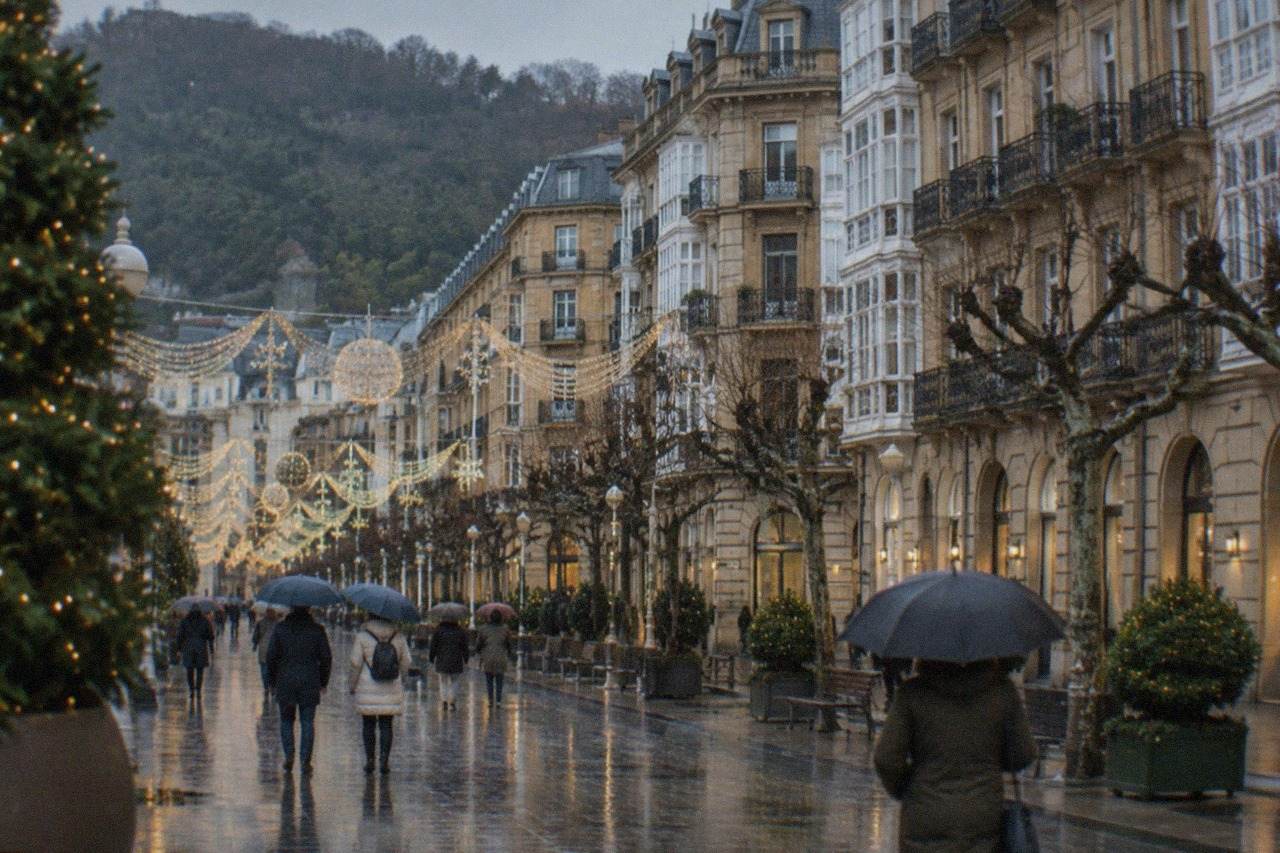
December is the quietest month on La Concha bay: the wettest stretch of the AEMET calendar overlaps with the Santo Tomás fair on 21 December, the beaches lose their lifeguards, and the city's indoor life, pintxo bars and museums, carries the visit.
Short answer
December in San Sebastián averages 9.1 C with 151 mm of rain over about 12 rain days, the beaches are unpatrolled, and seasonal sights like Hondalea and the island boat's high season are finished, but the Santo Tomás fair on 21 December, free-Tuesday museum entry and the pintxo bars make it a workable low-season city break.
San Sebastián, the Basque city on La Concha bay in Gipuzkoa, Spain, whose official name is Donostia / San Sebastián and whose Basque name, Donostia, is used alone in the local language, is a different place in December from the one that fills INE's hotel tables in August. The statistics agency counted 134,960 hotel overnight stays in the city in December 2025 against a peak of 245,769 in August, which is the honest headline: the crowds thin, the rain arrives on schedule, and the city's indoor life takes over. That indoor life is considerable. The MICHELIN Guide Spain 2026 lists 11 stars across 6 restaurants inside the municipality, and the pintxo bars of the Parte Vieja do not close for winter.
This page lays out what December actually gives a visitor: the numbers from AEMET's Igeldo station, the one festival the month owns, what has closed for the season and what replaces it, and where the city's December warmth genuinely lives. For a broader view of the city across all twelve months, the best time to visit guide compares every season, and is San Sebastian worth visiting tackles the question this page's weather table will inevitably raise.
What Is The Weather Like In San Sebastian In December?
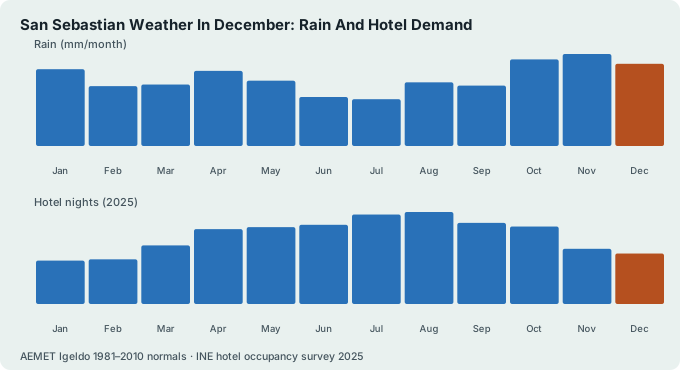
December is the second wettest month of the year in San Sebastián, averaging 151 mm of rain over 12.4 days with at least 1 mm, on a mean temperature of 9.1 C with a daily maximum of 11.6 C and a minimum of 6.6 C. AEMET's normals for its Igeldo station, the 1981 to 2010 series, give December the lowest sunshine total of the year. The station sits 250 m up on Monte Igeldo, so the seafront runs slightly warmer than these figures.
Those are the facts to plan around, and they come from AEMET's published normals for the station named Donostia / San Sebastián, Igeldo (1024E). The honest reading is that December rain is not an exception here, it is the baseline. The city records 1,507 mm a year over 141 rain days, and no month averages under 86 mm. What December adds is short days and the year's weakest sunshine, 93 hours against July's 196. A wet-Atlantic December in the Basque Country is not a Mediterranean winter with a chill on it, and any packing list built on the second kind of city will be wrong.
The comparison table below places December against the neighbouring months, all figures from the same AEMET series.
| Month | Mean C | Mean max C | Mean min C | Rain mm | Rain days 1mm+ | Sun hours |
|---|---|---|---|---|---|---|
| October | 15.5 | 18.5 | 12.4 | 159 | 11.8 | 140 |
| November | 11.3 | 14.0 | 8.7 | 169 | 13.0 | 102 |
| December | 9.1 | 11.6 | 6.6 | 151 | 12.4 | 93 |
| January | 8.5 | 11.0 | 5.9 | 141 | 13.2 | 98 |
Two things follow from that table. November, not December, is the wettest month at 169 mm, and January is marginally colder but slightly brighter. If a December trip is already booked, the practical response is not despair but layers: a real waterproof rather than a shower jacket, shoes that survive wet stone, and a plan that treats a rain day as the default rather than the accident. The San Sebastian weather guide works through the whole year in the same terms.
What Is There To Do In San Sebastian In December When It Rains?
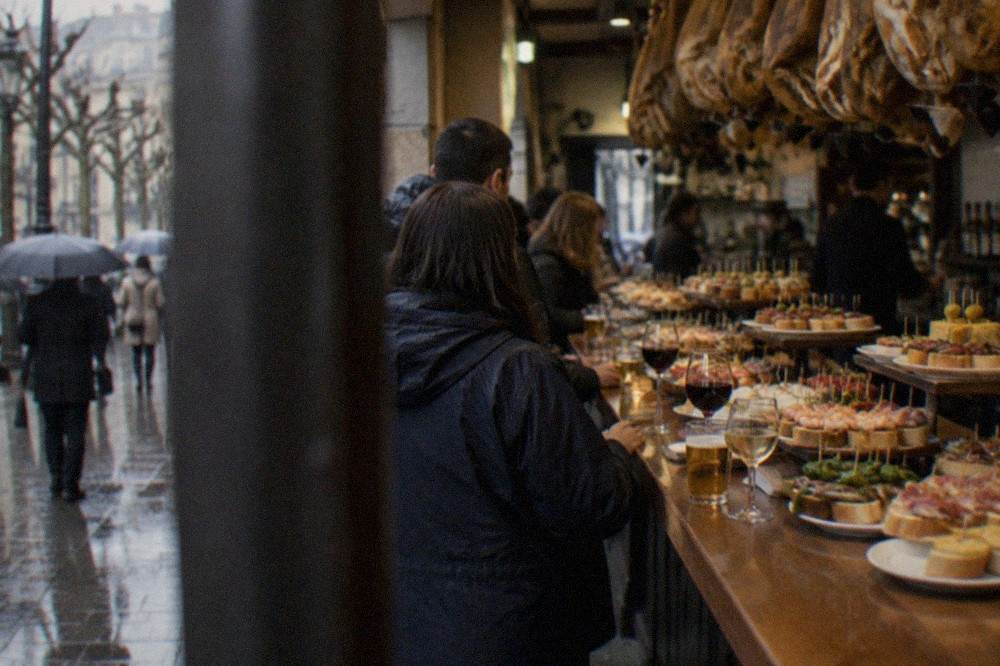
The December answer to rain is the city's indoor life: the pintxo bars of the Parte Vieja, San Telmo Museoa with free entry every Tuesday, Tabakalera's free building and exhibition halls, the Aquarium on its winter timetable, and a cooking class or a guided pintxo crawl that turns the evening into the day's main event. None of these depends on the weather, and several of them are cheaper in winter than the summer equivalents.
The pintxo bar is the structural answer. The bars of the Old Town are small, dense and warm, and an evening that moves between four of them covers more of the city's real culture than a summer afternoon on the sand. What a pintxo actually is, and how the bar ritual works, is explained in what are pintxos, and the bar-by-bar shortlist lives at best pintxo bars. A guided crawl solves the December visitor's specific problem, which is not finding a bar but choosing between sixty of them on a cold night.
The museums carry the afternoons. San Telmo Museoa, in the Old Town against the slope of Monte Urgull, charges 10.00 EUR general admission and 4.00 EUR reduced, and is free for everyone every Tuesday, with winter hours of 10:00 to 19:00 from 1 November and closure on Mondays. Tabakalera, the old tobacco factory by the Estación del Norte, is free to enter, open Tuesday to Sunday, with exhibition halls running 11:00 to 13:00 and 16:00 to 20:00. The Aquarium keeps winter hours, Tuesday to Friday 10:00 to 19:00, and closes on Mondays from October to March except when a long weekend intervenes, which is worth checking if your Monday falls near a holiday.
A cooking class is the other strong December move: it occupies an afternoon indoors, ends with the meal you cooked, and pairs with the wine and cider culture that the region runs on. The cooking classes guide compares what is on offer. For anyone whose December question is really about budget, is San Sebastian expensive breaks the city's costs down honestly.
What Is Santo Tomás And Why Is 21 December A Big Day?
Santo Tomás is a Basque festival held every 21 December, a fixed annual date, when the city fills with stalls, rural costumes and txistorra, the fresh Basque sausage that is the day's signature food. It is the one festival December owns outright, it takes over the centre for the day, and it draws people in from across Gipuzkoa rather than from the beach crowd.
The tourism board lists it as a fixed annual event, the 21st of December every year, alongside Tamborrada on 20 January. Santo Tomás is nominally a rural fair that migrated into the city, and its shape is stalls and food rather than parades and fireworks. Txistorra in a bread roll is the dish of the day, and cider, which is in the barrel but not yet in its formal txotx season, is poured alongside. The txotx season, standing at the barrel while cider shoots from the tap, runs from the middle of January to the end of April by the tourism board's rule, so a December visitor catches the cider but usually not the ritual, which begins in the weeks after New Year.
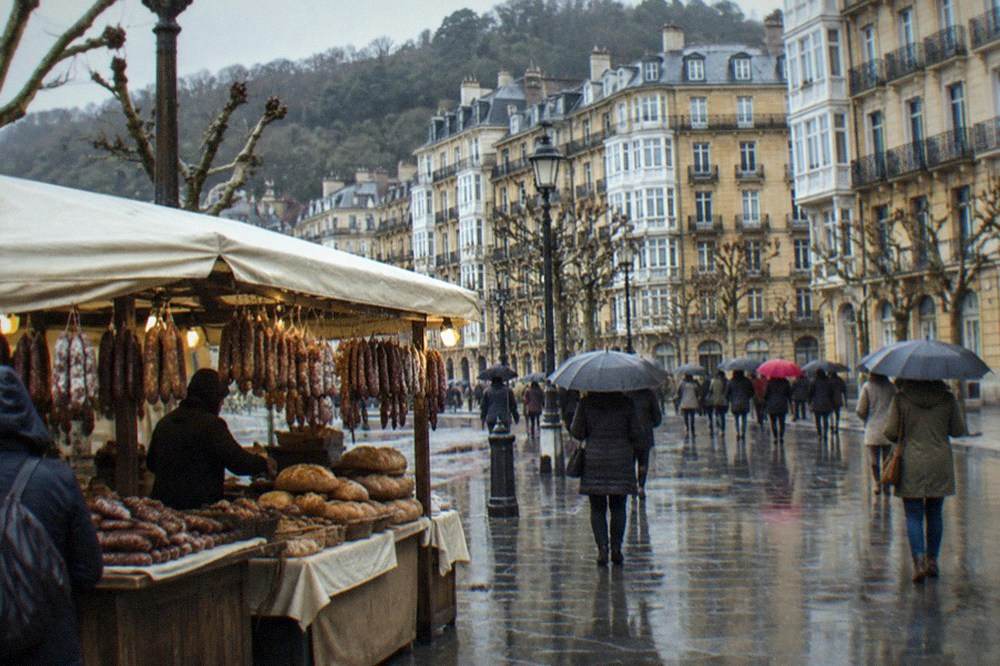
The day matters for planning because it changes the city. The centre is full, restaurants are busy from midday, and a visitor who did not know the date might read the crowds as evidence of a Christmas market that does not really exist here in the Central-European form. Santo Tomás is the local version, and it is more interesting than an imported one.
What Has Closed For The Season By December In San Sebastian?
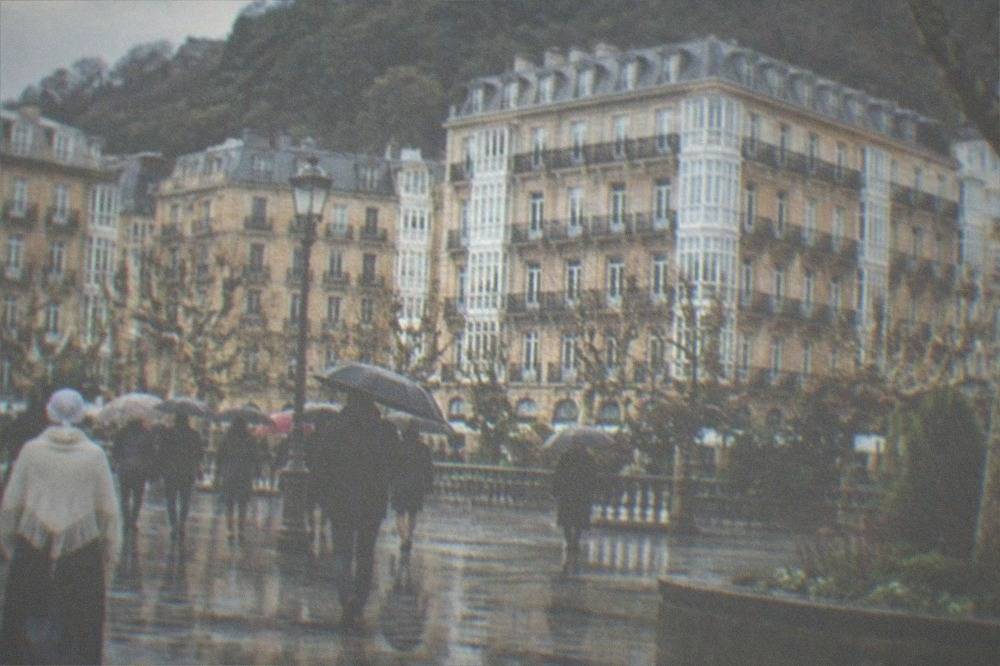
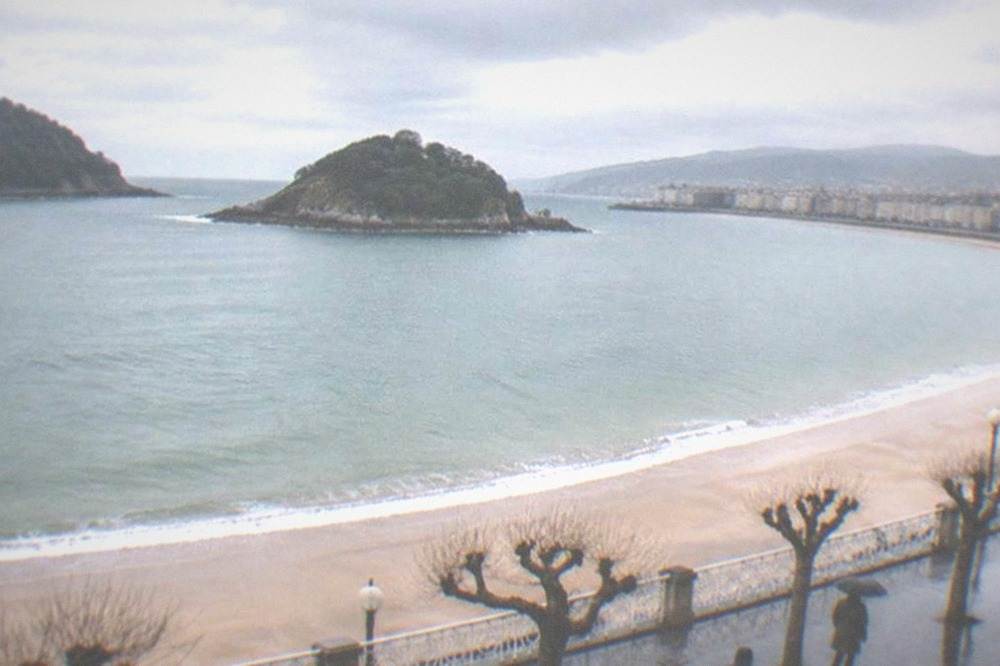
By December the beach lifeguards have left all three beaches, Hondalea on Santa Clara island has finished its 1 June to 30 September season, the island boat's high season is over, and Monte Urgull closes at 19:30 from 1 October. The funicular on Monte Igueldo keeps running but closes on rainy days, and its ticket includes entry to the grounds, with a return adult fare of 5.50 EUR.
These are season rules, not snapshots. The lifeguard service on La Concha, Ondarreta and Zurriola runs 1 June to 30 September, so a December swim is an unpatrolled swim, and the council's own pages describe Zurriola as having strong swell even in summer. The island boat, run by Motoras de la Isla, runs its high season 1 June to 30 September and then says to consult departures, so a December landing on Santa Clara is not something to plan a day around. Hondalea, Cristina Iglesias's work in the island lighthouse, is a summer installation, free but seasonal, and it is not open in December at all. More of these guides are collected on San Sebastian Spain Guide.
The table below collects the seasonal state of play.
| Sight or service | December status | Source rule |
|---|---|---|
| Beach lifeguards, all three beaches | Not on duty | Season runs 1 June to 30 September |
| Hondalea, Santa Clara island | Closed | Season runs 1 June to 30 September |
| Island boat high season | Finished | High season 1 June to 30 September, then consult departures |
| Monte Urgull access | Open 08:00 to 19:30 | Winter hours from 1 October |
| Monte Igueldo funicular | Running, but closes on rainy days | Own site FAQ |
| San Telmo Museoa | Open, winter hours 10:00 to 19:00, closed Mondays, free Tuesdays | Own site |
| Aquarium | Open, winter timetable, closed Mondays except long weekends | Own site |
| Tabakalera | Open Tuesday to Sunday, free entry | Own site |
The funicular deserves its own sentence because it is the December sight most likely to disappoint. It opened in 1912, the tourism board calls it the oldest funicular in the Basque Country, and the view from the top over the bay is the payoff. But the operator's own FAQ says rides close on rainy days, and December averages 12.4 rain days, so the funicular is a fair-weather bet in a month that offers roughly three dry weeks. The operator also sells no downhill-only ticket, so walking up and riding down is not an option. The Monte Igueldo guide covers the mechanics in full.
Can You Swim At The Beaches In San Sebastian In December?
You can enter the water, since the beaches are public and free year round, but there are no lifeguards after 30 September, the sea is at its coldest, and the council describes Zurriola as having strong swell even in summer, so a December swim is a solo decision with no patrol behind it. La Concha is sandy and shallow, which makes it the most forgiving of the three if the weather allows.
The council's beach pages give La Concha a mean length of 1,350 m, Ondarreta 600 m and Zurriola 800 m, and all three are sandy. None of that changes in winter, and neither does the fact that the tide often limits the usable area on La Concha. What changes is everything around the sand: no lifeguards, no parasol or lounger hire, and no assisted bathing service, all of which run on summer windows. The San Sebastian beaches guide and the individual pages for La Concha and Zurriola carry the detail.
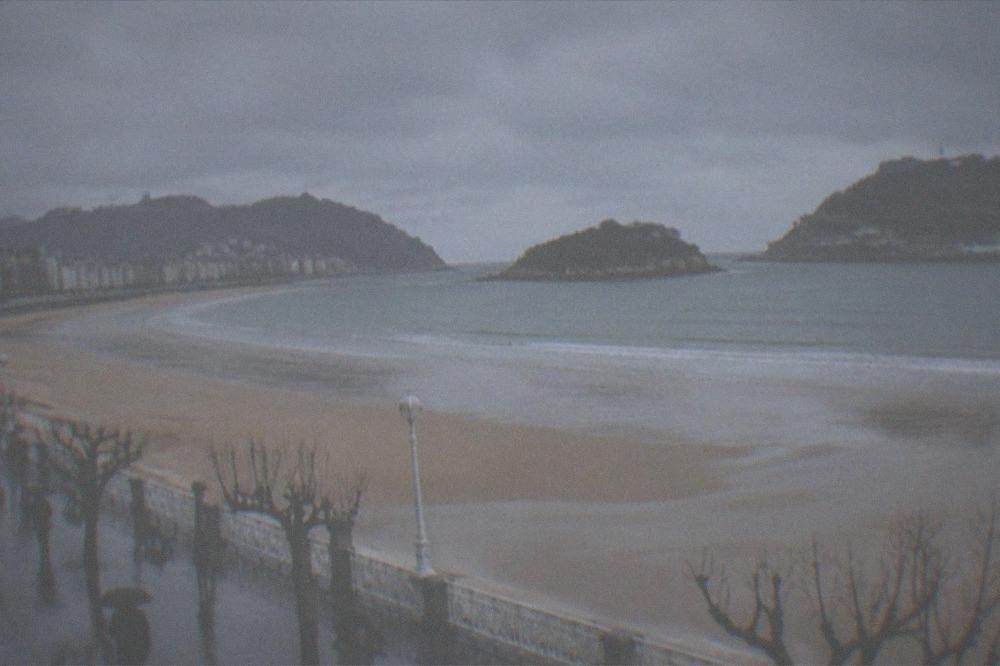
The honest December framing is that the beaches are for walking. The seafront promenade from Ondarreta to the Peine del Viento, Chillida's three steel sculptures anchored to the rocks at the foot of Monte Igeldo, is a walk that works in any weather short of a gale, and the Peine del Viento guide explains what the work is. Surfing continues through winter at Zurriola in principle, but the pack gives no surf-zone rules for the winter months, so check locally before entering the water with a board.
Is December A Good Time For Pintxos And Restaurants In San Sebastian?
December is arguably the best eating month of the city's low season: the pintxo bars are fully open, the Michelin-starred restaurants of the city, 11 stars across 6 houses in the MICHELIN Guide Spain 2026, are working, reservations are easier than in August, and the run-up to Christmas fills bars with locals rather than tourists. Santo Tomás on 21 December adds txistorra and cider to the month's table.
The Michelin count belongs to the 2026 edition and should be attributed to it, because the 2027 edition is announced on 24 November 2026 in Huesca and every figure in that section expires that day. Inside the municipality the guide lists Akelaŕe and Arzak at three stars, Amelia by Paulo Airaudo at two, and iBAi by Paulo Airaudo, Itzuli and Kokotxa at one each. Martín Berasategui, also three stars, is in Lasarte-Oria, a separate municipality, and Mugaritz is in Errenteria, so neither is in the city even though both appear on every San Sebastián eating itinerary. The Michelin restaurants guide sorts the starred houses from the ones merely nearby, and what to eat in San Sebastian covers the dishes that matter below that level.
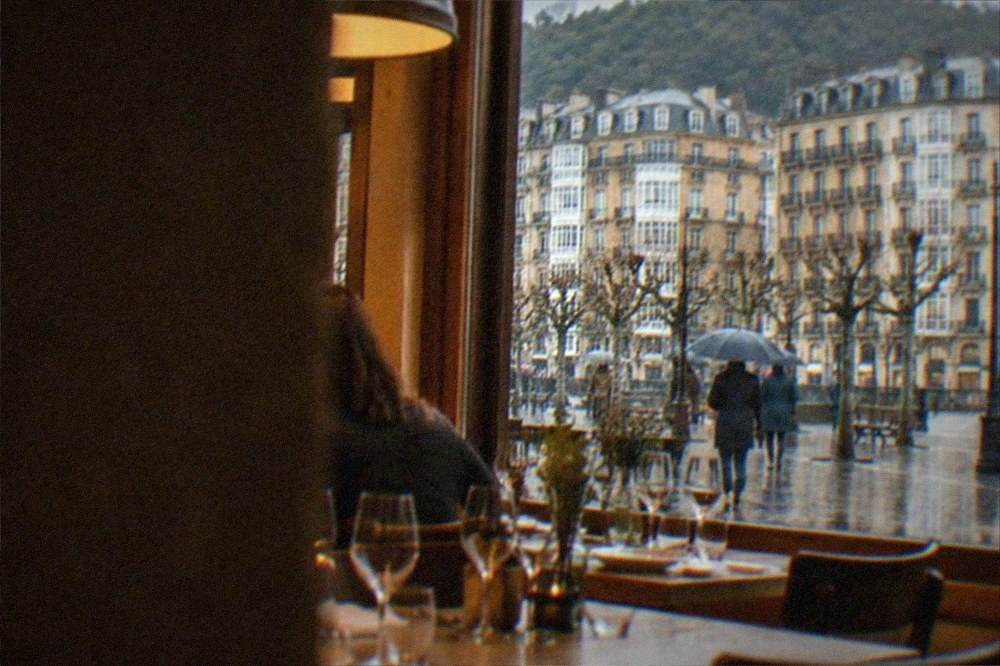
For a December evening, the guided crawl is worth a specific word. The related tour on this page is a small-group pintxo tour capped at eight guests and led by a culinary expert guide, and its figures, price, rating and duration, render from its own listing rather than from this page.
The listing also carries an inline booking option beside its own tour page: Check availability.
The self-guided alternative is a phone audio tour, which works well on a December day because it moves at your own pace and ducks indoors whenever the sky turns. The cultural sights and scenic trails version covers the city's monuments and the coastal paths.
What Day Trips Work From San Sebastian In December?
The December day trips that work are the indoor and food-led ones: Getaria for txakoli with hotel pickup included, the cider houses around Astigarraga where the season's first barrels are opening, and Bilbao for the Guggenheim. Coastal walks and beach towns are legal in December but the weather decides, and the flysch at Zumaia is a fair-weather sight.
Getaria is the strongest of these. The fishing town an hour along the coast is the home of txakoli, the lightly sparkling local white wine, and a half-day small-group trip with hotel pickup and tastings is a December-proof plan because the wineries are indoors. The txakoli guide explains the wine and how it is poured, and the Getaria guide covers the town, which is also the home of the Balenciaga museum, open in winter Wednesday to Sunday from November, 10:30 to 17:00, at 14 EUR general admission.
The cider houses around Astigarraga, the cider museum's town, are the other seasonal fit. The txotx ritual proper starts in mid-January, but a traditional cider house visit with lunch, run with the Gipuzkoa cider house association, works year round and includes the orchard, the cellar and the meal. The cider houses guide explains what the txotx ritual is and when it runs.
| Day trip | December fit | Why |
|---|---|---|
| Getaria, txakoli and Balenciaga museum | Strong | Tastings and museum are indoors; museum on winter hours |
| Cider house, Astigarraga area | Strong | Cellar, tasting and lunch are indoors; txotx season opens mid-January |
| Bilbao and the Guggenheim | Strong | Museum-led day, weather-independent |
| Hondarribia and Pasaia | Fair | Old town walk works in rain gear; harbour walk is weather-dependent |
| Zumaia flysch coast | Fair-weather only | The coastal geology is an outdoor sight |
| Biarritz and the French coast | Fair | Towns are walkable in winter; beach time is not the point |
How Crowded And Expensive Is San Sebastian In December?
December is the cheapest and emptiest full month of the city's year by the hotel numbers: INE counted 134,960 hotel overnight stays in December 2025 against 245,769 in August, a difference of a little over 110,000 stays, and 63.7 percent of the year's overnight stays by foreign residents fell across 2025 as a whole. Hotel demand is the year's lowest outside the January trough, which is what a December visitor actually experiences as short queues and available tables.
The INE figures cover hotels only, for the tourist point Donostia-San Sebastián, and 2025 is the latest full year. The month-by-month shape matters more than any single number: December sits below every month from April to October, all of which stay above 200,000 stays, and only January and February of the winter months come close to it. That is the arithmetic behind the December experience, and it is the one month where the city's celebrated restaurants are realistically bookable at short notice.
| Month 2025 | Hotel overnight stays | Month 2025 | Hotel overnight stays |
|---|---|---|---|
| January | 115,910 | July | 239,124 |
| February | 119,367 | August | 245,769 |
| March | 156,670 | September | 216,759 |
| April | 200,055 | October | 207,158 |
| May | 205,326 | November | 147,334 |
| June | 211,534 | December | 134,960 |
One forward-looking cost point that applies to December trips from 2027 onward: Gipuzkoa's tourist tax, Norma Foral 3/2026, takes effect on 1 January 2027, so no visitor pays it before that date. The law sets bands per person per night, up to 6.50 EUR for a five-star hotel and up to 3.50 EUR for a tourist apartment, with at most 6 nights charged per stay and under 18s exempt. The rate San Sebastián's own council will apply is not yet published in an official ordinance, so check with your accommodation for the year you travel.
What Should You Pack For San Sebastian In December?
Pack for 9 C and regular rain: a real waterproof coat, shoes with grip for wet stone and cobbles, warm layers for evenings near 6 C, and one smarter outfit if dinner reservations are on the plan. An umbrella is a fair-weather object here, because December averages 12.4 rain days and 151 mm, often arriving as wind-driven rain rather than showers.
The cobblestones of the Parte Vieja and the promenade along La Concha are the two surfaces a December visitor walks most, and both hold water. The layering question answers itself from the AEMET table: a mean maximum of 11.6 C means a midday that feels mild in the sun's 93 hours and cold the rest of the time, and a mean minimum of 6.6 C means evenings that want a proper coat. The how do people dress in San Sebastián question is answered in detail on the answers pages, but the December short version is practical rather than stylish: the city is walkable, the walking is the point, and the clothing should serve it.
Common Questions About San Sebastian In December
Is December A Good Time To Visit San Sebastian?
December suits a visitor whose priorities are eating, museums and low crowds. It averages 9.1 C with 151 mm of rain over about 12 rain days, the beaches are unpatrolled and the seasonal sights are closed, but hotel demand is the year's lowest outside January, the pintxo bars are fully open, and Santo Tomás on 21 December is a genuine local festival.
Does It Snow In San Sebastian In December?
Snow is rare at sea level in this city, but the pack publishes no snow-day count for the Igeldo station, so no figure is stated here. What the AEMET normals do show is a mean minimum of 6.6 C in December, which is winter rain territory rather than snow territory on the coast.
Is The San Sebastian Christmas Market Worth Visiting?
The city's December event is Santo Tomás on 21 December, a rural fair with stalls, txistorra and cider, not a Central-European-style Christmas market. Plan around that date rather than expecting a German-style market, and check the tourism board's festivities page for anything added in the year you travel.
Are The Beaches Open In San Sebastian In December?
The beaches themselves are public and free year round, but the lifeguard service on all three runs only 1 June to 30 September, and parasol and lounger hire runs on summer windows too. A December visit to the sand is for walking, and any swim is without a patrol.
What Should You Do In San Sebastian On A Rainy December Day?
The strongest rainy-day options are the pintxo bars of the Old Town, San Telmo Museoa, which is free every Tuesday and open on winter hours from 1 November, the free contemporary art spaces at Tabakalera, the Aquarium on its winter timetable, and a cooking class or guided pintxo tour that fills an afternoon and an evening indoors.
Is The Monte Igueldo Funicular Running In December?
The funicular runs year round in principle, but the operator's own FAQ states that rides close on rainy days, and December averages 12.4 rain days at the Igeldo station. The return adult fare is 5.50 EUR and includes entry to the grounds, and there is no downhill-only ticket, so check the weather before committing to the trip up.
December in San Sebastián is a month for the city's interior life: its bars, its museums, its one proper festival on the 21st, and its tables, booked at short notice in a way August never allows, with the rain on the windows doing the city's reputation for cosiness no harm at all.