What Are Pintxos?
Pintxos are the small, often skewered bar snacks of the Basque Country, and San Sebastián is their capital. Here is what they are, what goes on them and how ordering actually works.
Short answer
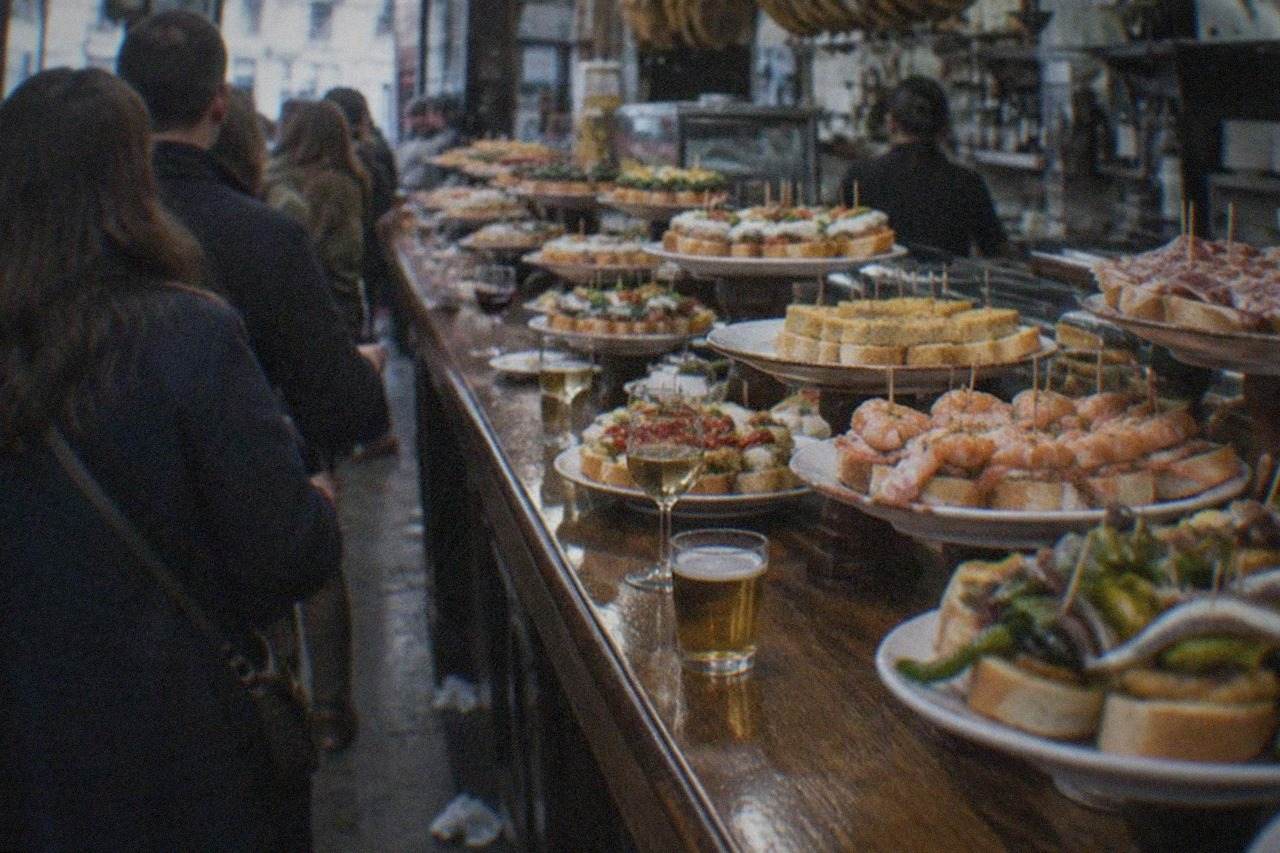
A pintxo is a small Basque bar snack, usually a slice of bread topped with ingredients and often held together with a skewer. Unlike tapas, pintxos are displayed on the counter, you pay per piece, and in San Sebastián you eat them standing up, moving from bar to bar.
Pintxos are the small bar snacks of the Basque Country, and San Sebastián, the city on La Concha bay in Gipuzkoa, Spain, whose official name is Donostia / San Sebastián, is the place where they were refined into an art form. Walk into almost any bar in the Parte Vieja, the Old Town, and the counter will be covered with them: little constructions of bread, fish, meat and vegetables, priced individually and eaten on the spot. This page on San Sebastian Spain Guide explains what a pintxo is, what the word means, what goes into one and how the whole ritual works, including the question every visitor asks first.
What Exactly Are Pintxos?
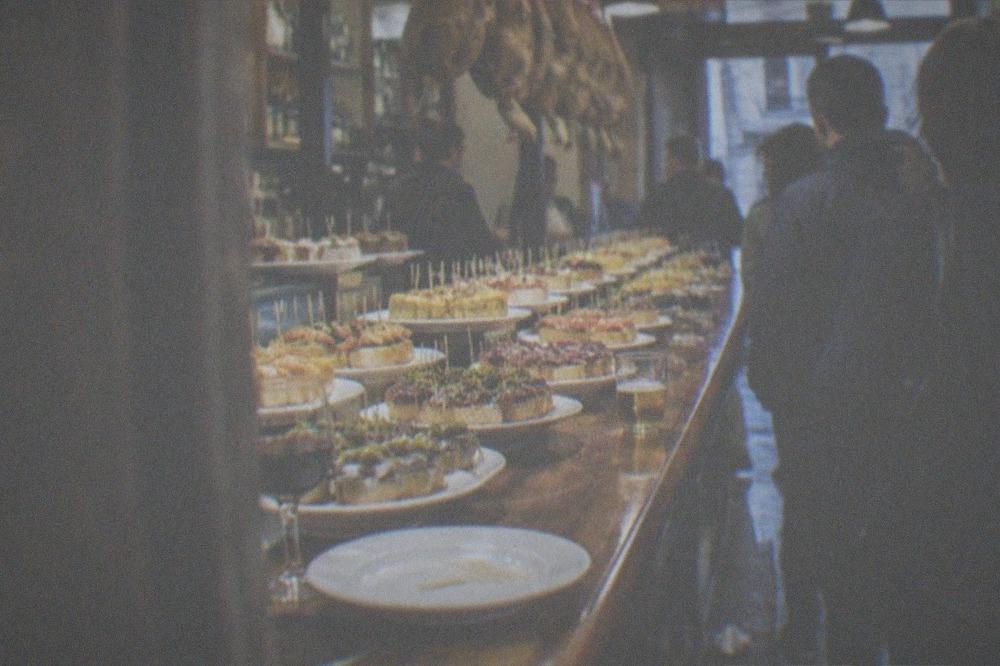
A pintxo is a small individual snack served in Basque bars, typically a slice of baguette-style bread carrying a topping of fish, meat, cheese or vegetables, frequently fastened with a wooden skewer called a palillo. Pintxos are laid out on the counter, you choose the ones you want, and you pay for each piece you take. They are eaten standing at the bar or at tall tables, not as a seated course, and an evening of moving between bars eating them is called a txikiteo or poteo.
The word covers a huge range. A simple gilda, three ingredients on a skewer with no bread at all, is a pintxo. So is a warm, elaborate creation finished to order behind the bar, the kind that helped the city's cooking earn its reputation. The common thread is the format: small, individual, priced per piece, and designed to be eaten with a drink in the other hand. The complete guide to pintxos in San Sebastián goes deeper into the culture around them.
The ritual matters as much as the food. Locals rarely stay in one bar. The pattern is one or two pintxos and a drink, then move on, which is why the Old Town's bars sit so close together. A short glass of wine or txakoli, poured from a height, is the traditional partner, and the guide to txakoli explains that local white wine in full.
What's The Difference Between Tapas And Pintxos?
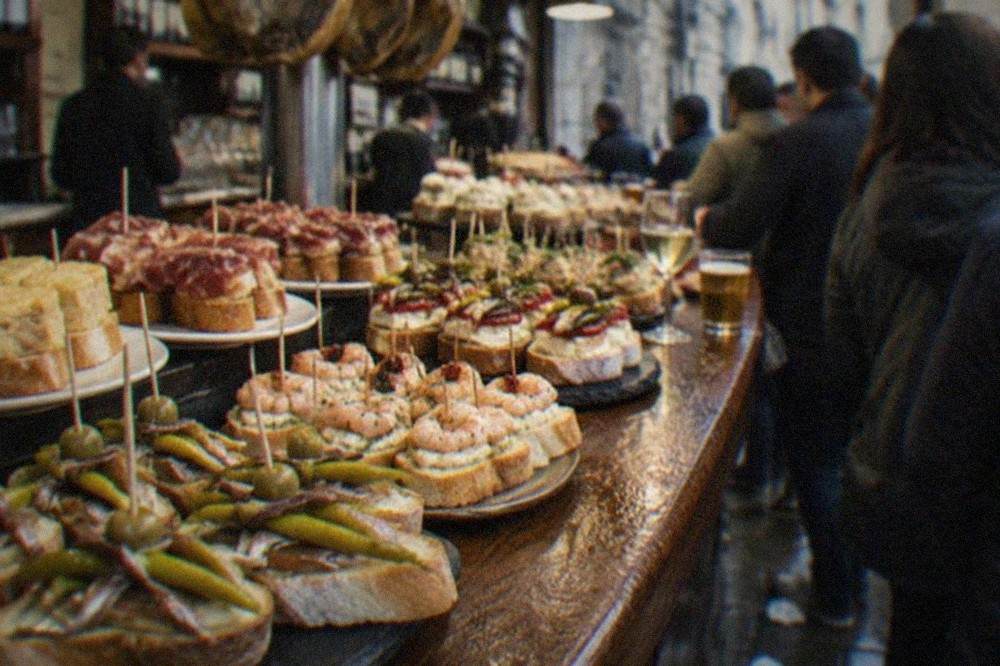
The difference is that tapas are a Spanish-wide tradition of small dishes brought to your table and usually included in or added to the price of a drink, while pintxos are a Basque tradition of individual counter pieces, displayed for you to pick, each paid for separately and usually skewered to bread. Tapas are a ration the kitchen sends out; pintxos are self-service from the bar top, and you are charged by the piece.
The table sets the two traditions side by side:
| Feature | Tapas | Pintxos |
|---|---|---|
| Where | Across Spain | Basque Country, above all San Sebastián |
| How served | Brought to the table from the kitchen | Displayed on the counter, taken by hand |
| Unit | A small dish to share | An individual piece, often skewered |
| Payment | Added to the drink, or priced per dish | Priced per piece |
| Skewer | Not typical | Common, the palillo, and part of the name |
| Bread base | Optional | Very common |
| Eating style | Seated, slower | Standing, bar to bar |
| Ordering | From a menu or the board | Pointing at the counter |
Two honest caveats. The line has blurred: plenty of Basque bars now serve warm pintxos cooked to order from a menu, and plenty of Spanish bars charge for their tapas. And the free-tapas custom, strongest in parts of Andalusia and other regions, has never been the norm in the Basque Country, so nobody should arrive in San Sebastián expecting a free plate with every drink. The question of whether tapas and pintxos are always served free is answered in full further down this page.
What Are Basque Pintxos?
Basque pintxos are the Basque Country's own version of the bar snack: individual counter pieces built on bread or a skewer, rooted in the cider houses and txokos, the private gastronomic societies, of Gipuzkoa, and developed in San Sebastián into miniature, highly technical cooking. What marks them out as Basque rather than generically Spanish is the local pantry behind them: anchovies from the Cantabrian coast, txakoli wine, Idiazabal sheep's cheese, salt cod, guindilla peppers and the produce of the region's markets.
The Basque language gives the tradition its vocabulary. Pintxo itself is a Basque spelling, txakoli and txotx are Basque words, and the custom of the txikiteo, the bar crawl, is a Basque social institution. The story of the gilda pintxo, the anchovy, pepper and olive skewer that is the region's most famous single bite, shows how a whole identity can fit on a toothpick.
San Sebastián pushed the form further than anywhere else. The city's cooks treated the pintxo as a miniature plate, applying restaurant technique to a two-bite snack, and that ambition is one strand of the food culture that produced a remarkable concentration of Michelin-starred kitchens, covered in the guide to the city's Michelin restaurants.
What Is Pintxos Made Of?
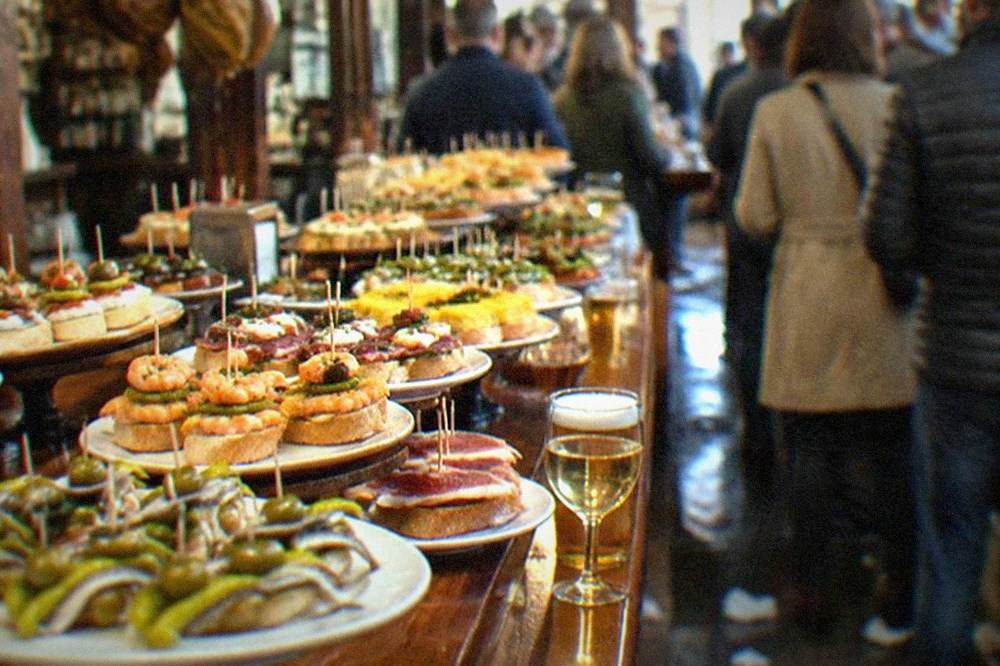
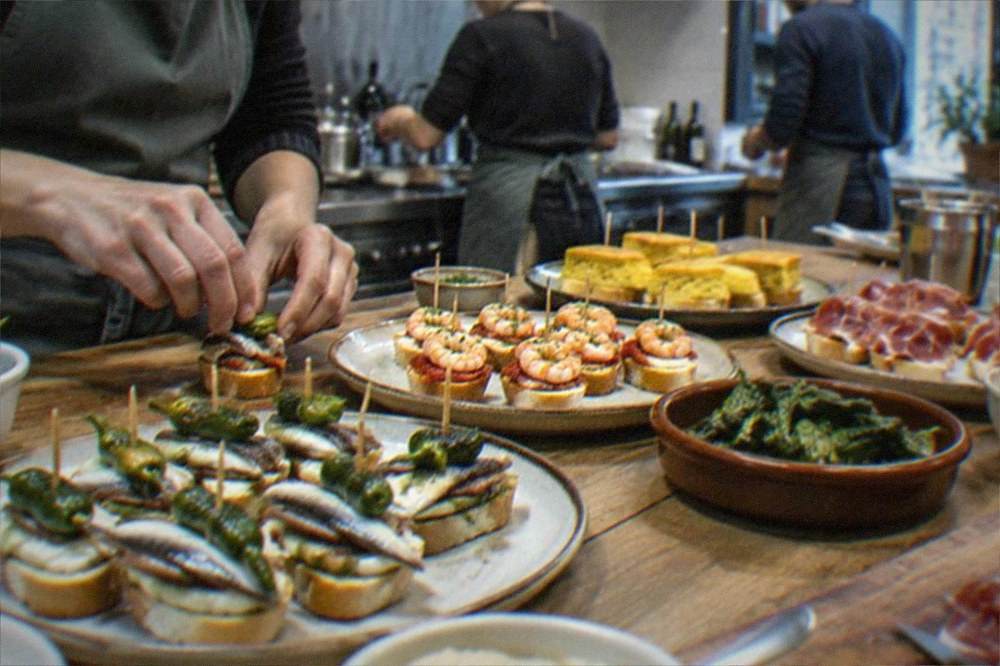
A pintxo is most often made of a slice of bread, a topping and a skewer. The bread is usually a small round or oblong of baguette-style loaf. The topping can be almost anything: Cantabrian anchovies, salt cod, hake cheeks, txangurro, spider crab, chorizo, morcilla blood sausage, Idiazabal cheese, roasted peppers, tortilla or croquette fillings. The skewer, a palillo, holds the layers together and doubles as the tally used to count what you owe.
Some toppings are cold and assembled in advance on the counter; others are fried or griddled to order. The classic repertoire a visitor will meet in almost any Old Town bar is fairly stable:
| Classic pintxo | Main ingredients | How it is served |
|---|---|---|
| Gilda | Cantabrian anchovy, guindilla pepper, green olive | Cold, on a skewer, no bread |
| Tortilla pintxo | Potato and egg omelette | Warm or room temperature, on bread |
| Croqueta | Bechamel with ham, cod or mushroom, breaded | Fried to order |
| Txangurro | Spider crab, onion, tomato, brandy | Warm, often in a shell |
| Gilda's cousin, the banderilla | Pickled items on a skewer | Cold, pre-assembled |
| Salt cod pil-pil | Bacalao, olive oil, garlic | Warm, in a small dish or on bread |
| Idiazabal and membrillo | Sheep's cheese, quince paste | Cold, on bread |
| Morcilla pintxo | Blood sausage, often with pepper | Warm, on bread |
The ingredients are the point. This is a coastal city in a green, rainy corner of the Atlantic facade: fish and shellfish dominate, the olive oil is Spanish but the peppers are Basque guindillas, and the cheese is local sheep's cheese. The guide to what to eat in San Sebastián places pintxos in the wider food landscape of the city, from txuleta steaks to the famous cheesecake.
What Is A Pintxos In English?
In English, a pintxo is best translated as a "skewer" or a "spike", which is what the Basque word literally means, though in practice English speakers use the word pintxo itself, the way they use the word sushi. A close functional equivalent is the Spanish tapa, but with the differences this page sets out: an individual, priced, counter-displayed piece rather than a dish sent from the kitchen. Menus in the city often render it as "pincho", the Spanish spelling.
The spelling tells you where you are. Pintxo with a tx is the Basque form and is what you will see on chalkboards in San Sebastián. Pincho with a ch is the Spanish form, common in Navarre and elsewhere. Both are pronounced the same way, and both refer to the skewer that gave the snack its name. The explanation of the city's name, Donostia, covers the same dual spelling habit for the city itself.
What Are Pintxos In San Sebastian?
Pintxos in San Sebastián are the city's everyday eating institution: the bars of the Parte Vieja, the Old Town, and the streets around it display counters of them from midday and again from evening, and eating them, standing and moving from bar to bar, is how the city socialises. San Sebastián treats the pintxo as miniature haute cuisine, which is the local twist, and its bars range from century-old taverns serving three-ingredient classics to counters turning out technically ambitious warm pieces.
The geography is compact. The Old Town's 31 de Agosto street and the lanes around the Plaza de la Constitución hold the densest concentration, and the Gros neighbourhood across the river has its own strong scene, described in the guide to the city's neighbourhoods. A first evening is best spent on a short route of three or four bars rather than settling into one.
The timing is worth knowing before you go, and the answer to when people eat pintxos in San Sebastián covers it in detail. The short version: the evening wave comes after the working day, and kitchens and counters in Spain run later than many visitors expect, so an early arrival can mean an empty bar and a cold frying pan.
Are Tapas And Pintxos Always Served Free?
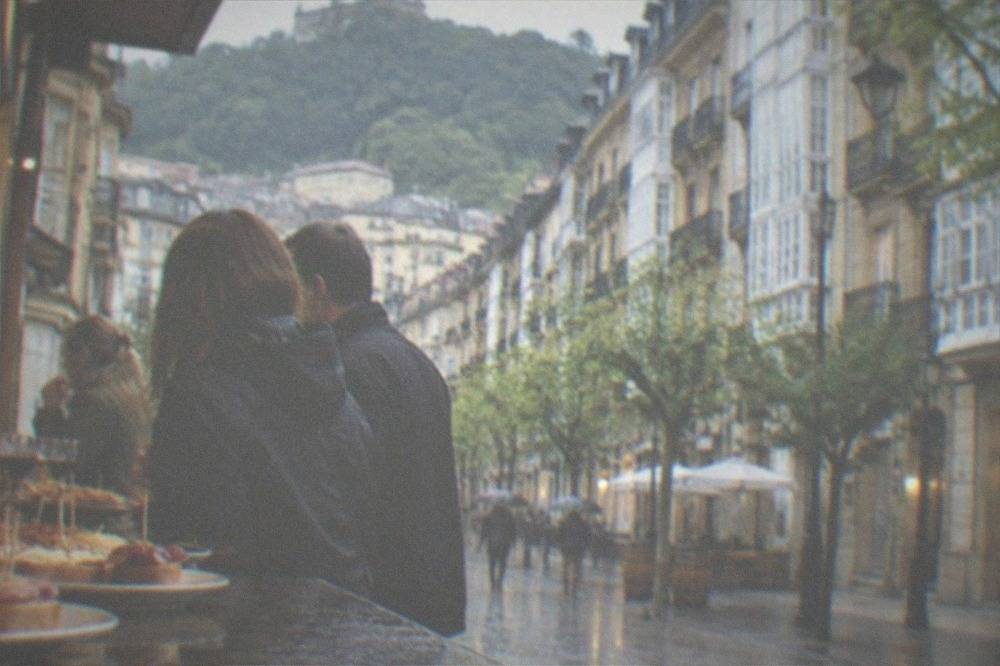
No. In the Basque Country pintxos are essentially never free: every piece on the counter has a price, and you pay for what you take, along with your drinks. The free-tapa custom, where a small dish arrives with a drink at no charge, exists in parts of Spain, above all in Andalusia and some other regions, but it is not the Basque norm and visitors should not expect it in San Sebastián. A free tapa is a regional courtesy, a pintxo is a purchase.
The mechanics are simple and mostly run on trust. At the counter you take what you want, keep the skewers on your plate, and either the barman counts them or you say what you had when you pay. Some bars now use ticketed systems for the more elaborate warm pieces. For what individual pieces cost in the city, the answer page on pintxo prices in San Sebastián covers the honest picture, and for the budget question in general there is the guide to whether San Sebastián is expensive.
How Does Ordering Pintxos Work In A San Sebastian Bar?
Ordering works in three steps: take or point at the cold pintxos displayed on the counter, order any warm ones you want from the menu or the board and wait while they are cooked, then tell the barman what you had and pay when you leave. There is no table service in most pintxo bars, no queueing system and no ticket machine: you speak to the staff at the counter, in Spanish or often English, and drinks are ordered the same way.
The vocabulary is small and worth carrying:
| Word | Meaning | When you use it |
|---|---|---|
| Pintxo | The snack itself | Pointing at the counter |
| Palillo | The skewer | What you leave on your plate |
| Txakoli | Local white wine | Ordering the classic pairing |
| Zurito | Small beer | When you want a short pour |
| Tinto de verano | Wine and soda | A common warm-weather drink |
| La cuenta | The bill | When you pay |
| Caliente / frío | Warm / cold | Choosing between cooked and counter pieces |
One practical note: bars in the Old Town fill completely at peak hours, and the custom is to eat fast, pay and move on rather than occupy a counter spot for an hour. The overview of things to do in San Sebastian places a pintxo evening among the city's other options, from La Concha to Monte Igueldo.
Where To Eat Pintxos In San Sebastian?
The two centres of pintxo eating in San Sebastián are the Parte Vieja, the Old Town between the harbour and the river, and the Gros neighbourhood across the Urumea, with a further run of bars along the streets of the Centro. The Old Town is the densest and most famous scene, Gros is where more locals eat, and the Centro holds the more polished, restaurant-like counters. All three are walkable from La Concha in minutes, so a route can cross them in one evening.
| Area | Character | What to expect |
|---|---|---|
| Parte Vieja | Historic, dense, festive | The deepest concentration of bars, classic and modern side by side |
| Gros | Local, younger, surf-side | Strong bars with fewer visitors, near Zurriola beach |
| Centro | Polished, elegant | Refined counters and wine-led bars on and near the Boulevard |
| Antiguo | Residential, relaxed | A quieter scene near Ondarreta, fewer visitors |
Choosing bars is its own discipline, and the best pintxo bars guide does that work bar by bar. For a first visit, a guided walk removes the guesswork: the small-group Old Town pintxo crawl takes in bars, restaurants and gourmet shops, and the operator's live listing shows current availability: Check availability.
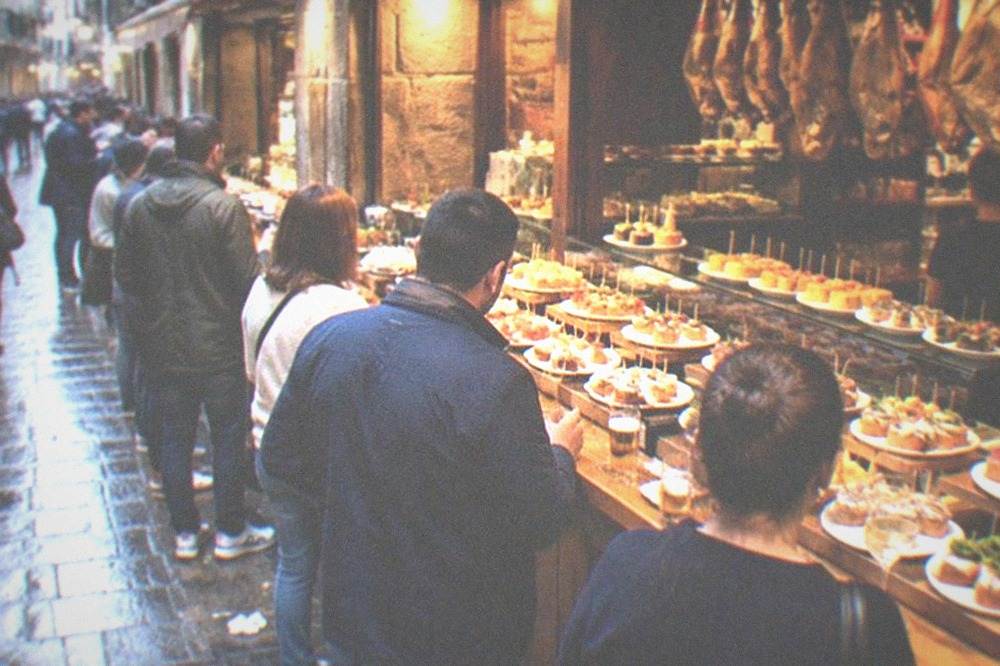
A guided option also solves the language and ordering question in one move. On a tour capped at eight guests and led by a culinary expert, the counter, the skewers and the customs are explained as you go, which is a different experience from working the bars alone. The range of food tours in the city runs from short walks with a single included pintxo to premium market-and-bar routes with reserved seats.
What Does Pintxos Mean In Spanish?
In Spanish the word means "thorn" or "spike", from the verb pinchar, to pierce or skewer, and it refers to the small skewer that pins the snack's layers together. The Basque spelling pintxo and the Spanish spelling pincho mean the same thing and sound the same; pintxo is the form used in the Basque Country, pincho the form used in the rest of Spain. So the name of the whole tradition is literally just the toothpick that holds it.
That origin explains the custom of counting skewers to settle the bill: the palillo was never just a fastener, it was the unit of account. It also explains why some of the most famous pintxos, like the gilda, consist of nothing but the skewer and its contents, no bread at all. Language runs deep in this city, which is officially bilingual in Basque and Spanish, and visitors will hear both at the counter, often in the same sentence.
When Do People Eat Pintxos In San Sebastian?
People in San Sebastián eat pintxos in two daily waves: at midday, before or instead of a full lunch, and in the evening from roughly the end of the working day until late, with the evening the bigger and more social of the two. Weekends are the peak, and the whole city participates, from students to grandparents. Pintxo bars are also where the day starts and ends around festivals, when the Old Town fills completely.
The evening wave is the one visitors should plan around. Arriving very early by Spanish standards means counters that are still being laid out; arriving with the locals means standing room only and a fry pan working nonstop. The full answer, with the local rhythm hour by hour, is on the page about when people eat pintxos, and a realistic one-day schedule slots a pintxo evening in alongside La Concha and Monte Urgull.
Should You Try Making Pintxos Yourself?
Yes, and San Sebastián is one of the best places to learn, because the city's cooking classes teach the Basque repertoire hands-on: market shopping, the classic dishes and the technique of building small, precise plates. A class typically ends with the meal you cooked, eaten with the wine and cider poured the local way. Learning to cook here also teaches the logic behind the pintxo counter, why ingredients are combined and how the small format forces discipline.
The cooking classes guide covers the options, from a market visit followed by a hands-on class to shorter sessions built around wine and cider tasting. For visitors who would rather be led than taught, a longer stay balances pintxo evenings with the city's other essential experiences, from the beaches to the museums on the hill.
What Drinks Go With Pintxos?
The classic drink with pintxos is txakoli, the young, lightly spritzy white wine of the Basque coast, poured from a height into a tumbler, and the other traditional partners are cider, served straight from the barrel in season, small beers called zuritos, and Rioja reds. The pour is part of the custom: txakoli is served from arm's length to aerate it, and cider in a cider house is caught in the glass a stream at a time, drunk immediately, and never left to sit.
| Drink | What it is | How it is served with pintxos |
|---|---|---|
| Txakoli | Young local white wine | Poured from a height, in a tumbler |
| Basque cider | Still apple cider, txotx style | From the barrel, in small measures |
| Zurito | Small beer, a short pour | Quick and cold between bars |
| Rioja | Red wine from the neighbouring region | By the glass at wine-led bars |
| Cava | Spanish sparkling wine | Common at celebrations and on tours |
The txotx season, when cider is poured straight from the barrel in the cider houses of Astigarraga and the surrounding province, runs from the middle of January to the end of April, and it is the older sibling of the pintxo counter: the same standing, social, small-dose way of eating and drinking.
Common Questions About Pintxos In San Sebastian
What does pintxos mean in spanish?
The word means "spike" or "thorn", from the verb to pierce, and it names the small skewer that holds the snack together. The Basque spelling is pintxo and the Spanish spelling is pincho; both are used in San Sebastián, with the Basque form on most bar boards.
What are Basque pintxos?
Basque pintxos are the Basque Country's counter snacks: individual, usually skewered pieces built on local ingredients such as Cantabrian anchovies, salt cod, Idiazabal cheese and guindilla peppers. In San Sebastián the form is treated as miniature haute cuisine, which is what sets the city's counters apart.
What is pintxos made of?
Most often a slice of bread, a topping and a skewer. The toppings range from cold assemblies like the gilda, anchovy, pepper and olive, to warm cooked pieces such as croquettes, tortilla and txangurro, spider crab. The skewer holds the layers together and is used to count what you owe.
What is a pintxos in english?
There is no exact English word. The literal translation is "skewer" or "spike", and the functional equivalent is a tapa, but the closest everyday answer is to use the word pintxo itself, as English does with other food words borrowed intact. Some menus translate it as "Basque tapas".
What exactly are pintxos?
Small individual bar snacks from the Basque Country, displayed on the counter, paid for per piece and eaten standing with a drink. They can be as simple as three items on a toothpick or as elaborate as a warm, restaurant-grade miniature plate.
Are tapas and pintxos always served free?
No. Pintxos in the Basque Country are always paid for individually, and the free-tapa custom of other Spanish regions has never been the norm here. Expect a price per piece, settled with your drinks when you finish.
What are pintxos in San Sebastian?
In San Sebastián pintxos are the city's core social ritual: counters across the Parte Vieja, Gros and the Centro from midday and again in the evening, with locals moving from bar to bar. The city's cooks treat the pintxo as a miniature showcase, which is why its bar food has a reputation well beyond Spain.
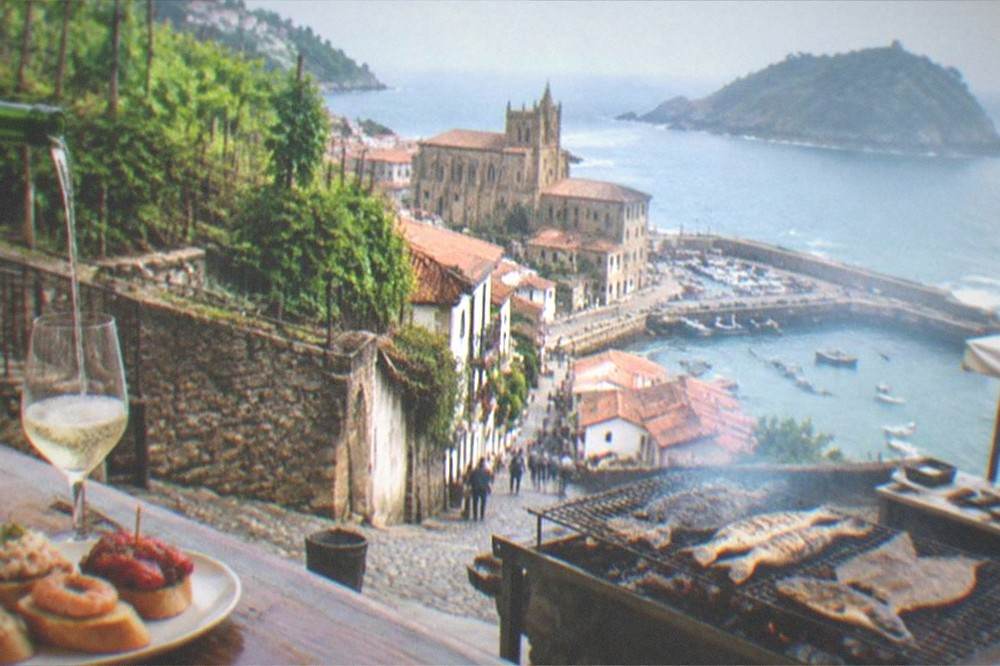
For visitors who want the counter explained rather than decoded alone, the premium route adds reserved seating at each bar and a guided visit to the Mercado de la Bretxa, a step up in comfort from the standing-room crawl.
Pintxos are the single best introduction to San Sebastián, because the counter tells you what the city cares about: good ingredients, precise cooking and a social life built around eating well in small, repeated doses. Start with a gilda, work two or three bars in the Old Town, and the rest of the city's food culture, from its cider houses to its starred kitchens, will make sense as one continuous tradition.