Zurriola Beach
Zurriola is the open, swell-facing beach of San Sebastián (Donostia), the Basque city on La Concha bay in Spain, and it is where the city surfs. Here is what the council's own pages say about it, when it is lifeguarded, and how to plan a day there.
Short answer
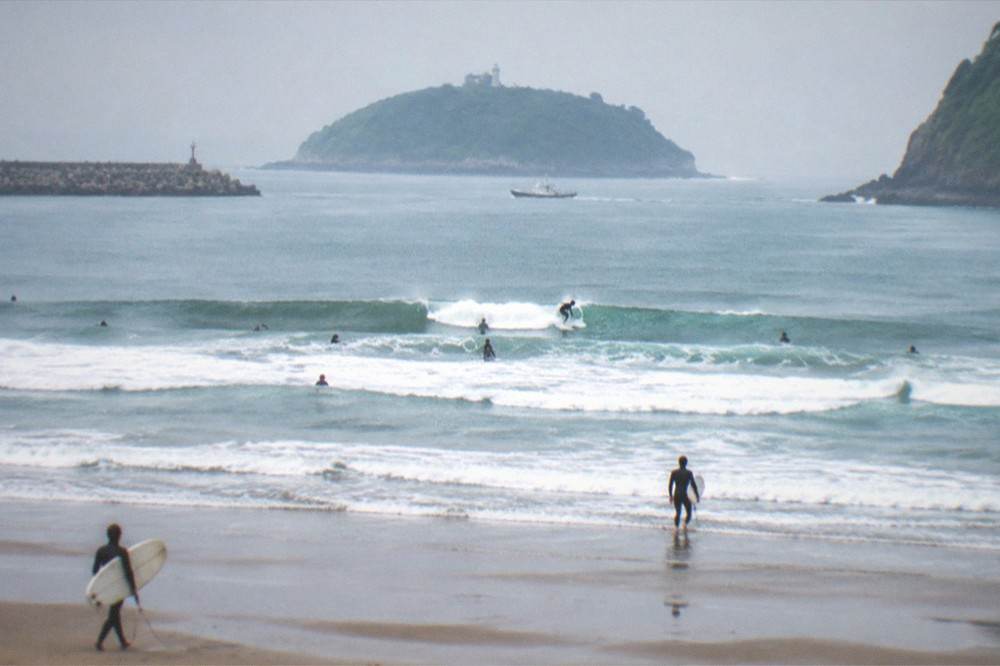
Zurriola Beach is San Sebastián's 800-metre surf beach in the Gros district, 110 metres wide on average, facing the open Atlantic with a strong swell. The council remodelled it in 1994, lifeguards cover it from 1 June to 30 September, and it is the beach for waves rather than calm swimming.
Zurriola Beach is the open-ocean face of San Sebastián (Donostia), the Basque city on La Concha bay in Gipuzkoa, Spain, and it behaves nothing like the postcard crescent across the headland. The council's own beach page describes Zurriola as sandy, fairly open and subject to a strong swell, 800 metres long with a mean width of 110 metres, remodelled in 1994. That single word, swell, is the reason this beach belongs to surfers, bodyboarders and swimmers who want waves, while families with small children mostly stay on La Concha. This page gathers what the council, the tourism board and the weather record actually say about Zurriola, from its season rules to its climate, so a visit can be planned around facts rather than folklore.
What Is Zurriola Beach In San Sebastian?
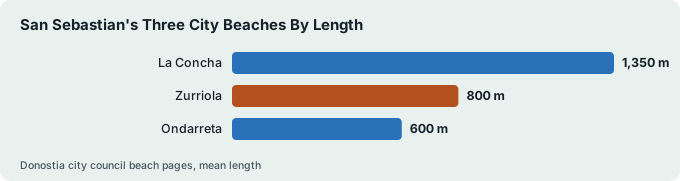
Zurriola Beach is an 800-metre sandy beach with a mean width of 110 metres in the Gros district of San Sebastián, on the bay's eastern side facing the open Atlantic. The council's beach page describes it as fairly open with a strong swell, and records that the beach was remodelled in 1994. It is one of the city's three main beaches, alongside La Concha and Ondarreta, and a fourth small beach sits on Santa Clara Island.
The 1994 remodelling is the detail most guides skip. The beach was reshaped that year, and its present form, a wide shelf of sand between the Gros seafront and the Kursaal end of the bay, dates from that work. The council's page is the source for the figures above, and its wording is deliberately plain: sandy, fairly open, strong swell. Where La Concha is described as shallow, with the tide often limiting the usable sand, Zurriola is the opposite, a beach that takes the ocean as it comes.
The beach sits in front of Gros, the neighbourhood that has become the city's surf and café quarter. Behind the sand stands the Kursaal Congress Centre and Auditorium, Rafael Moneo's building, officially inaugurated on 23 August 1999 after his proposal was chosen in 1990 from six invited architects. At the far eastern end, the headland rises toward Monte Ulia, where a guided Camino de Santiago hike runs over the hill to the Ulia lighthouse. In practice, Zurriola is the beach for people who want waves, a younger crowd and a shorter walk from the Gros pintxo bars.
Is Zurriola Beach Good For Swimming And Surfing?
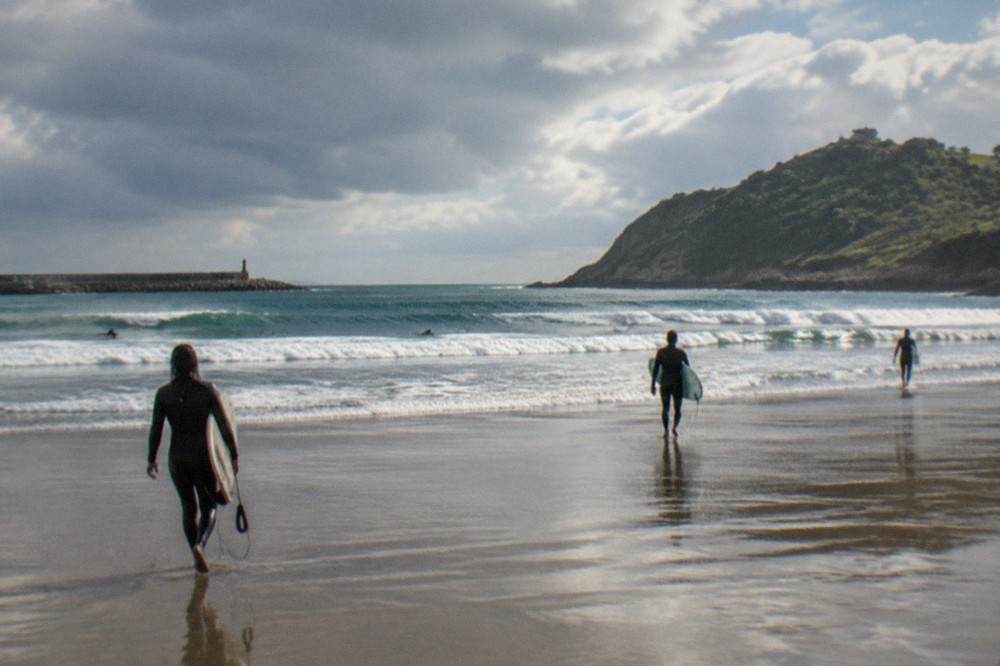
Zurriola is San Sebastián's surf beach, and the council's own page names a strong swell as its defining trait, which makes it the natural choice for surfing and bodyboarding and a more demanding one for casual swimming. Lifeguards cover all three city beaches, Zurriola included, only from 1 June to 30 September, working 10:00 to 20:00 from 15 June to 15 September and 13:30 to 19:30 from 16 to 30 September. Outside those dates the sand is open but the service is not.
The season rules deserve their own paragraph, because they are what a normal-looking guide gets wrong. Assisted bathing for visitors with reduced mobility runs 15 June to 15 September. Parasol and awning hire on Zurriola runs 15 June to 30 September, with the council listing an awning at 13.10 EUR a day, a lounger at 3.50 EUR and a lounger with parasol at 8.40 EUR. None of this exists in October, and none of it exists in February, whatever the weather is doing.
On surf zoning, flags and restrictions, this page stays silent, because the council's beach pages do not state them. The honest instruction is the practical one: check the conditions at the lifeguard post when the service is running, and treat the sea with respect when it is not. The Atlantic here is not decorative. AEMET's climate record for the city, taken at its Igeldo station 250 metres up on Monte Igeldo, shows where the wind and rain come from, and the same ocean that makes the swell makes the weather.
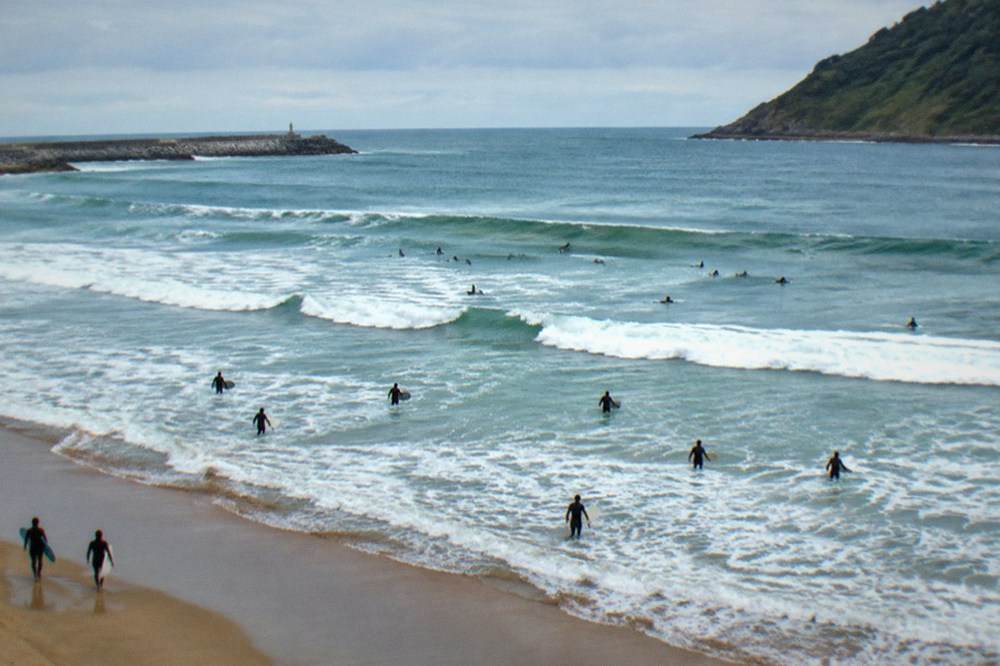
If the plan is a first surf lesson rather than a solo session, a combined lesson and pintxo tour covers the board, wetsuit, locker and hot shower, then finishes with pintxos and drinks in Gros.
How Do You Get To Zurriola Beach?
Zurriola sits at the eastern end of the bay, in front of the Gros district, roughly a ten-to-fifteen minute walk from the Old Town across the Urumea river bridges, and the whole city centre is compact enough to explore on foot. The dBus network covers the city with a cash occasional ticket at 1.95 EUR and a night ticket at 2.65 EUR, though cash payment does not allow free transfers, and card fares are cheaper still.
The walk is part of the point. From the Parte Vieja, the Old Town, the route crosses the Urumea at the Zurriola bridge and the beach opens up immediately on the far side. From La Concha the walk is longer, around the headland past the harbour, which is why many visitors combine the two beaches in one loop: La Concha in the morning, the loop past the fishing port, Zurriola in the afternoon when the surf crowd is out.
For orientation, the city's own San Sebastian map guide and the San Sebastian neighborhoods guide place Gros in context, and the Gros area page covers the district behind the sand. The beach is also the closest of the three to the Kursaal, so anyone coming from a concert or congress venue is already there.
What Is Near Zurriola Beach?
The immediate neighbours of Zurriola are the Gros district's cafés and pintxo bars behind the sand, the Kursaal Congress Centre and Auditorium at the western end, and the rising ground of Monte Ulia toward the east, where the coastal Camino de Santiago route continues toward Pasaia and Orio. The beach is also a short walk from Tabakalera, the former tobacco factory turned culture centre, which offers free access and is closed on Mondays.
A morning on Zurriola can be built entirely from what is within walking distance. The table below gathers the verified basics for the sights around the beach, each figure from the venue's own or the tourism board's page.
| Place | What the source says | Distance from Zurriola |
|---|---|---|
| Kursaal | Rafael Moneo's design chosen in 1990, inaugurated 23 August 1999 | At the beach's western end |
| Tabakalera | Free access, open Tuesday to Sunday, closed Mondays | Short walk across the river |
| Monte Ulia | Guided Camino hike to the Ulia lighthouse departs from the Kursaal side | Eastern headland |
| Santa Clara Island | Boat with island stop from the harbour, high season 1 June to 30 September | Around the bay on foot |
| La Concha | 1,350 m long, 40 m mean width, shallow, tide-limited sand | Across the city centre |
The island deserves its own sentence. Motoras de la Isla, the operator, runs a red line direct to Santa Clara for 5 EUR return, 10:00 to 19:00 every 30 minutes weather permitting in high season, 1 June to 30 September, with the last boat back at 20:00 in those months, and a blue line bay tour with island landing at 8 EUR. Under-4s travel free. Outside high season the operator says to consult departures, so no winter sailing should be promised. The island also holds Hondalea, Cristina Iglesias's work in the lighthouse, open only from 1 June to 30 September, 11:00 to 18:30, free, in half-hour sessions of about 20 minutes, with no booking needed for the visit itself, only the boat.
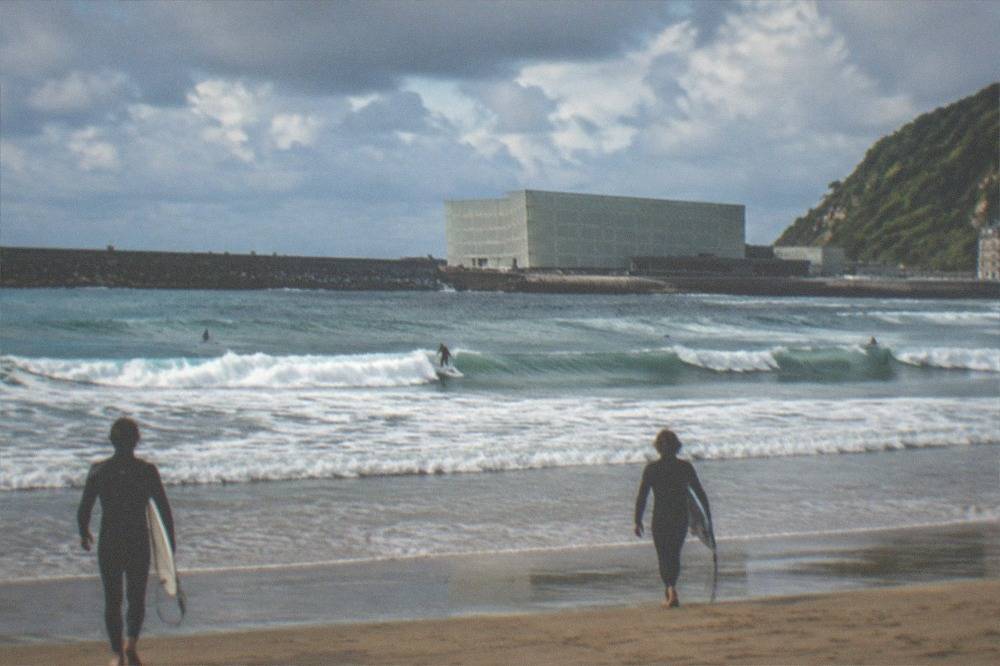
The bay boat is the one that fits a Zurriola day best, since it leaves from the harbour a short walk away and its ticket is valid for one day.
You can read the details on the bay boat and island stop page, or Check availability for the operator's live listing.
When Is The Best Time Of Year For Zurriola Beach?
The warmest months at San Sebastián's AEMET Igeldo station are July and August, with mean temperatures of 18.9 and 19.5 C and mean daily maxima of 21.8 and 22.5 C, but this is a wet Atlantic city: July, the driest month, still averages 86 mm of rain over 9.8 rain days, and August is wetter than June, July or September at 117 mm. No month here is dry, and no month averages under 86 mm.
The full record, from AEMET's normals for the station Donostia / San Sebastián, Igeldo (1024E), period 1981 to 2010, is worth reading whole. The station sits 250 m up on Monte Igeldo, so the seafront runs slightly warmer than these values. The full index of guides sits on San Sebastian Spain Guide.
| Month | Mean C | Mean max C | Rain mm | Rain days | Sun hours |
|---|---|---|---|---|---|
| Jan | 8.5 | 11.0 | 141 | 13.2 | 98 |
| Feb | 8.7 | 11.5 | 110 | 11.6 | 107 |
| Mar | 10.3 | 13.4 | 113 | 12.4 | 144 |
| Apr | 11.3 | 14.5 | 138 | 13.4 | 157 |
| May | 14.4 | 17.7 | 120 | 12.2 | 181 |
| Jun | 16.9 | 20.0 | 90 | 10.6 | 189 |
| Jul | 18.9 | 21.8 | 86 | 9.8 | 196 |
| Aug | 19.5 | 22.5 | 117 | 10.5 | 190 |
| Sep | 18.0 | 21.1 | 111 | 10.1 | 179 |
| Oct | 15.5 | 18.5 | 159 | 11.8 | 140 |
| Nov | 11.3 | 14.0 | 169 | 13.0 | 102 |
| Dec | 9.1 | 11.6 | 151 | 12.4 | 93 |
The planning reading of that table is straightforward. June and September are the shoulder months most locals would pick: June averages 16.9 C with 90 mm of rain and 189 sun hours, September 18.0 C with 111 mm and 179 sun hours, and both sit inside the lifeguard season. August is the warmest month and also carries more rain than the three months around it. November is the wettest of all at 169 mm. Anyone promising a dry summer here is describing a different city, possibly a different country.
Where Do You Stay Near Zurriola Beach?
The natural base for a Zurriola trip is the Gros district itself, whose streets run directly behind the sand, or the city centre across the river, which keeps all three beaches and the Old Town within a short walk. This site's hotel pages cover the options by style and budget, and no nightly rate belongs on this page, because prices move with the August peak and the film festival in September.
The honest framing is about demand. INE's hotel occupancy survey for the tourist point Donostia-San Sebastián, which covers hotels only, counted 2,199,966 overnight stays in 2025, of which 63.7 percent were by residents abroad. August is the peak month at 245,769 stays, July follows at 239,124, and April through October never dropped below 200,000 that year. What that means for a beach visit is simple: the sand at Zurriola in August is shared with the year's largest crowd, and June or September buys the same lifeguard season with fewer people on it.
For the accommodation options themselves, the beachfront and Old Town hotels guide covers what the names mean in practice, and the wider where to stay in San Sebastian guide sorts the districts. Gros puts a visitor at the surf; the centre puts them between the surf and La Concha.
Zurriola Beach Versus La Concha And Ondarreta: Which Should You Pick?
Zurriola is the waves beach, La Concha is the sheltered city beach and Ondarreta is the quieter end under Monte Igeldo, and the council's figures draw the difference: Zurriola is 800 m long and 110 m wide with a strong swell, La Concha is 1,350 m long and 40 m wide, shallow and tide-limited, and Ondarreta is 600 m long and 100 m wide, with the Peine del Viento walk starting at its west end. All three share the same lifeguard season, 1 June to 30 September.
| Beach | Length | Mean width | Council description | Best for |
|---|---|---|---|---|
| Zurriola | 800 m | 110 m | Sandy, fairly open, strong swell, remodelled 1994 | Surfing, bodyboarding, waves |
| La Concha | 1,350 m | 40 m | Sandy, shallow, tide often limits usable sand | Calm swimming, the classic view |
| Ondarreta | 600 m | 100 m | Sandy, mass use, Peine del Viento walk at west end | Quieter sand, sculpture walk |
The choice usually answers itself. If boards are involved, it is Zurriola. If small children or a long, easy swim are involved, La Concha's shallow water is the council's own selling point. If the plan is a beach morning followed by the walk to Eduardo Chillida's Peine del Viento, three steel sculptures of more than nine tonnes each, anchored to the rocks and given to the city in 1977 on a plaza by Luis Peña Ganchegui, then Ondarreta is the door. The which beach is better in San Sebastian answer page works through the comparison in more detail, and the question of whether La Concha beach is free covers access on the other side of the bay.
What Does A Perfect Day At Zurriola Beach Look Like?
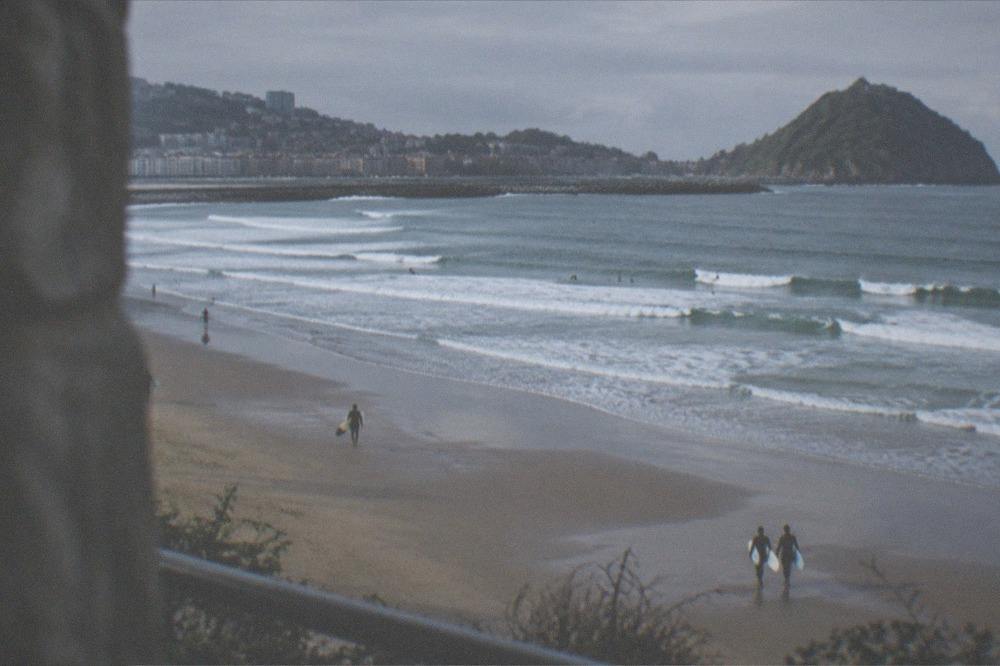
A day at Zurriola runs naturally from a morning on the sand or in the surf, through an afternoon walk west along the bay to the harbour and La Concha, to an evening back in the Gros pintxo bars behind the beach, and the whole circuit is walkable without transport. The pieces that need booking, the surf lesson and the island boat, both sit inside the 1 June to 30 September season, so a summer date is the one that lets a visitor do everything on this page.
A shape that works: coffee in Gros, the morning on the sand while the lifeguard service is running, lunch from the bars on the seafront, then the walk. Heading west from Zurriola, the route passes the Kursaal, crosses into the centre, and can continue past the harbour to La Concha and on to Ondarreta, or up onto Monte Urgull, open 08:00 to 21:00 from 1 May to 30 September and 08:00 to 19:30 the rest of the year, for the view back over all three beaches at once.
The rain plan matters as much as the sun plan. With 141 rain days a year in the record, a wet afternoon is a live possibility in any month, and the city answers it well: San Telmo Museoa, free every Tuesday, general admission 10.00 EUR, reduced 4.00 EUR, or the aquarium by the harbour, open all year except 25 December, 1 January and 20 January. The rainy day guide lists more, and the things to do in San Sebastian page is the full index.
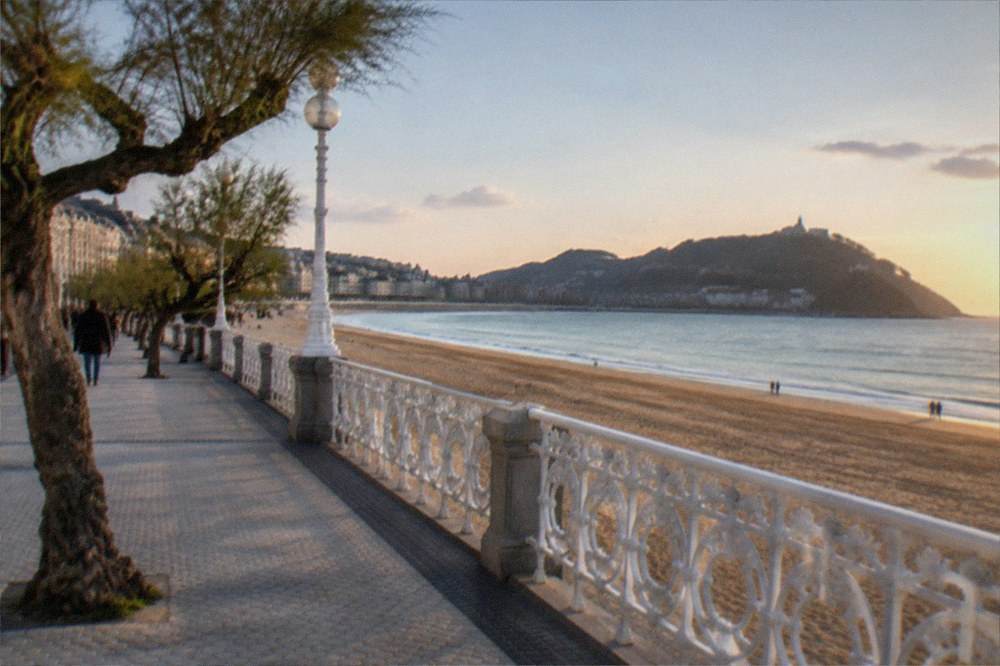
For the evening, a self-guided audio tour of the city's essence and culture turns the walk back from the beach into a commentary, played at your own pace.
What Should You Book Before A Zurriola Beach Day?
The two bookings that change a Zurriola day are a surf lesson with the pintxo finish in Gros and a bay boat with a stop on Santa Clara Island, and both only run in their full form inside the 1 June to 30 September season. The lesson covers board, wetsuit, locker and hot shower; the boat leaves from the harbour a short walk from the sand, with a ticket valid for one day and under-4s travelling free.
Booking ahead matters most in August, when INE's hotel survey shows the city at its annual peak of overnight stays, and the sand at Zurriola is shared with the year's largest crowd. A lesson slot and a boat ticket are the two things that sell out on a good summer day, and both listings carry their current prices, ratings and free-cancellation terms, so nothing needs to be guessed in advance.
The three options below cover the beach day from the water, the sand and the street: the bay boat from the harbour, the surf lesson and pintxo tour in Gros, and the self-guided audio tour for the walk between them.
Common Questions About Zurriola Beach
Is Zurriola Beach good for surfing in San Sebastian?
Yes. The council's own beach page names a strong swell as Zurriola's defining trait, which is why the surf community concentrates here rather than on La Concha or Ondarreta. A combined lesson covers board, wetsuit, locker and hot shower for beginners; the listing carries the current price and times.
Can you swim at Zurriola Beach?
You can, but it is the most demanding of the city's three beaches for swimming, because it faces the open Atlantic. Lifeguards are present only from 1 June to 30 September, 10:00 to 20:00 from 15 June to 15 September and 13:30 to 19:30 from 16 to 30 September. Outside that window the sand is open but the service is not, and conditions should be judged with care.
How long is Zurriola Beach?
Zurriola is 800 metres long with a mean width of 110 metres, according to the city council's beach page, which also records that the beach was remodelled in 1994.
Which is better, Zurriola or La Concha?
They serve different plans. Zurriola, 800 m by 110 m, takes the strong swell and suits surfing; La Concha, 1,350 m by 40 m, is shallow and sheltered and suits families and easy swimming. The full comparison is on the which beach is better in San Sebastián answer page.
Is there anything to eat near Zurriola Beach?
The Gros district runs directly behind the sand, with pintxo bars and cafés a short walk from the promenade, and the Old Town is across the river, about a ten-to-fifteen minute walk away.
When are lifeguards on duty at Zurriola?
From 1 June to 30 September only. Hours are 10:00 to 20:00 from 15 June to 15 September, and 13:30 to 19:30 from 16 to 30 September. Parasol and awning hire runs 15 June to 30 September, with the council listing an awning at 13.10 EUR a day and a lounger at 3.50 EUR.
Zurriola is the beach that shows the ocean side of San Sebastián: 800 metres of strong-swell sand, lifeguarded through the summer season, backed by Gros and the Kursaal, and honest about its weather. Plan around the 1 June to 30 September window, pack for rain as well as sun, and the waves are yours.