San Sebastian Beaches
San Sebastián, the Basque city on La Concha bay whose official name is Donostia / San Sebastián, has three city beaches and a fourth small one on Santa Clara island. This guide gives the council's own figures for each, the AEMET climate record that decides when swimming is realistic, and the season rules for lifeguards, hire and island boats.
Short answer
Yes, you can swim in San Sebastián. La Concha and Ondarreta are shallow, sandy and sheltered, Zurriola is the surf beach with strong swell, and lifeguards cover all three from 1 June to 30 September. The sea is Atlantic, so it is cooler than the Mediterranean and the city is wet year round, with July still averaging 86 mm of rain.
San Sebastián, in the Basque Country of Spain, is a city built around its bay. Its official name is Donostia / San Sebastián, and Donostia is the Basque name you will see on every street sign beside the Spanish one. The city council counts three beaches inside the municipality, La Concha, Ondarreta and Zurriola, plus a small fourth beach on Santa Clara island in the middle of the bay. That is an unusual amount of sand for a city of 189,866 people on the municipal register at 1 January 2025, and it shapes daily life here far more than any single monument does. This page lays out what each beach actually is, using the council's own measurements, and answers the swimming, weather and season questions that decide whether a beach day works.
Which Beaches Does San Sebastian Have?
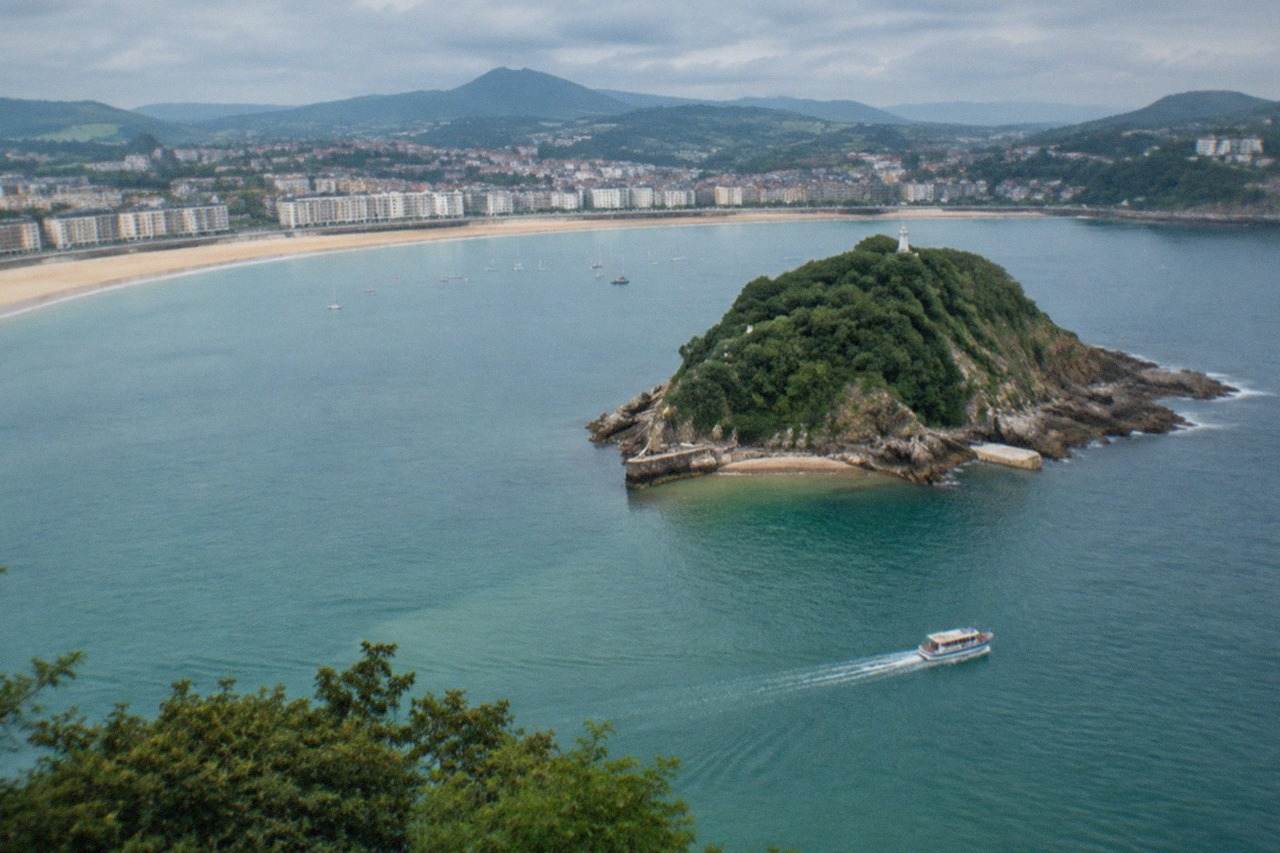
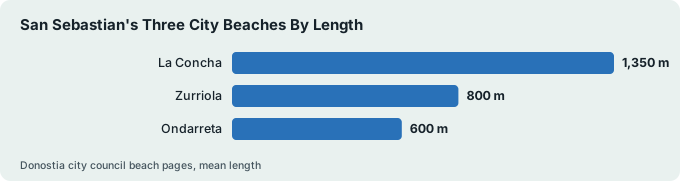
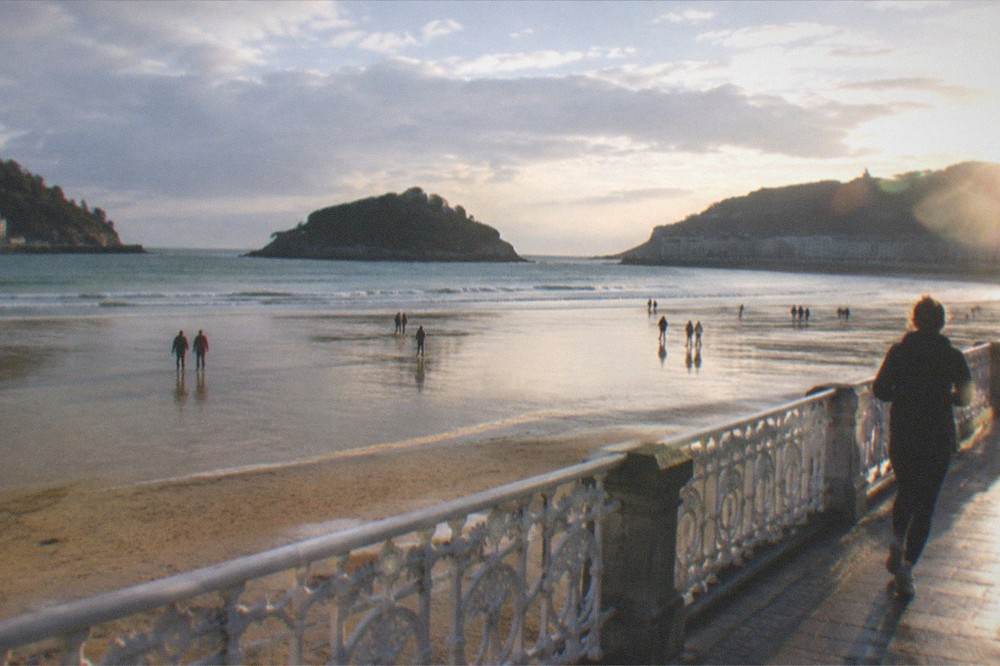
San Sebastián has three city beaches, La Concha, Ondarreta and Zurriola, plus a small fourth beach on Santa Clara island. The council measures La Concha at 1,350 m long and 40 m mean width, Ondarreta at 600 m and 100 m, and Zurriola at 800 m and 110 m. All three are sandy. La Concha is shallow, Zurriola is fairly open with strong swell, and the island beach sits in the middle of the bay.
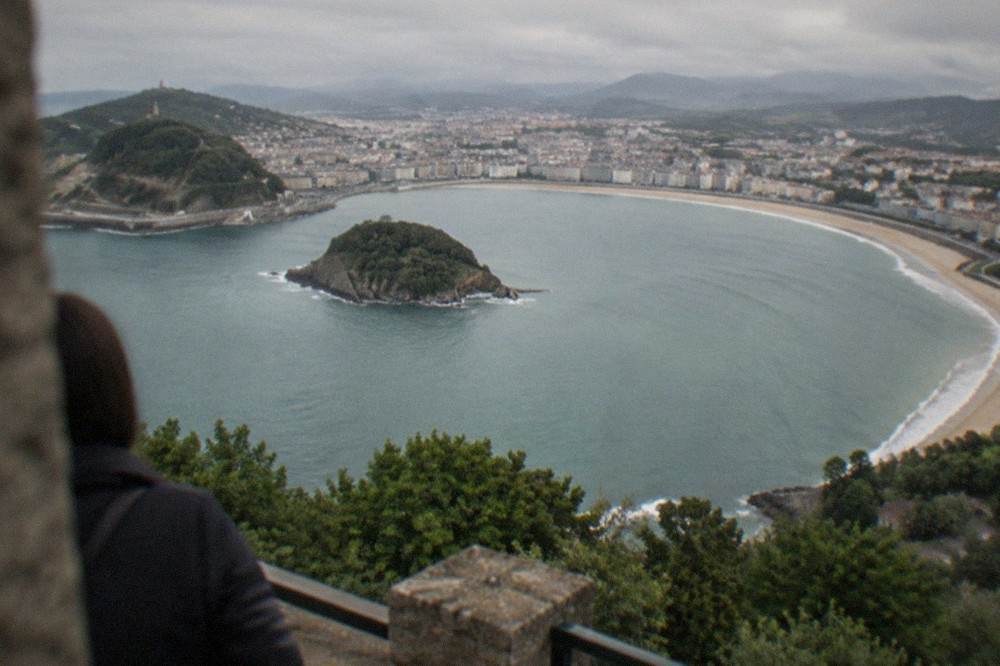
The council's beach pages give exact figures, and they are worth trusting over the rounder wording you often see. La Concha is the great curve between Monte Urgull and Monte Igueldo, and the council notes that the tide often limits the usable sand, which matters more than you might expect on a beach only 40 m wide on average. Ondarreta sits at the foot of Monte Igueldo and the walk to the Peine del Viento, Eduardo Chillida's sculpture work from 1977, starts at its west end. Zurriola faces the open Atlantic in the Gros district, was remodelled in 1994, and carries the council's own warning of strong swell. That single word, swell, is the reason surfers gather there and families with small children usually do not.
The island beach is the quiet one. Santa Clara sits in the middle of the bay, and the island boat stops there in high season. The council's beach index names it as the city's fourth beach under a shared environmental management system with the other three.
The table below shows the council's own figures for each beach.
| Beach | Mean length | Mean width | Mean area | Council description |
|---|---|---|---|---|
| La Concha | 1,350 m | 40 m | 54,000 m2 | Sandy, shallow, the tide often limits usable area |
| Ondarreta | 600 m | 100 m | 60,000 m2 | Sandy, mass use, the Peine del Viento walk starts at its west end |
| Zurriola | 800 m | 110 m | 88,000 m2 | Sandy, fairly open, strong swell, remodelled in 1994 |
| Santa Clara island | Not stated by the council | Not stated | Not stated | Small island beach, reached by boat |
If you are weighing one against another for a particular trip, the comparison question has its own detailed answer on this site: read which beach is better here. For the geography of how the bay fits together, the San Sebastian map guide shows all three beaches in relation to the Old Town and the two mountains.
Can You Swim In The Water In San Sebastian?
Yes, you can swim in San Sebastián, and people do all summer. La Concha and Ondarreta are shallow, sandy and sheltered inside the bay, which makes them the family swimming beaches, while Zurriola is the surf beach where the council warns of strong swell. Lifeguards watch all three beaches from 1 June to 30 September, and the water is Atlantic, so it stays cooler than a Mediterranean beach and refreshes even in August.
The honest part, which many guides skip, is the water itself. This is the Bay of Biscay, not the Mediterranean. The sea here is genuinely cool even at the height of summer, and swimmers who expect Mediterranean warmth are usually surprised on the first plunge. That coolness is exactly why the water is so clear and why the bay holds its marine life. The city's own spa, La Perla, sits right on La Concha's promenade and has traded on seawater bathing since the belle époque, which tells you the sea has always been part of the point of the place.
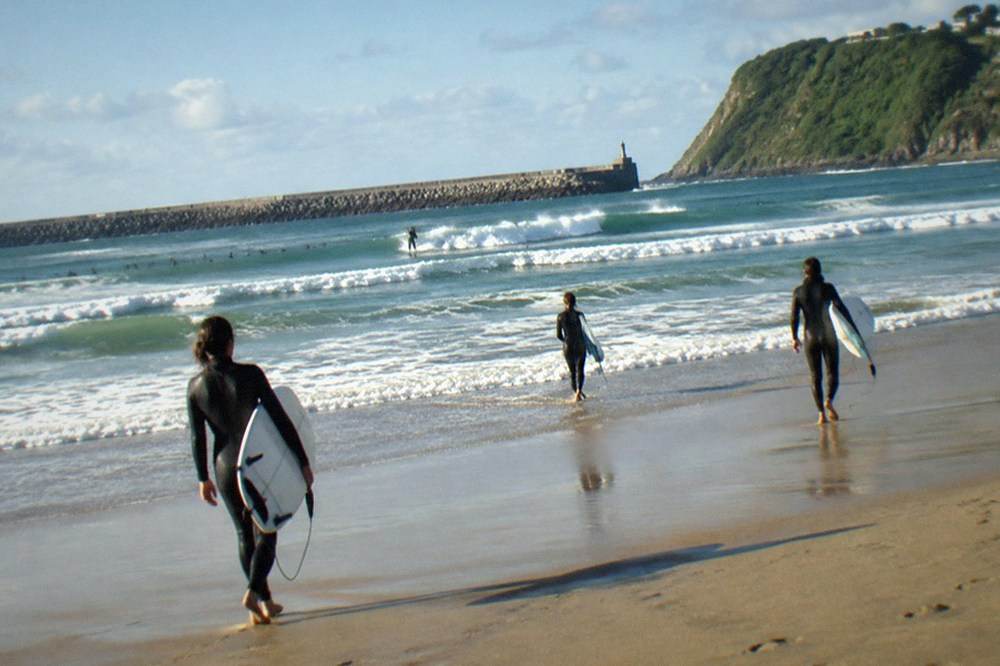
Where you swim matters. La Concha is shallow, which means at low tide the water can be a long walk out and the usable sand shrinks, a limitation the council states plainly on its own page. Ondarreta is wider and shallower still at 100 m mean width. Zurriola is a different proposition: the council describes it as fairly open with strong swell, and it is the city's surf beach, the home base for the surfing in San Sebastian scene. Confident swimmers enjoy it; parents of toddlers usually walk around the corner to La Concha instead.
For the specific question about the bay's flagship beach, there is a dedicated answer page: swimming at La Concha.
What Is The Weather Like For The Beach In San Sebastian?
AEMET's normals for its Igeldo station, period 1981 to 2010, show a wet Atlantic climate with 1,507 mm of rain a year over 141 rain days, and no month averages under 86 mm. July is the driest month at 86 mm over about 10 rain days, August means reach 19.5 C with a mean daily maximum of 22.5 C, and sunshine runs from 93 hours in December to 196 in July. The seafront runs slightly warmer than these station values.
The station sits 250 m up on Monte Igueldo, which is why AEMET's numbers run slightly cooler than the sand you stand on. The pattern they describe is the one that matters for planning: beach weather here is real but never guaranteed, and even the driest month averages rain on about ten days. August is the warmest month, with a mean of 19.5 C and a mean daily maximum of 22.5 C, and July the sunniest at 196 hours. But August is also wetter than June, July or September, at 117 mm against their 90, 86 and 111, so a beach week in August can still lose a day or two to rain.
The table below gives the swim-relevant months from AEMET's record.
| Month | Mean C | Mean daily max C | Rain mm | Days with 1 mm+ rain | Sun hours |
|---|---|---|---|---|---|
| May | 14.4 | 17.7 | 120 | 12.2 | 181 |
| June | 16.9 | 20.0 | 90 | 10.6 | 189 |
| July | 18.9 | 21.8 | 86 | 9.8 | 196 |
| August | 19.5 | 22.5 | 117 | 10.5 | 190 |
| September | 18.0 | 21.1 | 111 | 10.1 | 179 |
| October | 15.5 | 18.5 | 159 | 11.8 | 140 |
What this means in practice: June to September is the beach window, July is the best bet for sun, and every month in that window still carries rain. Pack for the beach and bring something for a wet afternoon. The full monthly picture, including the wet winter half of the year, is in the San Sebastian weather guide, and the broader question of when to come is covered in the best time to visit.
When Are Lifeguards On Duty At San Sebastian Beaches?
Lifeguards cover all three city beaches only from 1 June to 30 September. From 15 June to 15 September they watch from 10:00 to 20:00, and from 16 to 30 September the hours cut back to 13:30 to 19:30. Outside those four months there is no lifeguard service on any of the three beaches, so swimming in October or May is done without supervision. Parasol and awning hire runs 15 June to 30 September.
These are season rules, not opening hours, and the distinction matters. The beach itself is public sand all year; it is the safety and hire services that switch on in June and off in September. The council also runs assisted bathing for visitors with reduced mobility from 15 June to 15 September, which is worth knowing if anyone in your group needs it.
The hire prices come from the council's own beach pages, and they differ between beaches, so the table is worth a look before you budget a full beach day.
| Service | Dates | La Concha | Zurriola | Ondarreta |
|---|---|---|---|---|
| Lifeguards | 1 June to 30 September | 10:00 to 20:00 (15 Jun to 15 Sep) | Same hours | Same hours |
| Awnings | 15 June to 30 September | 13.10 EUR a day | 13.10 EUR a day | 13.10 EUR a day |
| Lounger | 15 June to 30 September | 3.50 EUR | 3.50 EUR | Not stated |
| Lounger with parasol | 15 June to 30 September | 8.40 EUR | 8.40 EUR | Not stated |
| Parasol | 15 June to 30 September | Not stated | Not stated | 17.50 EUR |
| Tent | 15 June to 30 September | Not stated | Not stated | 21.90 EUR |
| Assisted bathing | 15 June to 15 September | Available | Available | Available |
The flags on the beach are the lifeguard service's own signalling system, and the council's beach pages do not spell out what each colour means, so ask at the lifeguard post rather than assuming the colour code you know from another country. The same goes for dog rules and surf zoning: those details are not on the council pages this site relies on, and the lifeguard post or the council beach page is the right place to check them.
What Can You Do At The Beaches Besides Swimming?
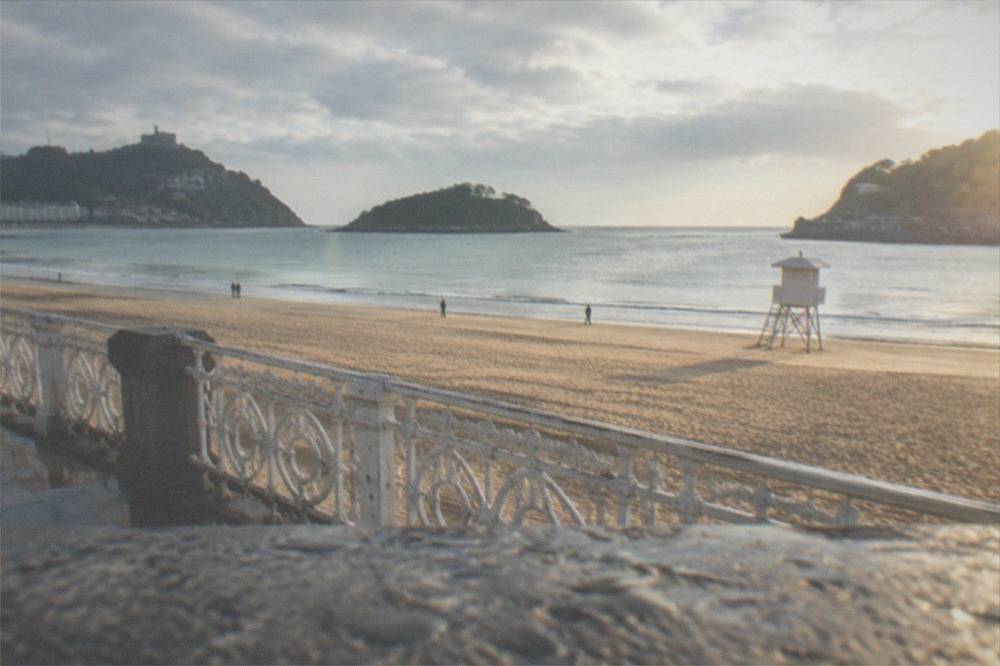
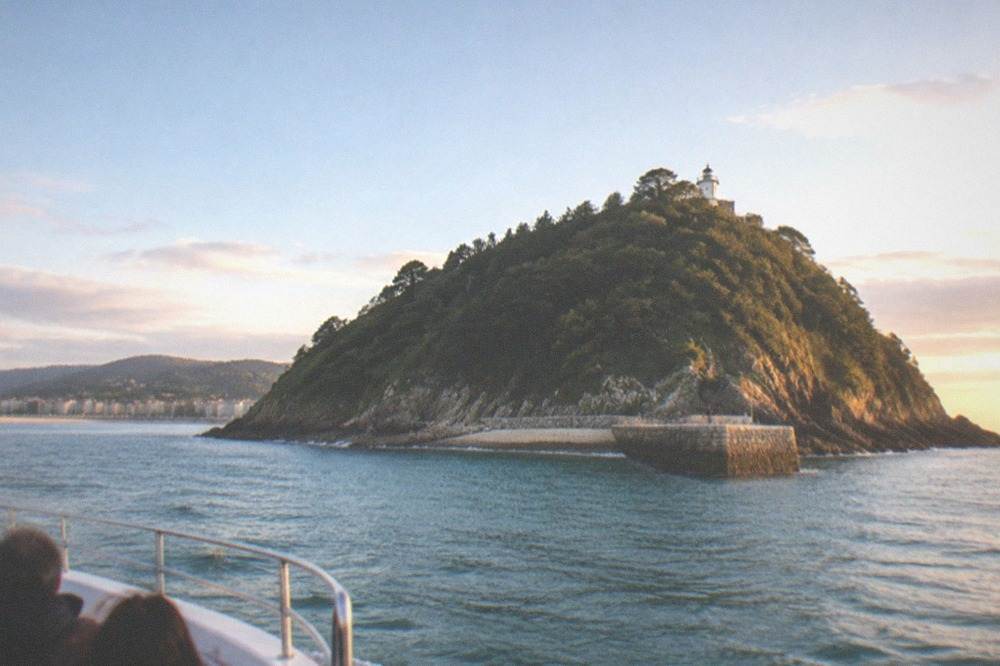
Beyond swimming, the beaches of San Sebastián open onto Monte Urgull and its access hours, the Santa Clara island boat at 5 EUR return in high season, the free Hondalea installation in the island lighthouse from 1 June to 30 September, surfing at Zurriola, and the Peine del Viento sculptures at the west end of Ondarreta. The island boat runs every 30 minutes from 10:00 to 19:00, weather permitting, with the last boat back at 20:00.
The island is the best of these. Motoras de la Isla, the operator, runs two lines from the harbour. The red line goes direct to Santa Clara, 5 EUR return, every 30 minutes from 10:00 to 19:00 in high season, with the last boat back at 20:00 from June to September. The blue line adds a bay tour before the island stop, at 8 EUR, with fixed departures through the afternoon and the last sailing not allowing landing. Children under 4 travel free. High season is 1 June to 30 September, plus Easter and long weekends; outside it the operator says to consult departures, so promise nothing for a winter visit.
On the island itself, Hondalea, Cristina Iglesias's installation in the lighthouse, is free, runs in half-hour sessions from 11:00 to 18:30, takes about 20 minutes, and needs no booking for the visit itself, only the boat. It is open 1 June to 30 September inclusive, and not open all year. Paid guided visits of about 2 hours are sold separately on the Hondalea site.
| Island boat line | Price | What it covers | High season schedule |
|---|---|---|---|
| Red line | 5 EUR return | Direct to Santa Clara island | 10:00 to 19:00, every 30 minutes, weather permitting |
| Blue line | 8 EUR | 30 minute bay tour plus island landing | Fixed afternoon departures, last sailing no landing |
| Children under 4 | Free | Both lines | Same schedule |
Back on land, Monte Urgull rises between La Concha and the Old Town, open 08:00 to 21:00 from 1 May to 30 September and 08:00 to 19:30 from 1 October to 30 April, with the Castillo de la Mota and its small history museum at the top. At the other end of the bay, the walk to the Peine del Viento starts at Ondarreta's west end: three steel sculptures of more than nine tonnes each, anchored to the rocks, made definitive in 1977, with a pink granite plaza by the Basque architect Luis Peña Ganchegui. When the Atlantic hits the rocks and the spray comes up through the sculpture's openings, you understand why the work sits where it does.
If you would rather see all three beaches from the water, the small-boat coast run east along the cliffs to Pasaia is one of the strongest sea options in the roster, and there is a sunset departure that includes cava.
For a shorter and cheaper taste of the bay, the bay boat with a stop on Santa Clara Island is the budget option, with a ticket valid for one day and audio commentary on board.
How Do You Get To The Beaches In San Sebastian?
All three beaches sit within walking distance of the centre, and the city bus system, dBus, charges 1.95 EUR for an occasional cash ticket and 2.65 EUR for the night ticket, with a MUGI anonymous card trip inside the city at 0.78 EUR. Cash payment does not allow free transfers, the MUGI card is the fare system for the whole province of Gipuzkoa, and La Concha, Ondarreta and Zurriola are all flat, seafront walks from the Old Town.
The geography makes this easy. La Concha's promenade runs the full 1,350 m of the beach and connects at its west end to Ondarreta, so the two are one continuous walk. Zurriola is across the River Urumea from the Old Town, five minutes over the bridge into Gros. Nobody needs a bus for beach access from any central hotel, and the flat seafront is why the city works so well for cyclists too.
The fares below are the ones the operators publish. The dBus figures come from the operator's own fare page and are confirmed by the official GTFS data, which carries exactly those two cash prices across 50 routes and 541 stops.
| Ticket | Price | Notes |
|---|---|---|
| dBus occasional ticket, cash | 1.95 EUR | Paid to the driver, no free transfers |
| dBus night ticket | 2.65 EUR | Special night fare |
| MUGI anonymous card, urban trip | 0.78 EUR | Urban 1 and 0 jumps, covers Donostia and the Pasaia harbour ferry |
For the wider question of reaching the city itself, by air, rail or road, the detailed routes are in the site's getting around guide and the overview of where San Sebastian is.
Which San Sebastian Beach Suits Which Visitor?
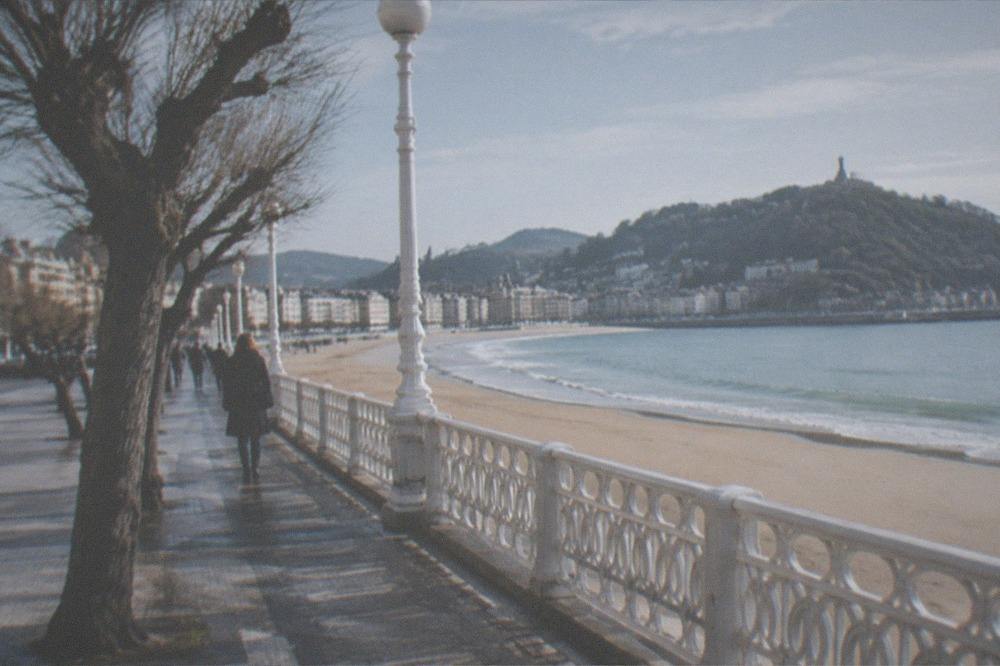
La Concha suits families and swimmers who want shallow, sheltered water and the classic bay view, Ondarreta suits visitors who want more sand width and the walk to the Peine del Viento, and Zurriola suits surfers, younger crowds and anyone staying in Gros. The tide limits La Concha's usable sand, Zurriola carries the council's strong swell warning, and Ondarreta is the one the council flags for mass use in summer.
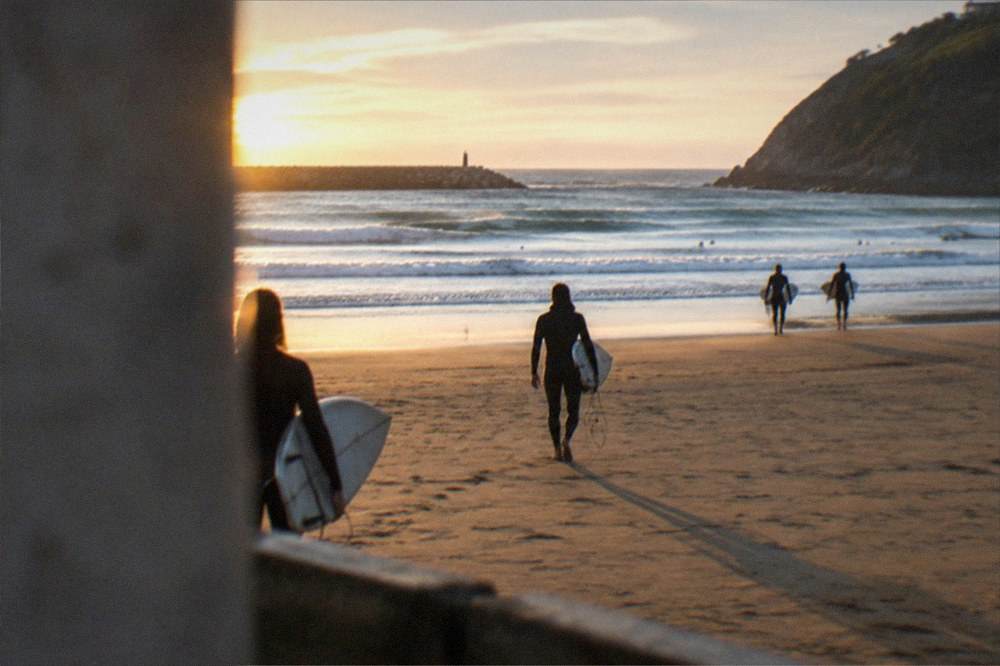
There is no single winner, which is why the head-to-head question lives on its own page rather than here. What this page can do is match the beach to the visitor. A family with small children: La Concha, in the lifeguard season, close to the promenade's ice cream stands. A surfer or a bodyboarder: Zurriola, where the surf schools base themselves and the strong swell is the attraction rather than the warning. A walker who wants a destination at the end of the sand: Ondarreta, finishing at the Peine del Viento. Someone who wants a swim and an island trip in one morning: any of them, then the red line boat from the harbour.
| Visitor | Best fit | Why |
|---|---|---|
| Families with young children | La Concha | Shallow, sheltered, lifeguarded, promenade facilities |
| Surfers and bodyboarders | Zurriola | Strong swell, the city's surf beach, remodelled 1994 |
| Walkers and art lovers | Ondarreta | West end leads to the Peine del Viento sculptures |
| Island day-trippers | Any beach, then the harbour | Red line boat to Santa Clara, 5 EUR return |
| Swimmers training laps | La Concha | Long, sheltered bay curve, shallow entry |
One caution worth repeating: the council's own pages stay silent on surf zoning at Zurriola and on dog rules on all three beaches, so check those at the lifeguard post rather than relying on a guide's memory.
If the surf side of the city appeals, the combined lesson and pintxo tour below pairs a Zurriola surf session with the food the city is famous for.
What Should You Know Before A Beach Day In San Sebastian?
Bring layers and a rain option even in July, swim inside the lifeguard season of 1 June to 30 September, expect Atlantic water that stays cool, and plan around the tide at La Concha, where the council says the tide often limits usable sand. Awnings and loungers run 15 June to 30 September, the island boat's high season matches, and Hondalea on the island is free but only open 1 June to 30 September.
The single most useful mental adjustment is this: a San Sebastián beach day is an Atlantic beach day, not a Mediterranean one. AEMET's Igeldo record gives the city 141 rain days a year and no month under 86 mm, so the forecast deserves a check every morning, even in August, which at 117 mm is wetter than June, July or September. When the sun is out, the bay is as good as any urban beach in Europe, and the mountains at each end give the place its frame.
The second adjustment is the tide. On a beach with a mean width of 40 m, the difference between high and low tide changes what the beach is. Check a tide table before you set up camp for the day, and expect the sand to move.
The third is timing around the season rules. Everything supervised, lifeguards, hire, assisted bathing, the island boat's high schedule, Hondalea, runs inside the 1 June to 30 September window, with the last two weeks of September on reduced lifeguard hours of 13:30 to 19:30. Come in October and you get the same sand, the same sculptures and the same bay, but none of the services.
Common Questions About San Sebastian Beaches
Does San Sebastian have a good beach?
Yes. La Concha is regularly described as one of the finest city beaches in Europe: 1,350 m of sandy, shallow, sheltered bay with Santa Clara island offshore and mountains at both ends. The council's own figures back the reputation up, and the city adds Ondarreta, Zurriola and the island beach on top.
Can you swim in the water in San Sebastian?
Yes. La Concha and Ondarreta are shallow and sheltered, Zurriola is the surf beach with strong swell, and lifeguards cover all three from 1 June to 30 September. The water is Atlantic, so it stays cooler than the Mediterranean even in August.
When are the beaches lifeguarded?
From 1 June to 30 September on all three beaches, with hours of 10:00 to 20:00 from 15 June to 15 September and 13:30 to 19:30 from 16 to 30 September. Outside that window there is no lifeguard service.
Can you visit Santa Clara island?
Yes, in high season. The operator's red line boat runs direct to the island at 5 EUR return, every 30 minutes from 10:00 to 19:00, weather permitting, with the last boat back at 20:00 from June to September. High season is 1 June to 30 September plus Easter and long weekends; outside it, consult departures.
Is the sea warm in San Sebastian?
It is cool rather than warm. This is the Bay of Biscay, an open Atlantic shore, and the water refreshes even at the height of summer. AEMET's Igeldo station gives the air a mean August maximum of 22.5 C, but the site publishes no sea temperature figure and neither does the council.
Are the beaches free?
The sand and the sea are free and public. What costs money are the extras: awning hire at 13.10 EUR a day, loungers at 3.50 EUR, the island boat at 5 EUR return, and parking if you drive. Hire services run 15 June to 30 September.
The beaches are the reason most people come, and they repay the planning: pick your month from AEMET's record, pick your beach from the council's own descriptions, and let the tide table decide which end of the day you swim. For everything beyond the sand, the site's things to do in San Sebastian page is the full index, and the San Sebastian Spain Guide homepage collects the beaches, the pintxos and the day trips in one place.