Is San Sebastian Expensive?
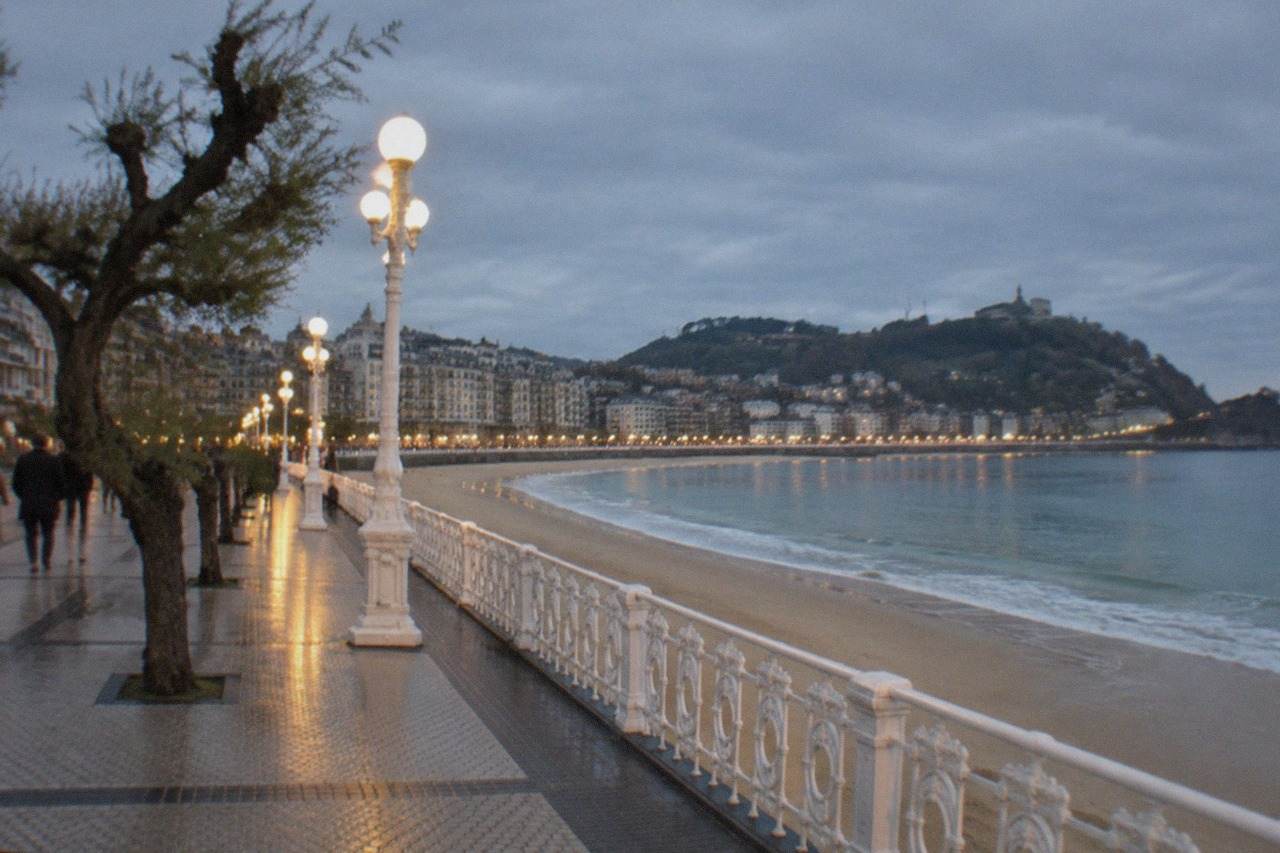
San Sebastián, in the Basque Country of Spain, has a reputation as Spain's food capital and a price tag to match, but the honest answer is that only part of the city is expensive, and the part most visitors come for, the bay, the beaches and the Old Town, costs very little.
Short answer
San Sebastián is expensive by Spanish standards for accommodation and fine dining, especially in August, but a pintxo crawl, the beaches, the funicular and the city buses are cheap, and no tourist tax is charged before 1 January 2027.
San Sebastián, the Basque city on La Concha bay whose official name is Donostia / San Sebastián, sits in Gipuzkoa in northern Spain, and its reputation runs ahead of it on two counts: more Michelin stars per resident than almost anywhere, and prices that make visitors from Madrid wince. Both are true, but only in part. The city's fine-dining tier is genuinely costly, and August accommodation reflects the busiest month of the year. The rest of the city, the pintxo bars, the beaches, the museums and the buses, is far cheaper than the reputation suggests. This page breaks the costs down with real figures, so the budget can be planned around what actually costs money here and what does not.
Is San Sebastian Very Expensive?
No, not uniformly, and the answer depends on which half of the city you are spending in. San Sebastián is expensive by Spanish standards for hotels in high season and for its Michelin-tier dining, where the MICHELIN Guide Spain 2026 counts 11 stars across 6 restaurants inside the city. But the everyday half is cheap: the beaches are free, a city bus ride costs 1.95 EUR in cash, San Telmo Museoa charges 10.00 EUR and is free every Tuesday.
The expensive reputation comes from a real place. The INE hotel occupancy survey recorded 2,199,966 hotel overnight stays in the city in 2025, with August alone holding 245,769, a little over twice January's 115,910. That demand, concentrated in a small city of 189,866 residents, pushes high-season accommodation prices to levels closer to Paris than to most of Spain. Residents abroad accounted for 63.7 percent of those overnight stays, so the city is competing for an international audience willing to pay.
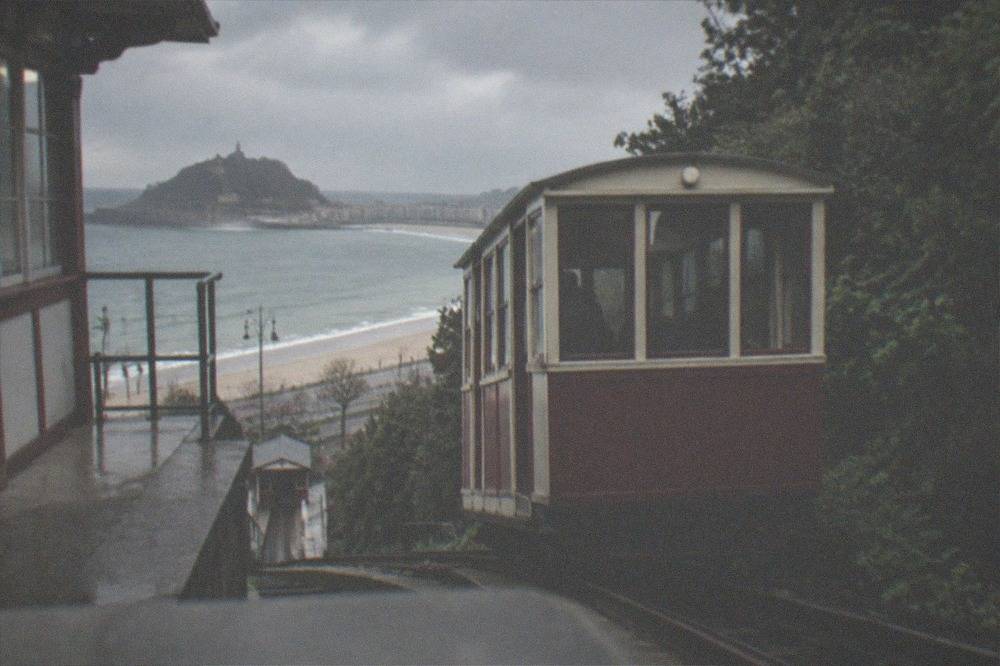
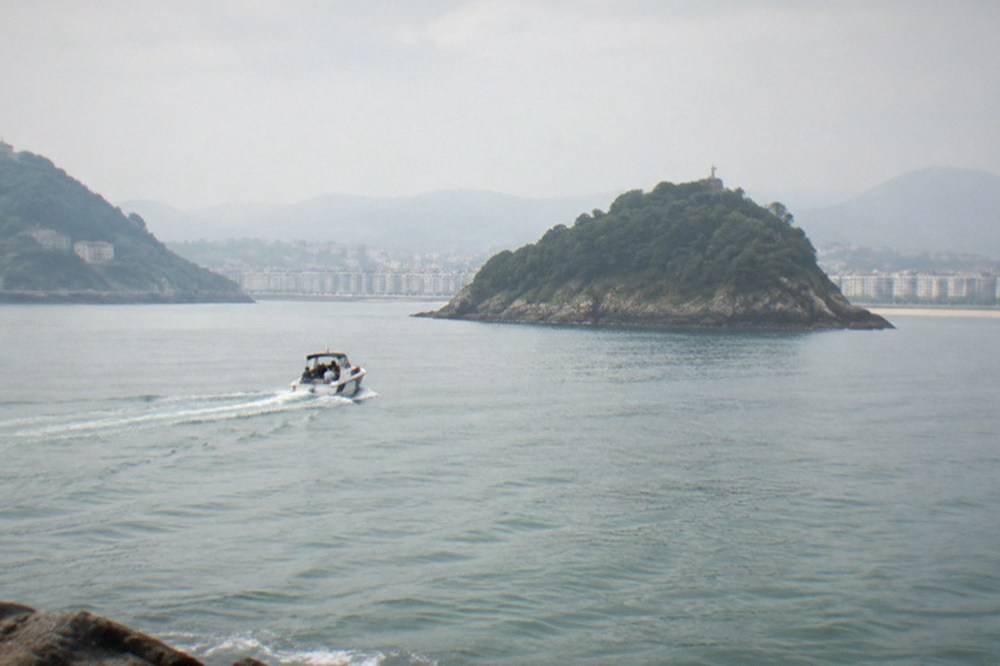
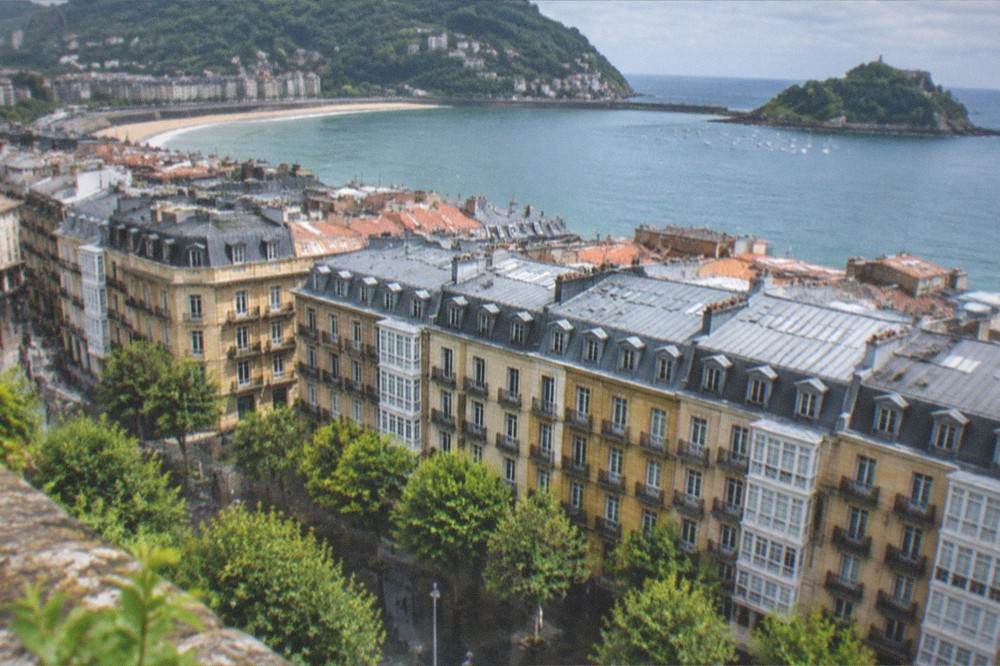
But the daily costs of actually being there tell a different story. The three beaches, La Concha, Ondarreta and Zurriola, cost nothing. The funicular up Monte Igueldo, opened in 1912 and the oldest in the Basque Country, charges 5.50 EUR return for an adult. The boat to Santa Clara Island is 5 EUR return. A visitor who structures a trip around the bay, the Old Town and the mountains spends very little per day beyond food, and food can be as cheap or as lavish as the choice of bar.
For the ranking question, whether this is the priciest city in the country, Spain's most expensive city question has its own answer page, and for the underlying reasons, why San Sebastián is so expensive is covered separately too.
What Does Eating Out In San Sebastian Cost?
Eating out splits into three clear tiers in San Sebastián. The Michelin tier, 6 restaurants holding 11 stars inside the city in the MICHELIN Guide Spain 2026, is priced like any world-class dining scene and needs booking far ahead. The restaurant tier below it, including the txuleta steakhouses and seafood houses, sits at normal Spanish city prices. The pintxo tier, the bars of the Parte Vieja, is the cheapest way to eat seriously well in the city, and it is where most locals actually eat.
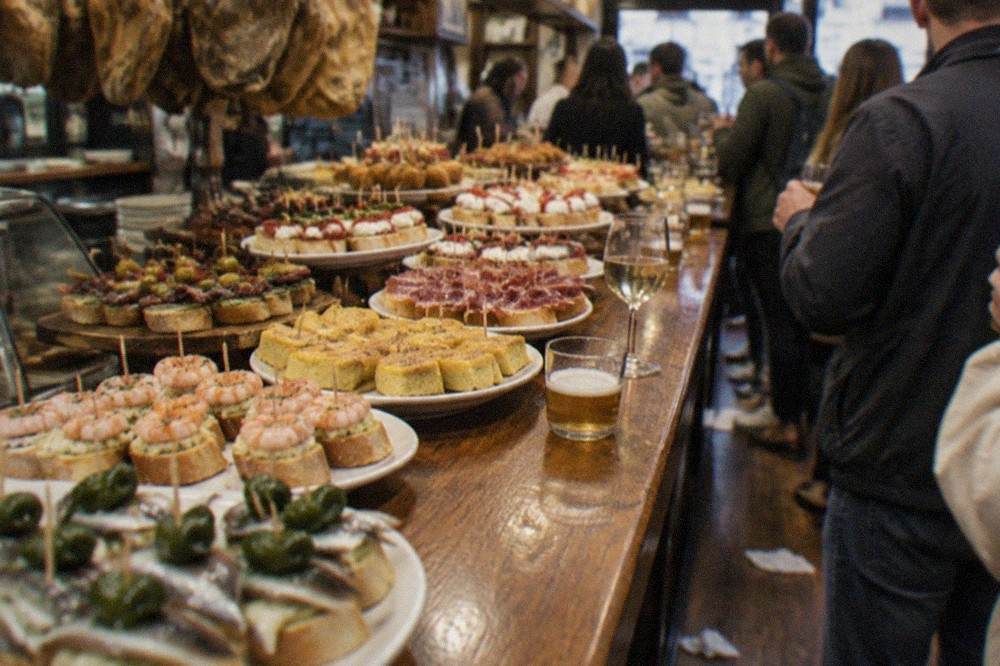
The pintxo bar is the budget traveller's secret weapon and the local's daily habit at the same time. A pintxo is a single small serving, typically eaten standing at the bar with a drink, and the Old Town's bars are packed from early evening. The pintxo culture of San Sebastián is the city's default way of eating, and the best pintxo bars are concentrated enough that a whole evening can be spent moving between five of them for less than one sit-down dinner. For the full cost picture of eating out, what it costs to eat out in San Sebastián has its own dedicated page.
At the top of the scale, the starred restaurants are a different financial category. Akelaŕe and Arzak each hold three stars in the 2026 edition, Amelia by Paulo Airaudo holds two, and iBAi, Itzuli and Kokotxa hold one apiece. Martín Berasategui, also three stars, is in Lasarte-Oria, a separate municipality, and must not be counted as a city restaurant. Tasting menus at this level are a splurge by any standard; for the cheapest route into a starred room, the cheapest Michelin star restaurant question is answered on its own page. The Michelin restaurants guide covers them all.
A guided food experience solves the one expensive problem of the Old Town: walking into the wrong bar. A wrong-bar evening is not dangerous, it is just disappointing, and disappointment is the costliest thing in a city where the good bars are three streets from the forgettable ones. A shared pintxo tour with a local takes that decision off the table.
How Much Do Pintxos Cost In San Sebastian?
Pintxo prices are not published in any official source this site's research could verify, so no per-bar figure appears here, and the honest planning advice is qualitative: a pintxo with a small drink is the cheapest complete mouthful in the city, bars display prices at the counter or on the menu, and an evening of five or six bars costs a fraction of a single sit-down dinner. The bars of the Parte Vieja price openly, and nobody is expected to order without seeing the price first.
What can be said with certainty is how the system works, because that is what protects the budget. Pintxos are displayed on the bar counter with prices on the board, you pay for what you have taken, and there is no pressure to order more. Locals move between bars, taking one or two pintxos and a drink in each, which naturally caps the spend. The Gilda, the anchovy, guindilla and olive skewer, is the classic single-bite order and the format's emblem.
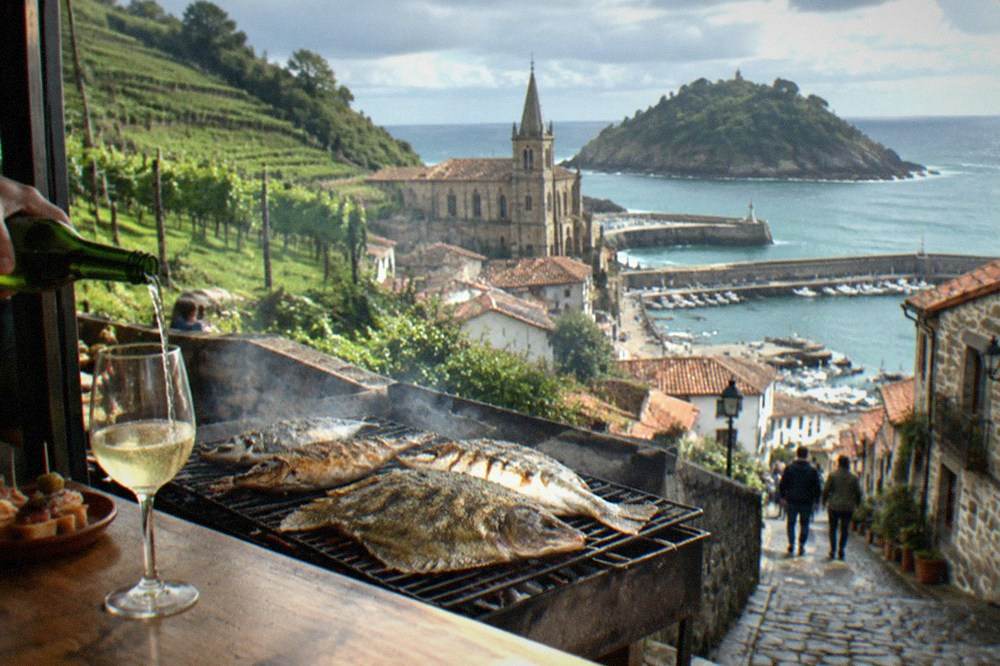
The drink matters as much as the food. Txakoli, the young local white wine, is poured from a height to aerate it and is the standard pairing. Ordering the house txakoli by the glass rather than bottled wine is the cheaper and more local route, and it is what the counter pours by default.
For visitors who want the structure handled, this shared tour includes drinks and tapas with a local leading:
What Do Museums And Attractions Cost In San Sebastian?
The headline attraction prices are low for a city of this standing: San Telmo Museoa charges 10.00 EUR general admission and is free every Tuesday, Chillida Leku in nearby Hernani charges 14 EUR, the funicular to Monte Igueldo is 5.50 EUR return, the Santa Clara Island boat is 5 EUR return, and Tabakalera, the contemporary culture centre, is free to enter. The beaches, Monte Urgull and the Peine del Viento sculptures cost nothing at all.
The table below gathers the verified entry prices for the main paid sights. The funicular ticket includes entry to the grounds at the top, and the funicular's own site states that downhill-only tickets are not on sale, so the return fare is the relevant one. Chillida Leku is in Hernani, a separate municipality, and is included here because it is the region's signature art visit; its own site gives 14 EUR for adults, 10 EUR for groups of ten or more, students and over 65s, 7 EUR for under 18s, and free entry for children up to 8.
| Attraction | Standard adult price | Reduced or free notes |
|---|---|---|
| San Telmo Museoa | 10.00 EUR | Reduced 4.00 EUR; free every Tuesday; free for under 25s |
| Chillida Leku (Hernani) | 14.00 EUR | 10 EUR students, over 65s, groups; free under 8s |
| Monte Igueldo funicular, return | 5.50 EUR | Child up to 7 years 2.50 EUR; ticket includes grounds entry |
| Monte Igueldo grounds by road or on foot | 3.00 EUR | Per person, any vehicle or walking |
| Santa Clara Island boat, return | 5 EUR | Under 4s free; high season 1 June to 30 September |
| Eureka! Zientzia Museoa | 10.00 EUR | Reduced 7 EUR; museum plus planetarium 12.50 EUR |
| Tabakalera | Free | Closed Mondays |
| Beaches, Monte Urgull, Peine del Viento | Free | Urgull closes at night, hours vary by season |
Two of these carry season rules worth planning around. Hondalea, Cristina Iglesias' installation in the Santa Clara lighthouse, is free, needs no booking for the short visit, and runs 1 June to 30 September inclusive, 11:00 to 18:30, with sessions every half hour. The island boat's high season matches, 1 June to 30 September, with departures every 30 minutes weather permitting. Outside that window the operator asks visitors to consult departures, so the 5 EUR return fare is a high-season figure.
How Much Does Getting Around San Sebastian Cost?
A single city bus journey paid in cash costs 1.95 EUR, the night ticket is 2.65 EUR, and the MUGI fare system's zones keep the whole province cheap: the occasional fare for one zone jump is 2.90 EUR, which covers the Euskotren Topo ride from Amara to Hendaia across the French border. A MUGI card cuts an urban ride to 0.78 EUR. The city is compact and walkable, so many visitors spend almost nothing on transport.
The dBus city network published 50 routes and 541 stops in its official data, and the fare page carries exactly two cash prices, 1.95 and 2.65 EUR, with the note that cash payment does not allow free transfers. The MUGI card system applies across Gipuzkoa: dBus, Lurraldebus and Euskotren all use it, and fares are set by the number of zone jumps rather than distance. The personalised card gets cheaper still across the first twenty trips of a month.
| Ticket | Urban, 1 and 0 jumps | 1 jump | 2 jumps | 3 jumps |
|---|---|---|---|---|
| Occasional, cash | 1.95 EUR | 2.90 EUR | 5.40 EUR | 7.90 EUR |
| Night ticket | 2.65 EUR | 3.70 EUR | 6.45 EUR | 8.95 EUR |
| MUGI anonymous card | 0.78 EUR | 1.16 EUR | 2.16 EUR | 3.16 EUR |
| MUGI personalised, trips 1 to 20 in the month | 0.59 EUR | 0.88 EUR | 1.64 EUR | 2.41 EUR |
One planning note: the Euskotren Topo from Amara-Donostia to Hendaia takes 37 to 38 minutes and runs roughly every 30 minutes on the busiest service days, at the 2.90 EUR one-jump occasional fare. A new underground Topo section through the city centre finished its civil works in June 2026, but no opening date has been published, and Amara remains the working terminus, so no itinerary should assume the new stations yet.
Does The Tourist Tax Make San Sebastian More Expensive?
Not yet, and that is the fact most guides get wrong: Norma Foral 3/2026 of Gipuzkoa creates a tourist tax that takes effect on 1 January 2027, so no visitor pays a cent before that date. When it starts, the law caps the charge at 6 nights per person per continuous stay, exempts under 18s, and sets bands per person per night from 0.75 EUR at campsites and rural houses up to 6.50 EUR at five-star hotels. Each council sets its own rate inside those bands.
The rate the city itself will apply has not been published in any official source, so this page prints no single figure. What the Gipuzkoa law does set is the ceiling, and the table below shows the bands as written. Stays booked before 5 February 2026 are not charged even once the law runs.
| Accommodation type | Band minimum | Band maximum |
|---|---|---|
| Hotel 5 stars | 4.50 EUR | 6.50 EUR |
| Hotel 4 stars | 3.50 EUR | 5.50 EUR |
| Hotel 3 stars | 1.50 EUR | 3.50 EUR |
| Hotel 2 stars | 1.00 EUR | 2.50 EUR |
| Hotel 1 star, pensiones | 0.75 EUR | 1.75 EUR |
| Tourist apartments | 1.50 EUR | 3.50 EUR |
| Tourist-use dwellings | 4.50 EUR | 6.50 EUR |
| Campsites, rural houses, hostels | 0.75 EUR | 1.75 EUR |
For a trip before 2027, the budget simply ignores this line. For a trip after 1 January 2027, the safe planning figure is the band maximum for the accommodation type, which is the number that applies if a council passes no ordinance of its own. Even at the top of the five-star band, six nights at 6.50 EUR is a modest add-on against a high-season room, but it belongs in the arithmetic.
When Is San Sebastian Most And Least Expensive To Visit?
August is the peak, and the data shows it plainly: 245,769 hotel overnight stays in August 2025 against 115,910 in January, and July and August together held 22 percent of the year's hotel nights. April to October never dropped below 200,000 monthly stays in 2025, while November and February ran at 147,334 and 119,367. Accommodation demand, and with it price pressure, follows that curve almost exactly, so the cheapest months to be in the city are the ones the Michelin crowd avoids.
| Month, 2025 | Hotel overnight stays | Month, 2025 | Hotel overnight stays |
|---|---|---|---|
| January | 115,910 | July | 239,124 |
| February | 119,367 | August | 245,769 |
| March | 156,670 | September | 216,759 |
| April | 200,055 | October | 207,158 |
| May | 205,326 | November | 147,334 |
| June | 211,534 | December | 134,960 |
The trade-off is weather, and it must be stated honestly: this is a wet Atlantic city. AEMET's Igeldo station records 1,507 mm of rain a year over 141 rain days, and even July, the driest month, averages 86 mm. November, one of the cheapest months, is also the wettest at 169 mm. The shoulder months are the sweet spot: May averages 14.4 C with 120 mm of rain, and September 18.0 C with 111 mm, both with the sea still swimmable, since the lifeguard season on all three beaches runs 1 June to 30 September. The best time to visit guide and the weather guide work through the climate month by month.
How To Visit San Sebastian On A Budget
The budget playbook is short: sleep outside August, eat standing up, walk everywhere, and use the free days. Free entry to San Telmo Museoa every Tuesday, free access to Tabakalera, free beaches, free Monte Urgull and a free Hondalea visit in season mean the sightseeing bill can be near zero, while the pintxo bar system keeps the food bill low without ever eating badly.
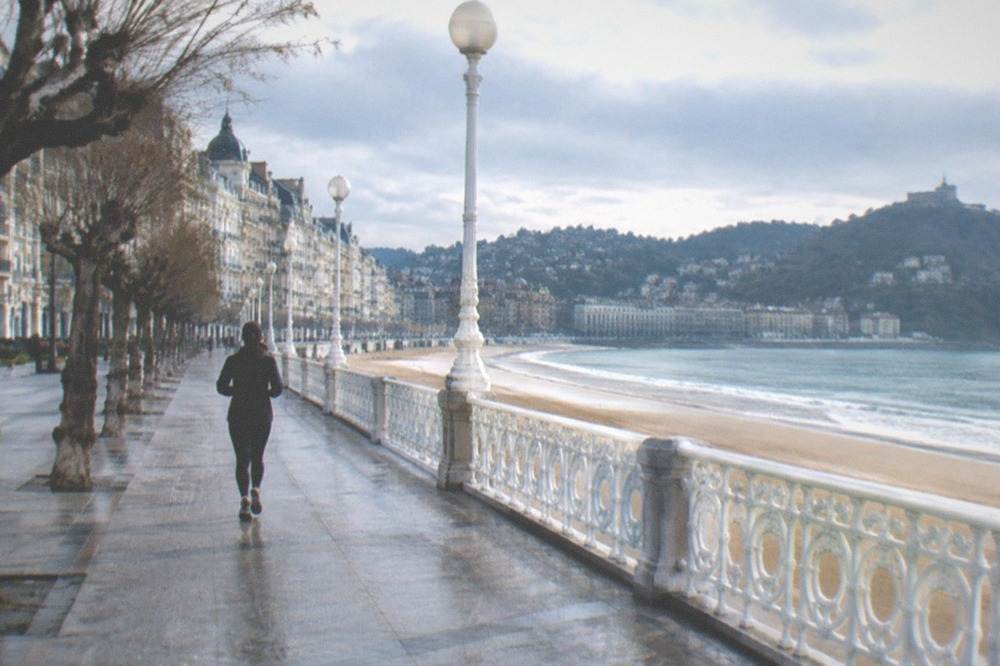
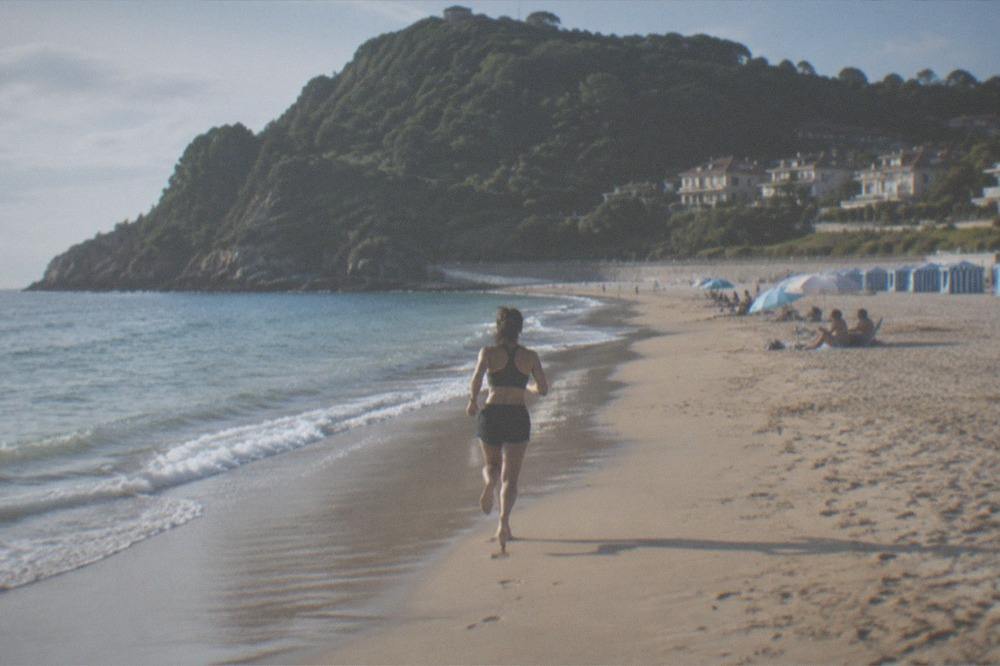
The beach costs deserve their own line, because they are the opposite of what visitors expect from a resort city. Entry to all three beaches is free; what costs money is equipment hire, and only in season. The council's prices run 15 June to 30 September: on La Concha and Zurriola an awning is 13.10 EUR a day, a lounger 3.50 EUR, a lounger with parasol 8.40 EUR; on Ondarreta an awning is 13.10 EUR, a parasol 17.50 EUR and a tent 21.90 EUR. A towel on the sand costs nothing.
| Beach hire item, 15 June to 15 September season | La Concha and Zurriola | Ondarreta |
|---|---|---|
| Awning, per day | 13.10 EUR | 13.10 EUR |
| Lounger | 3.50 EUR | not listed |
| Lounger with parasol | 8.40 EUR | not listed |
| Parasol | not listed | 17.50 EUR |
| Tent | not listed | 21.90 EUR |
Beyond the beaches, the free list is long: the Old Town itself, the Parte Vieja and its squares, the Peine del Viento at the foot of Monte Igeldo, the hill of Monte Urgull, and the whole sweep of La Concha beach. The San Sebastian Spain Guide collects the rest in its free things to do guide, and the question of how many days to spend matters for cost too, since every extra night in high season is the most expensive night of the trip.
For anyone weighing the whole question of whether the trip is worth the money, whether San Sebastián is worth visiting is the fuller argument, and what the city is known for explains what the money buys.
Is San Sebastian Expensive For Tours And Experiences?
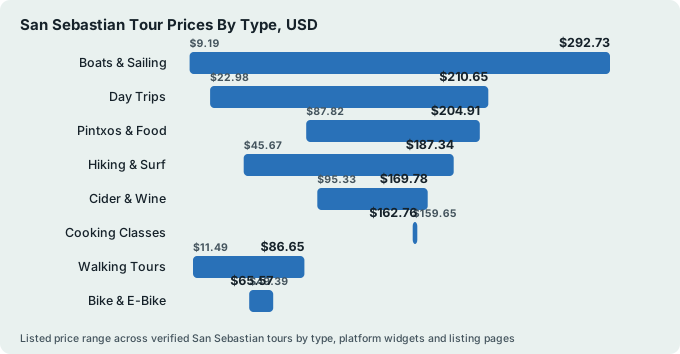
Experiences in San Sebastián are not expensive relative to other European food capitals, and the spread is wide: the bay boat with a Santa Clara Island stop is one of the cheapest paid experiences on the city's harbour, the walking tours sit in the middle, and the small-group sunset sailing and the cooking classes cost more but replace a full evening's food and drink. Product prices, ratings and durations for every tour below render from the live listing rather than being typed here, because they change.
The pattern worth knowing is that food tours in this city are not an add-on to the food budget, they are the food budget for that evening, since the tastings and drinks are included. A boat tour, by contrast, is pure sightseeing spend, and the bay itself is the city's best free view, so a boat is a treat rather than a necessity.
A short walk with a pintxo and a drink included is the lowest-commitment way to test whether a guided experience suits your style:
If the water calls louder than the Old Town, the bay boat with the island stop is the cheapest way out onto La Concha, with a ticket valid for a full day:
Is San Sebastian Expensive For A Day Trip From Elsewhere?
Yes, it can be, and the reason is time rather than money: the city rewards long, slow evenings of bar-hopping, so a rushed day trip pushes the visitor toward the pricier sit-down restaurants and away from the pintxo rhythm that makes the city affordable. The transport itself is cheap, with the Topo train to Hendaia at 2.90 EUR and frequent Lurraldebus coaches across Gipuzkoa, so the day-trip cost problem is really a food-and-pacing problem.
The one day in San Sebastián itinerary is built around exactly this: a single day spent on the bay, Urgull and a tight run of Old Town bars costs less than a day in most Spanish cities, provided nobody tries to compress a tasting menu into it. Day trips in the other direction, from the city out to Getaria, Hondarribia and the French Basque towns, drop costs further still.
For anyone combining the city with the rest of the region, spreading the expensive nights across cheaper towns works well, and the root money page for things to do in San Sebastian collects the full activity list.
Common Questions About San Sebastian Costs
Is San Sebastian Very Expensive?
Partly. Hotels in August and the Michelin-tier restaurants are expensive by Spanish standards, but beaches, Monte Urgull, Tabakalera and Tuesday's free San Telmo entry cost nothing, the city bus is 1.95 EUR in cash and a pintxo evening is one of the cheapest good meals in Spain.
Does San Sebastian Charge A Tourist Tax?
Not before 1 January 2027. Norma Foral 3/2026 of Gipuzkoa creates the tax with effect from that date, caps it at six charged nights per stay, exempts under 18s and sets bands from 0.75 to 6.50 EUR per person per night depending on the accommodation type. The city's own rate inside those bands has not been published.
What Is The Cheapest Month To Visit San Sebastian?
November to February carry the fewest hotel overnight stays, with January 2025 at 115,910 against August's 245,769, so accommodation pressure is lowest then. The trade-off is weather: November is the wettest month at 169 mm of rain, and the lifeguard and island boat seasons end on 30 September.
Is Eating Pintxos Cheaper Than A Restaurant In San Sebastian?
Almost always. Pintxos are priced openly at the bar counter, eaten standing with a drink, and an evening moving between several bars in the Parte Vieja costs a fraction of a sit-down dinner, while tasting the same kitchen's cooking.
Are The Beaches In San Sebastian Free?
Yes, all three: La Concha, Ondarreta and Zurriola cost nothing to enter. Only equipment hire is charged, from awnings at 13.10 EUR a day to loungers at 3.50 EUR, and only during the hire season from mid-June to mid-September.
How Much Does The Monte Igueldo Funicular Cost?
The funicular's own site lists 5.50 EUR return for an adult and 2.50 EUR for a child up to 7, with the ticket including entry to the grounds at the top. Downhill-only tickets are not on sale, so budget for the return fare.
The short version of this whole page: San Sebastián charges like a great food capital only where great food is bought by reservation, and charges like a small provincial city everywhere else. Plan around August, eat standing up, and the city costs less than its reputation, rain included.