Peine Del Viento (Comb Of The Wind)
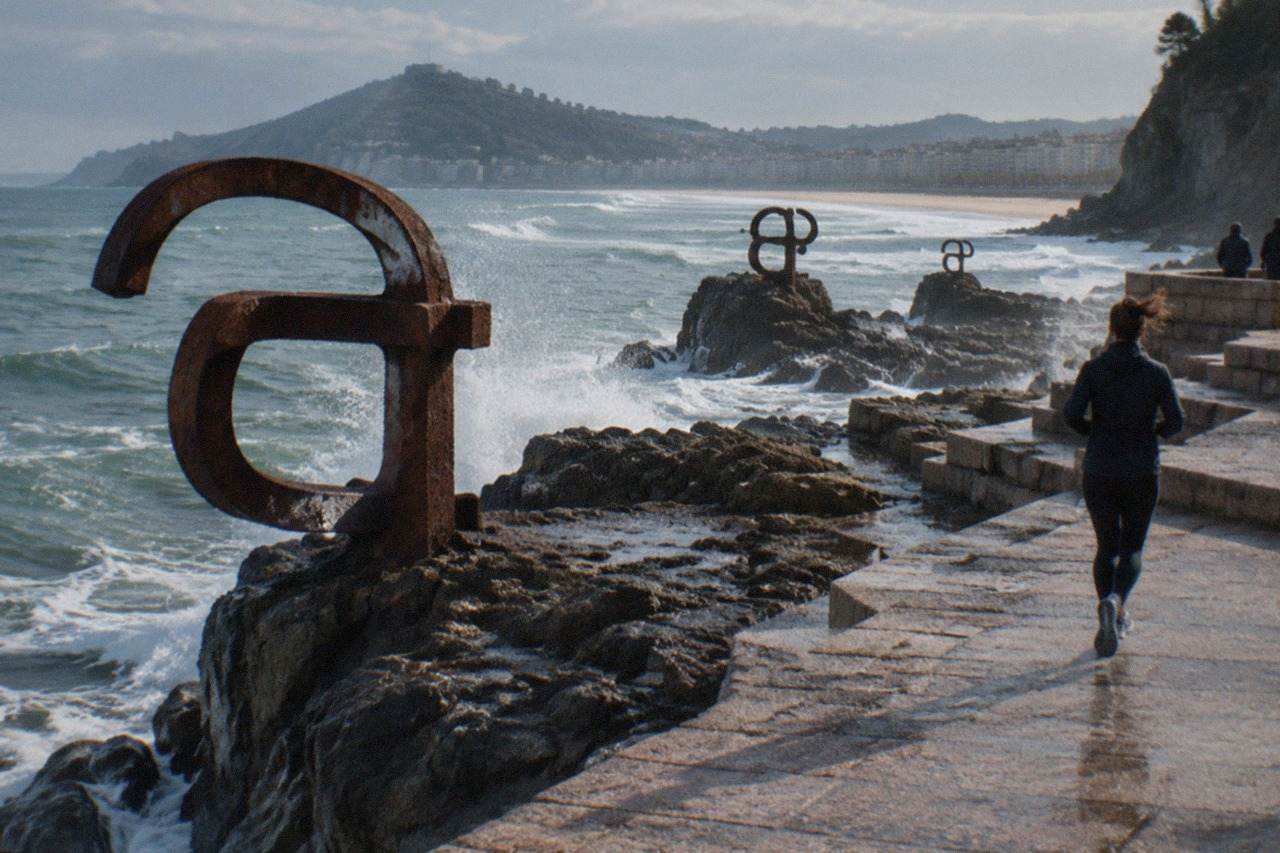
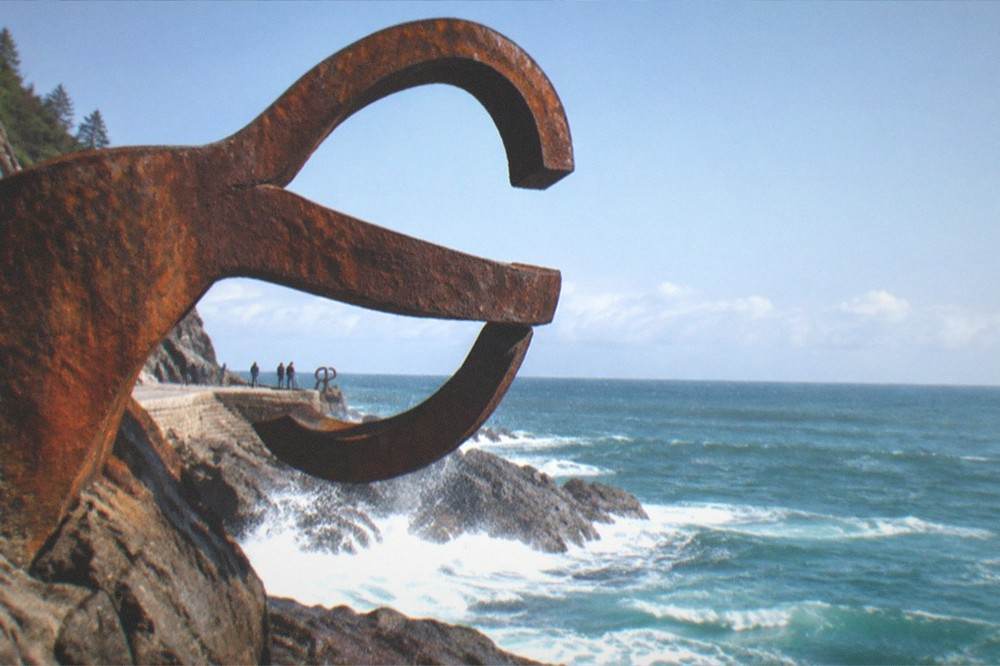
Three steel claws of more than nine tonnes each, anchored to the rocks where Monte Igueldo meets the Atlantic: the Peine del Viento is Eduardo Chillida's best-known work and the single most photographed spot on the San Sebastián seafront.
Short answer
The Peine del Viento is a set of three steel sculptures by Eduardo Chillida, created in 1977, set on a pink granite plaza by Luis Peña Ganchegui at the western end of Ondarreta beach. It is free to visit at any hour, and the sea does the performing.
Three curved forms of weathered steel rise out of the rocks where Monte Igueldo meets the Atlantic, and the sea spends all day trying to pull them off. This is the Peine del Viento, the Comb of the Wind, in San Sebastián, Basque Country, Spain: the Basque city on La Concha bay whose official name is Donostia / San Sebastián, and the work that more than any other defines how the city likes to see itself. Eduardo Chillida made the definitive version in 1977 and gave it to the city, and the pink granite plaza the sculptures stand on was designed by the Basque architect Peña Ganchegui. It costs nothing to stand on it, at any hour of any day, and the waves that break over it are the whole show.
What Is The Peine Del Viento In San Sebastian?
The Peine del Viento is a sculptural ensemble of three steel pieces, each weighing more than nine tonnes, anchored directly into the natural rocks at the western end of Ondarreta beach in San Sebastián, where Monte Igueldo drops into the Bay of Biscay. Eduardo Chillida created the definitive work in 1977 and gave it to the city, and Peña Ganchegui designed the pink granite plaza that surrounds it. It is a public, open-air work with no ticket, no fence and no opening hours.
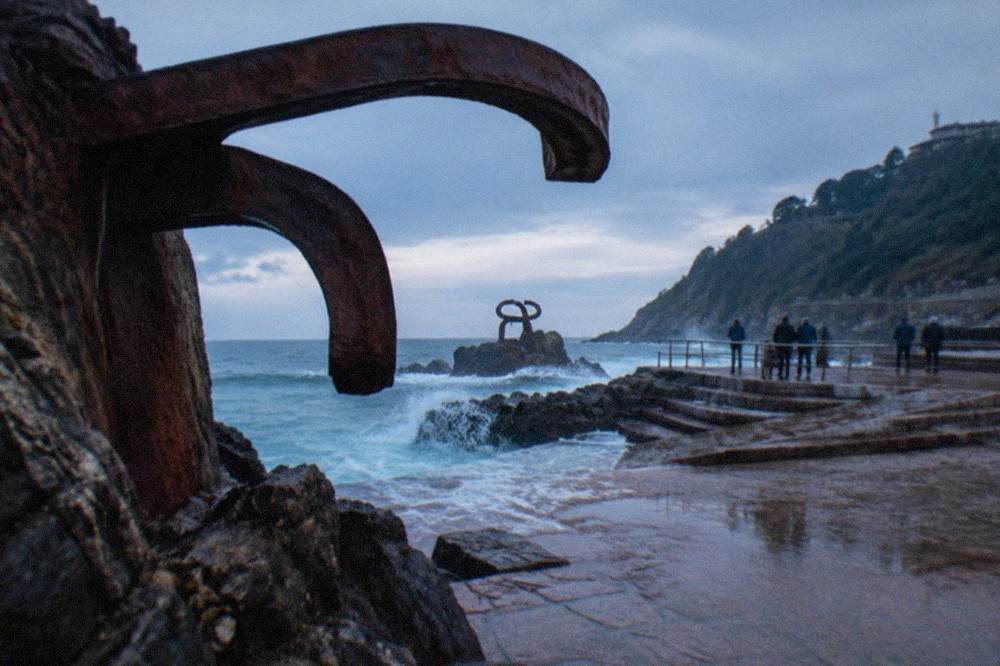
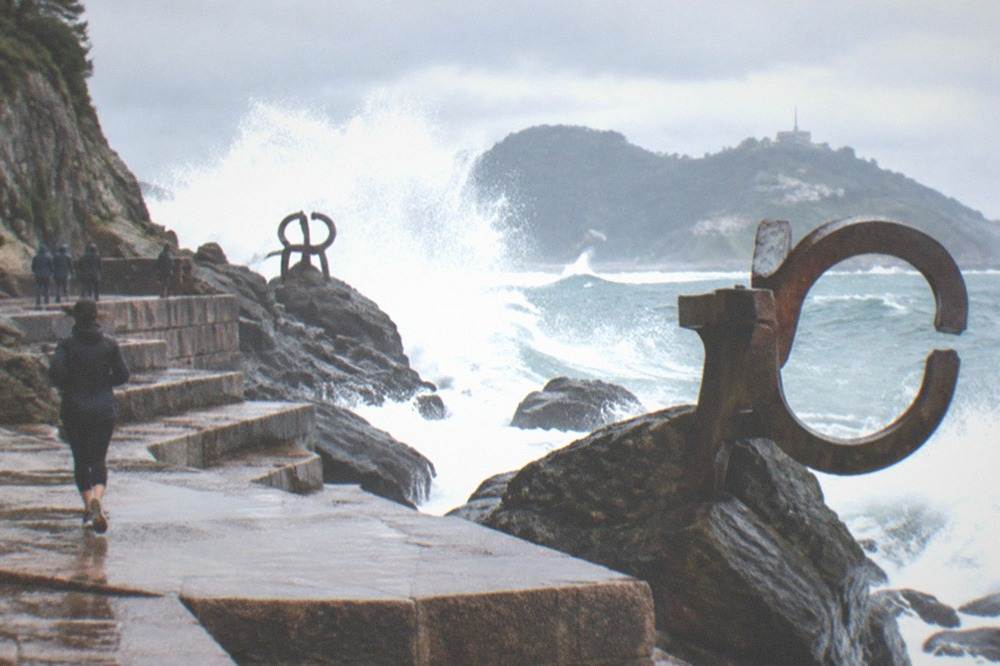
The three forms are often described as combs, or claws, or the fingers of a hand reaching into the sea, and Chillida's title invites exactly that reading: a comb for the wind. The tourism board's page on the work records that Chillida first made pieces under the title Peine del Viento in 1952, and that the definitive version of 1977 was his gift to the city. Each piece is embedded into the bedrock rather than placed on a plinth, so at high tide and in heavy swell the sea climbs over the plaza and the sculptures appear to be fighting the ocean from inside it.
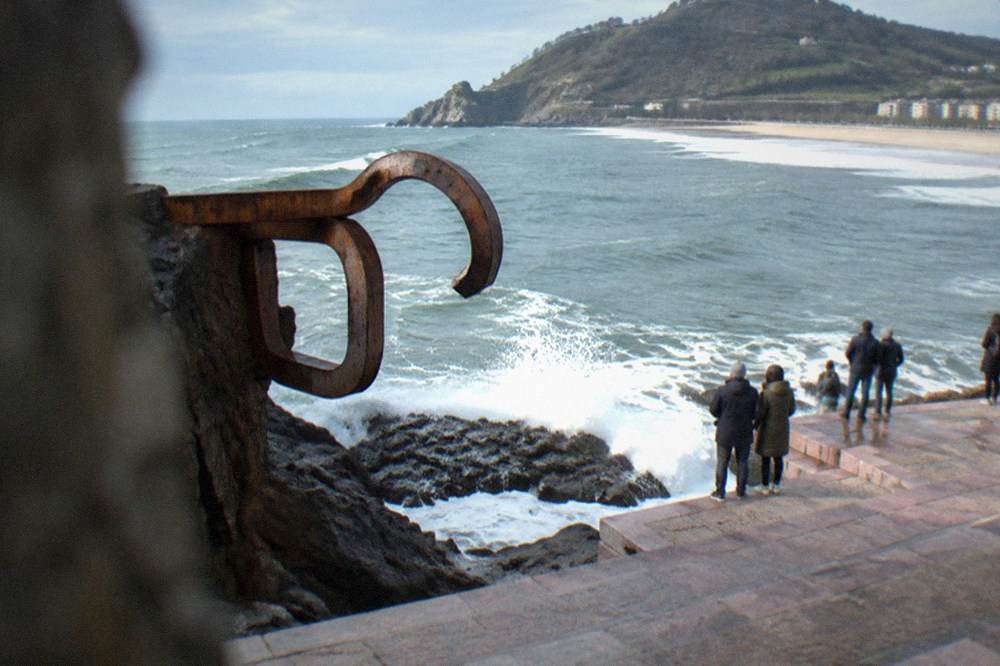
The plaza itself is part of the artwork. Peña Ganchegui set the pink granite surface with openings that channel the waves: when a big swell rolls in, water is forced up through the paving in a burst of spray that has become one of the city's signature sights. On a calm day the plaza is a quiet terrace above the rocks; on a stormy one it is a spectacle that draws people with cameras to the railings. Nothing about the visit depends on a ticket or a schedule, only on the state of the sea.
Who Was Eduardo Chillida, And Why Did He Give The Work To San Sebastian?
Eduardo Chillida was a Basque sculptor born in San Sebastián, and the Peine del Viento is his best-known public work in his own city. The tourism board records that he first worked under the title in 1952 and created the definitive ensemble in 1977, giving it to the city, with the plaza by the architect Peña Ganchegui. The three steel pieces each weigh more than nine tonnes and are anchored into the rocks at the end of Monte Igueldo.
Chillida's career is woven through the city and the province. The largest single collection of his work sits a short drive away at Chillida Leku in Hernani, a separate municipality in Gipuzkoa, where more than forty sculptures are set in the grounds and farmhouse of a country estate. Anyone who responds to the Peine del Viento will find the same sculptural language at full scale there, and the museum's own site gives the practical details of a visit.
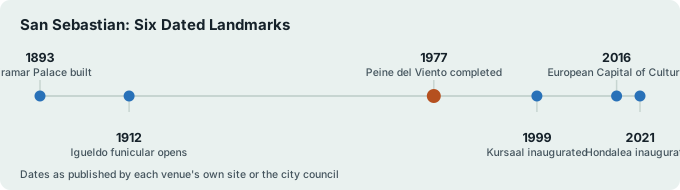
The Peine del Viento is also not the only place where the seafront carries serious contemporary art. Rafael Moneo's Kursaal, chosen in 1990 from proposals by six invited architects and inaugurated on 23 August 1999, stands on the other side of the bay at the mouth of the Urumea. Peña Ganchegui himself, the plaza's architect, was among those six invited names. The city treats its seafront as a gallery, and the Peine del Viento is the room with the best view.
How Do You Get To The Peine Del Viento?
The Peine del Viento stands at the far western end of Ondarreta beach, and the walk to it is the visit: the council's beach page describes Ondarreta as more than half a kilometre long and more than 100 metres wide, and the walk to the Peine del Viento starts at its west end. From the city centre it is a flat seafront stroll along the bay, with the funicular station to Monte Igueldo just beyond. No transport is needed, and none is needed to leave.
The simplest route is to follow the promenade west from La Concha, past Ondarreta, until the sand runs out at the rocks. The council's own description of Ondarreta notes that the walk to the Peine del Viento begins at the beach's west end, so the sculpture is effectively the terminus of the beach walk. The funicular up Monte Igueldo departs from immediately behind the site, and the funicular's own site lists return fares of 5.50 EUR for an adult and 2.50 EUR for a child up to 7 years, with the ticket including entry to the grounds at the top.
Two cautions from the operator's own pages matter here. The funicular's home page states that tickets for the downhill journey only are not on sale, so the plan of walking up and riding down does not work: buy the return, or ride both ways. And the funicular's FAQ notes that rides close on rainy days, which in a city recording 141 rain days a year at AEMET's Igeldo station is a real possibility. The sculpture itself, being on open rocks, is a different matter: it is at its most dramatic precisely when the weather is at its worst.
The table below sets out the ways of reaching the site.
| Route | What it involves | What the pack gives |
|---|---|---|
| Seafront promenade walk | Flat walk west along La Concha and Ondarreta to the rocks | The council describes the walk to the Peine del Viento starting at Ondarreta's west end |
| Monte Igueldo funicular | 1912 rack funicular from beside the site up the hill | Return 5.50 EUR adult, 2.50 EUR child up to 7; singles 4.00 and 1.50; runs every 15 minutes as a rule |
| On foot up Monte Igueldo | Continue past the sculpture to the hill paths | Entry to the grounds and viewpoint by any route: 3.00 EUR per person |
| From the city centre by bus | dBus city buses on the MUGI fare system | Occasional cash ticket 1.95 EUR; night ticket 2.65 EUR |
What Does Seeing The Peine Del Viento Cost?
Nothing. The Peine del Viento is a public sculpture on open rocks, with no admission, no ticket desk and no hours, and the plaza is reachable at any time of day or night. The only paid elements in the immediate area are the Monte Igueldo funicular, listed by its own site at 5.50 EUR return for an adult, and the 3.00 EUR per-person entry to the grounds and viewpoint on the hill above, which is charged however you arrive.
That makes the sculpture one of the strongest free experiences in a city that has several. The council's beach pages give free, open access to all three of the city's beaches, La Concha at 1,350 metres mean length, Ondarreta at 600 and Zurriola at 800, and the Peine del Viento sits at the end of one of them. The lifeguard service on all three runs 1 June to 30 September, with hours of 10:00 to 20:00 from 15 June to 15 September, but the beach and the sculpture plaza remain public ground outside those dates.
The funicular beside the site is the one thing visitors commonly pay for, and its own site gives the full tariff. The table below gathers the current figures for the immediate area.
| Item | Price | Source detail |
|---|---|---|
| Peine del Viento plaza | Free | Open public ground, no ticket |
| Funicular, adult return | 5.50 EUR | Includes entry to the grounds at the top |
| Funicular, child return (up to 7) | 2.50 EUR | Single 1.50 EUR |
| Funicular, adult single | 4.00 EUR | Downhill-only tickets are not on sale |
| Monte Igueldo grounds and viewpoint, on foot or by vehicle | 3.00 EUR per person | Charged for entry by any route |
| Funicular groups of 20+, disabled card holders, San Sebastián Card holders | 4.50 EUR return | Group discounts do not apply on weekends, holidays or long weekends |
When Is The Best Time To See The Peine Del Viento?
The Peine del Viento is at its most dramatic during a heavy Atlantic swell, which is most likely between October and March, when AEMET's Igeldo station records the wettest months: November averages 169 mm of rain over about 13 rain days and October 159 mm. For calm-weather photographs, July is the driest month at 86 mm, though even then the station records rain on nearly 10 days. The plaza itself is open in every month and every hour.
The honest climatic picture matters here, because the sculpture is a storm-watching site as much as a sculpture. AEMET's normals for its Igeldo station, at 250 m on Monte Igueldo, show a wet Atlantic city: 1,507 mm of rain across 141 rain days in an average year, with no month averaging under 86 mm. The seafront runs slightly warmer than the station's figures, since the station sits 250 m up the hill, but the pattern holds. Visitors planning a calm, dry photoshoot should not expect one.
What the rain buys is the performance. The plaza's wave-channelling openings only fire when the swell is running, and a winter storm over the rocks is the version of the Peine del Viento that appears in most photographs of the city. Summer delivers the opposite experience: flat sea, swimmers in the water below, and the sculptures standing quiet against a blue horizon. Both are the same artwork, and the choice between them is a choice about weather, not about tickets.
| Month | Mean temp C | Rain mm | Rain days | Sun hours |
|---|---|---|---|---|
| January | 8.5 | 141 | 13.2 | 98 |
| March | 10.3 | 113 | 12.4 | 144 |
| May | 14.4 | 120 | 12.2 | 181 |
| July | 18.9 | 86 | 9.8 | 196 |
| September | 18.0 | 111 | 10.1 | 179 |
| November | 11.3 | 169 | 13.0 | 102 |
What Can You Combine With The Peine Del Viento On The Same Walk?
The Peine del Viento sits at the junction of the city's best free walk: Ondarreta beach runs east from it, the Monte Igueldo funicular climbs the hill behind it, and the seafront promenade continues around the whole bay towards La Concha and Monte Urgull. The council gives Ondarreta a mean length of 600 metres and La Concha 1,350, so the sculpture is the western anchor of a continuous seafront stretch that can be walked end to end.
Walking east from the plaza, the promenade passes along Ondarreta and then around the headland past Miramar Palace, built in 1893 at the request of Queen María Cristina and designed by the English architect Selden Wornum, whose gardens run down to the sea. Beyond it comes La Concha itself, the 1,350-metre beach the council describes as sandy and shallow, with the tide often limiting the usable area. The full lap of the bay is the single most common walk in the city, and the Peine del Viento is where it begins or ends.
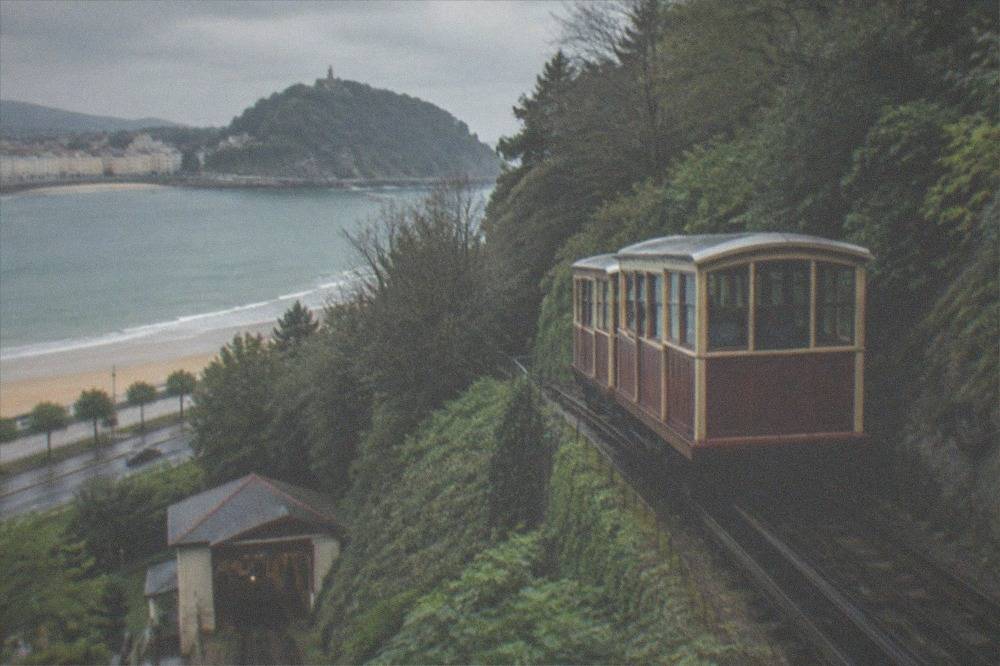
Behind the sculpture, the hill gives two more options. The funicular, opened on 25 August 1912 and described by the tourism board as the oldest in the Basque Country, runs up Monte Igueldo to grounds and a viewpoint over the bay, with entry to the grounds included in the funicular ticket. Across the bay in the other direction, Monte Urgull rises over the Old Town with the Castillo de la Mota at its summit; the tourism board gives its access hours as 08:00 to 21:00 from 1 May to 30 September and 08:00 to 19:30 the rest of the year.
For visitors who would rather ride than walk, a small-group electric bike tour covers the city's bike-lane network with a guide, and the bay can also be seen from the water on a boat tour with a stop at Santa Clara Island, the island that sits in the middle of La Concha bay.
| Stop on the walk | What it is | What the pack verifies |
|---|---|---|
| Peine del Viento | Three Chillida steel pieces on a granite plaza | Created 1977, plaza by Peña Ganchegui |
| Ondarreta beach | Sandy family beach west of the bay | Mean length 600 m, mean width 100 m |
| Miramar Palace grounds | English country house style, gardens to the sea | Built 1893 for Queen María Cristina, by Selden Wornum |
| La Concha beach | The city's main beach | Mean length 1,350 m, sandy and shallow |
| Monte Igueldo funicular | Rack funicular with wooden cars | Opened 25 August 1912, return 5.50 EUR |
| Monte Urgull | Hill over the Old Town with the Castillo de la Mota | Open 08:00 to 21:00, 1 May to 30 September |
Why Does The Peine Del Viento Matter To San Sebastian?
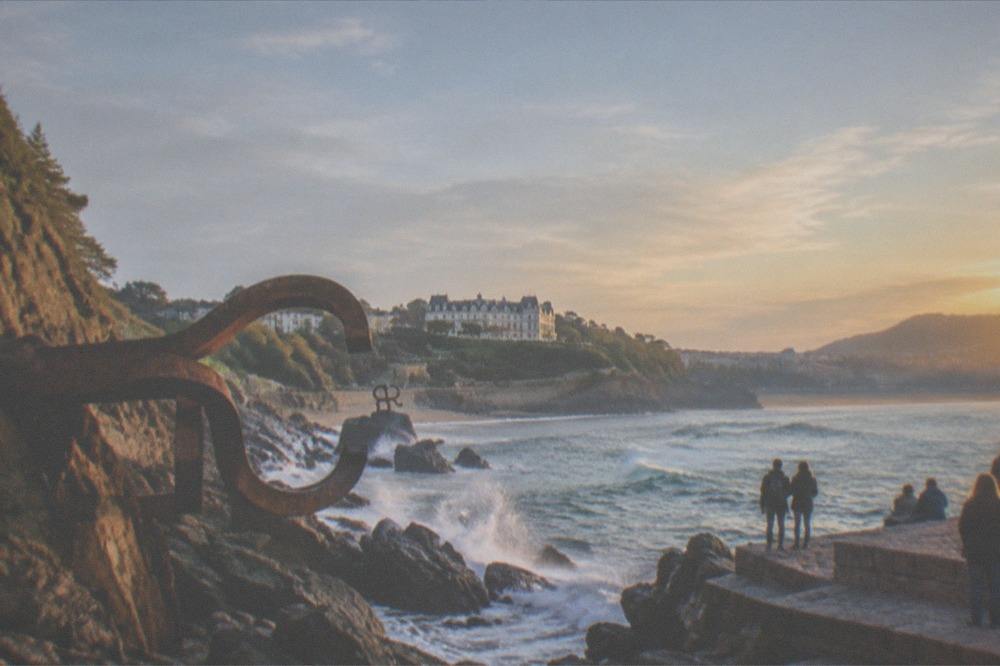
The Peine del Viento is the work that fixed the city's public identity as a place where contemporary art meets the sea, and it is the only major sculpture in San Sebastián embedded directly into the natural coastline. Chillida's gift of the 1977 ensemble, set on Peña Ganchegui's plaza, turned the western tip of the bay into a public artwork that performs with every tide, and it stands first on almost every list of the city's sights.
Its influence runs wider than one plaza. The city's seafront now carries a series of serious works and buildings, from the Kursaal at the mouth of the Urumea to the Peine del Viento at the foot of Monte Igueldo, and the sculpture is the piece that started the reading of the whole bay as a curated landscape. Chillida's presence across the province, above all at Chillida Leku in Hernani, means a visitor can trace his career in a single day trip.
The work also does something few monuments do: it is different every hour. The steel does not change, but the sea does, and the plaza was engineered so that the ocean participates. That is the reason locals treat it as a place to check the swell rather than a thing to see once, and it is the reason the site rewards a second visit on a different day.
What Should You Know Before You Go To The Peine Del Viento?
Four things shape a visit: the plaza is free and always open, the sea decides the show, the funicular beside it closes on rainy days and sells no downhill-only ticket, and the walk from the city centre is flat and continuous along the bay. Beyond the sculpture, entry to the Monte Igueldo grounds is 3.00 EUR per person by any route, and the lifeguard season on the beaches below runs 1 June to 30 September.
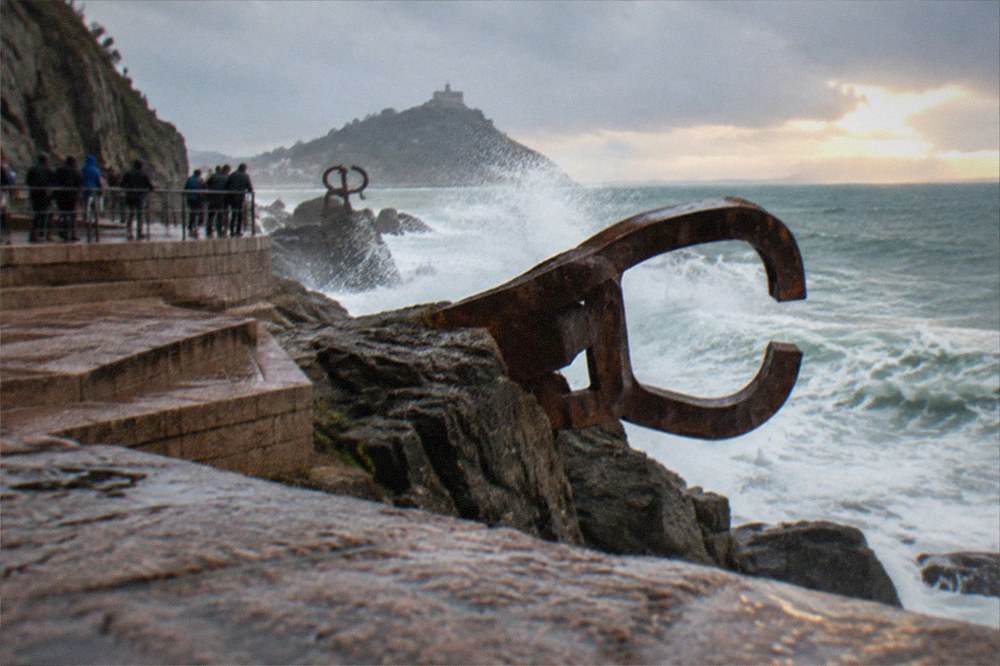
Safety on the plaza is a matter of common sense rather than rules. The openings that channel the waves are the point of the design, and in a heavy swell the water comes over the paving with force, so the railings exist for a reason. The council's page for Ondarreta gives the beach as sandy with mass use, and the strong-swelling Zurriola on the other side of the bay is the surf beach, not this one: the council describes Zurriola as fairly open with strong swell, remodelled in 1994.
For a first visit built around the city's monuments, a guided option helps put the sculpture in context. The must-see attractions walking tour of the historic centre runs with a small group or as a private option, and the operator's live listing carries the current price and dates.
| Question visitors ask | The verified answer |
|---|---|
| Is there an entry fee? | No, the plaza is open public ground |
| Are there opening hours? | No, the site is open at all hours |
| Can you ride the funicular down only? | No, the operator sells no downhill-only ticket |
| Does the funicular run in the rain? | No, rides close on rainy days, per the operator's FAQ |
| When do lifeguards patrol the beaches? | 1 June to 30 September, all three city beaches |
| Is the walk from the centre flat? | Yes, the seafront promenade runs level around the bay |
The Peine del Viento rewards the same treatment the city itself does: go twice, once in sunshine and once when the Atlantic is running, and let the sea decide which visit you remember. For more on what the city holds, see this site's San Sebastian Spain Guide coverage of the bay, the hills and the Old Town, the Monte Igueldo funicular and park above the sculpture, Ondarreta beach at its feet, and Chillida Leku in Hernani, where the sculptor's work fills a whole estate.
Common Questions About The Peine Del Viento
What Is The Peine Del Viento In San Sebastian?
Three steel sculptures by Eduardo Chillida, each more than nine tonnes, anchored into the rocks at the western end of Ondarreta beach, on a pink granite plaza by Peña Ganchegui. The definitive work dates from 1977 and was given to the city.
Is The Peine Del Viento Free To Visit?
Yes. The plaza is open public ground with no ticket and no opening hours. The only paid items nearby are the Monte Igueldo funicular, 5.50 EUR adult return, and the 3.00 EUR per-person entry to the grounds on the hill above.
Can You Walk To The Peine Del Viento From La Concha?
Yes. The seafront promenade runs continuously from La Concha along Ondarreta to the sculpture, and the council's own beach page describes the walk to the Peine del Viento as starting at Ondarreta's west end.
When Was The Peine Del Viento Made?
Chillida first made works under the title in 1952 and created the definitive ensemble in 1977, giving it to the city. The plaza around it was designed by the Basque architect Peña Ganchegui.
Is The Peine Del Viento Dangerous In Big Waves?
The plaza is engineered to channel waves up through the paving, and in a heavy swell the water comes over the stone with force. The railings mark the safe line, and the site is at its most dramatic, and most slippery, during winter storms.