Best Pintxos Bars In San Sebastian
The pintxo bars of San Sebastián, the Basque city on La Concha bay whose Basque name is Donostia, are the reason many people come at all. This guide covers how a crawl works, which neighbourhoods to do it in, what to order and what to pour.
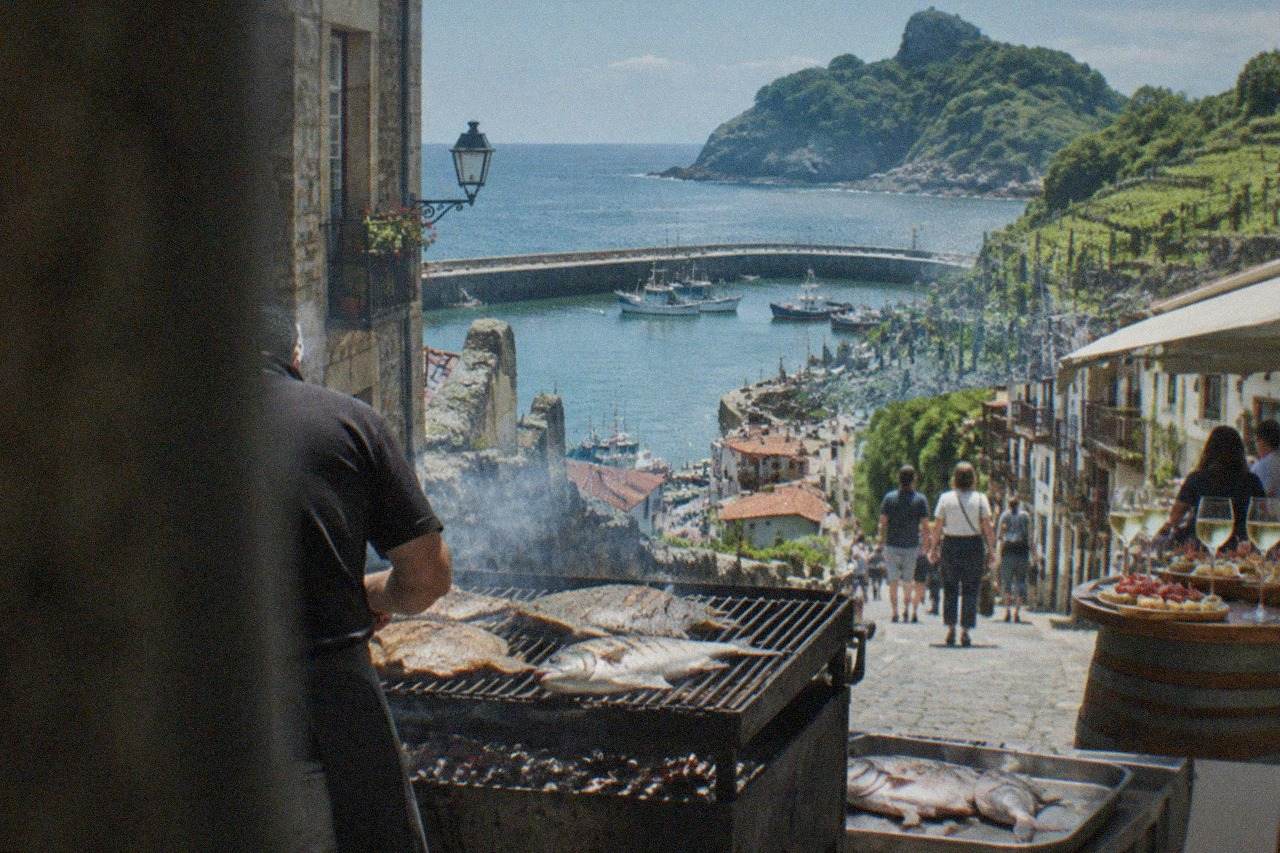
Short answer
The best pintxos bars in San Sebastián cluster in the Parte Vieja (Old Town), along Calle 31 de Agosto and the streets off it, with a second pocket around the Gros district and the Centro. Order two or three pintxos per bar, drink txakoli or a small beer, pay at the end, and move on.
San Sebastián, in the Basque Country of Spain, holds a remarkable concentration of Michelin stars inside its city limits, but the food people remember is eaten standing up, at a counter, off a toothpick. The city's Basque name is Donostia, and its Old Town, the Parte Vieja, packs dozens of pintxo bars into a few narrow streets a block back from La Concha bay. This page is a working guide to those bars: where they cluster, how the ordering and paying customs actually work, which dishes to look for first, and what to pour alongside them. If the whole vocabulary is new, start with what pintxos actually are before planning a crawl.
What Makes A Great Pintxo Bar In San Sebastian?
A great pintxo bar in San Sebastián has three things: a counter loaded with freshly made pintxos rather than trays sitting since morning, a kitchen turning out hot dishes to order instead of only cold ones, and a crowd that is mostly local. The bar tab system, where the barman keeps a running tally of everything you take, is the honest version of the custom, and a busy bar with a chalkboard of hot specials is the single best sign you have found the right place.
The pintxo itself is a small slice of bread topped with anything from anchovies and olives to slow-cooked cheek or squid in its own ink, held together with a toothpick, the pincho that gives the thing its name. The word is sometimes translated as tapas, but the two are not the same dish: a tapa in much of Spain is a small plate that arrives with or before a drink, while a pintxo is an individual piece you pick off the counter or order from the board. The pintxo scene in San Sebastián runs on volume and turnover, which is why the best bars feel frantic at eight in the evening and half empty at seven.
Quality in this city is not evenly spread, and the difference between a good bar and a lazy one is visible before you taste anything. Look for counters where items are replenished in front of you, where the hot dishes are cooked to order rather than microwaved, and where the staff will tell you what came in that morning. A bar with one tired tray of tortilla and nothing else is serving the tourist trade, not the tradition.
What Town Is Best For Pintxos?
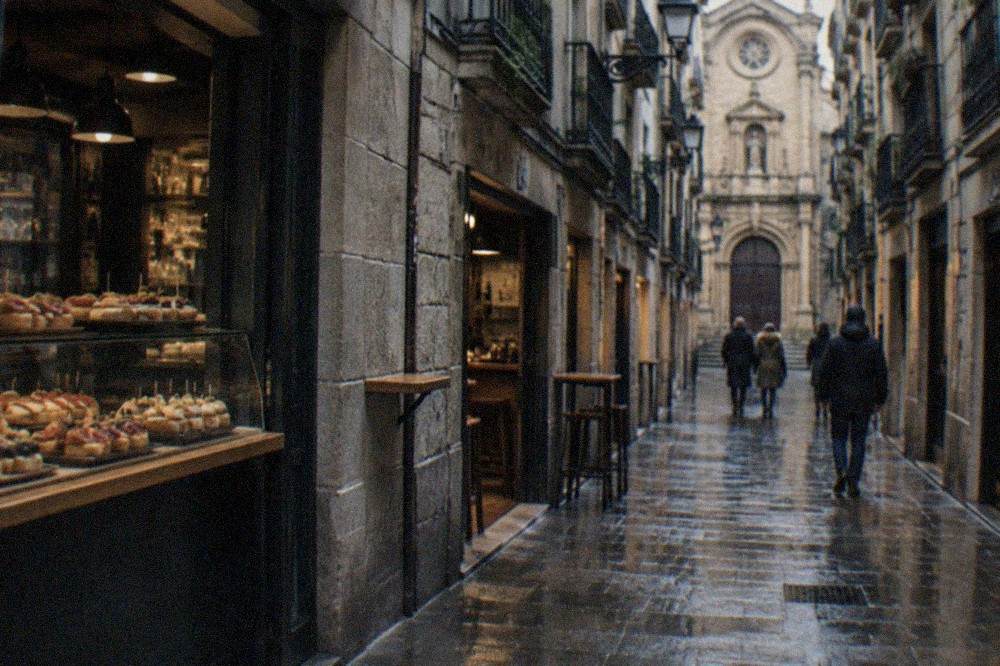
San Sebastián is the best town for pintxos in Spain, and it is not a close call. The MICHELIN Guide Spain 2026 lists 11 stars across 6 restaurants inside the city, and the same concentration shows at street level, where the Parte Vieja alone holds dozens of dedicated pintxo bars within a few minutes' walk. Bilbao and Logroño both have good pintxo streets, but San Sebastián combines the highest density of bars, the deepest cooking culture behind them and a crawl that works entirely on foot.
The city's claim is not just bragging. The tourism board counts the txotx cider-house season, the cooking societies, the gastronomic clubs called txokos, and a restaurant scene that runs from counters to three-star dining rooms as one continuous culture, and that culture is what feeds the bars. Akelaŕe and Arzak, both with three stars in the 2026 edition, sit inside the municipality, and the techniques worked out in those kitchens trickle down to hot pintxos within a year or two.
For a visitor, the practical meaning is simple: you do not need a car, a reservation or a plan. You need comfortable shoes and the willingness to walk into the fourth bar of the evening without a recommendation. If you want the structure taken off your hands, a guided crawl does that, and the trio below covers the three formats that suit a pintxo-first visit.
The Best Pintxos Bars In San Sebastian By Neighbourhood
The best pintxos bars in San Sebastián fall into three clusters: the Parte Vieja, the Old Town between the harbour and Calle 31 de Agosto, where the density is highest; the Gros district across the river, where the bars are younger and cheaper; and the Centro around the Boulevard, where the classic houses sit. A first crawl should stay in one cluster, because the whole point of the custom is walking five metres between bars, not crossing the city.
The table below shows what each area does best, so you can pick one and stay in it.
| Neighbourhood | Bar density | Character | Best for |
|---|---|---|---|
| Parte Vieja (Old Town) | Highest in the city | Historic bars, classic dishes, big evening crowds | A first crawl, classic pintxos |
| Gros | High, more spread out | Younger bars, surf crowd, more standing room | A relaxed second evening |
| Centro and the Boulevard | Medium | Classic houses and larger tablas | Longer sittings, sit-down eating |
| Antiguo and Ondarreta | Low | Neighbourhood bars, few visitors | A local-feeling detour |
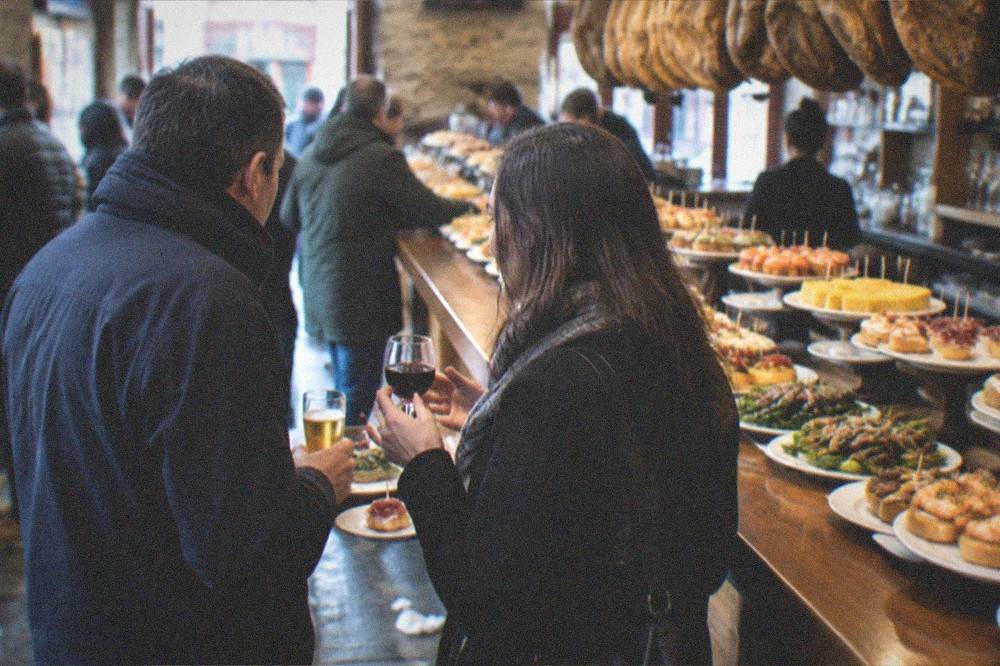
In the Parte Vieja, the crawl concentrates on Calle 31 de Agosto, Calle Fermín Calbetón and the streets running between them, and the plaza of the Basilica of Santa María gives the whole circuit a centre of gravity. Bars here range from old houses with wooden counters to modern ones doing deconstructed classics, and the custom of moving every two or three pintxos means you can try four or five houses in a short evening. Bar Nestor on Calle Pescadería is known for one thing, its tortilla, served in limited slices at set times, and La Viña at the edge of the neighbourhood is the origin of the city's famous burnt cheesecake, which travels to pintxo menus all over Spain.
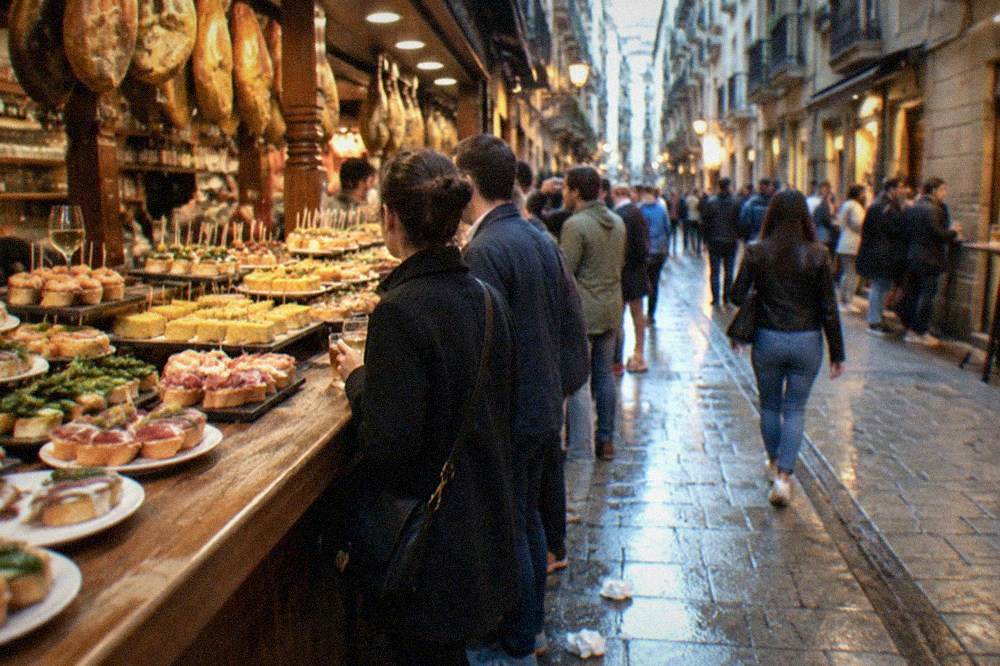
Across the Urumea river, Gros runs on Zurriola beach energy, and its bars stay more local later into the week. The cooking here leans to the generous and the grilled rather than the miniature and the precise, and the walk home along the river is flat. The Centro, around the Boulevard, holds the older, larger houses where a group can sit down and order tablas, shared platters, instead of eating off toothpicks, which is the right call with children or with anyone who does not want to stand all evening. For where each district actually sits on the map, see the guide to the city's neighbourhoods.
How Does Ordering And Paying Work In A Pintxo Bar?
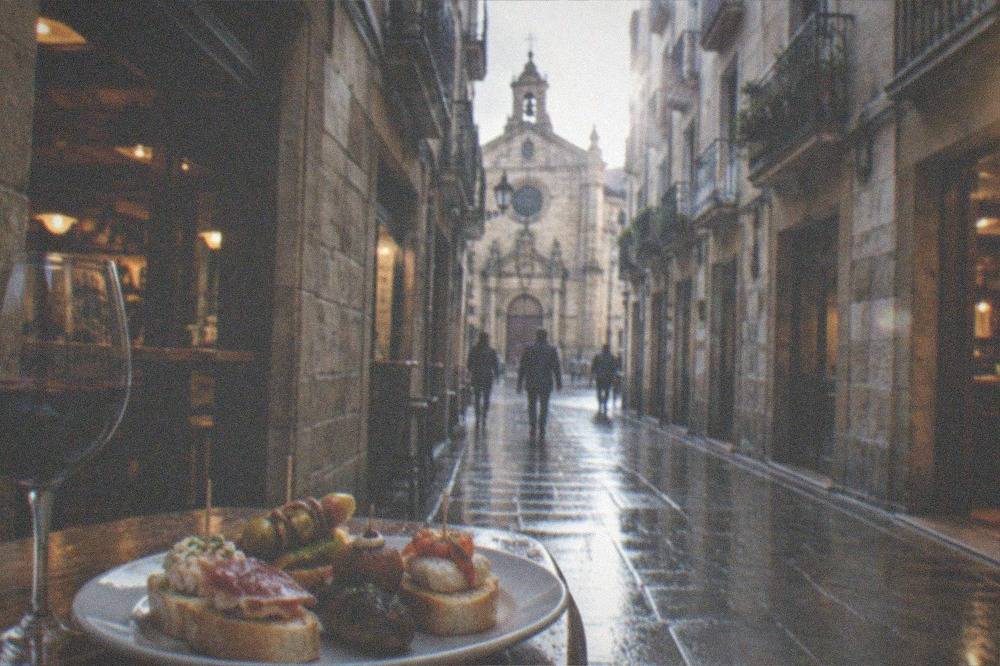
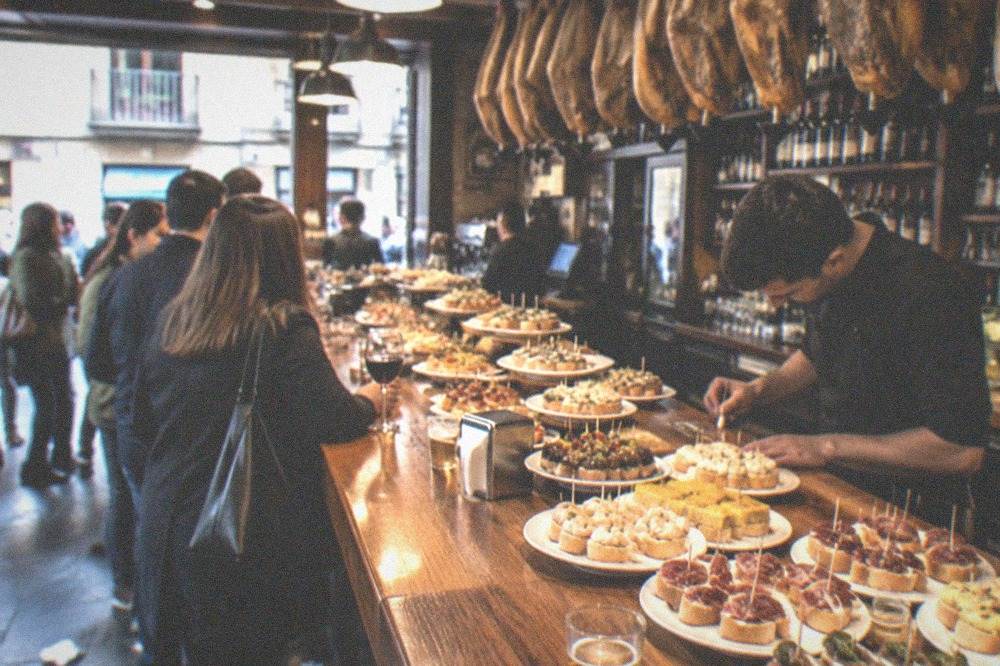
Ordering in a San Sebastián pintxo bar works on the honour system: you point at the cold tray or ask for the hot dishes from the board, let the barman tally your order, and pay once, at the end, when you leave. Some bars still count your toothpicks to total the bill, so never clear your own sticks from the counter. Two or three pintxos and a drink per person per bar is the normal pace, which is what makes a multi-bar crawl a full dinner.
The mechanics confuse first-time visitors more than the food does, so here is the sequence. You walk in, you take or are handed a small plate, and you either lift pintxos straight from the glass counter or order the hot ones, which are cooked to order and are usually the better half of the menu. The barman keeps a tally, sometimes chalked on the counter itself, sometimes in a notebook, sometimes literally by counting the toothpicks left on your plate. When you finish, you ask for the bill, la cuenta, and pay then. Taking a pintxo and quietly leaving without paying is the one thing that genuinely offends, and it is also the thing that makes the whole system work for everyone else.
A few customs are worth knowing before you go, and the table below lists them.
| Custom | What to do | Why it matters |
|---|---|---|
| The tally | Let the barman keep count, do not pay per round | The system depends on it |
| Toothpicks | Leave them on your plate or the counter | Some bars count them for the bill |
| Hot vs cold | Ask what is cooked to order | The hot dishes are often the best |
| Pacing | Two or three pintxos and a drink per bar | Lets you visit several bars |
| Timing | Evenings from around eight are busiest | Locals eat late, here is when |
| Standing | It is normal, tables are scarce | Standing at the counter is the custom |
Do not over-plan a crawl. The bars that look quiet at seven fill by half past eight, and the one you meant to visit may be six deep at the counter by the time you arrive, which is not a failure but the evening working as designed. Pick a street, walk into whatever has turnover, and let the tally run.
What Is The Best Pintxo Tour In San Sebastian?
The best pintxo tour in San Sebastián depends on what you want from the evening: a paired tasting walk with a fixed menu of pintxos and matched wines suits a wide range of tastes, a small-group Old Town crawl suits people who want the bar-to-bar rhythm explained, and a market-plus-cooking-class format suits anyone who wants to cook the food, not just eat it.
The paired tasting tour covers eight pintxos and five drinks matched to Denomination of Origin wines, and the listing gives the current price and rating.
A guided crawl solves the two real problems of a first visit: choosing among dozens of bars, and knowing what each dish is. The small-group Old Town pintxo crawl is one popular format, and the solo pick below is the one that pairs the food with the wine, in English or Spanish.
If your evening is more about learning to cook than being led, the market and cooking class format opens with a market visit and then puts you at a stove, and the same operator family covers both. The class below runs in English and ends with the meal you cooked. Everything else covered here is indexed on San Sebastian Spain Guide.
The comparison that matters is not between operators but between formats, and the table below sets out the honest differences.
| Format | What you actually do | Suits |
|---|---|---|
| Paired tasting walk | Guided stops, set pintxos and matched drinks | First visit, wine drinkers |
| Small-group Old Town crawl | Bar-to-bar walk with a guide choosing stops | People who want the crawl rhythm |
| Market visit plus cooking class | Shop, cook, then eat the meal | Hands-on cooks, families |
| Cider house trip with lunch | Leave the city for a cider house and meal | A daytime food outing |
Which Pintxo Dishes Should You Try First?
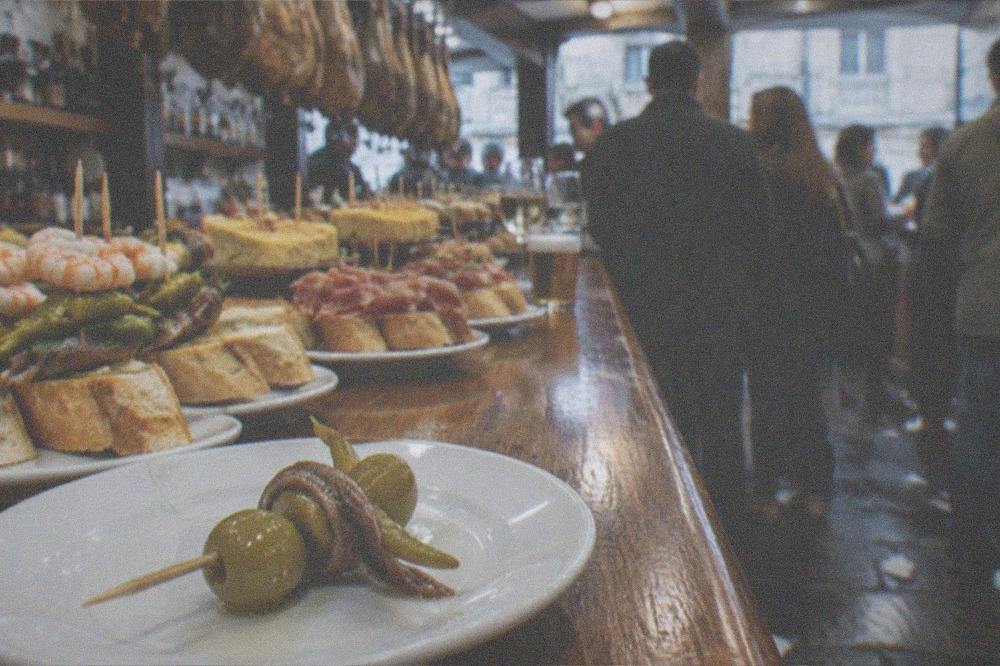
The pintxos to try first in San Sebastián are the gilda, the cold anchovy-olive-pepper skewer that is the city's signature bite; the tortilla de patatas, cut from a fresh round; and the hot dishes cooked to order, such as txangurro, spider crab served in its shell, and squid in its own ink. A first crawl should mix cold counter classics with at least two hot dishes, because the hot half of the menu is where the city's cooking culture shows.
The gilda alone deserves its own stop, and the story of the gilda pintxo explains why a salted anchovy, a guindilla pepper and an olive on a stick carries the name of a Rita Hayworth film character. Beyond it, the table below is a working order of the dishes that define the counters here, with what each one is, so you can point with confidence.
| Pintxo | What it is | How it is served |
|---|---|---|
| Gilda | Salted anchovy, guindilla pepper, olive | Cold, on a skewer |
| Tortilla de patatas | Egg and potato omelette, often runny in the centre | Cut from the round, sometimes by the slice |
| Txangurro | Spider crab, mixed with its own juices | Hot, in the shell |
| Calamares en su tinta | Squid in its own ink, often over rice | Hot, cooked to order |
| Txuleta | Thick-cut rib steak, shared | Off the grill, for the table |
| Quesada / burnt cheesecake | The La Viña style baked cheesecake | A slice to finish |
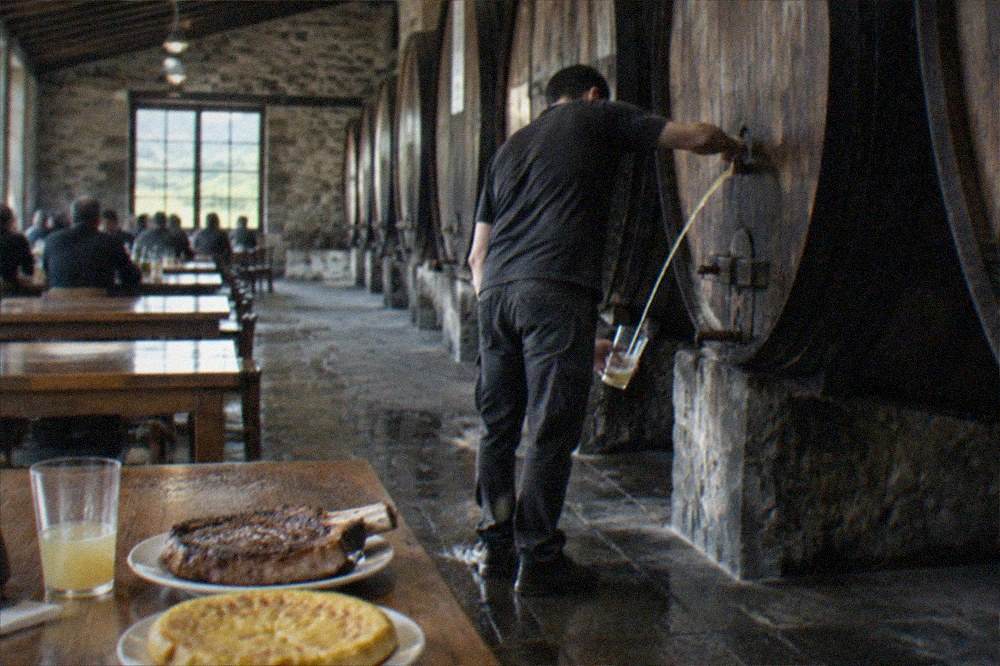
Meat eaters should know that a txuleta, the enormous rib steak of the cider houses, is a table dish rather than a counter one, and it appears on pintxo menus as a hot plate for two or more. The full picture of what the city eats, from breakfast to the cheesecake, is in the guide to what to eat in San Sebastián, and the cheesecake that closes half the city's dinners has its own page.
What Should You Drink With Pintxos In San Sebastian?
The drink to order with pintxos in San Sebastián is txakoli, the young, lightly sparkling white wine of the Basque coast, poured from a height into a tumbler so it froths, and sold by the glass in almost every bar. The alternatives are a zurito, the small beer that is the right size for a crawl, a glass of local red from Rioja Alavesa, or cider straight from the barrel during the txotx season from mid-January to late April.
Txakoli is the local white and the default pour, and the txakoli guide covers how it is made and why it is poured the way it is. The pouring ritual, the bottle held high so the wine falls in a thin arc, is not theatre: the aeration opens a wine that is otherwise sharp and closed, and the glass is filled only a finger deep so you drink it fresh. A zurito, the small beer, is the other crawl standard, and it exists precisely because a full pint does not survive three bars.
| Drink | What it is | When to order it |
|---|---|---|
| Txakoli | Young, lightly sparkling white, Basque coast | The default, with fish and cold pintxos |
| Zurito | Small beer, roughly a quarter litre | Between rounds, with hot fried dishes |
| Rioja Alavesa red | Tempranillo-based red from across the region | With txuleta and meat dishes |
| Sidra | Basque cider, still and dry | In the txotx season, mid-January to late April |
The cider deserves a trip of its own, because the txotx ritual, catching the cider straight from the barrel as it is opened, is a countryside custom that the city's bars only imitate. The tourism board gives the season as running from the middle of January to the end of April, and the cider houses of Astigarraga, a separate municipality a short ride away, are where it is done properly. The tour below runs with the Gipuzkoa cider house association and includes the orchard, the cellar, the txotx ritual and lunch.
Can You Do A Pintxo Crawl On A Budget?
A pintxo crawl in San Sebastián can be done on a budget, because the custom itself is built on small, cheap, repeat purchases rather than one large bill, and the bars of Gros and the quieter streets of the Parte Vieja cost less than the headline houses on the main drag. Prices vary by bar and are not published centrally, so check the chalkboard in each bar rather than trusting a figure quoted online, and a budget crawl simply means more counter classics and fewer hot dishes.
The cheapest crawl is not a worse crawl. The gilda, the tortilla and a zurito are among the best things in the city, and none of them is a premium item. What costs money is the sit-down restaurants and the hot dishes cooked to order, so a budget evening leans on the cold counter, walks further from Calle 31 de Agosto, and eats where the chalkboard prices are written in plain sight. For the wider question of what the city costs, see is San Sebastian expensive, and for what a single pintxo sells for, the price question has its own answer page.
Common Questions About Pintxos Bars In San Sebastian
What is the best pintxo tour in San Sebastián?
The best pintxo tour in San Sebastián depends on what you want: a paired tasting walk with matched wines suits most first visits, a small-group Old Town crawl suits people who want the bar-to-bar rhythm explained, and a market-plus-cooking-class format suits anyone who wants to cook the food. The paired tasting tour covers eight pintxos and five drinks matched to Denomination of Origin wines, and the operator's live listing gives the current price, rating and availability.
What time do people eat pintxos in San Sebastian?
The evening pintxo run starts around half past seven and peaks between eight and ten, with the busiest counters from nine onwards. Lunchtime pintxos are also a real thing, quieter and more local, between one and three. The full rhythm, including the late-night second round, is covered on the dedicated answer page.
What is the difference between pintxos and tapas?
A pintxo is an individual piece, usually bread-based and often held with a toothpick, that you order or lift yourself, while a tapa is a small plate that often arrives with a drink. Pintxos are the Basque form and the counters of San Sebastián are their home ground. The distinction and the vocabulary are explained in the guide to what pintxos are.
Do you tip in pintxo bars?
Tipping is light in the Basque Country, and in a pintxo bar it is normal to leave small change or round the bill up rather than add a percentage. Nobody expects a tip for a two-pintxo stop, and the tally system means the bill is settled once at the end. Do not leave money on the counter before the total is rung up, because the barman may think you are paying already.
Can children come on a pintxo crawl?
Yes, and they do. The bars are open to all ages in the early evening, the tortilla and croquetas are reliable child-friendly options, and the Centro's larger houses have tables for a sit-down version of the same food. The standing, multi-bar rhythm suits adults better, so families usually pick one or two houses and stay put.
Is it better to book a pintxo tour or go alone?
Going alone works well once you know the customs and the streets, and the tally system makes a solo crawl easy. A tour earns its place on a first visit, or when you want the wine pairing explained, or when your evenings are short. The paired tasting format is the most popular guided option, and its current price and rating are on the operator's live listing.
The bars of the Parte Vieja and Gros will still be standing at the counter when you arrive, and that is the whole point of the custom: no reservation, no queue to join, just a tally, a toothpick and the next bar five metres away. Pick your street, order the hot dishes, pour the txakoli from a height, and let the evening count itself.