San Sebastian Cheesecake: Where To Eat It In The City
The burnt Basque cheesecake served in San Sebastián, in the Basque Country of Spain, has become one of the most copied desserts on earth, and the city that launched it still does it best.
Short answer
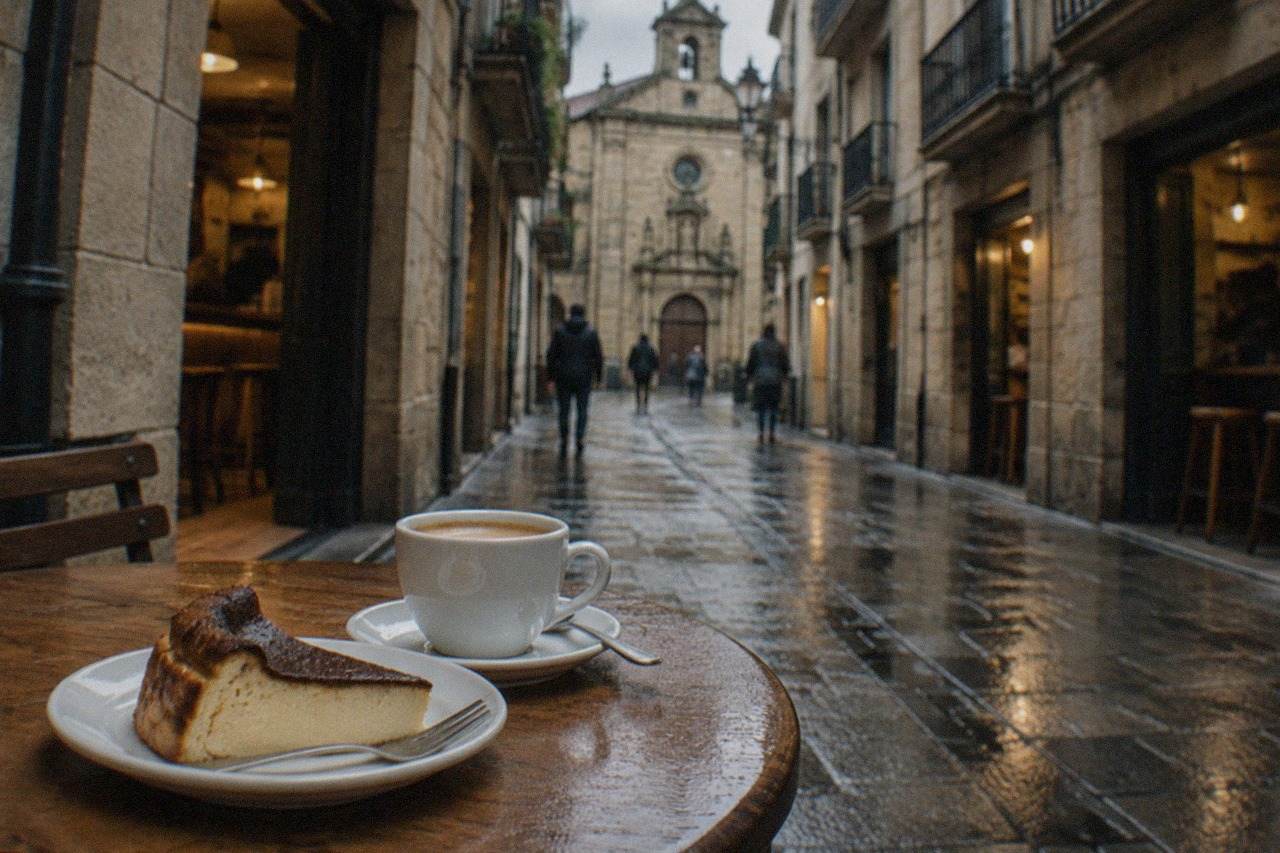
Basque cheesecake is a crustless tart baked at very high heat until the top scorches dark, giving a smoky caramel shell and a barely set, custard-like centre. It was created at La Viña, a bar in the Old Town of San Sebastián, and the city remains the reference point for the version every bakery now imitates.
San Sebastián, in the Basque Country of Spain, is the city on La Concha bay whose official name is Donostia / San Sebastián, and it is the place the burnt Basque cheesecake comes from. The tart was born in a bar in the Old Town, not in a pastry school, and in three decades it has travelled from a single kitchen to bakery counters in Tokyo, London, New York and Sydney. Every one of those copies traces back to the same small corner of Gipuzkoa. This page covers what the dessert actually is, how it differs from every other cheesecake, why this city made it famous, and where to eat it while you are here. For the deeper story of the city's signature dessert, the special story of this cheesecake has its own page, and this guide sits alongside the rest of what San Sebastian Spain Guide covers on the city's food.
What Makes A Basque Cheesecake Different From A Regular Cheesecake?
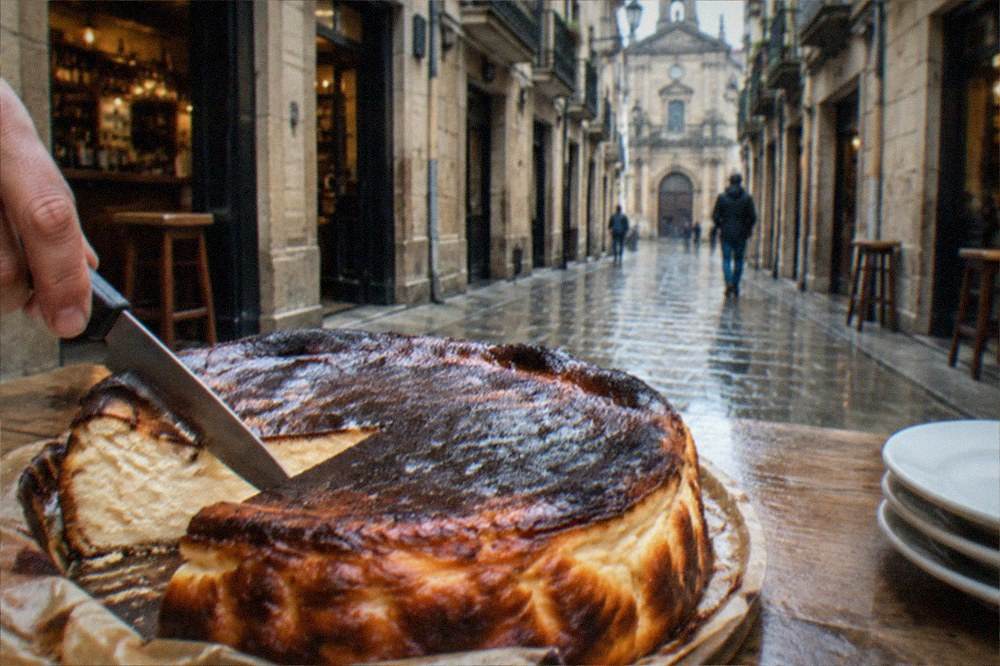
A Basque cheesecake is crustless, baked at very high heat until the top burns dark, and served with a centre that stays deliberately underbaked and jiggly, which is the exact opposite of a regular cheesecake: the classic version has a biscuit base, bakes low and slow in a water bath, and aims for a uniform, fully set, pale surface. The burn is not an accident, it is the point, because the scorched top tastes of caramel and smoke and acts as its own crust.
The regular cheesecake most people grew up with, whether the New York style or the German or Italian variants, is an exercise in control. The baker fights cracks, fights colour, fights uneven cooking, and wins by producing something smooth, pale and even from edge to edge. The Basque version abandons every one of those rules. There is no biscuit base, no water bath, no blind baking, no cooling protocol. The batter, little more than cream cheese, sugar, eggs, a spoon of flour and cream, goes into a paper-lined tin and into a ferociously hot oven, where the top blackens while the middle stays loose.
The result behaves differently on the plate. A classic slice holds a clean wedge shape. A Basque slice slumps slightly, the interior barely holding together, somewhere between custard and soufflé in texture. Eaten warm it is almost liquid at the core. Eaten the next day, chilled, it firms into something denser and fudgier, and many bakers in the city say that is the better way to eat it. The table below sets the two tarts side by side.
| Feature | Regular cheesecake | Basque cheesecake |
|---|---|---|
| Base | Biscuit or pastry crust | None, the tin is lined with baking paper only |
| Oven method | Low heat, gentle baking, often in a water bath | Very high heat, no water bath |
| Surface | Pale, smooth, uncoloured | Deliberately burnt, dark brown to nearly black |
| Centre | Fully set, slice holds a clean wedge | Barely set, custard-soft, slumps when cut |
| Serving temperature | Chilled | Warm from the oven or chilled the next day |
| Flavour profile | Clean, sweet, creamy | Caramelised, smoky, slightly bitter edge |
| Where it was created | Central Europe and the United States | San Sebastián, Basque Country, Spain |
What Is So Special About Basque Cheesecake?
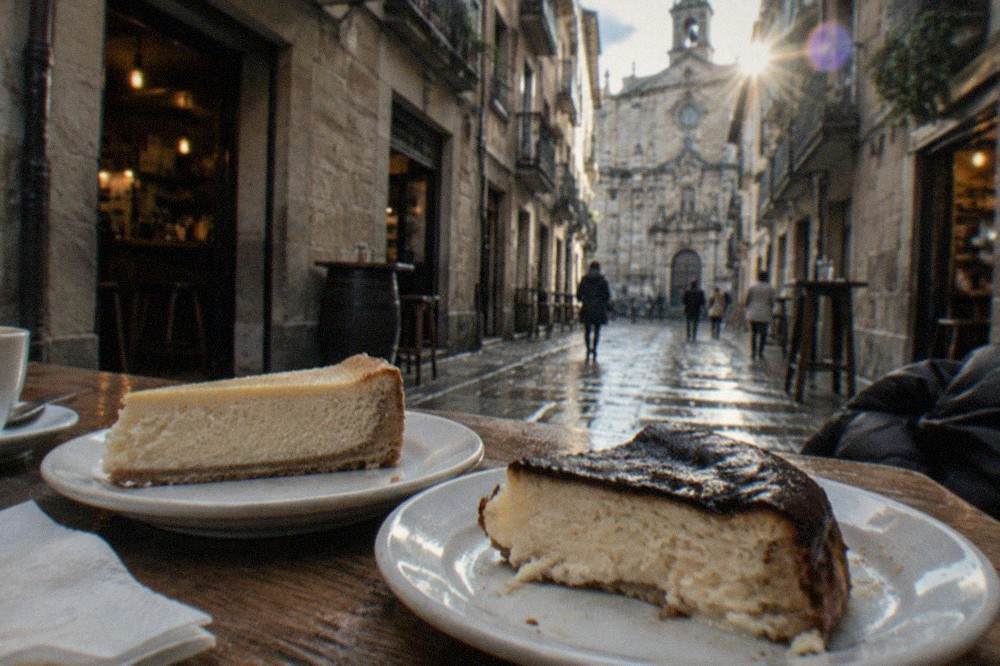
What makes it special is the inversion of everything a pastry chef is trained to avoid: the burnt top is intentional, the unset centre is intentional, and the missing crust is intentional, so the tart delivers three textures in one slice, a bitter caramel shell, a creamy middle and a faintly chewy edge, from a batter of about five ingredients. It is also a dessert that came out of a working pintxo bar rather than a restaurant kitchen, which is why it tastes like home cooking rather than haute pastry.
The genius of the tart is how much flavour it extracts from so little. Cream cheese on its own is mild. Subject it to a hot enough oven for long enough and the sugars on the surface take on deep caramel notes, the paper lining catches and toasts where the batter touches it, and the contrast between the bitter shell and the sweet, faintly tangy interior does all the work a sauce or a topping would do in a conventional dessert. Nothing needs to be added. A plain slice, a coffee, and the tart is complete.
That simplicity is also why it spread so far. A home baker with a springform tin, baking paper and a hot domestic oven can get close to the original in one attempt, because the whole method tolerates imprecision. There is no crust to shrink, no custard to curdle, no surface to crack, and the failure modes of ordinary cheesecake, the things that make people afraid to bake one, simply do not apply. The dessert that looks the most ruined of any in the pastry canon is the hardest one to ruin.
If you want to meet the dessert in its home habitat, a guided crawl of the Old Town bars is the fastest way in, and the three options below cover the range from a small-group expert walk to a hands-on cooking class and a txakoli winery half-day.
Where Can I Get The Best Basque Cheesecake In San Sebastian?
The reference version is served at La Viña, the Old Town bar where the tart was invented, and the streets around it in the Parte Vieja hold several kitchens baking their own take daily, so the honest answer is to eat the original first and then compare: order a slice at the source, then walk the Old Town and Centro trying the copies, because in this city the dessert is a category, not a single recipe.
La Viña sits on a street of cider bars a short walk from the port side of the Old Town, and its window, with tins of the tart cooling on the counter, is the image that travelled around the world. The bar itself is a traditional cider house style establishment, and the tart is sold by the slice and by the whole tin. The kitchen bakes in small batches through the day, which is why a slice eaten shortly after a batch comes out of the oven tastes different from a later one: the centre is looser, the top is softer, and the whole thing is closer to what the bakers themselves eat.
Beyond the source, the dessert now appears across the city's neighbourhoods, and each kitchen interprets it slightly differently, some bake it darker, some leave the centre more liquid, some serve it chilled with a txakoli recommendation on the card. The table below is a way to plan a comparison walk rather than a ranking, because no venue on this page had its prices, hours or address checked, and the honest way to find your favourite is to try three or four in an afternoon.
| Where to look | Neighbourhood | What the area adds to the search |
|---|---|---|
| La Viña and the cider bar street | Parte Vieja | The original tart, in the bar that created it, amid the Old Town's pintxo density |
| Pintxo bars around Calle 31 de Agosto | Parte Vieja | Individual slices served alongside pintxos, easy to combine with a bar crawl |
| Cafe counters and bakeries | Centro | Slices with coffee, useful for a morning or mid-afternoon stop |
| Brunch and speciality coffee spots | Gros | Newer kitchens, often a softer bake and a more liquid centre |
| Neighbourhood pastelerías | Antiguo | Local bakeries where residents buy whole tins for family meals |
For the practical money question, what a cheesecake here costs is answered on its own page, and so is where to find the best one. If you would rather not plan the walk yourself, a small-group food tour with reserved seats covers the Old Town's counters in one evening, and the box below is the one most cheesecake hunters book.
The same tour also runs as a featured pick on its own, and it is worth a closer look before you commit an evening to it, because the small-group cap is what makes the difference in a city where the popular counters fill fast.
Why Is San Sebastian Cheesecake So Famous?
The tart became famous because San Sebastián was already one of the most food-observed cities in Europe, with a concentration of Michelin-starred kitchens and a pintxo culture that puts serious cooking in casual bars, so when a bar in the Old Town started serving a burnt, unset cheesecake, the world's food media was already watching the city. The dessert then rode the same wave as the pintxo bars: photographed, copied, and carried outward by chefs and travellers.
The numbers behind that attention are real. The MICHELIN Guide Spain 2026 lists 11 stars across 6 restaurants inside the city, including three-star houses, and the province of Gipuzkoa holds 19 stars across 11 restaurants. That is an extraordinary density for a municipality of 189,866 people, and it means the city's kitchens are staffed by people who can look at a burnt cheesecake and understand exactly what the bake is doing. The tart was never dismissed as a mistake here, because the whole food culture of the city already valued rustic, high-heat, ingredient-first cooking, the same instinct behind the txuleta steaks grilled over open flame.
The fame loop closed when the international pastry world adopted the bake. The dessert appears on menus under names like burnt Basque cheesecake, crustless cheesecake and San Sebastián cheesecake, and its origin is always stated as a selling point, which keeps the city's name attached to every slice sold anywhere. The story of how the city's food scene earned that reputation explains the wider context, and the La Viña chapter of the story covers the bar itself in depth.
Are Basque And San Sebastian Cheesecake The Same?
Yes, they are the same dessert: the names Basque cheesecake, burnt Basque cheesecake and San Sebastián cheesecake all point to the crustless, high-heat, dark-topped tart created at La Viña in San Sebastián, and the different names exist only because the dessert travelled, with some menus favouring the region and others the city. The one honest distinction is quality of execution, not identity, since a badly baked version is still the same recipe.
The naming says something about how the dessert spread. In Spain it is usually called tarta de queso, sometimes with the oven or the burn named, and the Basque label attached itself as the tart crossed the border into France and then into English-language menus. Outside Spain, the city name carries more weight, because San Sebastián already meant serious food to international diners, so the menu that says San Sebastián cheesecake is borrowing the city's reputation along with its recipe. Inside the city, nobody needs the label. A tart de queso ordered at a counter is understood to be the local one.
The copy problem is the flip side of the fame. A bakery in another country can bake the recipe and call it Basque, and nothing stops a mediocre version from wearing the name, which is why eating it in San Sebastián matters to people who care about the difference. Here the tart is made in the bars and bakeries of the city that invented it, by kitchens that bake it every day, often several times a day, and the comparison between two neighbouring counters is a real local sport. The wider question of what makes the city's version special is answered on its own page.
Is Basque Cheesecake Spanish Or French?
It is Spanish, and specifically Basque: the tart was created in San Sebastián, a city in the Basque Country of Spain, and its lineage runs through the region's own dairy and farmhouse cooking rather than through French pastry tradition, although the dessert's popularity in France, where it is often called tourte basquaise or gâteau basque by confused menus, has muddied the question for people who first met it there.
The confusion has a geographical cause. The Basque Country straddles the border, with the French Basque provinces immediately north of San Sebastián, and the region's cooking, sheep's cheese, cider, gateau basque, is shared across that line. So when the burnt cheesecake crossed into France within a few years of its creation, French bakers could plausibly present it as a regional Basque dessert without spelling out which side of the border it came from, and from France it reached Paris and then the world. The city of origin, however, is not in dispute: the tart was first baked in San Sebastián, on the Spanish side, in the 1990s.
The French connection is real in one sense worth knowing. The region's cheese tradition includes local sheep's milk cheeses, and the gateau basque, a completely different dessert, a filled pastry cake, is a Basque speciality with its own festival on the French side. The burnt cheesecake borrowed none of that. It is a modern invention that uses industrial cream cheese, a product with no regional pedigree at all, and its only ancestral link to Basque cooking is the instinct for high heat and honest ingredients that also governs the cider house menus. The city's own account of its name and identity is told on the page about Donostia or San Sebastián.
How Do You Eat Basque Cheesecake Like A Local?
Locals eat it in two settings: as a ración ordered at a bar table, often at La Viña after a meal of pintxos, where the tart arrives warm and the centre runs, and as a whole tin bought from a bakery for a family lunch or a Sunday at home, where it is eaten chilled the next day and preferred by many for its firmer, fudgier texture. Ordering a single slice at a counter with a coffee is equally normal.
The timing matters more than visitors expect. A slice taken from a tin straight out of the oven is a different dessert from a slice taken an hour later, warmer, looser, with the burnt top still a little soft, and regulars time their orders to the batches. Chilled overnight, the same tart sets into something you can cut cleanly, the caramel top firms, and the flavour deepens. Neither is the wrong way, and arguing for one is a local pastime. What nobody local does is treat the tart as a diet dessert: it is cream cheese and cream, and the city eats it without apology, the same way it eats txuleta steak and pintxos.
The drink beside it is usually simple. Coffee is the default at a counter. At a table in the evening the pour is often txakoli, the young local white wine, whose dryness cuts the cream, or a glass of cider in the Old Town's cider bars, and the pairing logic is the same one the city applies to everything: local drink with local food. The table below is a short pairing guide built on that habit.
| Setting | What locals order with it | Why it works |
|---|---|---|
| Counter, morning or afternoon | Espresso or a cortado | The bitter coffee echoes the burnt top |
| Bar table, evening | A glass of txakoli | Dry, lightly spritzy, cuts the cream |
| Cider bar after a meal | Local cider | The house tradition of the street where the tart was born |
| At home, chilled tin | Coffee or nothing | The next-day texture is the point |
| Celebration tin | Poured over the tin at the table | The dessert arrives whole and is cut in front of everyone |
If you want the full context of the eating hours and the rhythm of the bars, when people eat pintxos in the city has its own answer page, and where locals actually eat is covered separately too.
Can You Learn To Make It In San Sebastian?
Yes, and doing it here is the most reliable shortcut to a good version at home, because the city's cooking classes teach the bake alongside the wider Basque repertoire, and a class that opens with a market visit shows you the ingredients the way the city's cooks buy them, so you leave with the technique, the shopping habit and the recipe in one session.
The classes listed below are the practical options, and the cooking class with a market visit is the one that maps most closely onto how the city's kitchens actually work: shop the market, cook the meal, eat it. A cheesecake baked under instruction, with someone telling you when the colour is dark enough and when the centre is loose enough, removes the two judgement calls that ruin home attempts.
The other half of the dessert's education is the drink beside it. Txakoli, the local white, is the tart's most common table partner, and the winery half-day to Getaria shows where that wine is made, on the coast a short drive west of the city. It is the pairing half of the lesson, done at the source.
For the full range of the city's food walks and classes, the pintxo and food tour overview collects them, and the cooking class guide goes deeper on the hands-on options.
What To Pair With The Tart, Beyond Coffee
The burnt edge of a Basque cheesecake changes the usual dessert pairing logic, because the tart supplies its own caramel sweetness, so sweet wines beside it can taste flat and the city reaches instead for dry drinks: txakoli, cider, espresso or a bitter digestif taken after the meal rather than with it. The burnt top also lets the tart stand up to bitter drinks that would clash with a pale New York cheesecake, which is one reason espresso and the tart are so often photographed together.
That is the local habit in one paragraph. Dry is the direction the city goes, and the pairing instinct is the same one behind every other plate here: local drink with local food. A glass of txakoli, poured the short, spritzy way, cuts the cream and matches the tart's faint tang. Cider does the same job in the Old Town's cider bars, on the very street where the dessert was invented. Coffee, bitter and short, echoes the burnt top rather than fighting it.
Common Questions About San Sebastian Cheesecake
What Is The Difference Between A Cheesecake And A Basque Cheesecake?
A regular cheesecake has a biscuit base, bakes gently in a water bath and aims for a pale, fully set, crack-free surface. A Basque cheesecake has no base at all, bakes at very high heat, and is finished when the top has burnt dark and the centre is still loose. The two are the same family of dessert, cream cheese, sugar, eggs and cream, but they are opposites in technique and texture.
Is Basque Cheesecake Spanish Or French?
It is Spanish. The tart was created in San Sebastián, a city in the Basque Country of Spain, in the 1990s. It became popular in France soon after, and the shared Basque culture on both sides of the border has led some menus abroad to blur its origin, but the city that invented it is on the Spanish side.
Where Can I Get The Best Basque Cheesecake?
The reference version is served at La Viña, the Old Town bar in San Sebastián where the tart was invented. Around it, the bars and bakeries of the Parte Vieja, Centro, Gros and Antiguo each bake their own interpretation, and the most reliable way to find your favourite is to compare several in one afternoon.
What Does A Basque Cheesecake Taste Like?
The burnt top tastes of caramel and smoke, with a slight bitterness like the edge of a well-toasted marshmallow. Underneath, the centre is sweet, faintly tangy and creamy, closer to a soft custard than to a set cake. The contrast between the dark shell and the pale interior is the whole point of the bake.
Is Basque Cheesecake Served Warm Or Cold?
Both, and locals argue about which is better. A slice from a fresh tin is warm, loose and almost liquid at the core. The same tart chilled overnight firms into a denser, fudgier slice that many people prefer. Neither is wrong, and the tart is baked to be eaten both ways.
Why Is San Sebastian Cheesecake So Famous?
Because it came out of a city the food world already watched closely, with 11 Michelin stars across 6 restaurants inside the city in the MICHELIN Guide Spain 2026 and a pintxo culture that puts serious cooking in casual bars. A photogenic, easy-to-copy dessert from that environment travelled fast, and every international menu that names the city keeps the reputation alive.
If the tart has made you hungry for the rest of the city's counters, the pintxo guide and the best pintxo bars pages are the natural next reads, and for the wider question of whether the city is expensive to eat out in, that has its own answer too. And if you only do one food thing while you are here, the small-group expert walk below is the one that puts the tart, the pintxos and the txakoli in a single evening, in the Old Town streets where all three were made famous.