Txakoli: The Basque Coast Wine
Txakoli, the pale, lightly sparkling white wine of the Basque coast, is the glass that appears beside almost every plate of pintxos in San Sebastián. This guide explains what it is, why it is poured from a height, how it sits beside Basque cider, and where to drink it, in the city and in the txakoli country around Getaria.
Short answer
Txakoli is a young, lightly sparkling white wine made in the Basque Country, most famously around Getaria on the Gipuzkoa coast about half an hour from San Sebastián. It is poured from a height into the glass to release its spritz, and it is the standard pairing for pintxos in the city's bars.
Txakoli is the local white wine of San Sebastián, the Basque city on La Concha bay in Gipuzkoa, Spain, whose official name is Donostia / San Sebastián and whose Basque name, Donostia, is what the city is called in its own language. It is a young, pale, lightly sparkling wine, low in alcohol, high in acidity, and made from grapes grown on green Atlantic slopes a short way along the coast. In the pintxo bars of the Parte Vieja and the Centro it is the default pour, and the ritual that comes with it, holding the bottle high above the glass so the wine falls in a thin aromatic stream, is one of the small performances that makes drinking in this city unlike drinking anywhere else in Spain.
This page is the site's full guide to txakoli: what the wine is, why the Basque Country pours it the way it does, how it compares with the region's other great drink, cider, and how to build a day around it from San Sebastián. For the broader drinking culture of the city, the famous drink of San Sebastian has its own page, and the question of what wine San Sebastian is known for is answered separately too.
What Is Txakoli And Where Is It Made?
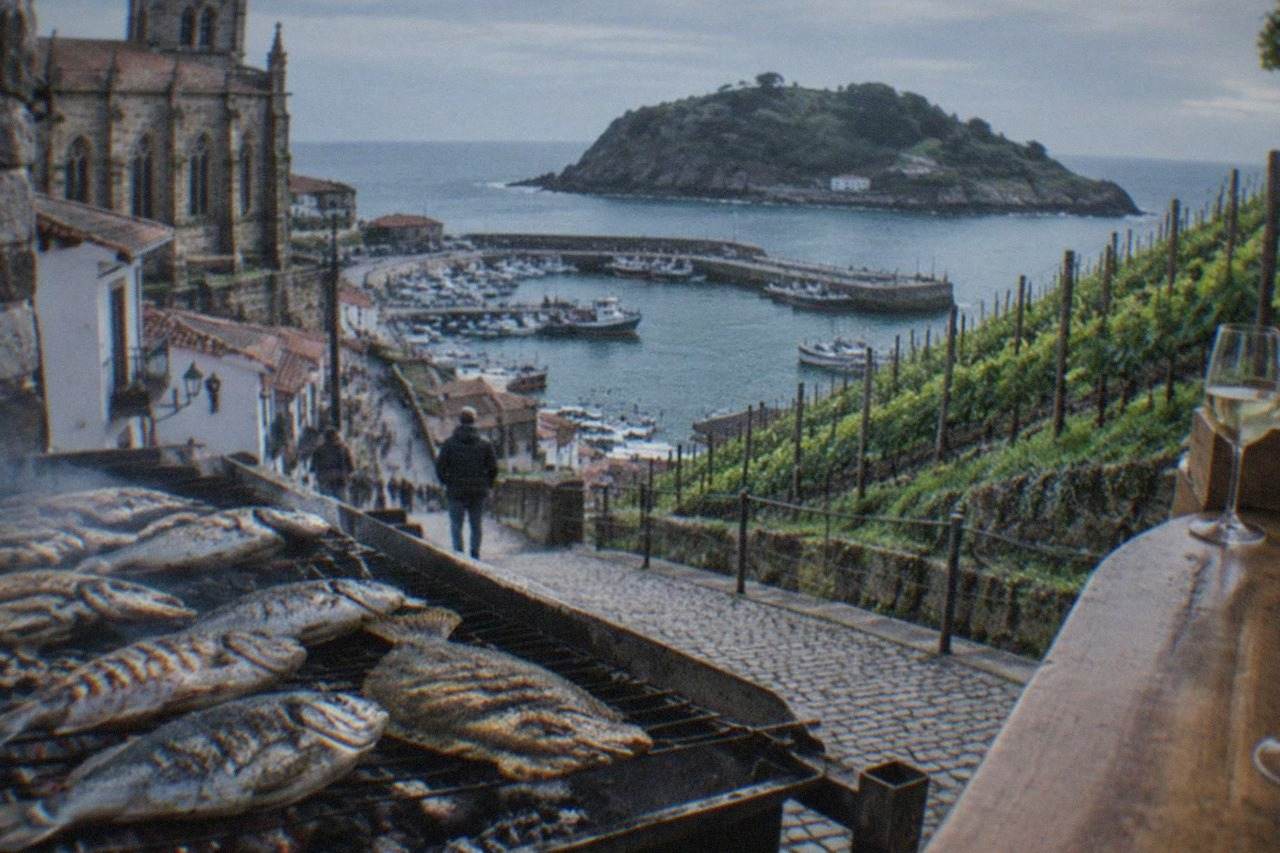
Txakoli is a young white wine, usually lightly sparkling, made in the Basque Country from Atlantic grape varieties grown close to the coast, and the heartland reached from San Sebastián is the txakoli country around Getaria and Zarautz on the Gipuzkoa coast. It is typically low in alcohol, sharply acidic and bottled young, meant to be drunk in the year it is made rather than cellared. The wine is a product of a wet, green Atlantic landscape, and that origin explains almost everything about how it tastes.
The Basque Country is not a place where heavy reds ripen. AEMET's climate normals for its Igeldo station, the weather post 250 m up on Monte Igueldo above San Sebastián, record 1,507 mm of rain a year spread over 141 rain days, and even July, the driest month, averages 86 mm. Vines here grow on hillsides facing the sea, trained high on wires so the damp air moves through the canopy, and the grapes keep a level of acidity that warmer wine regions would consider extreme. That acidity is not a flaw to be corrected, it is the entire point of the wine: it cuts through salted fish, oil, anchovies and cured ham the way lemon does.
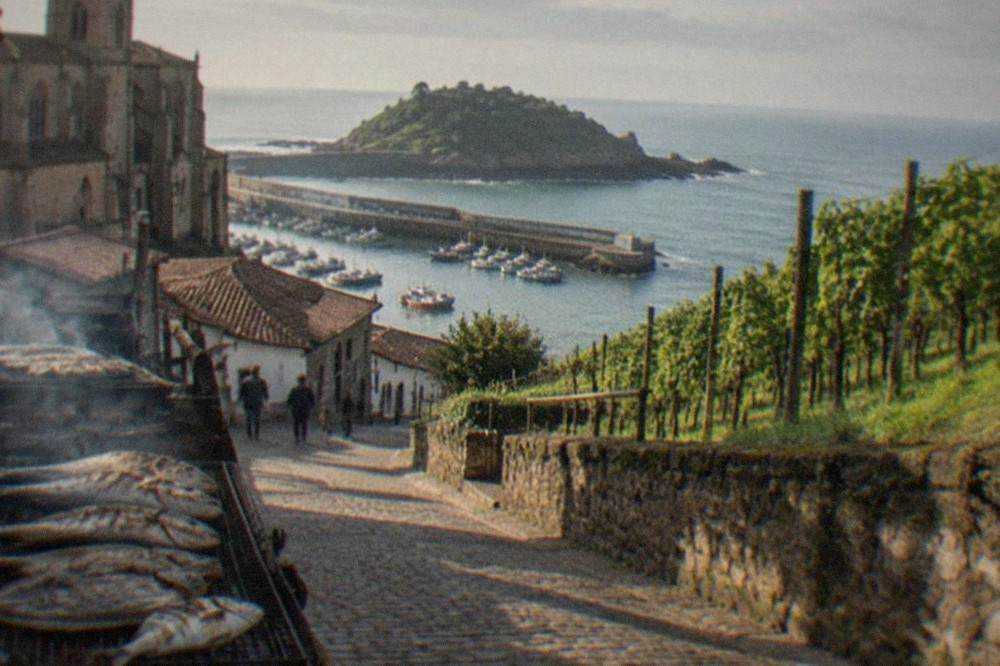
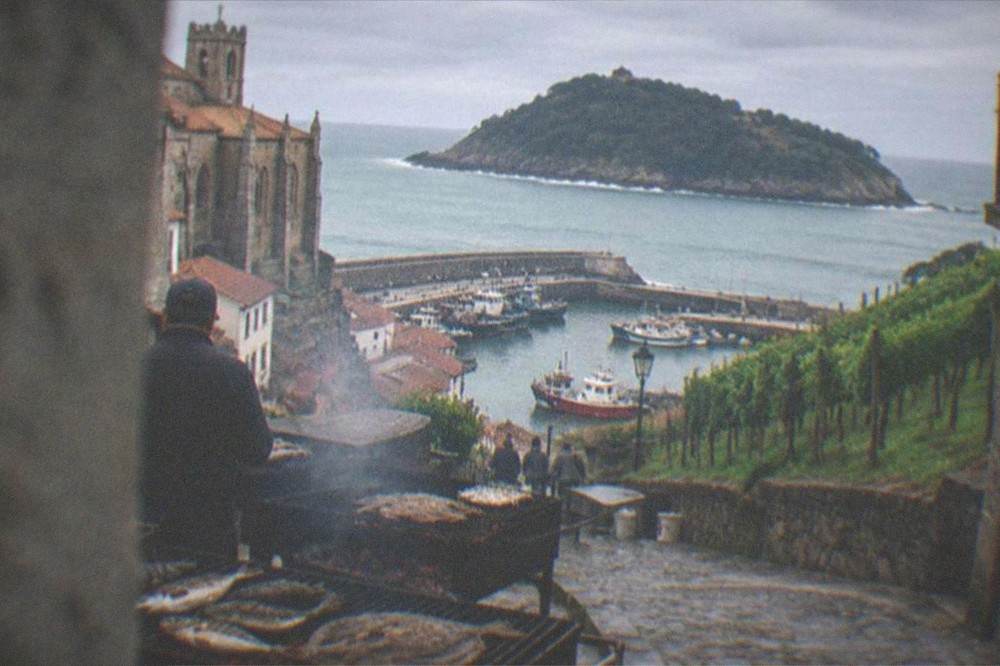
The nearest txakoli country to the city begins on the coast west of San Sebastián. The fishing town of Getaria, which also gives its name to the best known of the txakoli denominations, sits on a headland with vineyards running down toward the water, and the coastal road continues through Zarautz toward Zumaia and the flysch cliffs of the Basque Coast UNESCO Global Geopark, a member of the geoparks networks since 2010 and a UNESCO Global Geopark since 2015. The coastal Camino de Santiago route crosses this same stretch, and the tourism board lists its stages through Gipuzkoa from Irun through Pasaia, Donostia and Orio to Zarautz, Getaria, Zumaia and Deba.
If your question is specifically what kind of wine txakoli is, that has its own detailed answer, and so does the question of what txakoli tastes like and which other wines resemble it, covered in wines similar to txakoli.
What Is The Traditional Drink Of Basque?
There are two traditional drinks of the Basque Country, and any honest answer names both: txakoli, the young sparkling white wine of the coastal slopes, and sagardoa, Basque natural cider, whose txotx season in the cider houses runs from the middle of January to the end of April in the tourism board's words. Around San Sebastián the glass you meet first is txakoli, poured in every pintxo bar, while cider belongs to the cider houses of the interior, above all in Astigarraga.
The cider calendar and the wine calendar barely overlap. Txotx season, the months when the cider houses open their barrels and serve the fixed cider house meal, runs from mid-January to the end of April, and outside those months the cider house experience is a different, quieter thing. Txakoli has no equivalent season: it is bottled young and poured all year, and in San Sebastián nobody waits for a date to drink it. The result is a natural rhythm for a visitor: cider house country in the late winter and spring, txakoli on the coast from spring through autumn.
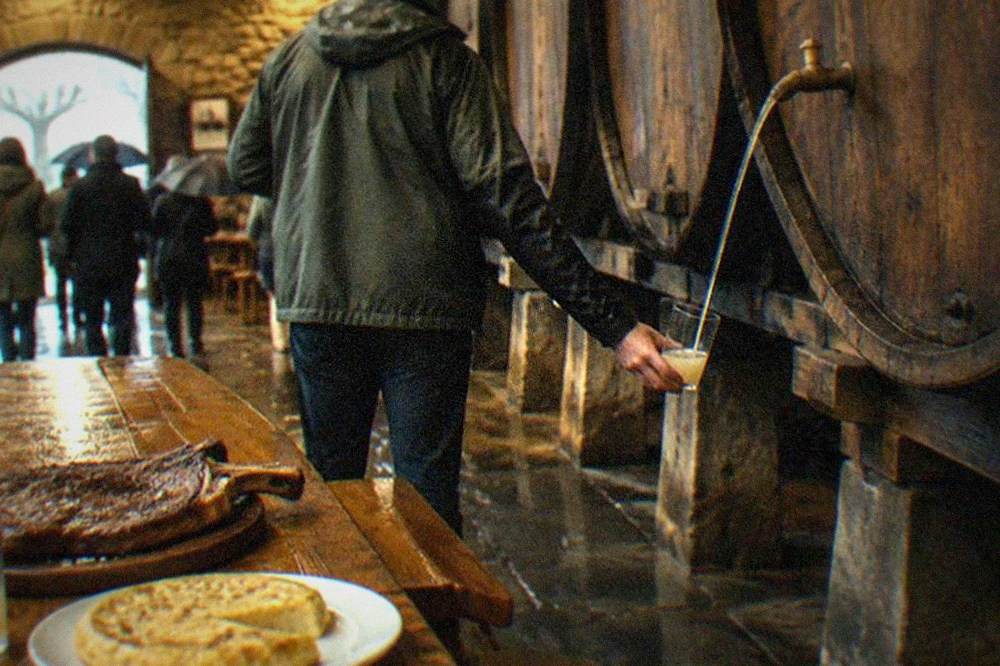
The divide is also geographic. Astigarraga, the cider house town, is a separate municipality inland from the city, and its Basque Cider Museum, Sagardoetxea, charges from 5.00 EUR for the museum visit and 9.00 EUR for the premium visit with a tasting. The txakoli country is the other way, on the coast. A visitor with a week can do both, and the two drinks between them describe the whole landscape: the apple orchards of the valleys and the vineyards of the sea cliffs.
For travellers who want the cider house half of the tradition handled for them, these are the site's picks for the region's drink experiences:
The cider house visit is the one that includes the txotx ritual and the full cider house lunch, run with the Gipuzkoa cider house association, and the Getaria trip covers the wine half of the tradition with hotel pickup included.
Why Do They Pour Txakoli So High?
The high pour exists because txakoli carries a light natural spritz of dissolved carbon dioxide from its young fermentation, and pouring it from a height breaks the wine against the glass, releasing that sparkle, waking the aroma and flattening the acidity into something softer on the palate. The bottle is held well above the glass, tilted so the stream falls in a thin ribbon, and only a small amount is poured at a time, to be drunk immediately before the fizz dies.
The practical details matter. The glass is only partly filled, because a tall fall needs room and because the wine is meant to be drunk within a minute or two of pouring, at the moment the bubbles are still rising. The pourer tilts the bottle sharply at the start and then lifts it, keeping the stream thin and steady. In a busy pintxo bar the person behind the counter does this dozens of times an hour, one glass at a time, and it is one of the reasons a fresh glass arrives rather than a bottle being left on the table.
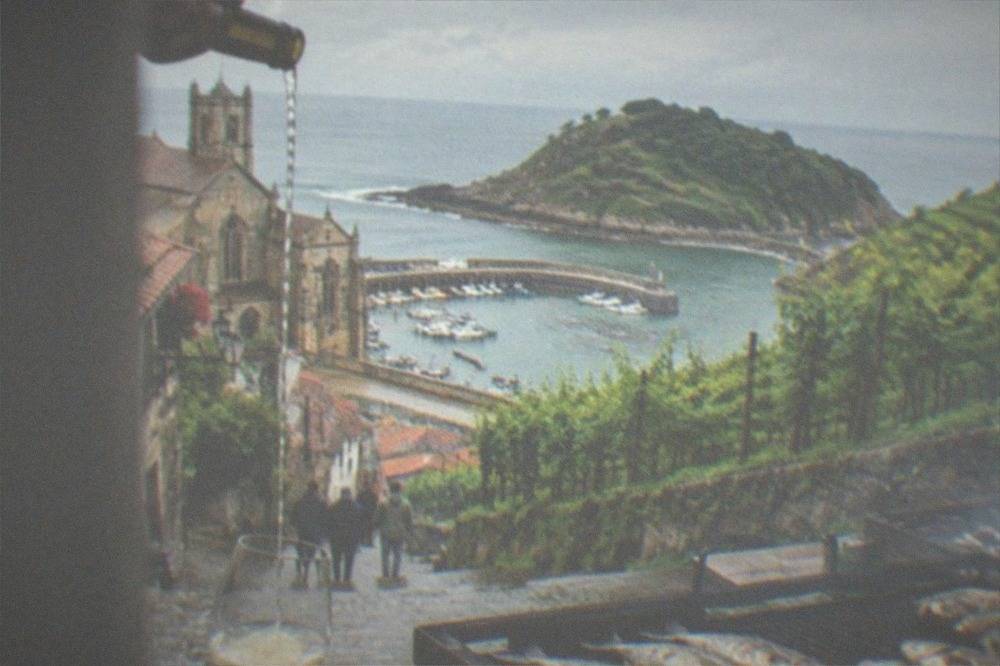
The full technique, how to hold the bottle and how to catch the stream without a splash, is written up in detail on the site's page on how to pour txakoli, and the question of how to pronounce the word txakoli has its own page as well. What belongs here is the reason behind the ritual: in a wine this young and this acidic, the pour is the last step of the making.
Where To Drink Txakoli In San Sebastian
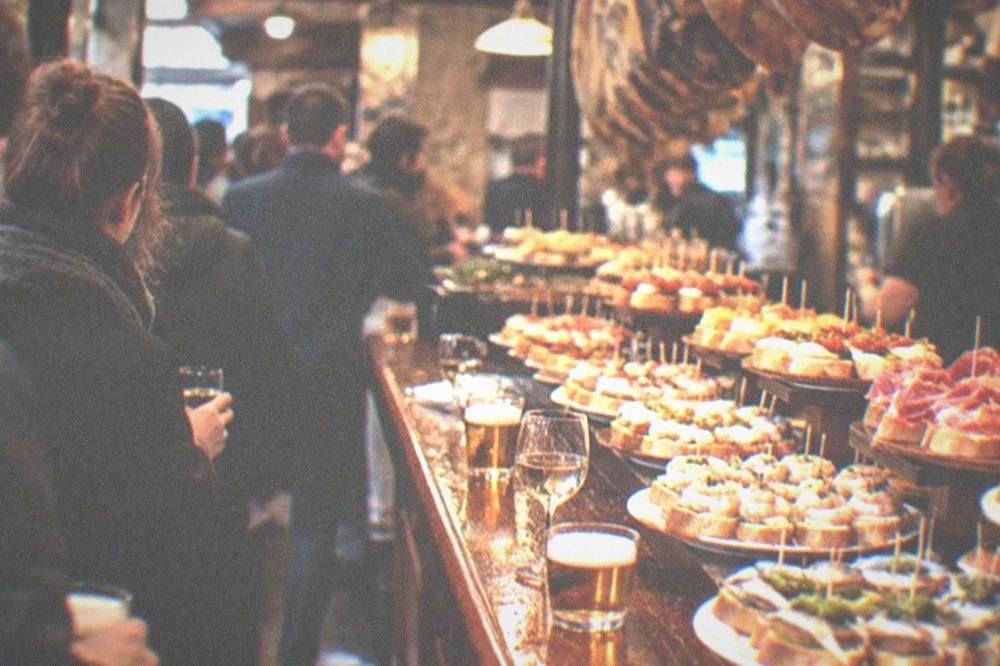
Txakoli is drunk in San Sebastián wherever pintxos are served, which means the Parte Vieja, the streets around the Boulevard, and the bars of the Gros and Centro neighbourhoods, and the wine is ordered by the glass, poured high at the counter, and matched to whatever is on the plate. There is no dedicated txakoli district in the city and no need for one: the wine is a house pour, listed by the glass in the same breath as the pintxos.
The pairing logic is local and consistent. Txakoli's acidity and spritz are built for the salt and oil of Basque bar food: anchovies, txangurro, salted cod, gildas, cured ham, and the fried fish of the old town's counters. The wine cleans the palate between bites, which is why a glass is ordered per round rather than a bottle per table. The city's pintxo culture is covered in depth elsewhere on the site, in the guides to what pintxos are and the best pintxo bars.
For visitors who would rather have the city explained while they walk between bars, a guided approach works well, and the range runs from short crawls that end with a pintxo and a drink included to premium tours with reserved seats at each counter. The Old Town pintxo crawl that runs as a small group from by City Hall is another option, and it has its own tour page on this site.
One caution for searchers: "San Sebastián wine" as a phrase belongs to a winery in St. Augustine, Florida, and has nothing to do with this city. There is no wine called San Sebastián here. The local white is txakoli, and the only connection between the city and the phrase is a shared saint's name.
Txakoli Versus Basque Cider: Two Drinks Of The Coast
Txakoli and sagardoa are the two native drinks of the Basque Country, and they divide cleanly by place and season: txakoli is a wine of the coastal slopes, bottled young and poured all year in the city's bars, while cider is a drink of the inland orchards whose barrel-opening txotx season runs from the middle of January to the end of April. Txakoli is poured high to release its sparkle, cider is caught in a glass held low under a barrel tap, and both are made within Gipuzkoa.
The comparison below gathers what is known about each drink and its season.
| Txakoli | Basque cider (sagardoa) | |
|---|---|---|
| What it is | Young, lightly sparkling white wine | Still natural cider, fermented from local apples |
| Where it is made | Coastal slopes of Gipuzkoa, around Getaria and Zarautz | Apple orchards inland, above all Astigarraga |
| How it is served | Poured from a height into a partly filled glass | Caught in a glass held low under the barrel's txotx tap |
| Season | Bottled young, poured all year | Txotx season runs from the middle of January to the end of April |
| Where you meet it | Pintxo bar counters across San Sebastián | Cider houses serving a fixed meal |
| Nearest visitor site | Getaria on the coast road | Sagardoetxea cider museum, Astigarraga |
The cider house meal is its own institution: a fixed sequence, eaten at long shared tables, with the barrel tapped whenever a drinker's glass is empty. The tourism board names the season for it and names the cider houses around Donostia and Astigarraga without publishing a price, an hour or an address for any of them, and this site does the same. The cider museum in Astigarraga is the one cider site with published admission, from 5.00 EUR for the museum visit and 9.00 EUR for the premium visit with tasting.
The site's related tour on this subject is the cider house day itself:
It is run with the Gipuzkoa cider house association and covers the orchard, the cellar, the txotx ritual and lunch, and it can be checked via the operator's live listing at Check availability.
Getaria: The Txakoli Capital On The Gipuzkoa Coast
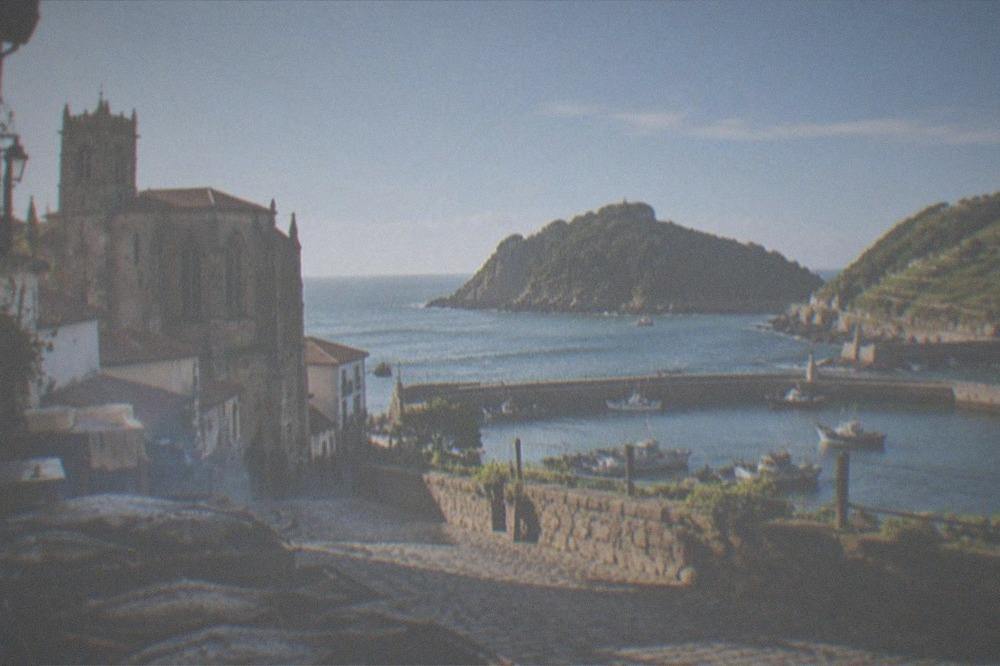
Getaria is the small fishing town on the Gipuzkoa coast that gives its name to the best known txakoli country, and it is the natural wine day trip from San Sebastián: a headland village with vineyards above the water, a one-star Michelin fish restaurant in Elkano, and the Cristóbal Balenciaga Museoa, all within the same walkable town. The town sits on the coastal road that continues to Zarautz and the flysch of Zumaia, the same stretch the coastal Camino de Santiago crosses.
The town's non-wine attractions are unusually strong for its size. The Cristóbal Balenciaga Museoa charges 14 EUR general admission, 9 EUR reduced, and keeps longer hours in July and August, daily 10:30 to 20:00, against Tuesday to Sunday 10:30 to 18:00 from April to October and Wednesday to Sunday 10:30 to 17:00 from November to March. In the MICHELIN Guide Spain 2026, Elkano in Getaria holds one star, one of 19 stars across 11 restaurants in the province of Gipuzkoa. The town is also a stage of the coastal Camino, on the board's listed route between Zarautz and Zumaia.
| Getaria sight | What the verified record states |
|---|---|
| Cristóbal Balenciaga Museoa | 14 EUR general, 9 EUR reduced; daily 10:30 to 20:00 in July and August |
| Elkano | One MICHELIN star, MICHELIN Guide Spain 2026 |
| Coastal Camino | Stage 5 of the board's Gipuzkoa list: Zarautz, Getaria, Zumaia |
| Txakoli country | Vineyards on the coastal slopes above the town |
| Basque Coast Geopark | The Zumaia flysch stretch, UNESCO Global Geopark since 2015 |
The easiest wine-focused way to reach the txakoli country from the city is the small-group Getaria trip with hotel pickup:
For travellers who prefer to move under their own steam, the site's guide to Getaria covers the town and the coast road in detail. There is also a longer option that combines walking with the wine: a coastal winery trail walk with three txakoli tastings and a train ticket back, listed below with the site's other picks.
When To Visit San Sebastian For Wine And Cider
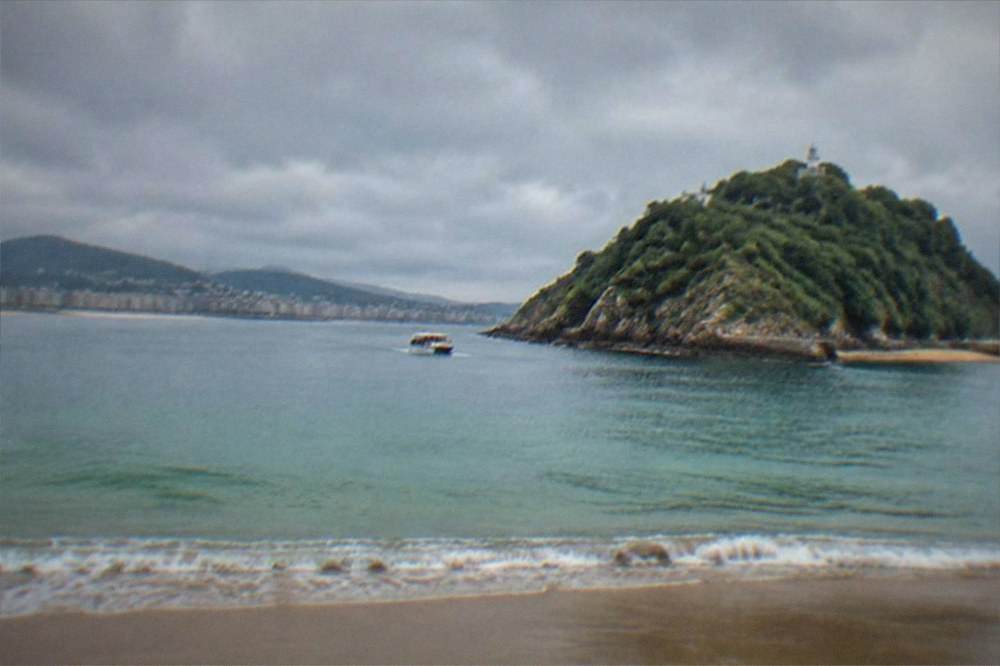
The best window for both drinks together is spring, from late March through May, when the txotx cider season is still open until the end of April and the txakoli country on the coast is green and quiet before the summer crowds, and AEMET's normals for the Igeldo station show May averaging 14.4 C with 181 sun hours against 120 mm of rain. For txakoli alone, any month works, since the wine is poured all year.
The climate table below is the one to plan around, taken from AEMET's normals for the Donostia / San Sebastián, Igeldo station, period 1981 to 2010. The station sits 250 m up on Monte Igueldo, so the seafront runs slightly warmer than these values.
| Month | Mean C | Rain mm | Rain days 1mm+ | Sun hours |
|---|---|---|---|---|
| Jan | 8.5 | 141 | 13.2 | 98 |
| Feb | 8.7 | 110 | 11.6 | 107 |
| Mar | 10.3 | 113 | 12.4 | 144 |
| Apr | 11.3 | 138 | 13.4 | 157 |
| May | 14.4 | 120 | 12.2 | 181 |
| Jun | 16.9 | 90 | 10.6 | 189 |
| Jul | 18.9 | 86 | 9.8 | 196 |
| Aug | 19.5 | 117 | 10.5 | 190 |
| Sep | 18.0 | 111 | 10.1 | 179 |
| Oct | 15.5 | 159 | 11.8 | 140 |
| Nov | 11.3 | 169 | 13.0 | 102 |
| Dec | 9.1 | 151 | 12.4 | 93 |
Read the table honestly: this is a wet Atlantic city, with 1,507 mm of rain a year over 141 rain days, and no month averages under 86 mm. November is the wettest at 169 mm, July the driest at 86 mm, and August, at 117 mm, is wetter than June at 90 mm, July at 86 mm and September at 111 mm. None of this argues against visiting, it argues for packing a layer and booking indoor tables, and the city's answer to rain is the same as its answer to sun: a counter, a plate and a glass of something local.
For a fuller treatment of the calendar, see the site's guides to the best time to visit and San Sebastian weather.
Common Questions About Txakoli In San Sebastian
These are the questions visitors ask most often about txakoli in San Sebastián, answered briefly below: how it is poured, what it is, where it comes from, and how it fits beside cider in the Basque drinking tradition. Each one is answered in a few sentences below, with links to the site's dedicated answer pages where a question has its own full treatment.
Why do they pour Txakoli so high?
The high pour releases the wine's light natural sparkle: the fall breaks the txakoli against the glass, waking the aroma and softening its sharp acidity. Only a small amount is poured at a time, a few centimetres, meant to be drunk while the bubbles are still rising. The full technique is on the site's page about pouring txakoli.
What Is The Traditional Drink Of Basque?
The Basque Country has two: txakoli, the young sparkling white wine of the coastal slopes, and sagardoa, the natural cider of the inland orchards, whose txotx season runs from the middle of January to the end of April. Around San Sebastián the glass you meet first is txakoli, poured in the pintxo bars all year.
Is txakoli only made near San Sebastian?
No. Txakoli is made in denominations across the Basque Country and beyond, but the heartland reached from San Sebastián is the coastal country around Getaria and Zarautz in Gipuzkoa, under an hour from the city. That stretch also carries the coastal Camino route and the flysch of the Basque Coast Geopark beyond Zumaia.
Can you visit a txakoli winery from San Sebastian?
Yes. Small-group tours run from the city to the Getaria txakoli country with hotel pickup included, and a longer coastal option combines a winery trail walk with three txakoli tastings and a train ticket back. Independent travellers can reach the coast by vehicle along the same road the day trips use.
Does txakoli go with pintxos?
That pairing is the local default. The wine's acidity and spritz cut through the salt and oil of Basque bar food, from anchovies to cured ham, which is why it is ordered by the glass per round rather than by the bottle. The site's guides to pintxos and the best pintxo bars cover where to do it.
A glass of txakoli, poured high and drunk fast, is the shortest possible introduction to how San Sebastián eats and drinks, and the vineyards that produce it are close enough that the same trip can stand in a cider house in Astigarraga in the morning and on a sea-facing slope above Getaria in the afternoon. For everything else the city offers, San Sebastian Spain Guide covers it in depth, from the guide to what San Sebastian is known for to the full list of things to do in San Sebastian.