Txuleta: Where To Eat Basque Steak
Txuleta is the bone-in rib steak that anchors the Basque grill table, and San Sebastián, in the Basque Country of Spain, is a city where many visitors first meet it. This page explains the cut, the cider house ritual that surrounds it and how to order one without guesswork.
Short answer
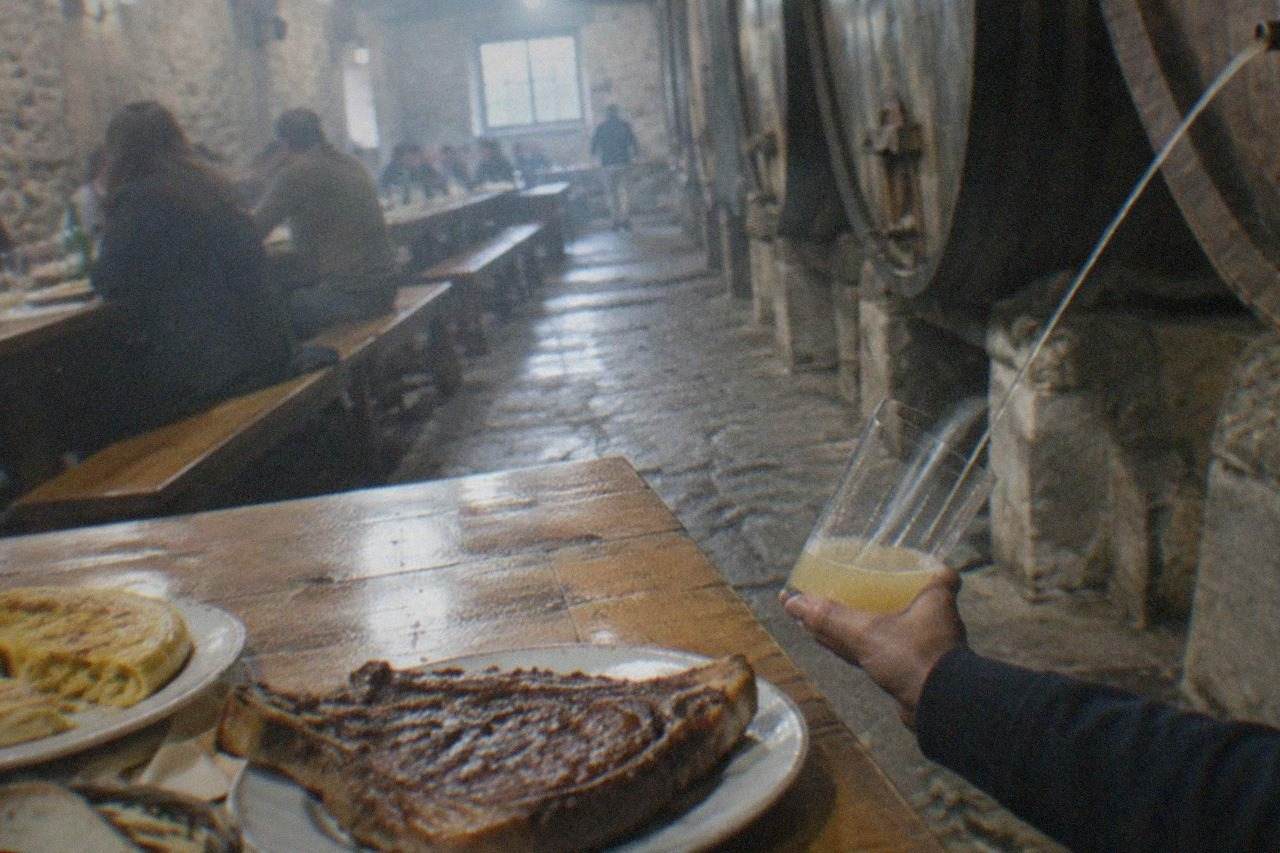
A txuleta is a thick, bone-in rib steak, usually cut from an older dairy cow, salted with coarse flakes and grilled over holm-oak embers. In San Sebastián the classic place to eat one is a cider house during txotx season, mid-January to late April, where it arrives with cod omelette, fried cod, peppers and txakoli or cider straight from the barrel.
Txuleta is the bone-in rib steak that anchors the Basque grill table, and San Sebastián, in the Basque Country of Spain, is a city where many visitors first meet it. Its Basque name, txuleta, comes from chuleta, the Spanish word for a chop or steak on the bone, and in Donostia, the city's Basque name, the word covers a specific thing: a thick slab of beef, bone in, fat cap on, cooked over wood embers and served on a wooden board with nothing but salt. It is not a tenderloin, not a porterhouse and not a supermarket ribeye, and the difference matters enough that this page exists.
Most people eat their first txuleta in one of two settings: a grill restaurant in the city, or a cider house in the hills behind it, where the steak is one course of a fixed sequence and the cider pours straight from the barrel. Both are covered below, along with what to order, what to drink with it and how the season shapes the whole custom. For the wider food picture, start with what to eat in San Sebastián and work outward.
What Is A Txuleta?
A txuleta is a bone-in rib steak, typically cut two to three fingers thick from an older dairy cow, salted with large flakes and grilled over holm-oak embers, then rested and served sliced on the bone. The fat and the bone carry most of the flavour, the meat is eaten closer to rare than medium, and the cut is the centrepiece of the Basque grill tradition rather than a single restaurant's signature dish.
The word deserves unpacking. In Spanish, chuleta means any chop, from pork to lamb to beef. In Basque usage around San Sebastián, txuleta has narrowed to mean beef rib on the bone, and when a menu here says txuleta without qualification, beef is what it means. Lamb chops exist everywhere in the Basque Country, but they are called costillas or txilistones, not txuleta, and ordering the wrong one is a common first-night mistake.
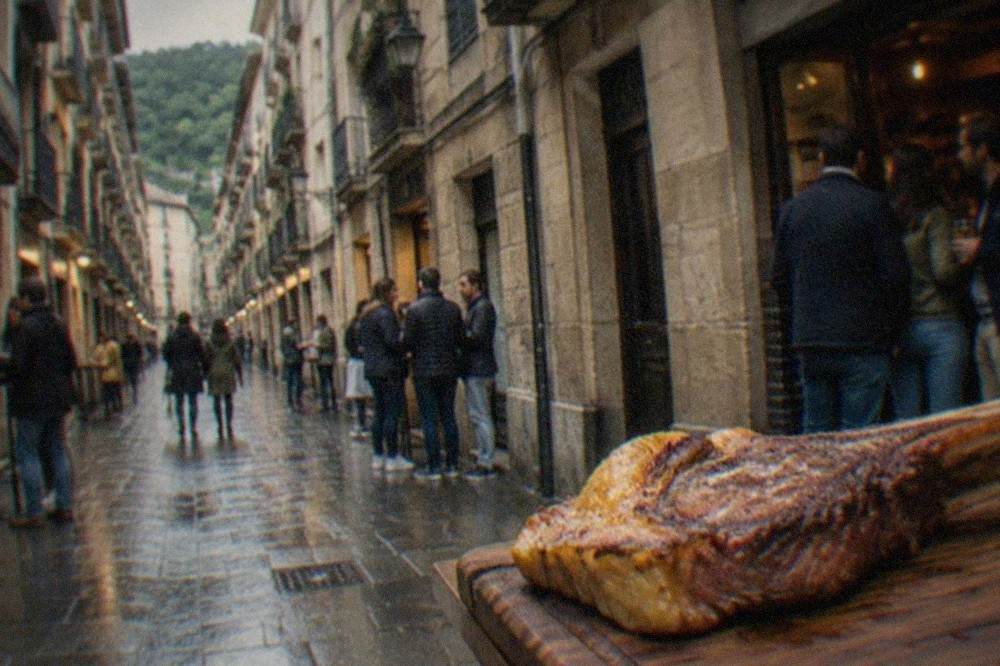
The animal matters as much as the cut. The txuleta tradition grew up around old dairy cows, animals that spent years producing milk and built deep flavour and yellow fat before being sold for beef. The best-known of these is the rubia gallega, the blonde cow of Galicia, but Basque and Navarrese dairies supply the same trade, and the general rule holds: meat from an animal of eight or more years tastes different from meat from a two-year-old bullock. The fat renders differently, the bone marrow contributes, and the steak stands up to fire in a way young beef does not.
Cooking is deliberately simple. Coarse salt, high dry heat from embers rather than flame, a turn or two, and a rest before slicing. There is no marinade, no sauce and no rub. The reasoning is that an old cow's flavour needs nothing added, and anything added hides it. A grill cook who talks about the wood, the distance of the grate from the embers and the resting time is telling you the whole recipe.
Where To Eat Txuleta In San Sebastian?
The two classic settings are a cider house in the Gipuzkoa hills during txotx season, where the txuleta is one course of a fixed menu poured with barrel cider, and a grill restaurant in or near the city, where it is ordered by weight and cooked over wood embers. The cider houses cluster around Astigarraga, a separate municipality a short ride from the city, while grill houses sit in the Parte Vieja, Gros and out towards the villages.
Cider houses, sagardotegiak, are the tradition's home ground. Astigarraga, next to San Sebastián, holds the densest concentration of them anywhere, and the tourism board names cider houses for both Donostia and Astigarraga in its coverage of the txotx season. The meal is not à la carte: you eat what the house serves, in the order the house serves it, and the txuleta is the main course. It is a loud, standing, communal way to eat, closer to a festival than a dinner.
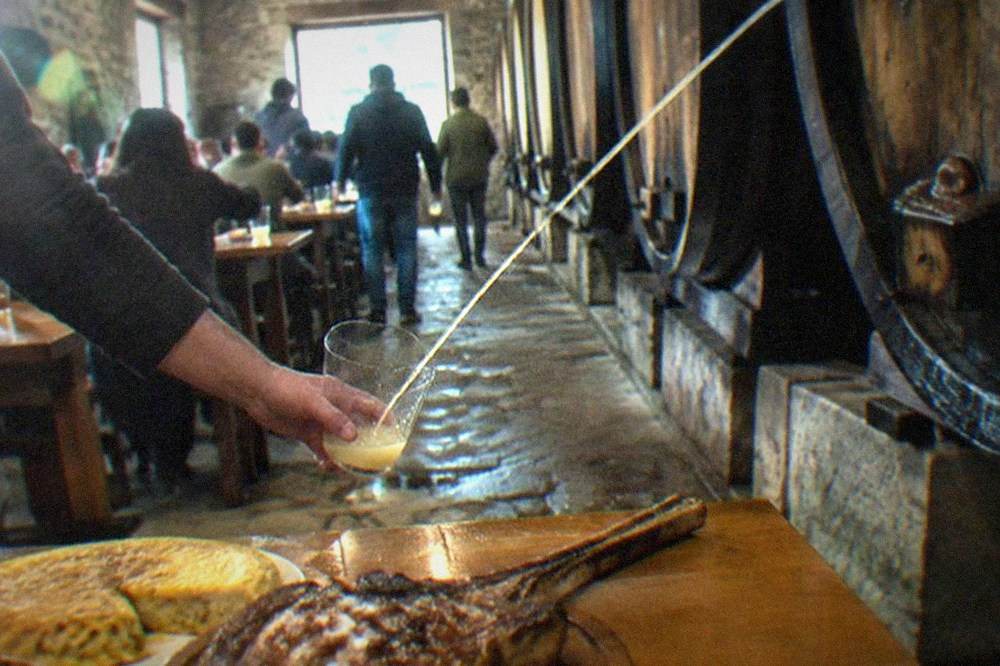
Grill restaurants are the year-round alternative. The Basque grill tradition, asador cooking, runs on the same beef and the same embers, and the city's serious grill rooms print txuleta by weight, often with the animal's age and origin on the card. The Michelin-starred asador tradition of the region, most famously Etxebarri up the valley from the coast, is the same craft at its highest pitch, and the Michelin restaurants guide covers how that world maps onto the city's 11 stars across 6 restaurants in the MICHELIN Guide Spain 2026.
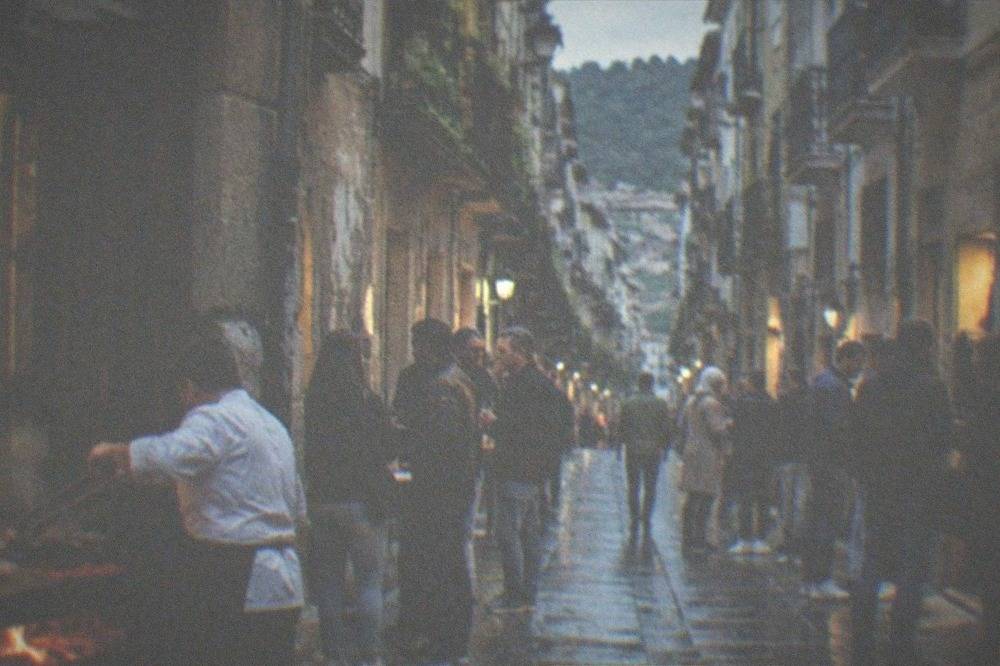
A third door into the subject is a guided food experience. A market-and-pintxo walk through the old town shows the raw material first, and a cooking class puts you at the stove instead of the table.
If you would rather be led to the tables than find them alone, the pintxos and food tours guide lays out the options, and locals'-table hunting is its own question, covered in where the locals eat in San Sebastián.
How Does A Cider House Txuleta Meal Work?
A cider house meal runs in a fixed order: txakoli or cider on arrival, then a salt cod omelette, then fried salt cod with peppers, then the txuleta with roasted peppers, then cheese, quince paste and walnuts for dessert, with natural cider drunk from the barrel throughout. You stand to catch the cider at the barrel, eat the early courses standing too, and only the steak course reliably comes with a seat.
The sequence is the menu. There is no choosing, no substitutions and no pacing of your own, and that is the point: the house has done this for generations and the order is engineered around the cider. The omelette, tortilla de bacalao, lands first because salt cod and cider are the historic pairing at the root of the whole custom. Fried cod and peppers follow, and the fat readies the palate for the steak.
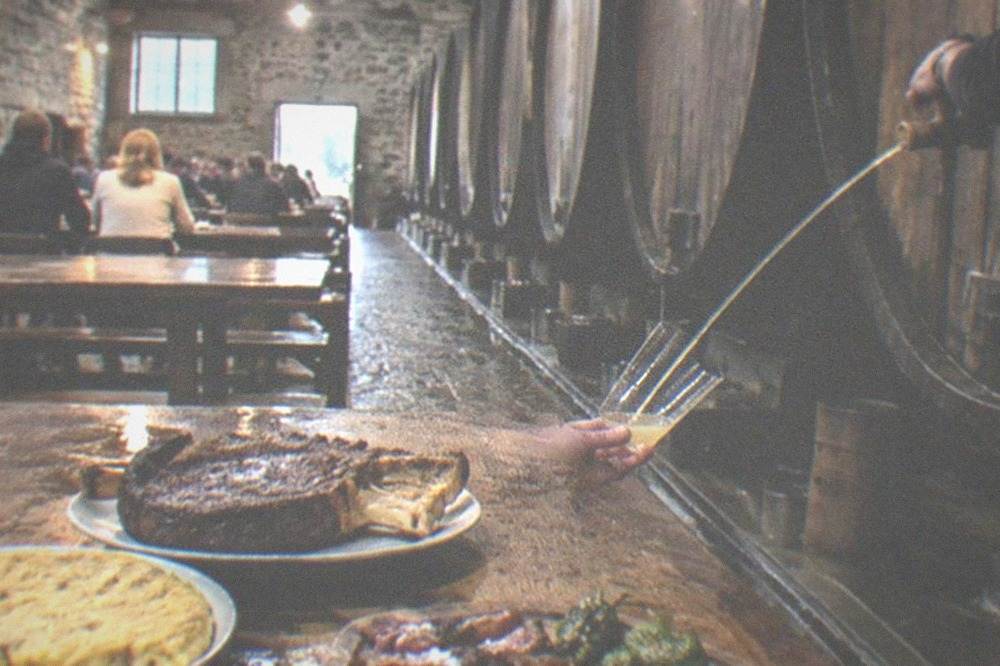
The txuleta arrives sliced on the bone, with roasted green peppers, and you eat it with bread and the same salt it was cooked with. Dessert is cheese with membrillo, quince paste, and walnuts, cracked at the table. The table below shows the sequence in order.
| Course | What it is | How it is served |
|---|---|---|
| Arrival drink | Txakoli or cider | Poured at the barrel or the table |
| First course | Salt cod omelette, tortilla de bacalao | Cut in wedges, eaten standing |
| Second course | Fried salt cod with peppers | Shared platter |
| Main course | Txuleta, bone-in rib steak | Sliced on the bone, with roasted green peppers |
| Dessert | Cheese, quince paste, walnuts | Shared board, walnuts cracked by hand |
| Drink throughout | Natural cider, txotx from the barrel | Caught at the spout in a glass |
The cider itself is poured by you, not for you. When the barrel is opened, the txotx call goes up, everyone crowds to the spout and each person catches a thin, long stream in their glass and drinks it fast, before the gas goes flat. The technique is to hold the glass low and let the cider splash and aerate on the way down. It sounds like a party trick and it is one, but it is also how natural Basque cider is meant to be drunk, and the txakoli guide explains the same logic behind the region's other pouring ritual.
What Cut Should You Order And How Should It Be Cooked?
Order a bone-in rib txuleta cut thick, at least two fingers, from an old dairy cow if the menu names one, and ask for it rare to medium-rare, which in Basque kitchens is expressed as poco hecha or al punto, never bien hecha. The bone and fat cap are the flavour, so a boneless or trimmed version defeats the object, and a steak this thick cooked past medium dries out before the centre is done.
The vocabulary is small and worth knowing before you order. Weight is usually quoted per portion or per steak, and a txuleta for two is a normal order in a grill house, carved at the table. Doneness in Basque and Spanish grill rooms runs the same scale as anywhere in Spain, but the kitchen's default sits rarer than a North American default, and pushing a txuleta to well done is a request a grill cook will honour reluctantly.
| Term on the menu | What it means | What to expect |
|---|---|---|
| Txuleta de vaca | Steak from an old dairy cow | Deep flavour, yellow fat, the classic order |
| Txuleta de vacuno | Generic beef rib steak | Younger animal, milder, still on the bone |
| Rubia gallega | Blonde Galician cow | The most celebrated source animal |
| Poco hecha | Rare | The kitchen's comfort zone |
| Al punto | Medium-rare to medium | The outer edge of usual |
| Bien hecha | Well done | Possible, but the fat and marrow lose most of their point |
Salt is the only seasoning, and it is applied coarse and late, so the flakes sit on the crust rather than drawing out the juice. If you are served a steak that needs more, the house will bring more salt rather than a sauce. Chimichurri and its cousins belong to other grill cultures, not this one.
What Should You Drink With Txuleta In San Sebastian?
The two correct answers are natural cider in a cider house and txakoli in a restaurant, with a Rioja red as the accepted third option for those who want tannin against the fat. The cider and the steak are historically one dish, txakoli's acidity cuts the fat the way the region's white wine always has, and a structured red from the neighbouring Rioja Alavesa is the local choice when only red will do.
The pairing logic is acid against fat. An old cow's fat is rich and persistent, and the two local drinks built to meet it are both high in acidity and low in everything else. Natural Basque cider is still, dry and sharp, and it exists in this meal precisely because it refreshes the mouth between slices of beef. Txakoli, the local white, does the same job cold and carbonated, and the what wine is San Sebastián known for question covers it in more depth.
| Drink | Where it fits | Why it works |
|---|---|---|
| Natural cider, txotx | Cider houses, txotx season | Sharp and dry, historically part of the same meal |
| Txakoli | Grill houses, city restaurants | High acid, light body, cuts the yellow fat |
| Rioja red | Anywhere, when red is preferred | Tannin and structure stand up to grilled beef |
| Cider house cider, bottled | Outside txotx season | Same drink, still and sharp, without the barrel ritual |
Water matters more than visitors expect. The fat is salty and the cider is dry, and a table that starts with water keeps pace with the meal. Sweet drinks clash with everything on the board, from the cod omelette to the quince paste.
When Is Txotx Season And Does It Matter For Steak?
Txotx season runs from the middle of January to the end of April, in the tourism board's own wording, and during those months the cider houses pour straight from the barrels in the full ritual, while outside the season they serve a fixed menu with bottled cider and no txotx call. The steak itself is available year-round in grill restaurants, so the season changes the ceremony, not the cut.
This is the single most useful planning fact on the page. The txotx ritual, standing at the barrel, catching the stream, drinking it fast, is a winter-to-spring custom, and the tourism board describes the season as running from the middle of January to the end of April without pinning exact first and last days. A visitor in February walks into a cider house at its loudest and best. A visitor in July gets the same kitchen, the same txuleta and a quieter room.
| Time of year | Cider house experience | City grill houses |
|---|---|---|
| Mid-January to late April | Txotx season, barrels open, full ritual | Open as normal |
| May to mid-January | Fixed menu, bottled cider, no barrel call | Open as normal |
| Semana Grande week, mid-August | City at its busiest, cider houses off-peak | Busy, book ahead |
| Film festival week, late September | Industry crowds in the centre | Busy, book ahead |
The weather shapes the steak less than the cider. AEMET's normals for its Igeldo station show 1,507 mm of rain a year over 141 rain days, and even July, the driest month, averages 86 mm, so a cider house visit in February is an indoor, rain-proof plan by design. The whole ritual was built for the cold months, when the cider had finished fermenting and the barrels needed drinking.
How Much Txuleta Should You Order?
Order by weight for the table rather than by portion, with a bone-in rib steak for two as the standard unit, and expect the fixed cider house menu to bring its own txuleta sized by the house, so the question only really applies in grill restaurants. A thick txuleta carries bone and fat that are not eaten, so the cooked yield is smaller than the ordered weight.
In a grill house, the card usually quotes price per steak or per portion and the kitchen sizes the cut to the party. The honest way to order is to say how many people, how hungry, and whether the txuleta is the whole meal or the end of one. A table that has already eaten pintxos in the Parte Vieja orders less steak than a table that arrived hungry, and the is it expensive to eat out in San Sebastián question frames the budget side of the same decision.
In a cider house, none of this applies. The menu is fixed, the txuleta course is included, and the only choice you make is whether to go back to the barrel. That simplicity is a large part of why the custom has survived, and it is why a first-timer is usually pointed at a cider house rather than a grill room: there is no way to order it wrong.
A guided farmhouse and cider house visit handles the logistics of reaching one, which matters because the classic houses sit outside the city in Astigarraga and the surrounding hills, and the ride there is part of the plan.
Can You Cook A Txuleta At Home?
Yes, and the method is short: bring the steak to room temperature, salt it coarsely just before cooking, sear it hard over the hottest heat you have, rest it longer than you cooked it and slice it off the bone against the grain. What you cannot fully reproduce at home is the holm-oak embers and the old-cow beef, so source the best bone-in rib you can and treat the fire as the variable that matters most.
The cut to ask a butcher for is a bone-in rib steak, thick, from an older animal if available, with the fat cap left on. Everything else is technique. Salt late and coarse. Cook over embers if you have them, a very hot cast pan if you do not, and do not move the steak until the crust forms. Rest it properly, five minutes at minimum for a cut two fingers thick, and slice perpendicular to the ribs, standing the steak on the bone so the knife follows the muscle.
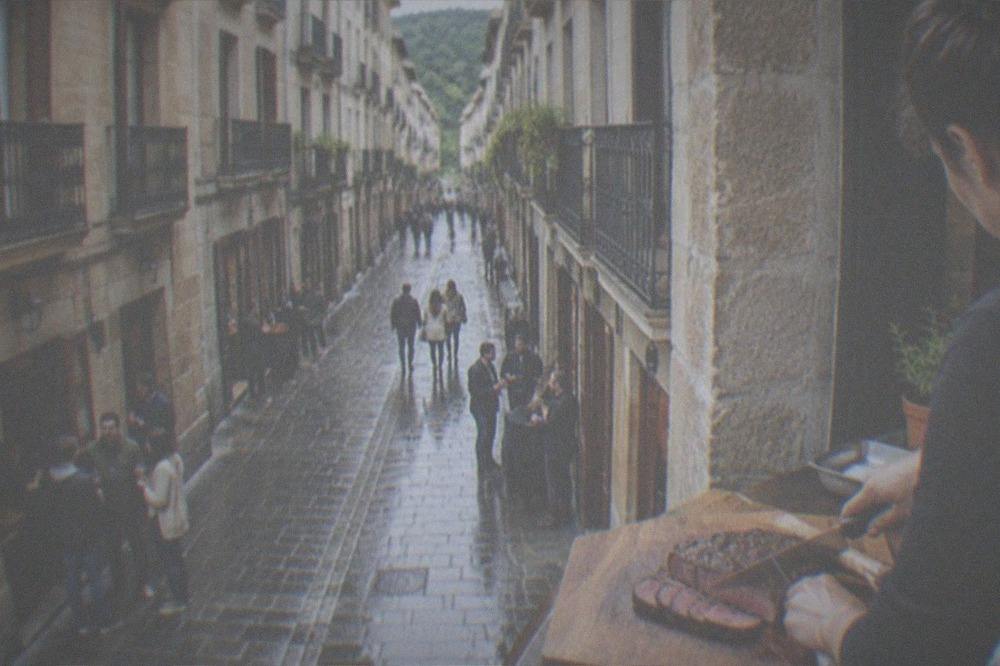
The drink translates too. Txakoli is exported and travels well, and a sharp, dry still cider stands in for the barrel. What does not translate is the room: the txotx call, the crowd at the spout and the smell of the grill are the parts of the meal you have to come to San Sebastián for, and the is San Sebastián worth visiting question makes that case in full.
Where Does Txuleta Sit In The Wider Basque Food Culture?
Txuleta is the grill-course centrepiece of a food culture better known for its pintxos and its Michelin stars, and it is the dish that links the cider house tradition, the farmhouse table and the asador lineage into one custom. San Sebastián's 11 stars across 6 restaurants in the MICHELIN Guide Spain 2026 sit on top of a much older, humbler steak-and-cider tradition that predates every tasting menu in the city.
The two cultures are not rivals, they are layers. The pintxo bars of the Parte Vieja, covered in the best pintxo bars guide, run on small plates and standing rooms. The cider houses run on one big plate and a barrel. The tasting rooms run on neither, and the Anthony Bourdain guide records how the city's most famous food visitor took the whole stack of layers seriously, from the grill to the stars.
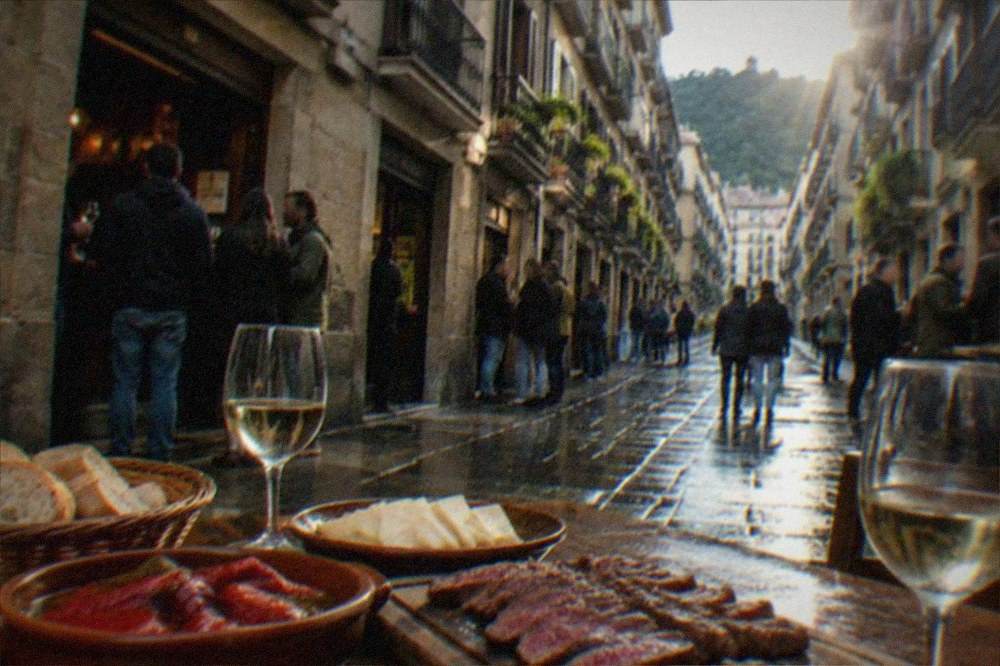
The steak also connects the city to its province. Gipuzkoa's grill tradition runs from the coast inland, through Tolosa and up the valley towards the asador country, and the beef, the cider and the peppers all move along the same routes. A txuleta eaten in the city tastes of a supply chain that has nothing to do with the sea on the other side of La Concha, and everything to do with the green hills behind it.
How Do You Plan A Txuleta Day In San Sebastian?
Build the day around one big steak meal and keep everything before it small: pintxos or a market walk at midday, the txuleta as the evening event, and txakoli or cider as the only serious drinking. In txotx season, aim the evening at a cider house and treat the journey there as part of the booking, and outside the season, aim at a grill house in the city and keep the night walk on the bay afterwards.
The practical pieces are simple. A cider house evening needs a way back: the houses sit in Astigarraga and the hills, and a guided visit or a booked ride solves it. A grill house evening needs a reservation, especially in August, when INE's hotel data shows the city at its peak of 245,769 overnight stays in a single month, and during the film festival week in late September. The how many days in San Sebastián question helps place the steak night inside a longer stay.
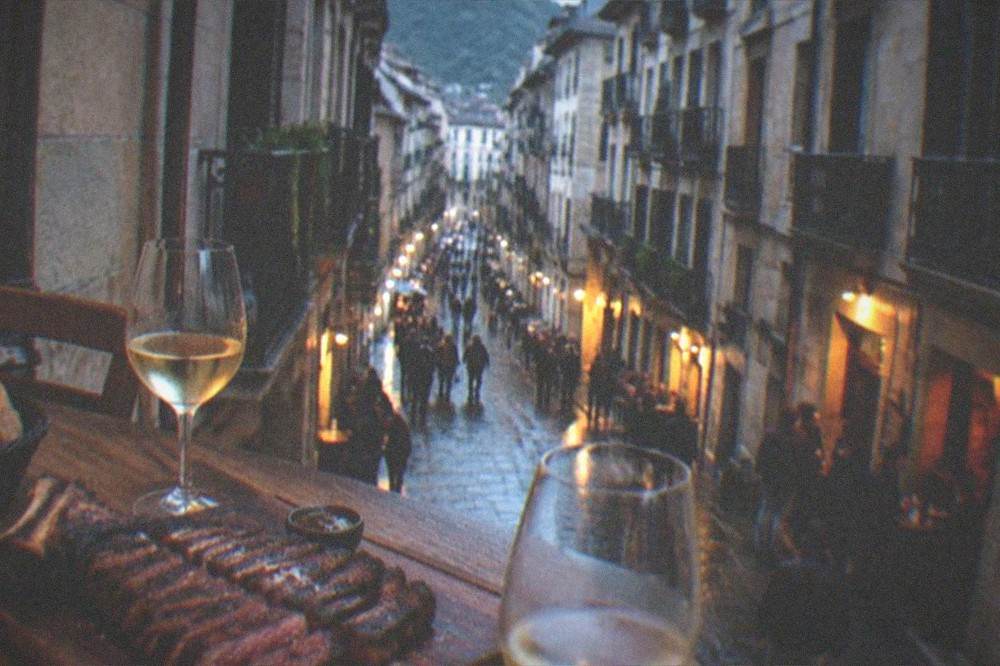
A guided version of the whole idea exists: a market visit followed by a hands-on class puts the city's raw ingredients and its cooking in one afternoon.
The premium market-and-pintxo walk is the other natural pairing, and the two can be booked as separate days of one trip.
For the full list of guided eating options, see the pintxos and food tours guide, and for the city's food identity in one place, what San Sebastián is known for covers the ground from the bay to the barrel. More on the whole scene is collected on San Sebastian Spain Guide.
Common Questions About Txuleta In San Sebastian
What Is A Txuleta In San Sebastian?
A txuleta is a thick, bone-in beef rib steak, usually from an older dairy cow, salted coarsely and grilled over holm-oak embers. It is the main course of the Basque cider house meal and a staple of the region's grill restaurants.
What Part Of The Cow Is A Txuleta?
The rib, on the bone, with the fat cap left on. The Basque word comes from the Spanish chuleta, a chop, but in and around San Sebastián it has narrowed to mean beef rib specifically.
How Should You Ask For A Txuleta Cooked?
Rare to medium-rare, poco hecha or al punto. A cut this thick dries out before the centre turns grey, and the kitchens here default rarer than many visitors expect.
When Is Txotx Season In San Sebastian?
The tourism board gives the season as running from the middle of January to the end of April. Inside those months the cider houses pour straight from the barrels in the full ritual; outside them the same meal is served with bottled cider.
What Do You Drink With A Txuleta?
Natural cider in a cider house, txakoli in a restaurant, or a structured Rioja red if only red will do. The logic is acidity against the fat, and sweet drinks clash with the whole board.
Can You Get A Txuleta Outside Txotx Season?
Yes. Grill restaurants in the city serve bone-in rib steak year-round, and cider houses outside the season serve the same fixed menu with bottled cider instead of the barrel pour.