Is San Sebastian Expensive To Eat Out?
Is San Sebastián expensive to eat out? An honest breakdown of pintxo bar bills, Michelin star dining and the middle ground in Donostia, Basque Country, Spain.
San Sebastián, whose Basque name is Donostia, sits on La Concha bay in Gipuzkoa in the Basque Country, Spain, and it carries one of the heaviest food reputations in Europe. The MICHELIN Guide Spain 2026 counts 11 stars across 6 restaurants inside the city itself, which is a remarkable density for a municipality of 189,866 people. That reputation leads many visitors to assume a sandwich here costs what a steak costs elsewhere, and the assumption is wrong in both directions. Eating out in San Sebastián can be genuinely cheap, and it can be genuinely eye-watering, and which one you get depends almost entirely on which of the city's three distinct eating cultures you walk into.
Is San Sebastian Expensive To Eat Out?
No, not by default, and yes at the top end. The pintxo bars of the Parte Vieja serve small, serious food at bar prices, and a crawl from counter to counter remains one of the most affordable ways to eat well in Spain. The Michelin layer above that is a different economy entirely, priced like fine dining anywhere in western Europe. Visitors can skip the star layer entirely and still eat extremely well, so the city is only as expensive as the room you choose to walk into.
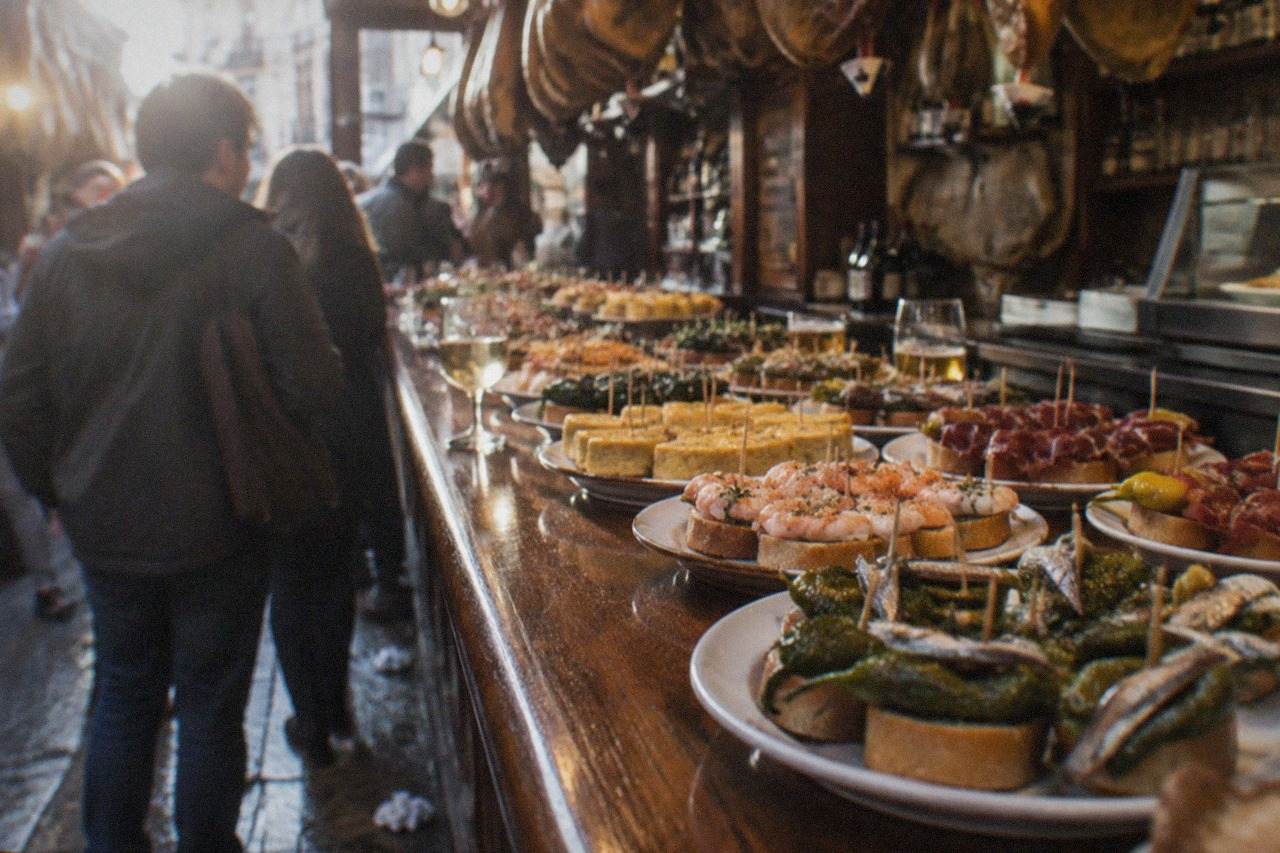
The reason the cheap end works is structural, not accidental. A pintxo is a single portion, often skewered on a toothpick so the bar can count what you ate, and you pay per piece. There is no forced table minimum, no cover charge culture to speak of, and no obligation to sit down at all: standing at the counter with a small drink is the normal, fully legitimate way to do it. A bar can turn over far more customers per square metre than a seated restaurant, and that turnover is what keeps the per-piece price honest. The custom is described in more detail in what a pintxo actually is, and the timing question, when the bars fill and when they empty, is covered in what time people eat pintxos in San Sebastian.
What makes the city feel expensive to some visitors is the mismatch between expectation and behaviour. Arrive at nine in the evening, sit down in the first restaurant you find on the Boulevard, order three courses with wine, and you will pay seated-restaurant prices in a city where the local specialty is precisely not that. Eat the way the city eats, moving between bars with a drink and two or three pieces at each, and the arithmetic changes completely. The dishes worth ordering, from txuleta steak to the burnt cheesecake that La Viña made famous, run the whole length of that price ladder, and knowing which ones belong to the counter economy is most of the battle.
How Pintxo Bars Keep The Bill Down In San Sebastian
Pintxo bars keep costs low by selling small portions at the counter, priced per piece, with no table service required and no minimum spend. You order one or two pintxos with a small drink, pay, and move to the next bar, so a full evening's eating is built from many small, individually cheap transactions rather than one large bill. The system rewards movement and curiosity, and it punishes nobody for eating lightly.
The economics deserve a moment, because they explain why the city's most celebrated food is also its most accessible. A bar's counter is its most valuable real estate, and a pintxo is designed to be eaten in two or three bites standing up. No table, no waiter running a section, no printed menu per customer, and a kitchen that can prep in bulk and plate in seconds. The customer pays for food and drink and almost nothing else. That is why locals treat a Thursday-evening route through four bars as a normal dinner, and why asking for a large plate in a pintxo bar is sometimes simply not something the bar does.
The drink matters as much as the food. Txakoli, the lightly spritzy local white wine, is the traditional pour, and it is poured from a height into a tumbler, which is a custom of its own; the bars also pour small beers, called zuritos, and house reds by the glass. Nobody expects a bottle. Ordering a small drink at each stop is part of the rhythm, and it keeps the per-bar cost down in exactly the same way the small plates do. The Gilda, an anchovy, olive and guindilla pepper skewer, is the canonical first pintxo of any crawl and shows how little a bar needs to do to be taken seriously.
Prices are not printed here, and that omission cuts both ways: prices move with the season and with the street. What can be said is that the pintxo economy has a deliberate low end and a deliberate high end, and the bars themselves make the distinction visible. A piece on a toothpick on the counter is one economy, and a plate brought to a table is another. When a guide walks you through that distinction bar by bar, the crawl stops being a gamble. This is the strongest argument for taking a tour on a first visit:
A guided crawl also solves the standing-order problem. Knowing how to ask for what is on the counter, how the toothpick-counting works at the till, and when a bar expects you to order verbally rather than point, is the difference between feeling like a participant and feeling like a spectator.
The same logic applies to the cooking side of the city's food culture. A market visit followed by a hands-on class turns the shopping-and-eating economy into something you can reproduce at home, and a farmhouse and cider house day moves the whole meal out to the countryside where it originates. All three are ways of paying once for a known format instead of guessing your way through an unfamiliar one, which is the same bet a pintxo crawl makes at a smaller scale.
Where The Michelin Money Goes In San Sebastian
The star restaurants are where San Sebastián gets expensive. The MICHELIN Guide Spain 2026 lists 6 restaurants holding 11 stars inside the city, including two three-star houses, Akelaŕe and Arzak, and dining at that level is priced like fine dining in Paris or Copenhagen rather than like a Spanish provincial city. This is a deliberate splurge category, not the default, and no visitor stumbles into it by accident.
The table below shows the full star map inside the municipality, as the 2026 edition lists it.
| Restaurant | Stars | Location |
|---|---|---|
| Akelaŕe | 3 | Donostia / San Sebastián |
| Arzak | 3 | Donostia / San Sebastián |
| Amelia by Paulo Airaudo | 2 | Donostia / San Sebastián |
| iBAi by Paulo Airaudo | 1 | Donostia / San Sebastián |
| Itzuli | 1 | Donostia / San Sebastián |
| Kokotxa | 1 | Donostia / San Sebastián |
The wider province matters too, because half the gastronomic halo sits outside the city limits and much of it is reachable as a day trip. Gipuzkoa as a whole holds 19 stars across 11 restaurants in the 2026 edition, and the geography is worth knowing before you plan a splurge, because Martín Berasategui is in Lasarte-Oria and Mugaritz is in Errenteria, both separate municipalities, and Elkano's grilled turbot is in Getaria on the coast.
| Restaurant | Stars | Town |
|---|---|---|
| Martín Berasategui | 3 | Lasarte-Oria |
| Mugaritz | 2 | Errenteria |
| Elkano | 1 | Getaria |
| Alameda | 1 | Hondarribia |
| Ama | 1 | Tolosa |
None of those addresses is "in San Sebastián", and a page that says otherwise is importing a fact from the wrong geography. The question of how many three-star houses the city itself holds is answered in how many 3-star Michelin restaurants there are in San Sebastian, and the broader cost-of-the-city question, accommodation included, is tackled in is San Sebastian the most expensive city in Spain.
How To Eat Well In San Sebastian Without The Star Prices
The middle of the market is where most locals actually eat, and it is neither a toothpick crawl nor a tasting menu. It is the sit-down restaurants of the neighbourhoods, the asadores grilling txuleta over charcoal, the cider houses of Astigarraga in season, and the menú del día that working Donostia eats at lunchtime. This layer is real Basque cooking at restaurant prices that would not shock a visitor from anywhere in Spain.
The cider houses deserve special mention because they are the clearest example of a fixed, generous meal at a single price, and the season is a rule rather than a secret: the tourism board gives the txotx season as running from the middle of January to the end of April, when the barrels are tapped straight from the cask and the meal around them is a set affair of salt cod omelette, fried cod, txuleta and cheese, with cider drunk freely from the txotx jet itself. The cider house visit is a half-day commitment, and the tours that run it from the city include the meal, which removes the guesswork from the one eating experience where the format is genuinely unfamiliar.
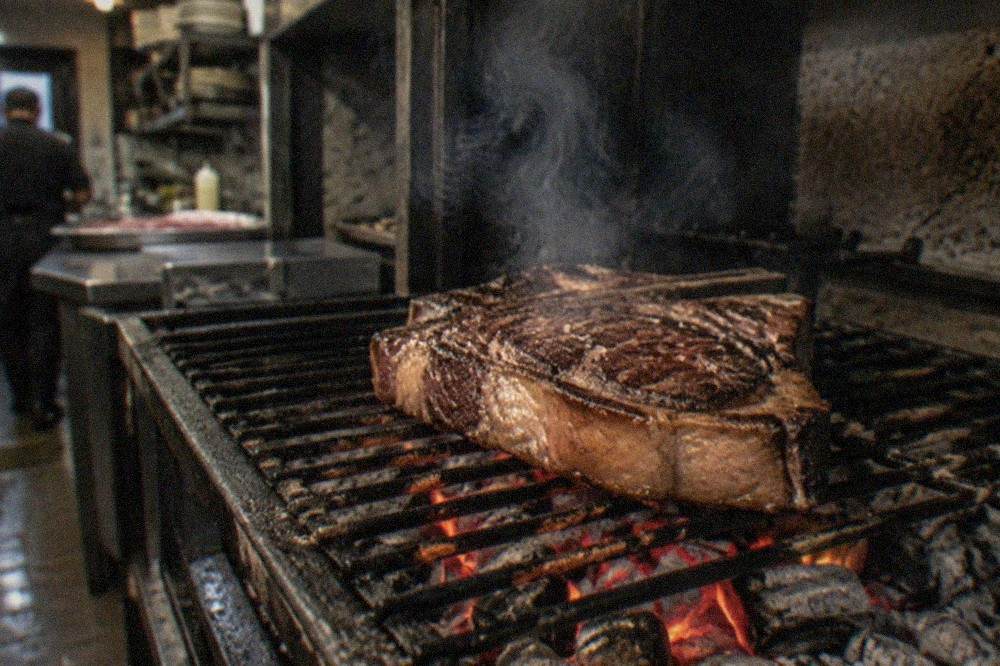
The txuleta steak is the other anchor of the mid-market. A thick bone-in ribeye, salted and grilled over live coals, carved at the table for two or more people, is the ceremonial dish of the asadores, and the txuleta guide covers how it is cut and ordered. A shared steak with a salad and a bottle is a big bill by pintxo standards, but it is a feast, not a scam, and it is the dish the city itself orders for birthdays.
Between those poles sits the everyday machinery: the lunchtime set menu, the neighbourhood restaurants of Gros and Egia away from the Old Town, and the bars where locals actually eat, a subject with its own answer page on where locals eat in San Sebastian. The pattern to notice is that the tourist premium attaches to location, not to cuisine. The same cooking two streets back from the bay costs less than the same cooking facing it, and the city's own residents exploit that gradient every day.
When You Should Book Ahead In San Sebastian
Book ahead for the starred restaurants, for weekend evenings at any sit-down restaurant you care about, and for the txotx season's cider houses, where tables are sold as a set meal. Do not book for pintxo bars, which do not take reservations in the normal way and work on counter turnover. August is the peak month for hotel overnight stays in the city, and everything that books fills earliest around it.
The timing data backs that up. INE's hotel occupancy series for the city recorded 245,769 overnight stays in August 2025, the year's peak, against 115,910 in January, so the eating-out crowd roughly doubles between the depths of winter and the height of summer. July and August together account for about 22 percent of the year's hotel overnight stays, and April through October never drops below 200,000 in that series. Practical translation: in the high season, the walk-in pintxo crawl still works, because that system is built for walk-ins, but anything with a table and a name fills up.
Semana Grande, always the week of 15 August, concentrates the city's biggest crowds into eight days, and the film festival in late September does something similar to the restaurant layer. If your trip collides with either, decide your one splurge meal early and reserve it, then let the pintxo bars absorb everything else, which is what they are for. The wider cost question, including why the city carries its expensive reputation at all, is unpacked in why San Sebastian Spain is so expensive, and this San Sebastian Spain Guide keeps the rest of the eating-out picture, from breakfast to cheesecake, under separate cover.
Common Questions About Eating Out In San Sebastian
Is San Sebastian expensive to eat out?
Not by default. Pintxo bars sell small portions per piece at counter prices and remain one of the cheapest ways to eat seriously in Spain, while the 11-star Michelin layer inside the city is priced like fine dining anywhere in western Europe. Visitors can eat entirely in the affordable layer and never feel the expensive one.
How much do pintxos cost in San Sebastian?
Pintxo prices vary from bar to bar, so no figure is printed. What can be said is that pintxos are priced per piece, often counted by toothpick at the till, and that the counter economy keeps per-piece prices far below any seated menu. Check the board or the counter at each bar for the current price.
Is it cheaper to eat standing at the bar in San Sebastian?
Yes, and it is also the local custom. Counter service means no table allocation and faster turnover, which is the structural reason the pintxo economy stays affordable. Standing with a small drink and a couple of pieces, then moving on, is how the city itself eats.
Do I need a reservation for Michelin restaurants in San Sebastian?
Yes, well in advance. The MICHELIN Guide Spain 2026 lists 6 restaurants holding 11 stars inside the city, including the three-star houses Akelaŕe and Arzak, and tables at that level are booked out far ahead, especially in the August peak when hotel overnight stays hit their yearly maximum.
What is the cheapest way to eat well in San Sebastian?
A self-guided pintxo crawl through the Parte Vieja and the streets behind it, ordering one or two pieces and a small drink at each counter, or a guided crawl on a first visit so the ordering customs are handled for you. The cider houses in season also offer a full set meal at a single known price.
When is the cider house season in San Sebastian?
The tourism board gives the txotx season as running from the middle of January to the end of April. Outside that window the barrel-room ritual is not the same affair, so time a cider house trip to the season rather than assuming it runs all year.
The short version: San Sebastián's food reputation is earned at both ends of the bill, and the city hands you the choice every evening, one counter at a time.