Where Do The Locals Eat In San Sebastian?
Where locals eat in San Sebastián, Basque Country, Spain: the neighbourhoods, the dishes, the cider houses and the customs that shape how Donostia feeds itself.
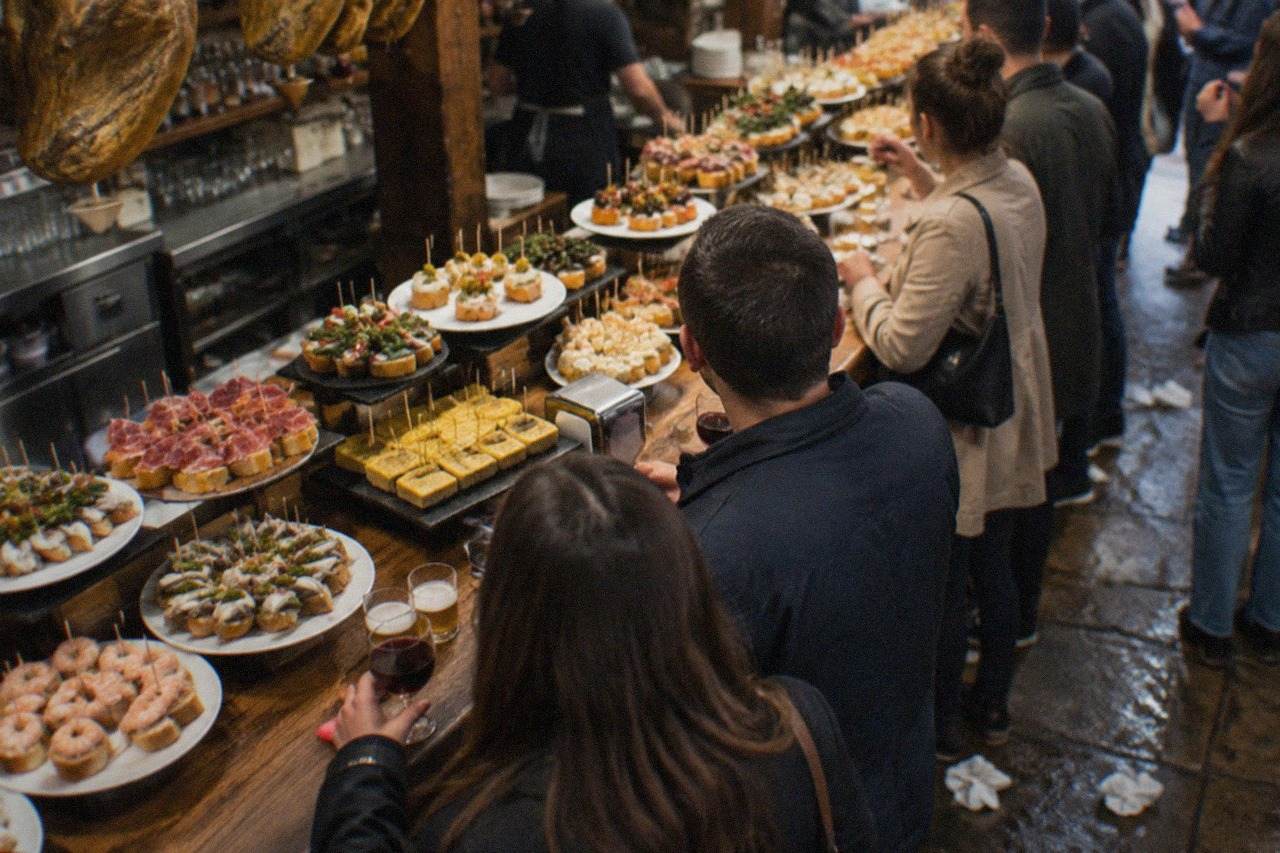
San Sebastián, in the Basque Country of Spain, is the city on La Concha bay whose official name is Donostia / San Sebastián, and it feeds itself differently from the way it feeds its visitors. Locals eat standing up, in short bursts, at counters rather than at tables, and much of the eating that gives the city its reputation happens in the neighbourhoods and satellite towns that a beach-facing visitor never walks through. The pintxo bar culture the city is famous for is a local habit first and a tourist attraction second, and the divide between the two shows up in where, when and what people order.
Where Do The Locals Eat In San Sebastian?
Locals in San Sebastián eat in three rings: the Parte Vieja and Centro counters for pintxos and quick glasses, the residential neighbourhoods such as Gros, Egia, Amara and Antiguo for everyday bars and txuleta grills, and the cider houses of Astigarraga for the winter and spring txotx season. The difference from the visitor's version is timing and ordering: locals go early or late, order one pintxo and one drink per bar, and move on.
The Parte Vieja, the old town, is where the density of bars is highest and where the evening ritual of moving from counter to counter, called a txikiteo or poteo, is at its most visible. It is a local custom that visitors share, and the bars on the busiest streets carry the heaviest evening crowds. Local residents who want the same habit without the crowds do the identical thing a few streets or a neighbourhood away, in Gros across the river, in Egia beside the station, or in the Antiguo behind Ondarreta beach, where the bars are smaller and the clientele is drawn from the block around them.
What stays constant across all of it is the format. A pintxo is a small piece, often skewered with a toothpick, served on the bar top or made to order, and the custom is to take one or two with a drink, pay, and move to the next bar. The drink is as much a decision as the food: txakoli, the local lightly sparkling white wine poured from a height, a small beer called a zurito, or a glass of cider. The custom of eating standing, at the counter, in company, moving between bars over an hour or two, is the backbone of how the city eats socially, and no visitor needs a guide to understand it once they see it happening around them.
For an introduction to the format itself, the site's guide to what to eat in San Sebastián covers the dishes, and the pintxo and food tours page covers the walks that teach the customs fast.
Which Neighbourhood Bars Do San Sebastián Locals Actually Go To?
The local answer is the neighbourhood itself: Gros for the densest everyday bar scene within walking distance of the centre, Egia and Amara for bars that serve their own streets, Antiguo for the streets behind Ondarreta, and the Parte Vieja for the ritual itself, taken at the hours when the tourist tide is out. Locals also eat outside the city altogether, in the cider houses of Astigarraga in season and in the coastal towns along the Gipuzkoa coast, which function as weekend eating destinations rather than sightseeing ones.
Gros is the clearest case. It sits across the Urumea river from the centre, faces the Zurriola beach, and its bars fill with a crowd that lives or works in the neighbourhood, especially around the surfing and after-work hours. The bars there are the same format as the old town's, a counter, a tapa, a drink, but the ratio of residents to visitors is reversed. Egia and Amara, further out, are the same idea at one more remove, and the Antiguo, the city's original residential quarter behind Ondarreta, runs its own small circuit of bars that the beach crowd at La Concha never sees.
The satellite towns matter as much as the neighbourhoods. Astigarraga, a separate municipality a short ride from the city, is the cider house heartland, and in txotx season locals fill its sagardotegiak for the fixed cider house meal. Getaria and Zumaia on the coast are fishing-town eating destinations, and Hondarribia near the airport has its own celebrated grill culture. These are places residents drive to on weekends, and the tourism board's own framing of the cider route and the coastal towns treats them as part of how the region eats rather than as excursions.
The table below sets out the rings in summary form.
| Ring | Where | What locals do there |
|---|---|---|
| Old town circuit | Parte Vieja | Pintxo bar to bar, standing at counters, one pintxo and one drink per bar |
| Residential neighbourhoods | Gros, Egia, Amara, Antiguo | Everyday bars and grills serving the surrounding streets |
| Cider house season | Astigarraga and surrounding villages | The txotx ritual and the fixed cider house meal, mid-January to the end of April |
| Weekend coast | Getaria, Zumaia, Hondarribia | Fish grills and coastal eating, as a drive-out destination |
A local-led walk is the fastest way to see the difference between the tourist-facing bars and the ones a resident would pick, and the shared pintxo tour below is built exactly around that contrast, led by someone from the city with drinks and tapas included.
What Do Locals Order That Visitors Usually Miss?
Locals order the same formats visitors do, pintxos, txakoli, cider, but they anchor their eating on dishes visitors often skip: the gilda, the salt cod preparations, the txuleta, the shareable raciones eaten seated at midday, and the cider house menu of salt cod omelette, fried cod and txuleta. They also treat the city's sweet signature, the basque cheesecake, as a household name rather than a discovery, and they drink txakoli and cider where visitors default to Rioja.
The gilda is the clearest example of a local shorthand. It is a skewer of anchovy, guindilla pepper and an olive, named after a film character, and it is the pintxo that defines the format: salty, sharp, one bite, no bread required. Salt cod, bacalao, runs through the local repertoire in the same way, in pil pil, in the omelette served in cider houses, and as a pintxo across the old town. The txuleta, a bone-in rib steak cut thick and grilled over embers, is the ceremonial dish of the region, the thing a table orders to share, and the cider house meal ends with it. The site's txuleta guide covers the cut and the custom in detail.
The seated meal matters as much as the standing one. Raciones, full plates to share, are what a local table eats at lunch, and the restaurants that serve them, from grill houses to sociedades gastronómicas, the private gastronomic societies whose dining rooms have historically been male spaces where men cook for each other, are the backbone of local eating that a visitor standing at a counter never sees. Some societies now admit visitors or women on set days, and the custom of cooking for your own group rather than being served is the point of the institution. Other pages covering the same trip are gathered on San Sebastian Spain Guide.
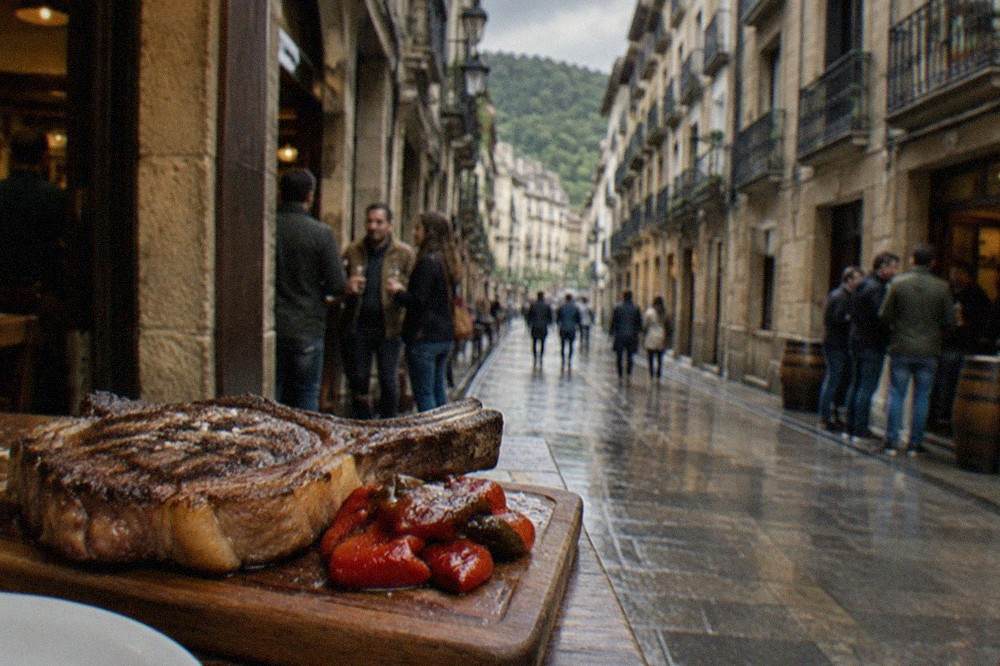
The cider house menu is the most codified local meal of all, and it belongs to its season. The tourism board describes the txotx season as running from the middle of January to the end of April, and the ritual is fixed: at the shout of txotx, the barrel is opened, and drinkers stand to catch the cider straight from the cask, then return to the long tables for salt cod omelette, fried cod with peppers, and finally txuleta, with cheese, quince jelly and walnuts to finish. The Basque Cider Museum, Sagardoetxea, sits in Astigarraga and sells its museum visit from 5.00 EUR and its premium visit with tasting at 9.00 EUR, which is the region's own account of the culture, in the place the culture comes from.
| Local staple | What it is | Where it sits in local eating |
|---|---|---|
| Gilda | Anchovy, guindilla pepper and olive on a skewer | The defining one-bite pintxo, ordered with the first drink |
| Bacalao al pil pil | Salt cod emulsified in olive oil and garlic | Signature cooked dish of the old town bars |
| Txuleta | Thick bone-in rib steak grilled over embers | The shareable centre of grill-house and cider house meals |
| Txakoli | Lightly sparkling local white wine | The default pour at the counter, poured from a height |
| Basque cheesecake | Burnt-topped soft cheesecake | A local household name, served by the slice everywhere |
For visitors who want to cook the repertoire rather than just eat it, a hands-on Basque class with a market visit is the most direct route in.
Do San Sebastián Locals Avoid The Old Town?
Partly, and by timing rather than by boycott. The Parte Vieja is the historic heart of the pintxo custom and locals have never abandoned it, but residents take it at the hours and in the bars that suit them, early evening before the visitor tide, late at night after it, and in the bars a street or two off the busiest lanes. The city's festive eating also happens there, during Tamborrada on 20 January and the Santo Tomás fair on 21 December.
The timing point is the practical one. The old town's busiest hours are the visitor's hours, and a resident's txikiteo often starts earlier or runs later, which is why the same bars can feel like two different places at five in the afternoon and at midnight. The bars on the main lanes face the most passing trade, and the ones locals keep for themselves sit on the side streets, where the tortilla, the gilda and the house specialty are what the bar is known for rather than its location. The site's answer on when people eat pintxos in San Sebastián breaks the clock down.
The festive calendar proves the point in reverse. On Tamborrada, the drum festival held every 20 January, the old town fills with the city's own societies eating and drinking in their headquarters, and on Santo Tomás, the fair on 21 December, the streets fill with stalls and the day's own food, including the talo, a corn flatbread wrapped around chorizo or pork belly. Both are city events, not tourist events, and both happen largely in the same streets visitors walk. The old town is not a place locals avoid, it is a place locals use differently.
How Does Local Eating Change With The Seasons?
The cider houses own the winter and spring: the txotx season runs from the middle of January to the end of April, and the cider house meal is the season's fixed ritual. Summer pushes eating toward the beaches and the neighbourhood terraces, autumn belongs to the grill rooms and the film festival crowds, and the year's biggest single eating days are the city's festivals, Tamborrada on 20 January and Santo Tomás on 21 December, when the whole city eats in the streets.
The cider season is the clearest cycle. From mid-January to the end of April, in the tourism board's wording, the sagardotegiak around Astigarraga and across the province open their barrels, and the meal is served at long communal tables with no menu choices to make. Outside those months the cider houses change character, and the txotx shout is not the point of a visit. It is the most seasonal eating custom the region has, and residents plan around it the way a coastal town plans around a fishing season.
Summer shifts the geography without changing the format. The neighbourhoods nearest the beaches, Gros by Zurriola and the Antiguo by Ondarreta, fill through the warm months, and the terraces do the work the counters do in winter. The city's hotel data shows the pattern: August is the peak month for overnight stays in the INE hotel series, with 245,769 in 2025 against 115,910 in January, and July and August together hold 22 percent of the year, which means the bars locals use in August are simply fuller than the ones they use in February. Rain does not stop the custom either: AEMET's Igeldo station records 1,507 mm across the year and no month under 86 mm, and the counters are indoors.
The fine dining layer sits on top of all this rather than replacing it. The MICHELIN Guide Spain 2026 counts 11 stars across 6 restaurants inside the municipality, with Akelaŕe and Arzak holding three stars each, and the wider province holding 19 stars across 11 restaurants including Martín Berasategui in Lasarte-Oria and Elkano in Getaria. Locals treat these as celebration destinations, the way the cider house is a seasonal one and the neighbourhood grill is a weekly one, and the starred rooms are booked rather than walked into.
| Layer | What it is | When locals use it |
|---|---|---|
| Neighbourhood counter | One pintxo and one drink, bar to bar | Evenings and weekends, all year |
| Cider house | The txotx ritual and the fixed meal | Mid-January to the end of April |
| Grill house | Txuleta and raciones, seated, shared | Weekend lunches and celebrations |
| Starred dining | The city's MICHELIN-listed restaurants | Booked occasions, not everyday eating |
For visitors who want a resident's route through the same customs, from the counter format to the coastal eating towns, the three options below cover the local-led walk, the cooking class and the txakoli day trip.
Common Questions About Where Locals Eat In San Sebastian
Where do the locals eat in San Sebastian?
In the Parte Vieja at the hours visitors miss, in the neighbourhood bars of Gros, Egia, Amara and Antiguo for everyday eating, in the cider houses around Astigarraga during the txotx season from mid-January to the end of April, and in the coastal towns such as Getaria and Hondarribia on weekends.
Do locals in San Sebastián eat pintxos every day?
The counter habit is a regular social format rather than a daily obligation, and locals use it most in the evening and at weekends. Seated meals, raciones to share and grill-house txuleta carry the rest of the week.
Is the Old Town only for tourists?
No. The Parte Vieja is the historic home of the pintxo custom and locals keep using it, earlier and later in the day than visitors do, and in the side-street bars. The city's own festivals, Tamborrada on 20 January and Santo Tomás on 21 December, fill those same streets with residents eating together.
What is the most local dish to order?
The gilda, the skewer of anchovy, guindilla pepper and olive, is the defining one-bite pintxo, and txuleta, the thick grilled rib steak, is the dish local tables share when they sit down. Salt cod in its various preparations runs through both worlds.
When is cider house season?
The txotx season runs from the middle of January to the end of April, in the tourism board's wording. In season, the cider is poured straight from the barrel at the shout of txotx, and the fixed meal is salt cod omelette, fried cod and txuleta.
Can a visitor eat like a local without a guide?
Yes, the format is visible and public: stand at the counter, order one pintxo and one drink, pay, and move to the next bar. A local-led walk simply shortens the learning curve, and the answer on whether San Sebastián is expensive to eat out covers what the habit costs.
The honest summary is that locals in San Sebastián eat the city's famous food in the same format visitors do, standing, moving, drinking txakoli and cider, but they do it on their own clock, in their own neighbourhoods, and they keep a second city of eating, the cider houses, the grills and the coastal towns, that no stay on the bayfront ever has to show you.