What Is So Special About San Sebastian Cheesecake?
The burnt Basque cheesecake of San Sebastián, the Basque city on La Concha bay: what it is, why it is famous, how it differs from New York cheesecake, and where the tradition comes from.
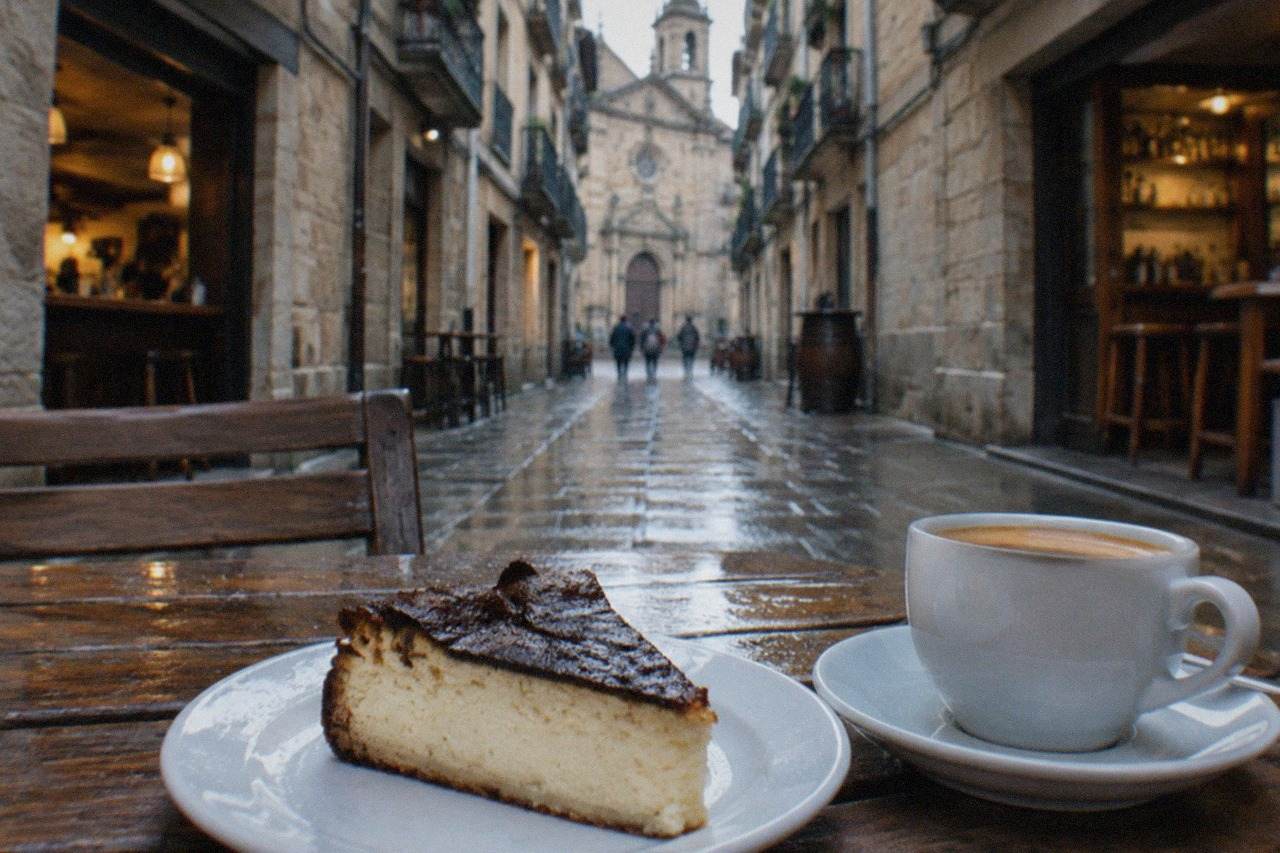
San Sebastián, the Basque name Donostia, is a small city on La Concha bay in Gipuzkoa, in the Basque Country of Spain, and one of its most exported ideas is a dessert: a crustless cheesecake with a dark, burnt top and a soft centre. People now bake it in kitchens on every continent, usually under the name "Basque burnt cheesecake", but the original is a local thing, tied to the bar culture of a city that eats standing up and takes its food seriously. This page explains what the cake actually is, why it became famous, and how it differs from the cheesecakes most people grew up with.
What Is So Special About San Sebastian Cheesecake?
The special thing about San Sebastián cheesecake is that it is baked deliberately burnt: no crust, no biscuit base, a very high temperature that blackens the top and edges while the middle stays unset and creamy. The result is a dessert with a bitter caramel surface and a nearly molten interior, the opposite of the pale, dense, chilled cheesecake most people know, and it comes out of the oven rather than the fridge.
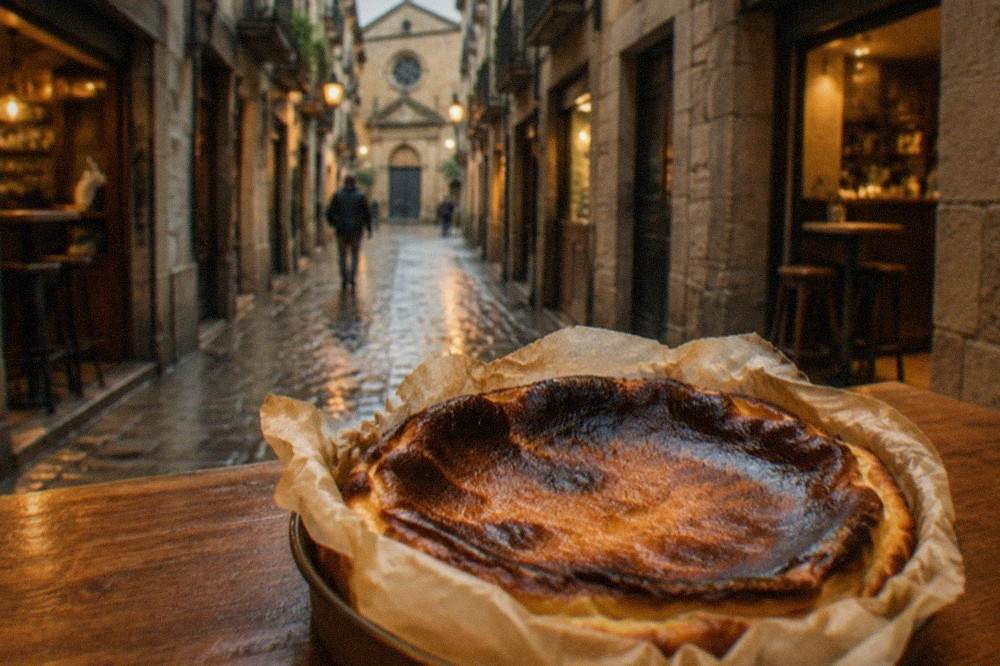
The cake is built from very little: cream cheese, eggs, sugar, cream and a little flour, poured into a parchment-lined tin whose paper stands well above the rim. That collar of paper matters. It lets the batter rise and catch heat from every side, so the top scorches while the centre barely sets. The recipe tolerates imprecision, which is part of why it travelled so well: an oven a little too hot, a few minutes too long, and the cake is still right, arguably better.
It is served at room temperature or slightly warm, never chilled solid, and it collapses rather than slices cleanly. A wedge looks rustic, almost damaged, and that is the point. In the bars of the Parte Vieja, the old town, it arrives as a square on a small plate, often with the paper still clinging to the caramelized edge. The city's own dedicated pages go deeper on the dessert and its home bar: the full cheesecake guide and the story of La Viña, the bar behind it.
Why Is San Sebastian Cheesecake So Famous?
San Sebastián cheesecake is famous because it inverted the rules of a dessert everyone thought was finished, then rode the city's reputation for food. A burnt top, which would be a failure in any other cheesecake, became the signature, and the cake spread through food media, restaurant menus and home-baking blogs for two decades until "Basque burnt cheesecake" became a standard bakery item far outside Spain.
The city gave it a launchpad. San Sebastián holds 11 Michelin stars across 6 restaurants inside the municipality in the MICHELIN Guide Spain 2026, and its pintxo bar culture means desserts compete in a very crowded, very demanding field. A cake that looks ruined and tastes of caramelized sugar and warm cream is exactly the kind of thing that survives in a place like that, and visitors carried the idea home.
Fame also came from the recipe's honesty. It needs no water bath, no crust, no chilling overnight and no special equipment, so food writers could publish it in five lines and home bakers could try it the same night. The cake's look photographs well too: the dark top against the pale, wobbling interior is instantly recognisable, which helped it travel on image-led food media long before anyone printed a cookbook chapter about it.
What Makes A Basque Cheesecake Different From New York Cheesecake?
A Basque cheesecake has no crust, no water bath and no chilling stage, and it is baked hot enough to burn the top, while a New York cheesecake has a biscuit base, bakes low and slow in a water bath, sets firm and chills for hours before serving. The Basque version is eaten warm with a molten centre; the New York version is eaten cold and holds a clean slice.
The two cakes come from opposite philosophies. New York cheesecake aims for control: even heat, a smooth surface, a dense uniform crumb. The Basque version hands control to the oven and accepts, even wants, a scorched surface and an uneven set. Where one hides its baking, the other advertises it. The table below sets the differences side by side. The full index of guides sits on San Sebastian Spain Guide.
| Feature | San Sebastián (Basque burnt) cheesecake | New York cheesecake |
|---|---|---|
| Crust | None, parchment-lined tin only | Biscuit and butter base |
| Baking | Very hot oven, top deliberately darkened | Low oven in a water bath |
| Set | Centre stays soft, near-liquid when warm | Firm, sets fully while chilling |
| Serving temperature | Warm or room temperature | Chilled |
| Appearance | Dark caramelized top, collapsed edges | Pale, smooth, neat slice |
| Main risk | Underbaking the centre | Cracking the surface |
Texture is the biggest difference on the tongue. A chilled New York slice resists, then melts; a wedge of the Basque cake barely holds its shape and tastes of scorched cream, close to crème brûlée in spirit. That resemblance is not accidental: both desserts live on the line where burnt sugar turns bitter and sweet at once.
There is a difference in timing too. A New York cheesecake is planned a day ahead, chilled overnight and cut cold; the Basque cake is decided an hour before dinner and eaten while the tin is still warm. That spontaneity suits the bar it comes from, where nothing is booked and everything is eaten the moment it is ready.
If tasting the city's bar food in person is on your list, a guided evening is one way in, and you can Check availability on the operator's live listing. The same tour pairs the bars with local wines, which is how most people here actually eat.
Where Did San Sebastian Cheesecake Come From?
San Sebastián cheesecake comes from the bar and restaurant culture of the city's Parte Vieja, where it was served as a house dessert long before it had an international name, and its worldwide identity is tied to La Viña, the Old Town bar whose version of the burnt cake became the one visitors photographed, copied and wrote about until the recipe circled the world.
The cake belongs to a family of Spanish bar desserts, the kind a kitchen bakes in one tin in the morning and cuts to order all day. What made this one different was the burn: a kitchen that let the top go dark because the customers liked it that way, not because anything went wrong. That preference, a taste for bitter caramel edges, is common in Basque cooking, and the cheesecake simply made it visible.
Its spread was gradual, then sudden. Food writers encountered it in the city, printed the short recipe, and within a few years bakeries in East Asia, North America and across Europe were selling their own scorched versions, often labelled "Basque" without any other connection to the region. The original context survived at home: in San Sebastián the cake is still a bar dessert, eaten after pintxos, not a bakery showcase item. Readers planning a trip can compare the practical questions on what the city is known for and where to find the best cheesecake in San Sebastian.
Can You Bake It At Home, And Does It Travel?
You can bake San Sebastián cheesecake at home easily, because the recipe is short, forgiving and needs no special equipment, but the fresh-baked version does not travel well: the soft centre sets as it cools, so the cake you eat a day later is firmer and drier than the one that came out of the oven, which is why the best version is still the one eaten near where it was baked.
Home bakers should expect one surprise: the cake looks burnt when it is done. Trust the recipe rather than your eyes, and take it out while the centre still trembles. It firms up as it rests, and the window between molten and merely soft is an hour or two, not a day. Baking it the same afternoon you plan to eat it is the whole trick.
A few practical notes help. Line the tin carefully, because the paper collar does the work a crust would otherwise do. Let the cake rest before cutting, since the first slice out of a hot tin will run. And do not chase a perfect surface: every crack and dark patch is part of what the cake is supposed to be.
Travel, in the other sense, is what made the cake famous, and that is the honest limit of this page's subject: the dessert is now global, but the experience of it is local, a warm square at a bar counter in a city where it rains on roughly 10 days even in the driest month, which is exactly the kind of place that perfects indoor pleasures. For the wider picture of eating in the city, see what food San Sebastián is famous for and what pintxos are.
Common Questions About San Sebastian Cheesecake
What is so special about San Sebastian cheesecake?
It is baked deliberately burnt at a high temperature, with no crust, so the top turns dark and bitter-sweet while the centre stays soft and creamy. The contrast between the scorched surface and the near-molten interior is what no other cheesecake offers.
Why is San Sebastian cheesecake so famous?
It inverted a dessert everyone thought was settled, turning a burnt top from a failure into a signature, and it spread from a city with an outsized food reputation. The recipe is also short and forgiving, so home bakers worldwide could reproduce it the same day they read it.
Is Basque burnt cheesecake the same thing?
Yes. "Basque burnt cheesecake" is the international name for the same crustless, scorched-top cheesecake that comes from San Sebastián in the Basque Country. Bakeries abroad often use the wider regional label, but the cake's home is this city.
Should it be served warm or cold?
Warm or at room temperature. The centre is meant to be soft and creamy, and chilling firms it into an ordinary dense cheesecake. If a slice has been refrigerated, letting it come back toward room temperature restores much of the intended texture.
Does it contain a crust or biscuit base?
No. The batter goes straight into a parchment-lined tin, and the paper standing above the rim is what lets the top catch heat and darken. The caramelized edge does the job a crust would do, with a completely different flavour.
Where can I try the original in the city?
In the bars of the Parte Vieja, the old town, where the cake is served as a house dessert. The dedicated pages on this site cover the dessert's home bar and where to find the best versions, including the cost question answered separately.
The burnt cheesecake is one small export from a city that exports very little and keeps most of its pleasures for the people standing at the counter, and that, more than any single ingredient, is what makes it special.