Pintxos In San Sebastian: How A Pintxos Crawl Works
Pintxos are the small, often skewered bites served on bar counters across San Sebastián, the Basque city on La Concha bay whose official name is Donostia / San Sebastián, and eating them well means moving from bar to bar rather than sitting down for one meal.
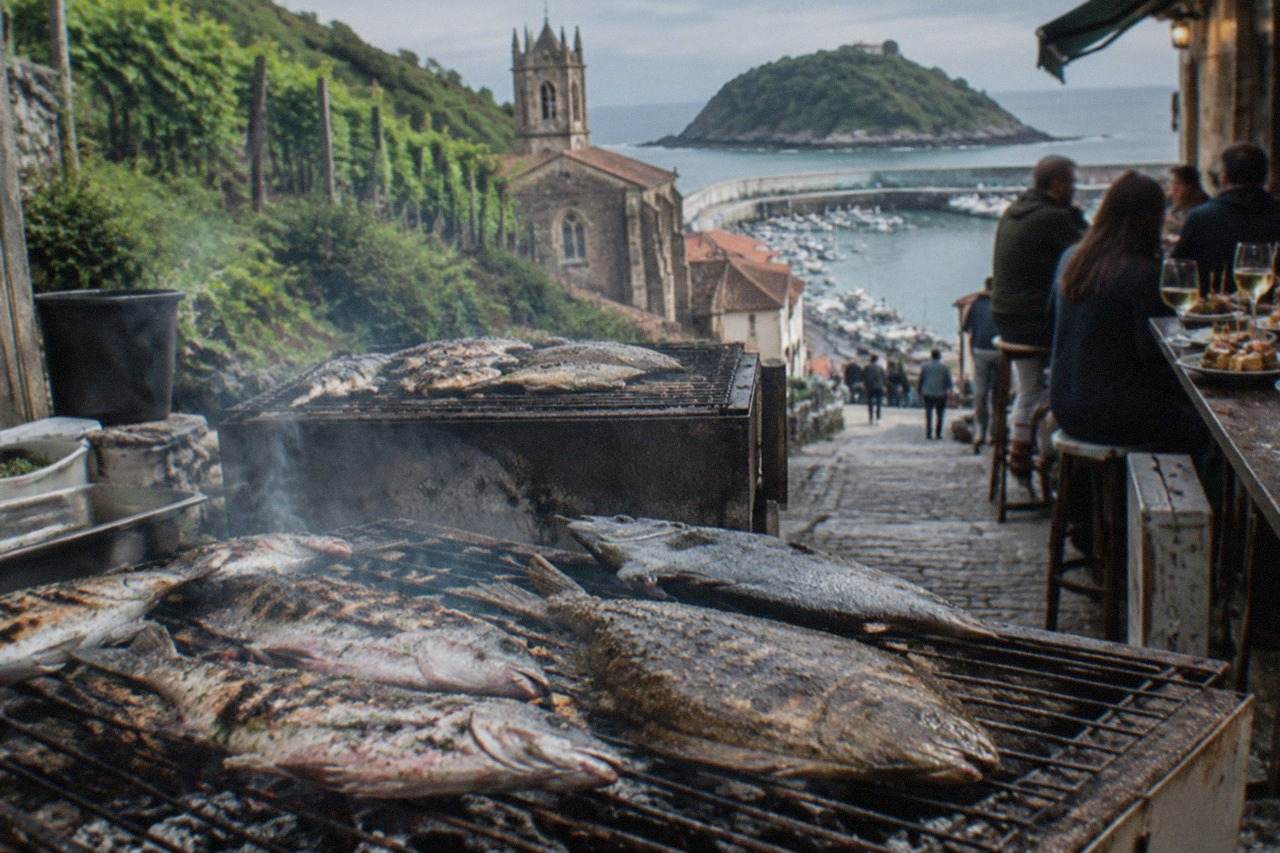
Short answer
A pintxo is a small bar snack, usually toothpicked to a slice of bread, eaten standing at the counter. A crawl means one or two per bar with a small drink, then moving on. Order at the bar, keep your own tally, and pay when you leave.
Pintxos are the small, usually bread-based bites laid out on the counters of the bars of San Sebastián, in the Basque Country of Spain, and the city whose official name is Donostia / San Sebastián has turned eating them into a moving, sociable ritual that has no real equivalent anywhere else in the country. The word comes from the Basque verb pinchtu, to pierce, and the classic pintxo really is pierced: a skewer, a toothpick, a slice of baguette holding something worth eating on top of it. The custom is not to sit down. You stand at the counter, take one or two, take a small drink, finish, and walk to the next bar. An evening built this way, bar after bar, is called a txikiteo or a poteo, and it is the single best introduction to what this city is about. The basics of the bite itself are covered in what a pintxo actually is, and the strongest counters are ranked on the best pintxo bars guide; this page explains the mechanics of the crawl itself, from ordering to paying to pacing.
What Exactly Is A Pintxo In San Sebastian?
A pintxo is a small individual portion, typically something served on or spiked with a skewer over a piece of bread, priced and eaten as a single unit at the bar counter rather than ordered as a shared plate. It is not a tapa in the southern Spanish sense, because it is almost never free with a drink and it is designed to be taken with your fingers in one or two bites. The ración, a full shared plate ordered from the menu, is a separate thing entirely.
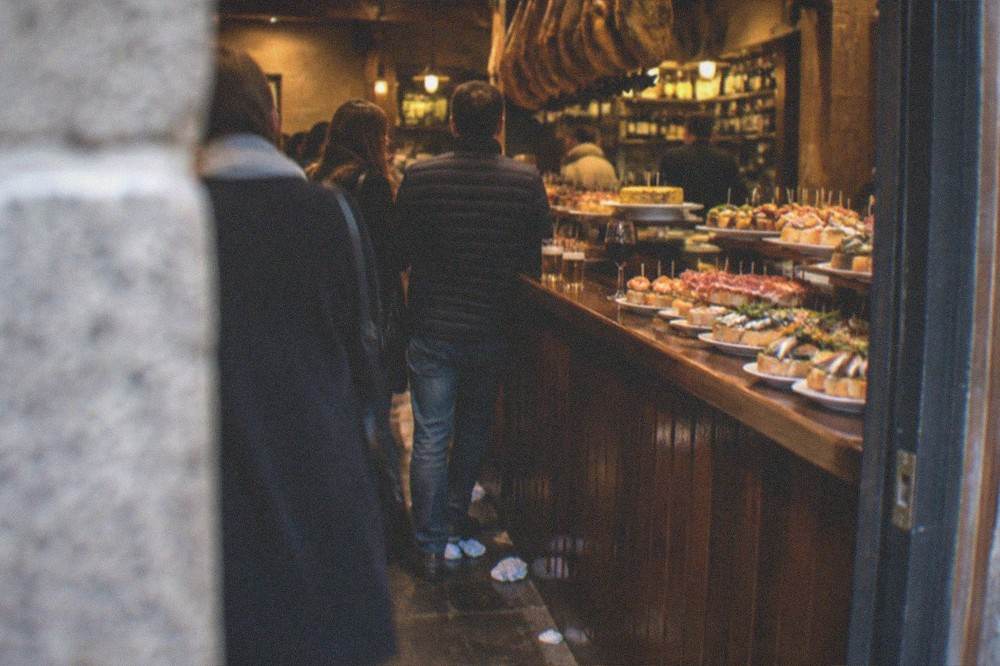
The distinction matters because it drives the whole evening. A tapa in Andalusia is often something the bar sends along with the drink. A pintxo in San Sebastián is a product: displayed on the counter in the cold display case, or made to order off a hot plate menu chalked on the wall, and each one is counted on your tab. Some are cold and self-service, lifted straight from the glass case. Others are hot, and for those you order at the bar and wait while the cook fires them. The best bars do both, and the crawl works because each bar only needs to give you one excellent thing.
The form has a practical logic. Bread on the bottom keeps fingers clean, the skewer holds the topping in place, and the whole object is engineered to be eaten standing up, one-handed, with a glass in the other hand. That engineering is why the pintxo scene never needed tables. It is also why the scene is honest in a way that restaurant dining is not: a bar that has to win you over one bite at a time, knowing you will walk somewhere else in ten minutes, cannot coast.
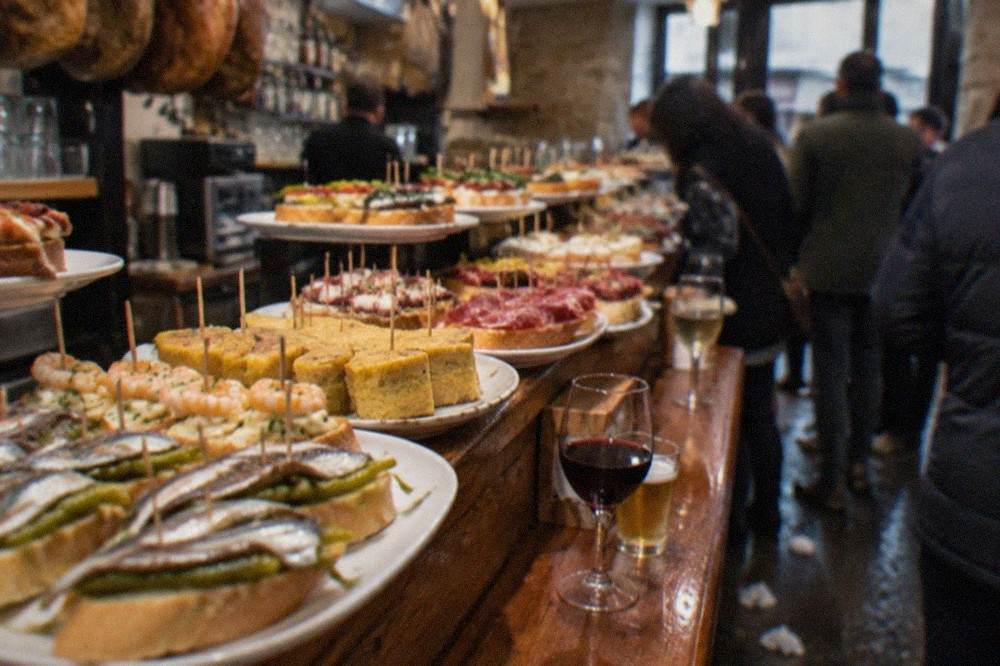
The table below separates the terms you will meet on any bar counter in the city, because they are not interchangeable and using them correctly gets you served faster.
| Term | What it is | How you get it |
|---|---|---|
| Pintxo | An individual bite, usually on bread with a skewer | From the counter case, or ordered hot at the bar |
| Ración | A full plate, sized for sharing | Ordered from the menu, served at the table or counter |
| Media ración | A half plate, for two people or one hungry one | Ordered from the menu |
| Txato | A small poured portion, typically of beer or wine | Ordered at the bar by the word |
| Bandeja | The tray or platter of cold pintxos on the counter | Point and take, keep your toothpicks |
How Does A Pintxos Crawl In San Sebastian Work?
A crawl means taking one or two pintxos and a small drink in each bar, then leaving and repeating at the next one, so that a whole evening is assembled from five or six short stops instead of one long sitting. You order at the bar, you eat standing, you keep a mental or physical tally of what you took, and you pay at the end of each stop before moving on. The pace is the point: no single bar has to carry the whole night.
The mechanics are simple once seen. In the old town, the Parte Vieja, the bars sit shoulder to shoulder along narrow streets, so a crawl is literally a walk of a few dozen metres between stops. You do not book, you do not queue for a table, and you do not stay for a second round unless the bar has earned it. Locals often drink a txikito, a small pour of wine, or a zurito, a short beer, precisely because a full drink would slow the rhythm down. The whole structure rewards momentum.
The etiquette is unforgiving in exactly one respect: the toothpick. In bars where cold pintxos come from a self-service case, the skewer is your receipt. You keep your used toothpicks on a plate or napkin in front of you, and the bar counts them when you ask for the bill. Throwing them away early, or pocketing them, is the one thing that genuinely annoys the staff, because it breaks the trust system that lets the case stay open in the first place.
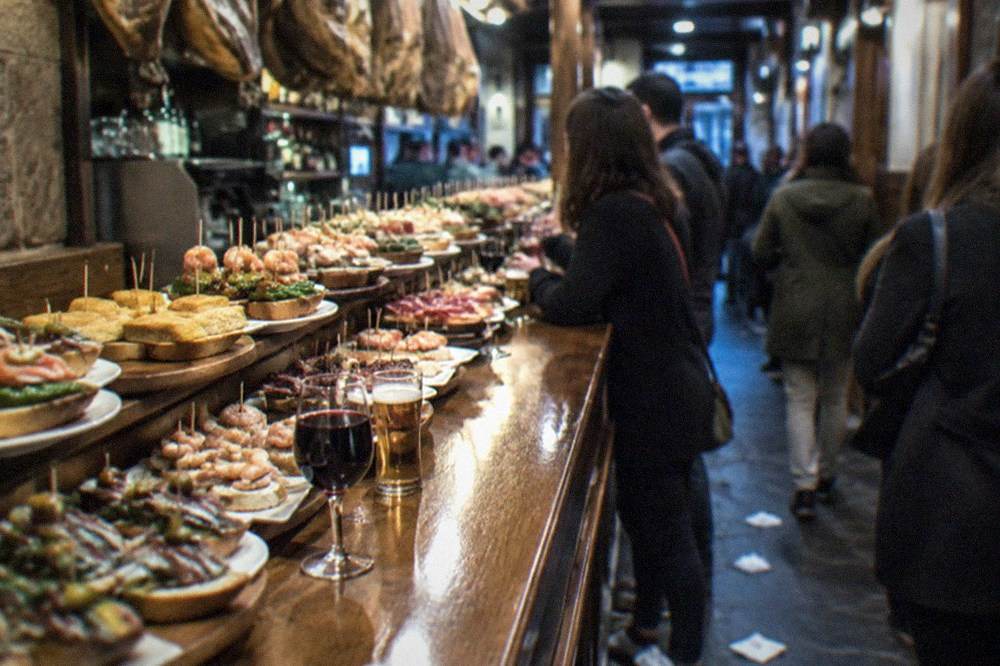
A first crawl runs more smoothly with a shape to follow, so here is the sequence as it typically unfolds.
| Step | What you do | What it looks like in practice |
|---|---|---|
| 1 | Pick a street, not a bar | Start anywhere in the Parte Vieja and let the next bar be visible from the door of the last one |
| 2 | Read the room | Full counter, locals standing, good sign; empty case at nine in the evening, keep walking |
| 3 | Take or order one pintxo each | One or two per person per bar is the local rhythm |
| 4 | Order a small drink | A txikito or a zurito keeps the pace up |
| 5 | Keep your skewers | The toothpicks are the tally in self-service bars |
| 6 | Ask for the bill, pay, leave | "La cuenta, por favor" ends every stop |
The first evening is easier with someone who already knows which door to walk through, and the short walking tour with a pintxo and drink included is the cheapest way to get that first counter decoded, while a full crawl with a guide is covered further down this page.
How Much Do Pintxos Cost?
Pintxo prices are set bar by bar and are not published in any official source, so no honest page can print a per-bite figure for a named bar: what can be said firmly is that each pintxo is priced individually, that hot made-to-order pintxos cost more than cold case ones at the same bar, and that raciones cost more than either. The bill is the sum of your skewers and your drinks, counted when you ask to pay.
The reason this page does not list prices is simple: no bar's tariff was verified for it, and a pintxo price recalled from memory is exactly the kind of figure that goes stale within a season. What is stable is the structure. Cold pintxos from the case are the entry level, hot pintxos fired to order carry a premium, and the drinks, small by design, add less than you would expect because the pours are small too. A full breakdown of what a crawl costs across the city, including the per-bar detail this page deliberately leaves out, lives on what pintxos cost in San Sebastian.
Two things catch visitors out. First, the tally system means nobody itemises as you go: you are trusted, and the count happens at the end, so keep your skewers. Second, a ración ordered "to sit down properly" can cost more than the entire crawl, because it is restaurant food at restaurant portions. The crawl is the budget-friendlier format by construction.
Which Pintxos Should You Try First In San Sebastian?
Start with the gilda, the city's signature skewer of anchovy, guindilla pepper and olive, then work through the tortilla, the hot made-to-order pintxos, and whatever the bar has chalked on its board as today's special. The gilda is the one bite that appears in essentially every serious bar in the city, so it works as a benchmark: taste it in three bars and you have already learned how differently the same three ingredients can be treated.
The gilda deserves its status as the first bite of any crawl. It is a green olive, a salted anchovy fillet and a pickled guindilla pepper on a single skewer, nothing more, and its name is local to this city. Because there is no cooking involved, it exposes the quality of a bar's raw ingredients instantly: a good gilda means the anchovy supplier is good, and a bar that cares about its anchovies cares about everything else. The full story of the skewer is on the gilda pintxo guide.
Beyond the gilda, the canon is broad, and the table below gives a first-timer's route through it. Hot pintxos are where the city's kitchen talent shows, because a bar that fires your bite to order is running a restaurant through a pass the size of a wardrobe.
| Pintxo | What it is | Why it belongs on a first crawl |
|---|---|---|
| Gilda | Anchovy, guindilla pepper and olive on a skewer | The benchmark bite, present in almost every bar |
| Tortilla de patatas | Thick-cut potato omelette, often served by the wedge | Tests a bar's basics like nothing else |
| Hot board specials | Made to order, chalked daily | Where the kitchen shows what it can do |
| Seafood pintxos | Anchovy, txangurro, squid or cod preparations | The city is a fishing port first, a kitchen second |
| Cheesecake finishes | The burnt Basque cheesecake, by the slice | The dessert that travelled the world from here |
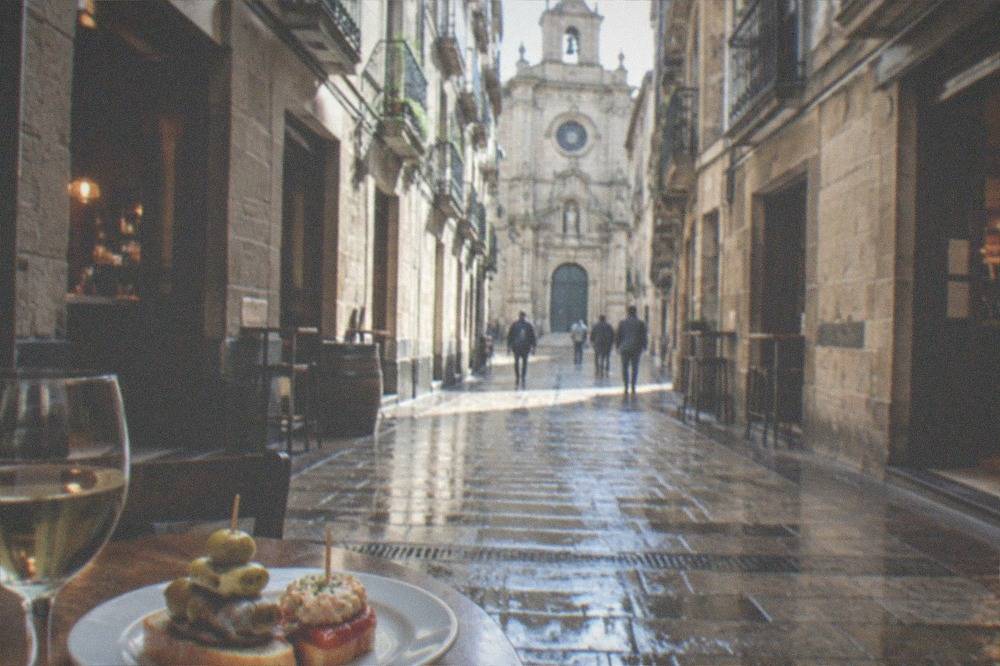
The cheesecake deserves its own mention because it is a pintxo counter's standard closer: the burnt, crustless Basque cheesecake that this city exported to bakeries across the world is served by the slice in many bars, and a crawl that ends without one is only half finished. The story of that slice, and where it came from, is told on the San Sebastian cheesecake guide.
Where Are The Best Pintxo Bar Zones In San Sebastian?
The Parte Vieja, the old town between the harbour and the Urumea river, holds the densest concentration of pintxo bars in the city and is where a crawl should start, but Gros across the river is the modern counter scene, the Centro has fewer and calmer bars, and Antiguo near Ondarreta runs on neighbourhood places rather than destination ones. Each zone gives a different evening, and the best crawls stay inside one of them rather than crossing the city.
The old town is the classic for a reason: bars packed into a handful of streets, all walkable in an evening, all competing at the same volume. Gros, by contrast, is where the newer counters opened, and its scene skews younger and more experimental. The Centro's bars sit on the grander streets and suit a slower, more seated evening, while Antiguo is where locals eat on their own doorstep. The character of each district is described in detail on the San Sebastian neighborhoods overview.
| Zone | Character of the crawl | Best for |
|---|---|---|
| Parte Vieja | Dense, loud, traditional, maximum bars per metre | A first crawl, any night of the week |
| Gros | Younger, more inventive counters, wider streets | A second or third evening |
| Centro | Calmer, roomier bars on grand streets | Sitting down more, standing up less |
| Antiguo | Neighbourhood places near Ondarreta | A local-paced evening away from crowds |
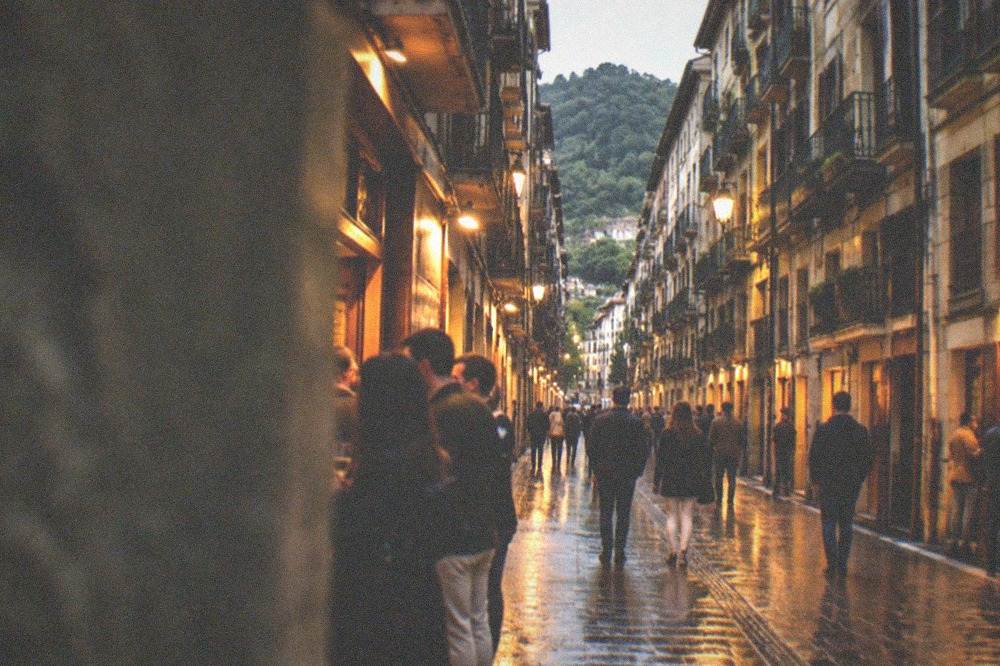
One practical note: the old town's density is also its weakness on peak nights, when the busiest counters become hard to reach. Starting earlier in the evening, or moving one street off the main drag, changes the experience completely. The bar-by-bar selection across all these zones is the job of the best pintxo bars guide, which ranks the counters worth planning around.
Do You Need A Guided Pintxo Tour In San Sebastian?
A guided pintxo tour is not necessary, because the crawl is a self-service format by design, but it earns its price on a first evening by removing the three things that slow a beginner down: choosing among dozens of near-identical doors, ordering hot pintxos in a fast-moving bar, and trusting the tally system. A guide also buys you a seat in bars where standing room is scarce. From the second evening onwards, a visitor is equipped to crawl on their own.
The honest case against a tour is that the format is genuinely open to anyone: the case is in front of you, the skewers are counted, and pointing works in every language. The honest case for one is that the first evening is where the mistakes happen, and a small-group crawl that has already picked the bars, already ordered the hot items and already found you somewhere to stand compresses a night of trial and error into a single evening. The small-group crawl through the old town bars, restaurants and gourmet shops is the classic version, and its details are on the old town pintxos and wine tour page.
For visitors who want the crawl to be the start of their cooking rather than the whole of it, the market-and-class format flips the evening around: it opens with a guided visit to the Mercado de la Bretxa and then teaches the dishes in a hands-on class, which is described on the market tour and cooking class page.
The full range of guided options, including the free-tip walking tours and the cooking formats, is compared on the pintxos and food tours guide, and the broader question of how the city's guided scene fits a whole trip is on the San Sebastian Spain Guide overview of the destination.
| Format | What it gives you | When to pick it |
|---|---|---|
| Small-group crawl | Bars chosen, ordering handled, drinks paired | First evening in the city |
| Budget walk with a pintxo | A short orientation walk, one bite and one drink | Arrival day, low commitment |
| Market visit plus cooking class | Shopping the market, then cooking the meal | Visitors who want to cook, not just eat |
| Free-tip historic walk | The city's history, a radioguide included | Before the crawl, to know what you are walking past |
What Should You Drink With Pintxos In San Sebastian?
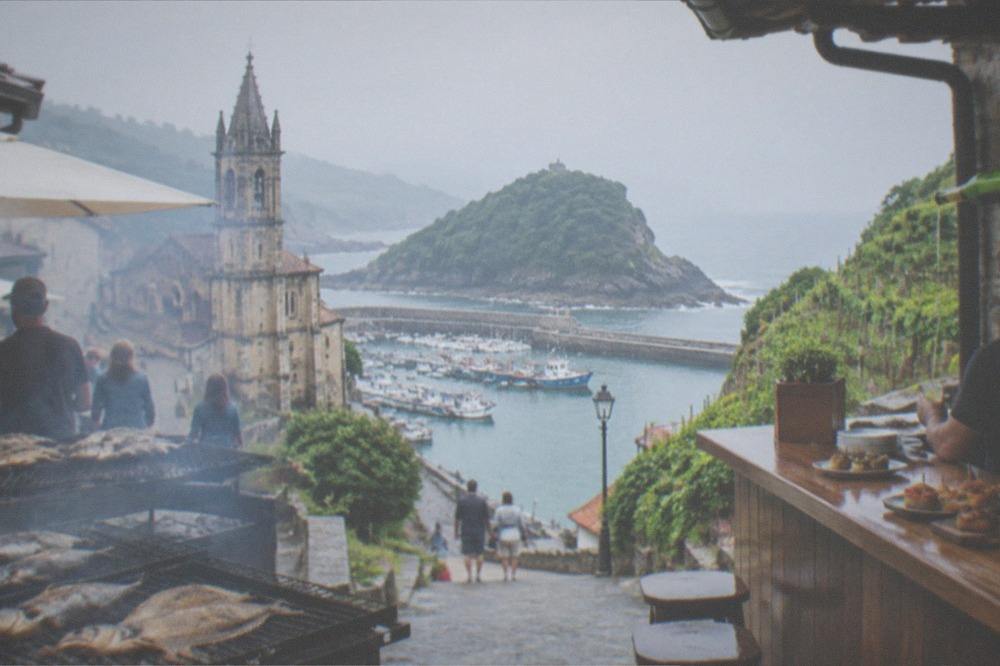
The two local answers are txakoli, the young, lightly sparkling white wine of the Basque coast poured from a height to aerate it, and sagardoa, Basque natural cider, which is poured from the bottle in a thin stream at chest height for the same reason. Both are drunk in small measures, which suits the crawl's pace. A zurito, a short beer, is the third standard order, and rioja reds appear by the glass in most bars too.
Txakoli is the one to start with, because it is the region's own wine and the pouring ritual is part of the show: the bottle goes high, the glass goes low, and a thin stream of wine hits the glass full of air. The taste is dry, high in acidity and slightly fizzy, which makes it a natural partner for anchovies and seafood pintxos. The cider is the country cousin, tied to the cider house season and the txotx ritual, in which the barrel is tapped and the cider is caught streaming from the hoop. The tourism board places the txotx season from the middle of January to the end of April, and the ritual itself is explained on the cider houses guide.
| Drink | What it is | How it is served |
|---|---|---|
| Txakoli | Young, dry, lightly sparkling white from the Basque coast | Poured from a height into a shallow glass |
| Sagardoa | Natural Basque cider, still and dry | Straight from the bottle, caught in the glass mid-air |
| Zurito | A short measure of beer | Small on purpose, to keep the pace |
| Txikito | A small pour of wine | The classic crawl order |
| Rioja by the glass | Red wine from the region south of here | Ordinary glass pour, no ritual attached |
How Do You Order And Pay In A Pintxo Bar?
You order at the bar, verbally for hot pintxos and drinks, by hand for cold ones from the case, and you pay once, at the end of your stop, when you ask for the bill; there is no tipping obligation in pintxo bars, and locals either round up slightly or leave nothing at all. The bar trusts your skewer count and your honesty until the moment you say "la cuenta".
The ordering sequence is short. For the cold case, you take a plate, lift what you want, and eat where you stand. For the hot board, you get the bar's attention, point or read out the chalked item, and wait for it to be fired. Drinks are ordered in the same breath as the food. Nothing arrives at a table, because there is usually no table. When you are done, you ask for the bill, the bar counts your skewers, you pay, and you leave. Cash and cards are both normal, though a handful of very small bars prefer cash, so carrying some is sensible.
Payment timing is the part that unnerves visitors from countries where every item is rung up as it is taken. Here the tally runs on trust for the whole stop, sometimes for the whole evening in a bar where the staff recognise you. That trust is the system, and it works because the skewers are physical evidence. Do not pocket them, do not tidy them away, and let the bar do the counting.
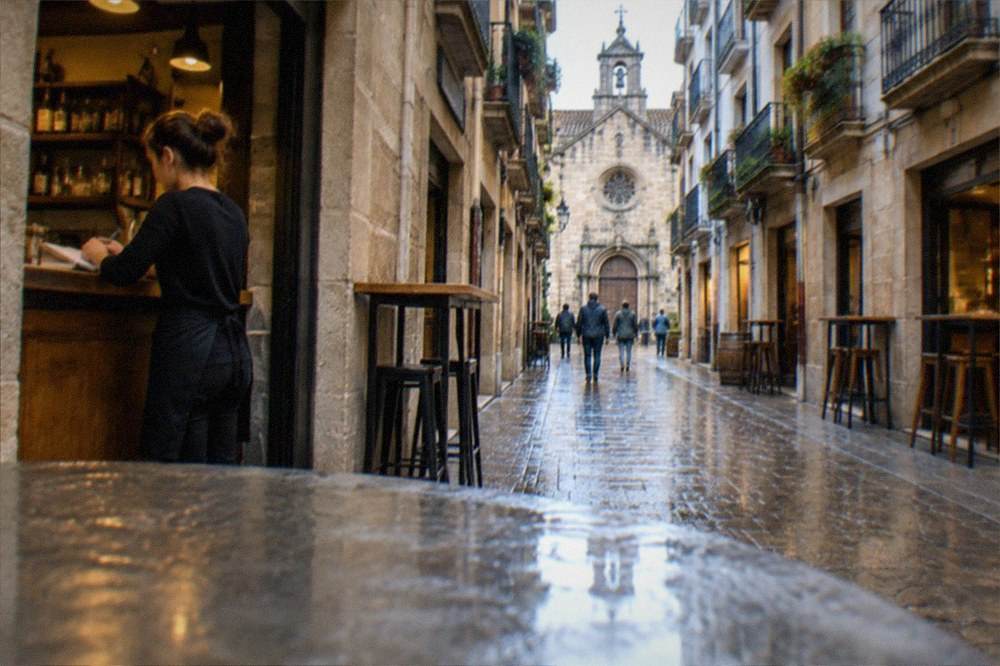
Pacing is the last skill. Five or six bars, one or two pintxos each, a small drink each time, is a full and generous evening, and the locals' trick of never finishing a full drink in any one bar is worth copying. The question of which hours the city actually eats in, morning versus evening, is answered on the pintxo eating times page, and the wider question of whether this city strains a budget is tackled on is San Sebastian expensive.
For visitors who want the lightest possible entry into the format, the budget walking tour is the natural pick: a short guided walk of the centre that ends with a pintxo and a drink included in the price, which makes it a low-commitment way to see the streets and taste the first bite on the same outing. It suits an arrival afternoon better than a full evening, and it pairs well with a self-run crawl later the same night.
Common Questions About Pintxos In San Sebastian
How Much Do Pintxos Cost?
Every bar sets its own prices and none are published in an official source, so no reliable per-bite figure exists for a named bar. Cold case pintxos are the cheapest tier at any counter, hot made-to-order ones cost more, and raciones cost more again. The detailed cost breakdown lives on the dedicated pintxo prices page.
Do You Tip In Pintxos Bars?
No tip is expected in a pintxo bar, and leaving nothing at all is completely normal. Locals who do leave something typically round the bill up by a small amount, coins rather than a percentage. This is counter service in a standing format, not table service, and the pricing and customs reflect that.
Are Pintxos In San Sebastián Expensive?
Compared with a sit-down restaurant meal in the same city, no: the crawl format is built from small individual bites and small drinks, so the total is assembled piece by piece and can be stopped whenever it reaches your budget. Compared with a free southern Spanish tapa, yes, because a pintxo is always a paid item. The cost question has its own full page with the numbers.
Are Pintxos Expensive?
As a category, pintxos are priced as individual bar items, which makes them flexible rather than uniformly cheap or dear. A crawl of a few cold bites and small drinks costs far less than a ración-based dinner at the same counter. The per-bar detail is on the dedicated prices page.
What Is The Difference Between Pintxos And Tapas?
A tapa in southern Spain is often a small item served alongside a drink, sometimes unrequested and free. A pintxo in the Basque Country is an individually priced product, usually skewered to bread, that you select yourself from the counter case or order hot. The pintxo scene is built around standing and moving between bars, the tapa scene around one table.
Can You Eat Pintxos If You Are Vegetarian?
Yes, though the cold case leans heavily on anchovies and seafood. Tortilla, mushroom, cheese and vegetable pintxos appear on most boards, and hot made-to-order items are the vegetarian's friend because you can see what goes into them. The dedicated vegetarian and gluten-free guide lists the options in full.
The crawl is the city's own invention and it rewards the first evening you give it: start in the old town, keep your skewers, drink small, and move on.