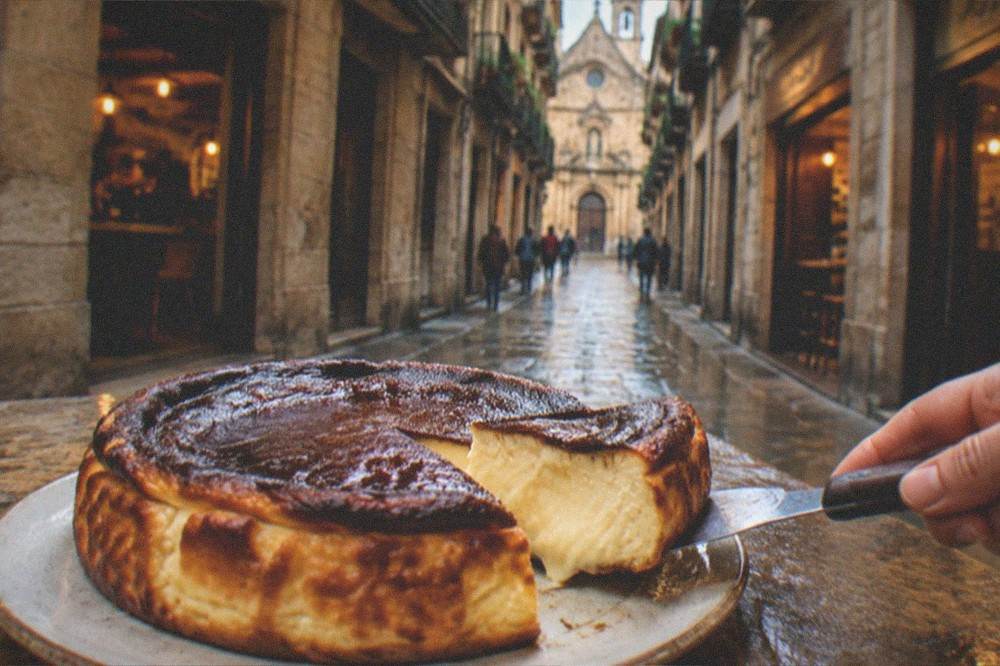
La Vina And The Original Basque Cheesecake
The burnt Basque cheesecake that Bar La Vina in the Old Town made famous is the single most copied dessert to come out of San Sebastián, and this page explains what it is, why the top is black, and how to eat your way around it.
Short answer
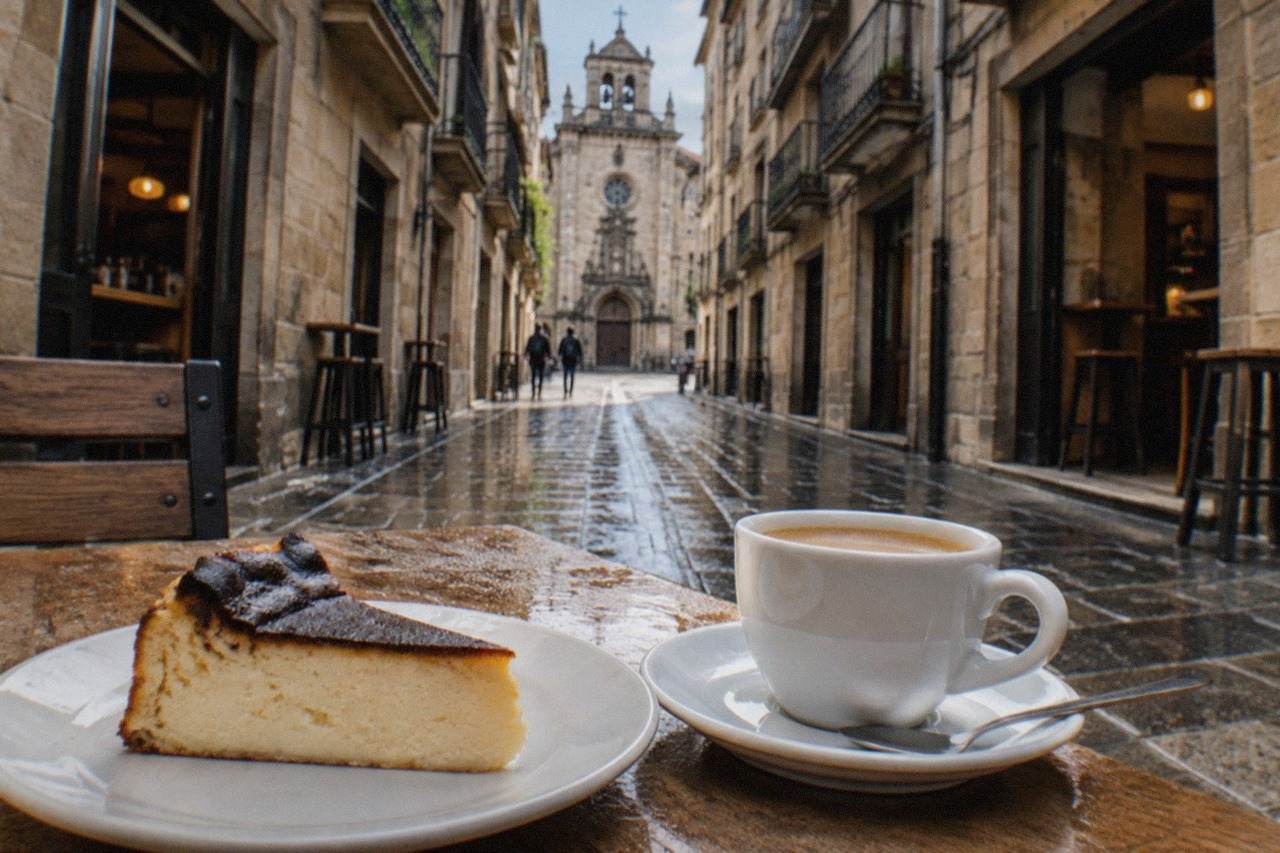
La Vina cheesecake is the burnt Basque cheesecake, a crustless baked cream cheese tart with a deliberately caramelised, almost bitter dark top and a molten centre, associated with Bar La Vina in the Parte Vieja of San Sebastián. It has no biscuit base, no flour-heavy sponge and no chilling stage, and it is served warm or at room temperature rather than cold.
San Sebastián, in the Basque Country of Spain on the bay of La Concha, is the city the world's pastry counters quietly owe a debt to. Its Basque name is Donostia, and in the Parte Vieja, the Old Town that runs behind the beach, a bar called La Viña serves the burnt Basque cheesecake that has since turned up on menus from London to Tokyo. The dessert is simple to describe and hard to do well: a crustless cream cheese tart, baked hot enough that the surface goes dark and bitter, with a centre that stays soft to the point of running. This page covers what it is, where to find it, how it differs from every cheesecake that came before it, and how to build a day in the city around a slice.
What Is La Vina Cheesecake In San Sebastian?
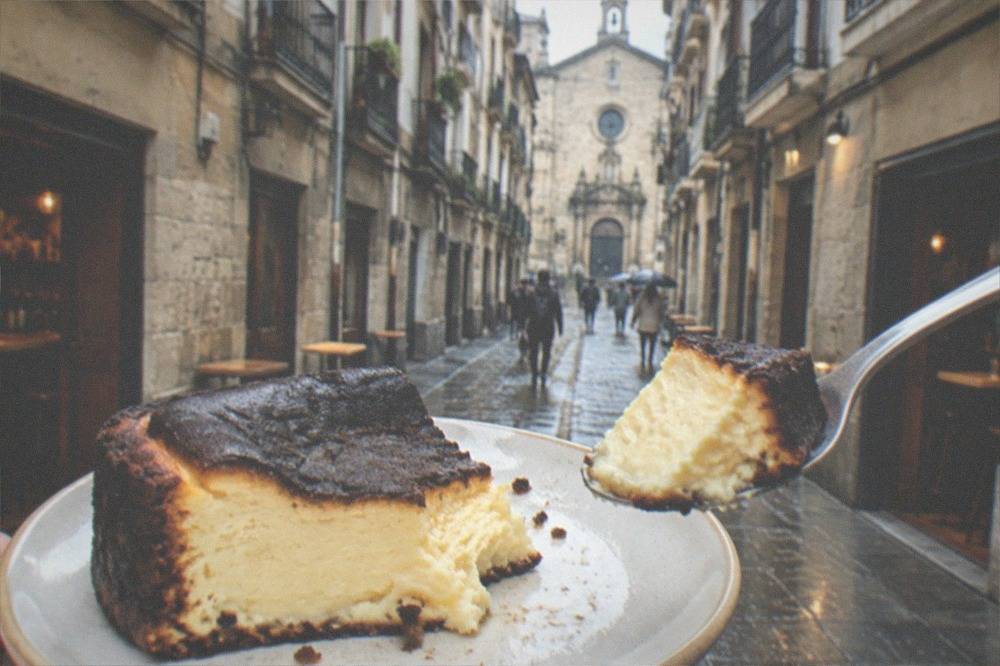
La Vina cheesecake is the burnt Basque cheesecake, a crustless baked tart made from cream cheese, eggs, sugar and cream, cooked at a high heat until the top caramelises to a dark, almost bitter crust while the middle stays soft and molten. It has no biscuit base, it is never served chilled, and it is eaten with a spoon rather than cut into neat wedges. The version associated with Bar La Viña in the Parte Vieja made the style famous.
The dessert answers to several names. In Spanish it is a tarta de queso, a cheese tart. In Basque it is often called a tarta de queso de La Viña, after the Old Town bar that bakes it continuously through the day. In English-language menus it usually appears as burnt Basque cheesecake, and the word burnt is not an apology, it is the whole point. The dark top is not a mistake rescued by a kitchen, it is the intended texture: bitter, slightly chewy, and set against a filling that is barely held together.
What makes it distinct from the cheesecakes many people grew up with is the absence of structure. There is no base of crushed biscuits, no gelatine, no flour in any meaningful quantity, and no overnight rest in a fridge. The tart is baked in a paper-lined tin, taken out while the centre still wobbles, and served warm or at room temperature. A slice collapses on the plate rather than standing up. That collapse is the sign of a good one.
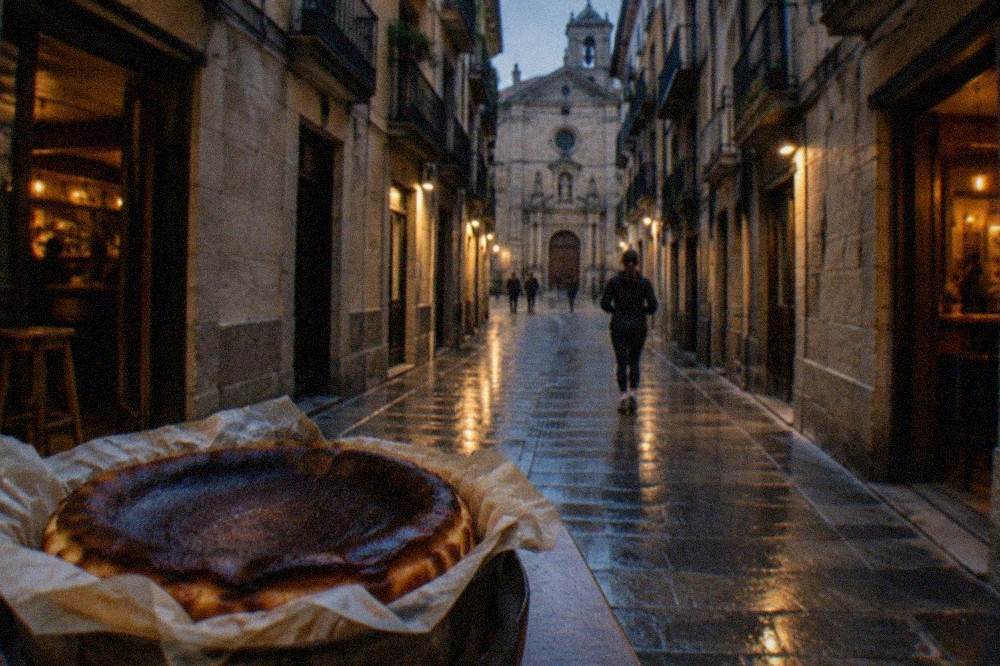
For the full background on the dessert and its place in the city's food culture, the companion page on San Sebastian cheesecake goes deeper into the style, and the answer page What Is So Special About San Sebastian Cheesecake? covers the question in brief.
Where Is Bar La Vina In San Sebastian?
Bar La Viña sits in the Parte Vieja, the Old Town of San Sebastián, a few streets back from La Concha beach and within easy reach of the Plaza de la Constitución, the old bullring square that now serves as the neighbourhood's living room. The Old Town is compact and flat, so the walk from the beach promenade to the bar's street takes only a few minutes.
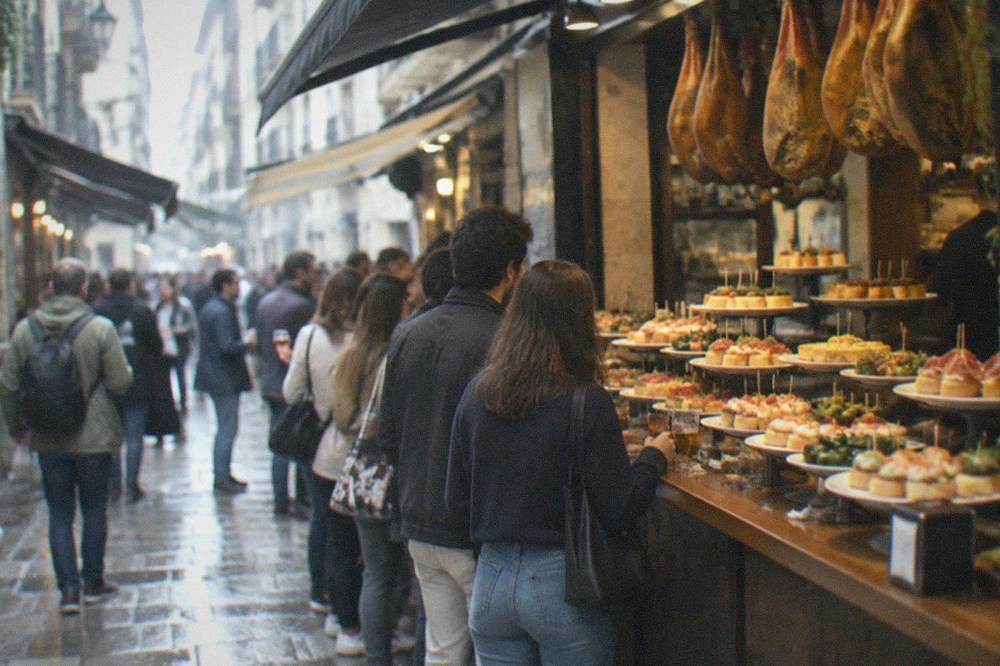
This is the densest pintxo bar district in the city, which is why the cheesecake and the pintxo crawl grew up together.
The Old Town, whose name in Spanish is the Parte Vieja and whose streets you can explore through the Plaza de la Constitución and the surrounding blocks, packs dozens of bars into a grid you can cross in ten minutes. Bar La Viña belongs to that world: it is a working pintxo bar first and a dessert destination second, with a counter, standing room, and a kitchen that turns out the cheesecake in trays. Visitors come for a slice at the end of a meal or as the whole purpose of a trip across town.
Because no bar's opening hours, prices or address details were confirmed for this page, plan the practical side the way locals do: check the bar's current listing before setting out, and treat the evening as a crawl rather than a single appointment. The Old Town runs late, and the neighbourhood's rhythm, drinks and pintxos from early evening onward, means a cheesecake stop fits naturally at the end of the night rather than the start.
A guided crawl is the easiest way to see how the bars connect, and the food tours below cover the Old Town with a local leading the way.
Why Is The Top Burnt On Basque Cheesecake?
The top is burnt because the tart is baked at a very high oven heat, hot enough that the sugars and proteins on the surface caramelise and then pass beyond caramel into a dark, bitter crust, while the short baking time leaves the centre under-set and molten. The contrast between the bitter black top and the sweet, barely solid filling is the dessert's entire character. Remove the burnt layer and what remains is a blander tart.
The burn is controlled, not accidental. A baker who wants this result runs the oven far hotter than any conventional cheesecake recipe would tolerate, and pulls the tin out while the middle still moves. The outside cooks twice: once by the oven's heat radiating from above, and once by the tin's own heat continuing to work from below. The table below shows what happens at each stage.
| Stage | What Happens In The Tin |
|---|---|
| Mixing | Cream cheese, eggs, sugar and cream are blended to a smooth, pourable batter with no base layer |
| Early baking | The outer ring of the batter sets first, forming the tart's only structure |
| Surface browning | Sugars on the top caramelise, turning amber before the heat pushes them darker |
| The burn | The surface passes caramel into a dark, bitter crust, and the edges go chewy |
| Resting out of the oven | The centre stays loose, so the tart is served while it still collapses on the spoon |
The bitterness is what carries the flavour. A slice of this cheesecake tastes of caramelised sugar and browned cheese proteins first, then of the plain, sweet, creamy interior, and the two halves of each spoonful argue with each other pleasantly. This is why the dessert pairs so well with the local drinks: txakoli, the sharp local white wine, cuts the richness, and a coffee alongside is the most common order in the Old Town.
How Does Basque Cheesecake Differ From Other Cheesecakes?
Basque cheesecake differs from New York cheesecake and chilled continental cheesecakes in three ways: it has no biscuit or pastry base, it is baked at high heat until the surface is deliberately dark rather than pale and uniform, and it is served warm or at room temperature with a molten centre rather than chilled and slice-firm. It is a dessert built on contrast, where the others are built on uniform smoothness.
The comparison below is the quickest way to see the differences. A New York cheesecake is dense, pale, baked in a water bath or gently at low heat, and rests on a base. A continental no-bake cheesecake sets with gelatine or whipped cream and lives in the fridge. The Basque version rejects both templates. The wider set of guides lives on San Sebastian Spain Guide.
| Characteristic | Burnt Basque Cheesecake | New York Cheesecake | Chilled No-Bake Cheesecake |
|---|---|---|---|
| Base | None, paper lining only | Biscuit or pastry crust | Biscuit crust |
| Baking | High heat, short time | Low, gentle heat or water bath | Not baked |
| Surface | Dark, bitter, intentionally burnt | Pale golden, uniform | Set topping, often fruit |
| Texture when served | Soft to molten centre | Dense and firm | Light and mousse-like |
| Serving temperature | Warm or room temperature | Chilled | Chilled |
| Main flavour | Caramelised, bitter-sweet | Rich cream cheese | Sweet cream and topping |
The differences matter when ordering. If you expect a firm slice that holds its shape, the Basque version will surprise you, because a proper one slumps. If a kitchen serves it cold and solid, it has been chilled to make it easier to portion, and something has been lost. Ask for it as it comes, and eat it soon.
The dessert's spread beyond Spain has been remarkable, and the answer page Where Can You Find The Best Cheesecake In San Sebastian? tracks where the style is done well inside the city, while the cost question is handled at How Much Does A San Sebastian Cheesecake Cost?.
Can You Make La Vina Style Cheesecake At Home?
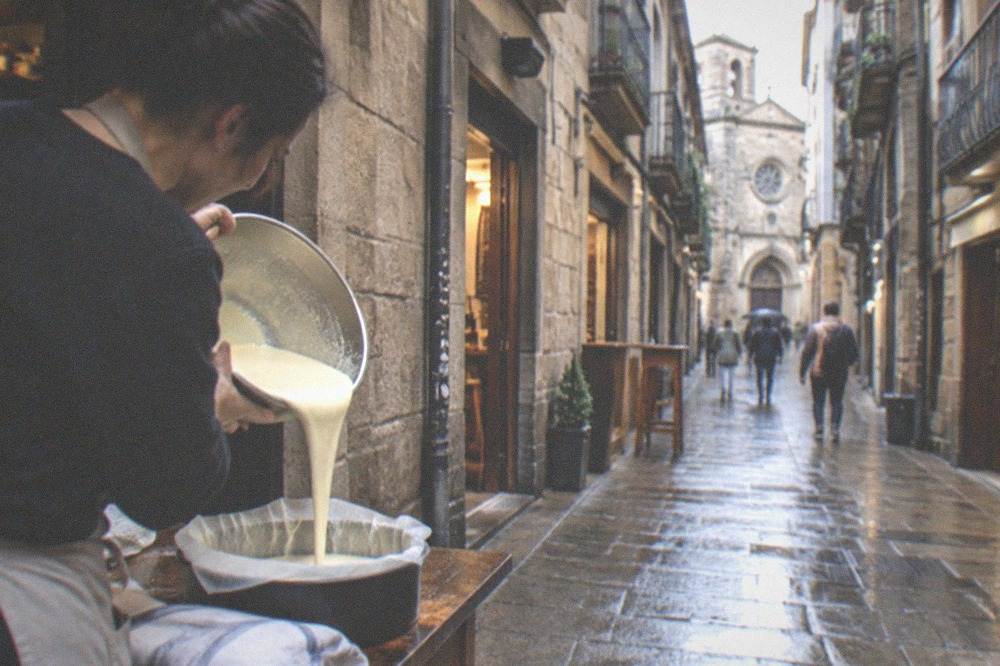
Yes, and the recipe is famously short: cream cheese, eggs, sugar and cream, blended smooth, poured into a paper-lined tin and baked hot enough to blacken the top while the centre stays underdone. The difficulty is not the ingredient list but the timing, because the window between a properly burnt top and an overcooked centre is narrow, and the tart must come out while it still wobbles.
Home bakers fail at this dessert in two ways: they under-bake out of fear and get a pale, wet tart, or they bake to the safe point and get a firm, dry one. The recipe rewards confidence. Blend the batter until it is entirely smooth, line the tin with paper so it rises well above the rim, and let the top go darker than instinct suggests. The paper collar is what gives the tart its rough, rustic edge.
| Ingredient | Role In The Tart |
|---|---|
| Cream cheese | The body of the filling, and the source of the browned, savoury notes in the crust |
| Eggs | The only setting agent, and the reason the centre must stay under-baked |
| Sugar | Sweetens the filling and caramelises into the dark top |
| Cream | Loosens the batter so the centre stays molten |
| Paper lining | Replaces a pastry base and forms the tart's rough, craggy edge |
The most reliable way to understand the dessert before baking it is to eat a few in the city where it was perfected. A cooking class takes that further, and the class below covers Basque cooking hands-on with a local chef.
Where To Eat Cheesecake In San Sebastian Beyond La Vina?
Beyond Bar La Viña, the burnt cheesecake appears across San Sebastián in three settings: pintxo bars in the Parte Vieja that bake their own trays, restaurants that serve it as a set dessert, and pastry shops that sell whole tarts to take away. The style has spread so far through the city's kitchens that the question is no longer where to find it, but which version you want, since each venue sets the bake differently and no two slices match.
The Old Town is the natural hunting ground, and a crawl that takes in several bars in one evening is the efficient way to compare them. The style also travels well beyond the Old Town, into the Centre and the Gros neighbourhood across the river, where cafe counters keep their own tins. Because no venue's prices or hours were confirmed for this page, use each listing for the practical details and judge the bakes on the evidence of the slice itself.
| Setting | What The Slice Is Like | When To Go |
|---|---|---|
| Pintxo bar counter | Cut to order from a tray, served at room temperature | Evening, at the end of a crawl |
| Restaurant dessert | Plated, sometimes with cream or a sauce | After a full meal |
| Pastry shop | Sold whole or by the slice for takeaway | Morning or afternoon |
| Cafe counter | Individual portions, often alongside coffee | Mid-afternoon break |
Pairing the dessert is half the pleasure. The table below sets out the common local pairings and what each one does to the slice.
| Pairing | What It Does |
|---|---|
| Coffee | The bitterness of the roast matches the burnt top |
| Txakoli | The local white wine's acidity cuts the rich centre |
| Sweet sherry | Concentrated nuttiness that leans into the caramel notes |
| Nothing | The purist's order, letting the top and centre argue alone |
To taste the dessert in its native setting, a guided pintxo evening is the simplest route, and the tour below pairs eight pintxos and five drinks across the Old Town, with reserved seats and a guide who knows which trays came out of the oven when. It is the version of the evening that turns a list of bars into a single plan, and it ends within walking distance of every dessert counter in the neighbourhood. Check availability if the timing suits your trip.
How To Fit Cheesecake Into A Day In San Sebastian?
The easiest pattern is a morning or afternoon on and around La Concha, an evening pintxo crawl through the Parte Vieja, and the cheesecake as the final stop of the night, when the bars' trays have been out long enough to be at room temperature and the counter is calm enough to order slowly. The dessert belongs to the end of a San Sebastián day, after the beach, the walks and the savoury bars have done their work.
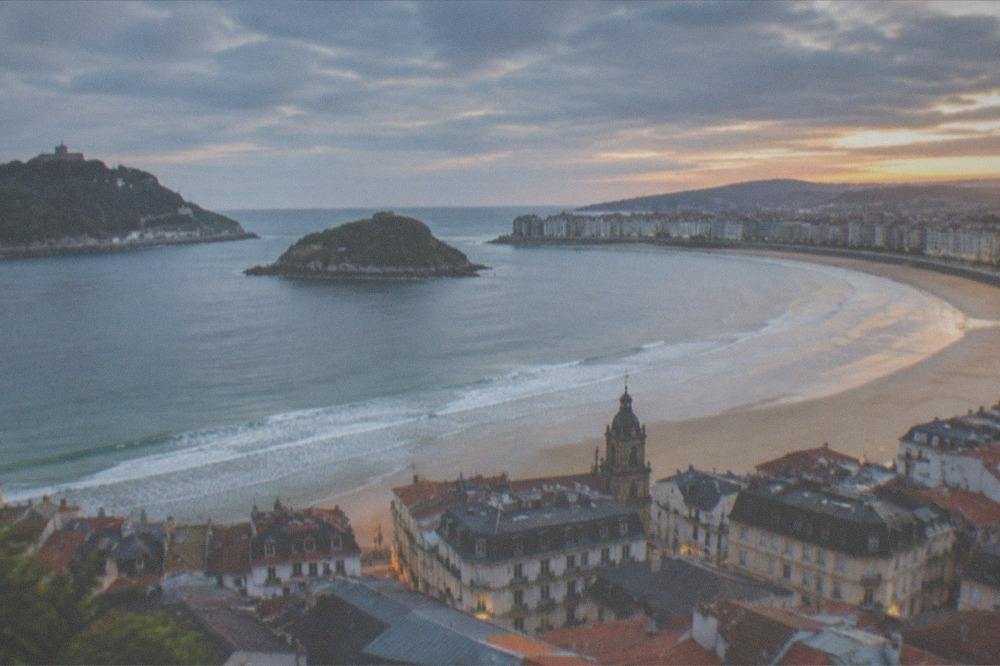
A day built around the city's essentials runs naturally east to west. Start on the sand at La Concha beach, where the council's own page lists a mean length of 1,350 metres of shallow sandy bay. Climb Monte Urgull behind the Old Town for the view over the whole curve, then come down into the Parte Vieja for the evening. The full plan is laid out on the root page of things to do in San Sebastian, and the dessert slots in wherever the evening ends.
| Time Of Day | Plan | Why It Works |
|---|---|---|
| Morning | La Concha, then Monte Urgull's paths | The beach is calmest early, and the hill is open from 08:00 |
| Midday | Lunch in the Old Town or at a cider house | The savoury half of the day |
| Afternoon | Coffee and a slice at a cafe counter | The afternoon break the city takes seriously |
| Evening | Pintxo crawl through the Parte Vieja | Bars fill from early evening onward |
| Last stop | Cheesecake at the counter | The traditional close of the night |
Wet days, and this city has 141 rain days a year at AEMET's Igeldo station, rearrange the plan rather than cancel it. The indoor alternatives, from the San Telmo museum to the covered counters of La Bretxa market, all end within a short walk of a dessert. The rain plan is covered in full on the San Sebastian weather page.
A day that ends at a cider house instead of a bar works too, and the lunch below runs the full txotx ritual with the meal included.
Common Questions About San Sebastian Cheesecake
What is so special about San Sebastian cheesecake?
The contrast: a deliberately burnt, bitter top over a barely set, sweet centre, with no base and no chilling. The style is associated with Bar La Viña in the Parte Vieja, and it has spread from there to menus worldwide, but the original setting is an Old Town pintxo bar counter. The full answer is on the page What Is So Special About San Sebastián Cheesecake.
Is burnt Basque cheesecake actually burnt?
The top is caramelised past the point of golden into a dark, bitter crust, which is intentional and is where much of the flavour lives. The centre is under-baked by design. Nothing about the dessert is scorched in the accidental sense.
Should Basque cheesecake be served warm or cold?
Warm or at room temperature. The tart is baked hot, rested briefly and served while the centre still moves. A slice served fridge-cold has usually been chilled for easier portioning, and the texture suffers for it.
Where can I find the best cheesecake in San Sebastian?
Start at Bar La Viña in the Parte Vieja, then compare versions at other Old Town counters, restaurant desserts and pastry shops across the city. No two kitchens bake it the same way, and the differences are the point. The dedicated answer page lists the options in detail.
Does La Vina cheesecake have a crust or base?
No. The batter is poured into a paper-lined tin with no biscuit or pastry layer, and the paper is what gives the tart its rough, craggy edge. The only structure is the baked outer ring of the filling itself.
Can you walk from La Concha beach to Bar La Vina?
Yes. The Parte Vieja begins directly behind the eastern end of La Concha, and the Old Town is flat and compact, so the walk from the promenade into the bar streets takes only a few minutes at an easy pace.
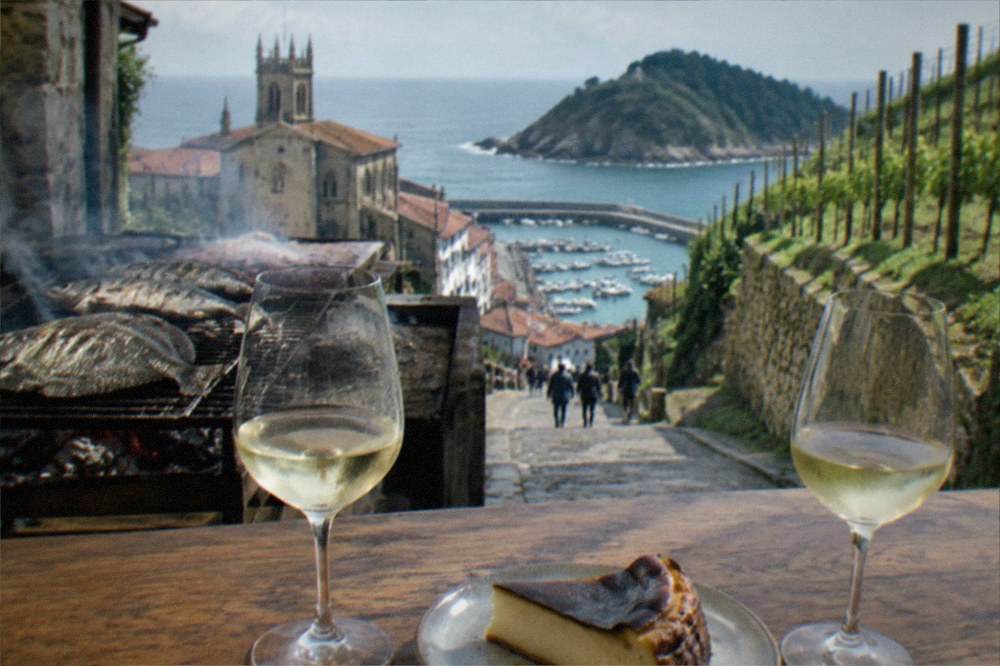
The burnt cheesecake is the rare local dish that escaped its city without changing its character: the dark top, the collapsing centre and the paper edge travel intact, and every version served abroad is an argument for coming to the Parte Vieja to eat the original. Pair the slice with a coffee or a glass of txakoli, order it at the end of the evening, and let the counter decide the portion. For everything else the city puts on a plate, start with the companion page on San Sebastian cheesecake and the wider guide to what San Sebastian is known for, both of which pick up where this slice leaves off.