What To Eat In San Sebastian: Basque Food Explained
San Sebastián, in the Basque Country of Spain, eats differently from the rest of the country. This is the city of pintxos, txuleta steak, txakoli wine and cider poured straight from the barrel, and it holds more Michelin stars per resident than almost anywhere.
Short answer
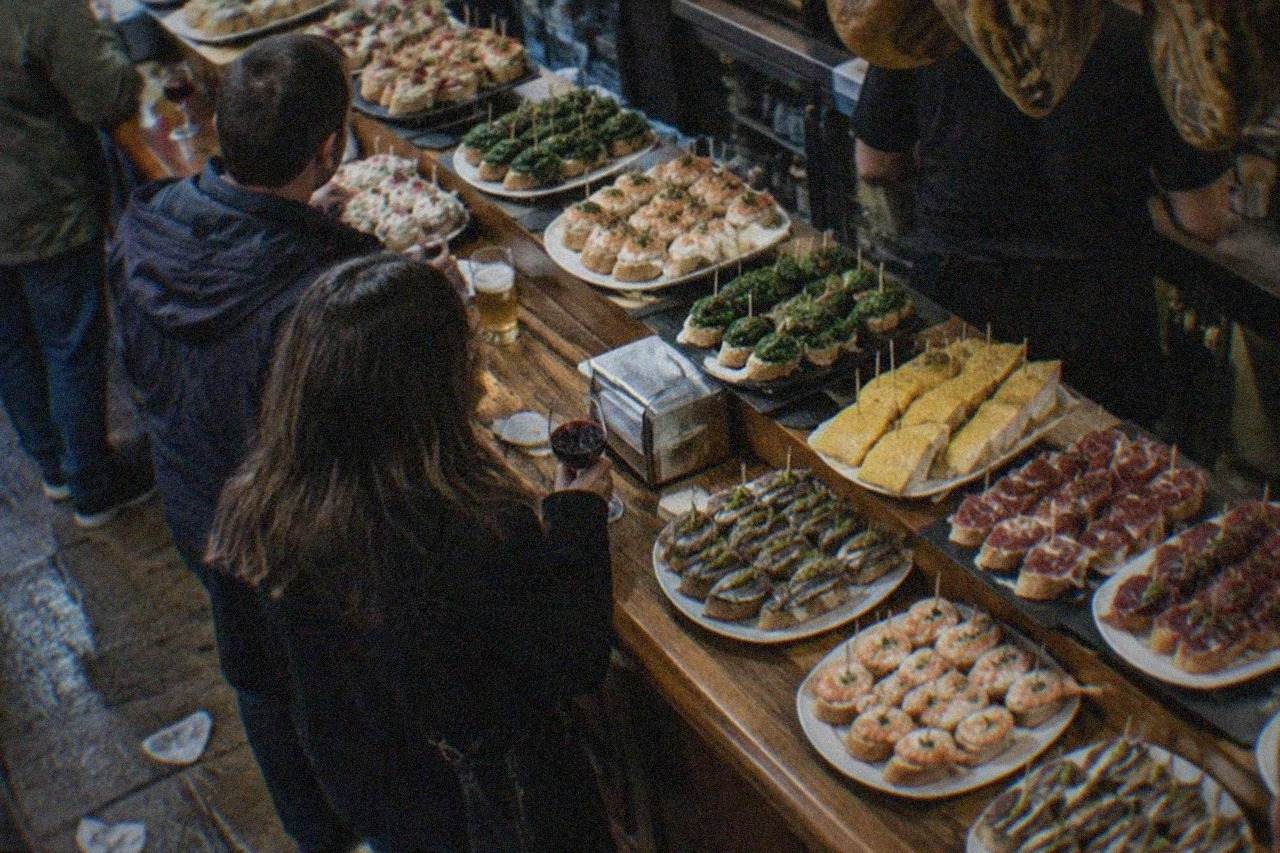
Basque food in San Sebastián is built on pintxos eaten standing at the bar, seafood from the Cantabrian coast, txuleta steak grilled over wood, txakoli wine and the winter txotx cider ritual. The MICHELIN Guide Spain 2026 lists 11 stars across 6 restaurants inside the city.
San Sebastián, the Basque city on La Concha bay in Gipuzkoa, Spain, whose Basque name is Donostia, treats eating as the local art form. The city's official name is Donostia / San Sebastián, and either half of that name answers to the same reputation: this is a place where the bar food is taken as seriously as the fine dining, where a skewered gilda on a counter is a civic institution, and where the MICHELIN Guide Spain 2026 counts 11 stars across 6 restaurants inside the municipality. A page elsewhere on this site answers what food San Sebastián is famous for in brief; this guide goes the other way and explains the whole Basque plate, dish by dish, custom by custom.
What Is The Food Capital Of Spain?
San Sebastián, in the Basque Country of Spain, is the city most consistently called the food capital of the country, and the claim rests on two pillars: a pintxo bar culture in the Old Town that runs every night of the week, and 11 Michelin stars across 6 restaurants inside the city in the MICHELIN Guide Spain 2026. The province of Gipuzkoa as a whole holds 19 stars across 11 restaurants in the same edition.
The starred restaurants inside the municipality, counted from the MICHELIN Guide Spain 2026 list, are set out below. Two of them, Akelaŕe and Arzak, hold three stars each. Martín Berasategui also holds three stars but sits in Lasarte-Oria, a separate municipality, so it never counts as a San Sebastián table.
| Stars | Restaurant | Location |
|---|---|---|
| 3 | Akelaŕe | Donostia / San Sebastián |
| 3 | Arzak | Donostia / San Sebastián |
| 2 | Amelia by Paulo Airaudo | Donostia / San Sebastián |
| 1 | iBAi by Paulo Airaudo | Donostia / San Sebastián |
| 1 | Itzuli, new in the 2026 guide | Donostia / San Sebastián |
| 1 | Kokotxa | Donostia / San Sebastián |
The next edition of the guide is announced at a gala on 24 November 2026, which is why every count here carries the edition name rather than a vague "currently". The starred layer sits on top of something older and more democratic: the pintxo bars of the Parte Vieja and the surrounding streets, where the same ingredients, anchovy, txangurro spider crab, cod, appear at counter height for a fraction of a tasting menu. The Michelin restaurants guide covers the top of the pyramid, and the best pintxo bars guide covers the base. Both belong to the same food culture.
Why Is The Food In San Sebastian So Good?
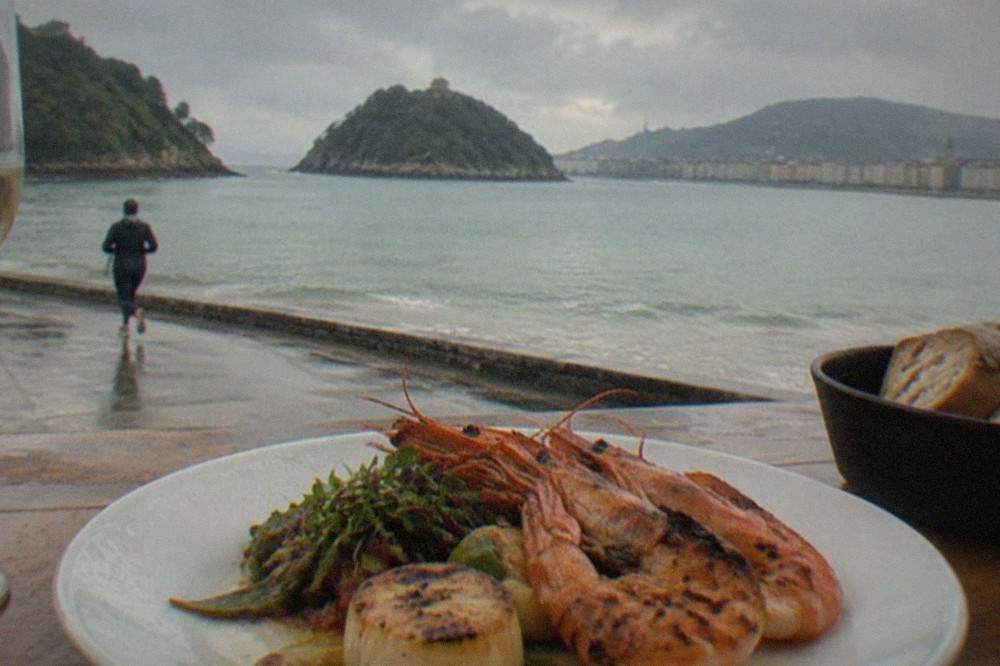
The food in San Sebastián is good for structural reasons, not luck: the city sits on a Cantabrian coast that supplies its fish markets daily, it sits surrounded by the txakoli vineyards and cider orchards of Gipuzkoa, it inherited a society that runs its own gastronomic clubs, and its cooks developed pintxos as a way to taste many small things in one evening. The tourism board counts the txotx cider season from the middle of January to the end of April, a whole season built around one drink.
The raw material explains a lot. The Bay of Biscay is cold and rough, and the fish that lands at the nearby ports, Getaria, Pasaia, Hondarribia, is the backbone of the local kitchen: hake, txangurro, anchovies, squid. The hills behind the city grow the apples for cider and the vines for txakoli, the lightly sparkling white wine poured from a height. Nothing on the plate travels far.
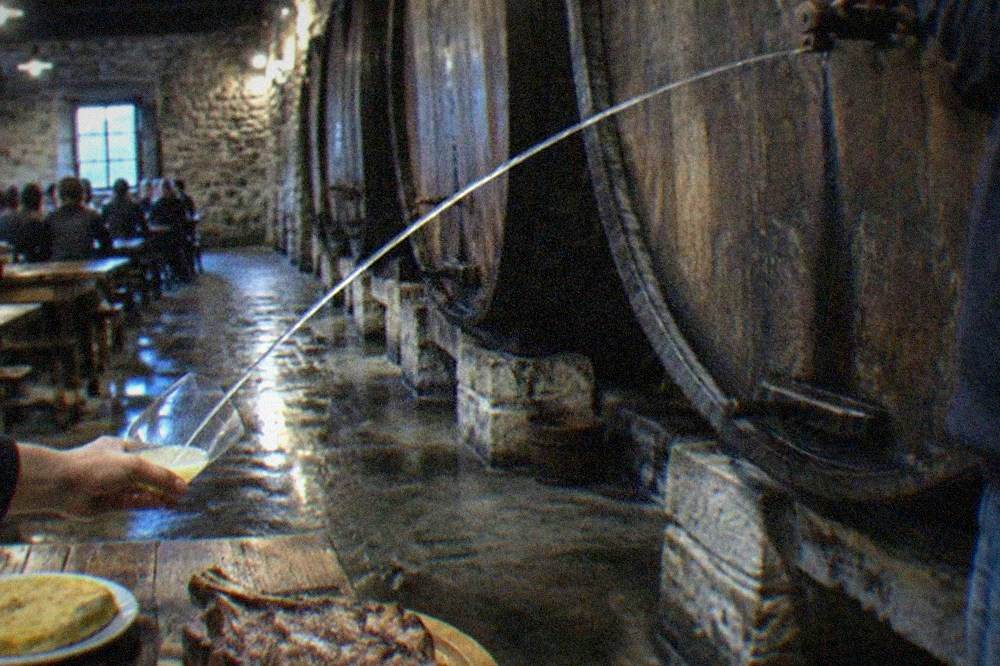
The institutions explain the rest. Gastronomic societies, the txokos, are private club kitchens where members cook for each other, and they keep the cooking standards of the city permanently high because thousands of amateur cooks practise weekly. The cider houses of Astigarraga, a separate municipality a short way inland, run the txotx ritual each winter: the barrel is broached, the cider shoots out, and everyone catches it in a glass while eating a fixed menu of cod omelette, fried cod with peppers and a massive txuleta steak. The cider houses guide covers that meal in detail, and the txuleta steak guide covers the chop itself.
A guided introduction compresses years of bar knowledge into one evening, which is why a food walk is the single most useful booking a first-time visitor can make.
What Is A Typical Basque Meal?
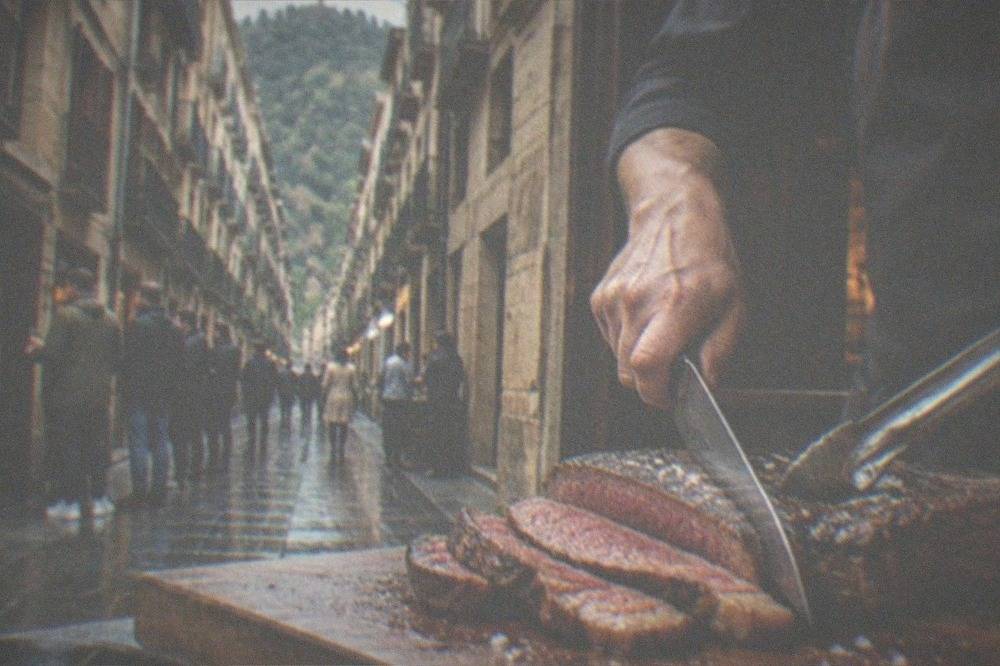
A typical Basque meal in San Sebastián is built in courses from the same local larder: a first plate of seafood or vegetables, often salt cod, hake or marmitako tuna stew, a second plate of meat, most often txuleta steak grilled over vine cuttings or charcoal, cheese or quince for dessert, and txakoli or cider to drink. In a cider house the meal is fixed: cod omelette, fried cod with green peppers, txuleta, and cheese with quince and walnuts.
The structure is older than the restaurants. Basque home cooking, the repertoire of pil-pal cod, porrusalda leek and potato soup, and marmitako, was designed around fish and root vegetables, and the restaurant kitchens of the city grew out of that base rather than replacing it. The table below sets out the shape of a full Basque meal as it is served in the city's asadores and cider houses.
| Course | What It Is | Typical Dishes |
|---|---|---|
| First plate | Fish or vegetables from the Cantabrian coast and the market gardens | Salt cod in pil-pal sauce, hake in green sauce, txangurro spider crab, porrusalda |
| Second plate | Meat, usually grilled over live fire | Txuleta steak, lamb chops, pork txistorra sausage |
| Dessert | Cheese or fruit-based sweets | Idiazabal sheep's cheese, quince paste with walnuts, the burnt basque cheesecake |
| Drink | Local, lightly sparkling or barrel-fresh | Txakoli white wine, still cider from the barrel, rioja reds from the south |
The burnt cheesecake deserves its own sentence because it has travelled the world under the name of the city. It was created at La Viña in the Parte Vieja, and the San Sebastian cheesecake guide tells that story in full. Learning to cook these dishes is a popular half-day in itself, and the cooking classes listed on this site cover the market visit and the hands-on version of exactly this meal.
What Is The Most Popular Basque Food?
Pintxos are the most popular Basque food in San Sebastián, and the single most ordered pintxo is the gilda: a skewer of anchovy, guindilla pepper and olives. Behind the gilda come txangurro spider crab, salt cod in pil-pal sauce, marmitako tuna and potato stew, and the txuleta steak, which is the centrepiece of every cider house meal and asador in the city.
The gilda was invented in this city and is the local answer to the question of what to eat first. It appears in the gilda pintxo guide in full, but the short version is that it carries everything Basque cooking prizes in one bite: good preserved anchovy, a sharp pickled pepper and a salty olive, held on a skewer and eaten in a single mouthful with a glass of txakoli. The what are pintxos guide explains the form itself, and the pintxos in San Sebastian guide maps the culture around it.
| Dish | What It Is | How It Is Served |
|---|---|---|
| Gilda | Anchovy, guindilla pepper and olive on a skewer | Cold, eaten standing at the bar in one bite |
| Txangurro | Spider crab, shell picked and returned to the shell with its own roe and sauce | Hot, as a starter |
| Bacalao al pil-pal | Salt cod in a sauce of garlic and olive oil emulsified into foam | Hot, a first plate |
| Marmitako | Tuna and potato stew, originally a fisherman's boat pot | Hot, a main plate |
| Txuleta | Bone-in beef chop, grilled over wood fire | Carved at the table for the whole group |
| Burnt cheesecake | Basque cream cheesecake baked until the top is blackened | Room temperature, shared |
The way to eat all of this on a first visit is the way locals do it: bar to bar, one or two pintxos and a drink in each, moving on. A shared pintxo walk led by a local covers the bars, the ordering customs and the drinks in one evening, with tapas and drinks included in the price. More of these guides are collected on San Sebastian Spain Guide.
The premium pintxo and market tour is the reserved-seat alternative for anyone who wants a chair at every bar plus a guided visit to the Mercado de la Bretxa.
How Is Basque Food Different From Spanish Food?
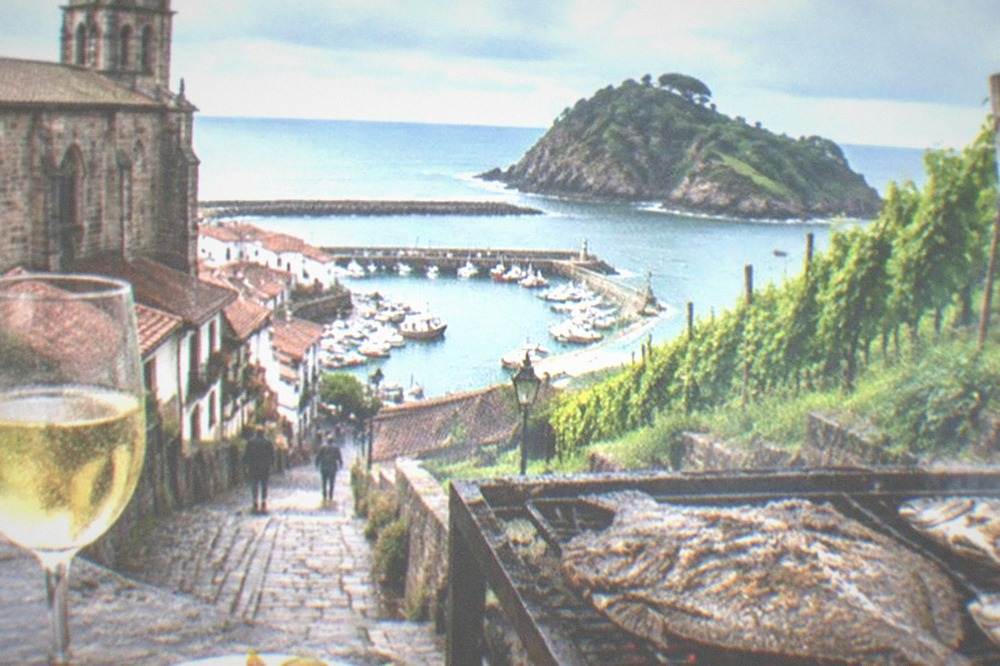
Basque food differs from Spanish food in its ingredients, its structure and its drinking customs: it is built on Cantabrian fish and cider rather than Mediterranean produce and sherry, it uses its own language for its dish names, it serves pintxos ordered and paid for individually rather than tapas that arrive free or shared, and it grills its meat over vine cuttings and charcoal as the default rather than the exception. It is a coastal Atlantic kitchen, not a Mediterranean one.
The tapa and the pintxo are the clearest dividing line. A tapa in much of Spain is a small thing that arrives with a drink or is shared from the middle of the table; a pintxo in San Sebastián is an individually priced item, often skewered or on bread, that you order by pointing at the counter and pay for by the toothpick count or the receipt. The two words are not interchangeable, and using them correctly is the first sign of taking the city seriously.
| Element | Basque Food In San Sebastián | Spanish Food Generally |
|---|---|---|
| Small plate | Pintxo, ordered and priced individually | Tapa, often shared or served with a drink |
| Fish | Cantabrian: hake, anchovy, txangurro, squid | Mediterranean: sardines, red mullet, sea bass |
| Signature meat | Txuleta steak over wood fire | Cocido, jamón, grilled lamb by region |
| Local white | Txakoli, lightly sparkling, poured from height | Albariño, verdejo, fino sherry |
| Winter drink | Cider straight from the barrel in txotx season | Wine, beer and sherry year round |
| Meal language | Basque names: pintxo, txangurro, txuleta, txotx | Spanish names by region |
None of this makes Basque food hostile to a visitor, it makes it specific. The city's kitchens are proud of their difference, and the tourist board markets the txotx season and the cider houses as experiences you cannot copy elsewhere in Spain, because the orchards, the barrels and the ritual are all here.
When To Eat Pintxos In San Sebastian?
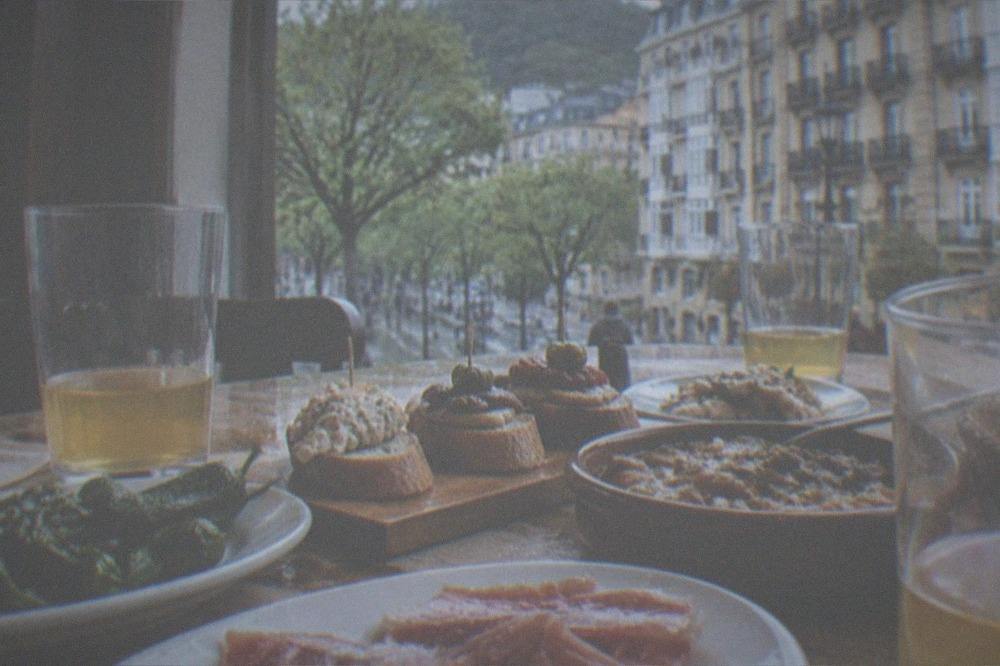
Pintxos in San Sebastián are eaten in the late evening, from roughly eight o'clock onwards, as the city's version of dinner, and again at midday when the Old Town bars fill with workers on their lunch break. The custom is to eat standing at the counter, take one or two pintxos and a drink in each bar, and move to the next bar, so an evening becomes a crawl of five or six stops rather than one sitting.
The rhythm matters more than the clock. Locals do not eat pintxos at five in the afternoon, that is when the bars are quiet and the counters are being restocked, and they do not sit down for a long table service the way a Madrid diner might. The answer page on pintxo times covers the schedule in detail for anyone planning an evening around it.
The crawl format rewards a guide on a first visit, because the bars are dense, unmarked to an outsider and full of unwritten rules about ordering and paying. A cooking class is the other way in, and the hands-on Basque class with wine and cider tasting teaches the dishes and the drinks together in one session.
The best pintxo bars guide is the companion read for anyone going it alone after the class.
Where To Drink Txakoli And Cider Around San Sebastian?
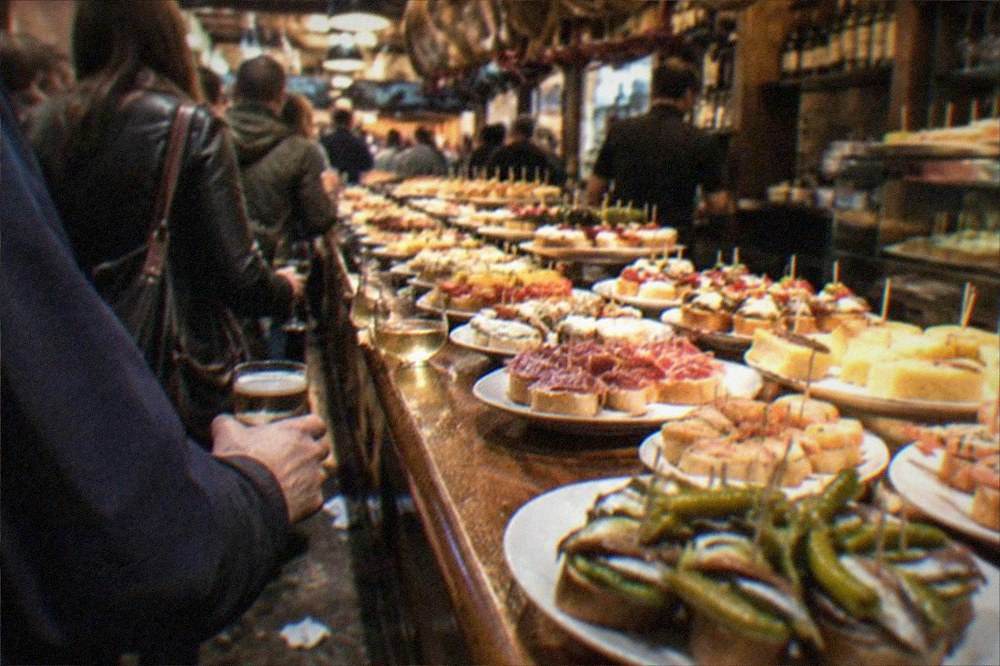
Txakoli is drunk everywhere in San Sebastián, poured from a height into a tumbler, but the cider ritual belongs to the cider houses of Astigarraga and the surrounding hills, where the txotx season runs from the middle of January to the end of April and the barrel is broached so the cider pours straight into your glass. Getaria, a fishing town along the coast, is the txakoli capital, and its vineyards can be visited on a half-day trip from the city.
The two drinks are opposites that share one rule: both are local, and both are drunk young. Txakoli is a slightly fizzy, high-acidity white made in small vineyards, and the theatrical pour from arm's height is not decoration, it wakes the wine up. Cider is still, sharp and unfiltered, and the txotx ritual, standing, glass out, catching the arc from the barrel, is the whole point of the visit. The txakoli guide covers the wine, its taste and how it is poured.
| Drink | Where It Comes From | How It Is Drunk | Season |
|---|---|---|---|
| Txakoli | Getaria and the Gipuzkoa coast vineyards | Poured from height into a tumbler, with seafood and pintxos | Year round |
| Natural cider | The cider houses of Astigarraga and the hills | Straight from the barrel in the txotx ritual, standing | Middle of January to the end of April |
| Cider house lunch | Astigarraga cider houses | Fixed menu: cod omelette, fried cod, txuleta, cheese with quince | Same txotx season |
The cider house visit run by the Gipuzkoa cider house association is the fullest version of the day: the orchard, the cellar, the txotx ritual and the full lunch, with transport from the city handled. Check availability on the operator's listing before the season fills up, because the window from January to April is fixed by the barrels, not by the calendar of the visitor.
For the wine side of the coast, the Getaria txakoli trip includes hotel pickup and tastings at the source, and the same trio of food experiences below covers the whole spread: a pintxo walk in the city, a cooking class with cider tasting, and the txakoli half-day.
Common Questions About San Sebastian Food
What Is The Foodie Capital Of Spain?
San Sebastián is the usual answer to the foodie capital question, and the case is the same one the Michelin counts make: 11 stars across 6 restaurants inside the city in the MICHELIN Guide Spain 2026, plus a pintxo bar culture that runs every night. Some writers give the title to the Basque Country as a whole, since the province of Gipuzkoa holds 19 stars across 11 restaurants in the same edition. Either way, the answer lands on this coast.
The Dishes The City Is Known For
The city is famous for pintxos, txuleta steak, the burnt basque cheesecake, txakoli and the txotx cider ritual. The dedicated page on what food San Sebastián is famous for answers this in full.
Is Basque Food Spicy?
Basque food is not spicy in the chilli sense. Its heat comes from one place, the guindilla, a slim green pickled pepper that appears in the gilda and in fried dishes, and it is a sharp pickle rather than a burn. The flavour base of the kitchen is garlic, olive oil, parsley and the fish itself.
Do You Tip In San Sebastian Bars?
Tipping is light and optional in San Sebastián, as across Spain. Locals commonly round up a bar bill or leave small change after a full restaurant meal, and nothing is expected at a pintxo counter. Service charges are not added to bills.
Can Vegetarians Eat Well In San Sebastian?
Yes, with more effort than a fish eater needs. The pintxo counters lean heavily on anchovy, cod and crab, but the vegetable side of the kitchen is real: porrusalda, piquillo peppers, tortilla, Idiazabal cheese and the market produce of La Bretxa. The vegetarian and gluten-free guide on this site maps the options.
What Is The Best Food Tour In San Sebastian?
It depends on the evening you want. A shared pintxo walk with a local suits a first night, a reserved-seat premium crawl suits a group that wants seats at every bar, and a cooking class suits anyone who wants to take the recipes home. The premium pintxo and market tour page lists the options with live prices.
Eating in San Sebastián is not a sideline to the visit, it is the visit, and the city's own calendar, from the txotx barrels in January to the pintxo counters in August, is built to prove it. Plan at least one bar-crawl evening, one long lunch and one trip out to the cider houses or the txakoli coast, and the city will have fed you properly.