Where Can I Find The Best Cheesecake In San Sebastian?
The best cheesecake in San Sebastián is the burnt Basque cheesecake born in the city's Parte Vieja. This guide covers where to find it, what makes it different and how to order it.
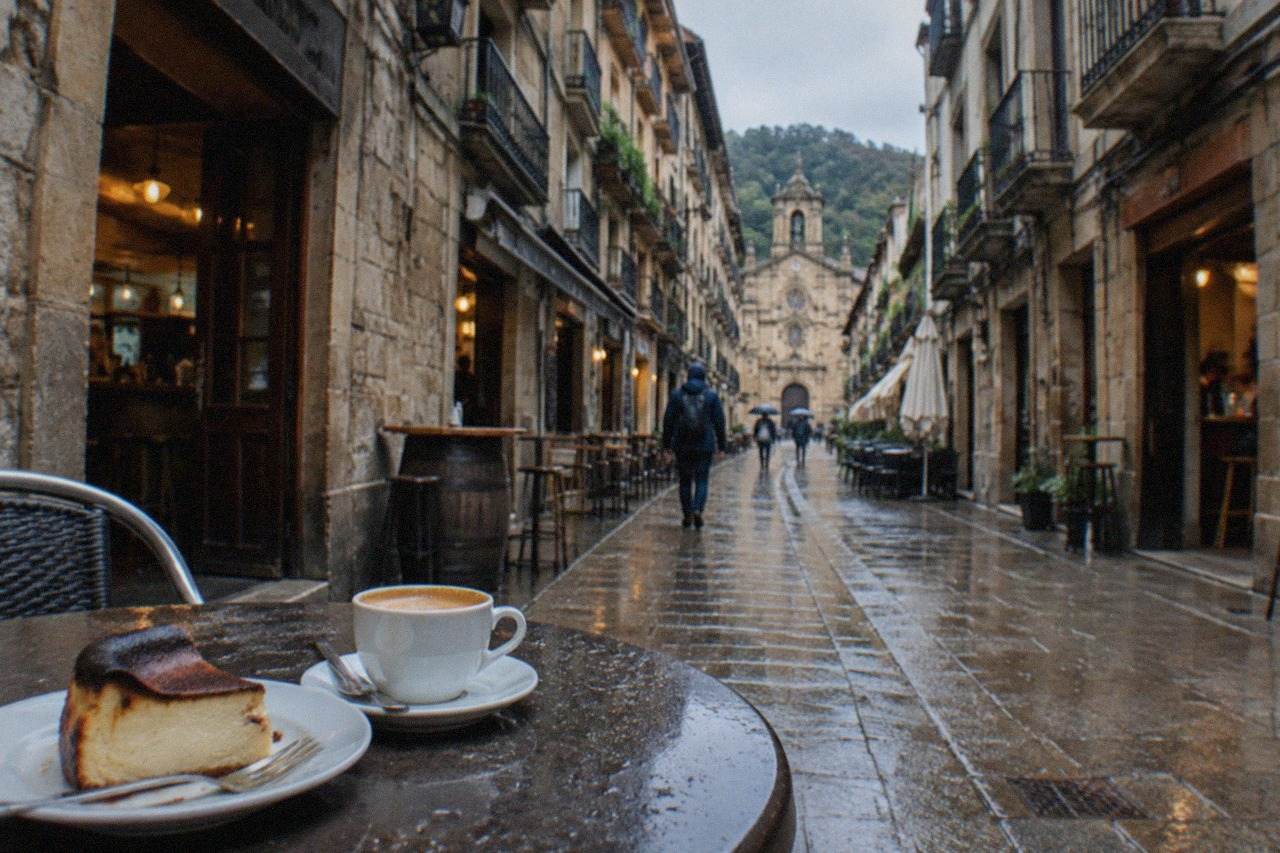
San Sebastián, the Basque city on La Concha bay whose official name is Donostia / San Sebastián, is where burnt Basque cheesecake was born. The dessert that food writers now copy in kitchens from New York to Sydney started as a single house recipe at a bar in the Parte Vieja, the Old Town, and the city still treats it as a local product rather than a trend. This page answers where to find the best cheesecake in San Sebastián, what the cake actually is, and how it fits into an evening of pintxos rather than replacing one.
Where Can I Find The Best Cheesecake In San Sebastian?
The best-known cheesecake in San Sebastián is the burnt Basque cheesecake served at Bar La Viña in the Parte Vieja, the Old Town, the bar credited with creating the recipe in its modern form. The cake is baked deliberately hot so the top scorches dark while the centre stays liquid, and a slice is served plain, usually with nothing on it. Many people eat it at the bar itself or take a whole cake from the counter.
La Viña sits in the Parte Vieja, the old quarter where most of the city's pintxo bars are packed into a grid of narrow streets. The bar's own story is that the recipe was developed in-house, replacing the dense, flour-bound cheesecakes of an older tradition with something looser: a high ratio of cream cheese to everything else, no base, no crust, and an oven hot enough to blacken the surface in the time the middle needs to barely set. The result is the single most copied dessert in modern Spanish cooking. For the full history of the cake and the bar behind it, see the La Viña cheesecake guide.
Ordering it is simple. The bar sells slices to eat in and whole cakes to take away, and the slice arrives on a plate with a fork and nothing else, because the cake needs no sauce, no fruit and no biscuit. The correct moment to eat it is the same moment locals eat everything sweet here: after the savoury pintxo round, late in the evening, when the bars are at their loudest. The cake is also a standard stop on food tours of the Old Town, where a guide orders for the table and explains the difference between this and the cheesecakes many visitors grew up with.
What Makes Basque Cheesecake Different From Other Cheesecakes?
Basque cheesecake is baked at a very high temperature so the top burns to a dark, bitter caramel while the centre stays deliberately undercooked and custardy, and it has no biscuit base, no crust and no topping. A New York cheesecake is dense, pale and firm enough to slice cleanly. A Basque cheesecake collapses slightly when cut and is eaten with a spoon as much as a fork.
The look puts people off the first time. The surface is not golden, it is nearly black, and the burn is the point: the scorched layer tastes of caramel and coffee, and it plays against a centre that is barely set, somewhere between custard and thick cream. The recipe is short, cream cheese, sugar, eggs, a little flour and a lot of cream, and the skill is entirely in the oven. The cake is baked in a parchment-lined tin so the paper rises above the rim and the top takes the heat directly.
The cake belongs to a wider Basque habit of desserts that are simpler than they look. The same kitchen culture that produces a three-ingredient cheesecake also produces the gilda pintxo, an anchovy, an olive and a pickled pepper on a toothpick, and the txuleta steak cooked over nothing but wood. If you want the deeper background on the cake itself, the San Sebastian cheesecake guide covers the recipe and its spread beyond Spain, and the page on what is so special about San Sebastian cheesecake takes the question apart piece by piece.
The table below sets the two styles side by side, because the difference is easier to see written down than explained at a bar counter.
| Feature | Burnt Basque cheesecake | Classic New York cheesecake |
|---|---|---|
| Surface | Dark, deliberately scorched | Pale, smooth, often browned only at the edge |
| Texture in the centre | Loose and custardy, spoon-soft | Dense and firm, holds a clean slice |
| Base | None, no crust at all | Biscuit and butter crust |
| Baking | Very hot oven, short bake | Low oven, long bake, often in a water bath |
| Serving | Plain, at room temperature | Often chilled, sometimes with fruit or sauce |
Where Else Can You Eat Cheesecake In San Sebastian?
Beyond the original bar in the Parte Vieja, burnt Basque cheesecake now appears on counters across San Sebastián, in pintxo bars in Centro and Gros, in bakeries that sell whole cakes, and as the dessert course in some of the city's best restaurants. The recipe is public and the style is regional, so the version you meet two streets from the source is often a faithful copy rather than a rival.
The Parte Vieja is still the densest ground. Bars that spend their evenings on savoury pintxos frequently keep a cheesecake under the counter for the last round of the night, and asking for the postre, the dessert, after your pintxos is a normal order rather than a special request. In Gros, on the surf side of the river, cafe culture is stronger and the cake shows up in a coffee-shop setting, baked by younger kitchens that learned the style from the original and put their own oven temperatures on it. Centro, the shopping district around the Boulevard, has bakeries selling whole cakes for people taking one home or to an apartment. Other pages covering the same trip are gathered on San Sebastian Spain Guide.
Two practical notes. First, check the counter or the listing before you plan a visit around any bar. Second, the cake travels well and is sold whole precisely because it does: a whole cake holds its burnt top and soft middle for hours, which is why take-away is as common as eating in. For what a cake or a slice costs, the dedicated answer on how much does a San Sebastian cheesecake cost is the page to read.
The most reliable way to eat your way to the cake is with someone who orders for you. A guided crawl through the Old Town builds the evening the way locals build it, savoury bars first, and the dessert arrives as part of the route rather than as a hunt.
How Do You Order Cheesecake Like A Local In San Sebastian?
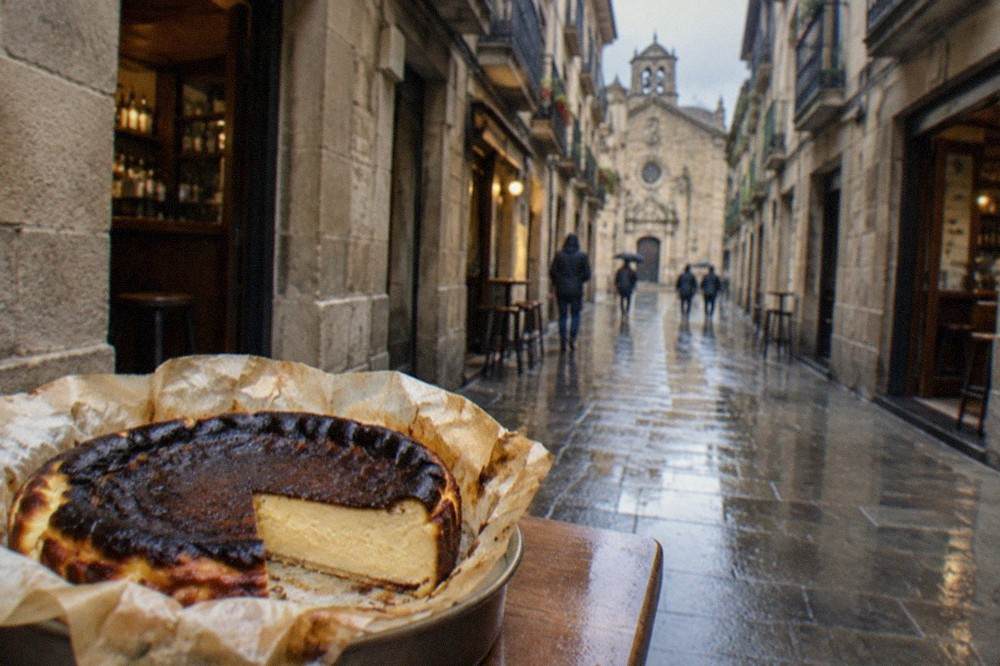
Ask for the cheesecake as part of the last round of the evening, after the savoury pintxos, either as a slice at the bar or as a whole cake to take away, and eat it plain with nothing added. Locals do not treat it as an afternoon pastry or a breakfast item. It is a night dessert, ordered when the bar round is winding down.
The rhythm matters. An evening in the Parte Vieja runs bar to bar, one or two pintxos and a drink in each, and the dessert comes at the end of the route rather than at the start. If you are doing the round on your own, the phrase that works is simply the dessert, la tarta de queso, and the bar will tell you whether they cut slices or sell whole cakes only. If a bar has run out for the night, that is normal and not a crisis, the cake is baked in batches and the last round often finishes it, and the answer is the next bar.
If you would rather have the whole route handled, a guided food walk is the low-effort version. The Old Town crawl is the classic, and the city's wider food identity, covered in what food is San Sebastian famous for, goes well past dessert: pintxos, txuleta steak, txakoli wine and cider house meals all belong to the same evening tradition. For the full picture of the city beyond the table, the root page on things to do in San Sebastian is the place to start.
The table below is a short planning aid for working the cake into a visit.
| Situation | Best approach |
|---|---|
| One evening in the Old Town | Savoury pintxo bars first, cheesecake as the last stop |
| Eating in an apartment or hotel | Buy a whole cake to take away, it holds for hours |
| Travelling with a group | One whole cake and forks beats six slices |
| Short visit, one bar only | Order pintxos, then ask for the dessert at the same counter |
| Want the original | The Parte Vieja bar credited with the recipe |
Common Questions About San Sebastian Cheesecake
Where can I find the best cheesecake in San Sebastian?
The bar credited with inventing burnt Basque cheesecake is in the Parte Vieja, the Old Town, and it still bakes the cake on site every day. Many other bars and bakeries across the city serve faithful versions of the same style.
What is burnt Basque cheesecake?
It is a crustless cheesecake baked at a high temperature so the top scorches dark while the centre stays soft and custardy. The burn is intentional and gives the cake its caramel flavour.
Do you eat it hot or cold?
At room temperature. The centre is meant to be loose and creamy, and chilling it firms the cake up and loses the texture the recipe is built around.
Is it the same as New York cheesecake?
No. The Basque version has no biscuit base, a burnt top and a runny centre, while a New York cheesecake is dense, pale and firm enough to cut into clean slices.
Can you buy a whole cheesecake to take away?
Yes, whole cakes are a standard take-away item, and the cake travels well because the burnt top protects the soft middle. Ask at the counter of the bar or bakery you are in.
When do locals eat it?
At the end of an evening of pintxos, late at night, as the dessert round of the bar crawl. It is not a breakfast or afternoon-tea item in the city that invented it.
The cake is the city's most exported idea, and the version you eat two streets from the source is still the version the world is copying, which is a good enough reason to plan the last stop of your evening around it.