Breakfast And Coffee In San Sebastian
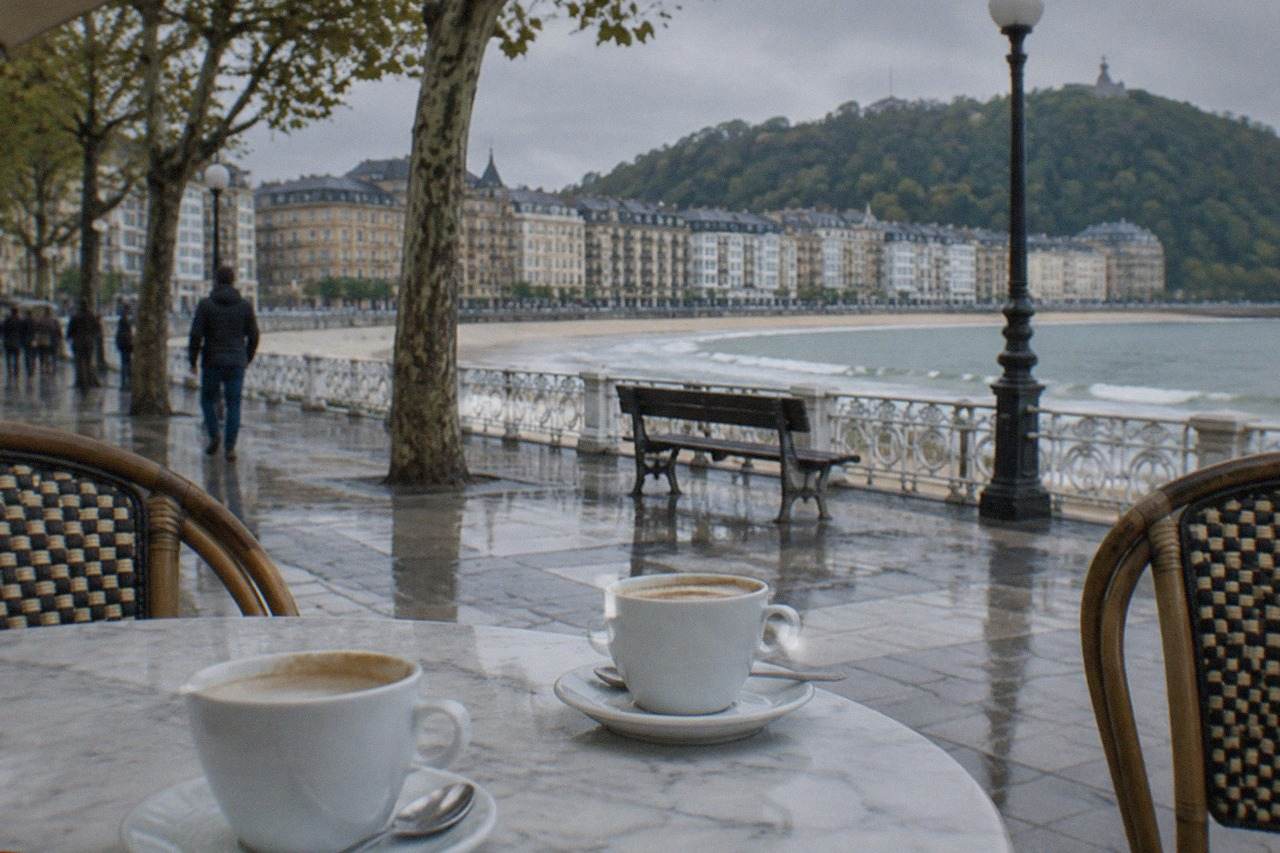
Breakfast in San Sebastián, in the Basque Country of Spain, is a quieter affair than the city's famous evening pintxo crawl, and it rewards planning: coffee is ordered by name, the sweet things are worth knowing about, and the morning is the best window on La Concha before the day fills up.
Short answer
A typical San Sebastián breakfast is coffee plus something small: a tostada, a pastry from a bakery, or a pintxo in the Parte Vieja. Locals eat light and early, and the big food moment of the day comes later. This page covers what to order, where to go, and how the morning fits the rest of the day.
Breakfast in San Sebastián, the Basque city on La Concha bay in Spain whose official name is Donostia / San Sebastián, is the quiet half of a food town. The evening pintxo crawl in the Parte Vieja gets the attention, and rightly so, but the morning has its own logic: a coffee ordered by its exact name, something small to eat, and a city that is still empty enough to see properly. This page, part of the San Sebastian Spain Guide, walks through what a San Sebastián breakfast actually is, where to find it, how the coffee culture works, and how to fold the morning into the rest of the day.
What Is A Typical Breakfast In San Sebastian?
A typical breakfast in San Sebastián is small, savoury or barely sweet, and eaten standing or quickly seated: coffee with a tostada, a croissant-style pastry from a bakery, or a simple pintxo in an Old Town bar. It is not a hotel-buffet meal. The Basque name for the city, Donostia, sets the tone: the big eating comes at midday and in the evening, so the morning plate stays light and the coffee matters more than the food.
That lightness is the honest description, and it is worth internalising before your first morning. A visitor arriving from a full-English or American-pancake tradition sometimes reads the local breakfast as an omission, but it is a choice with a reason: lunch in this city is a serious event, from the pintxo bars of the Parte Vieja to the Michelin-starred tables counted in the MICHELIN Guide Spain 2026, and eating a small breakfast leaves room for it. The pattern holds across the week, not just on weekends.
The building blocks barely change from bar to bar. Bread, in the form of a toasted slice, is the backbone, and the toppings are usually tomato, oil, jamón or cheese, or a mix. Bakeries supply the sweet alternative, and the glass counter of a pintxo bar supplies the third option, a cold pintxo with a coffee standing at the bar. If you are new to the pintxo format itself, the guide to what pintxos actually are explains the difference between a pintxo, a ración and a tapa, which matters when you order.
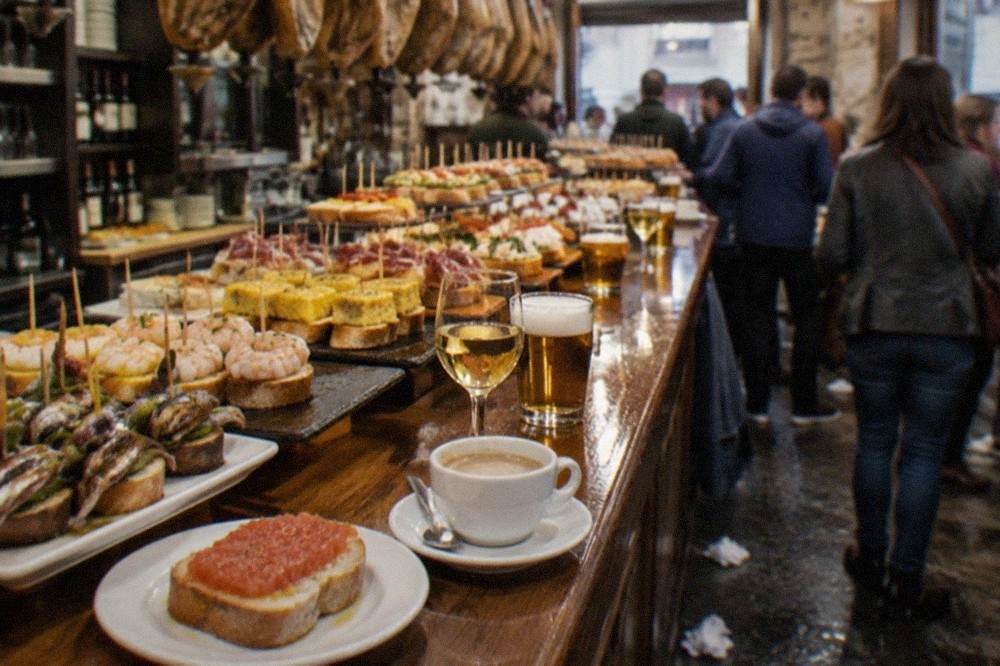
One structural point saves confusion: many pintxo bars are not open first thing in the morning, and some close entirely in the middle of the afternoon. The breakfast window belongs to cafeterías, pastelerías and the bars that do open early, and the pintxo bars take over from late morning. The table below sorts the formats so you know which door to push at eight in the morning.
| Format | What it serves in the morning | Where you find it |
|---|---|---|
| Cafetería | Coffee, tostadas, squeezed juice, basic sweets | Centro, Gros, every neighbourhood |
| Pastelería / panadería | Pastries, cakes, bread to take away or eat in | Centro and the Parte Vieja |
| Pintxo bar (morning-opening) | Coffee plus cold pintxos from the glass counter | Parte Vieja and around the Boulevard |
| Pintxo bar (later opening) | Pintxos from midday, no breakfast service | Parte Vieja, Gros |
| Hotel breakfast | Buffet or plated, aimed at visitors | City centre hotels |
Where To Find The Best Breakfast And Coffee In San Sebastian By Neighbourhood?
The Centro and the Parte Vieja carry the densest breakfast options within a few flat minutes of each other: bakery windows and cafeterías around the Boulevard and Calle Mayor, and morning pintxo bars in the Old Town lanes. Gros, across the river, is the surf neighbourhood's café strip, and Antiguo, near Ondarreta, runs quieter local places along its streets.
The geography is compact, which is the whole advantage. The city centre, the Old Town and the beach are within a short flat walk of one another, so a morning can combine coffee, a pastry, a look at the bay and still be unhurried. The guide to the city centre and the guide to the Parte Vieja break down what each area holds beyond breakfast, and the neighbourhoods overview covers Gros, Antiguo, Egia and Amara for anyone staying further out.
A morning walk is also the cheapest sightseeing there is. The Peine del Viento, the three steel sculptures by Eduardo Chillida anchored to the rocks at the end of Monte Igeldo, is free to stand beside at any hour, and the dedicated page explains the work and the pink granite plaza by Luis Peña Ganchegui. The council's own beach pages give La Concha a mean length of 1,350 metres, so the seafront promenade itself is a morning route, not just a destination.
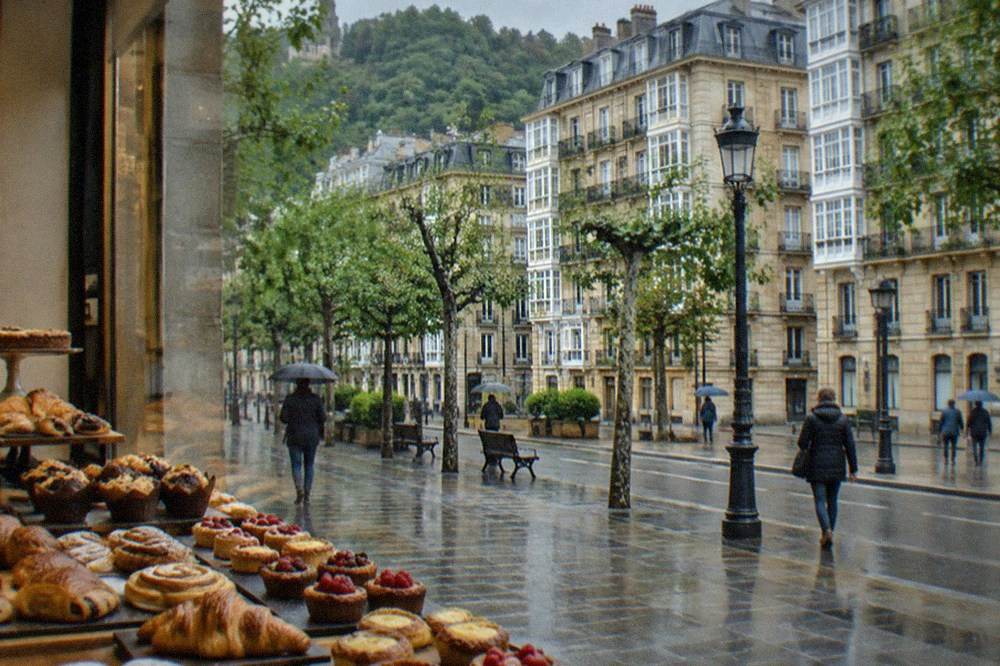
The neighbourhood differences are real, if understated. The table below is a character guide rather than a list of named venues, because bars open and close faster than any guide tracks them; what stays stable is the personality of each area's morning.
| Neighbourhood | Morning character | Best for |
|---|---|---|
| Parte Vieja | Bars and bakeries in narrow lanes, earliest pintxo counters | Coffee with a pintxo, old-street atmosphere |
| Centro | Grand cafés, pastelerías around the Boulevard and Calle Mayor | Pastry plus people-watching |
| Gros | Younger café scene near Zurriola, surf footfall | A flat white before the beach |
| Antiguo | Local residential streets near Ondarreta | An unhurried neighbourhood breakfast |
| Egia and Amara | Away from the centre, mostly resident custom | Where you are staying, not a destination |
How Do You Order Coffee In San Sebastian?
You order coffee by its exact Spanish name at the bar: a cortado is an espresso with a splash of milk, a café con leche is half coffee half milk, a café solo is a straight espresso, and a manchada is mostly milk. Saying "coffee" alone will get a question back, so the name is the order. Prices are set by each bar and are not listed on this page.
The vocabulary is short and worth learning before the first counter. The Basque Country is bilingual, and you may see kafea on a chalkboard as easily as café, but the Spanish coffee names are understood everywhere in the city, and English works in the tourist-facing cafés of the centre without any difficulty. The language guide covers the wider picture, including how widely English is spoken in San Sebastián.
The coffee style of the city is the roast-and-milk tradition of northern Spain rather than the third-wave espresso of a specialty scene, though the specialty end has grown around Gros and the centre. Neither is the correct choice; they are different breakfasts. The table below gives the orders you will actually use.
| Order | What you get | When locals drink it |
|---|---|---|
| Café solo | A small straight espresso | After a meal, or a fast morning hit |
| Cortado | Espresso cut with a little milk | The most common morning order |
| Café con leche | Roughly half coffee, half hot milk | The full breakfast coffee |
| Manchada | Mostly milk, a stain of coffee | Late afternoon, or a light preference |
| Café americano | Espresso lengthened with hot water | For visitors who prefer it |
| Carajillo | Coffee with a spirit, often brandy or orujo | Not a breakfast drink, an after-lunch one |
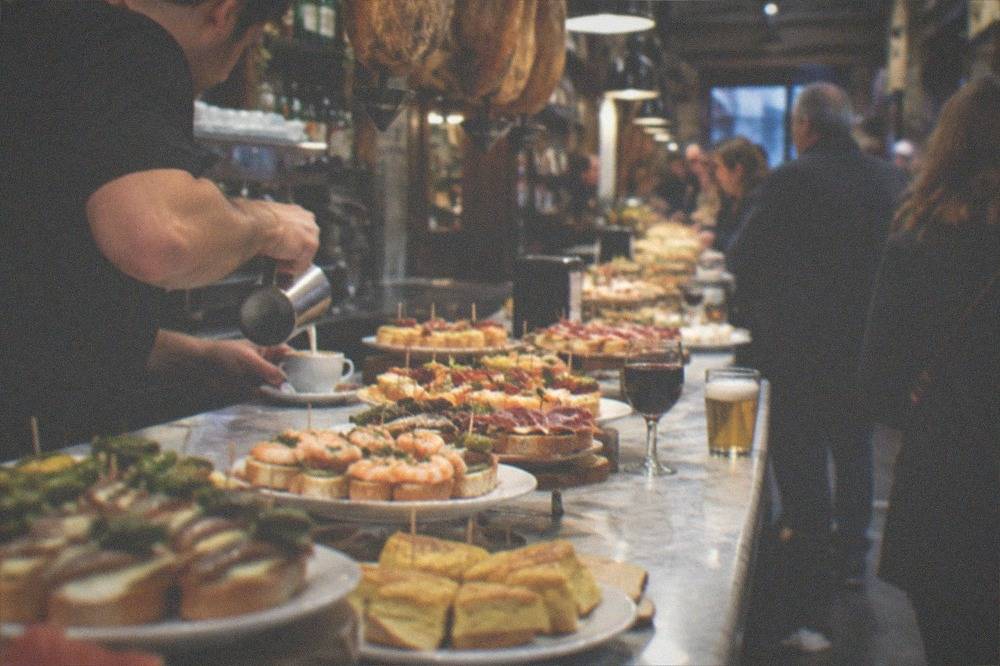
One habit worth copying: coffee at the bar, standing, is the local default, and many bars price the counter and the table differently or simply expect the counter for a quick cup. Table service is there when you want to sit and stay, but the bar is where the city drinks its morning. It is also where the pastries are, usually under glass, and pointing is an entirely acceptable way to order one.
What Should You Eat With Your Morning Coffee In San Sebastian?
The reliable morning plates are a tostada with tomato and oil, jamón or cheese; a pastry from a bakery counter, croissant-style or a local cake slice; or a cold pintxo from a bar's glass case. Anything sweeter and heavier, like the city's famous cheesecake, is technically available in the morning but is really an afternoon and evening thing.
The tostada deserves its own sentence because it is the workhorse. Toasted bread, rubbed or topped with tomato and dressed with olive oil, is the savoury standard, and jamón, cheese or a tortilla slice are the usual upgrades. The tortilla, the Spanish potato omelette, sits in a category of its own: a slice from a bar counter in the morning is a legitimate San Sebastián breakfast, and bars take visible pride in theirs.
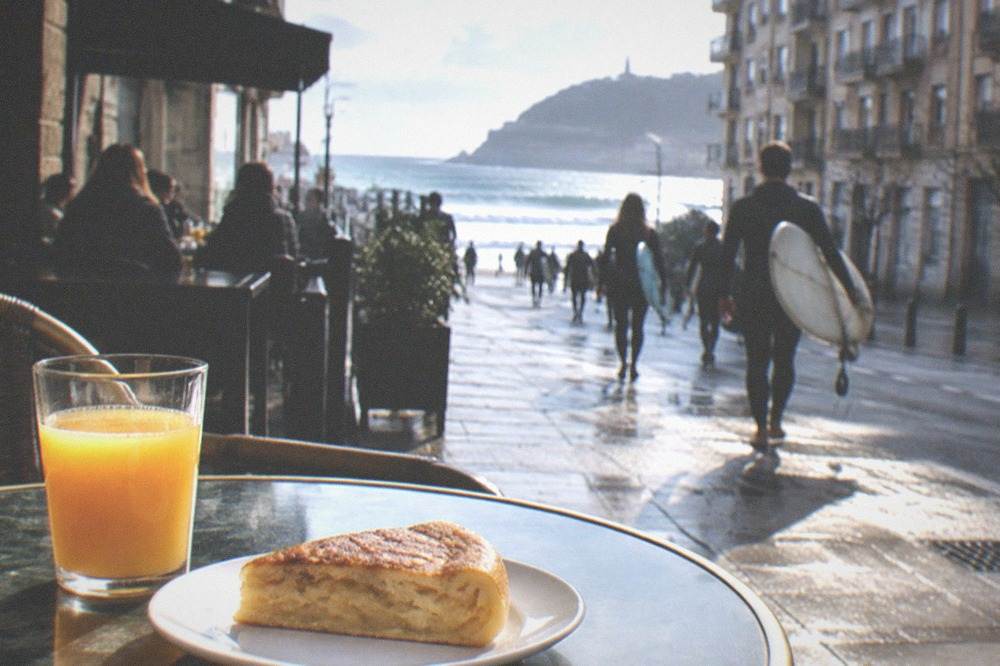
The sweet side runs from croissants and palmeras to the local cake tradition. The basque cheesecake, the burnt-top creation associated with La Viña in the Parte Vieja, has its own guide page and a dedicated La Viña page, and it makes a morning stop entirely possible, but it is richer than breakfast needs and most locals treat it as an any-time treat rather than a breakfast. The same goes for the pintxo counters: open from late morning, they turn coffee into a meal without much effort.
If the morning pintxo idea appeals, the small-group crawl through the Old Town, whose details render in the card above, is the evening version of the same instinct, and the pintxos in San Sebastian guide maps the culture in full. For the morning itself, the honest advice is smaller: one bar, one coffee, one or two things from the counter, then move.
| Morning food | What it is | How it is served |
|---|---|---|
| Tostada | Toasted bread with tomato, oil, jamón or cheese | On a small plate, made to order |
| Tortilla slice | Potato and egg omelette, room temperature or warm | Cut from the round at the counter |
| Cold pintxo | A single skewered or bread-based piece from the glass case | Priced per piece, eaten standing |
| Croissant or palmera | Flaky pastry from a bakery | From the counter, with the coffee |
| Basque cheesecake | Burnt-top baked cheesecake | A slice on a plate, any hour of the day |
Is Breakfast Expensive In San Sebastian?
Breakfast is one of the cheapest meals of the day in San Sebastián, because it is small and the format is pay-per-item at the counter. The city has a reputation for expense that comes from its Michelin tables and its hotel rates, not from a coffee and a tostada. No café price is printed on this page, because none is verified here; the bar's own board is the price.
The expense question hangs over the whole city, and the honest answer splits by meal. The is San Sebastian expensive guide takes the full question, including how the city compares for hotels and dinners, and the short version for this page is that the morning meal carries almost none of that weight. A breakfast is a coffee and one or two items, ordered individually, paid at the counter, and finished in twenty minutes.
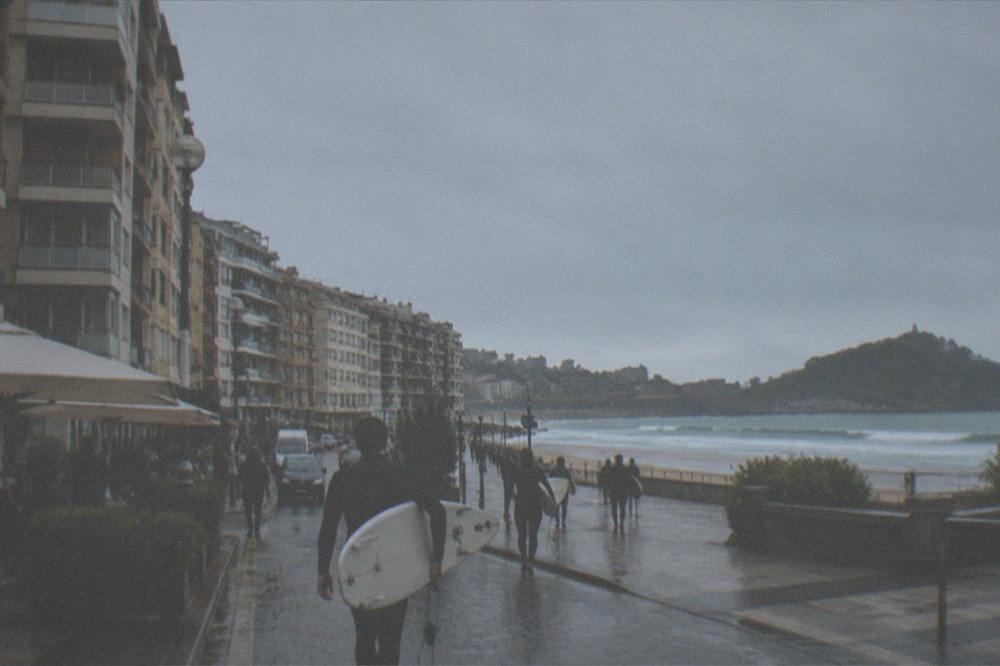
Two planning notes keep the morning cheap. First, the counter is the local price and the table is sometimes a different one, so if the bar has a counter, use it. Second, the pastry-and-coffee combination scales naturally: one coffee and one pastry is a breakfast, and adding a second item is a decision, not a default. Nothing about the format pushes the bill upward the way a set menu does.
When Is The Best Season For Breakfast Outdoors In San Sebastian?
The best months for an outdoor breakfast in San Sebastián are June to September, when the mean daily highs run from 20.0 to 22.5 degrees Celsius at AEMET's Igeldo station, but every one of those months still averages 86 mm or more of rain, so a terrace morning is never guaranteed in any season. November is the wettest month at 169 mm.
That is the honest framing of the climate, and it matters for a meal that people like to take outside. The city is a wet Atlantic one: AEMET's normals for its Igeldo station, the 1981 to 2010 period the station publishes, record 1,507 mm a year over 141 rain days, and the driest month, July, still averages 86 mm over about 10 rain days. A terrace breakfast in July is likely, not certain. The weather guide and the best time to visit guide take the climate question in full.
| Month | Mean min C | Mean max C | Rain mm | Rain days (1 mm+) |
|---|---|---|---|---|
| Jan | 5.9 | 11.0 | 141 | 13.2 |
| Mar | 7.2 | 13.4 | 113 | 12.4 |
| May | 11.1 | 17.7 | 120 | 12.2 |
| Jul | 16.0 | 21.8 | 86 | 9.8 |
| Sep | 14.8 | 21.1 | 111 | 10.1 |
| Nov | 8.7 | 14.0 | 169 | 13.0 |
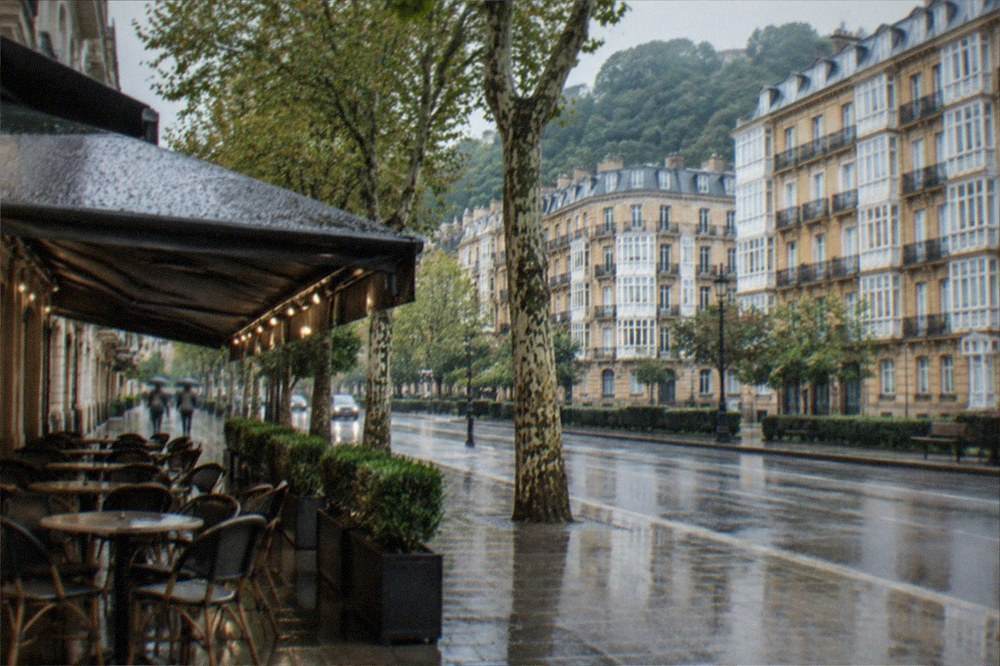
The rain is not a reason to skip the city, and the breakfast format is one reason why: a counter breakfast is an indoor meal by design, and the Old Town bars are close enough together that a shower is an inconvenience of thirty seconds. The seasonal calendar also gives the morning a few anchors worth planning around, listed below from the verified festival dates.
| Time of year | What is happening | Why it shapes a morning |
|---|---|---|
| 20 January | Tamborrada, the city's drum festival day | A very early, very loud start to the day |
| Mid-January to end of April | Txotx cider season, per the tourism board's rule | Cider house lunches, so breakfast stays small |
| Week of 15 August | Semana Grande, Saturday to Saturday | Crowds; the seafront fills early |
| First two Sundays of September | La Concha regattas, women 11:00, men 12:00 | A morning with coffee and a view of the races |
| 21 December | Santo Tomás fair | A street-food morning, the year's biggest |
How Does Breakfast Fit Into A Full Day In San Sebastian?
Breakfast works as the light opening move of a day that saves its appetite: a small coffee stop, then the seafront or a hill, a serious midday pintxo round or long lunch, an afternoon gap for the beach or a museum, and the evening crawl in the Parte Vieja. The morning is also the best time for the views, before the crowds and the heat arrive.
The rhythm is the thing to plan around, not the individual venues. The one day itinerary and the how many days guide build full days on this pattern, and the morning slot is deliberately cheap in time and money so the afternoon and evening can be ambitious. A coffee at eight, a walk along La Concha or up Monte Urgull, whose access hours run from 08:00, and you have seen the city at its emptiest before the first pintxo bar matters.
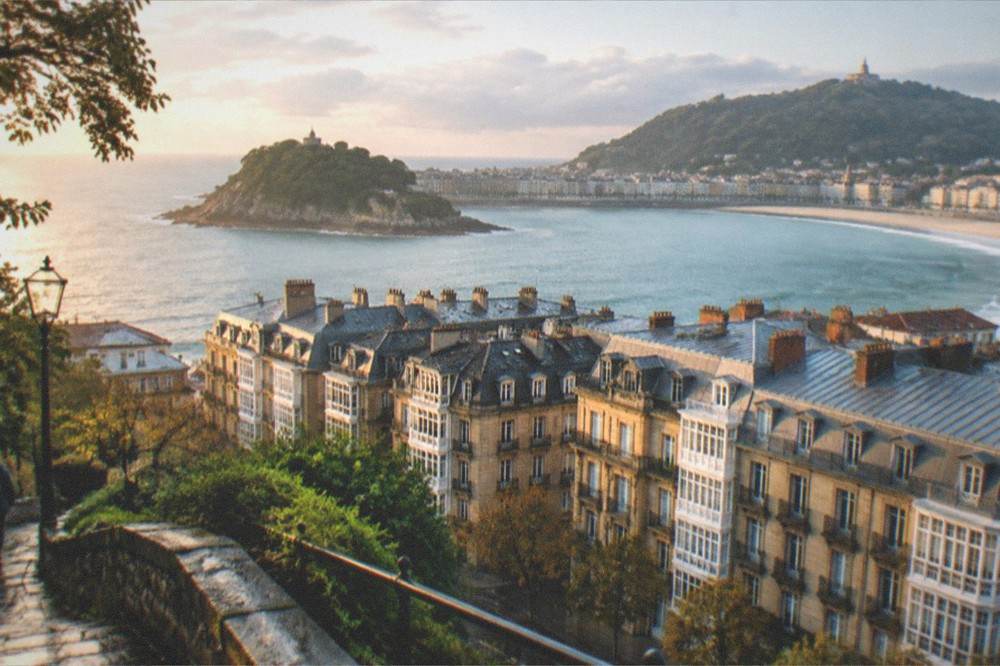
The guided options slot in at exactly this point. The city highlights walking tour, whose price and rating render in the card below, covers the Old Town and the Romantic Area on foot with separate English and Spanish departures, and it is a natural post-breakfast move; you can also Check availability for its live listing alongside the walking tours overview.
For a day that leaves the city, the options run from the coast to the mountains, and breakfast is the meal you eat before them rather than during. The day trips guide collects the full set, and the card below shows the private Pamplona option, a full day along the bull run route with a three-course Basque meal in a 19th-century cafe, which turns lunch into the day's main event and keeps the morning coffee quick.
Common Questions About Breakfast And Coffee In San Sebastian
What is a typical breakfast in San Sebastian?
A small one: coffee with a tostada, a pastry from a bakery, or a cold pintxo at a bar counter. The big meals of the day in San Sebastián are lunch and the evening pintxo round, so breakfast stays light by design.
What time do people eat breakfast in San Sebastian?
Early, and briefly. Cafeterías and bakeries open from the early morning, and the pintxo bars that matter for food open from late morning onward. The counter coffee is a ten-minute affair, not a seated occasion.
How do you order coffee in San Sebastian?
By name: a cortado for espresso with a splash of milk, a café con leche for half and half, a café solo for a straight espresso. The Spanish names work everywhere in the city, and the Basque word kafea appears on boards too.
Can you eat pintxos for breakfast in San Sebastian?
You can, in the bars that open early, but the pintxo scene really starts at midday and runs into the night. A morning pintxo is one piece with a coffee, standing; the crawl is an evening activity.
Is San Sebastian cheesecake a breakfast food?
It is available in the morning at some places, but locals treat the basque cheesecake as an any-hour treat rather than a breakfast. A slice in the afternoon with a coffee is the more usual slot.
Where is the best place for breakfast in San Sebastian?
The Centro for pastelerías and grand cafés, the Parte Vieja for coffee with a pintxo in the old lanes, Gros for the younger café strip near Zurriola, and Antiguo for a quiet local morning. All four are within a short walk of the bay.
The morning in San Sebastián is a small meal with an outsized role: it starts the clock on a day whose real eating comes later, and it buys you the city at its emptiest. Order the cortado by name, take the counter seat, and save the appetite for the evening crawl through the Old Town.