What Language Do They Speak In San Sebastian?
San Sebastián, in the Basque Country of Spain, has two official languages: Spanish, which almost everyone speaks, and Basque, the language the city shares with the region around it and which appears on every street sign, museum label and council page.
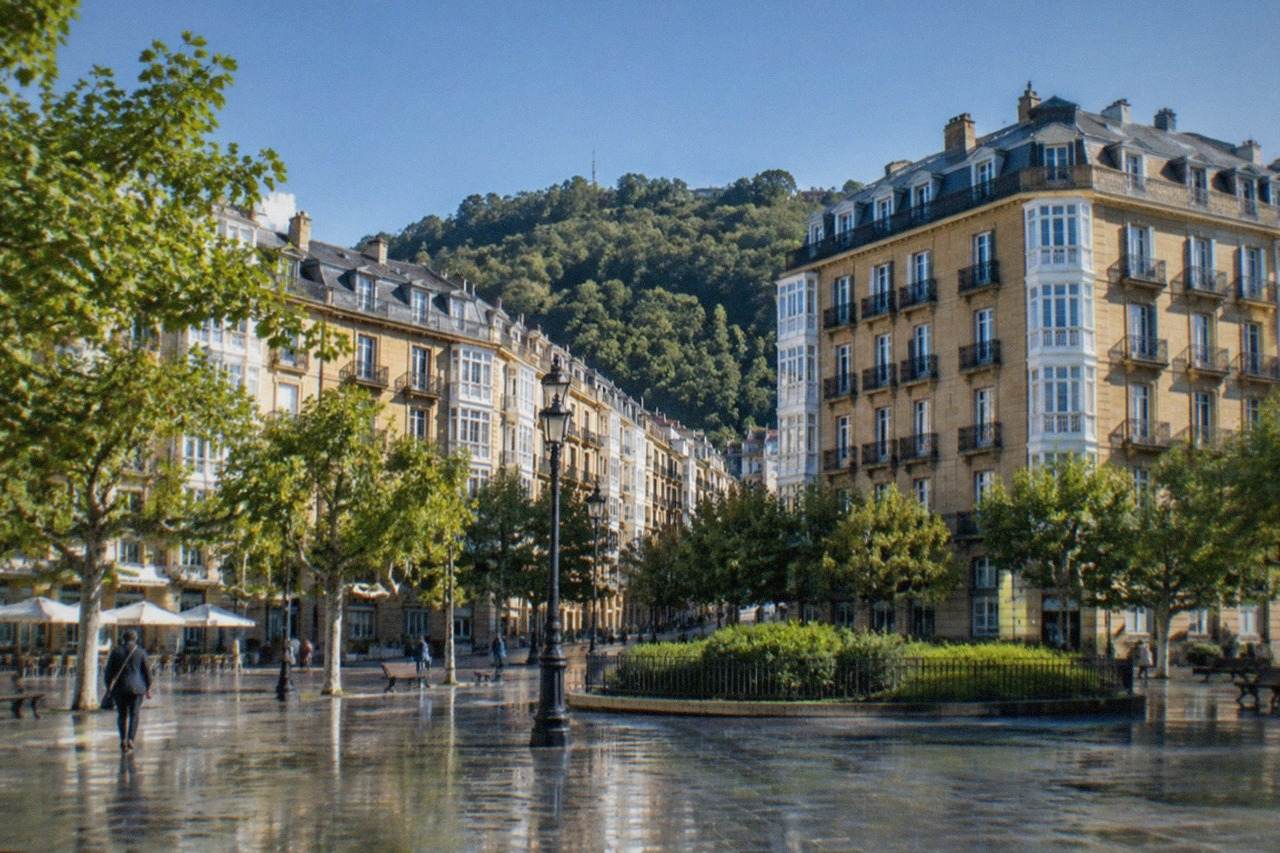
Short answer
In San Sebastián, Basque Country, Spain, the two official languages are Spanish and Basque. Nearly everyone speaks Spanish, Basque appears on signage and official documents, and English is common in tourism. A simple hello in Basque is kaixo.
San Sebastián, the city on La Concha bay in the Basque Country of Spain, officially carries two languages: Spanish and Basque, known to its speakers as Euskara. The city's own Basque name is Donostia, and its formal municipal title, "Donostia / San Sebastián", was set by provincial order in 2012 so that either name can stand alone depending on the language being used. The council's pages, its beach notices and its museum labels all run in both tongues, and a visitor notices this within minutes of arriving, because the street signs do too. This page explains what you will actually hear, how to greet people in Basque, and which words are worth having before you sit down at a pintxo bar.
What Languages Are Official In San Sebastian?
Both Spanish and Basque are official in San Sebastián and across the Basque Autonomous Community, which means every council sign, bus timetable and municipal webpage appears in both. In daily life Spanish is the language you will hear most, in shops, bars and hotel desks, while Basque is strongest in schools, signage, local media and among families who speak it at home. English and French appear in tourism, but the two official languages are the pair the city runs on.
Spanish arrived with the state and is the majority language of the city's streets. Basque, Euskara, is the region's own language, and its presence in San Sebastián is deliberate and visible rather than incidental: the tourism board publishes in Basque and Spanish, the dBus city network carries Basque destination announcements, and school education in the city is offered in models that teach partly or wholly through Basque. Neither language is a courtesy translation of the other here. Both are load-bearing.
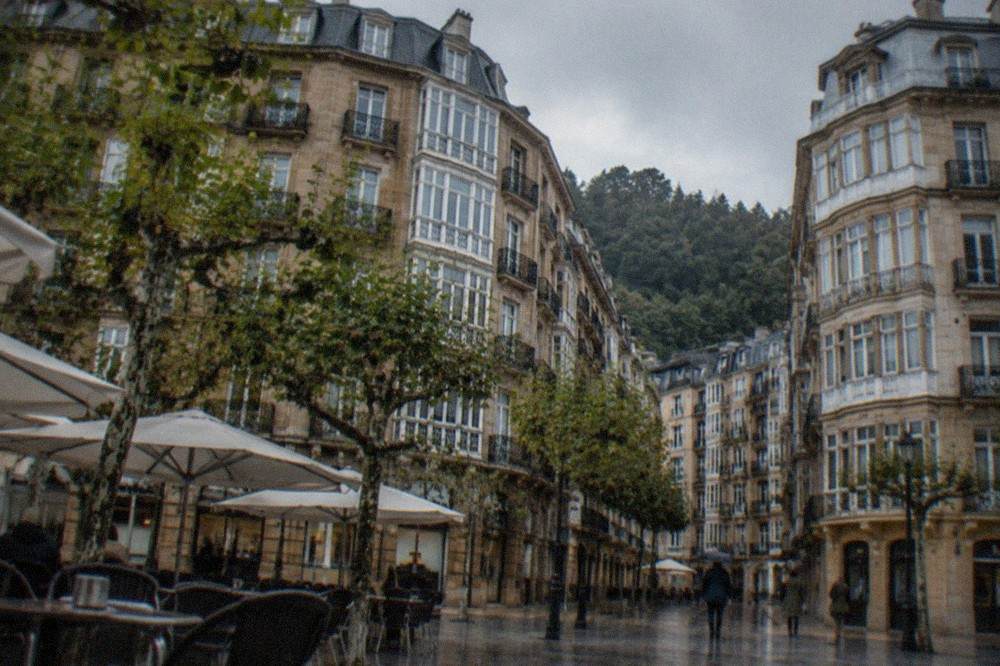
The table below shows where each language physically turns up on a visit, so you know what you are looking at when a sign does not match the Spanish you learned at school.
| Where | Language you see | What it looks like |
|---|---|---|
| Street signs | Basque and Spanish together | Kalea / Calle names on the same plate |
| Beach noticeboards | Basque first, Spanish beside it | Council rules for La Concha and Zurriola |
| Museum labels | Basque, Spanish, often English | San Telmo Museoa runs trilingual panels |
| Bus and train displays | Basque and Spanish alternating | Destination screens and stop announcements |
| Bar menus | Usually Spanish, sometimes Basque | Pintxo names in either language |
| Tourism offices | Basque, Spanish, English, French | Printed maps in all four |
For where the city actually sits on the map, and why its name is shared with places as far apart as Puerto Rico and the Canary Islands, see where San Sebastian is. The story of the two names, Donostia and San Sebastián, has its own page on Donostia or San Sebastian.
How Do You Say "Hi" In Basque?
The standard way to say hi in Basque is kaixo, pronounced roughly KYE-shoh, and it works at any hour of the day. A slightly more formal greeting is egun on for good morning and arratsalde on for good afternoon or evening, and agur covers goodbye. If Basque feels like too much on day one, hola in Spanish is understood everywhere in the city, and kaixo is the word that will earn you a smile in a Basque-speaking bar.
Kaixo is the all-purpose hello, the one word worth carrying even if you learn nothing else. Basque greets by part of the day rather than by a single word, so the fuller set is worth a minute. The table gives the greetings against their Spanish equivalents, since Spanish is the language you will fall back on between attempts.
| Time of day | Basque | Spanish | English |
|---|---|---|---|
| Any time | Kaixo | Hola | Hi |
| Morning | Egun on | Buenos días | Good morning |
| Afternoon and evening | Arratsalde on | Buenas tardes | Good afternoon |
| On leaving | Agur | Adiós | Goodbye |
| On leaving, informal | Ikusi arte | Hasta luego | See you |
| Before sleep | Gabon | Buenas noches | Good night |
A note on pronunciation: Basque spelling is far more regular than English, and every letter is pronounced. The x in kaixo sounds like the sh in ship, the ts in words like txakoli is a single tch sound, and stress lands on the second syllable more often than a Spanish-trained ear expects. Say kaixo as KYE-shoh and you are close enough that nobody will wince. The courtesy words in the next table round out a polite minimum.
| Basque | Spanish | English |
|---|---|---|
| Eskerrik asko | Gracias | Thank you |
| Mesedez | Por favor | Please |
| Barkatu | Perdón | Excuse me / sorry |
| Bai / Ez | Sí / No | Yes / No |
| Pozik nago | Estoy contento | I am happy |
| Ondoeza | No hay de qué | You are welcome |
If you want the city's story played into your ears while you walk its streets at your own pace, there is a self-guided option that does exactly that.
Is Basque Basically Spanish?
No, Basque is not basically Spanish, and the two are not dialects of one another: Basque is a language isolate, the only surviving pre-Indo-European language in western Europe, with no proven relative among any living language. Spanish belongs to the Romance family descended from Latin. Basque shares almost nothing with it in grammar, vocabulary or structure, and a Spanish speaker with no Basque training reads a Basque sentence with no more comprehension than an English speaker does.
This is the single most surprising fact about the language for many visitors. Spanish, French, Italian and Portuguese are siblings, and a speaker of one can half-read the others. Basque sits outside that entire family. Its grammar works on cases attached to word endings, its subject and object are marked on the verb, and its word order differs from anything Romance. Where Spanish says "I am from here", Basque builds the same idea by adding endings to the place word itself.
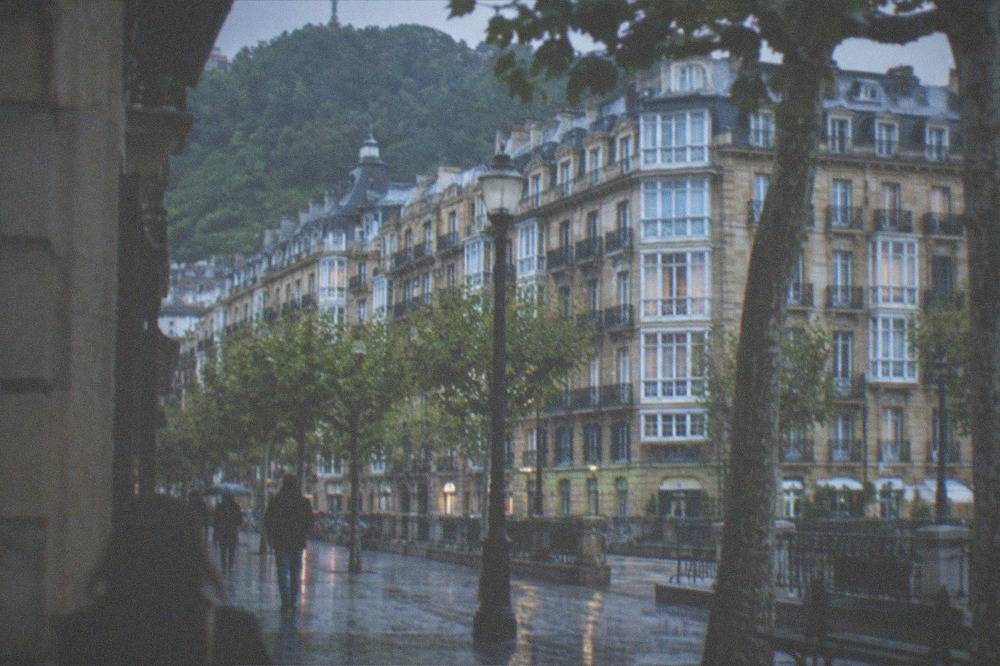
The practical effect for a visitor is mild. You cannot decode Basque from Spanish, but you do not need to: the city's Basque is on signs rather than as a barrier, and the words you will want at a bar, kaixo, eskerrik asko, are short and fixed. The language's long local history is part of what San Sebastian is known for, and it is one reason the city feels distinct from the Mediterranean coast.
Which Language Is Basque Closest To?
Basque has no proven close relative among living languages, which is what linguists mean when they call it an isolate: comparisons have been made over the years with Georgian, with ancient Iberian and with several other candidates, and none has ever been demonstrated. Its closest connections are geographic rather than genetic, the Basque and Spanish of the same towns existing side by side for centuries, which has produced shared place names and borrowed everyday words, not a shared family tree.
The borrowing runs in both directions. Spanish took a handful of Basque words, among them izquierda, the word for left, whose Basque source, ezker, is still the everyday Basque word. Basque took Spanish words for modern things, cars, computers, offices, and gives them Basque endings. None of this makes the languages relatives. It makes them long-term neighbours, and neighbours who have shared a coastline for well over a thousand years pick up each other's vocabulary without merging.
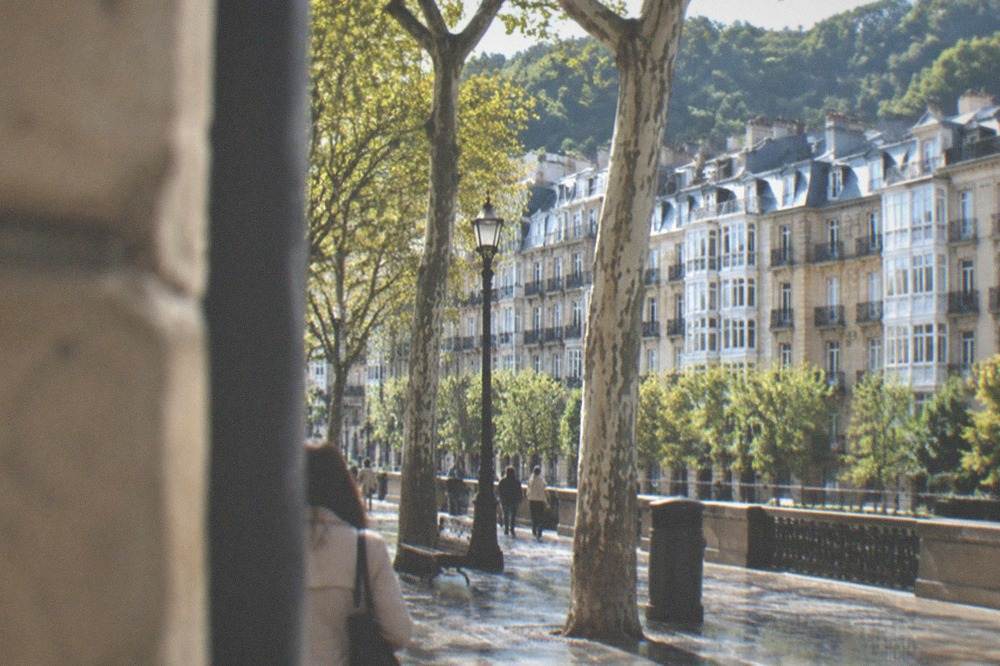
The place names show the neighbourhood most clearly. The same town often has a Basque and a Spanish form, and San Sebastián itself is the clearest case: Donostia is the Basque name, San Sebastián the Spanish one, and the official municipal title joins them with a slash. The table below pairs the names you may meet on timetables and day trips.
| Basque name | Spanish name | What it is |
|---|---|---|
| Donostia | San Sebastián | The city itself |
| Gasteiz | Vitoria | Capital of the Basque Autonomous Community |
| Bilbo | Bilbao | The big city to the west |
| Irun | Irún | Border town on the French frontier |
| Pasaia | Pasajes | Fishing port east of the city |
| Baiona | Bayona / Bayonne | Just across the border in France |
Is Basque Very Different From Spanish?
Yes, Basque is very different from Spanish in structure, sound and vocabulary: it builds sentences by adding case endings to nouns rather than using separate prepositions, it marks who does what to whom on the verb itself, and its core vocabulary shares no visible root with Latin. A written Basque sentence gives a Spanish reader no foothold. The differences are why bilingual signage matters here, and why two official languages are genuinely two languages rather than one language dressed two ways.
Consider one small example. To say "in the bar" in Spanish you use a separate word, en, before the noun. In Basque the idea of "in" is an ending attached to the noun itself, so the location and the preposition are a single word. Multiply that across a whole sentence and you get a language that assembles meaning differently at every step, not one that swaps Spanish words for near-cousins.
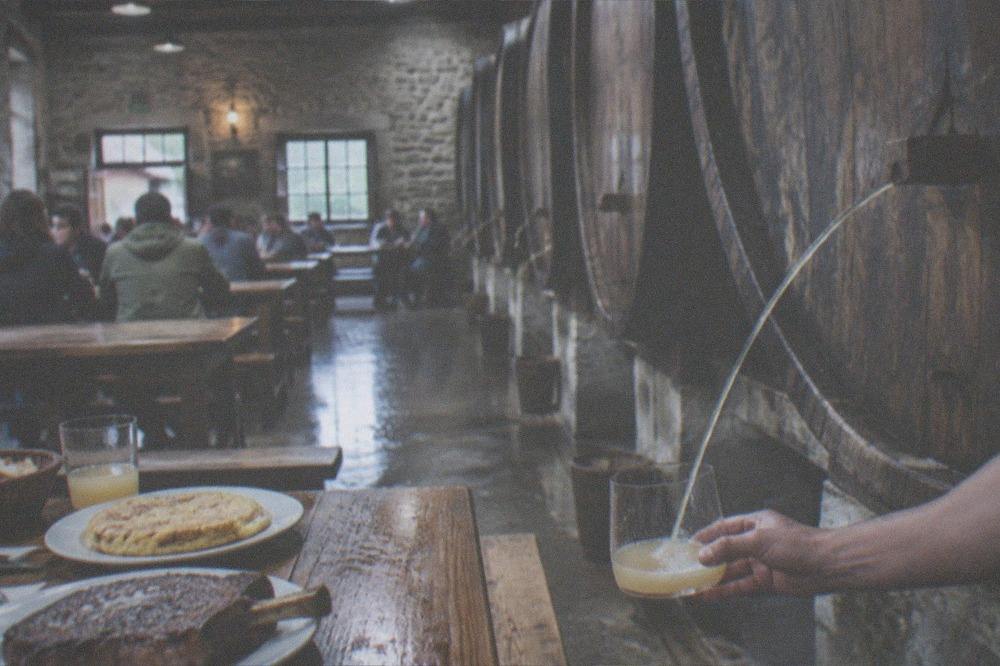
For a visitor the difference is interesting rather than obstructive. Menus in the Parte Vieja lean Spanish, with Basque dish names embedded, and the few Basque words that matter at a bar are short enough to learn over one drink. The food vocabulary is the part worth taking seriously, and it has its own section below.
Is It OK To Speak Spanish In San Sebastian?
Yes, it is completely fine to speak Spanish in San Sebastián: it is one of the city's two official languages and the one most residents use with strangers, so a visitor speaking Spanish is doing the normal thing. Nobody expects a tourist to arrive speaking Basque, and attempting kaixo or eskerrik asko is received as a friendly gesture rather than an obligation. Speaking Spanish in bars, hotels and shops is unremarkable and entirely welcome.
The etiquette is simple. Default to Spanish, or to English in tourist-facing settings, and offer a Basque greeting when you want one. If a bar is clearly Basque-speaking, your kaixo will be met warmly and the conversation will then flow into whatever language is easiest for both sides. What is not welcome anywhere is correcting locals on which language they should be using, a rudeness in any city.
One question that comes up often alongside this one is whether English gets you through the city, and that has its own page: speaking English in San Sebastian. The same goes for the veteran American travel writer's take on the city, covered at Rick Steves on San Sebastian.
How Do You Say Hello In San Sebastian?
In San Sebastián you say hello with hola in Spanish or kaixo in Basque, and both are heard on the city's streets every day. Because the city runs bilingually, either greeting fits any counter, bar or shop, and the time-of-day forms, buenos días and egun on, are equally normal. Locals switch between the two languages without thinking, so a visitor using either one, or mixing them, lands perfectly well.
The choice between them is a matter of taste rather than correctness. Hola is the safe default, the word every waiter and shop assistant will answer in kind. Kaixo carries a little local warmth, especially in the Old Town and in the neighbourhood bars west of the centre, and it costs nothing to try. If the reply comes back in fast Basque, a smile and a switch to Spanish end the moment without awkwardness.
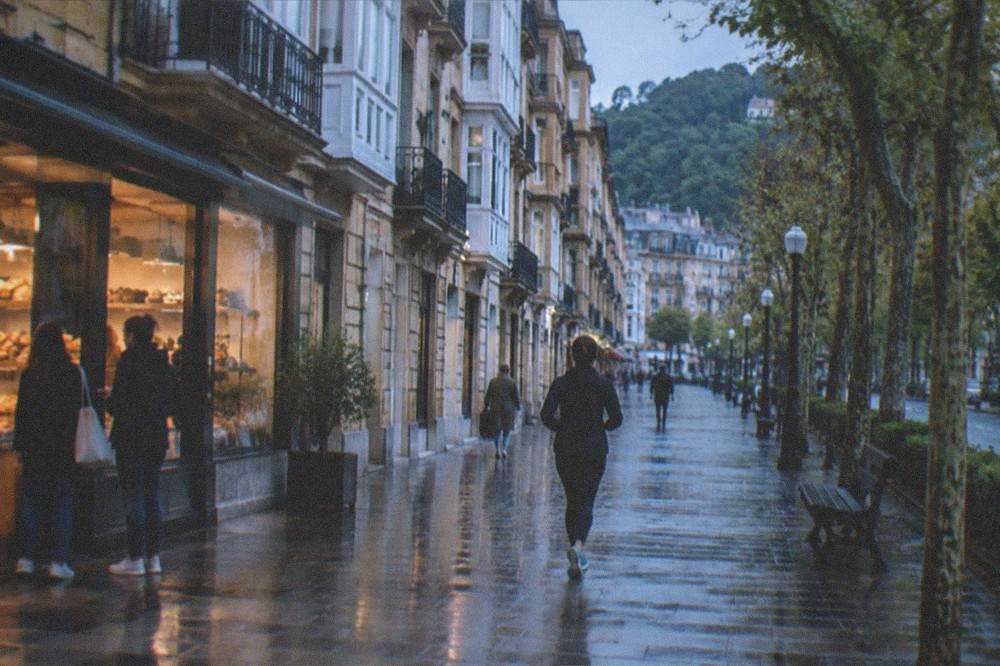
The greetings you will actually hear, ranked by how often a visitor meets them, look like this.
| Greeting | Language | Typical setting in San Sebastián |
|---|---|---|
| Hola / Buenos días | Spanish | Shops, hotel desks, most bars |
| Kaixo | Basque | Neighbourhood bars, friends, signage |
| Egun on | Basque | Morning, anywhere Basque is spoken |
| Buenas | Spanish | Casual, any hour, extremely common |
| Agur | Basque | On leaving, also on farewell signs |
Which Basque Words Help Most At The Table?
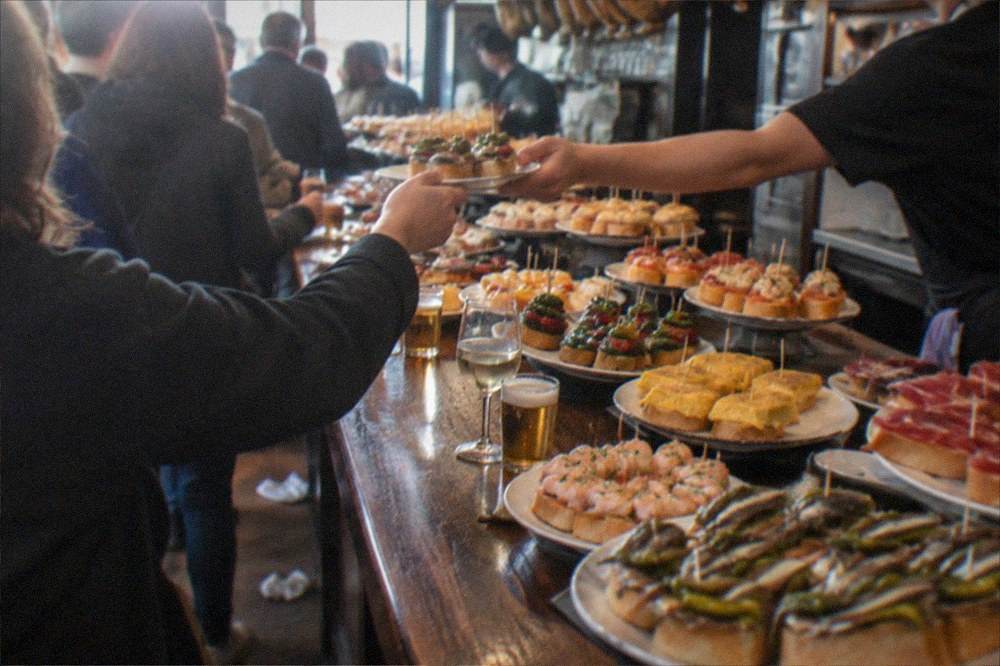
The Basque words that help most at the table in San Sebastián are the food and drink names you will see on menus and bar boards: pintxo for the small skewered bite, txakoli for the local white wine, sagardo for cider, txuleta for the grilled rib steak and gilda for the anchovy, olive and guindilla skewer. These are not translations, they are the dishes' own names, and ordering them by name works in either language.
This is the part of Basque a visitor absorbs fastest, because it is printed in front of you at every bar. The Old Town's pintxo bars run on these words, and the cider houses east of the city run on sagardo and on the txotx ritual, the moment the barrel is tapped and cider is poured straight from the barrel into your glass at height. The pintxo tradition has a full page of its own, as does txakoli, the local wine.
| Basque word | Meaning | Where you meet it |
|---|---|---|
| Pintxo | Small bar snack on bread or a skewer | Every bar counter |
| Txakoli | Local young white wine | Poured everywhere in the Old Town |
| Sagardo | Cider | Cider houses, some pintxo bars |
| Txotx | The barrel-tapping ritual | Cider house season, mid-January to late April |
| Txuleta | Thick grilled rib steak | Grills and steak houses |
| Gilda | Anchovy, olive and pickled pepper skewer | A classic bar order |
A guided crawl is the fastest way to put these words to work, because the guide orders with you and translates the board as you go.
Where Can You Hear Basque Spoken Around You?
You will hear Basque spoken openly in San Sebastián's schools, its neighbourhood bars, its cultural centres and among friends in the street, and you will see it everywhere on signage, in shop names and on public transport displays. The strongest concentrations of everyday Basque speech sit in the city's residential neighbourhoods and in family-run bars away from the seafront, while the tourist strip runs mostly Spanish and English. Listening for it is one of the small pleasures of walking the city.
The language is also something you can have explained to you as you move. An audio tour of the city's essence and culture, played through an app on your own schedule, weaves the place and its background together without a group or a timetable, and it pairs well with a slow afternoon in the Old Town.
Basque also travels with you if you take a day out of the city. The region around San Sebastián is dotted with towns whose names you will read in both languages, and a guided day trip handles the language and the roads together. One option runs to Pamplona, the Navarrese capital where Basque is also official, with a bilingual guide on the coach.
Common Questions About San Sebastian Language
Do I need to speak Basque to visit San Sebastian?
No. Spanish and English cover every tourist-facing situation in the city, and Basque is never required of a visitor. Learning kaixo and eskerrik asko is a courtesy, not a necessity, and locals will happily meet you in whichever language you manage.
Is Basque hard to learn?
For a Spanish or English speaker, Basque is genuinely difficult, because its grammar shares nothing with the Romance or Germanic families. A handful of greetings and food words is realistic for a short visit, and that small vocabulary goes a long way at a bar counter.
What language are street signs in?
Both official languages. Street plates in San Sebastián give the Basque and Spanish forms together, and council notices, beach rules and transport displays alternate between them. Museum panels frequently add English as a third language.
How do you say thank you in Basque?
Eskerrik asko, pronounced roughly ES-keh-reek AS-ko. It is the standard thank you in Basque and works anywhere in the city. The Spanish gracias is equally welcome, and both are heard constantly.
Do children in San Sebastian learn in Basque?
Yes, in whole or in part. Schooling in the Basque Autonomous Community is organised in models that teach partly or entirely through Basque, so the language has a strong base among younger residents, and you will hear it among school groups around the city.
Is Basque spoken in France too?
Yes. The Basque Country straddles the border, and the French Basque Country around Bayonne, Biarritz and Saint-Jean-de-Luz is part of the same language area. Basque has no official status in France, but it is spoken there, and day trips across the border from San Sebastián pass straight through it.
A Final Word Before You Go
A visitor to San Sebastián needs only a few words of either official language to get by, because Spanish covers every practical need and Basque rewards you with warmth rather than access. Kaixo at the counter, eskerrik asko when the plate arrives, and the names of the dishes themselves, pintxo, txakoli, txuleta, are the whole of a workable vocabulary. The bilingual signs carry the rest, and the city meets you halfway in whichever language you choose.
Say kaixo once at a bar counter in the Old Town, order the pintxos by their Basque names, and let the bilingual street signs do the rest. For everything else, from how long to stay to what the weather will do, the rest of this site, San Sebastian Spain Guide, has the city covered, and the language will take care of itself.