Beachfront And Old Town Hotels
San Sebastián, the Basque name Donostia, packs its hotels into a strip between the bay and the Old Town, and the choice between the two shapes the whole stay.
Short answer
Beachfront hotels in San Sebastián sit along La Concha, Ondarreta and Zurriola, while Old Town hotels sit inside or beside the Parte Vieja; the two zones are close enough that the choice is about atmosphere, not distance.
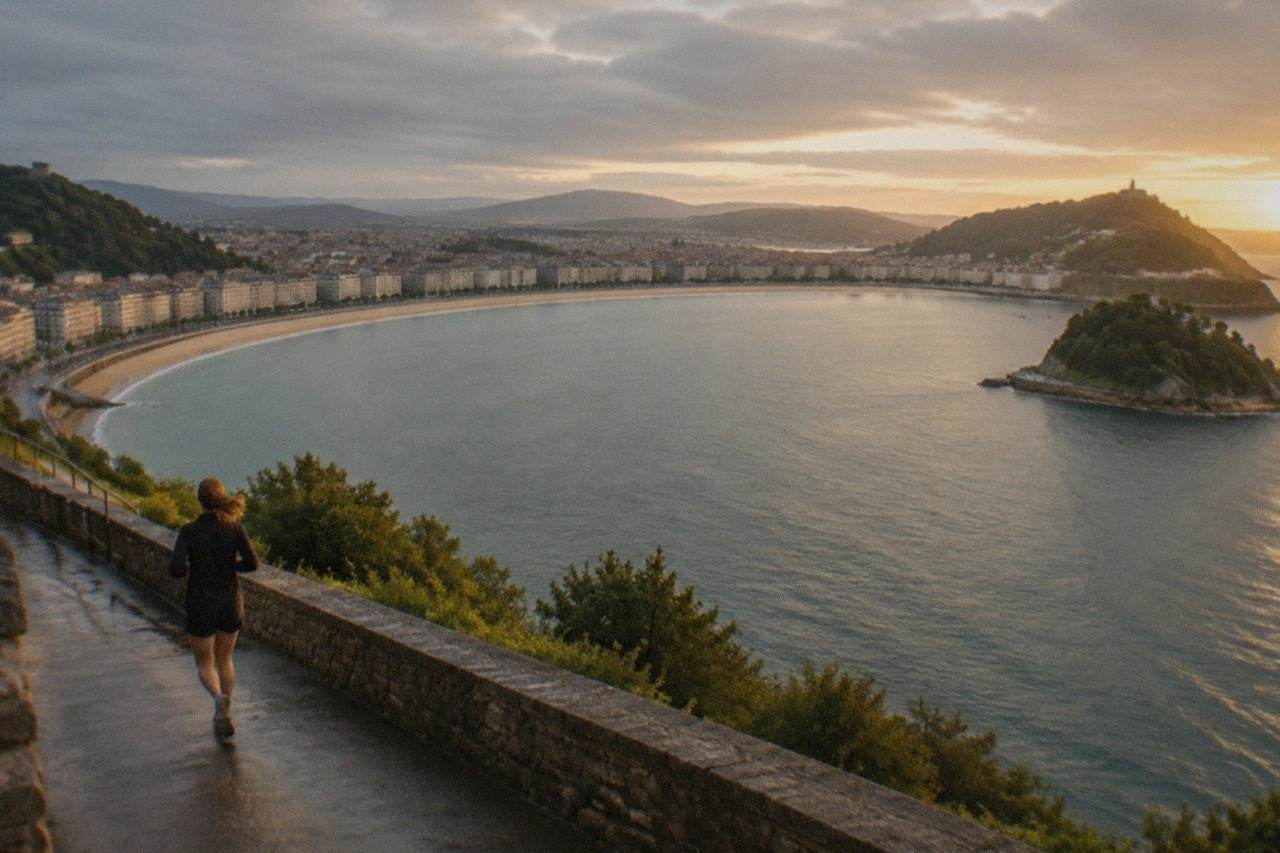
San Sebastián, known in Basque as Donostia, is a city built around water: a shell-shaped bay, a surf beach, an island, and an Old Town pressed between the beach promenade and the Urumea river. Its hotel stock follows that geography closely. Almost every bed in the city falls into one of two zones, the beachfront strip that faces La Concha and Ondarreta, or the Parte Vieja, the Old Town, and the blocks immediately around it. This page compares the two so a visitor can pick with real facts rather than guesswork, using the council's own beach measurements, AEMET's climate normals for the Igeldo station, and the season rules that govern lifeguards, island boats and the island's art installation.
Where Should You Stay In San Sebastian For The Beach?
For direct beach access, stay along the Paseo de la Concha and the Ondarreta frontage west of the centre, where hotels face the sand across the promenade; for surf and a younger scene, stay near Zurriola in Gros; for pintxo bars and the shortest walk to dinner, stay in or beside the Parte Vieja. The two zones overlap at the eastern end of La Concha, so several Old Town hotels are only a few minutes from sand.
The city is compact enough that "beachfront versus Old Town" is a question of character rather than of long transfers. The council's own beach pages give the hard numbers: La Concha runs 1,350 metres with a mean width of 40 metres, Ondarreta 600 metres at 100 metres wide, and Zurriola 800 metres at 110 metres wide. A hotel on any of those frontages puts the water literally across the road.
The Old Town, the Parte Vieja, holds most of the city's pintxo bars, and its eastern edge touches the river mouth beside Zurriola rather than La Concha. That detail matters when choosing: an Old Town base trades a balcony over the bay for a doorstep on the bar scene. The broader hotel landscape, including the big names on the beachfront, is covered on the best hotels page, which also draws the split between the grand bayfront properties and the smaller design houses.
The table below sets the four zones against each other using the council's measurements and each area's character.
| Zone | Faces | Beach at the door | Character |
|---|---|---|---|
| La Concha frontage | La Concha bay | Yes, across the promenade | Grandest addresses, bay views, quiet at night |
| Ondarreta frontage | Ondarreta | Yes, across the promenade | Calmer, family-leaning, near the Peine del Viento walk |
| Zurriola frontage (Gros) | Zurriola | Yes | Surf scene, younger crowd, strong swell |
| Parte Vieja and edges | River mouth and Gros side | A short walk to Zurriola or La Concha | Pintxo bars, plazas, oldest streets, liveliest evenings |
Which Hotels Sit Right On La Concha?
The beachfront hotels along the Paseo de la Concha sit directly opposite the sand, with nothing between the building and the promenade except the walkway itself; La Concha is 1,350 metres long and 40 metres wide on average, sandy and shallow, and the council notes the tide often limits the usable sand, so a bay view room also means a tidal view. No accommodation price belongs on this page; what can be stated is geometry and season.
La Concha is the postcard beach, and the addresses facing it are the ones people tend to picture when they imagine the city. The beach is shallow and sandy, which makes it the family choice, and lifeguards work it from 1 June to 30 September, from 10:00 to 20:00 between 15 June and 15 September and 13:30 to 19:30 for the second half of September. A summer guest at a beachfront hotel therefore swims on a watched beach; an October guest does not, and should plan accordingly.
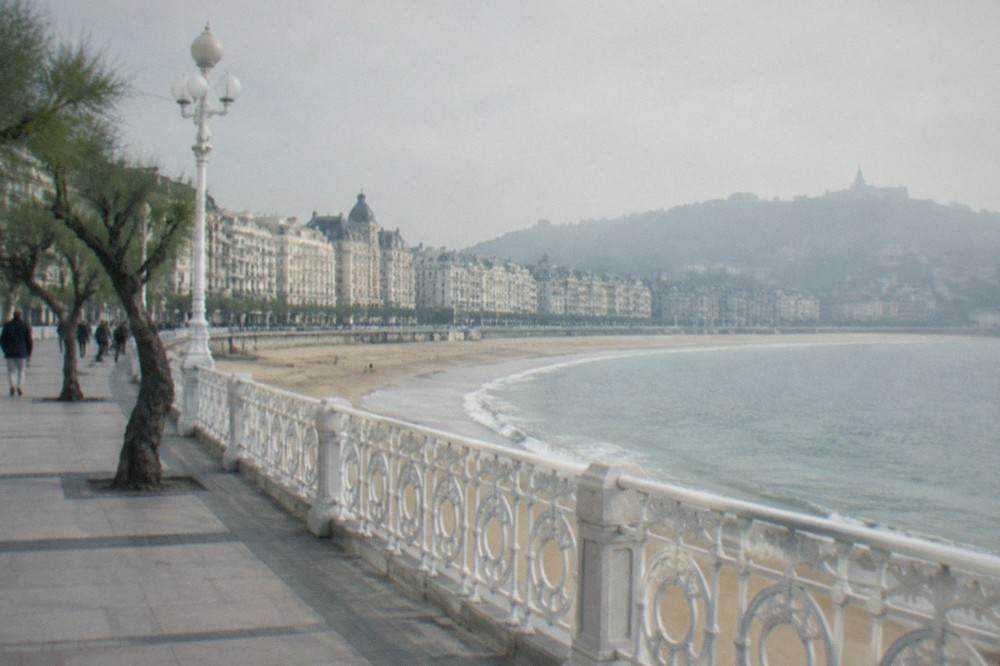
Parasol and awning hire on La Concha and Zurriola runs 15 June to 30 September, with the council listing an awning at 13.10 EUR a day, a lounger at 3.50 EUR and a lounger with parasol at 8.40 EUR. Ondarreta's frontage hires awnings at 13.10 EUR, parasols at 17.50 EUR and tents at 21.90 EUR over the same dates. A guest who books a beachfront room can leave the equipment question to the day itself.
The comparison between the three beaches, including which suits swimmers and which suits surfers, is drawn in detail on La Concha beach and the San Sebastian beaches overview.
| Beach | Length | Mean width | Council description | Lifeguard season |
|---|---|---|---|---|
| La Concha | 1,350 m | 40 m | Sandy, shallow, tide often limits usable area | 1 June to 30 September |
| Ondarreta | 600 m | 100 m | Sandy, mass use, Peine del Viento walk at west end | 1 June to 30 September |
| Zurriola | 800 m | 110 m | Sandy, fairly open, strong swell, remodelled 1994 | 1 June to 30 September |
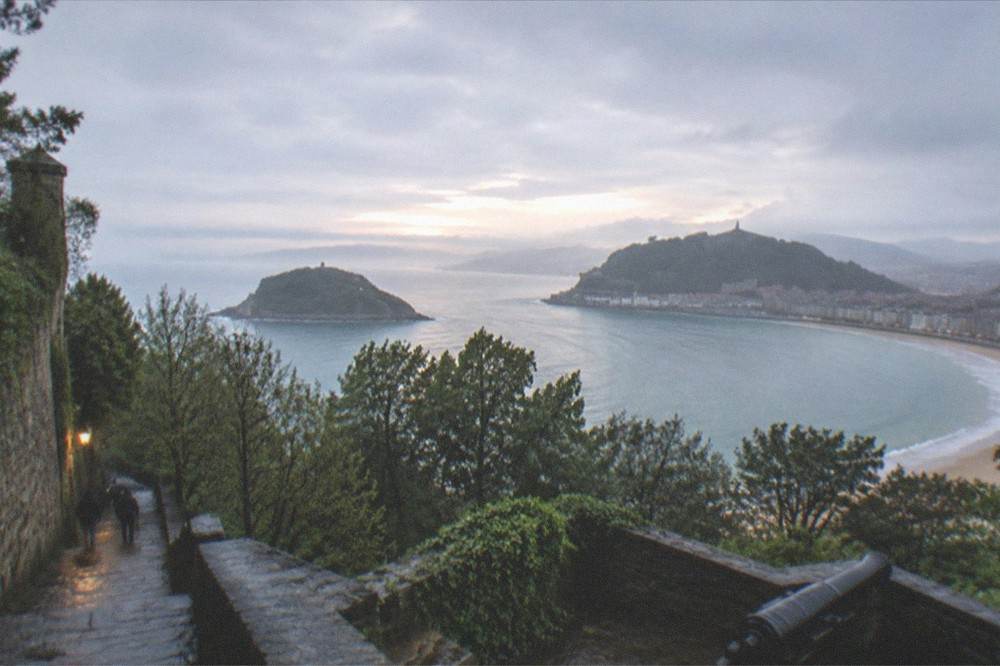
From a beachfront base, the bay itself is part of the stay, and the simplest way onto the water is the harbour boat that circles the bay and stops at Santa Clara Island.
The bay boat is the one that pairs naturally with a La Concha frontage room: the departure point sits on the harbour, and the ticket is valid for a day, so it fits around a morning on the sand. The Old Town walking tour below it suits a first evening, and the surf-plus-pintxos combination belongs to the Zurriola side of the city.
What Does The Parte Vieja Offer Hotel Guests?
Hotels in and beside the Parte Vieja put a visitor inside the Old Town's street grid, steps from the pintxo bars of the Calle 31 de Agosto area and the Plaza de la Constitución, with Zurriola a short walk east and La Concha a short walk west; the trade is noise and narrower streets in exchange for the shortest possible walk to dinner. The Old Town is the oldest part of the city, and its name and layout are explained on what is the Old Town of San Sebastian called.
The Parte Vieja is small enough that any hotel inside it is within a few minutes' walk of everything inside it. What it does not have is a beach of its own: the sand sits on either side, La Concha to the west across the promenade, Zurriola to the east across the river mouth. Guests who want to swim before breakfast choose the frontages; guests who want to eat late and walk home in two minutes choose the Old Town.
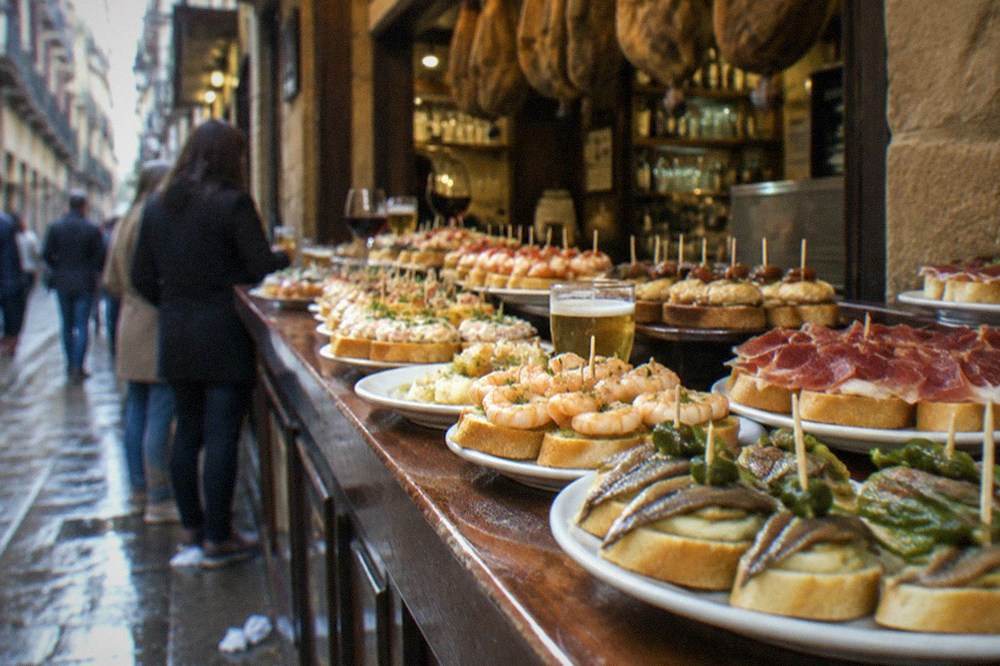
Evenings are the Old Town's argument. Pintxo bars, the small dishes stacked on counters and ordered by the toothpick-load, are the local evening custom, and the customs, dishes and ordering mechanics are covered on what are pintxos. No bar had its prices, hours or address verified, so none is quoted here; what can be said is that the concentration of bars in the Parte Vieja is the reason many visitors book there despite the thinner beach access.
A stay in the Old Town also sits conveniently for the harbour, where the island boats leave, and for the eastern end of La Concha. The bay boat from the harbour fits an Old Town stay as well as a beachfront one.
Is Zurriola Better For A Surf Hotel Stay?
Zurriola is the surf beach: 800 metres long, 110 metres wide, fairly open and, in the council's own word, exposed to strong swell, so hotels on the Gros side suit surfers and a younger crowd, while La Concha suits swimmers and families; Zurriola was remodelled in 1994 and its neighbourhood, Gros, is the city's liveliest low-key district. The beach itself is covered on Zurriola beach.
The Gros side of the city has grown into the casual counterpart to the grand La Concha frontage. The beach faces open sea rather than the sheltered bay, which is precisely why the surf schools and the board-carrying crowd are there. The council page records the strong swell as a defining trait and states nothing on surf zoning or any summer restriction in the bay; a swimmer or surfer should read the flags and ask at the lifeguard post, which is staffed from 1 June to 30 September.
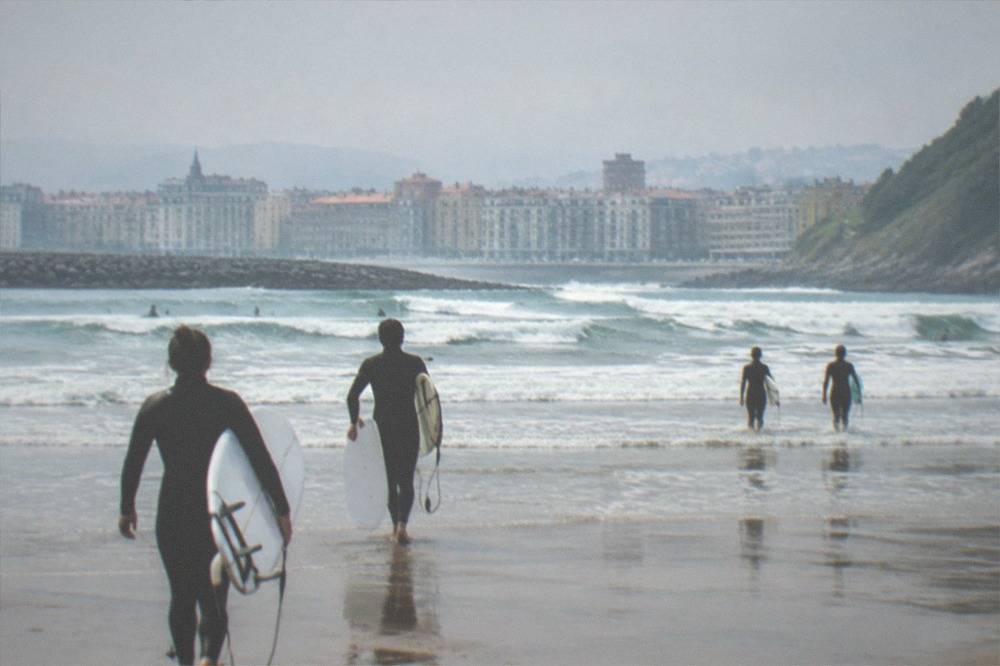
For a guest who books a Gros or Zurriola-facing room, the surf lesson with a pintxo tour afterwards is the natural product: the lesson includes board, wetsuit, locker and hot shower, then finishes with pintxos and drinks. It is one of the few products that combines the neighbourhood's two identities, the surf and the food, into a single afternoon.
The direct comparison between the beaches, for a visitor choosing a hotel zone around it, is on which beach is better in San Sebastian.
What About Ondarreta And The Antiguo Side?
Ondarreta, 600 metres long and 100 metres wide, is the calmest of the three beaches, and hotels near its frontage in the Antiguo district suit families and anyone who wants the walk to the Peine del Viento to start at their end of the bay; the council lists the Peine del Viento walk as beginning at Ondarreta's west end. The Peine del Viento, Eduardo Chillida's three steel sculptures of more than nine tonnes each on the rocks below, with Luis Peña Ganchegui's granite plaza, was given to the city in 1977.
The Antiguo side is the least touristed of the three frontages. It trades the postcard view of the full bay for space: 100 metres of mean width against La Concha's 40, and a beach the council describes as seeing mass use but which still reads calmer than the central arc. The Monte Igueldo funicular, which opened on 25 August 1912 and which its own site calls the oldest in the Basque Country, leaves from the west end of this stretch.
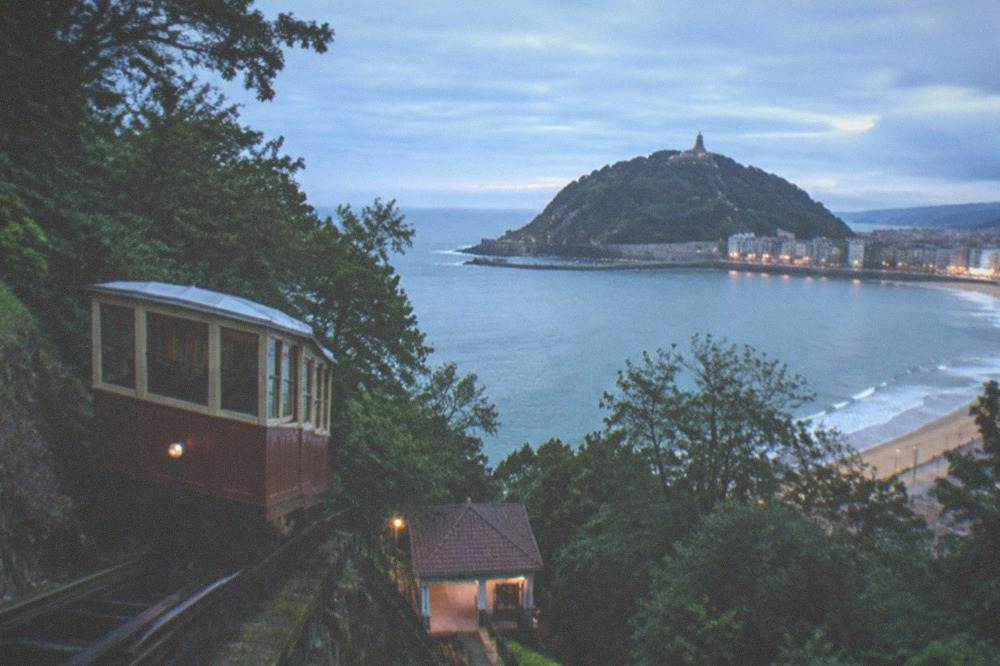
The funicular's own site lists a return adult ticket at 5.50 EUR and a child ticket at 2.50 EUR, with the funicular ticket including entry to the grounds; entry to the grounds and viewpoint by any other route, including on foot, is 3.00 EUR per person. One detail from the operator's home page matters to anyone planning to walk up and ride down: tickets for the downhill funicular journey are not on sale. The funicular normally runs every 15 minutes, and rides close on rainy days, which in this city is a real consideration.
What Do Beachfront And Old Town Hotels Cost, And What About The Tourist Tax?
No accommodation price appears on this page; the one cost every visitor should know about is the Gipuzkoa tourist tax, which is law under Norma Foral 3/2026 but is not charged to anyone before 1 January 2027, and after that date each council sets its own rate inside provincial bands, charged on at most 6 nights per stay, with under 18s exempt. The bands, in EUR per person per night, are set out below.
The law was approved on 12 June 2026 and published in the Boletín Oficial del País Vasco on 25 June 2026, and it takes effect on 1 January 2027. Until that date, no visitor to San Sebastián pays a tourist tax at all. After it, the rate the city itself applies is a municipal decision, and this page does not print one because no official municipal figure has been published; the honest statement is "up to" the band maximum, attributed to the Gipuzkoa law. Stays booked before 5 February 2026 are not charged under the law's transitional provisions.
| Accommodation type | Band minimum (EUR per person per night) | Band maximum (EUR per person per night) |
|---|---|---|
| Hotel 5 stars | 4.50 | 6.50 |
| Hotel 4 stars | 3.50 | 5.50 |
| Hotel 3 stars | 1.50 | 3.50 |
| Hotel 2 stars | 1.00 | 2.50 |
| Hotel 1 star, pensiones | 0.75 | 1.75 |
| Tourist apartments | 1.50 | 3.50 |
| Tourist-use dwellings | 4.50 | 6.50 |
| Campsites, rural houses, hostels | 0.75 | 1.75 |
For the wider cost picture, including how expensive the city is to eat and drink in, see is San Sebastian expensive. For the geography that decides which of these zones is which, the San Sebastian map page lays out the districts.
When Is The Best Season For A Beach Hotel In San Sebastian?
The warmest months are July and August, with mean temperatures of 18.9 C and 19.5 C and mean daily maxima of 21.8 C and 22.5 C, but this is a wet Atlantic city, not a dry one: AEMET's Igeldo station records 1,507 mm of rain a year over 141 rain days, and even July, the driest month, averages 86 mm over about 10 rain days, so a beachfront booking here should expect some rain in any month. The station sits 250 m up on Monte Igeldo, so the seafront runs slightly warmer than these values.
The numbers reward reading closely. August, at 117 mm of rain, is wetter than June at 90 mm, July at 86 mm or September at 111 mm, a fact that surprises visitors who assume peak summer equals dry summer here. November is the wettest month at 169 mm. Sunshine runs from 93 hours in December to 196 hours in July, 1,816 hours across the year. The full monthly picture is on San Sebastian weather and the month-by-month pages linked from best time to visit.
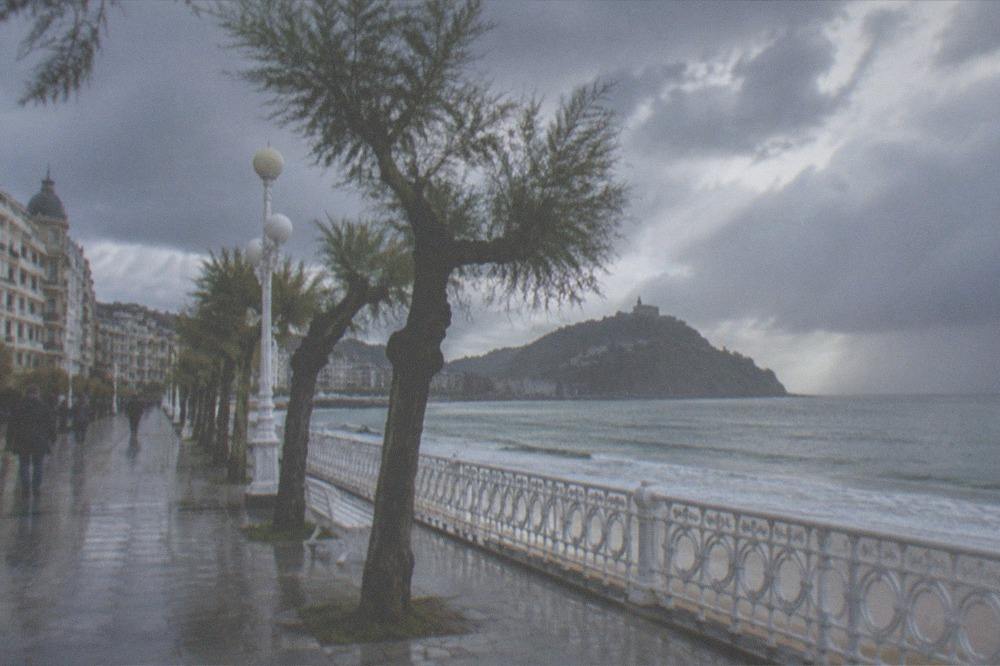
The season rules matter as much as the temperature. Lifeguards, parasol hire, the island boats' high season and Hondalea all run to 30 September; from 1 October the beaches are unwatched, the boats say "consult departures", and Monte Urgull's access hours drop from 21:00 to 19:30. A September booking still gets the full summer setup; an October booking gets the same sand with the summer machinery switched off.
| Month | Mean C | Mean daily max C | Rain mm | Sun hours |
|---|---|---|---|---|
| May | 14.4 | 17.7 | 120 | 181 |
| June | 16.9 | 20.0 | 90 | 189 |
| July | 18.9 | 21.8 | 86 | 196 |
| August | 19.5 | 22.5 | 117 | 190 |
| September | 18.0 | 21.1 | 111 | 179 |
| October | 15.5 | 18.5 | 159 | 140 |
How Do You Get Around From A Beachfront Or Old Town Hotel?
The city is walkable between all the hotel zones, and the two systems that matter are dBus city buses, with a cash occasional ticket at 1.95 EUR and a night ticket at 2.65 EUR, and the MUGI card, whose anonymous card fare starts at 0.78 EUR for urban trips; the Euskotren Topo runs from Amara station to Hendaia in 37 to 38 minutes, so day trips by rail start from the Amara side of the city. Cash on dBus does not allow free transfers, which is the practical argument for a card if a guest plans more than a couple of rides.
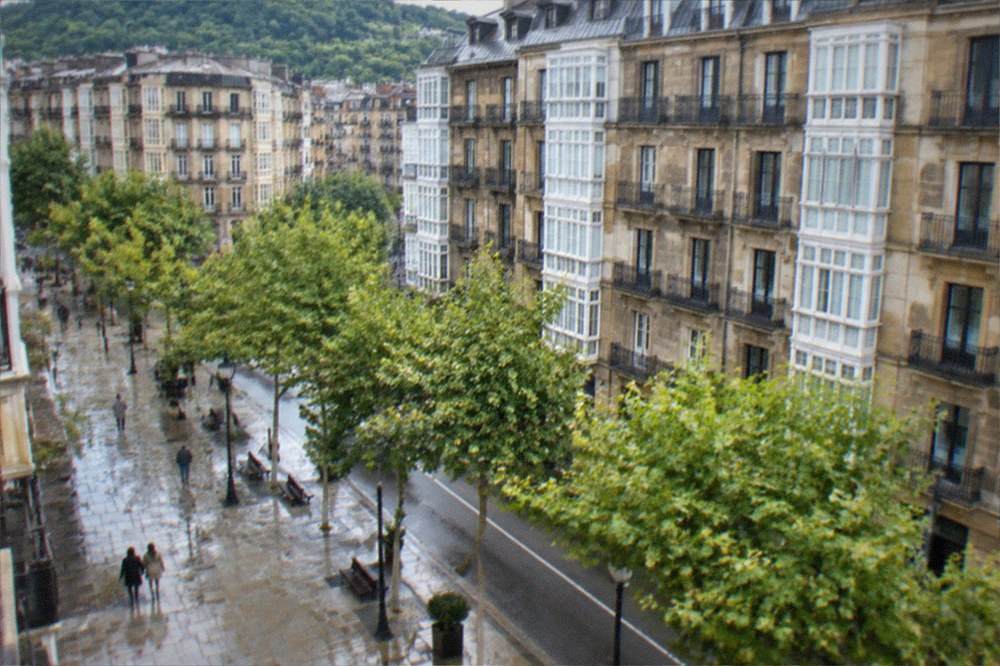
A beachfront guest on La Concha is a flat walk from the Old Town along the promenade and the Boulevard. An Old Town guest is a flat walk from both Zurriola and the eastern end of La Concha. Nothing in the central hotel stock requires a bus, which is one of the city's real conveniences and is discussed on the how many days in San Sebastian page.
The fares below come from the operators' and the MUGI system's own tariff pages. The MUGI card's purchase price is not stated.
| Ticket | Urban 1, 0 jumps | 1 jump | 2 jumps | 3 jumps |
|---|---|---|---|---|
| Occasional (cash) | 1.95 EUR | 2.90 EUR | 5.40 EUR | 7.90 EUR |
| Night ticket | 2.65 EUR | 3.70 EUR | 6.45 EUR | 8.95 EUR |
| MUGI anonymous card | 0.78 EUR | 1.16 EUR | 2.16 EUR | 3.16 EUR |
| MUGI personalised, trips 1 to 20 in month | 0.59 EUR | 0.88 EUR | 1.64 EUR | 2.41 EUR |
One transport caveat belongs on any current page about this city: a new underground section of the Topo line, including a station beside La Concha, finished its civil works in June 2026, but no opening date has been published, and Amara remains the working terminus. A hotel booking near the centre should not be made on the assumption of a new station running beneath the bay.
What Can You Do From A Beachfront Or Old Town Base?
From either zone a visitor can reach all three beaches on foot, the Old Town's bars within minutes, the island boat from the harbour, and the Monte Igueldo funicular from the Ondarreta end, and the city's food reputation is anchored by 6 restaurants holding 11 stars inside the municipality in the MICHELIN Guide Spain 2026. The Michelin count is the city's headline credential, alongside its year as European Capital of Culture 2016, shared with Wrocław.
The two hotel zones serve different itineraries. A La Concha frontage base pairs with mornings on the sand and evenings walking east into the Old Town. A Parte Vieja base inverts that: evenings are downstairs, and the beach is the excursion. Both work because the distances are short, and the choice of what to do with the days is laid out across the site's main things to do in San Sebastian page.
The products below fit the two bases differently: the bay boat and the Old Town walk suit a first day in either zone, and the surf-plus-pintxos afternoon belongs to the Gros side.
For a guest who wants the Old Town explained rather than just eaten in, the dedicated Old Town walk is the solo pick that pairs with a Parte Vieja hotel.
And for the harbour side of the stay, the island boat remains the cheapest way onto the water from either zone: the operator's own tariff page lists the red line, direct to Santa Clara Island, at 5 EUR return, running 10:00 to 19:00 every 30 minutes in high season, weather and sea permitting, with the last boat back at 20:00 from June to September; the blue line, a bay tour plus island landing, is 8 EUR. Children under 4 travel free. On the island itself, Hondalea, Cristina Iglesias's installation in the lighthouse, is free to visit, open 1 June to 30 September from 11:00 to 18:30 in half-hour sessions, with no booking needed for the visit itself, only the boat.
The bay boat has its own page with full details at bay boat with Santa Clara Island stop, and inline availability is here: Check availability.
Common Questions About Beachfront And Old Town Hotels In San Sebastian
Is La Concha beach free to access?
Yes, all three city beaches are public and free to walk on and swim from; the question is covered in detail on the is La Concha beach free page. Paid items on the sand are the seasonal parasol, awning and lounger hire, which runs 15 June to 30 September.
Which hotel zone is closest to the pintxo bars?
The Parte Vieja, the Old Town, holds the densest concentration of pintxo bars, and any hotel inside it or on its edge puts them within a short walk. Beachfront hotels along La Concha are a few minutes further but still walkable in the evening.
Do the beaches have lifeguards all year?
No. Lifeguards work all three city beaches only from 1 June to 30 September, with hours of 10:00 to 20:00 from 15 June to 15 September and 13:30 to 19:30 from 16 to 30 September. Outside that window the beaches are unwatched.
Is there a tourist tax on hotel stays in San Sebastian?
Not yet. Norma Foral 3/2026 of Gipuzkoa creates a tourist tax from 1 January 2027, charged per person per night on at most 6 nights, with under 18s exempt. Before that date no visitor pays it, and the city's own rate inside the provincial bands has not been published.
Can you walk from a beachfront hotel to the Old Town?
Yes. The city centre is compact and flat, and the walk from the La Concha promenade to the heart of the Parte Vieja takes in the Boulevard and the river edge; no bus is needed for any trip between the hotel zones.
Which beach is best for swimming from a beachfront hotel?
La Concha is sandy and shallow, which suits families and swimmers, while Zurriola is fairly open with strong swell and suits surfers. The council's own descriptions are the reliable guide, and the full comparison is on the which beach is better page.
The honest summary is that the two zones are close enough that no visitor loses, only chooses: a bay-facing room for the water view and the morning swim, an Old Town address for the bars and the shortest walk home, and the whole of San Sebastián, from Zurriola's surf to the Peine del Viento at Ondarreta's west end, within an easy flat stroll of either. Every district, beach and bar in between is mapped out across San Sebastian Spain Guide.