What Is The Old Town Of San Sebastian Called?
The Old Town of San Sebastián in the Basque Country, Spain, is called the Parte Vieja, or Alde Zaharra in Basque. This page explains the name, the boundaries, the sights and the pintxo culture of the quarter.
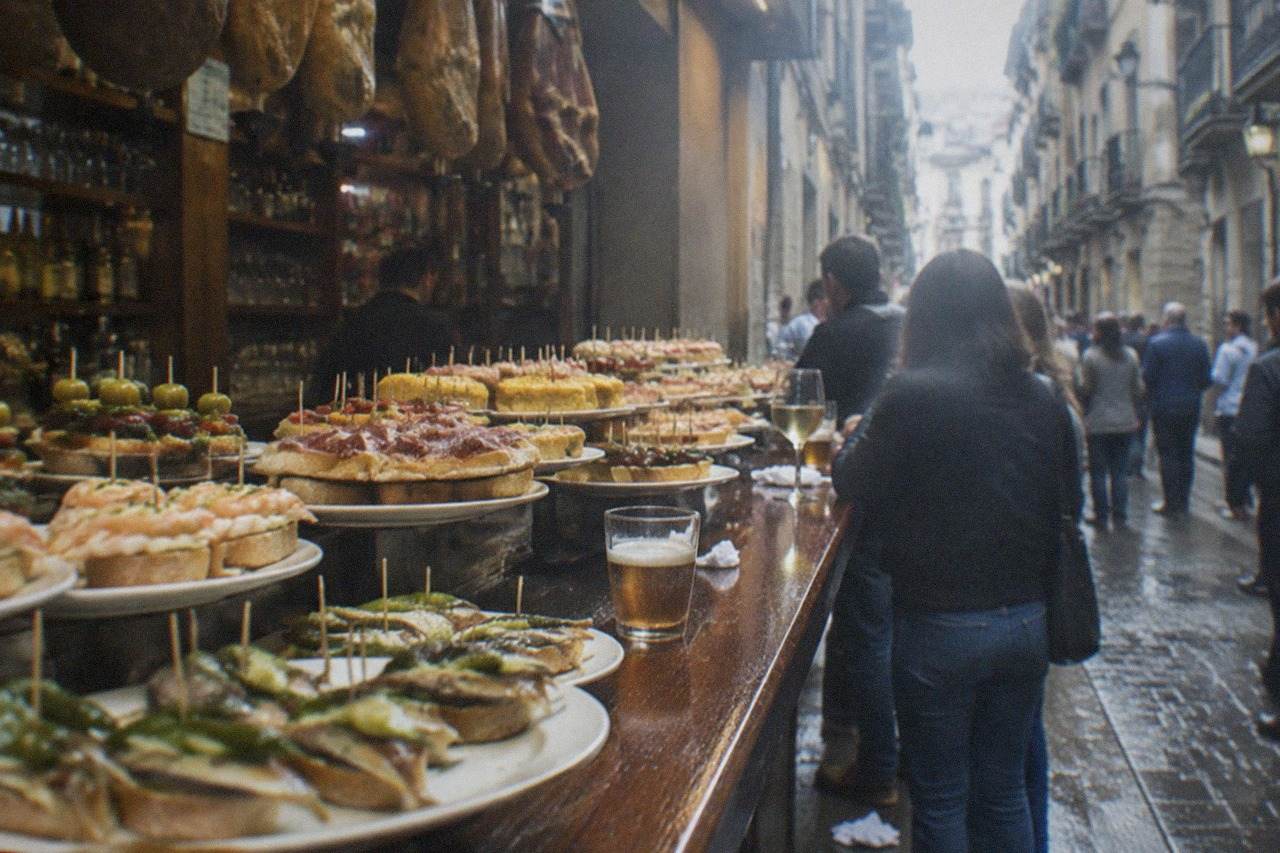
The Old Town of San Sebastián, the Basque city on La Concha bay in Spain whose official name is Donostia / San Sebastián, is called the Parte Vieja, and in the Basque language the same quarter is the Alde Zaharra. Both names mean the same thing, the old part, and locals use them interchangeably on street signs, menus and bus stops. The quarter is the oldest piece of the city, squeezed between Monte Urgull and the Urumea river, and it holds most of what visitors come to the city to eat and see: the pintxo bars, the Plaza de la Constitución and the shell of the old walled town. This page explains where the name comes from, where the quarter begins and ends, and what is worth finding inside it.
What Is The Old Town Of San Sebastian Called?
The Old Town of San Sebastián is called the Parte Vieja, which is simply Spanish for "the old part". In Basque, the co-official language of the city, the same quarter is called the Alde Zaharra, which means exactly the same thing. The city itself is Donostia in Basque, and its full official municipal name, set by a 2012 provincial order, is "Donostia / San Sebastián", a form in which either name can stand alone.
The two-language naming runs through the whole city. Street signs in the quarter often carry both the Basque and the Spanish form, and the Basque names are the ones used on public transport stops and official maps. A visitor asking for "the Old Town" will be understood, but asking for the Parte Vieja by name gets a more precise answer, because the word also tells a local which side of the boulevard you mean: the old town side, not the nineteenth-century expansion on the other side.
The name is old enough that it describes a town that no longer fully exists. The original core was walled, and the walls came down in the nineteenth century to let the city expand westward toward the bay. What survived, the street grid between Monte Urgull and the river, kept the name Parte Vieja even as the new streets behind it grew into the city's main residential and shopping districts.
Where Does The Name Parte Vieja Come From?
The name comes from geography and history rather than from a founder or a saint: when San Sebastián outgrew its walls in the nineteenth century, the streets that stayed inside the old line became "the old part", the Parte Vieja, in contrast with the new Romantic-era expansion, the Centro, that rose on the drained marsh west of the boulevard. The Basque form Alde Zaharra is a direct translation, alde meaning part and zahar meaning old.
The city's own history explains the contrast. San Sebastián was rebuilt after the fire that destroyed nearly the whole town during the Peninsular War, so much of the "old" quarter's building fabric is early nineteenth-century neoclassical rather than medieval. The street plan, though, is older, and the quarter keeps the tight blocks and narrow lanes of a walled settlement. The expansion area, by contrast, was laid out with straight streets, uniform heights and formal squares, which is why locals still call it the Romantic Area.
The distinction matters when you are reading a map or a hotel listing. The Parte Vieja and the Centro sit back to back along the Boulevard, the tree-lined avenue that runs from the river toward the bay, and a hotel described as "old town" is a different walk from the beach, and a different night's sleep, than one in the Centro. The San Sebastian map guide shows how the two quarters fit together, and the city's history is covered in its own guide on this site.
What Are The Boundaries Of The Parte Vieja In San Sebastian?
The Parte Vieja sits on a compact headland-side block bounded by Monte Urgull to the east, the Urumea river to the west, the Boulevard and the Centro beyond it, and the sea at Playa de La Concha to the south. The whole quarter is walkable end to end in minutes, and everything inside it, from the Plaza de la Constitución to the pintxo streets, sits within a short walk of the beach promenade.
Monte Urgull is the green hill that closes the quarter on the east, and it is a managed site rather than open moorland: the tourism board gives access hours of 08:00 to 21:00 from 1 May to 30 September and 08:00 to 19:30 from 1 October to 30 April, because the hill is closed at night. The Castillo de la Mota on its summit holds the Casa de la Historia, a small museum run by San Telmo. The river side is the practical western edge: cross the Maria Cristina bridge over the Urumea and you are already in the Centro.
The table below sets out the four edges of the quarter and what you find at each one.
| Edge of the Parte Vieja | What marks it | What you find there |
|---|---|---|
| East | Monte Urgull | The wooded hill, the Castillo de la Mota and views over La Concha |
| West | The Urumea river and its bridges | The crossing into the Centro and the Kursaal side beyond |
| South | The La Concha promenade | The beach, the town hall and the start of the bay walk |
| North | The Boulevard and the Centro | The Romantic-era expansion, shops and the larger squares |
Staying inside or beside the quarter is a common choice for a first visit, and the old town and beachfront hotels guide covers the trade-offs between the two sides of the Boulevard.
What Are The Main Sights Inside The Parte Vieja?
The main sights inside the Parte Vieja are the Plaza de la Constitución, the old town's main square and former bullring; the three pintxo streets of Calle 31 de Agosto, Calle Fermín Calbetón and Calle Narrica; the San Telmo Museoa on the western edge, which costs 10.00 EUR general admission and is free for everyone every Tuesday; and the basilica of Santa María del Coro, the quarter's main church, whose entrance opens off the Calle 31 de Agosto.
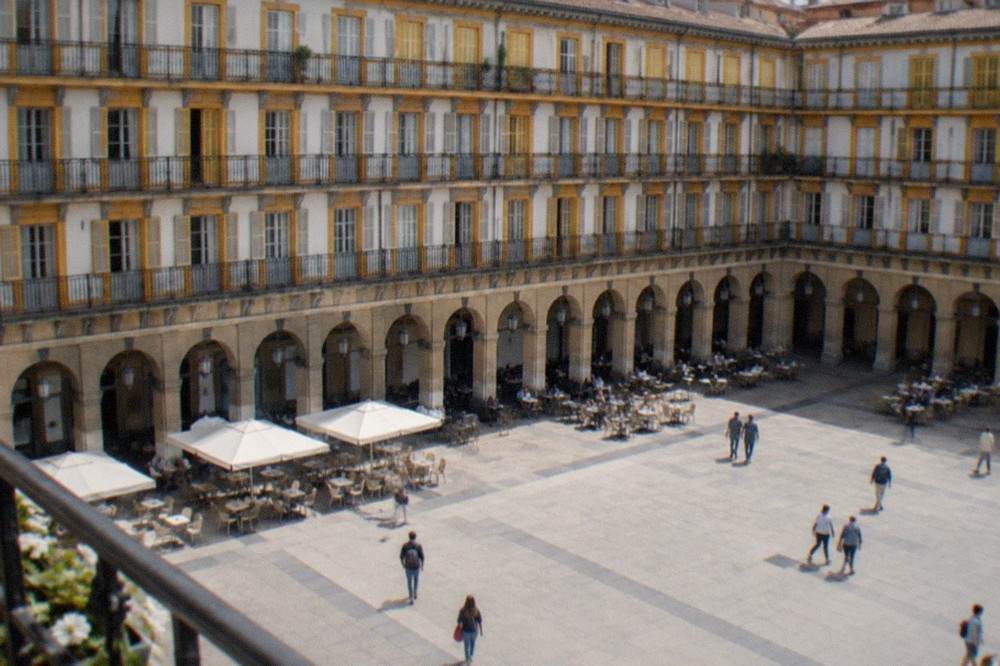
The Plaza de la Constitución is the quarter's living room. It is a rectangular neoclassical square with numbered balconies, a leftover from the days when the plaza served as the town bullring and spectators rented the windows by the session. Today it holds café tables under the arcades and the city's biggest public celebrations, from the drumming of the January Tamborrada on 20 January to the fair of Santo Tomás on 21 December, both fixed dates in the city's calendar.
San Telmo Museoa, in a former convent building at the quarter's western edge, is the city's history museum. Its own site gives the hours: Tuesday to Sunday, 10:00 to 19:00 in winter from 1 November to 31 March and 10:00 to 20:00 in summer from 1 April to 31 October, closed Mondays except holidays and long weekends. General admission is 10.00 EUR, the reduced ticket is 4.00 EUR for students, visitors over 65 and large families, and every Tuesday entry is free for everyone, with further free days on 18 May and for under 25s on any open day. The San Telmo guide covers the collection in detail.
The basilica of Santa María del Coro stands at the top of the Calle 31 de Agosto with a sculpted doorway worth stopping for, and the church of San Vicente sits just outside the quarter on the Gros side of the river. The Monte Urgull path, entered from the quarter's eastern streets, climbs to the Castillo de la Mota and the English cemetery on the hill's seaward slope.
Why Is The Parte Vieja Known For Pintxos?
The Parte Vieja is the pintxo capital of San Sebastián because the quarter holds the densest concentration of pintxo bars in the city, clustered along the Calle 31 de Agosto and its parallel lanes, where the custom is bar-hopping: order one or two pintxos and a drink at the counter, eat standing, pay, and move on. The pintxo, a small slice or skewer of food served on bread or on its own, is the Basque answer to tapas, and this quarter is where the city eats them.
The custom has its own etiquette. Ordering is done at the counter, not from a table; many bars lay their pintxos out on the counter in trays and you point at what you want; and the tally is often kept by the bar staff on a chalkboard or by counting the empty skewers on your plate. Txakoli, the lightly sparkling local white wine poured from a height, is the standard pairing, and the pintxos guide explains the dishes and the customs bar by bar.
The quarter's food reputation is not just local pride. The MICHELIN Guide Spain 2026 lists 11 stars across 6 restaurants inside the city, and the pintxo-bar tradition is widely described as the everyday, standing-room counterpart to that formal dining scene. No bar's prices, hours or queues were checked on the ground, so treat any figure you see elsewhere with care and check the room itself.
How Does The Parte Vieja Compare With Other San Sebastian Neighbourhoods?
The Parte Vieja is the smallest and densest of San Sebastián's central neighbourhoods and the only one that preserves the pre-expansion street plan, while the Centro offers the formal nineteenth-century grid, Gros the surf beach and a younger bar scene, Antiguo a quieter residential feel near Ondarreta, and Amara a local district away from the water. Each has its own character, and the choice between them is mostly a choice between atmosphere and sleep.
The comparison that matters most for visitors is old town versus Centro. The Parte Vieja puts the pintxo bars, the squares and the beach promenade at your door, at the cost of thinner walls and lively evenings, since the bar streets run late. The Centro is one bridge away, quieter at night and closer to the shops. The Parte Vieja area guide covers the quarter street by street, and the answer page on whether four days in the city is too many explains how the quarters divide up a longer stay.
Common Questions About The Parte Vieja In San Sebastian
The Parte Vieja is the Old Town of San Sebastián in the Basque Country, Spain, called the Alde Zaharra in Basque, and it sits between Monte Urgull and the Urumea river. Its main square is the Plaza de la Constitución, its museum is San Telmo with free entry every Tuesday, and its three pintxo streets are the Calle 31 de Agosto, Calle Fermín Calbetón and Calle Narrica. The answers below cover the questions visitors ask most often about the quarter.
What is the Old Town of San Sebastián called?
The Old Town of San Sebastián is called the Parte Vieja, Spanish for "the old part". In Basque the same quarter is the Alde Zaharra, which means the same thing, and both names appear on signs and maps across the city.
Is the Parte Vieja the same as the Centro?
No. The Parte Vieja is the old walled quarter between Monte Urgull and the Urumea river, while the Centro is the nineteenth-century expansion on the other side of the Boulevard, built after the walls came down. They sit back to back and are one short walk apart.
Can you walk from the Parte Vieja to La Concha beach?
Yes, the quarter's southern edge runs along the La Concha promenade, and the beach starts directly across the promenade from the town hall end of the quarter. The walk from the Plaza de la Constitución to the sand takes only a few minutes.
Which streets have the pintxo bars in the Parte Vieja?
The pintxo bars cluster on the Calle 31 de Agosto and the parallel lanes of Calle Fermín Calbetón and Calle Narrica, with more bars spreading toward the boulevard and the harbour. The custom is to move between several bars rather than settle in one.
Is the Parte Vieja worth visiting at night?
Yes, and it is the default evening plan for much of the city: the pintxo bars fill from late evening and the bar streets stay busy into the small hours, especially at weekends. Visitors wanting quiet sleep often stay across the river in the Centro and walk over.
Whether you arrive for the pintxos, the plaza or the hill, the quarter's name is the first useful thing to learn, because everything else in the city is described by where it sits in relation to the Parte Vieja. More on the whole city, from the beaches to the day trips, is on San Sebastian Spain Guide, and the local-eating answer page on where the locals eat picks up where this one leaves off.