Santa Clara Island
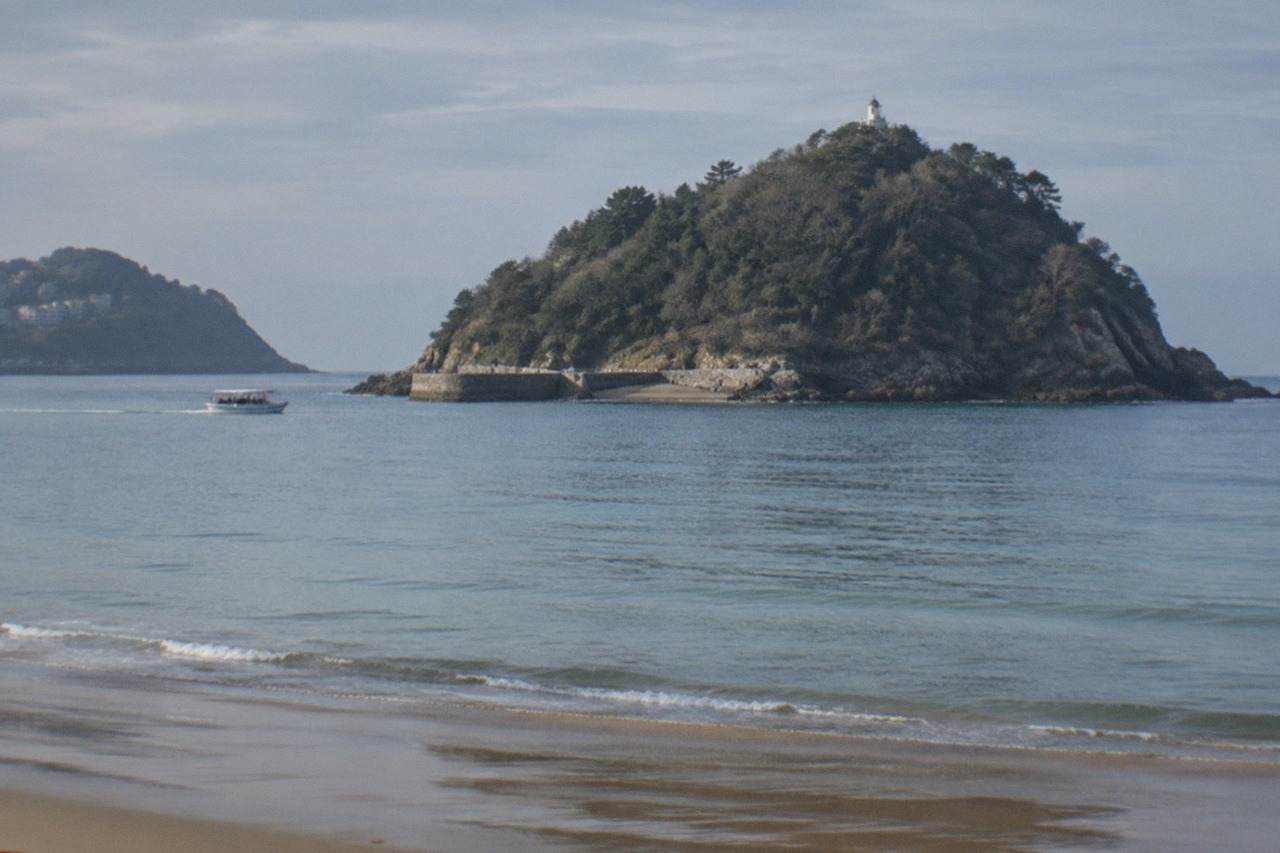
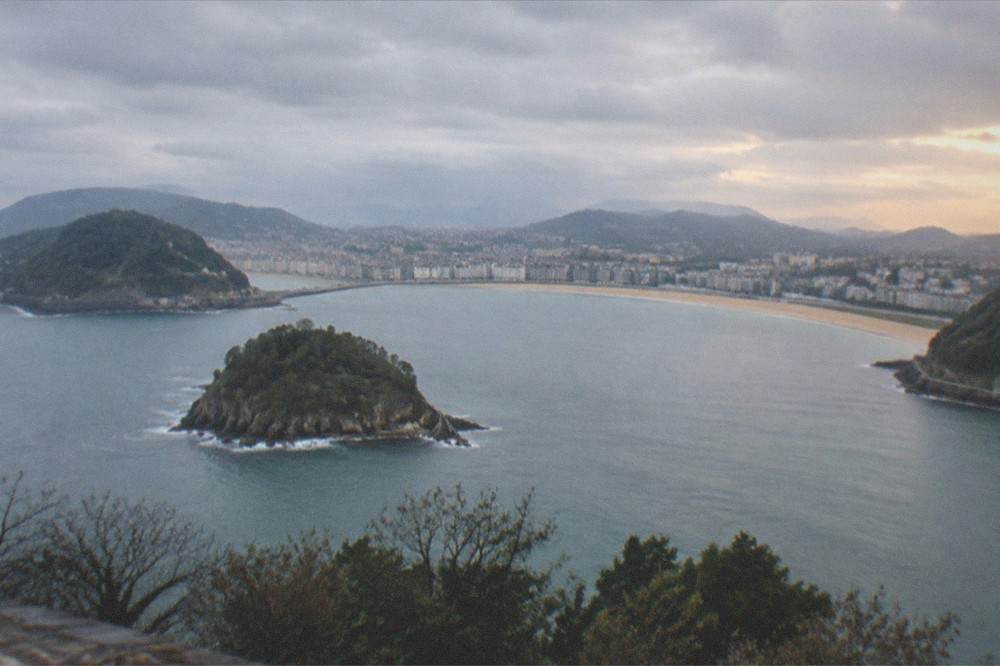
Santa Clara Island is the small, boat-accessible island at the centre of La Concha bay in San Sebastián, Basque Country, Spain, the city whose official name is Donostia / San Sebastián. A short crossing, a free art installation in the old lighthouse and one of the most photographed vantage points on the Basque coast fit inside a half day.
Short answer
Santa Clara Island is reached by a short boat crossing from the harbour in San Sebastián. The high season service runs 1 June to 30 September, plus Easter and long weekends, with the direct red line sailing every 30 minutes for a 5 EUR return fare. The island holds a small beach, walking paths and Hondalea, a free art installation inside the old lighthouse, open 1 June to 30 September.
Santa Clara Island sits in the middle of La Concha bay in San Sebastián, Basque Country, Spain, the Basque city whose official name is Donostia / San Sebastián. It is the quiet third element of the bay's famous silhouette: Monte Igueldo on one side, Monte Urgull on the other, and the island between them, holding the centre of the water. Many people see it only from the promenade. Those who cross get a small island with a seasonal beach, a network of short paths and, since 2021, Hondalea, a free artwork by Cristina Iglesias set inside the island's old lighthouse. Everything on the island is shaped by one rule: it is a summer place, and the boats, the lifeguard-free beach and the lighthouse installation all follow the same season.
The island is small enough that a visit rarely needs more than a couple of hours, yet it changes how the whole city reads. From the shore, La Concha is a crescent of sand backed by a promenade. From the island, the crescent closes around you, and the city appears as a ring of hills, belle époque facades and the two headlands that guard the bay. The tourism board lists the island among the city's monte and island outings, and the boat operator runs the crossing only when the sea allows, which is itself the honest summary of the place: beautiful, close and weather-dependent.
What Is Santa Clara Island In San Sebastian?
Santa Clara Island is a small island in the centre of La Concha bay in San Sebastián, the Basque city on Spain's Atlantic coast whose official name is Donostia / San Sebastián. It holds a former lighthouse, a small seasonal beach, walking paths and the 2021 artwork Hondalea by Cristina Iglesias. The island has no bridge and no permanent visitor infrastructure, so every visit starts with a short boat crossing from the harbour.
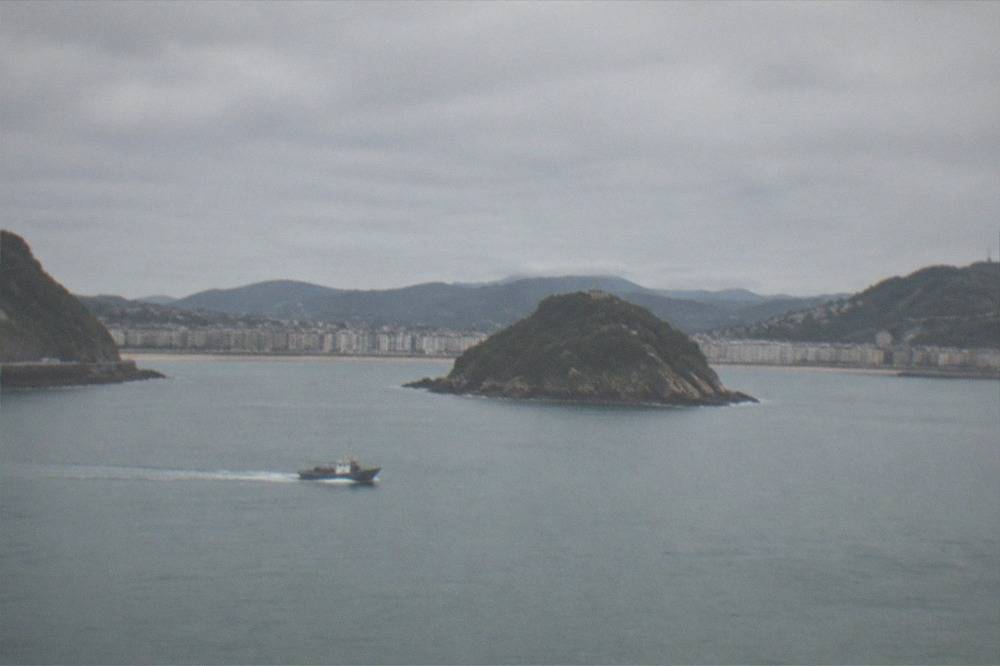
The island's role in the city is mostly visual. It anchors the view that made La Concha famous, the closed bay that guidebooks photograph from Monte Igueldo or Monte Urgull. The council's beaches index even names a fourth city beach on the island alongside La Concha, Ondarreta and Zurriola, which tells you how the city itself classifies it: not a monument, but a piece of the coastline you can stand on. There is no hotel, no restaurant beyond what the boat operator provides in season, and no road. What the island offers is the rarest thing on this stretch of coast, a place to sit that is inside the bay's picture rather than looking at it.
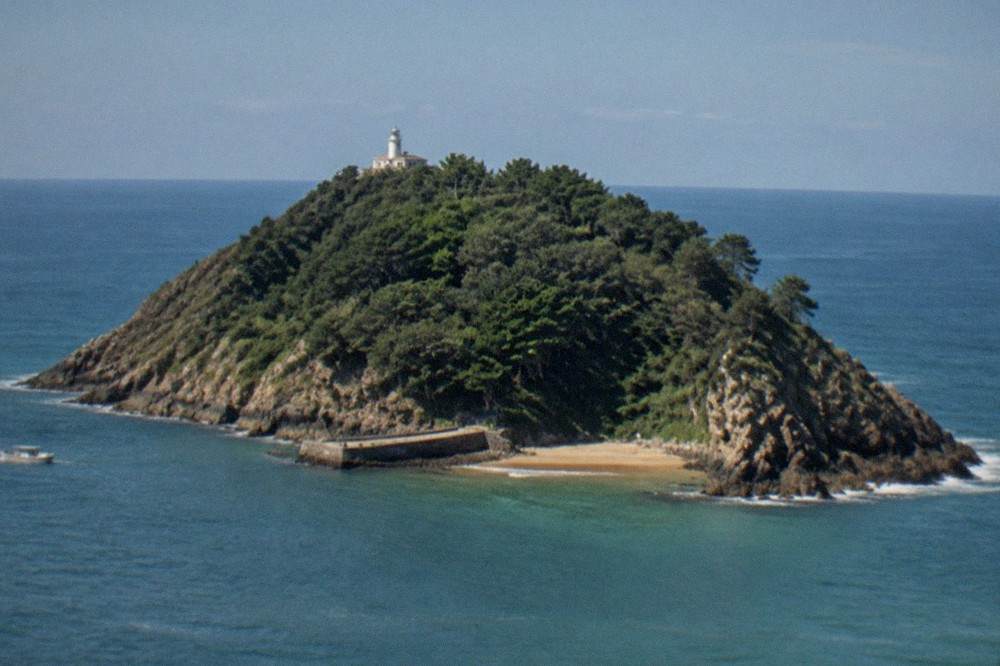
The island's history is tied to the sea rather than to the city's royal summer past. A lighthouse stood on the high ground, and that building is the reason the island now has an artwork instead of an empty shell. In 2021 the Cristina Iglesias installation Hondalea opened inside the lighthouse, commissioned for the space, and the council now runs free visits through the summer season. The rest of the island is low scrub, paths and a strip of sand on the northern side, facing the open Atlantic rather than the bay.
For orientation, the island sits roughly level with the middle of La Concha beach. The crossing leaves from the harbour beside the Aquarium, at the foot of Monte Urgull. From the island's summit paths, the whole bay is visible at once, which no point on the mainland shore can offer, since the shore always blocks half of its own view.
How Do You Get To Santa Clara Island?
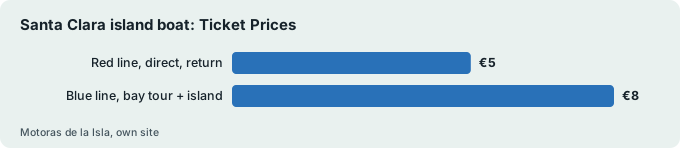
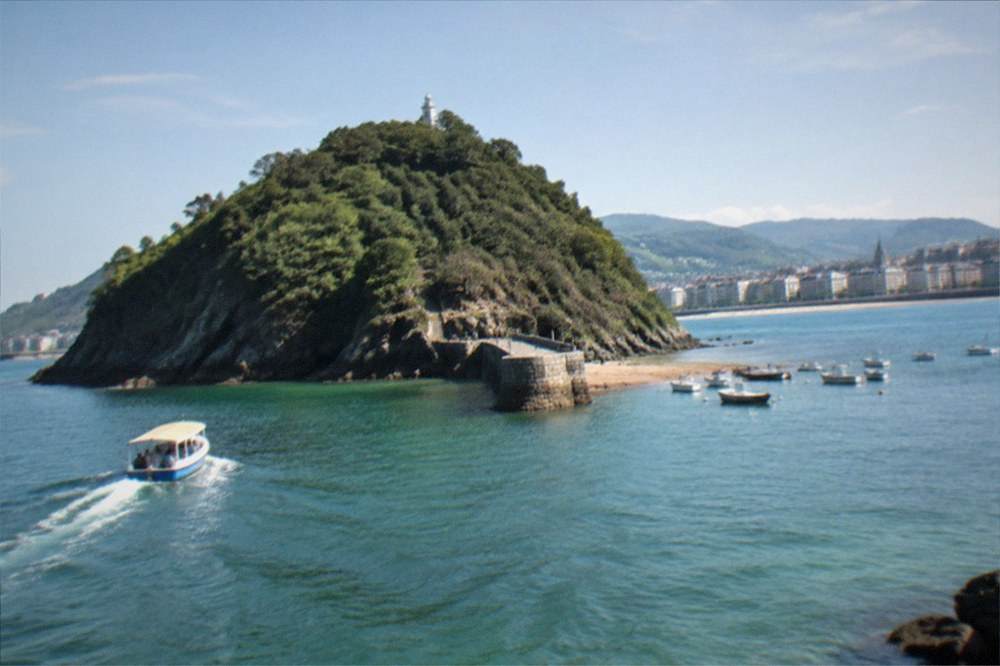
The only public way to Santa Clara Island is the boat run by Motoras de la Isla from the harbour in San Sebastián. In high season, 1 June to 30 September, the direct red line sails every 30 minutes from 10:00 to 19:00, weather and sea permitting, for a 5 EUR return fare, with the last boat back from the island at 20:00. Outside high season the operator says to consult departures, so no winter sailing can be promised.
The operator runs two lines, and the difference matters. The red line goes straight to the island and back. The blue line is a 30 minute tour of the bay that also calls at the island, with fixed departures through the day, and the last blue line departure does not allow landing. Children under 4 travel free on the operator's tariff. Tickets for the direct service are sold at the kiosk on the day, which is worth knowing before you plan a tight schedule: the crossing is popular on calm summer afternoons and the boat is small.
The table below sets out the two lines as the operator's own tariff page gives them.
| Line | What it does | Departures | Fare | Notes |
|---|---|---|---|---|
| Red line | Direct crossing to Santa Clara Island | 10:00 to 19:00, every 30 minutes, high season | 5 EUR return | Last boat back from the island 20:00, June to September |
| Blue line | 30 minute bay tour plus an island call | Fixed departures 12:00 to 19:30 | 8 EUR | The last departure does not allow landing on the island |
Both lines depend on weather and sea state, and the operator states this plainly. A flat-calm August morning is near-certain to sail; a day of Atlantic swell may not, and the bay's own weather is part of the story. AEMET's normals for its Igeldo station, on the hill above the bay, record 1,507 mm of rain across 141 rain days in an average year, and even July, the driest month, averages 86 mm over about 10 rain days. The crossing is a fair-weather plan, and the island visit should be booked with that in mind.
The high season rule has one extension worth knowing: the operator also runs at Easter and on long weekends outside the June-to-September window. Beyond that, the published instruction is to consult departures, and this page will not guess what the operator does not publish.
If you would rather see the bay with a guide than queue at the kiosk, several bookable boats include the island or the bay in their route, and the listing for each states what is included.
The bay boat above is the natural companion to an island day: it includes the crossing, a stop on the island and a ticket valid for one day, which suits the relaxed pace the island rewards. The two pintxo tours in the band are the standard evening follow-on, since the harbour sits at the edge of the Parte Vieja, the Old Town, where most of the city's pintxo bars stand.
What Can You Do On Santa Clara Island?
A visit to Santa Clara Island fills a couple of hours with three things: walking the short path network to the viewpoints over the bay, sitting on the small north-facing beach, and visiting Hondalea, the free Cristina Iglesias installation inside the old lighthouse, which runs sessions every half hour from 11:00 to 18:30 through its summer season. None of it needs a guide, and none of it needs more than a half day.
The paths are the island's main furniture. They climb from the landing point through low scrub to the high ground where the lighthouse stands, and from there the bay opens in both directions. The view takes in La Concha and Ondarreta along the western arc, Monte Igueldo closing that end, and Monte Urgull with the Kursaal's glass cubes beyond it at the eastern end. On a clear day the coastal hills of Gipuzkoa run west towards Getaria, and the French border hills begin to the east. It is the only place in the city where all of this composes into one frame.
The beach is a real but modest strip of sand on the island's northern side, which faces the open sea rather than the sheltered bay. The council's beach system includes it among the city's four beaches, but the lifeguard service that covers La Concha, Ondarreta and Zurriola from 1 June to 30 September does not extend to the island in the same published form, so swimming there is a self-assessed decision on an unguarded shore. The water is the same Atlantic that meets the city beaches, and the same caution about swell applies.
Hondalea is the reason many visitors now cross at all. The work was inaugurated in 2021, set inside the lighthouse, and the council's visit page gives the practical shape of a visit in its summer season.
| Hondalea detail | What the council's page states |
|---|---|
| Season | 1 June to 30 September inclusive |
| Hours | 11:00 to 18:30 |
| Sessions | Every half hour, about 20 minutes each |
| Price | Free |
| Booking | No booking needed for the visit itself, only the boat |
| Group size | Small groups |
| Paid option | Guided visits of about 2 hours sold at hondalea.eus |
The artwork itself is a piece about water, which is fitting for a lighthouse. Cristina Iglesias built Hondalea as an installation you descend into, with pools, channels and cast forms that hold and move seawater, so the building reads as a lighthouse turned inward, lit by the sea it once warned against. The council's information page describes the visit as short, free and unbooked, with only the boat needing a ticket. The paid guided visit is a separate, longer product sold on the artwork's own site.
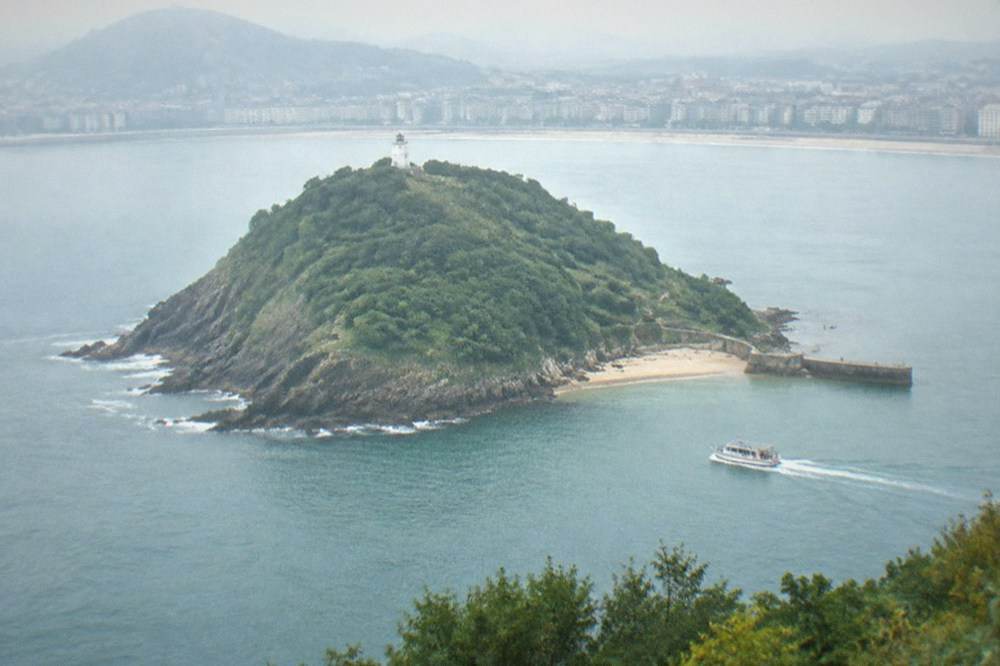
The island also works as a picnic spot, and that is how many locals use it. There is shade on the paths, flat ground near the landing, and a pace of life that the mainland promenade, with its joggers and traffic, cannot match. Bring water, because the island's services are seasonal and minimal, and bring back everything you carry over, since the island is a protected piece of the bay's landscape rather than a developed attraction.
For visitors combining the crossing with a fuller day on the water, a sunset sailing is the other way to see the bay from the sea, with a drink included on a silent hybrid catamaran.
That sunset departure pairs well with a morning on the island: the crossing and the paths take the first half of the day, and the evening lap of the bay closes it. If the island boat is the one that matters most to your plan, the box below points to the operator's live listing for the bay tour with the island stop.
Can You Swim From Santa Clara Island?
Swimming from Santa Clara Island is possible from its small north-facing beach, but it is not a lifeguarded city beach in the published sense. The council's lifeguard service covers La Concha, Ondarreta and Zurriola from 1 June to 30 September, with hours of 10:00 to 20:00 from mid-June to mid-September, and the island's own shore faces the open Atlantic. Treat it as an unguarded swim on a coast with real swell.
The distinction matters because the island's beach looks sheltered from the mainland. It is not. The northern side of the island takes the Atlantic directly, the same exposure that makes Zurriola, the city's surf beach, what it is. The council's page for Zurriola describes that beach as fairly open with strong swell, and the island's seaward side belongs to the same water. Inside the bay, around the landing point, the water is calmer, but the beach proper faces outward.
For a swim with lifeguards, the city's three mainland beaches are the answer, and each has a stated season and stated hours.
| City beach | Lifeguard season | Peak hours (15 Jun to 15 Sep) | Late season hours (16 to 30 Sep) |
|---|---|---|---|
| La Concha | 1 June to 30 September | 10:00 to 20:00 | 13:30 to 19:30 |
| Ondarreta | 1 June to 30 September | 10:00 to 20:00 | 13:30 to 19:30 |
| Zurriola | 1 June to 30 September | 10:00 to 20:00 | 13:30 to 19:30 |
The island's beach, by contrast, has no published lifeguard hours, and the honest framing is that it is a beach you swim from on your own judgement, on a shore where the sea state changes with the Atlantic rather than the bay. The same weather that cancels the boats is the weather that makes the swim a poor idea.
Assisted bathing for visitors with reduced mobility runs on the mainland beaches from 15 June to 15 September, and parasol and lounger hire runs 15 June to 30 September, with the council's price page listing an awning at 13.10 EUR a day on La Concha and Zurriola and a lounger at 3.50 EUR. None of that equipment or support exists on the island, which is part of its charm and part of its limitation.
What Is The Best Time Of Year To Visit Santa Clara Island?
The best time to visit Santa Clara Island is between 1 June and 30 September, when the boats run their high season schedule and Hondalea is open, with July the driest month of the year at 86 mm of rain and about 10 rain days. August is warmer but wetter than July, averaging 117 mm, and September stays warm at a mean of 18 C while the sea is at its warmest after the summer.
The season rule is not a soft preference, it is the operating calendar. Before 1 June and after 30 September the direct boats stop their timetable, Hondalea closes, and the operator's instruction outside Easter and long weekends is to consult departures. A visitor in November who plans an island afternoon will likely be planning a promenade walk instead.
The climate table below is drawn from AEMET's normals for the Igeldo station above the bay, the series covering 1981 to 2010, and it shows the five months that matter most for an island visit.
| Month | Mean temperature | Mean daily maximum | Rainfall | Rain days (1 mm or more) | Sun hours |
|---|---|---|---|---|---|
| May | 14.4 C | 17.7 C | 120 mm | 12.2 | 181 |
| June | 16.9 C | 20.0 C | 90 mm | 10.6 | 189 |
| July | 18.9 C | 21.8 C | 86 mm | 9.8 | 196 |
| August | 19.5 C | 22.5 C | 117 mm | 10.5 | 190 |
| September | 18.0 C | 21.1 C | 111 mm | 10.1 | 179 |
Two honest readings follow from that table. First, this is a wet Atlantic city: no month averages under 86 mm of rain, and even the driest month has rain on about ten days. Second, August, the warmest month, is wetter than June, July or September, so the peak-heat choice is not the driest choice. September is the connoisseur's month for the island: the sea has absorbed a full summer, the boats still run to the full timetable until the 30th, and the crowds of August have gone back to school.
Crowding follows the hotel calendar more than the rain calendar. INE's hotel occupancy figures for the city show August 2025 as the peak month with 245,769 overnight stays, against 115,910 in January, and July and August together carry 22 percent of the year's hotel nights. The island's boats feel that. A July or September morning crossing is a different experience from an August afternoon one, and the fixed kiosk-only ticketing for the direct line rewards arriving early in the day.
What Can You See From Santa Clara Island?
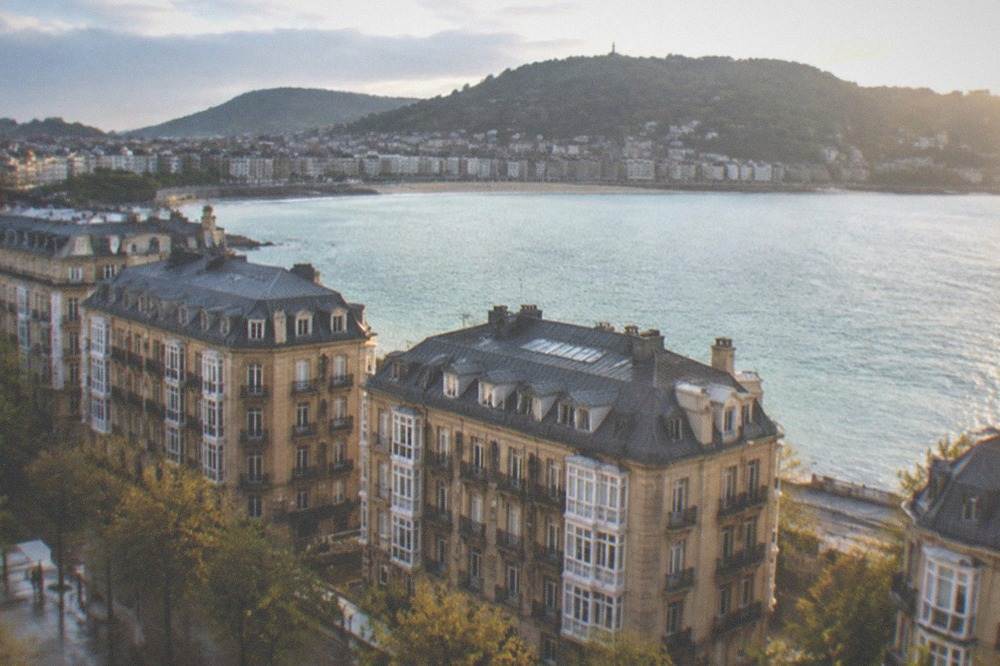
From Santa Clara Island you can see the entire bay of San Sebastián in one frame: La Concha and Ondarreta along the western shore, Monte Igueldo and its funicular closing the west end, Monte Urgull and its fortifications to the east, and the Kursaal's two glass cubes on the far side of the mouth of the Urumea. On clear days the coastal hills of Gipuzkoa run west and the French border hills begin east.
The composition is the point. From the La Concha promenade you see the island; from the island you see everything that photographs the island. The two headlands bookend the view. Monte Igueldo, on the west, carries the 1912 rack funicular and the amusement park at its summit, and its own site sells a return funicular ticket that includes entry to the grounds. Monte Urgull, on the east, holds the Castillo de la Mota and the English cemetery among its paths, and the tourism board gives its access hours as 08:00 to 21:00 from May to September, closing at 19:30 for the winter half of the year.
Between the headlands, the city stacks itself in layers. The beach crescent, the promenade railings, the belle époque facades behind them, and the two white bridges over the Urumea leading to the Gros district and the Kursaal. Further west, past Ondarreta, the Peine del Viento, Eduardo Chillida's three steel sculptures set into the rocks with Luis Peña Ganchegui's granite plaza, marks where the bay ends and the open coast begins.
The table below pairs each direction of the island's view with the mainland page that covers it in depth.
| Direction from the island | What you see | In-depth page |
|---|---|---|
| West | Ondarreta beach, Monte Igueldo and the funicular line | Monte Igueldo |
| Northwest | The Peine del Viento sculptures at the bay's mouth | Peine del Viento |
| South | The La Concha crescent and the city centre behind it | La Concha Beach |
| East | Monte Urgull, the Old Town at its foot and the port | Monte Urgull |
| Northeast | The Kursaal, Gros and Zurriola beach | Zurriola Beach |
Photographers value the island for the reverse of the standard postcard. The famous image of La Concha is shot from Monte Igueldo or from the Urgull ramparts, with the island in the middle. From the island, the bay closes around the viewer and the city becomes the subject, which is a rarer picture and one that changes completely with the tide, the light and the hour.
How Does A Visit Fit Into A Day In San Sebastian?
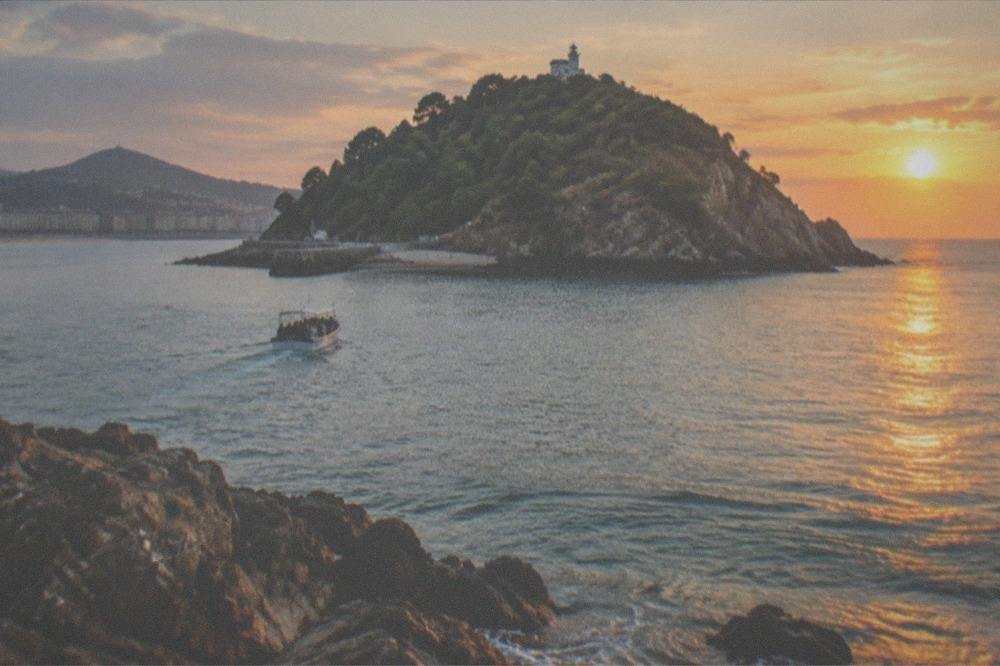
A Santa Clara Island visit fits best as the middle of a day: the crossing from the harbour takes minutes, the island itself rewards one to two hours, and the landing point sits at the foot of Monte Urgull beside the Aquarium, so the Old Town, the port and the La Concha promenade all chain naturally onto it. Visitors can spend a morning on the island and the afternoon and evening on the shore.
The geography makes the plan for you. The boats leave from the harbour beside the Aquarium, which is at the eastern end of La Concha and the western edge of the Parte Vieja. Land from the island before lunch and you are two minutes from the Old Town's pintxo bars, five from Plaza de la Constitución, and ten from the cathedral and the centre. The Old Town walking guide covers that quarter in detail, and the Aquarium next to the landing is the city's most visited indoor attraction.
A sample shape for a full day, using only the operating facts above:
| Time | Plan |
|---|---|
| Morning | Red line crossing from the harbour kiosk, island paths and Hondalea session |
| Midday | Last morning boat back, late Basque lunch or pintxos in the Parte Vieja |
| Afternoon | La Concha promenade west to Ondarreta and the Peine del Viento |
| Evening | Pintxo bars in the Old Town, or a sunset bay sailing |
The evening option deserves its own line, because the bay changes character at sunset and the small-boat operators know it. One small-boat run goes east along the cliffs towards Pasaia with a sunset departure that includes cava, and the eco-catamaran sails a silent sunset lap with a drink included. Both are listed products, and the listing for each states what is and is not included.
For a longer version of the same coastline, the island is also a waypoint in the bigger picture of the bay's hills and beaches, and the San Sebastian Spain Guide overview page collects the city's main sights, including the island, in one place.
Common Questions About Santa Clara Island
Can You Visit Santa Clara Island In San Sebastian?
Yes, by boat from the harbour. The direct red line runs every 30 minutes from 10:00 to 19:00 in the high season, 1 June to 30 September, at 5 EUR return, plus Easter and long weekends. Outside those periods the operator says to consult departures, so a winter visit cannot be assumed.
Is Hondalea Open All Year?
No. The council's visit page gives the season as 1 June to 30 September inclusive, with sessions every half hour from 11:00 to 18:30, free of charge, in small groups, lasting about 20 minutes. No booking is needed for the visit itself, only for the boat. Paid guided visits of about two hours are sold separately on the artwork's own site.
How Much Does The Santa Clara Island Boat Cost?
The operator's tariff page lists the direct red line crossing at 5 EUR return and the blue line, a 30 minute bay tour with an island call, at 8 EUR. Children under 4 travel free. Tickets for the direct service are sold at the harbour kiosk on the day.
Can You Swim On Santa Clara Island?
There is a small beach on the island's northern side, but it faces the open Atlantic and has no published lifeguard service, unlike the city's three mainland beaches, which are lifeguarded from 1 June to 30 September. Treat the island as an unguarded swim and judge the sea state yourself.
How Long Should You Spend On Santa Clara Island?
One to two hours covers the paths, the viewpoints and a Hondalea session comfortably. The ticket for the direct line is a return, and the last boat back in the June-to-September season is at 20:00, so the island can also absorb a slow afternoon.
Does The Boat Run In Bad Weather?
The operator states that sailings depend on weather and sea conditions, and the island boats are small. AEMET's normals for the Igeldo station record 141 rain days a year in San Sebastián, so checking the sky and the sea before committing to a crossing time is simply part of visiting this coast.
The last decision of the day is usually the evening one, and the bay offers three ways to close it: a table in the Old Town, a slow walk back along the promenade, or a boat on the water at sunset. The picks below cover the water and the Old Town together.
Of those three, the bay tour with the island stop is the one this page exists for, and it is the one to check first if the island is the reason you are here.
The island rewards exactly the kind of visitor San Sebastián suits: someone happy to let a boat timetable, a weather window and a free half-hour art session define the day. Cross in the morning, walk to the lighthouse, swim only if the Atlantic looks calm, and be back in the Old Town in time for pintxos. That is the whole plan, and the bay does the rest.