Gros Neighbourhood
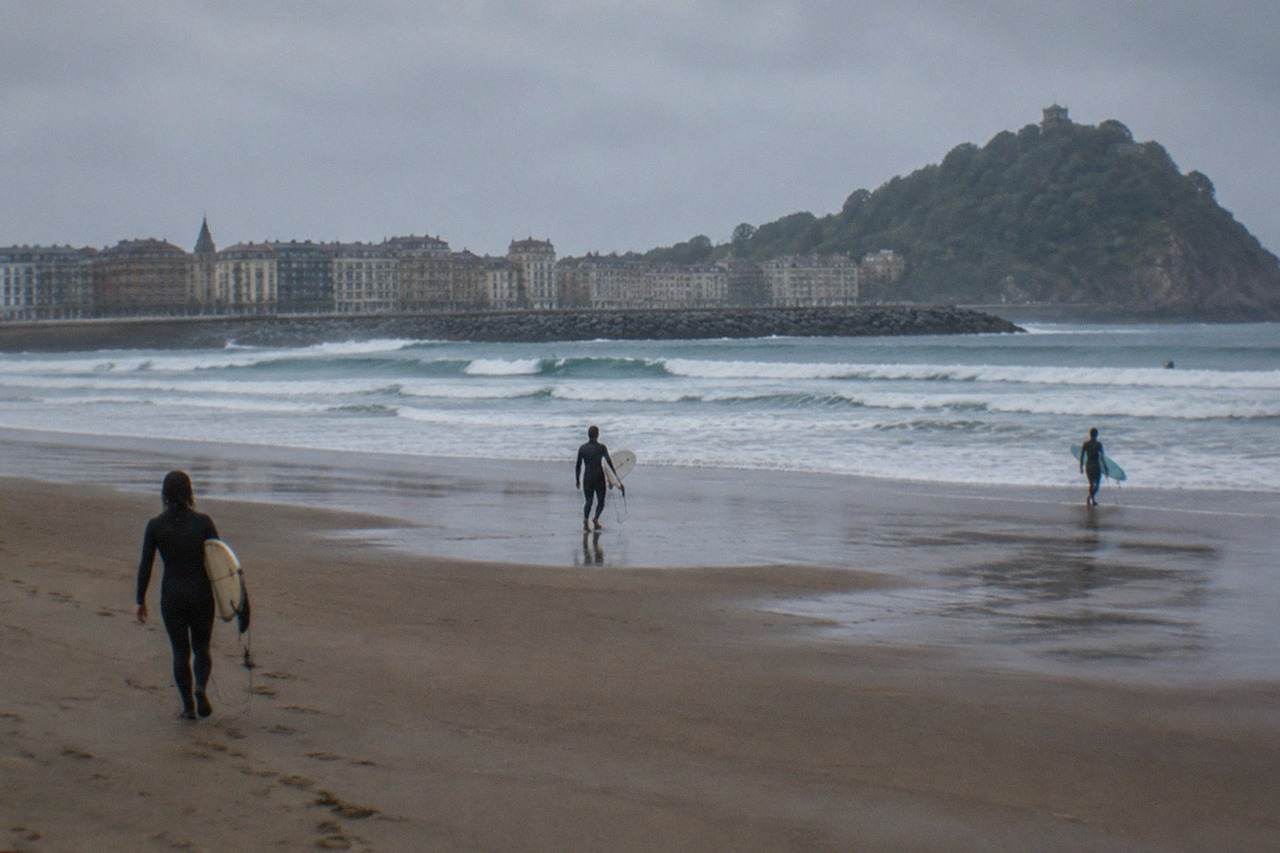
Gros is the San Sebastián neighbourhood that faces the Atlantic rather than the bay, built around Zurriola beach, the Kursaal and the foot of Monte Ulia.
Short answer
Gros is the neighbourhood east of the Urumea river in San Sebastián (Donostia), Basque Country, Spain. It is the city's surf district, built around Zurriola beach, the Kursaal congress centre and the start of the coastal path up Monte Ulia, and it holds a younger, looser bar and pintxo scene than the Old Town across the river.
Gros is the neighbourhood of San Sebastián, in the Basque Country of Spain, that sits east of the Urumea river and faces the open Atlantic. The city's Basque name is Donostia, and locals know this district as the surf side of town: where the elegant curve of La Concha gives way to the stronger swell of Zurriola, and where the glass cubes of the Kursaal stand on the river mouth where the 19th-century tobacco factory and the old bullring used to define the edge of the city. It is the youngest-feeling of the city's central neighbourhoods, the one with surf schools on the sand, coffee roasters on the side streets and a pintxo scene that runs on its own clock, and it rewards a visit at least as much as the Old Town does.
Where Is Gros In San Sebastian?
Gros occupies the eastern side of the city, everything between the Urumea river and the base of Monte Ulia, directly across the water from the Centre and the Parte Vieja. The Kursaal sits on the river mouth at its western corner, Zurriola beach runs along its whole seafront, and the neighbourhood climbs gently inland toward the Sagüés rocks at the foot of Monte Ulia. Every address in Gros is within a short, flat walk of the sand.
The river is the boundary that matters. Cross the Maria Cristina bridge from the Centre and you are in Gros within a block; cross the Zurriola bridge, foot traffic only, and you land practically on the beach. The neighbourhood is flat along the seafront and rises only at its eastern end, where the city ends and the coastal headland begins. That headland is Monte Ulia, and the path up it starts at Sagüés, at the far eastern tip of the beach.
The orientation is simple once you have the three fixed points: the Kursaal at the river mouth, the beach promenade running northeast, and Monte Ulia closing the view. The table below fixes the district's landmarks in relation to each other.
| Landmark | Position In Gros | What It Is |
|---|---|---|
| Kursaal | River mouth, western corner | Rafael Moneo's congress centre and concert hall, inaugurated in 1999 |
| Zurriola beach | The whole seafront | 800 m sandy beach, the city's surf beach, remodelled in 1994 |
| Paseo de Zurriola | Behind the beach | The promenade with the surf schools and beach bars |
| Sagüés | Eastern end of the beach | Rocky point at the foot of Monte Ulia, start of the coastal path |
| Monte Ulia | Beyond the eastern edge | Wooded headland with the Ulia lighthouse and Camino de Santiago route |
| Plaza Pío Baroja | Inland, central Gros | Neighbourhood square surrounded by bars and cafés |
For how this district fits with the others, the San Sebastian neighbourhoods overview places Gros beside the Centre and the Parte Vieja, and the neighbouring district of Egia continues east behind the station on the far side of the tracks.
What Is Gros Known For?
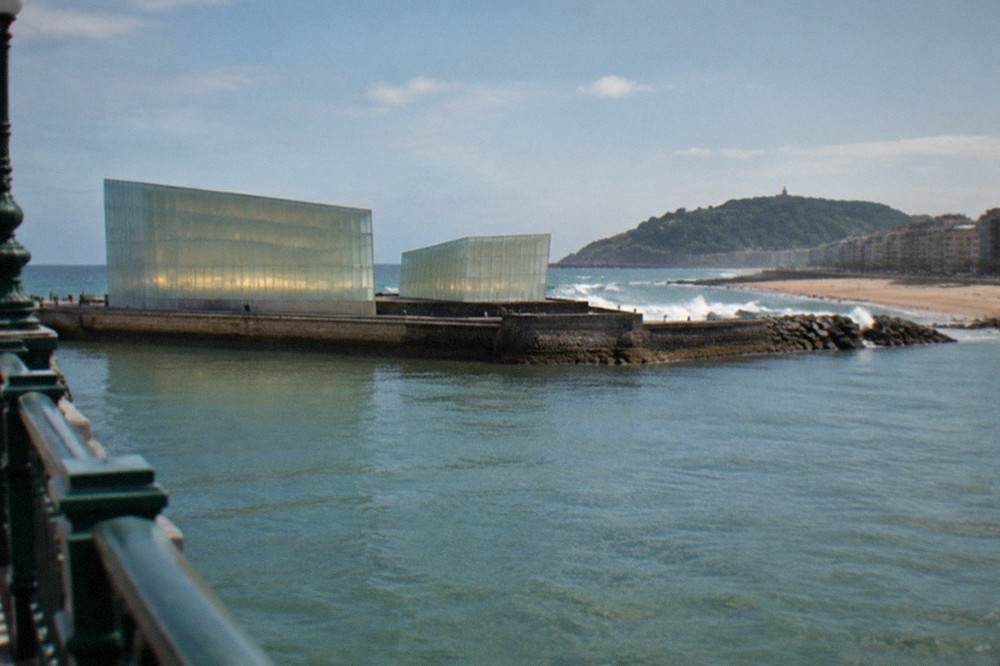
Gros is known for three things above all: Zurriola beach and the surf culture around it, the Kursaal, the concert hall and congress centre by Rafael Moneo that anchors the river mouth, and a pintxo and bar scene that is younger and less formal than the Old Town's. It is also the starting point for the coastal walk up Monte Ulia and along the Camino de Santiago.
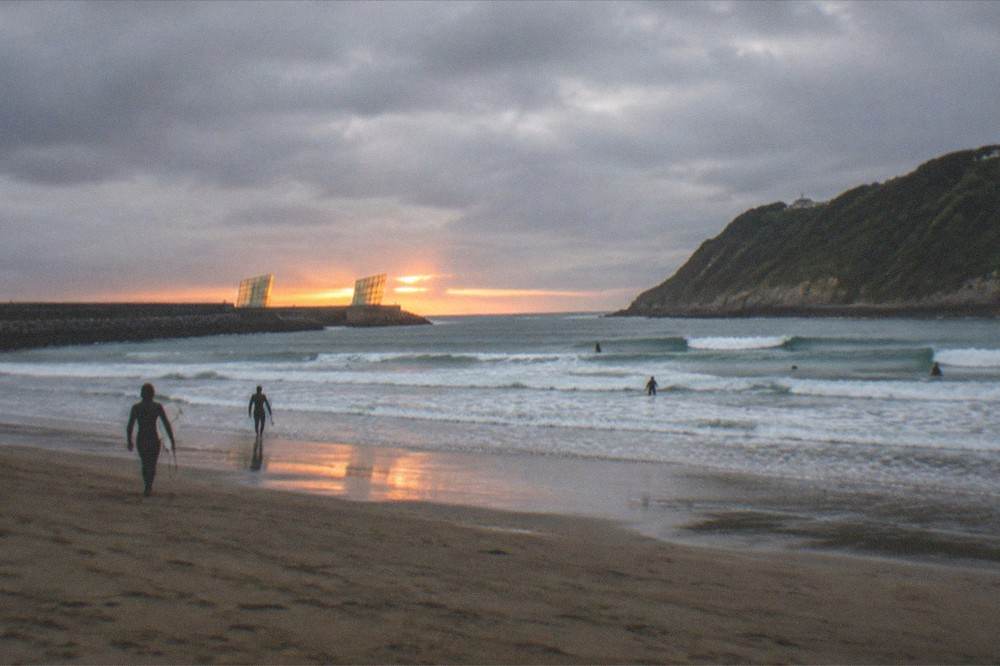
The surf identity is not marketing. The city council's own beach page describes Zurriola as fairly open with a strong swell, which is precisely why the surf schools, the board hire shops and the wetsuit-drying racks are all here rather than on La Concha. The beach was remodelled in 1994, and the works reshaped the sand and the seafront into the promenade district you walk today. The council's figures give it a mean length of 800 m and a mean width of 110 m, the widest of the city's three main beaches, with an area of 88,000 square metres.
The Kursaal gives Gros its architectural landmark. Six architects were invited to submit proposals in 1990, and Rafael Moneo's was chosen; activity began in the Chamber Hall on 3 June 1999 and the building was officially inaugurated on 23 August 1999. Two translucent cubes now stand where the tobacco factory stood, and the film festival uses them every September, which means a visit during those days puts you next to the industry's red carpets.
The third identity is the food and drink one. Gros holds a dense strip of pintxo bars, cider-style taverns and coffee shops along and behind the seafront, and because the district is residential as well as touristic, the bars fill with locals in the evening in a way the Old Town's tourist strips do not always manage. The pintxo custom itself, small skewered or open-faced bites ordered one bar at a time, is explained in what pintxos are, and the city-wide crawl culture in pintxos in San Sebastian.
A good way to cover the district's ground on a first day is with a guided product rather than a plan of your own. The small-group electric bike ride follows the city's bike-lane network and takes in the river mouth and the seafront, while the shared pintxo tour with a local starts by City Hall and works through bars with drinks included. Whichever suits, check the live listing before committing to a time.
Is Zurriola Beach Good For Swimming And Surfing?
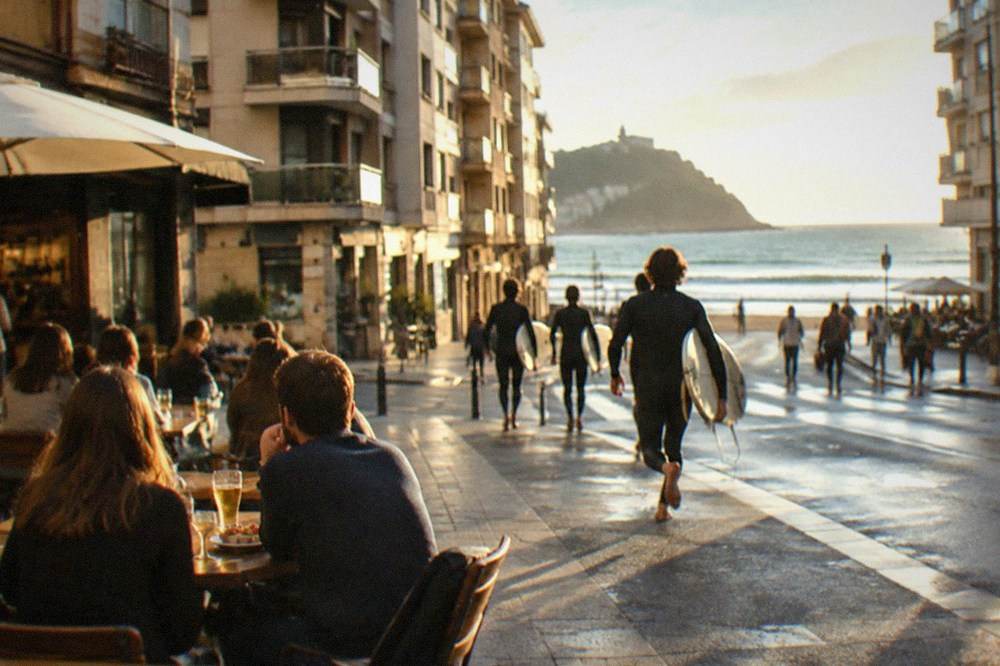
Zurriola is the best beach in San Sebastián for surfing and the boldest one for swimming: the council describes it as fairly open with a strong swell, and it is the only one of the city's three main beaches with a surf school scene. Lifeguards patrol from 1 June to 30 September, between 10:00 and 20:00 from 15 June to 15 September. Swimmers who want calm, shallow water should use La Concha instead.
The comparison with the other beaches is not close. The council's own pages give La Concha 1,350 m of shallow, sandy strand where the tide often limits the usable area, and Ondarreta 600 m of family sand at the west end of the bay. Zurriola faces the open Atlantic, takes the swell directly, and is remodelled around that fact. The table below sets the three against each other using the council's figures.
| Beach | Mean length | Mean width | Mean area | Council description |
|---|---|---|---|---|
| Zurriola | 800 m | 110 m | 88,000 m2 | Sandy, fairly open, strong swell; remodelled in 1994 |
| La Concha | 1,350 m | 40 m | 54,000 m2 | Sandy and shallow; the tide often limits usable area |
| Ondarreta | 600 m | 100 m | 60,000 m2 | Sandy, heavy use in summer; the Peine del Viento walk starts at its west end |
The season rules matter more here than on the bay beaches. The lifeguard service runs on all three beaches from 1 June to 30 September, with full hours of 10:00 to 20:00 from 15 June to 15 September, reduced hours of 13:30 to 19:30 for the last two weeks of September, and nothing outside that window. Parasol and awning hire runs 15 June to 30 September. A swimmer in October has the same sand and no patrol, which is a decision to make knowingly. The wider beach picture, including Zurriola and the bay beaches, is in the guide to all the San Sebastian beaches, and the surf side of the district is covered in surfing in San Sebastian.
Surf lessons cluster on this beach for the obvious reason, and one combined product pairs a lesson here with a pintxo round afterwards: board, wetsuit, locker and hot shower, then food and drinks in the district's bars.
If a lesson plus a crawl sounds like too much for one afternoon, the operator's live listing shows the exact schedule, what is included and the cancellation terms before you commit.
What Can You Do In Gros Beyond The Beach?
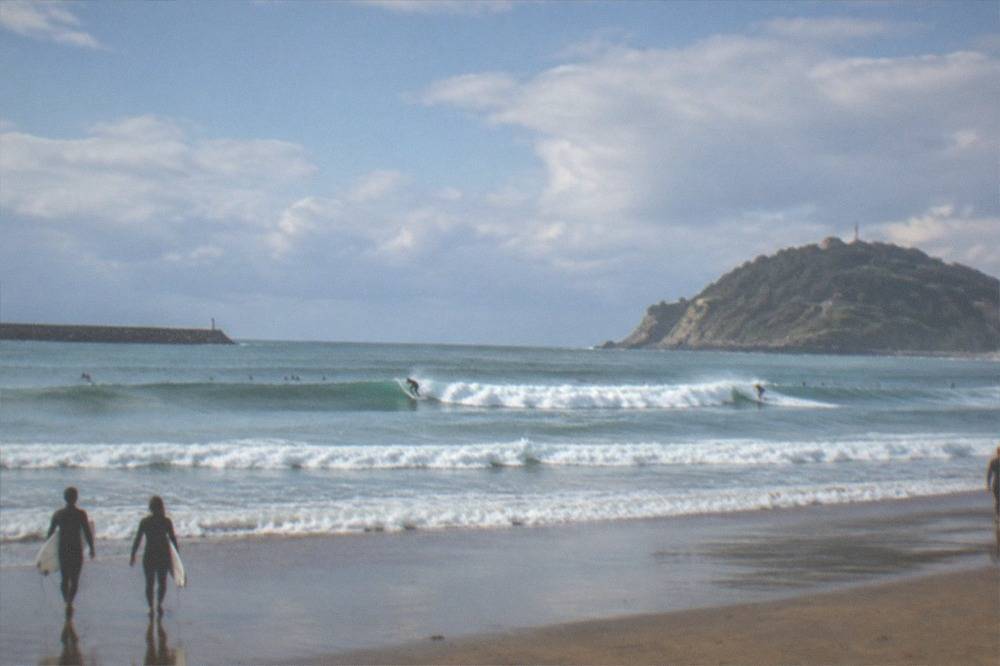
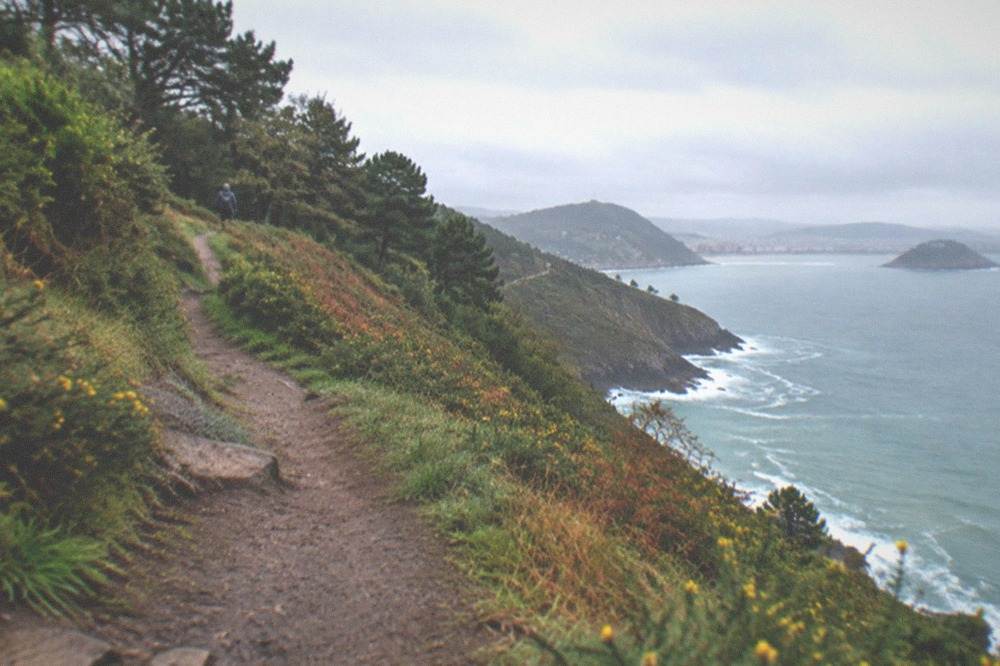
Beyond the sand, Gros offers the Kursaal and its public programme, the coastal path from Sagüés up Monte Ulia toward the Ulia lighthouse, the Sagüés rocks themselves at low tide, and a self-guided circuit of the district's architecture, markets and squares. The Camino de Santiago's coastal route also leaves the city through here, on its stage from Donostia toward Orio.
The Monte Ulia walk is the district's best free hour and a half. The tourism board lists the coastal Camino stages through Gipuzkoa, and stage 3 runs Donostia to Orio, leaving the city along this headland. The full stage is a long day; the first stretch, up to the lighthouse, is the popular part, and it gives the whole sweep of the coast back toward France. The Monte Ulia guide covers the route in detail.
The Kursaal is the second stop. Even outside the festival and concert calendar, the building's terraces sit directly on the river mouth, and the seafront around it is where the district's evening paseo, the traditional evening stroll, concentrates. On the river side, the Maria Cristina bridge and the Zurriola bridge frame short, photogenic crossings, and the Kursaal cubes catch the last light at sunset, one of the angles the city's photographers return to.
A self-guided audio walk suits this district unusually well, because Gros is a loose collection of sights rather than a single monument, and an audio commentary stitches the Kursaal, the seafront and the scenic trails into one loop at whatever pace you choose.
The listing gives the route and the app details, and Check availability to see the current price and start instructions.
The river mouth is also the departure point for the boats. The bay boat with the Santa Clara island stop leaves from the harbour on the far side of the river mouth, and the ticket is valid for a day, which pairs naturally with a Gros morning: beach, boat, island, then back for pintxos.
Where To Eat And Drink In Gros?
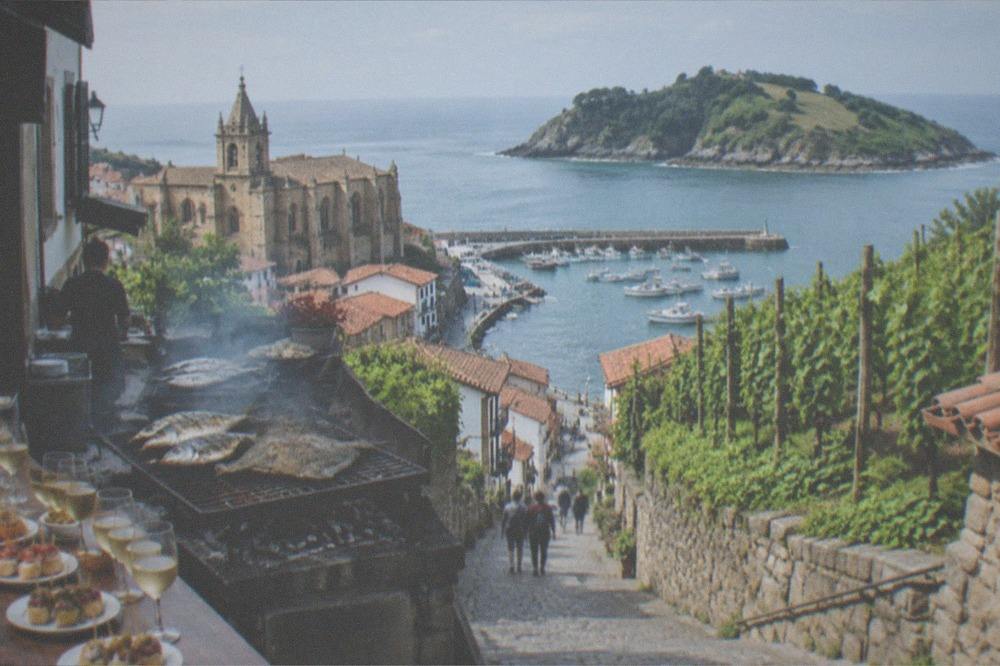
Gros eats and drinks on a pintxo-bar rhythm rather than a restaurant one: the district's bars serve small plates and drinks from late morning through the evening, and the custom is to move between several bars in one night rather than settle at one table. The strongest strips run behind the beach promenade and around Plaza Pío Baroja, with a mix of pintxo bars, cider houses and modern Basque kitchens.
Ordering works the way it does across the city. You ask for pintxos from the counter, either pointing at what is on display or ordering hot ones from the board, and you pay at the end, usually for everything at once. Pintxos are eaten standing or perched at the bar, and a two-bar or three-bar evening is normal. The etiquette, the vocabulary and the differences between a pintxo and a tapa are laid out in the city's pintxo guides, and the strongest bars across the whole city, including several in this district, are picked in the best pintxo bars guide.
What marks Gros out from the Parte Vieja is tone rather than quality. The Old Town across the river is the historic crawl, dense and famous; Gros is where the surf crowd, the students and the young families of the district eat, and the bars keep earlier and more local hours. Cider, txakoli and the local pour, the sharp white wine streamed into the glass from a height, all appear on the counters here, and the cider-house custom of the txotx season, when cider is poured straight from the barrel, has outposts in the district even though the full ritual belongs to the countryside houses.
No bar in the district has confirmed prices or hours, so treat any figure you read elsewhere about a named bar with caution and check the room itself. What can be said is structural: the district is compact, the bars are many, and an evening here costs what you decide it costs, one counter at a time.
How Do You Get To Gros And Around It?
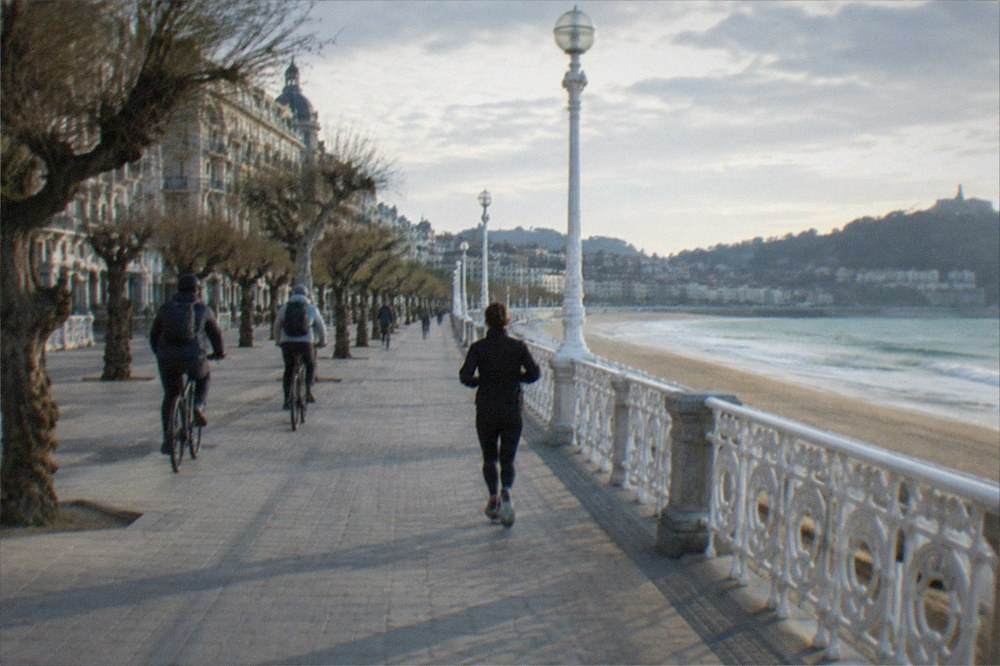
Gros is reached on foot from the Centre in five minutes over the Maria Cristina bridge or the Zurriola bridge, and by city bus on the dBus network, whose occasional cash ticket is 1.95 EUR and whose night ticket is 2.65 EUR. The district is flat and walkable end to end, and the beach promenade carries foot and bike traffic along the whole seafront.
The bridges are the honest answer for many visitors. The Maria Cristina bridge lands you at the Kursaal corner, and the Zurriola bridge, closed to cars, lands you mid-beach. From the Parte Vieja the walk is barely longer, and from the far end of La Concha it is still a flat stroll along the river. The city's overall walkability, and the arguments for never touching a car inside it, are set out in how to get around San Sebastian.
The bus fares are fixed and published. The dBus occasional ticket paid in cash to the driver is 1.95 EUR, the special night ticket is 2.65 EUR, and cash does not allow free transfers, a detail that matters if you plan to hop. The MUGI card system covers the city buses, the regional buses and Euskotren, and its cheapest fares are on the personalised card, which is aimed at residents making regular trips. The fare table as published:
| Ticket | Urban, 0 or 1 jump | 1 jump | 2 jumps | 3 jumps |
|---|---|---|---|---|
| Occasional (cash) | 1.95 EUR | 2.90 EUR | 5.40 EUR | 7.90 EUR |
| Night ticket | 2.65 EUR | 3.70 EUR | 6.45 EUR | 8.95 EUR |
| MUGI anonymous card | 0.78 EUR | 1.16 EUR | 2.16 EUR | 3.16 EUR |
Cycling is the other natural mode here. The seafront promenade and the river paths are flat, separated from traffic, and connect Gros to the bay without a single hill, which is why the guided bike products in the city ride through the district rather than around it, from the flat bay loop to the small-group electric rides.
When Is The Best Time To Visit Gros?
The best months for Gros are June and September: both sit inside the lifeguard and boat season, both carry sea temperatures near their warmest, and both avoid the August peak, when hotel stays in the city hit their yearly maximum. July is the driest month on record at 86 mm of rain, but no month in San Sebastián is dry, so pack for showers whenever you come.
The climate data comes from AEMET's normals for its Igeldo station, on Monte Igeldo at 250 m altitude, for the period 1981 to 2010, and the seafront runs slightly warmer than those values. The honest reading of the table is that this is a wet Atlantic city: 1,507 mm of rain across 141 rain days in an average year, and even July, the driest month, averages 86 mm over about 10 rain days. November is the wettest at 169 mm, and August, at 117 mm, is wetter than June, July or September.
| Month | Mean max C | Rain mm | Rain days | Sun hours |
|---|---|---|---|---|
| May | 17.7 | 120 | 12.2 | 181 |
| June | 20.0 | 90 | 10.6 | 189 |
| July | 21.8 | 86 | 9.8 | 196 |
| August | 22.5 | 117 | 10.5 | 190 |
| September | 21.1 | 111 | 10.1 | 179 |
| October | 18.5 | 159 | 11.8 | 140 |
The season rules do the rest of the planning for you. Everything on and around the water runs to the same calendar: lifeguards on all three beaches from 1 June to 30 September, the Santa Clara island boats in high season over the same window, Hondalea, the Cristina Iglesias installation in the island lighthouse, open 1 June to 30 September from 11:00 to 18:30 with no booking needed for the visit itself, and Monte Urgull across the bay open until 21:00 in the summer half of the year. After 30 September the district keeps its bars, its beach and its views, but the supervised summer machine switches off.
| Season rule | Dates | Applies to |
|---|---|---|
| Lifeguard service | 1 June to 30 September | All three city beaches |
| Full lifeguard hours | 15 June to 15 September, 10:00 to 20:00 | All three city beaches |
| Reduced lifeguard hours | 16 to 30 September, 13:30 to 19:30 | All three city beaches |
| Island boat high season | 1 June to 30 September, plus Easter and long weekends | Santa Clara crossings |
| Hondalea open season | 1 June to 30 September, 11:00 to 18:30 | The lighthouse installation on Santa Clara |
| Monte Urgull summer hours | 1 May to 30 September, 08:00 to 21:00 | The hill park across the bay |
September adds a second reason beyond the weather: the film festival takes over the Kursaal, the district's own building, and the seafront fills with the industry's evening traffic. The best time to visit guide works through the whole calendar, and the month-by-month pages go deeper if your dates are fixed.
For the second half of a visit, or for a day when the swell is too much and the rain closes in, the guided products below cover the district and the city around it well.
Common Questions About Gros In San Sebastian
Is Gros A Good Area To Stay In In San Sebastian?
Gros is one of the city's best-value central areas to stay in: it is flat, it is a five-minute walk from the Old Town over the bridges, it has the surf beach on its doorstep, and its bar scene is local rather than touristic. The trade-off is that it faces the open Atlantic, so sea views here come with more weather than the bay side. The full comparison of districts is in the where to stay guide.
Is Zurriola Beach Safe For Swimming?
It is safe for confident swimmers inside the lifeguard season, 1 June to 30 September, and the council describes the beach as fairly open with a strong swell. Weak swimmers and small children are better served on La Concha, which the council describes as shallow, with the caveat that the tide often limits its usable area. Outside the lifeguard season, swimming anywhere in the city is a decision you make without a patrol.
Can You Surf In Gros As A Beginner?
Yes. Zurriola is where the city's surf schools are based, precisely because the beach takes a usable swell, and board and wetsuit hire sits behind the promenade. The district is the natural base for a first lesson; the combined lesson-plus-pintxos product on this page is one structured way to do it.
How Far Is Gros From The Old Town?
The Old Town, the Parte Vieja, begins on the far side of the Urumea river. Two bridges connect them, the Maria Cristina bridge and the pedestrians-only Zurriola bridge, and the crossing takes a few minutes on foot. Nothing in central Gros is more than a short, flat walk from the Old Town's bars and the La Concha seafront beyond them.
What Is The Kursaal And Can You Visit It?
The Kursaal is the city's concert hall and congress centre, designed by Rafael Moneo and officially inaugurated on 23 August 1999. Its public programme, including the film festival every September, fills its halls, and its terraces sit openly on the river mouth beside the Gros seafront.
Does It Rain A Lot In Gros?
Gros shares the city's Atlantic climate: AEMET's Igeldo station records 1,507 mm of rain over 141 rain days in an average year, and no month averages under 86 mm. The seafront promenade, the bars and the Kursaal make the district easy to enjoy between showers, but nobody should plan a dry week here in any month.
Gros earns its place on any San Sebastián itinerary not by competing with the Old Town but by being its opposite: the same food culture at a slower, local pace, the same city with its face turned toward the open sea, and a coastline that walks out of the district and up toward the lighthouse whenever the weather gives you the hour for it. This guide to the district, like every page on San Sebastian Spain Guide, is written from official sources: the council's beach pages, the venue's own sites and the national weather record.