Egia Neighbourhood
Egia sits on the east bank of the Urumea river in San Sebastián, Basque Country, Spain, a residential wedge between the water and the railway that holds the Kursaal, Cristina Enea park and some of the quietest riverfront walking in the city.
Short answer
Egia is the neighbourhood east of the Urumea river in Donostia / San Sebastián, best known for the Kursaal Centre on its riverbank, the Cristina Enea park and its quiet, local, non-touristy streets beside Gros and Amara.
Egia is the neighbourhood on the east bank of the Urumea river in San Sebastián, in the Basque Country, Spain, the city whose official name is Donostia / San Sebastián and whose bay, La Concha, curves around the other side of the centre. It is the district you pass through between the river and the Gros beach quarter without always noticing it has a name, and it is where several thousand locals actually live, which is precisely its appeal. The city's own Basque name, Donostia, is used on every street sign here, and Egia reads as one of its most ordinary, most Basque-speaking districts.
What Egia offers a visitor is not a monument district but a set of edges: the river mouth and its bridges, the Kursaal Centre standing on the sand where the Urumea meets the bay, the green hill of Cristina Enea park rising behind the streets, and the Zurriola surf beach one block east in neighbouring Gros. This page lays out what the neighbourhood is, what is actually in it, how it connects to the rest of the city, and how to decide whether it belongs in your itinerary.
Where Is Egia In San Sebastian?
Egia occupies the east bank of the Urumea river between the water and the railway line, directly across the river from the city centre and immediately south and inland of Gros, in San Sebastián, Basque Country, Spain. The Kursaal Centre, the city's concert hall complex, stands at its northern tip where the river reaches the bay, and the Amara district lies to its south. Every part of it is within a short walk of the Zurriola beach and the Old Town.
The Urumea river is the neighbourhood's whole western edge. Three bridges cross it within the district's stretch: the Maria Cristina bridge at the southern end, the Zurriola bridge in the middle, and the Kursaal bridge at the mouth, each one landing the walker in the centre within minutes. The riverbank itself is a continuous promenade, and the tourism board's walking routes along this bank connect the Parte Vieja to the Kursaal and on towards Gros without ever crossing a road.
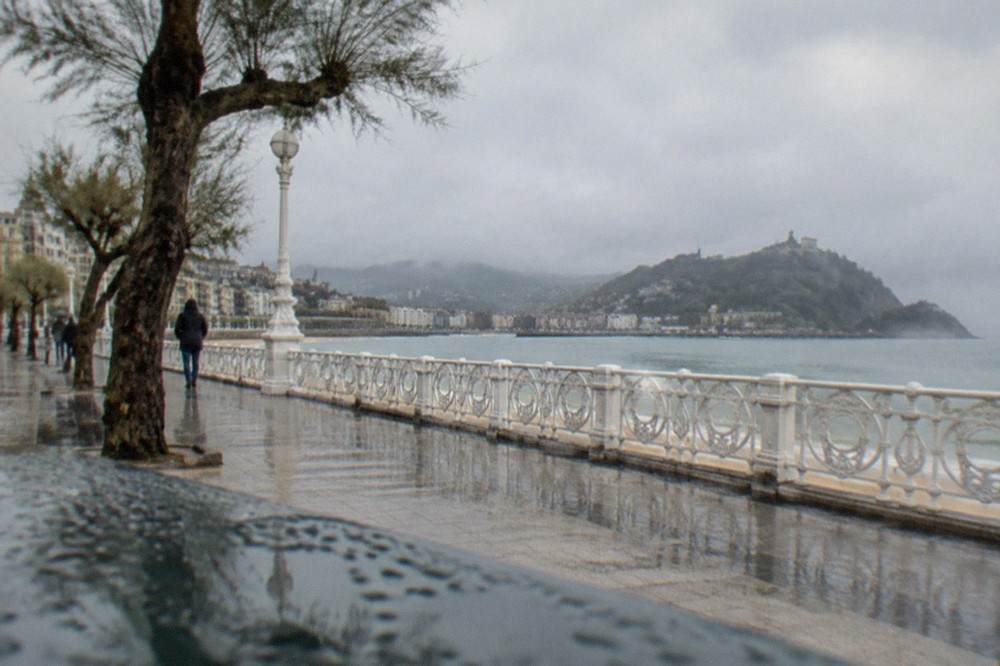
The neighbourhood's shape is a long, thin triangle. The Kursaal sits on the sandspit at the river mouth, the residential streets climb gently eastward, and Cristina Enea park caps the hill at the inland end. The railway and the Euskotren Topo line run along its southern edge, with Amara station the working terminus of the Topo, from which the train runs to Hendaia across the French border.
What Is The Kursaal Centre And Why Is It In Egia?
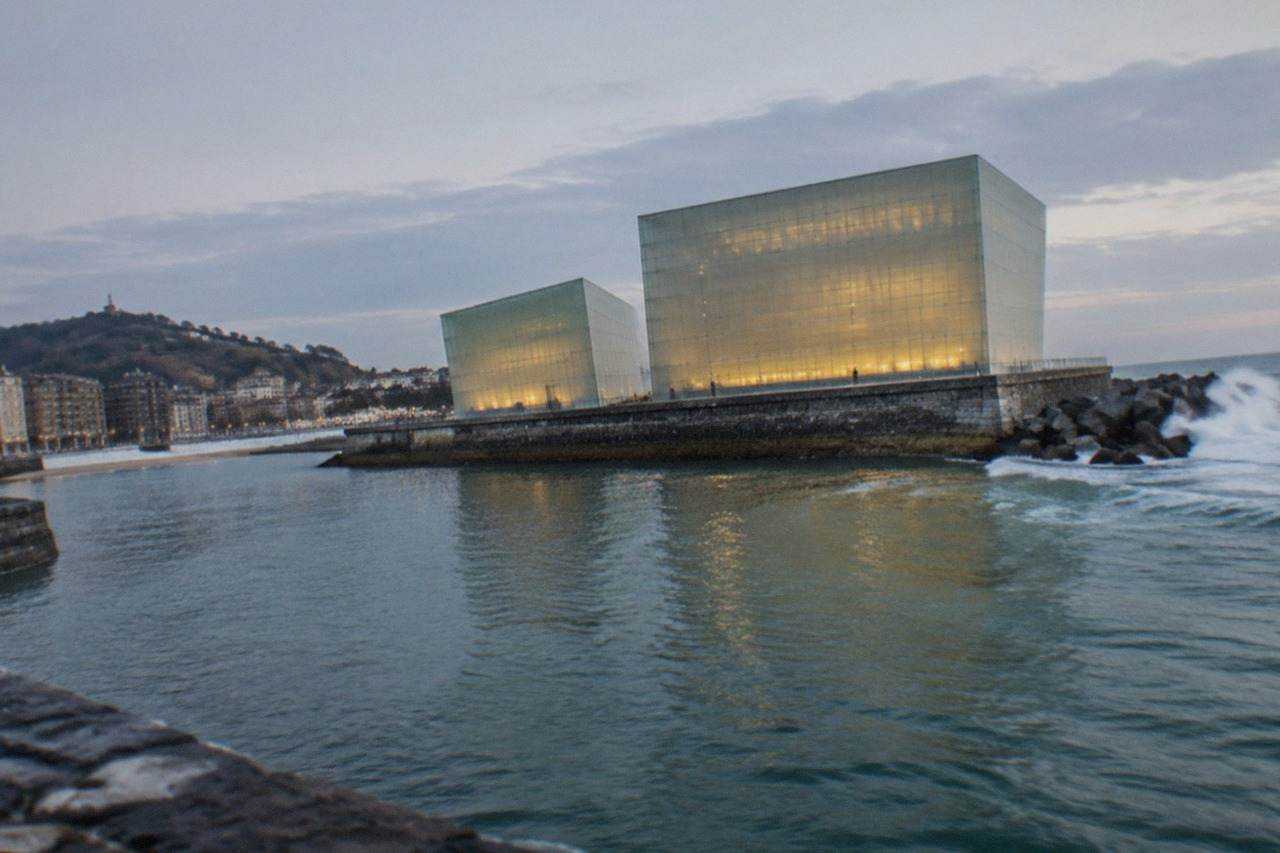
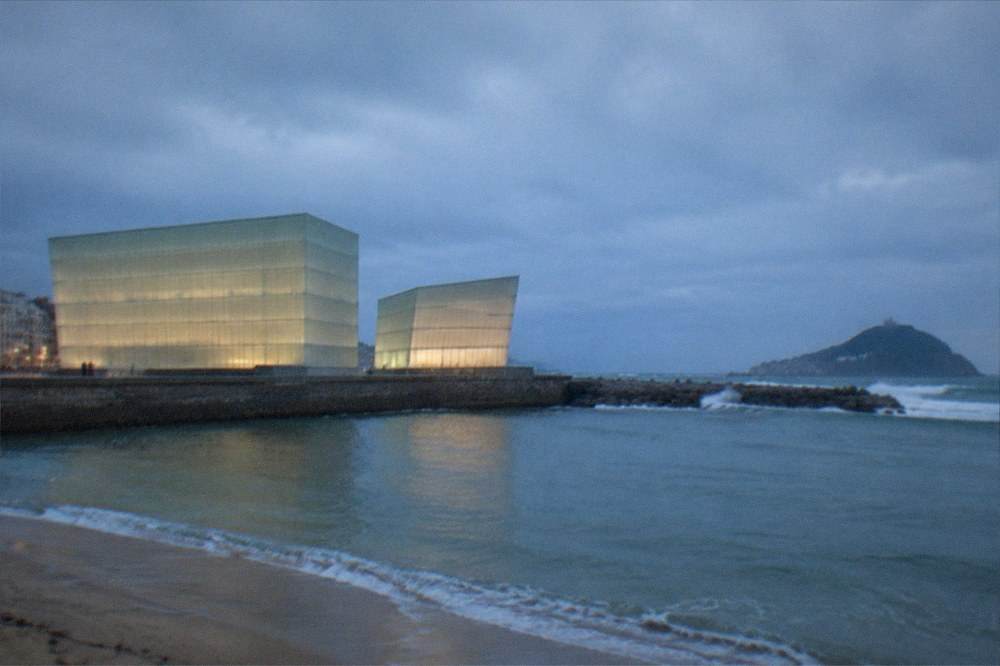
The Kursaal Centre is San Sebastián's concert and congress hall, a pair of glass cubes by the architect Rafael Moneo standing on the sand at the mouth of the Urumea river at Egia's northern tip. Moneo's proposal was chosen in 1990 from an invited competition of six architects, activity began in the Chamber Hall on 3 June 1999, and the building was officially inaugurated on 23 August 1999. It is the single most recognisable piece of architecture in the neighbourhood.
The Kursaal's own history page records that six architects were invited to the competition: Botta, Foster, Isozaki, Moneo, Navarro Baldeweg and Luis Peña Ganchegui, the same Basque architect who later built the Peine del Viento plaza at the far western end of the bay. Moneo's design was selected in 1990, and the building opened in two stages during 1999. Its glass volumes are usually described as two beached rocks, standing loose on the sand between the river and the sea with no surrounding plaza, which is why they photograph so well from the Egia riverbank at dusk.
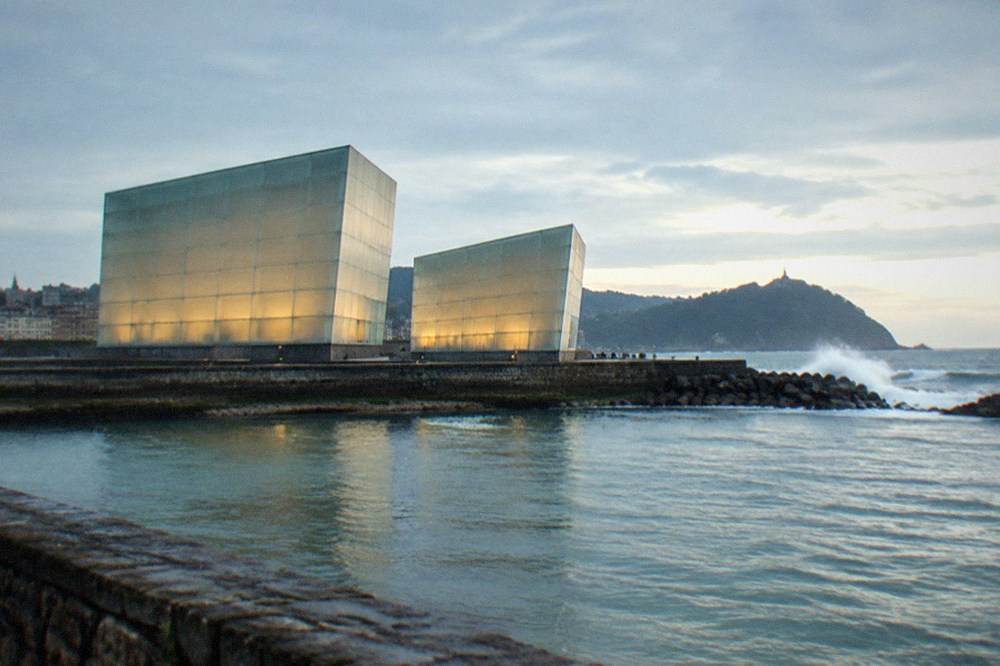
For a visitor the Kursaal matters in two ways. First, it is the venue of the Quincena Musical festival, whose 87th edition ran 2 to 30 August 2026, and a principal screen of the San Sebastián International Film Festival, whose 74th edition ran 18 to 26 September 2026, so in late September the festival's red carpet and screens sit directly on Egia's riverbank. Second, it is simply the best landmark in the district: if you can see the Kursaal, you know where the river mouth is, and from there the whole city orients itself.
The following table gathers the building's key dates from its own history page.
| Date | Event at the Kursaal |
|---|---|
| 1990 | Rafael Moneo's proposal chosen from six invited architects |
| 3 June 1999 | Activity begins in the Chamber Hall |
| 23 August 1999 | Official inauguration of the building |
Is Cristina Enea Park Worth Walking Up To?
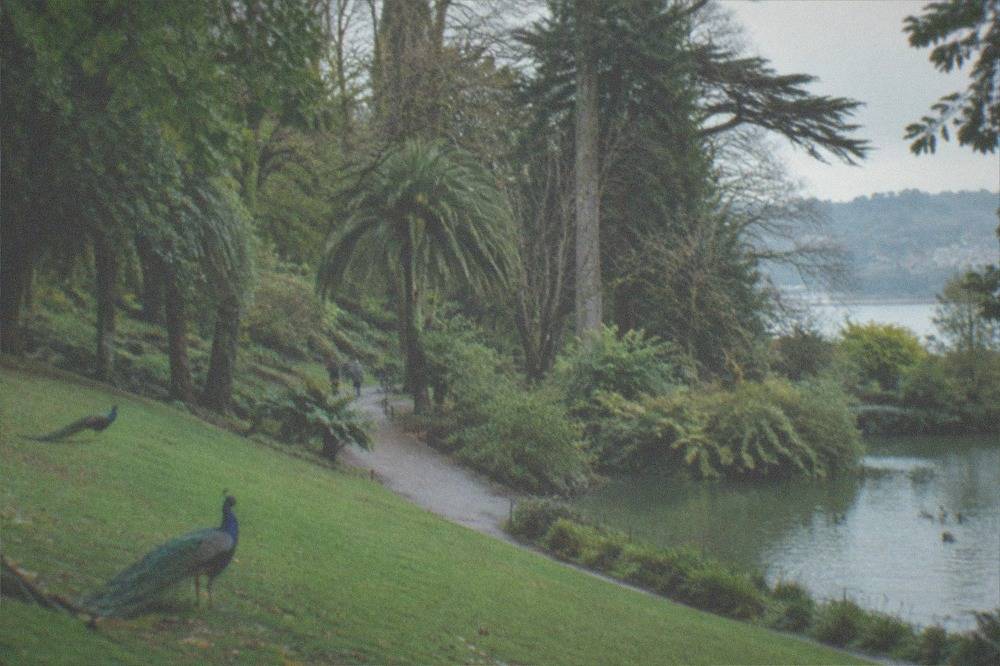
Yes, Cristina Enea park is the green heart of Egia, a wooded hilltop park at the neighbourhood's inland end with lawns, mature trees, a small palace building and views over the Urumea river, and it is one of the few sizeable parks in San Sebastián that sees mostly local users rather than visitors. It costs nothing to enter and it connects the neighbourhood's residential streets to the riverbank paths below.
The park sits on the hill where the Egia streets rise towards the railway, and its paths drop down towards the river on the western side. A visit combines naturally with the river promenade: walk the riverbank north from the Maria Cristina bridge, climb into the park, and come down again at the Zurriola bridge. Peacocks have long been part of the park's life, and the council lists it among the city's principal green spaces. The palace at its centre, like the Miramar Palace across town built in 1893 for Queen María Cristina, belongs to the era when the city was the Spanish court's summer seat, and Cristina Enea takes its name from the same queen.
For families this is the most useful open space on the east side of the city. The council's beach season runs its lifeguard service on all three beaches from 1 June to 30 September, but a park visit has no season, and on one of the city's roughly 141 rain days a year, recorded at AEMET's Igeldo station, the tree cover at Cristina Enea changes the walk rather than ending it.
How Do You Get To Egia And Around It?
Egia is reached on foot across any of the three Urumea bridges from the centre, by dBus city bus for 1.95 EUR cash to the driver, or by the Euskotren Topo line to Amara, the working terminus at the neighbourhood's southern edge, from which trains run to Hendaia in France in 37 to 38 minutes. The MUGI anonymous card cuts a single urban bus trip to 0.78 EUR.
The neighbourhood is small enough that walking is the real answer. The centre of the city, the Old Town and the Zurriola beach all sit within a few minutes of any point in Egia, and the flat riverbank is the natural route. The MUGI fare system covers dBus city buses, Lurraldebus and Euskotren across the whole province of Gipuzkoa, and its tariff page defines the urban one-jump zone as Donostia and the Pasaia motorway, so ordinary city journeys are all at the urban rate.
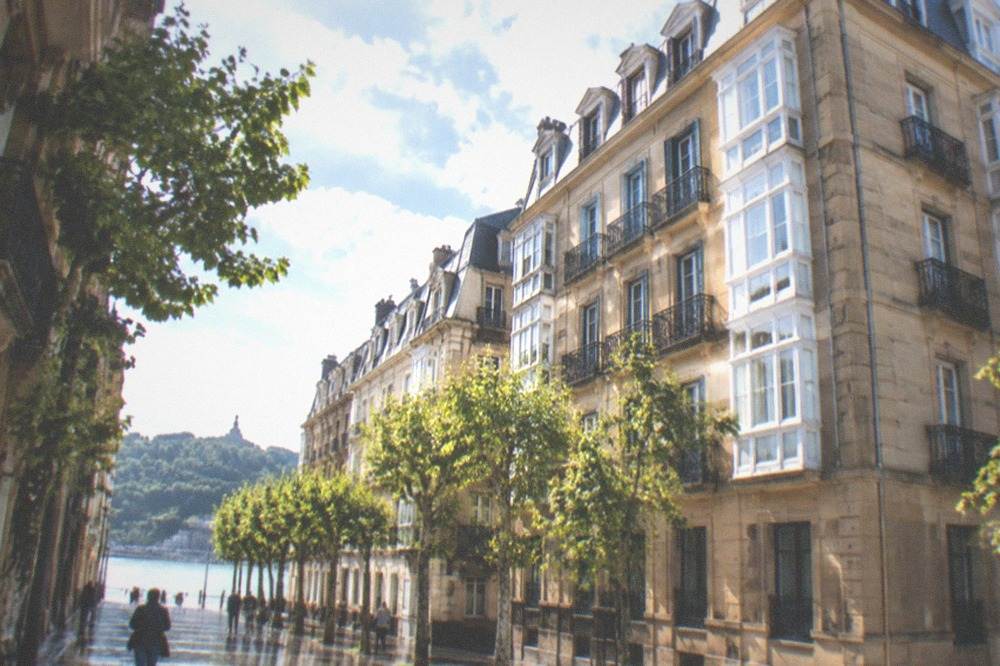
One thing not to plan around: the new underground Topo section through the city has no published opening date. The Basque Government announced in June 2026 that the civil works of the new through-line, including the station beside La Concha, were finished, with electrical, ventilation and signalling work still under way, and the note gave no date. Amara remains the working terminus, and Amara is the station that serves Egia's southern edge.
The table below sets out the fares that apply to getting around the neighbourhood and the city.
| Ticket | Price | Notes |
|---|---|---|
| dBus occasional ticket, cash | 1.95 EUR | Paid to the driver; cash does not allow free transfers |
| dBus night ticket | 2.65 EUR | Special night fare |
| MUGI anonymous card, urban | 0.78 EUR | Rechargeable card for city journeys |
| MUGI occasional ticket, 1 jump | 2.90 EUR | Covers Amara zone to Hendaia zone on the Topo |
What Is There To See And Do In Egia?
The neighbourhood's sights are its riverbank promenade, the Kursaal Centre at the river mouth, Cristina Enea park on the hill, the Zurriola bridge views back towards Monte Urgull, and easy access to the surf beach and Gros cafe scene one block east, plus the Santa Clara island boats from the nearby harbour. It is a walking district, not a ticketed-attraction district, and a half day covers it comfortably.
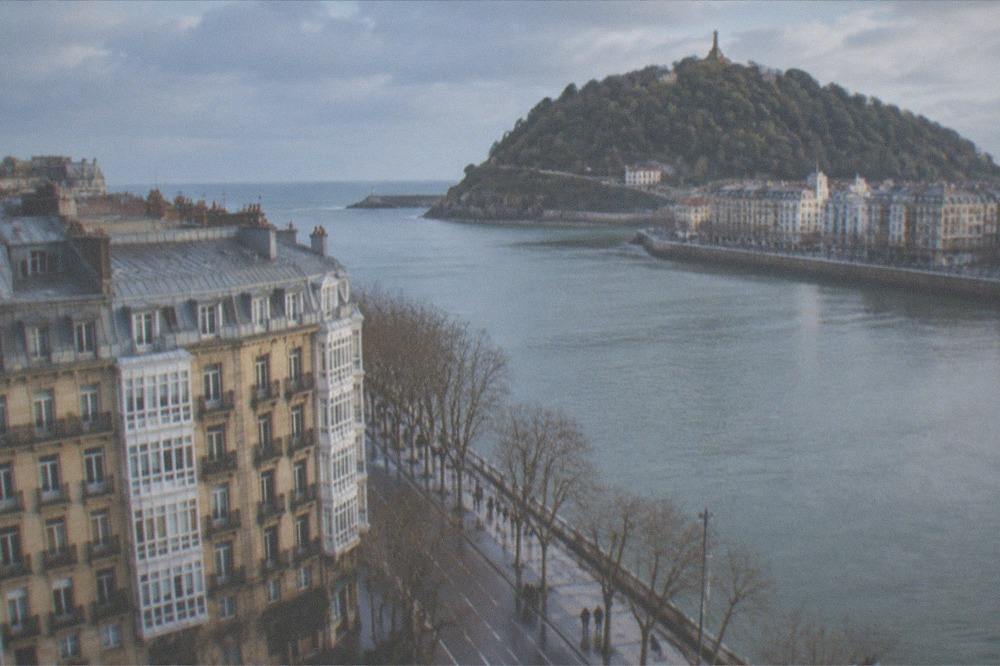
The riverbank is the spine of any visit. From the Kursaal bridge at the mouth, the promenade runs south past the Kursaal's glass cubes, under the Zurriola bridge and on towards the Maria Cristina bridge, with Monte Urgull and its Castillo de la Mota rising across the water. Urgull's access hours are seasonal: 08:00 to 21:00 from 1 May to 30 September and 08:00 to 19:30 from 1 October to 30 April, and the tourism board notes the hill closes at night. The full index of guides sits on San Sebastian Spain Guide.
From the harbour a short walk west, the island boats run. The operator Motoras de la Isla runs its red line direct to Santa Clara island every 30 minutes in high season, 1 June to 30 September, at 5 EUR return, and its blue line, a bay tour with an island landing, at 8 EUR. The bay boat tour with a stop at Santa Clara is also sold as a bookable product with a ticket valid for one day, and it departs from this stretch of the harbour.
The table below gathers the district's principal sights and what each one is.
| Sight in or beside Egia | What it is | Best moment |
|---|---|---|
| Kursaal Centre | Concert and congress hall by Rafael Moneo, opened 1999 | Dusk from the riverbank, or a festival screening in September |
| Cristina Enea park | Wooded hilltop park with lawns and a former palace | Morning walk, or shade on a hot afternoon |
| Urumea riverbank promenade | Continuous riverside walk past all three bridges | Any daylight hour |
| Zurriola bridge | Bridge with views up the river and over to Urgull | Early evening |
| Kursaal bridge | Footbridge at the river mouth beside the concert hall | Sunset over the bay |
| Santa Clara island boats | Harbour departures a short walk west | High season, 1 June to 30 September |
Where Does Egia Sit Among San Sebastian's Neighbourhoods?
Egia is the quiet, residential, local-life counterpart to its neighbours: Gros to the north holds the surf beach and the cafe and bar scene, the Parte Vieja across the river holds the pintxo bars, Centro holds the shopping streets, and Amara to the south is the transport and residential district around the station. Egia itself has the Kursaal, the park and the riverbank, and little of the visitor traffic that fills the other three.
This positioning is what makes the neighbourhood useful. A visitor who wants the best pintxo bars and the evening crowd stays in or near the Old Town; a visitor who wants the beach stays in Gros; Egia suits the visitor who wants a calmer base within a few minutes' walk of all of it. The city's full set of districts, and how to choose between them for a stay, is laid out on the San Sebastian neighbourhoods overview.
| Neighbourhood | Relation to Egia | Character |
|---|---|---|
| Egia | Itself | Residential, riverside, the Kursaal and Cristina Enea park |
| Gros | North, one block | Surf beach, cafes, young evening scene |
| Parte Vieja | Across the river mouth | Old Town, pintxo bars, the busiest streets in the city |
| Centro | Across the river | Shopping streets, the Buen Pastor cathedral, hotels |
| Amara | South, across the railway | Station district, residential, the Topo terminus |
When Is The Best Time To Walk Egia?
The best months to walk the neighbourhood are June and September, when AEMET's Igeldo station records means of 16.9 and 18.0 C, the seafront runs slightly warmer, and the crowds of August have either not arrived or have gone, with September also bringing the film festival onto the Kursaal's riverbank. July and August are the warmest months at 18.9 and 19.5 C mean, but August carries 117 mm of rain, more than June, July or September.
The honest weather reading for this city is that it always rains a little. AEMET's normals for the Igeldo station, on Monte Igueldo at 250 m, show 1,507 mm across the year over 141 rain days, and even July, the driest month, averages 86 mm over about 10 rain days. November is the wettest at 169 mm. None of this argues against visiting; it argues for packing a layer and treating the riverbank walk as an all-weather route, since the bridges and the Kursaal give it covered endpoints.
The table below pulls the months that matter most for planning a visit around this side of the bay.
| Month | Mean C | Rain mm | Rain days | Sun hours |
|---|---|---|---|---|
| May | 14.4 | 120 | 12.2 | 181 |
| June | 16.9 | 90 | 10.6 | 189 |
| July | 18.9 | 86 | 9.8 | 196 |
| August | 19.5 | 117 | 10.5 | 190 |
| September | 18.0 | 111 | 10.1 | 179 |
| October | 15.5 | 159 | 11.8 | 140 |
Should You Stay In Egia Or Just Visit?
Stay in Egia if you want a residential, quieter base within a five minute walk of the Kursaal, the riverbank and the Zurriola beach, and visit only if your trip is short and centred on the Old Town, because the neighbourhood has few hotels and its value is calm rather than sights. For a first trip of one to three days, many visitors sleep closer to the bay and cross into Egia on foot.
Lodging here is mostly apartments rather than the grand hotels of the centre, and the trade is straightforward: less atmosphere per square metre, more ordinary city life, and the whole visitor city still within walking distance. Anyone weighing how long to stay in the city at all should start with the question of how many days in San Sebastian makes sense, then decide where the nights go.
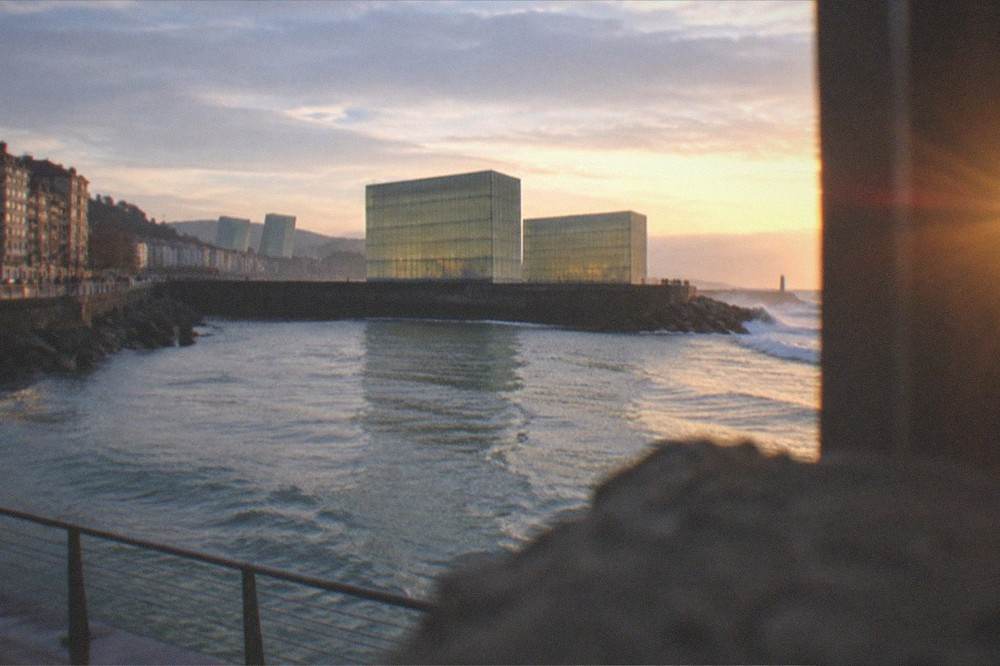
A stay here also puts the September film festival on the doorstep. The 74th edition of the San Sebastián International Film Festival ran 18 to 26 September 2026, and its principal venue, the Kursaal, sits at the neighbourhood's northern tip, so in festival week Egia's riverbank becomes one of the busiest red-carpet stretches in Spain and then, in October, goes quiet again.
How Do You Fit Egia Into A Day In San Sebastian?
Give Egia a half day: cross the Maria Cristina bridge, walk the riverbank north past the Zurriola bridge to the Kursaal, climb into Cristina Enea park on the way back, then continue east into Gros for the beach and a late pintxo, or cross the Kursaal bridge into the Old Town for the evening. The neighbourhood rewards a slow loop rather than a dash between sights.
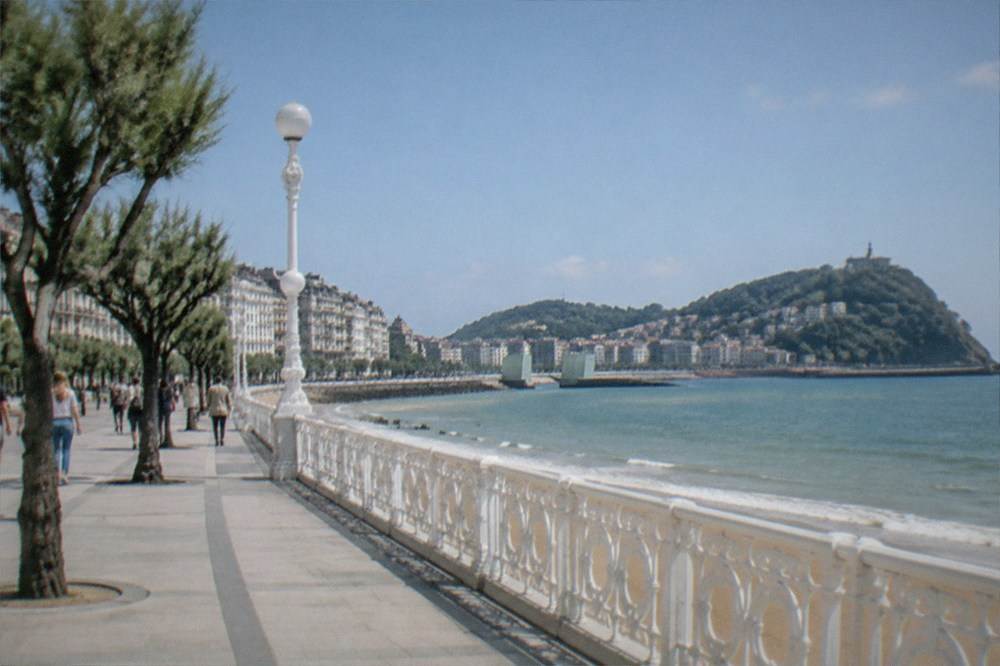
A sample loop runs like this. Start at the Maria Cristina bridge, whose lamps and balustrades are among the most photographed river details in the city. Walk the east bank north: the promenade passes under the trees, the Kursaal's cubes appear ahead, and Monte Urgull fills the view across the water. At the mouth, cross the Kursaal bridge for the sand of Zurriola or turn back inland and up into Cristina Enea park. Come down at the Zurriola bridge, and either continue into Gros or recross to the centre.
For the full picture of how a first day in the city is usually shaped, from La Concha beach to the Old Town bars, the site's overview of things to do in San Sebastian is the place to start, and Egia slots in as the riverside interlude between the beaches and the evening.
A guided walk is a good way to anchor the day, and the Old Town walk across the river pairs naturally with an Egia morning: the tour has its own page at Explore the Old Town walking tour, and you can Check availability before committing the afternoon.
If you would rather cover ground faster, the small-group electric bike tour runs on the city's bike-lane network and the riverbank is one of its natural corridors, while the pintxo tasting tour makes the Old Town half of the evening effortless.
Common Questions About Egia In San Sebastian
Is Egia in San Sebastian, Spain, or somewhere else?
Egia is a neighbourhood of San Sebastián in the Basque Country, Spain, the city officially named Donostia / San Sebastián, on the east bank of the Urumea river. It is not related to any of the other places called San Sebastián, in Puerto Rico, Florida, Mexico or the Canary Islands.
Is Egia walkable from the centre of San Sebastian?
Yes. Any of the three Urumea bridges, the Maria Cristina, the Zurriola and the Kursaal, crosses from the centre into Egia in a few minutes on foot, and the riverbank promenade connects the whole neighbourhood to the Old Town and the Zurriola beach without crossing traffic.
What is the Kursaal Centre used for?
It is San Sebastián's concert and congress hall, designed by Rafael Moneo and inaugurated on 23 August 1999. It hosts the Quincena Musical festival each August and is a principal venue of the San Sebastián International Film Festival each September.
Is Cristina Enea park free?
Yes, the park is a public green space with no entry charge. It is a wooded hilltop park with lawns, mature trees and a former palace building, and it is used mainly by locals.
Does it rain a lot in Egia?
Egia shares the city's wet Atlantic climate. AEMET's Igeldo station records 1,507 mm of rain a year over 141 rain days, and even July, the driest month, averages 86 mm, so a light rain layer is worth carrying on any walk here.
Should I stay in Egia or in Gros?
Stay in Egia for a quieter, residential base near the river, and in Gros if you want the surf beach and the cafe scene directly outside your door. The two neighbourhoods sit one block apart, so the practical difference is atmosphere rather than distance.
Egia will never top a list of the city's sights, and that is exactly why it works: a riverside district where the Kursaal's glass cubes, a queen's park and an ordinary Basque neighbourhood share the same few streets, five minutes from everything and a world away from the crowds.