Getting Around San Sebastian
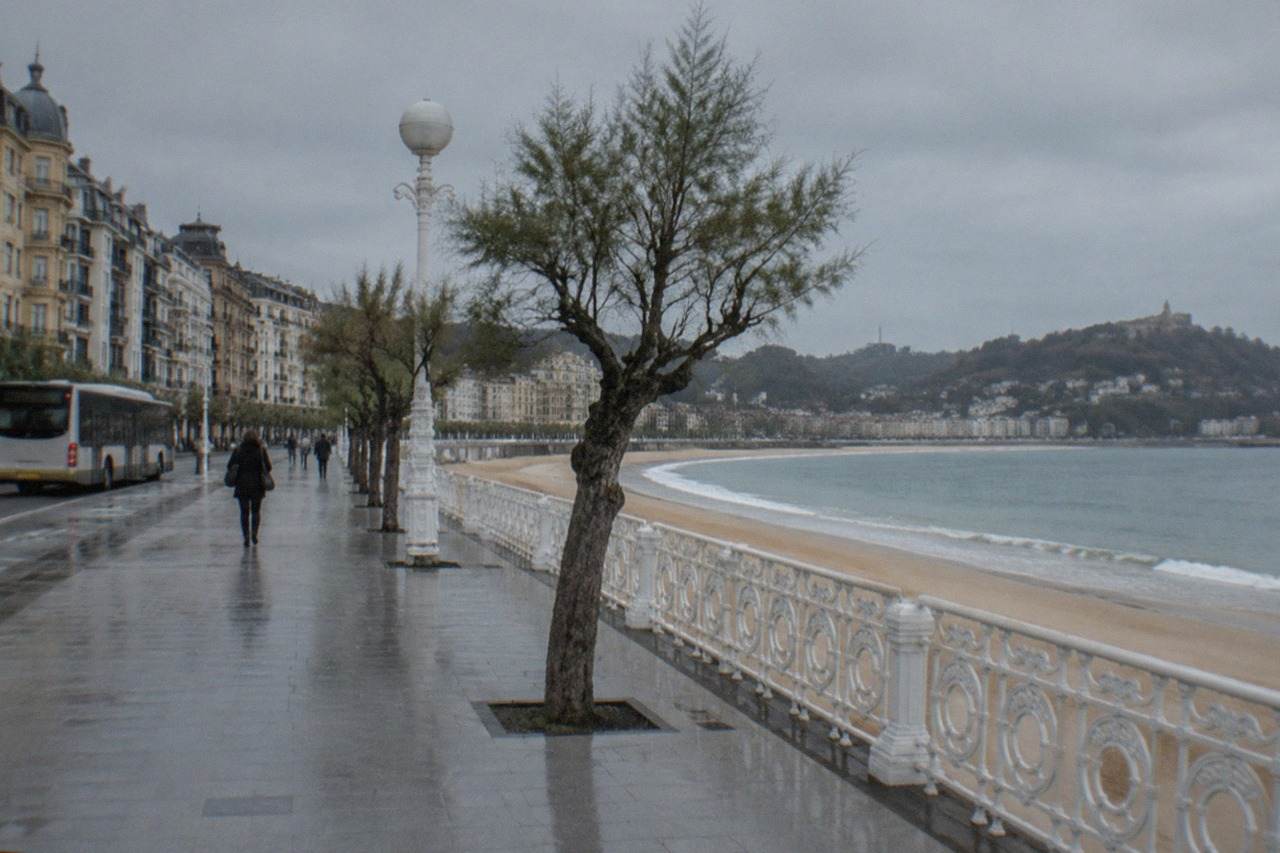
San Sebastián, or Donostia in Basque, is a compact Atlantic city in Gipuzkoa, Spain, where almost everything a visitor needs sits within walking distance of La Concha bay, and a single MUGI fare system covers the buses, the regional trains and the harbour boat when you want to go further.
Short answer
On foot for the centre, the dBus city network with a MUGI card for anything beyond it, and the Euskotren Topo for the coastal towns. A cash bus ticket is 1.95 EUR, a card trip 0.78 EUR, and the funicular, the island boat and the beaches each follow their own seasonal rules.
San Sebastián, the Basque city on La Concha bay in Gipuzkoa, Spain, whose official municipal name is Donostia / San Sebastián, is one of the easiest cities in Europe to move around, precisely because so little of it needs moving around at all. The Parte Vieja, the Centro, Gros and the three beaches form a walkable crescent rarely more than half an hour apart on foot, and everything beyond that crescent is stitched together by one fare system, MUGI, which covers the dBus city network, the Lurraldebus regional buses and the Euskotren Topo trains under a single card. This page sets out what the operators themselves publish: the fares, the frequencies, the season rules and the moments when a tour or a private driver simply makes more sense than a timetable.
If you are still deciding how to reach the city in the first place, the arrival options have their own page: start with how to get to San Sebastian and, if you are flying into Bilbao, the Bilbao to San Sebastian route.
Do You Need A Car In San Sebastian?
No, a visitor does not need a car in San Sebastián, because the walkable core between Monte Urgull, the river and Ondarreta covers most of what the city is visited for, and the dBus network, the Euskotren Topo and a handful of seasonal boats and one funicular reach almost everything else. A car adds parking pressure in a dense city centre and earns its keep only for multi-stop day trips along the coast or inland, where a tour or a private driver usually does the same job better.
That is the honest shape of it. The centre is small enough that walking is not the budget option, it is the normal one, and the question of whether the city is walkable has a whole page of its own: is San Sebastian a walkable city answers it in detail. What a car genuinely solves is the ring of day trips: Getaria, Zumaia, Hondarribia, the Rioja. For those, the trade is between renting and letting someone else drive, and the day-trip tours listed further down this page cover the let-someone-else-drive side.
There is one more reason to leave the car undecided until you have read the whole page: the city's transport is unusually integrated. The same MUGI card that pays a city bus also pays the Topo train to Pasaia or Hendaye, and the same fare table governs both. Few mid-sized cities make the car-free option this frictionless.
What Is The Best Way To Get Around San Sebastian?
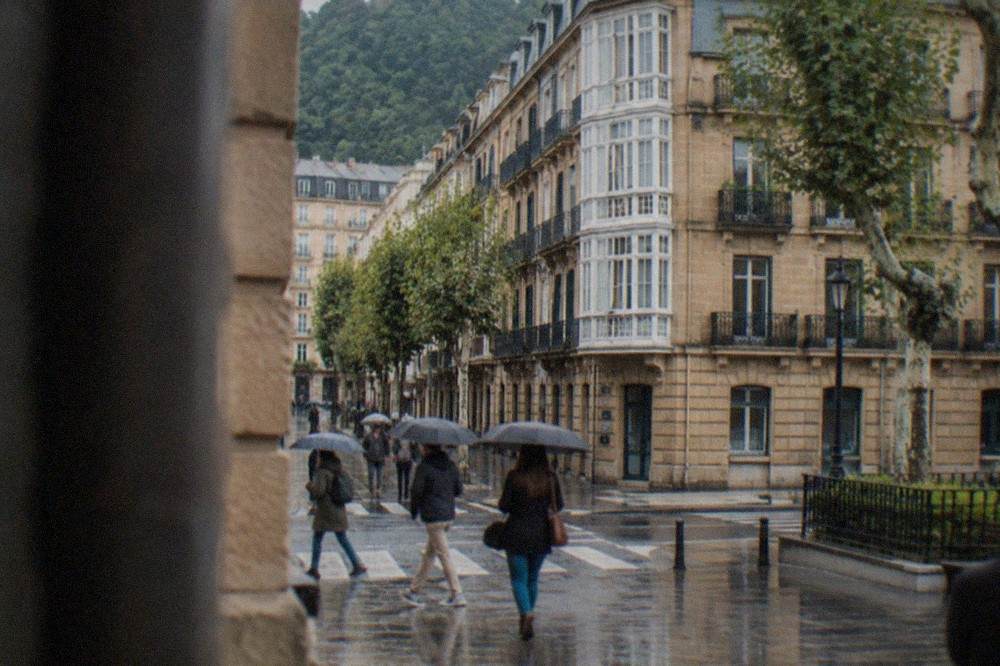
The best way to get around San Sebastián is on foot inside the bay crescent, backed by the dBus city network for the climbs, the outskirts and the airport direction, and by the Euskotren Topo for coastal towns such as Pasaia and Hondarribia. Pay with a MUGI card rather than cash: the anonymous card charges 0.78 EUR for an urban trip against 1.95 EUR paid to the driver, and card trips include transfers where cash does not.
The foot-first answer is not a platitude, it is geometry. La Concha runs 1,350 metres, Ondarreta 600 and Zurriola 800, and the council's own beach pages put all three inside one continuous seafront. The Old Town, the Centro and Gros sit behind them. A visitor staying anywhere in that arc reaches the pintxo bars, the aquarium, the Kursaal and the Peine del Viento without ever consulting a timetable.
Beyond the arc, the dBus network takes over. It is the city bus operator, its cash fare is 1.95 EUR with a 2.65 EUR night ticket, and its own fare page states plainly that cash payment does not allow free transfers, which is the single strongest argument for getting a MUGI card on day one. The card is the region's common currency for transport in Gipuzkoa: dBus, Lurraldebus and Euskotren all read it.
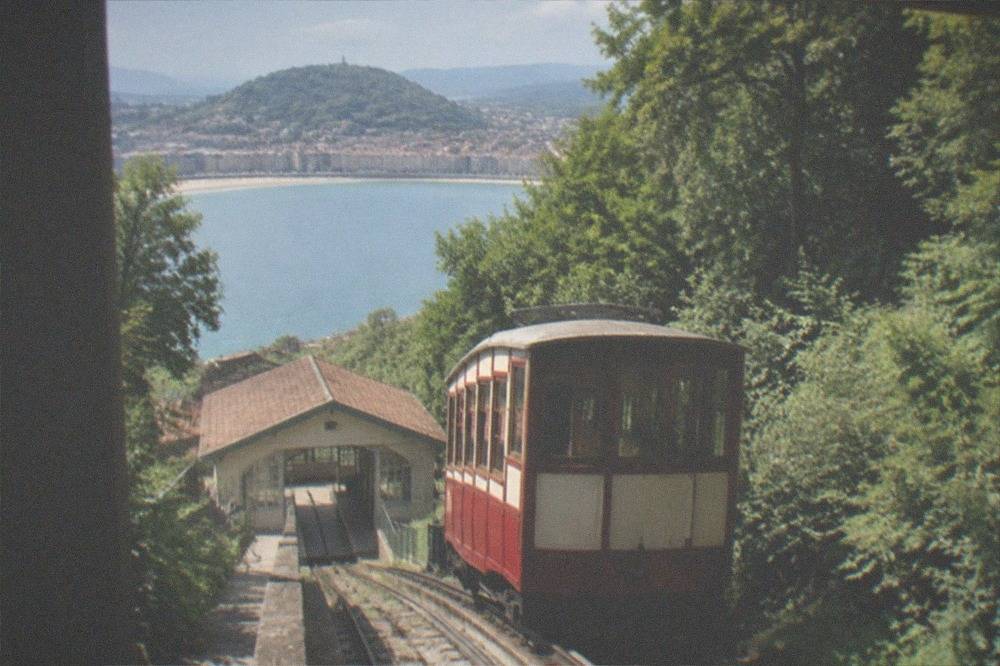
For the vertical journeys, there are exactly two machines worth knowing: the Monte Igueldo funicular, which has run since 25 August 1912 and departs every 15 minutes on the quarter hours, and your own legs on Monte Urgull, which is free and closed only at night. Both hills have their own pages if you want the full picture: Monte Igueldo without a car is covered in the destination guide to the hill, and the coastal walking routes are gathered under hiking around San Sebastian.
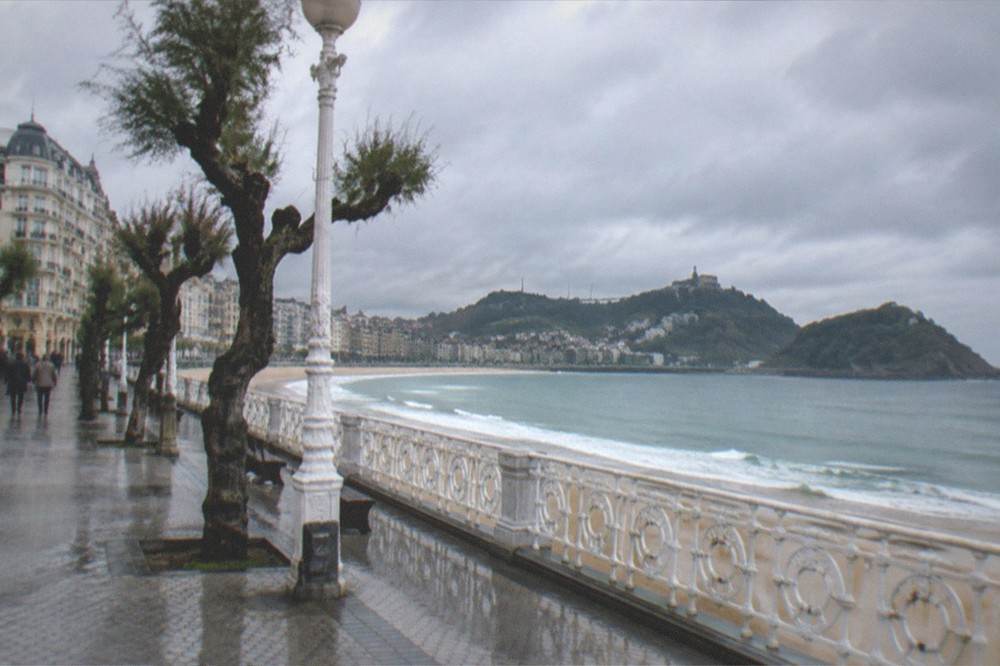
One thing this city will do that most will not: it will rain on your transport plan. AEMET's normals for its Igeldo station record 1,507 mm a year over 141 rain days, and even July, the driest month, averages 86 mm. The practical consequence is that the bus network is not a fair-weather backup here, it is a real one, and the weather in San Sebastian page shows which months ask most of your umbrella.
For the days when you would rather have a guide than a route map, these are the tours that replace a transport decision with a plan:
How Much Do San Sebastian Buses And Trains Cost?
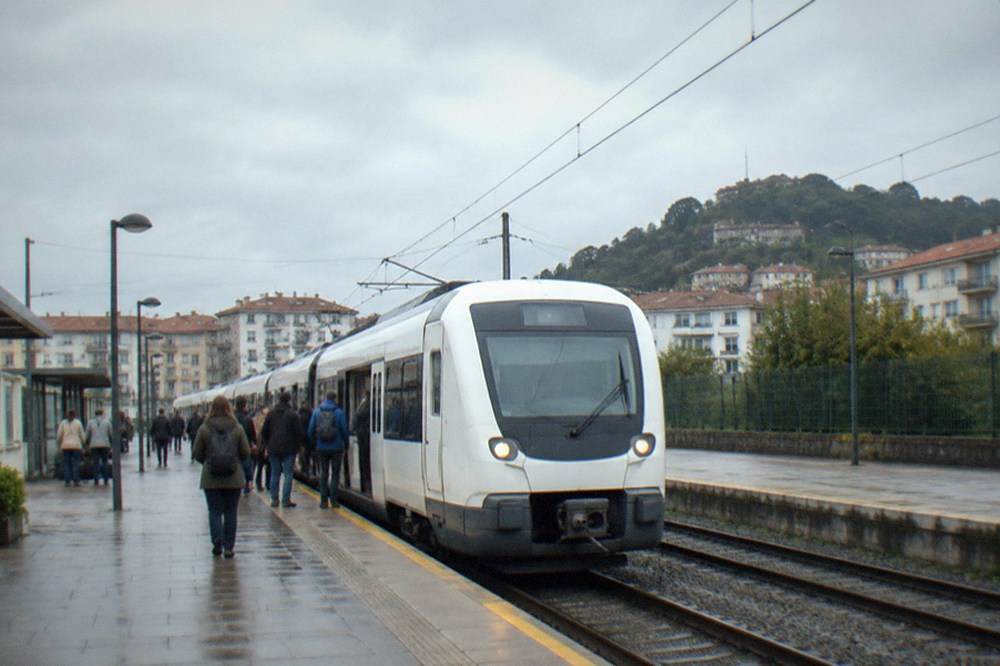
A dBus city bus ticket paid in cash to the driver costs 1.95 EUR, or 2.65 EUR on the night network, and cash does not allow free transfers. With an anonymous MUGI card the same urban trip costs 0.78 EUR, and one zone jump beyond the city costs 2.90 EUR occasional or 1.16 EUR by card. The Topo train from Amara to Hendaye uses the same zone system, and the Pasaia harbour boat sits inside the urban fare.
The MUGI tariff is built on zone jumps, saltos, and the operators publish it in full. The table below gives the fares that matter to a visitor, all in euros, exactly as the operator pages state them.
| Ticket | Urban, 0 jumps | 1 jump |
|---|---|---|
| dBus occasional, cash to driver | 1.95 EUR | 2.90 EUR |
| dBus night ticket | 2.65 EUR | 3.70 EUR |
| MUGI anonymous card | 0.78 EUR | 1.16 EUR |
| MUGI personalised, trips 1 to 20 in the month | 0.59 EUR | 0.88 EUR |
Two details from the fine print earn their space here. First, the MUGI page defines the urban zone as "Donostia y motora Pasaia", which means the little harbour boat across the bay mouth at Pasaia is inside the urban fare, a genuinely unusual inclusion. Second, the personalised card's cheapest tier applies to your first twenty trips in a month, after which the price steps up, which matters only to long-stay visitors.
The Euskotren Topo, the metre-gauge coastal train, is the same system's railway arm. The operator's own timetable data, computed across a full service period, gives the Amara to Hendaye run at 37 to 38 minutes, with departures every 30 minutes on the busiest days. Amara is the working terminus inside the city, and it is worth being precise about why that sentence carries a caveat.
| Euskotren Topo fact | Figure from the operator's data |
|---|---|
| City terminus in use | Amara-Donostia |
| Amara to Hendaia journey time | 37 to 38 minutes |
| Busiest-day frequency | Every 30 minutes |
| Occasional fare, Amara to Hendaia | 2.90 EUR |
| Same trip, anonymous MUGI card | 1.16 EUR |
How Do The Bays, Boats And Beaches Work?
The three city beaches, La Concha, Ondarreta and Zurriola, are all on the walkable seafront, and the seasonal services around them follow fixed calendar rules: lifeguards are present on all three beaches only from 1 June to 30 September, the Santa Clara island boat runs its high season in the same window, and the Monte Igueldo funicular sells no downhill-only ticket, so the ride is a return or nothing.
The council's beach pages give the lifeguard season and its hours precisely, and because swimmers and families plan around them, they belong on a transport page too.
| Seasonal service | Rule from the operator or council |
|---|---|
| Lifeguards, all three beaches | 1 June to 30 September |
| Lifeguard hours, 15 June to 15 September | 10:00 to 20:00 |
| Lifeguard hours, 16 to 30 September | 13:30 to 19:30 |
| Santa Clara island boat, high season | 1 June to 30 September, plus Easter and long weekends |
| Monte Urgull access, 1 May to 30 September | 08:00 to 21:00 |
| Monte Urgull access, 1 October to 30 April | 08:00 to 19:30 |
The island boat deserves its own line because it doubles as transport and as a bay cruise. The operator, Motoras de la Isla, runs a red line direct to Santa Clara every 30 minutes through the high-season day, 10:00 to 19:00, weather and sea permitting, with the last boat back at 20:00 from June to September, at 5 EUR return bought at the kiosk on the day. The blue line adds a 30-minute bay tour to the island crossing and costs 8 EUR. Children under 4 travel free. If you want a longer, narrated version of the same water, the bay boat tours with an island stop are listed on the site's boat pages, and the short crossing itself is covered in the guide to Santa Clara island.
The funicular's own site gives its fares, and one of its home-page notices matters more than any of them: tickets for the downhill journey alone are not on sale. The full fare table sits on the Monte Igueldo page, but the headline is a 5.50 EUR adult return, 2.50 EUR for a child up to 7, with the ticket including entry to the grounds at the top, and departures every 15 minutes on the hour, quarter past, half past and quarter to. Rides close on rainy days, which in this city is a real clause, not boilerplate.
Is Cycling A Good Way To See San Sebastian?
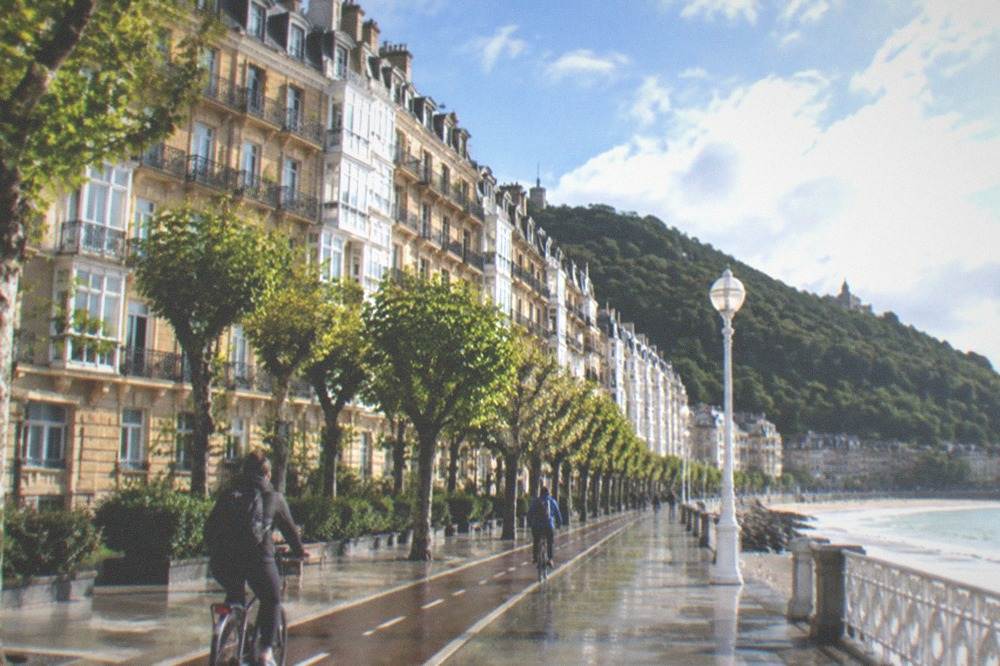
Yes, cycling is one of the better ways to see San Sebastián, because the bay is flat end to end, the city has a dedicated bike-lane network, and the seafront connects La Concha, Ondarreta, the Peine del Viento and Zurriola without a single serious climb. The guided options range from a regular or e-bike bay ride to a small-group e-bike tour built around the lane network, and a self-guided audio tour covers the same ground for those who prefer their own pace.
The flatness is the whole argument. A rider starting at the Peine del Viento at Ondarreta's west end can trace the entire bay, cross the river at the Kursaal side and finish on Zurriola without ever leaving dedicated lanes or gentle promenade. The one hill that tempts cyclists, up to the funicular, is exactly where the e-bike option or the funicular itself takes over. The rest of the planning pages sit on San Sebastian Spain Guide.
For a two-wheel plan with a guide reading the city for you, the block above carries the operator's live listing. If you would rather walk the same ground, the Old Town walking tour below does it on foot with a local's insight into the pintxo bars.
What About Taxis And Ride Services?
Taxis exist in San Sebastián and work well for airport runs, late nights and the few journeys where a bus is a detour, but this page prints no taxi fare because no operator figure is in the record, and the honest advice is that inside the city centre a taxi is rarely faster than walking or the dBus. For the airport at Hondarribia, the E30 bus is the operator's direct line, since line E21 stopped serving the airport on 1 June 2026.
The E30 detail is the one worth memorising, because stale information still circulates. The operator, Ekialdebus, lists seven lines under its airport services, E20, E23, E25, E27, E28, E29 and E30, and names E30 as the direct Donostia to airport run. Its timetable page warns that times are approximate because of traffic, and the journey time and fare zone are not published in the record this site works from, so the operator's own pages are the place to confirm both before you travel.
Taxis, for their part, are best treated as a tool for three jobs: the early-morning airport run, the late-night return from Gros, and the rainy-day rescue. All three are real in a city with 141 rain days a year. What a visitor should not do is budget taxi money for the centre, because the centre defeats the car on parking alone.
How Do You Get Out Of The City For The Day?
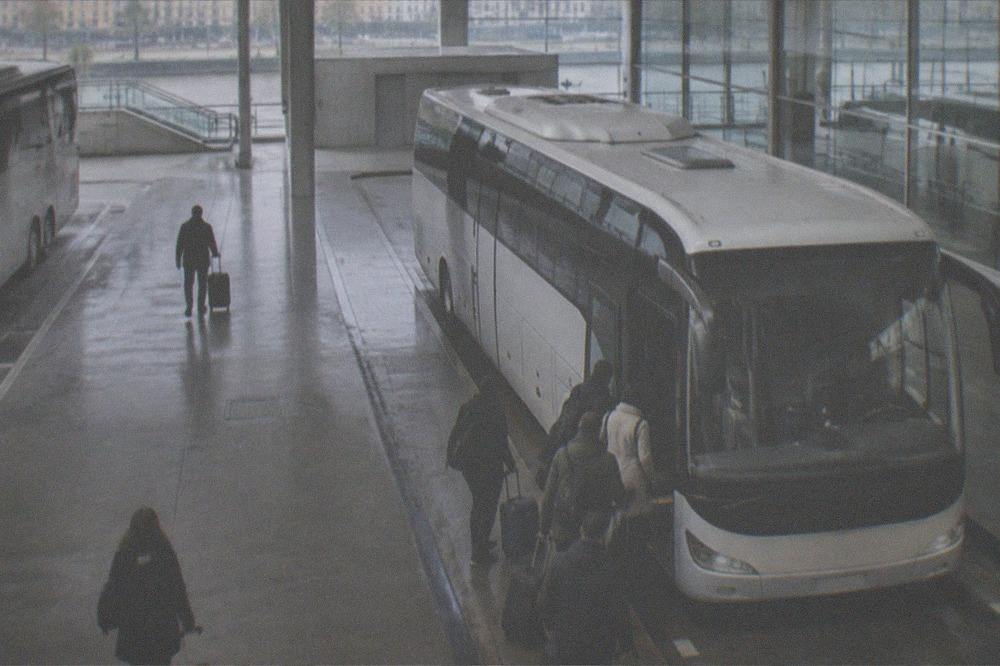
The day-trip network runs on three legs: the Euskotren Topo along the coast to Pasaia and Hendaye, the Lurraldebus regional coaches from the city's bus station to towns like Getaria and Zarautz, and the small-group day tours that bundle a guide, a driver and a destination into one ticket. For Pamplona, Rioja or the French Basque Country, a tour or a private driver beats self-drive once parking and route-finding are counted.
The Topo leg is the one you can do on a whim: the same MUGI card, the same 2.90 EUR occasional fare, and a train every 30 minutes on the busiest days. Pasaia, the first harbour east, is inside the urban fare zone, which makes it the cheapest half-day excursion the city offers. The coach leg covers the Gipuzkoa coast, and the tour leg covers everything that involves a border, a wine region or a long drive.
For the guided version of the coast and the border country, the site's day-trip pages gather the options: start from day trips from San Sebastian and the wider Basque Country itinerary if you are building a multi-day plan.
The private Pamplona day trip above is the purest transport answer in the roster: a driver and guide for your own group only, lunch included, no timetables to read. Book it at Check availability.
Which Journeys Are Best Left To A Tour?
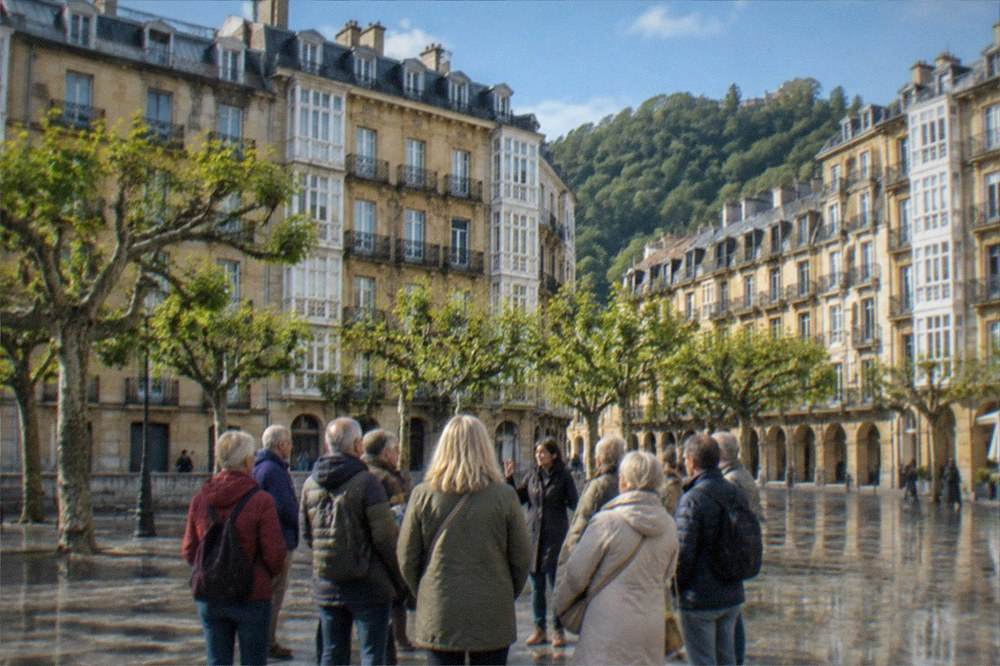
The journeys best left to a tour are the ones where the driving is the work: Pamplona and its bull-run route, the Rioja wineries around Laguardia, the French Basque towns of Biarritz and Saint-Jean-de-Luz, and the long coastal loops to Gaztelugatxe and Bilbao. Inside the city itself, tours earn their place differently, not as transport but as interpretation, on the food walks and the Old Town walks where the guide is the point.
That distinction matters. Nobody needs a tour to reach the Parte Vieja, it is a walk from anywhere central. But a walk with a local who knows which bar serves which pintxo, or a small-group crawl with reserved seats, converts the same streets into something a map cannot. The site's food pages cover that side of the city at length: what pintxos are, pintxos in San Sebastian and the best pintxo bars each have their own guides.
The full range of guided options, walking and otherwise, is collected on the site's tour pages, and the master list of everything worth seeing is on the things to do in San Sebastian page.
What Should You Plan Around The Seasons?
Plan around three seasonal rules: the beach and boat services run their full season from 1 June to 30 September, the funicular closes its rides on rainy days and sells no downhill-only ticket, and the tourist tax law passed by Gipuzkoa takes effect on 1 January 2027, so it does not apply to any stay before that date. Outside the summer window the city still moves fine, but the island boat drops to consult-departures and the lifeguards leave the beaches.
The rain is the other season, the one no calendar marks. AEMET's Igeldo station, 250 metres up on the hill, records November as the wettest month at 169 mm and July as the driest at 86 mm, and the seafront runs slightly warmer than those hillside figures. The transport consequence is simple: the dBus network and the Topo train are all-weather infrastructure, the boats and the funicular are not, and the best month-by-month breakdown lives on the best time to visit San Sebastian page.
| Month | Mean temperature | Rain mm | Rain days 1 mm or more | Sun hours |
|---|---|---|---|---|
| January | 8.5 C | 141 | 13.2 | 98 |
| April | 11.3 C | 138 | 13.4 | 157 |
| July | 18.9 C | 86 | 9.8 | 196 |
| August | 19.5 C | 117 | 10.5 | 190 |
| November | 11.3 C | 169 | 13.0 | 102 |
Read that table honestly and it changes how you pack, not just how you travel: August, the peak hotel month in the INE series, is wetter than June, July or September. The bus card earns its keep in every one of those months.
Common Questions About Getting Around San Sebastian
What is the best way to get around San Sebastián?
On foot inside the bay crescent, with the dBus network and a MUGI card for anything beyond it. A cash bus ticket is 1.95 EUR against 0.78 EUR with the anonymous card, and the Topo train covers the coastal towns on the same fare system.
Do I need a car in San Sebastian?
No. The centre, the beaches and the Old Town are walkable, the dBus and the Topo cover the rest of the city and the near coast, and a car only pays for itself on multi-stop day trips, where a tour or private driver usually works better.
How much is a bus ticket in San Sebastian?
The dBus occasional ticket paid in cash to the driver is 1.95 EUR, the night ticket is 2.65 EUR, and cash does not allow free transfers. With an anonymous MUGI card the urban trip is 0.78 EUR.
Does the MUGI card work on the train?
Yes. MUGI is the single fare system for Gipuzkoa and covers dBus city buses, Lurraldebus regional buses and Euskotren trains. One zone jump costs 2.90 EUR occasional or 1.16 EUR with the anonymous card.
Can you take a bus to San Sebastian airport?
Yes, but not line E21, which has not stopped at the airport since 1 June 2026. The operator lists E20, E23, E25, E27, E28, E29 and E30 as airport lines, and E30 is the direct Donostia to airport service.
Is the Santa Clara island boat part of the transport system?
It is a seasonal operator service rather than a transit line: high season runs 1 June to 30 September plus Easter and long weekends, the red line costs 5 EUR return, and the blue line with the bay tour costs 8 EUR.
The short version of this whole page: buy the card, walk the crescent, ride the buses when the rain arrives, and let a driver handle the distances beyond the bay.