Surfing In San Sebastian
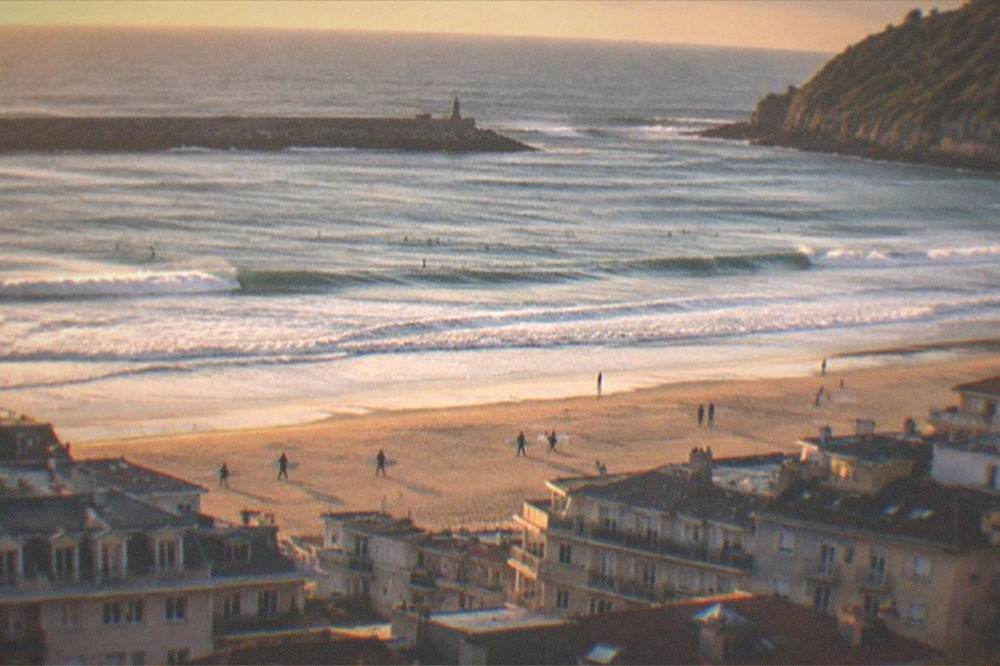
Surfing in San Sebastián means Zurriola beach in the Gros district, the city's open Atlantic-facing strand with a strong swell, surf schools and a boardriding culture that runs all year.
Short answer
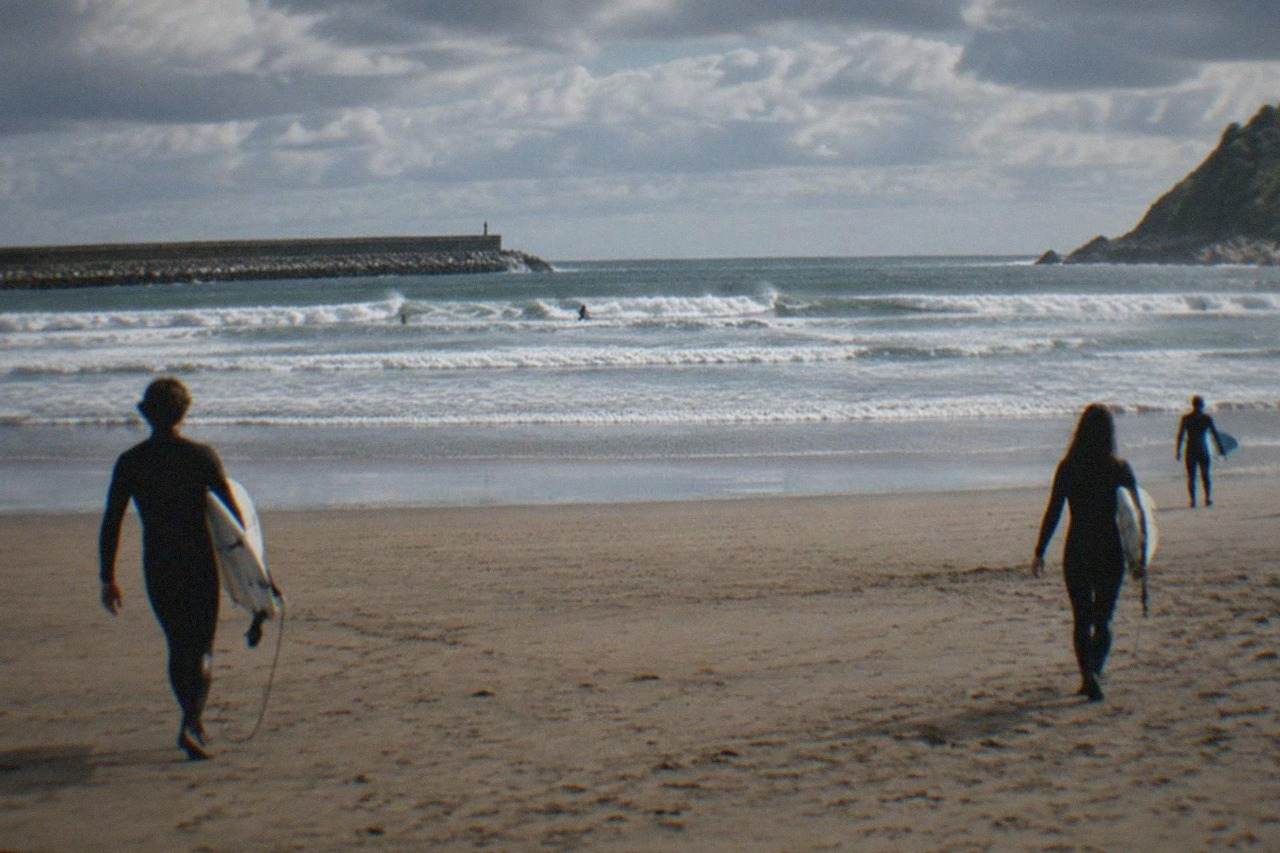
Surfing in San Sebastián, in the Basque Country of Spain, happens on Zurriola beach in the Gros district, an 800-metre open strand with the strong swell the city council itself notes on its beach page. La Concha and Ondarreta are sheltered bay beaches better for swimming than waves. Surf schools operate around Zurriola, and the surf season effectively never closes, though the water is cold enough that a wetsuit is standard for most of the year.
Surfing in San Sebastián, the Basque city on La Concha bay whose official name is Donostia / San Sebastián, is built around one beach. Zurriola, in the Gros district on the east side of the River Urumea, is the city's open, Atlantic-facing strand, and the council's own beach page describes it as fairly open with a strong swell, remodelled in 1994. That single sentence is why the surf schools, the board rentals and the year-round wetsuit culture of this coast all sit on Zurriola and not on the famous postcard beach a few hundred metres west. This guide covers where to surf, when the surf is at its best, what to wear in the water, how beginners get started, and what to do on the days the ocean or the weather says no.
Where Can You Surf In San Sebastian?
The surf in San Sebastián breaks on Zurriola beach in the Gros district, an 800-metre sandy strand with a mean width of 110 metres that the city council describes as fairly open with a strong swell. La Concha and Ondarreta, the two beaches on the bay side, are sheltered swimming beaches: La Concha is 1,350 metres long but shallow, sandy and tide-limited, and Ondarreta, 600 metres long, faces the same calm water. A fourth small beach sits on Santa Clara island.
Zurriola is the only one of the city's beaches that looks straight out at the open ocean rather than into the bay, and that geography does all the work. The council's page for each beach states the facts plainly, and the difference between them is the difference between a surf beach and a bathing beach. Gros, the neighbourhood behind Zurriola, has grown around that: it is where the surf shops, the schools and the after-surf pintxo bars cluster, and the Gros neighbourhood guide covers where to eat and stay within a short walk of the sand.
The table below shows what the council's own beach pages say about each of the three city beaches, so the choice of where to paddle out is not a guess.
| Beach | Length | Mean width | Character, per the council's page | Surf role |
|---|---|---|---|---|
| Zurriola | 800 m | 110 m | Sandy, fairly open, strong swell; remodelled 1994 | The city's surf beach |
| La Concha | 1,350 m | 40 m | Sandy and shallow; the tide often limits usable sand | Swimming, not surfing |
| Ondarreta | 600 m | 100 m | Sandy, high use; the Peine del Viento walk starts at its west end | Swimming, not surfing |
If you are weighing the city's beaches for a mixed group, swimmers and sunbathers on one side and surfers on the other, the San Sebastian beaches guide compares all of them, including the island beach, in one place. The short version for surfers is simple: you go to Zurriola.
When Is The Best Time Of Year To Surf In San Sebastian?
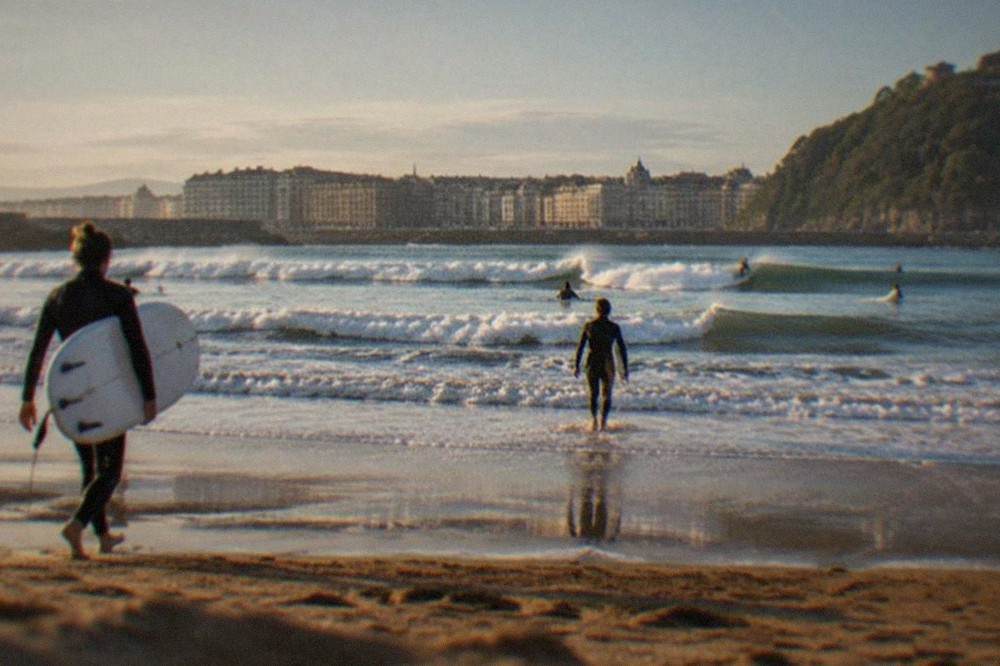
The best surf months in San Sebastián run through the Atlantic autumn and winter, when the swell on Zurriola is at its most consistent, while the warmest water months are July and August with mean air temperatures of 18.9 and 19.5 degrees. There is no dry window to plan around: AEMET's Igeldo station records 1,507 mm of rain a year over 141 rain days, and even July averages 86 mm. Surfers here plan around the swell and accept the rain.
The honest climate picture matters for a surf trip more than for almost any other kind of trip, because you will be standing on the sand in whatever the sky delivers. The table below is drawn from AEMET's published normals for the Igeldo station, which sits 250 metres up on Monte Igeldo, so the seafront runs slightly warmer than these figures.
| Month | Mean air temp | Rain mm | Rain days (1 mm+) | Sun hours |
|---|---|---|---|---|
| Jan | 8.5 C | 141 | 13.2 | 98 |
| Feb | 8.7 C | 110 | 11.6 | 107 |
| Mar | 10.3 C | 113 | 12.4 | 144 |
| Apr | 11.3 C | 138 | 13.4 | 157 |
| May | 14.4 C | 120 | 12.2 | 181 |
| Jun | 16.9 C | 90 | 10.6 | 189 |
| Jul | 18.9 C | 86 | 9.8 | 196 |
| Aug | 19.5 C | 117 | 10.5 | 190 |
| Sep | 18.0 C | 111 | 10.1 | 179 |
| Oct | 15.5 C | 159 | 11.8 | 140 |
| Nov | 11.3 C | 169 | 13.0 | 102 |
| Dec | 9.1 C | 151 | 12.4 | 93 |
Read that table the way a surfer does. November is the wettest month at 169 mm and October is close behind at 159 mm, and those same months are when the Atlantic sends its most reliable swell at this latitude. July is the driest month and still averages about ten rain days. August, at 117 mm, is actually wetter than June, July or September, which surprises visitors who arrive expecting a Mediterranean summer: this is a wet Atlantic city, and the San Sebastian weather guide and the best time to visit guide unpack the same numbers for travellers who are not carrying a board.
One seasonal rule from the council is worth writing down: the lifeguard service on all three beaches runs 1 June to 30 September, with hours of 10:00 to 20:00 from 15 June to 15 September and 13:30 to 19:30 for the rest of September. Outside that window you surf without lifeguards, which experienced winter surfers here treat as normal and beginners should treat as a reason to go with a school.
Do You Need A Wetsuit To Surf In San Sebastian?
Yes, a wetsuit is standard equipment for surfing in San Sebastián for most of the year, because this is the Bay of Biscay coast and the ocean here stays cool even at the height of summer. In the winter months, when the mean air temperature drops to between 8.5 and 9.1 degrees, surfers wear thick full suits with boots, gloves and hoods. In July and August many surfers use a thinner summer suit.
The Basque coast is not the Mediterranean, and the climate data above is the reason the wetsuit rack at every surf shop in Gros is full in every season. AEMET's normals give mean January air temperatures of 8.5 degrees and mean August air temperatures of 19.5, and the sea tracks the air on this coast: warm enough in high summer for a light suit, cold enough the rest of the year that a proper full suit is the default. Nobody who surfs here year-round surfs in just shorts outside the peak weeks.
The practical packing list below is what a first surf trip to this coast actually involves. Rental shops around Gros supply all of it, so nothing on the list is a reason to buy before you fly.
| Item | Winter season | Summer season | Rent it in Gros? |
|---|---|---|---|
| Wetsuit | Thick full suit, 5 mm class | Thin full suit or shorty | Yes, at surf shops near the beach |
| Boots and gloves | Standard in the coldest months | Rarely needed | Yes |
| Surfboard | Larger volume board for the strong swell | Any level-appropriate board | Yes |
| Hood or cap | Hood for winter sessions | Sun cap between sessions | Cap yes, hood comes with suit hire |
| Towel and dry layer | Always, rain is possible any month | Always | Bring your own |
| Changing robe or poncho | Strongly useful in winter | Useful | Bring your own |
One more weather-driven rule from the operator of the Monte Igueldo funicular, on the other side of the bay, applies to the whole coast: rides there close on rainy days. Surf does not close for rain, but if your group splits between surfers and funicular-goers, keep the funicular for a dry morning.
Can Beginners Learn To Surf In San Sebastian?
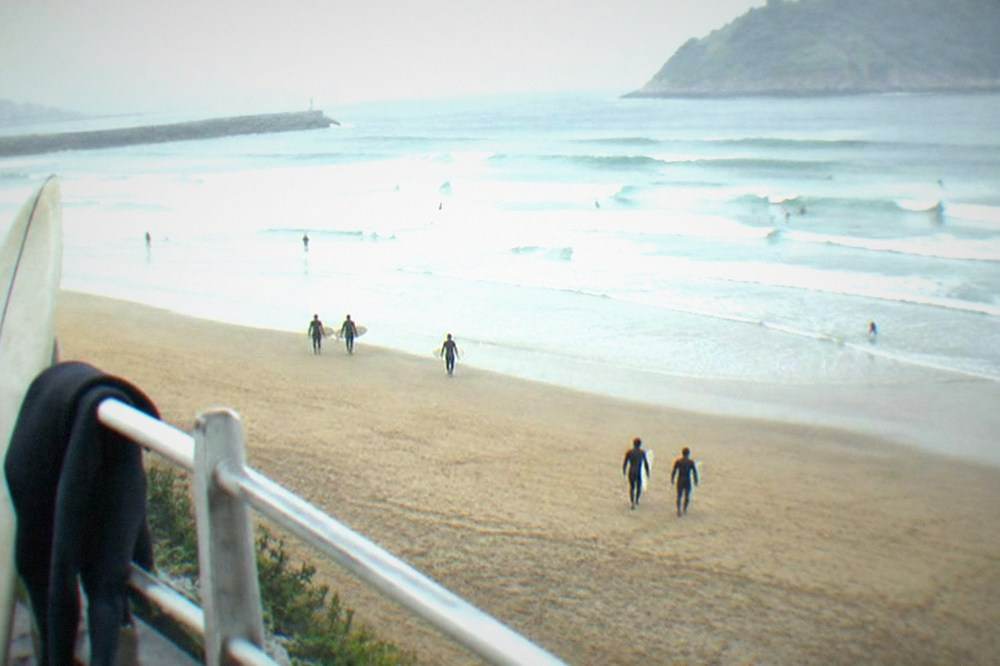
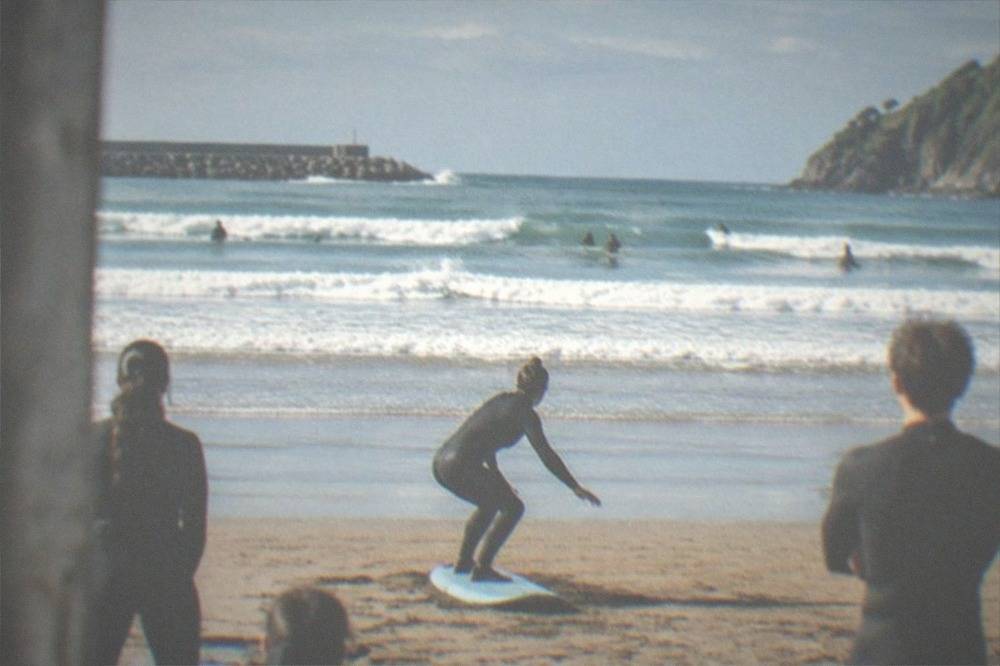
Yes, San Sebastián is a genuine learn-to-surf city, because Zurriola's strong-but-workable swell, its surf schools and its beachfront rental shops make it one of the easiest places on the northern Spanish coast to book a first lesson. Lessons run through the surf schools based around the Gros end of the beach, and a combined lesson-plus-pintxos product exists for visitors who want the ocean and the kitchen in one afternoon.
The beginner infrastructure here is real and it is local. Schools around Gros supply boards, wetsuits and instructors, and the beach's 800-metre length means a class can spread out. The council's note that the swell is strong is a reason to learn with a school rather than alone, especially outside the 1 June to 30 September lifeguard season. For a structured option, the surf lesson and pintxos tour bundles a lesson with board, wetsuit, locker and hot shower, then follows it with pintxos and drinks.
Beginners should also know what the council does and does not publish. The beach pages state the lifeguard season and the hire prices, but they do not state surf zoning rules, dog rules or what each flag colour means, and this guide will not invent them: ask at the lifeguard post or check the council's beach page on the day. That is the honest answer, and it is the one a local school will give you too.
How Do You Get To Zurriola Beach From The Centre?
Zurriola beach sits directly across the River Urumea from the city centre, with the Kursaal concert hall complex on the sand's western edge as the obvious landmark, so reaching it from the centre of San Sebastián is a short walk across one of the Urumea bridges into the Gros district. There is no need for a bus or a car: the beach is part of the city, not a drive away.
The geography is forgiving. The Kursaal, Rafael Moneo's building inaugurated in 1999, stands at the mouth of the river facing Zurriola, and from the Parte Vieja, the Old Town on the west bank, the walk over the Zurriola bridge lands you on the sand. Gros is flat, residential and full of the cafés and board shops a surf morning needs. If you are staying in the centre or the Old Town, the practical plan is to walk over with your morning coffee and let a rental shop on the Gros side handle the equipment.
If you want to see more of the city's coastline than your feet allow, a bike is the natural upgrade. The city's bike-lane network runs along the bayside, and a guided ride covers the flat end-to-end route along the water, with an e-bike option that follows the bike trails out to the beaches.
What Is Surfing Culture Like In San Sebastian?
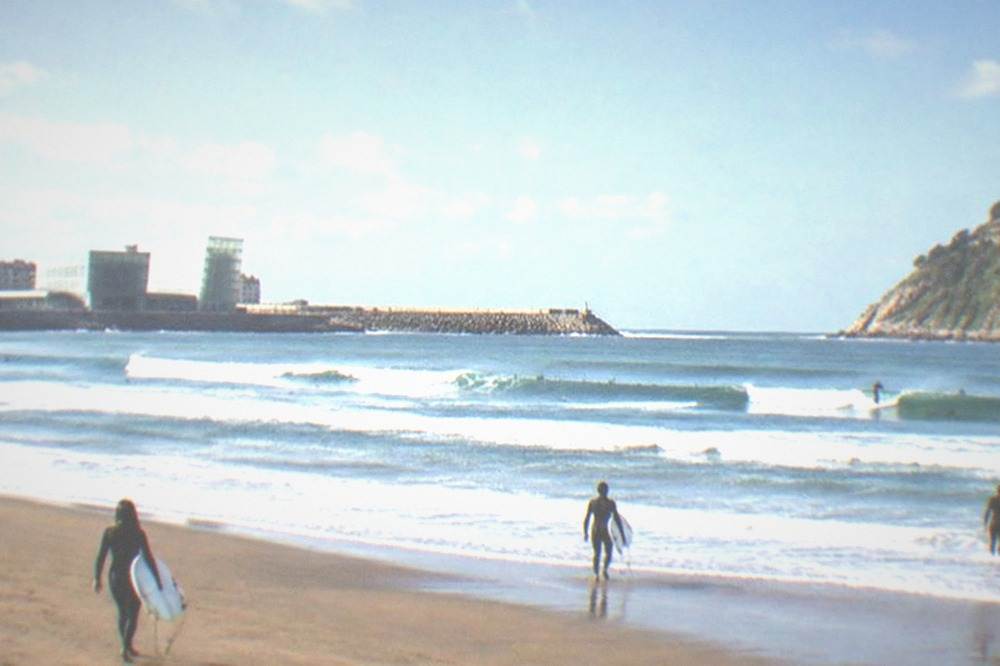
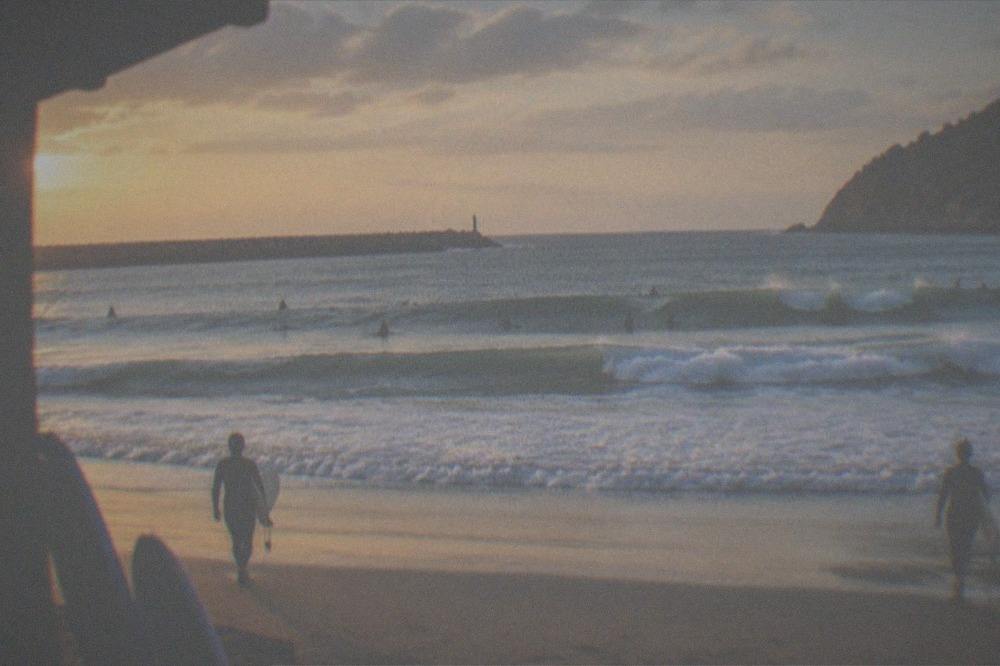
Surfing culture in San Sebastián is quiet, local and year-round, anchored in the Gros district's surf shops and board shapers rather than in a resort scene, and it coexists with a city better known for pintxos and Michelin stars than for waves. The MICHELIN Guide Spain 2026 counts 11 stars across 6 restaurants inside the city, and the surf community shares those same streets. It is a place where a morning session and a serious dinner are treated as equally normal parts of a day.
That combination is unusual on the European coast and it is the reason surfers keep coming here rather than to bigger wave towns. The after-surf ritual in Gros is a pintxo and a drink, and the city's food culture is documented across this site, from what pintxos actually are to the best pintxo bars and the wider what to eat in San Sebastian guide. Surfers who travel for waves and eat seriously will find the two halves of the city fit together without friction.
The culture is also honest about weather in a way warmer surf towns are not. With 141 rain days a year at the Igeldo station, the local approach is that rain is not a cancellation, it is a jacket. On the days it genuinely closes things down, the rainy day in San Sebastian guide lists what stays open, from San Telmo Museoa, free every Tuesday, to Tabakalera's free-access building.
What Can You Do In San Sebastian When The Surf Is Flat?
When the surf is flat or the weather closes the beach, San Sebastián still delivers: the city's two hills, its bay boat trips and its coastal hiking on the Camino de Santiago route give a full day without a single wave.
Monte Urgull is open from 08:00 to 21:00 between 1 May and 30 September and 08:00 to 19:30 the rest of the year, and the Monte Igueldo funicular, running every 15 minutes, sells a 5.50 EUR adult return ticket that includes entry to the grounds.
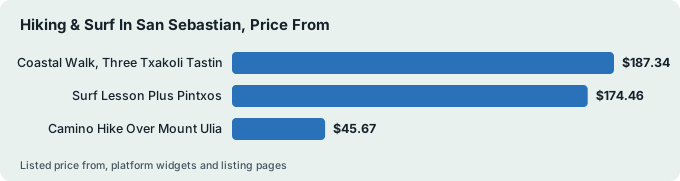
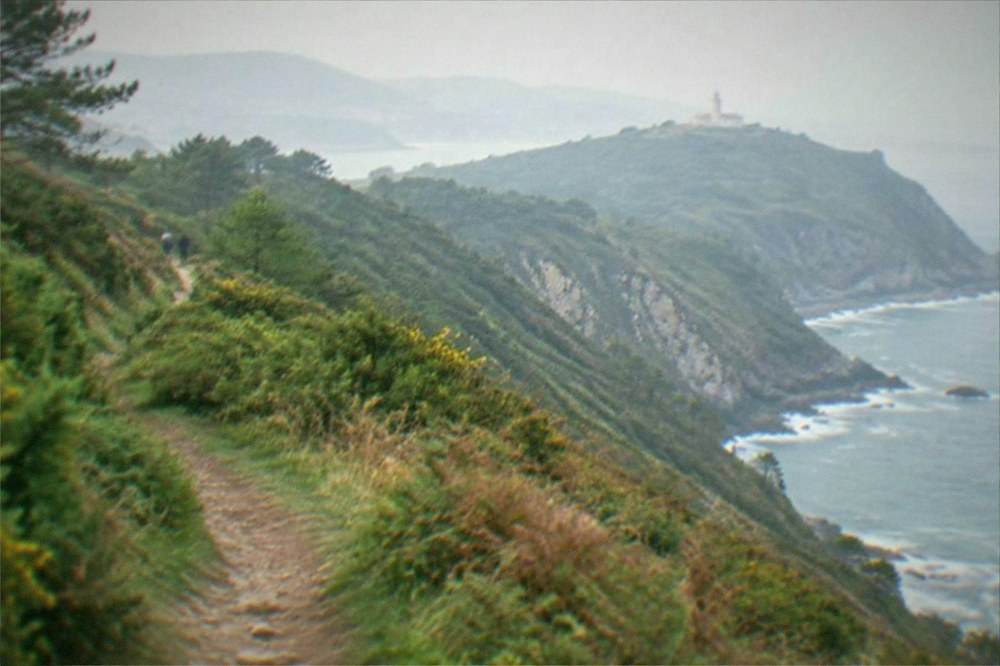
The coastal walk is the one that surprises visitors most. The Camino de Santiago's northern route runs through this coast, and its second stage as the tourism board lists it runs Pasaia to Donostia, with the third continuing Donostia to Orio. A guided hike over Monte Ulia, the headland east of the city, follows the Camino out to the Ulia lighthouse and is the natural flat-day swap for a surf session: Check availability on the guided Camino hike.
On the water side, the bay itself is always worth an hour. An eco-catamaran lap of La Concha bay with an audio guide runs from the harbour, and in high season the island boats run direct to Santa Clara every 30 minutes from 10:00 to 19:00 at 5 EUR return, with the bay tour plus island landing at 8 EUR. The island's Hondalea installation, free to visit with sessions every half hour, runs 1 June to 30 September, so it pairs with the summer surf season rather than the winter one.
The table below is a flat-day planner built only from what the official pages state.
| Flat-day option | Season rule, from the official page | Cost stated by the operator |
|---|---|---|
| Monte Igueldo funicular | Runs every 15 minutes; closes on rainy days | 5.50 EUR adult return, includes grounds entry |
| Monte Urgull walk | 08:00 to 21:00 from 1 May to 30 Sep; 08:00 to 19:30 otherwise | Free access |
| Santa Clara island boat | High season 1 Jun to 30 Sep, every 30 min from 10:00 | 5 EUR return direct; 8 EUR with bay tour |
| Hondalea in the island lighthouse | 1 Jun to 30 Sep, 11:00 to 18:30, sessions every 30 hour-mark | Free, no booking for the visit itself |
| Camino hike over Monte Ulia | Guided hike to the Ulia lighthouse | Price on the operator's live listing |
| Eco-catamaran bay cruise | Harbour departures with phone audio guide | Price on the operator's live listing |
Where Should Surfers Stay In San Sebastian?
Surfers should stay in the Gros district, directly behind Zurriola beach, where the surf shops, rental counters and board-friendly cafés put the sand within a few minutes' walk, or in the centre across the river if they want the Old Town's pintxo bars closer than the beach. The two areas face each other across the River Urumea, so the choice is between waking up beside the waves and waking up beside the bars, and both are walkable to the other.
Gros is the surfer's answer, and the Gros area guide covers it in detail. The centre and the Parte Vieja, covered in the where to stay in San Sebastian thinking, suits visitors who prioritise the evening over the morning. Families splitting their time between Zurriola's surf and La Concha's swimming can read the San Sebastian with kids guide for the middle path.
One planning note that affects every accommodation choice: the Gipuzkoa tourist tax law, Norma Foral 3/2026, takes effect on 1 January 2027 and is not charged before that date, so a 2026 stay pays nothing. From 2027 the law sets bands per person per night, with at most 6 nights charged per stay and under 18s exempt, and each council picks its own rate inside the bands. Budget with "up to" the band maximum in mind and check with your hotel at booking.
Common Questions About Surfing In San Sebastian
Can you surf at La Concha beach in San Sebastian?
The council describes La Concha as sandy and shallow with the tide often limiting the usable sand, and it is the city's swimming beach, not its surf beach. Surfing in San Sebastián happens on Zurriola, the open strand in Gros with the strong swell the council's own page notes.
Is San Sebastian good for beginner surfers?
Yes. Zurriola has surf schools, rental shops and 800 metres of sand to learn on, and the strong swell is best handled with an instructor. A combined lesson-plus-pintxos product covers board, wetsuit, locker and hot shower, then takes you out to eat.
Do you need a wetsuit to surf in San Sebastian in summer?
Most surfers wear at least a thin summer suit even in July and August, when mean air temperatures reach 18.9 and 19.5 degrees. This is the Bay of Biscay, not the Mediterranean, and the water stays cool. In winter a thick full suit with boots and gloves is standard.
When are lifeguards on duty at Zurriola beach?
The council states the lifeguard service on all three beaches runs 1 June to 30 September, with hours of 10:00 to 20:00 from 15 June to 15 September and 13:30 to 19:30 from 16 to 30 September. Outside that window there are no lifeguards, so beginners should go with a school.
Does it rain too much to surf in San Sebastian?
Rain is part of the deal, not a dealbreaker. AEMET's Igeldo station records 1,507 mm a year over 141 rain days, and even July, the driest month, averages 86 mm. Surfers here treat rain as normal and plan around the swell instead.
What else is there to do in San Sebastian besides surfing?
Plenty: the city holds 11 Michelin stars across 6 restaurants in the MICHELIN Guide Spain 2026, its two hills give bay views, the island boats run in high season, and the Camino de Santiago coastal route passes through. The site's things to do in San Sebastian page collects the full range.
The Short Version
Surfing in San Sebastián is a Zurriola habit, not a resort add-on: pick the Gros side of the river if the waves are the point of the trip, book a school for your first sessions because the swell the council itself calls strong deserves an instructor, pack for rain in every month including July, and let the flat days send you up Monte Ulia on the Camino or out onto the bay.
The ocean here is cold, the city is warm, and the two together are exactly why this coast keeps people. For more on the city behind the beach, start with San Sebastian Spain Guide and the is San Sebastian worth visiting guide.