The Kursaal
The Kursaal is the pair of translucent cubes that Rafael Moneo set on the mouth of the Urumea river in San Sebastián, Basque Country, Spain, and they are the city's most recognisable piece of modern architecture.
Short answer
The Kursaal is San Sebastián's congress centre and concert hall, two glass cubes by Rafael Moneo on the Gros side of the Urumea river mouth, chosen from six invited proposals in 1990 and inaugurated on 23 August 1999.
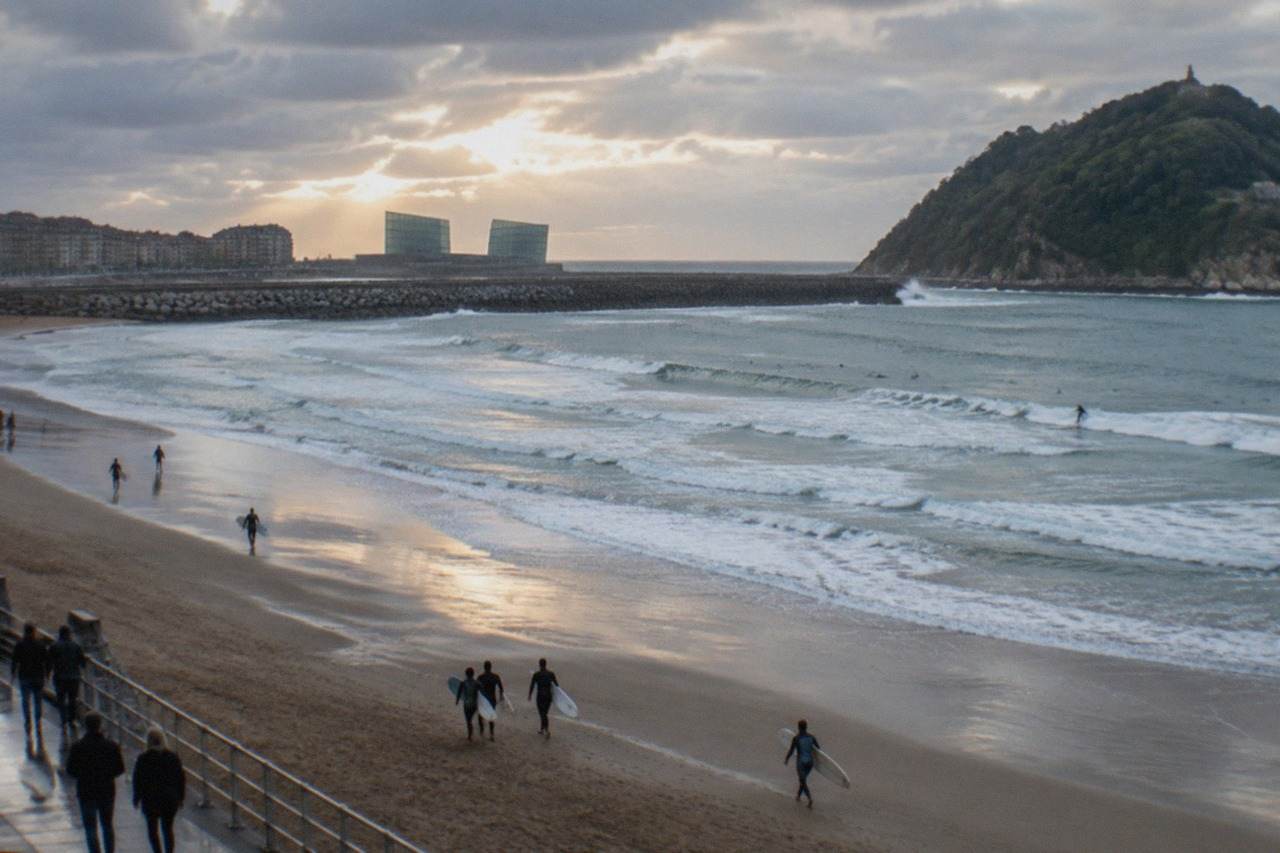
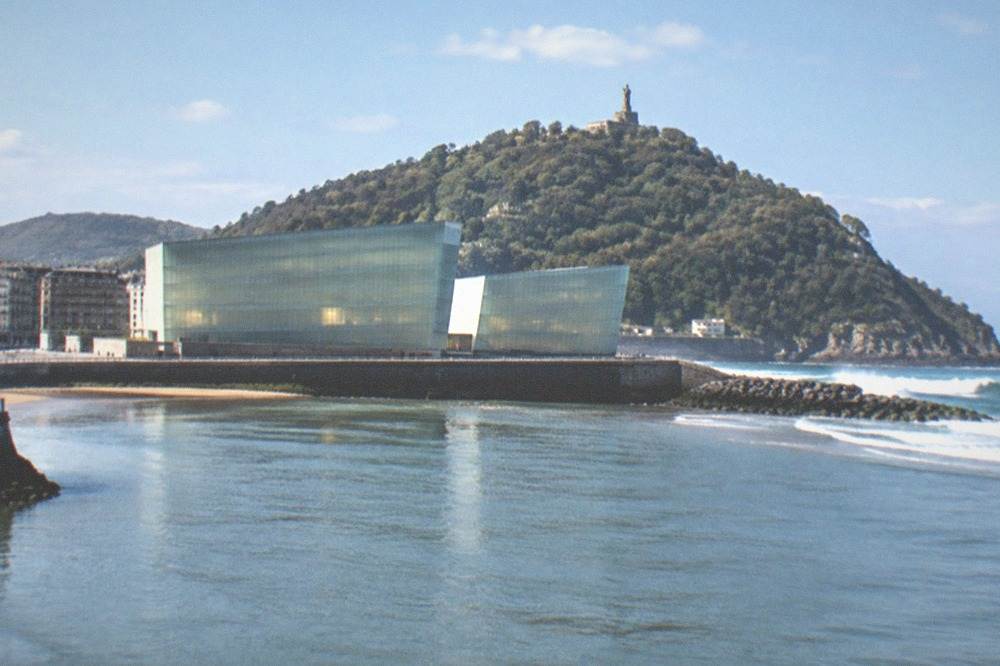
The Kursaal is the name San Sebastián, in the Basque Country of Spain, gives to the pair of translucent glass cubes that stand on the seafront where the Urumea river meets the bay, on the Gros side of the mouth. The city's Basque name is Donostia, and the building's full title is the Kursaal Congress Centre and Auditorium, though almost nobody uses more than the one word. The cubes house the city's main concert hall and its congress activity, and they anchor the eastern end of the seafront in a way few modern buildings manage: from Zurriola beach they read as two rocks washed by light, which was the stated intent of the architect who won the competition. This page explains what the building is, who designed it, what goes on inside it, and how to fold a visit into a day in the city.
What Is The Kursaal In San Sebastian?
The Kursaal is San Sebastián's congress centre and principal concert hall, a complex of two translucent glass cubes standing on the seafront at the mouth of the Urumea river, on the Gros side of the city. The larger cube holds the main auditorium used by the Basque Symphony Orchestra and by the city's festivals, and the smaller cube holds a second hall and congress spaces. The building was officially inaugurated on 23 August 1999, and activity in its Chamber Hall had already begun on 3 June that year.
The site matters as much as the structure. The Kursaal stands where the river meets the sea, directly across the mouth from Monte Urgull, and the cubes were deliberately designed to be seen from the water and from the far side of the bay as much as from the street. The building replaced an earlier Kursaal on the same stretch of seafront, a Belle Epoque casino and theatre complex that gave the name to the whole area, and the modern building kept the word while changing everything else about it. Locals still call the surrounding district by the building's name, and the beach promenade that runs in front of it is one of the city's main evening walks.
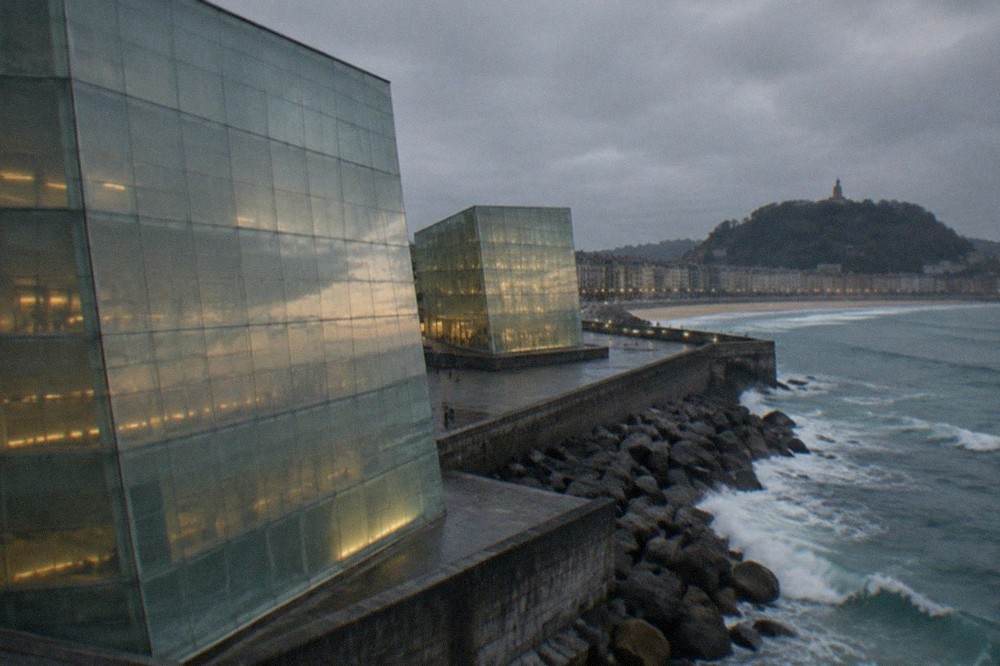
The cubes are not solid glass in the way a photograph suggests. The outer faces are a translucent cladding that lets the interior glow at night, and the halls sit inside the cubes rather than filling them, which is why the building reads differently from every angle. The ground level opens toward the sea and the promenade, and the plaza between the two cubes is public ground that anyone can walk through, whether or not anything is happening inside. That openness is the reason the building works as a landmark even for visitors who never buy a ticket.
The building's role in the city's cultural calendar is hard to overstate. The San Sebastián International Film Festival holds its galas and screenings here, the Quincena Musical uses the main hall, and the city's congress business runs through the same building for most of the year. For a visitor, the practical point is simpler: the Kursaal is free to look at from the outside at any hour, and it sits on a walking route that takes in the beach, the river mouth and the Old Town in a single loop.
Who Designed The Kursaal And When Did It Open?
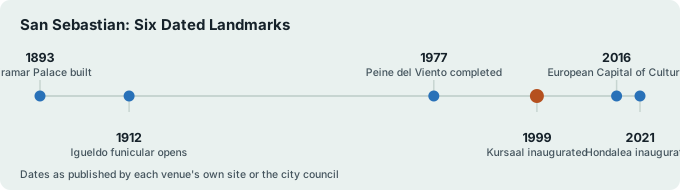
Rafael Moneo designed the Kursaal, and his proposal was chosen in 1990 from a competition among six invited architects: Botta, Foster, Isozaki, Rafael Moneo, Navarro Baldeweg and Luis Peña Ganchegui. Construction followed through the 1990s, activity began in the Chamber Hall on 3 June 1999, and the building was officially inaugurated on 23 August 1999.
The competition list is a snapshot of architecture at its highest level, and the Kursaal's own history page records all six names. The table below shows who was invited and what each is otherwise known for.
| Invited architect | Outcome of the 1990 competition | Otherwise known for |
|---|---|---|
| Rafael Moneo | Winning proposal, built as the Kursaal | Pritzker Prize winner, the National Museum of Roman Art in Mérida |
| Botta | Not selected | Churches and museums in Ticino and beyond |
| Foster | Not selected | Airports, the Reichstag dome and the Gherkin |
| Isozaki | Not selected | Museums and concert halls across Japan |
| Navarro Baldeweg | Not selected | Painting, architecture and teaching in Spain |
| Peña Ganchegui | Not selected | The Peine del Viento plaza with Eduardo Chillida |
Peña Ganchegui's presence on the list ties the Kursaal to the city's other great piece of modern design: the same architect built the pink granite plaza at the Peine del Viento, where Chillida's three steel sculptures anchor the rocks at the end of Monte Igueldo. Moneo's winning idea, two cubes standing like beached rocks on the shoreline, belongs to the same tradition of putting serious modern architecture directly into the sea landscape rather than behind it.
The dates are worth holding onto because guidebooks blur them. The choice of architect came in 1990, the first events in the Chamber Hall came on 3 June 1999, and the official inauguration was 23 August 1999. Nothing about the building is older than that, whatever the Belle Epoque name suggests. The earlier Kursaal, the casino and theatre complex that occupied the seafront before it, is a separate building that no longer exists, and only the name carried across.
What Happens Inside The Kursaal In San Sebastian?
Inside, the Kursaal is a working concert hall and congress centre: the larger cube contains the main auditorium that hosts the Basque Symphony Orchestra's season, the film festival's galas and the Quincena Musical, while the smaller cube holds a secondary hall and the meeting rooms used by congresses. The building also serves the city's opera and dance programme, and during the film festival in September it becomes the centre of the whole city's attention.
The film festival is the moment the building earns its place on every visitor's itinerary, whether or not they hold a ticket. During the festival's run, the seafront around the Kursaal fills with queues, red carpet activity and screens, and the building's cubes are lit for the occasion. The 74th edition ran from 18 to 26 September 2026, and the festival is one of the oldest and most respected film festivals in Europe, with its principal events in and around the Kursaal.
The table below gathers the building's main cultural tenants and the time of year each one fills the halls.
| What happens inside | Who or what | When it fills the Kursaal |
|---|---|---|
| Film festival galas and screenings | San Sebastián International Film Festival | September each year, 2026 edition ran 18 to 26 September |
| Classical concert season | Quincena Musical | August, 2026 edition ran 2 to 30 August |
| Orchestra season | Basque Symphony Orchestra | Across the concert year |
| Congresses and trade meetings | Congress business of the city | Year round, heaviest outside summer |
| Jazz festival events | Jazzaldia, 61st edition in 2026 | Summer, dates vary by edition |
For a visitor with no ticket, the honest answer about the inside is that it opens when there is something on. The building is not a museum with set visiting hours, and this page gives none because none is published in the sources behind it. What a visitor can always do is walk the plaza between the cubes, sit on the seafront steps in front of it, and come back after dark, when the translucent cladding glows and the building is at its most photogenic.
Is The Kursaal Worth Seeing On A San Sebastian Trip?
Yes, the Kursaal is worth seeing even without a ticket, because the building costs nothing to look at, sits directly on a beach promenade you will likely walk anyway, and is the single most photographed piece of modern architecture in the city. With a ticket, it becomes one of the best evenings available in San Sebastián: a concert or a festival screening in a hall that looks straight out at the Atlantic.
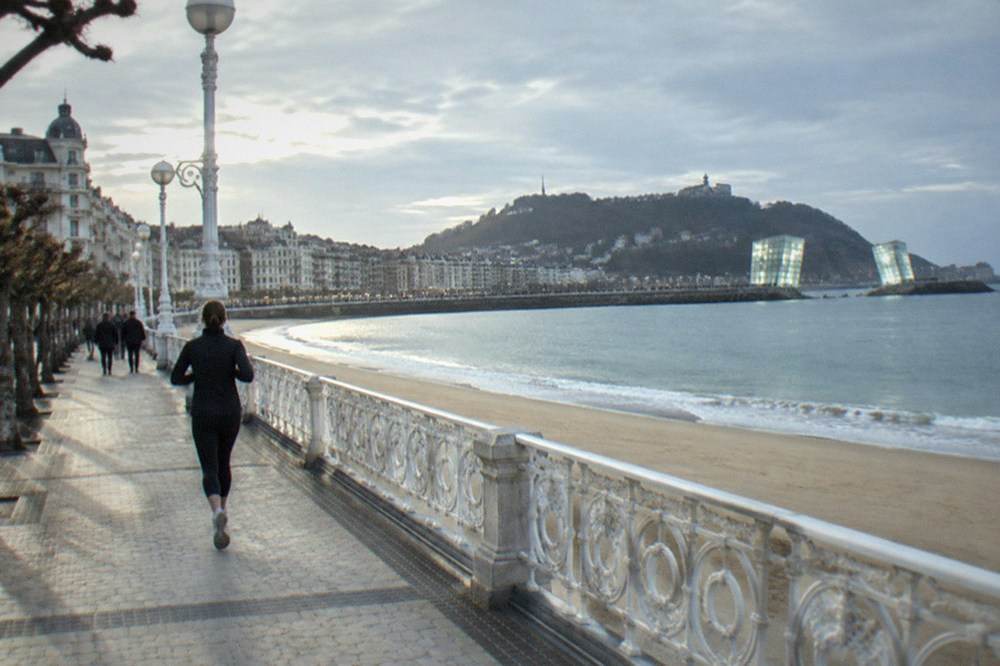
The practical case is strong. The cubes stand at the eastern end of the seafront, next to Zurriola beach, the city's surf beach, an 800 metre stretch of sand that the council describes as fairly open with a strong swell. A walk from the Old Town across the river, along the Gros seafront and back around the bay passes the Kursaal, the beach, the river mouth and, on the far side, the foot of Monte Urgull, in under an hour of easy strolling. The building sits on that loop like a hinge.
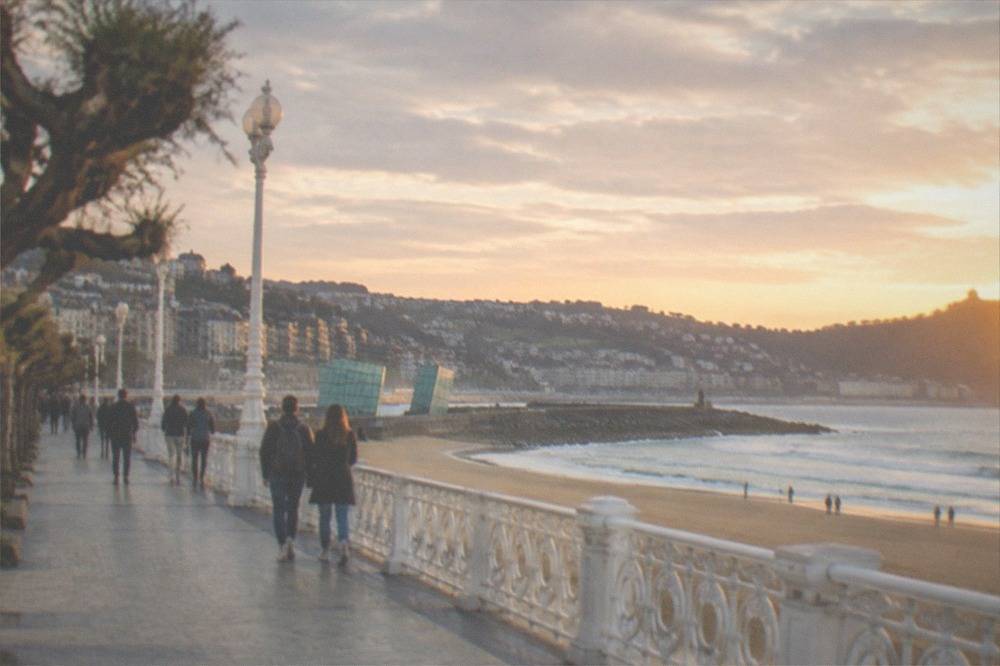
The comparison that matters is with the city's older monuments. San Sebastián has Belle Epoque architecture along the bay, the Miramar Palace above Ondarreta, and the gothic church of Santa María del Coro in the Old Town, and the Kursaal is the counterweight to all of it: the one building that says the city did not stop. Photographers get the best of both by shooting the cubes from the far side of the river mouth, with Monte Urgull and the bay behind.
A guided walk is the efficient way to place the building in context, and the city highlights tour covers exactly this ground.
How Do You Get To The Kursaal In San Sebastian?
The Kursaal sits at the eastern end of the seafront in the Gros district, directly on the promenade behind Zurriola beach and a short walk from the Old Town across the Urumea river, and no transport is needed from the city centre. From the far end of La Concha the walk runs along the whole bay and takes in the river mouth; from the Old Town it is only the width of the river.
The building's position makes it one of the easiest landmarks in the city to reach on foot. The Gros seafront promenade runs the full length of Zurriola beach and passes the cubes at the western end, where the beach meets the river. The bridge across the Urumea connects this side to the Old Town and the city centre, and the whole route is flat. Cyclists get the same route with more range, and the bay loop is a flat end-to-end ride.
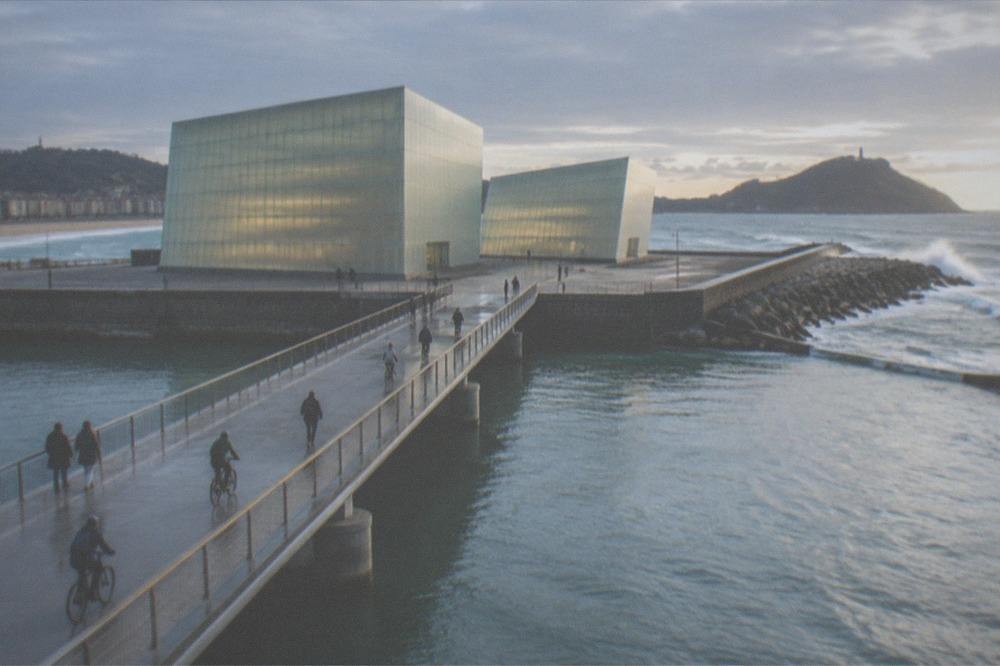
The table below sets out the walking approaches from the city's other main sights, described by what the pack gives: each route is a flat seafront or river walk, and none needs transport.
| Starting point | Route to the Kursaal | What the pack states about the start point |
|---|---|---|
| Old Town, by the river | Cross the Urumea bridge directly | The Old Town sits on the west bank of the river mouth |
| Zurriola beach | Walk the promenade to its western end | 800 m sandy beach, fairly open, strong swell |
| La Concha | Follow the bay east, then the river mouth | 1,350 m sandy beach, shallow, tide often limits usable area |
| Monte Urgull | Descend toward the river mouth on the far bank | Open 08:00 to 21:00 from 1 May to 30 September |
| Gros district | The Kursaal is inside the district | The cubes stand on the Gros seafront |
A bike is the other natural way in. The bay ride passes the Kursaal at its eastern turn, and a guided option covers the whole route.
For anyone planning the wider day, the building makes a natural eastern anchor: the aquarium and the Old Town lie to the west across the river, and the full seafront walk from Ondarreta beach in the west to the Kursaal in the east is the city's single best free outing.
What Should You Know Before Visiting The Kursaal Area?
Before visiting, know three things: the plaza between the cubes is public and always walkable, the halls open only for ticketed events, and the seafront around the building is exposed Atlantic weather, so check the forecast, because even July averages 86 mm of rain at the city's Igeldo weather station. The beach beside the building has lifeguards from 1 June to 30 September only, and the surf at Zurriola is strong enough that swimming there is a different proposition from La Concha.
The weather point deserves its own paragraph because it shapes every visit to this stretch of the city. AEMET's climate normals for the Donostia / San Sebastián, Igeldo station record 1,507 mm of rain a year across 141 rain days, and no month averages under 86 mm. The seafront in front of the Kursaal is one of the most exposed places in the city when a front comes in off the bay, and the building's plaza, for all its beauty, offers little shelter. The upside is the same exposure: the light on the cubes changes hour by hour, and the building is at its best in the fast weather this coast is known for.
| Month | Mean temperature | Rainfall | Rain days of 1 mm or more |
|---|---|---|---|
| January | 8.5 C | 141 mm | 13.2 |
| April | 11.3 C | 138 mm | 13.4 |
| July | 18.9 C | 86 mm | 9.8 |
| August | 19.5 C | 117 mm | 10.5 |
| September | 18.0 C | 111 mm | 10.1 |
| November | 11.3 C | 169 mm | 13.0 |
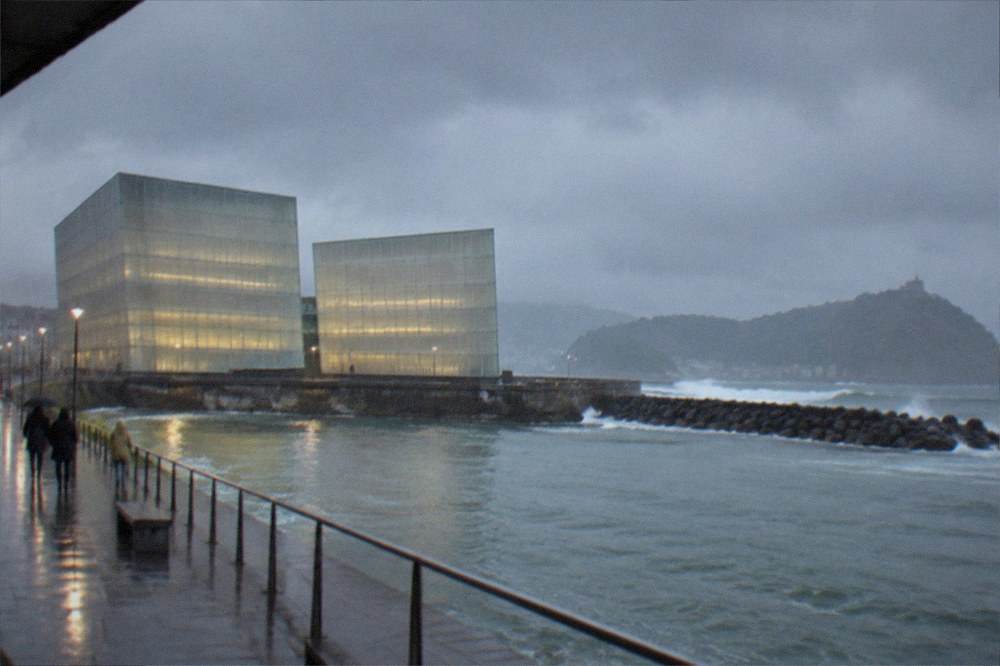
The beach beside the building follows the city's season rules. Lifeguards are on duty at all three city beaches from 1 June to 30 September, with full hours of 10:00 to 20:00 from 15 June to 15 September and reduced hours of 13:30 to 19:30 for the second half of September. Outside those dates the sand is open but unwatched, and Zurriola's strong swell does not pause for the calendar. Visitors who want calm water should walk west to La Concha; visitors who want to watch the surfers will be in exactly the right place on the steps in front of the Kursaal.
How Does The Kursaal Fit Into A Day In San Sebastian?
The Kursaal fits best as the eastern turn of a half-day loop: start in the Old Town, cross the river to the cubes and Zurriola beach, then walk the full bay west past the city centre to Ondarreta and the Peine del Viento, or reverse the direction and finish at the Kursaal after dark when the cubes glow. Either way, the building needs no ticket and no fixed time, only a place at one end of the walk.
A sample day that uses the building well looks like this. Morning in the Old Town, where the pintxo bars open early and the Basilica of Santa Maria faces onto the Buen Mayor street. Midday across the river to the Gros side: the cubes first, then the promenade along Zurriola, then lunch in Gros, which has its own pintxo strip away from the Old Town crowds. Afternoon along the bay: La Concha, the city centre, and on to Ondarreta and the Peine del Viento at the western tip. Evening back at the Kursaal if there is a concert or a festival screening on, or simply for the lit cubes and the seafront steps.
| Time of day | What to do around the Kursaal | Why it works |
|---|---|---|
| Morning | Photograph the cubes from across the river mouth | Low light on the glass, quiet promenade |
| Midday | Walk Zurriola beach and the Gros seafront | Lifeguard season runs 1 June to 30 September |
| Afternoon | Continue west along the bay to Ondarreta | Flat, continuous seafront promenade |
| Evening | Return for a concert, a screening or the lit cubes | The cladding glows after dark |
| Festival season | Catch the film festival's September run | The 2026 edition ran 18 to 26 September |
Food belongs in the plan as much as architecture. The Old Town's pintxo bars are a short walk across the river, and a guided crawl through them pairs well with the seafront walk on either side of it.
For a longer stay, the building is also the departure point for the eastern walks: the Camino de Santiago's coastal route leaves the city eastward, and the guided hike over Monte Ulia to the lighthouse starts from the Kursaal side of the city. The cubes, in other words, sit at a junction: the whole bay runs west from their doorstep, and the coastal paths run east.
Common Questions About The Kursaal In San Sebastian
What is the Kursaal in San Sebastian?
The Kursaal is the city's congress centre and main concert hall, two translucent glass cubes by the architect Rafael Moneo standing on the Gros seafront at the mouth of the Urumea river, next to Zurriola beach. It was inaugurated on 23 August 1999.
Who designed the Kursaal in San Sebastian?
Rafael Moneo designed the Kursaal. His proposal was chosen in 1990 from six invited architects: Botta, Foster, Isozaki, Rafael Moneo, Navarro Baldeweg and Peña Ganchegui.
Can you visit inside the Kursaal?
The plaza between the cubes is public ground and can be walked at any time. The halls inside open for ticketed events such as concerts, congresses and festival screenings, and no set public visiting hours are published for the interior.
When is the film festival at the Kursaal?
The San Sebastián International Film Festival holds its principal events at the Kursaal each September. The 74th edition ran from 18 to 26 September 2026.
Where is the Kursaal in San Sebastian?
The Kursaal stands in the Gros district, on the seafront at the eastern side of the Urumea river mouth, directly behind Zurriola beach and a short flat walk from the Old Town across the river.
Is the Kursaal free to see?
Yes. Looking at the building from the plaza, the promenade and the far side of the river costs nothing, and the cubes are at their most striking after dark when the translucent cladding is lit. Only events inside require a ticket.
The Kursaal rewards exactly the kind of visit San Sebastián itself rewards: unhurried, on foot, and timed for the light. Walk the loop, come back after dark, and if a festival week happens to coincide with your dates, buy the ticket and see the cubes from the inside. For more on planning around the building, see the wider guide at San Sebastian Spain Guide and the beach-by-beach breakdown starting with La Concha beach.