What Kind Of Wine Is Txakoli?
Txakoli is the young, lightly sparkling white wine of the Basque coast, poured from a height in the pintxo bars of San Sebastián, Spain. Here is what it is, where it comes from and how to drink it.
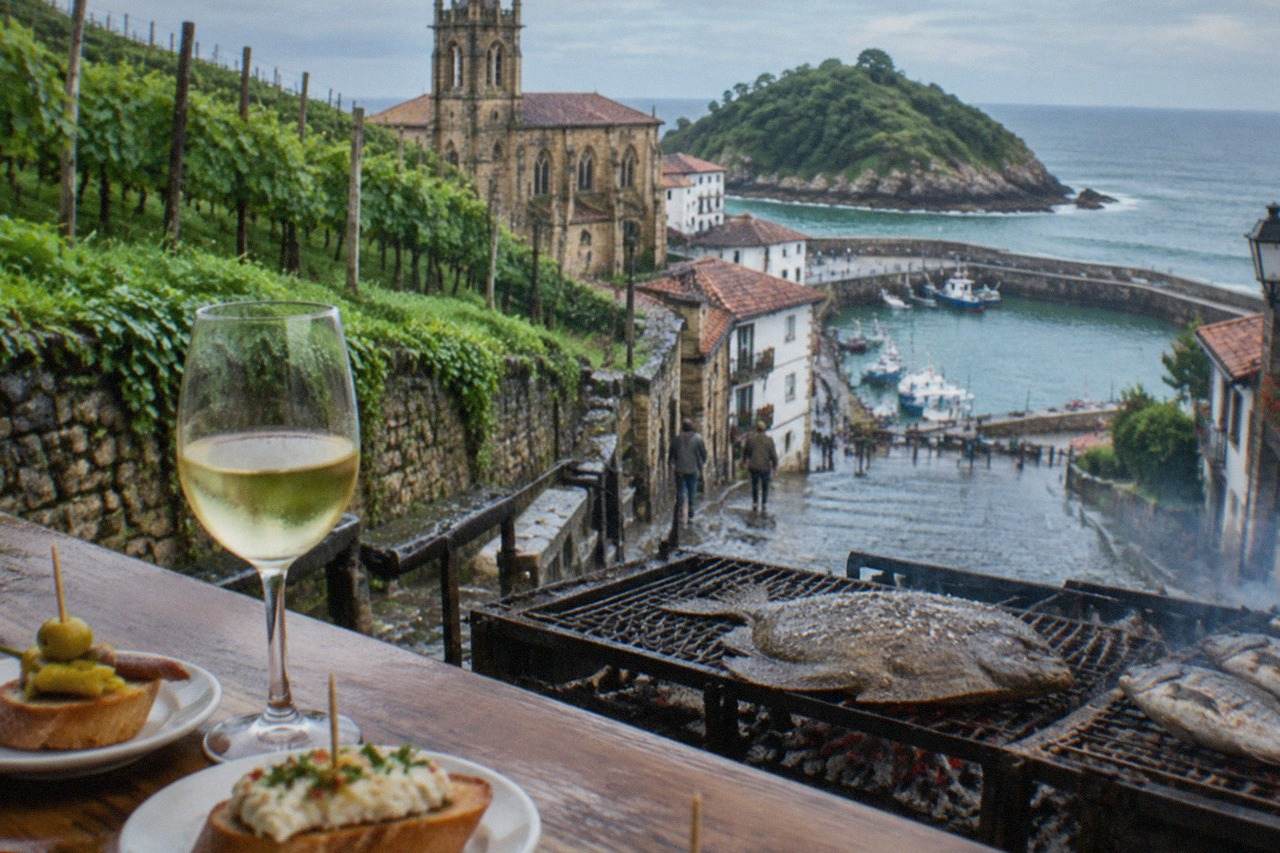
Txakoli is the local white wine of San Sebastián, the Basque city on La Concha bay in Gipuzkoa, Spain, whose official name is Donostia / San Sebastián. It is not a wine called "San Sebastián": that phrase belongs to a winery in St. Augustine, Florida, and has nothing to do with this coast. Here, txakoli is a young, dry, high-acid white, often with a light natural spritz, and it is the default glass poured in the pintxo bars of the Parte Vieja. It is also one of the few wines that comes with its own pouring ritual, held high above the glass so it foams and aerates.
What Kind Of Wine Is Txakoli?
Txakoli is a young, dry, lightly sparkling white wine from the Basque Country, made from local grapes grown close to the Atlantic coast, and it is the wine San Sebastián drinks by default with pintxos. Bottled early and drunk young, it carries a sharp, clean acidity with a slight natural fizz. It is protected under Denomination of Origin rules, so only wine from defined Basque growing zones may legally be called txakoli.
That last point matters more than it sounds. Txakoli is not a grape name and not a style anyone can copy: it is a protected regional designation, the way Rioja and Cava are. The wine is made chiefly from the white Hondarribia Zuri grape, with Hondarribia Beltza, a dark-skinned variety, used in some red and rosé txakoli. The vineyards sit on green, rain-fed slopes near the sea, which is why the grapes keep their acidity: this is one of the wettest corners of Spain, and AEMET's normals for its Igeldo station above the city record 1,507 mm of rain a year over 141 rain days. Cool, damp, Atlantic conditions produce exactly the kind of wine this coast wants with its fish and its salt: something bright, lean and refreshing.
The wine's character follows from how it is made. Most txakoli is fermented in steel and bottled without long ageing, so what reaches the glass is fruit, acid and spritz rather than oak or weight. It is a wine for drinking now, not for keeping, and the bars here treat it that way. A bottle from a good vintage will not improve by sitting in a cellar; the whole point is the freshness of the most recent harvest, and bodegas release each year's wine expecting it to be gone within a season or two. If you want the fuller picture of how the wine fits into the city's food culture, the txakoli guide covers it in depth.
Where Does Txakoli Come From?
Txakoli comes from three protected Denomination of Origin zones in the Basque Country: Getariako Txakolina along the Gipuzkoa coast around Getaria, Bizkaiko Txakolina around Bilbao, and Arabako Txakolina in Álava. The best-known zone for visitors to San Sebastián is Getariako Txakolina, whose vineyards run down to the sea around the fishing town of Getaria, roughly an hour along the coast from the city.
Getaria is the name to remember. It is a small port town in Gipuzkoa, famous both for its txakoli and as the birthplace of the couturier Cristóbal Balenciaga, whose museum there charges 14 EUR for the collection and temporary shows together. The town's white houses, its grilled fish restaurants and its steep hillside vineyards make it the natural day trip for anyone whose main interest in San Sebastián is the wine. You can read more about the wider scene in what wine San Sebastian is known for.
The three zones produce recognisably similar wine because they share the same Atlantic climate and largely the same grapes, but they are legally distinct: a bottle must state which zone it comes from. For a visitor, the practical difference is small and the geographic difference is the point. Gipuzkoa's zone is the one you can reach from the city in a morning, taste at source, and be back for dinner.
How Is Txakoli Served And Poured?
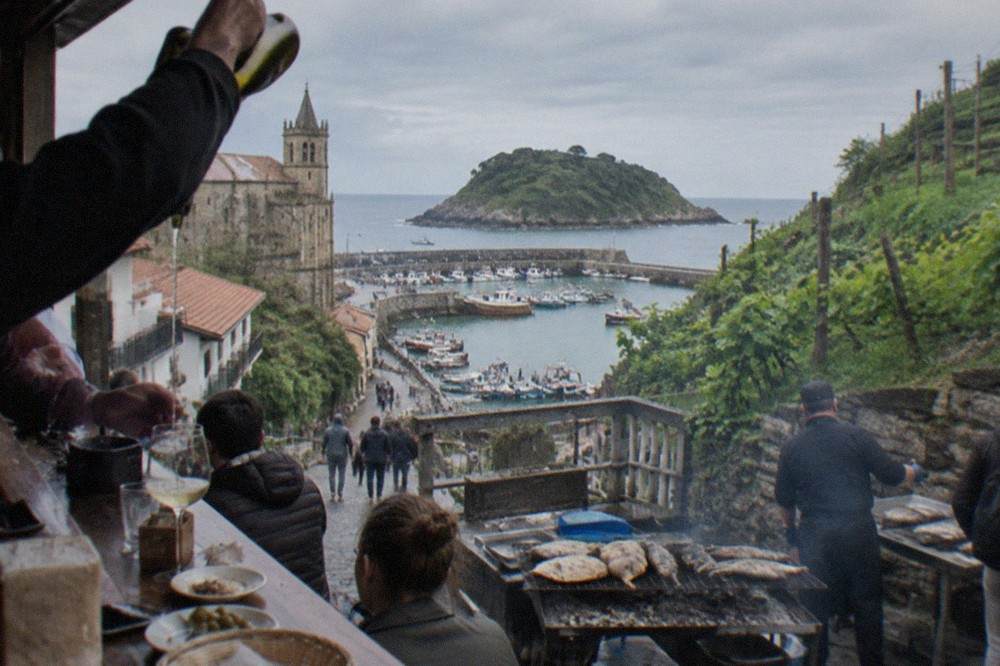
Txakoli is served cold and young, and it is traditionally poured from a height, with the bottle held well above the glass so the wine falls in a thin, foaming stream. The pour aerates the wine, releases its spritz and shows off its clarity, and only a small amount goes into the glass at a time, so it stays cold and fizzy until the last sip. In San Sebastián's pintxo bars this is standard practice, done at speed across a crowded counter.
The high pour is not theatre for tourists; it is how the wine is meant to be drunk. A glass is filled only partway, drunk quickly, and refilled, which suits the rhythm of a pintxo crawl: a bite, a glass, a move to the next bar. The technique has its own page of detail at how to pour txakoli, including why the height matters and what happens when the wine is poured flat.
Because txakoli is light, acidic and slightly fizzy, it behaves differently from a still white at the table. The table below sets out the practical differences a visitor will notice. Everything else covered here is indexed on San Sebastian Spain Guide.
| Feature | Txakoli | Typical still white |
|---|---|---|
| Spritz | Light natural fizz from early bottling | None, or added in sparkling wines |
| Acidity | High, sharp, saline-leaning | Moderate to high depending on region |
| Age on release | Young, usually within a year of harvest | Often one to three years |
| Standard pour | Small, from a height, refilled often | A full glass, poured at the table |
| Natural partner | Pintxos, fish, seafood, salt | Depends on the wine's weight and origin |
What Does Txakoli Taste Like, And What Do You Eat With It?
Txakoli tastes dry, sharply acidic and clean, with citrus and green fruit notes, a saline edge from its coastal vineyards and a light prickle of bubbles. It is a low-weight wine built for food rather than sipping alone, and in San Sebastián it is poured above all with pintxos: gildas, anchovies, white fish, squid and the seafood that dominates the city's bars. Its acid cuts through oil and salt, which is exactly why the pairing works.
The wine's taste profile is described in more detail at what txakoli tastes like, including which flavours dominate and what it is often compared to. The short version: expect brightness rather than richness, and expect the wine to refresh the palate between bites rather than compete with them. A wine that tried to be bigger would fight the food; txakoli steps aside and lets the anchovy or the grilled fish be the point of the mouthful.
The classic pairings are local because the wine and the food grew up together. The table below pairs the wine with the dishes you will actually find on the counters of the Parte Vieja and the Gros neighbourhood.
| Pintxo or dish | Why it works with txakoli |
|---|---|
| Gilda (olive, anchovy, guindilla) | The wine's acid matches the vinegar and cuts the anchovy's salt |
| White fish, grilled or in batter | A lean wine for lean fish, with the spritz lifting the batter |
| Squid and baby squid | Citrus and saline notes echo the seafood's own character |
| Salt cod preparations | High acid balances the saltiness of bacalao dishes |
| Idiazabal sheep's cheese | The wine's sharpness offsets the rich, nutty cheese |
Can You Visit Txakoli Country From San Sebastian?
Yes, txakoli country is a half-day trip from San Sebastián: the Getariako Txakolina zone around Getaria is the closest, and several small-group tours run there from the city with hotel pickup. The coastal route out of the city also passes through cider and txakoli territory, and the tourism board lists the Camino de Santiago coastal route as crossing the same stretch of Gipuzkoa. A visit to a bodega lets you taste the wine at source and see the steep, sea-facing vineyards the bottles come from.
The most direct option is the Getaria txakoli wine tour, a half-day small-group trip to Getaria with hotel pickup included; you can Check availability on the operator's live listing. The tour pairs naturally with time in Getaria itself, and the town is small enough that a morning of tasting still leaves room for the fish restaurants on the port.
Cider is the other drink of this coast, and the two seasons do not overlap much: txotx season runs from the middle of January to the end of April, while the txakoli bodegas around Getaria receive visitors through the warmer months. If you are planning a longer stay, is 4 days in San Sebastian too much is worth reading before you commit, because a wine day, a cider day and a city day fill an itinerary fast.
Common Questions About Txakoli In San Sebastian
What kind of wine is Txakoli?
Txakoli is a young, dry, lightly sparkling white wine from the Basque Country, made mainly from the Hondarribia Zuri grape and protected by Denomination of Origin rules. It is the standard wine poured with pintxos in San Sebastián.
Is txakoli white or red?
Most txakoli is white, made from Hondarribia Zuri. A smaller amount of red and rosé txakoli exists, made with the Hondarribia Beltza grape, but the white version is what fills the city's bars.
Why is txakoli poured from a height?
The high pour aerates the wine, releases its light spritz and keeps it cold in the glass. Only a small amount is poured at a time, and the glass is refilled often.
Where is txakoli made?
In three protected zones in the Basque Country: Getariako Txakolina around Getaria in Gipuzkoa, Bizkaiko Txakolina around Bilbao, and Arabako Txakolina in Álava.
Is txakoli sweet?
No. Txakoli is a dry wine with high acidity and a saline edge. Its freshness comes from acid and spritz, not from residual sugar.
Can you visit a txakoli bodega from San Sebastian?
Yes. Getaria, the heart of the Getariako Txakolina zone, is a half-day trip from the city, and small-group tours with hotel pickup run there through the season.
A glass of txakoli, poured high and drunk young, is the shortest route into this city's food culture, and the vineyards that make it are close enough to visit between breakfast and dinner.