What Wine Is Similar To Txakoli?
Wines that resemble txakoli, the young high-acid white of the Basque coast, and where to drink it in San Sebastián, Spain.
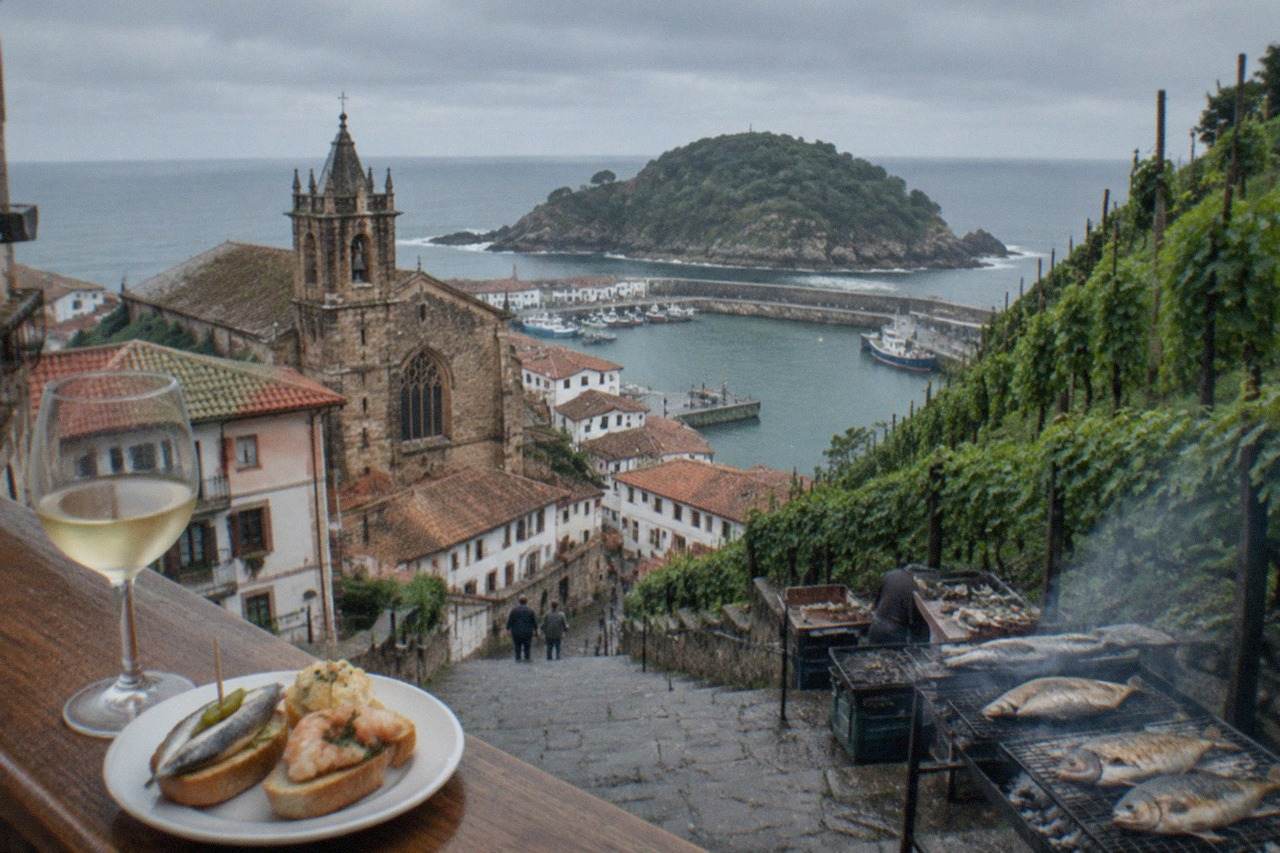
Txakoli is the dry, high-acid, faintly sparkling white that bars across San Sebastián, the Basque city on La Concha bay whose official name is Donostia / San Sebastián, pour from a height straight into the glass. It is a young wine, released barely months after harvest, and its whole personality, the spritz, the green-apple snap, the saltiness that makes it a natural partner for pintxos, comes from that youth and from the wet Atlantic coast where its grapes grow. When a trip ends and the bottle is gone, or when a wine list at home has never heard of it, several other wines from other rainy Atlantic corners of Europe scratch the same itch.
What Wine Is Similar To Txakoli?
The closest substitutes for txakoli are Portuguese Vinho Verde, Galician Albariño from Rías Baixas, and Muscadet from the Loire: all are dry, high-acid Atlantic whites that drink best young. Vinho Verde is the nearest match, because it shares txakoli's light spritz and low alcohol. Albariño is rounder and more aromatic but carries the same saline edge, and Muscadet offers the same lean, mineral dryness without the bubbles.
Each of these three comes from a cool, damp coastline, which is exactly why they behave like txakoli in the glass. Cool climates keep acidity high and sugar low. Short time on the lees or in bottle keeps them fresh instead of heavy. None of them is meant to age, and none of them improves from being saved, which is the single most useful thing to know if you are shopping for a stand-in.
The spritz deserves a word, because it is the detail people remember most about txakoli and the one a substitute most often lacks. The fizz in txakoli is not champagne's second fermentation: it is residual carbon dioxide from a wine bottled early and often a deliberate light carbonation before bottling. Vinho Verde is made the same way, which is why it is the stand-in of choice. Albariño and Muscadet are usually still, so if the prickle matters to you, pour them cold and fresh and accept a quieter mouthfeel.
The table below sets the four wines side by side in the order a txakoli drinker will usually find them useful.
| Wine | Where it comes from | What it shares with txakoli | How it differs |
|---|---|---|---|
| Vinho Verde | Northern Portugal | Light spritz, high acid, low alcohol, drunk very young | Slightly softer fruit, often a touch sweeter at entry |
| Albariño (Rías Baixas) | Galicia, north-west Spain | Atlantic salinity, dry finish, seafood wine | Fuller body, stone-fruit aromas, usually still |
| Muscadet | Loire Valley, France | Bone-dry, mineral, lean, high acid | No spritz, more neutral fruit, can age longer on lees |
| Txakoli (Getariako, Bizkaiko, Arabako) | Basque Country, Spain | The reference: spritzy, green apple, saline, citrus | The benchmark itself |
Beyond those three, two other wines are worth a detour if a shop has none of them. Assyrtiko from Santorini has the same searing acidity and salt-drenched character, though at a fuller weight and a higher price. Grüner Veltliner from Austria shares the white-pepper snap and food friendliness but swaps the saline edge for a vegetal one. Neither is Atlantic, but both deliver the refreshing jolt that makes someone order a second glass of txakoli in the first place. If you want to go deeper on the original, the site's txakoli guide covers its three denominations and how the Basque name is spelled and pronounced.
Why Txakoli Tastes The Way It Does
Txakoli tastes sharp, salty and lightly fizzy because it is grown on a wet, cloudy coastline, harvested early at low ripeness, and bottled young with most of its carbon dioxide kept in. The dominant notes are green apple, lemon and a saline minerality that locals credit to the sea air, and the alcohol stays low because the grapes rarely reach high sugar levels. The wine is not designed to keep: it is designed to be drunk within a year or two of the vintage.
That is a style, not an accident. The Hondarribia Zuri grape that makes most white txakoli ripens slowly under the Bay of Biscay's overcast skies, in a region where AEMET's Igeldo station records 1,507 mm of rain a year across 141 rain days. Early picking preserves acidity, and fermentation and bottling follow quickly. The result is a wine that tastes of the place it comes from in a way few supermarket whites do.
The pouring ritual is part of the style too. Basque bartenders pour txakoli from arm's height into a wide, shallow glass called a txakolin, so the wine breaks against the bottom of the glass, wakes up, and sheds a little of its gas before the first sip. It is theatrical, but it is also practical: the wine is at its best aerated and cold. The site has a full page on how to pour txakoli if you want to reproduce the arc at home without redecorating the kitchen.
Because the flavour is so distinctive, the best way to understand what a substitute needs to copy is to taste the original side by side with its cousins. For readers planning a trip, what txakoli tastes like breaks down the profile glass by glass, and what kind of wine txakoli is covers the grape varieties behind it.
Where To Drink Txakoli Around San Sebastian
Every pintxo bar in the Old Town, the Parte Vieja, pours txakoli by the glass, and it is the default white on nearly every list in the city. Getaria, the fishing town about half an hour down the Gipuzkoa coast, is the heartland of the Getariako denomination and the place to taste it at the bodega door. San Sebastián's own cider houses pour it alongside the txotx season's cider from mid-January to the end of April.
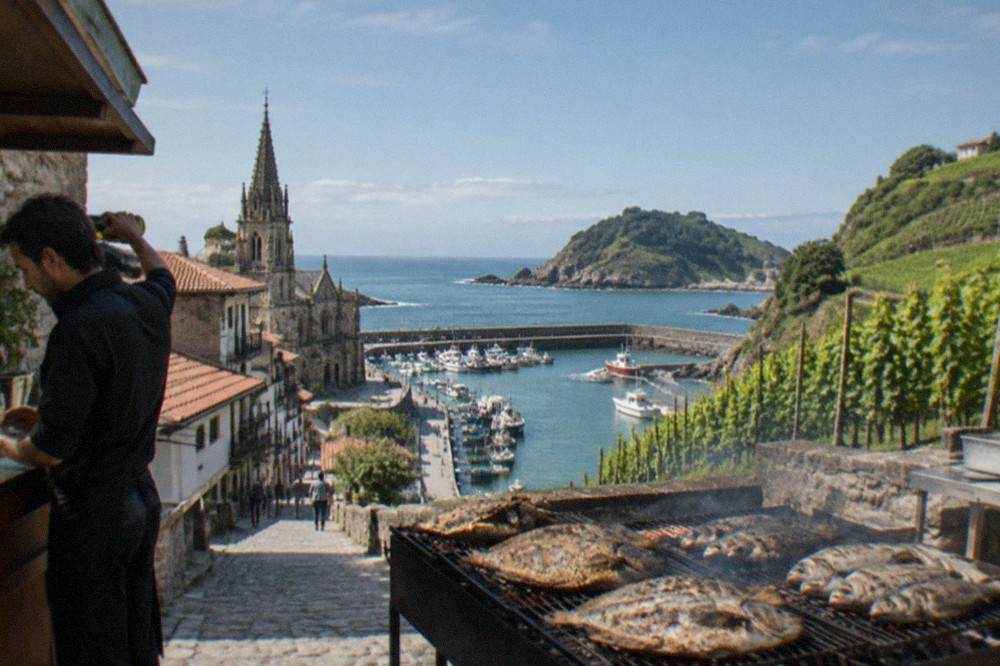
The Old Town is the easiest starting point: a crawl down Calle 31 de Agosto will put a glass in your hand within minutes of arriving. Ask for txakoli by name and you will rarely be shown a wine list at all, it is simply poured. In Getaria the experience changes scale, from a glass beside a plate of grilled fish to a tasting room looking over the vineyards that slope to the sea. The town is also the home of the Balenciaga museum, so the trip rewards a full afternoon rather than a quick dash. The wider set of guides lives on San Sebastian Spain Guide.
For visitors who want the wine explained rather than just served, a guided tasting trip solves the logistics, since the bodegas outside Getaria are spread along country roads. A half-day excursion with hotel pickup is a popular pattern, and the same logic applies to the bigger wine country further inland, covered on the site's Rioja day trip page. Check availability for the Getaria trip if that route appeals.
Wines To Try If Txakoli Is Not On The List
If a wine list has no txakoli, order Vinho Verde for the closest match, Albariño for the closest Atlantic cousin, or Muscadet for the closest dryness, in that order of preference. All three are widely stocked, reasonably priced as everyday whites go, and share txakoli's seafood-friendly acidity. A dry Riesling from a cool region works in a pinch, though it will read sweeter-fruited than any Basque glass.
The reason for that ranking is the spritz again. Someone who loves txakoli usually loves the tingle as much as the taste, and Vinho Verde is the only common wine that delivers it in the same gentle way. Albariño is the better wine to order with a plate of shellfish, since its texture is richer and it holds up to garlic and paprika the way txakoli holds up to anchovies and vinegar. Muscadet is the connoisseur's pick, the sur lie versions in particular, because their time on the lees gives a bready depth under the same lean frame.
There is also a pleasure in the substitution itself. Ordering a local Atlantic white in a seafood town, Vinho Verde in Lisbon, Muscadet in Nantes, Albariño in Vigo, is the same instinct txakoli serves in San Sebastián: the wine of the coast drunk with the food of the coast. The Basque version is simply the one with the pour from a height and the name nobody can quite spell. For the full local context, what wine San Sebastian is known for covers the city's wider drinking culture.
Can You Find Txakoli Outside The Basque Country?
Yes, txakoli is exported, and the three denominations, Getariako, Bizkaiko and Arabako, appear on lists in Madrid, Barcelona, London and New York, though usually at a higher price than in San Sebastián and often in a smaller selection. Specialist wine shops and online merchants are the most reliable sources. Once a bottle is found, it should be drunk young: check the vintage and pass on anything more than a couple of years old.
The vintage rule matters more with txakoli than with almost any other white. Its whole appeal is freshness, and a bottle that has sat on a warm shelf for three years tastes of nothing much. A shop that cannot tell you the vintage is a shop to walk past. Serve it cold, pour it generously from a height, and drink it with anything salty: anchovies, white fish, hard sheep's cheese, or the classic gilda pintxo of olive, anchovy and guindilla pepper.
If a search turns up nothing at all, the substitutes in the table above are the honest answer, and a trip to the source is the other one. The Getaria route along the coast, with tastings at the bodega and the town's grilled fish afterwards, is the day most txakoli-curious visitors remember longest, and it pairs naturally with the wider question of how many days to spend in the region.
Common Questions About Txakoli Around San Sebastian
Txakoli raises a handful of practical questions in San Sebastián, from how it is pronounced to whether it counts as a sparkling wine, and the short answers are that it is still wine with a light spritz, it is dry rather than sweet, and it is drunk young and cold with seafood and pintxos.
What wine is similar to Txakoli?
Vinho Verde from northern Portugal is the closest match, sharing the light spritz, high acidity and low alcohol. Albariño from Galicia and Muscadet from the Loire are the next best stand-ins, both dry and saline but still rather than fizzy.
Is txakoli a sparkling wine?
No. Txakoli is a still white wine with a light natural spritz from early bottling, and sometimes a deliberate light carbonation. It carries far less fizz than a cava or a champagne and loses its tingle quickly in the glass.
Is txakoli sweet or dry?
Txakoli is dry. The high acidity can read as sharp on the first sip, and the fruit is green apple and citrus rather than ripe stone fruit, but there is little residual sugar in a typical glass.
How do you pronounce txakoli?
Roughly "CHAH-koh-lee", with the Basque tx sounding like the ch in chair. The full page on how to pronounce txakoli wine covers the Basque spelling and the common mispronunciations.
What food goes with txakoli?
Anything salty or from the sea: anchovies, white fish, shellfish, and the pintxos of the Old Town, including the gilda. The wine's acidity and spritz cut through oil and vinegar the way a squeeze of lemon does.
The short version: if the bottle says Getariako, Bizkaiko or Arabako, buy it young, chill it hard and pour it from a height, and if there is no bottle to be had, a cold Vinho Verde is the glass that comes closest to a San Sebastián bar without the airfare.