How Do You Pronounce "Txakoli" Wine?
The Basque white wine served all over San Sebastián is pronounced CHA-ko-lee. Here is how the Basque spelling works, why the tx looks so strange, and how to order it in the city's pintxo bars.
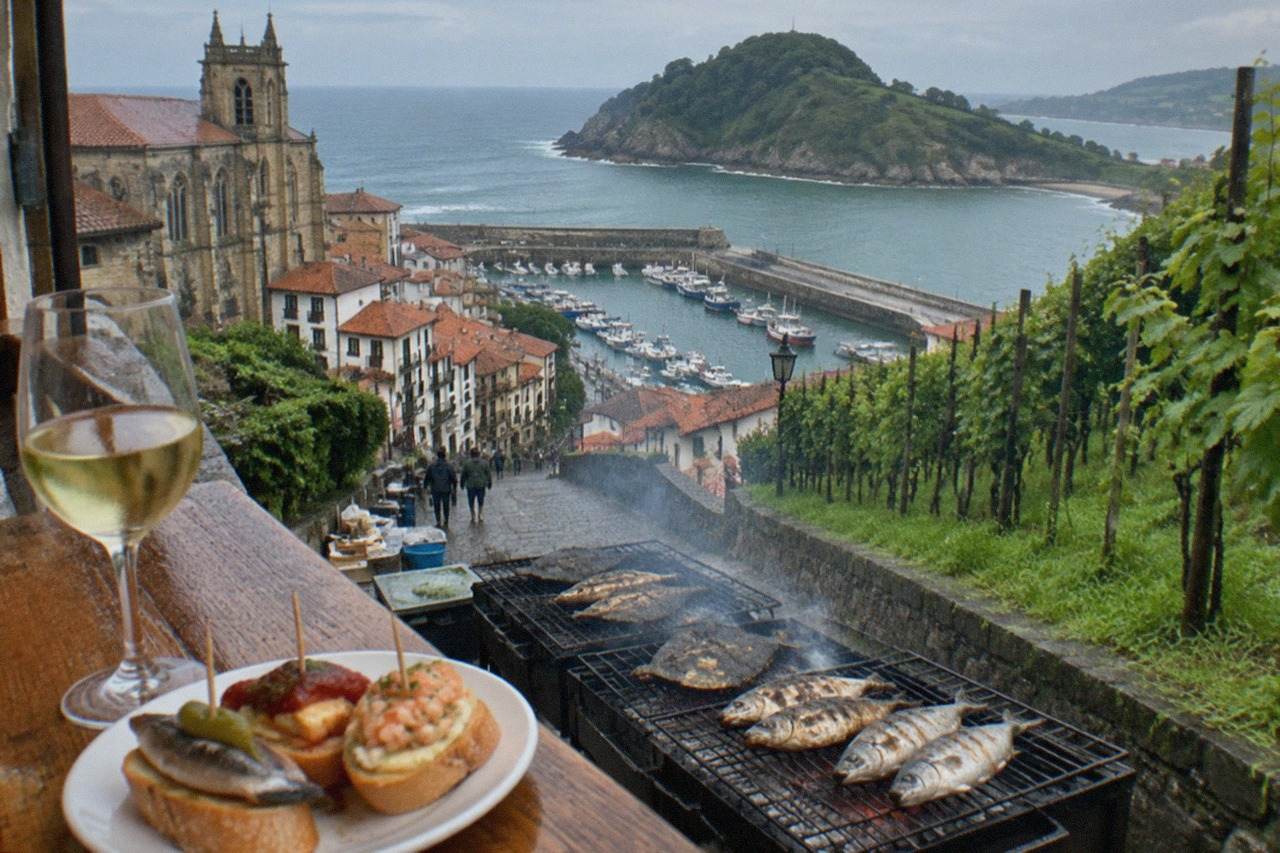
Txakoli, the lightly sparkling white wine poured in nearly every pintxo bar in San Sebastián, the Basque city on La Concha bay whose official name is Donostia / San Sebastián, is pronounced CHA-ko-lee. The word looks intimidating on a bar board because Basque spells the ch sound as tx, but nothing about the pronunciation is difficult once that one rule is known. Say the first syllable like the ch in church, keep the middle syllable short, and finish with a clean lee. Stress lands on the first syllable, and the whole word takes about a second to say.
How Do You Pronounce "Txakoli" Wine?
Txakoli is pronounced CHA-ko-lee, with the stress on the first syllable and the tx at the start sounding like the ch in church. The word has three syllables, the middle one is short and flat, and the final i is a clean ee sound. Basque spelling is highly regular, so unlike English, once you know that tx means ch, you can say the word with confidence in any bar in San Sebastián.
The confusion is entirely visual. English readers meet the letter cluster tx and reach for a sound that does not exist in the word, something like "tza" or "tax". Basque uses the letter x on its own for the sh sound, and tx for the harder ch sound, so the spelling is doing exactly what it should. The same logic runs through the city's food vocabulary: pintxos, the skewered bar snacks, is pronounced PEEN-chos, and txotx, the ritual of drinking cider straight from the barrel, is roughly CHOCH.
The Spanish spelling of the wine, txacolí with an accent on the final i, appears on some labels and menus, and it is pronounced the same way. The Basque form txakoli and the Spanish form txacolí are two spellings of one word, not two wines. Some labels also carry the older variant chacolí, which drops the tx entirely and shows what the word sounds like to a Spanish ear.
Why Does Basque Spelling Use "Tx" For A "Ch" Sound?
Basque writes the ch sound as tx because the letter x on its own already stands for the softer sh sound in modern Basque orthography, so the language needed a second combination for the harder ch. Tx is that combination, and it appears in some of the most common words a visitor to San Sebastián will meet, including pintxos, txotx and txakoli itself. The system is consistent, unlike English spelling, so every tx in Basque sounds the same.
Basque has its own standardised orthography, and it is remarkably predictable. Once a visitor knows a handful of letter combinations, almost every Basque word on a menu or a street sign can be read aloud correctly on the first try. This matters in a city where Basque and Spanish share every signboard, and where the wine list in a Parte Vieja bar may switch languages mid-page.
The table below gathers the Basque words a visitor is most likely to need in San Sebastián, with a plain guide to saying each one. None of them is harder than txakoli itself, and all of them follow the same rules.
| Basque word | What it is | How to say it |
|---|---|---|
| txakoli | the local lightly sparkling white wine | CHA-ko-lee |
| pintxos | bar snacks served on bread or a skewer | PEEN-chos |
| txotx | the cider-house ritual of drinking from the barrel | CHOCH |
| sagardoa | Basque cider, the drink of the txotx season | sah-gar-DOH-ah |
| Donostia | the Basque name of San Sebastián | doh-NOSS-tee-ah |
| Zurriola | the surf beach in the Gros district | soo-ree-OH-lah |
The txotx season itself is a rule worth knowing alongside the vocabulary. The tourism board describes the cider house season as running from the middle of January to the end of April, and it is the one time of year when the cider houses around Astigarraga, a separate town from San Sebastián, serve the full barrel-side ritual. A visitor who can say txotx will be handed a glass at exactly the right angle.
Where Does Txakoli Come From Near San Sebastian?
Txakoli is a Basque Country wine produced under three protected designations, and the one a visitor to San Sebastián will taste most often is Getariako Txakolina, made in and around the fishing town of Getaria on the Gipuzkoa coast west of the city. The vineyards sit close to the Atlantic, on slopes that face the sea, and the wine's high acidity and slight spritz come directly from that cold, wet coastal climate.
The connection between the wine and the weather is not a romantic flourish. AEMET's climate normals for its Igeldo station above San Sebastián record 1,507 mm of rain a year across 141 rain days, and even July, the driest month, averages 86 mm. This is a wet Atlantic corner of Spain, and the green hills that press right down to the coast at Getaria and Zarautz are the same hills that grow txakoli grapes. The wine tastes the way the landscape looks: sharp, green and cold-climate fresh.
That is also why the pour matters. Txakoli is traditionally poured from a height into a flat tumbler, so the wine breaks against the glass and fizzes, and it is drunk young, within a year or so of harvest. The full guide to how the pour works covers the technique, and the page on what txakoli tastes like goes deeper into the flavour profile.
The easiest way to connect the word with the place is to go to the coast where it is grown. A guided trip from the city covers the tasting, the drive and the town in one booking:
The txakoli country is small and easy to reach, but the tasting rooms are scattered, and a guided half-day solves the logistics of getting between them. The fishing town of Getaria also holds the Cristóbal Balenciaga Museoa, which the museum's own site lists at 14 EUR for the collection plus temporary shows, so the trip can pair a winery visit with a museum stop.
How Do You Order Txakoli In A San Sebastian Pintxo Bar?
Order txakoli by asking for a txakoli, pronounced CHA-ko-lee, or simply by pointing at the bottle on the counter, since most pintxo bars in the Parte Vieja keep a bottle chilled and open behind the bar. It is normally served in a flat tumbler rather than a wine glass, poured from a height, and it is treated as an everyday house white rather than a special occasion wine.
The bars of the Old Town, the district the locals call the Parte Vieja, pour txakoli by the glass all year. A visitor who has mastered the pronunciation will be understood instantly, and a visitor who has not will still be understood, because bartenders here are used to every accent in Europe attempting the word. The order that matters more than the wine is the round: a glass of txakoli and a couple of pintxos, standing at the bar, moving from counter to counter. The page on what kind of wine txakoli is explains the style in detail, and the wider txakoli guide covers where it fits among the city's drinks.
For visitors who want the structure of a guided evening rather than a self-directed crawl, a food tour that pairs pintxos with local wines takes the guesswork out of ordering. The city's own wine identity is modest: there is no wine called San Sebastián, and the phrase "San Sebastián wine" belongs to a winery in Florida that has nothing to do with this city. The local pour here is txakoli, and in the cider season it is sagardoa.
The serving rules are simple enough to fit in one table:
| Detail | What happens in the bar |
|---|---|
| Glass | a flat tumbler, not a stemmed wine glass |
| Pour | from a height, so the wine fizzes as it lands |
| When | all year, as the standard local white |
| With | pintxos, salted fish, anchovies and cured ham |
| Season note | the txotx cider ritual overlaps in winter, from mid-January to the end of April |
Can You Hear The Word Spoken In San Sebastian Before You Visit?
You can hear txakoli pronounced by the people who make it, because the wineries around Getaria and Zarautz host tastings where the word is used constantly, and guided tours from San Sebastián run to those cellars year round. The pronunciation does not vary by region: Basque speakers, Spanish speakers and the city's bartenders all say CHA-ko-lee, with only the speed and the thickness of the accent changing.
The one warning worth repeating is the contamination risk in the name. A search for San Sebastián wine will return the San Sebastián Winery in St. Augustine, Florida, an unrelated business that owns that phrase. This site, the San Sebastian Spain Guide, covers the Basque city only, and the white wine of this city is txakoli, a word that belongs to the Basque Country and to nowhere else on the map.
For visitors planning a longer stay, the question of how many days to spend in the city comes up often, and the answer usually leaves room for at least one trip out to the coast where the wine is made. A day that combines Getaria's wineries with the coast road through Zarautz and Zumaia is the classic pairing, and it is the route several guided day trips follow:
The dedicated Getaria txakoli tour below is the most direct option for a visitor whose main goal is the wine itself, with hotel pickup in the city included:
Common Questions About Txakoli Pronunciation
How do you pronounce "txakoli" wine?
CHA-ko-lee, with the stress on the first syllable. The tx at the start sounds like the ch in church, the middle syllable is short, and the final i is a clean ee. The word is Basque, and Basque spelling is regular, so the rule never changes.
Is txakoli the same as txacolí?
Yes. Txakoli is the Basque spelling and txacolí is the Spanish spelling, with an accent marking the stress on the final syllable of the Spanish form. Both are pronounced the same way, and both refer to the same lightly sparkling white wine of the Basque Country.
Why is txakoli spelled with a tx?
In modern Basque orthography the letter x alone represents the sh sound, so the language uses the combination tx for the harder ch sound. The same combination appears in pintxos, pronounced PEEN-chos, and in txotx, the cider barrel ritual, pronounced roughly CHOCH.
Do people in San Sebastián say the word differently?
The pronunciation stays CHA-ko-lee whether the speaker is using Basque or Spanish. What changes is the accent around it, not the word itself, and bartenders in the Parte Vieja are used to hearing every European accent attempt it.
Will a bartender understand if you mispronounce it?
Almost always. Pintxo bars in San Sebastián pour txakoli by the glass all year and serve visitors from everywhere, so an imperfect attempt is still instantly recognised, and pointing at the chilled bottle behind the bar works as a backup.
Say the word once or twice before the trip, order it by name on the first evening in the Old Town, and the spelling will stop looking strange by the second glass.