How Do You Pour Txakoli?
How txakoli is poured in San Sebastián, in the Basque Country of Spain: the high pour, the glass, the fizz it creates, and where to try the local white wine around the city.
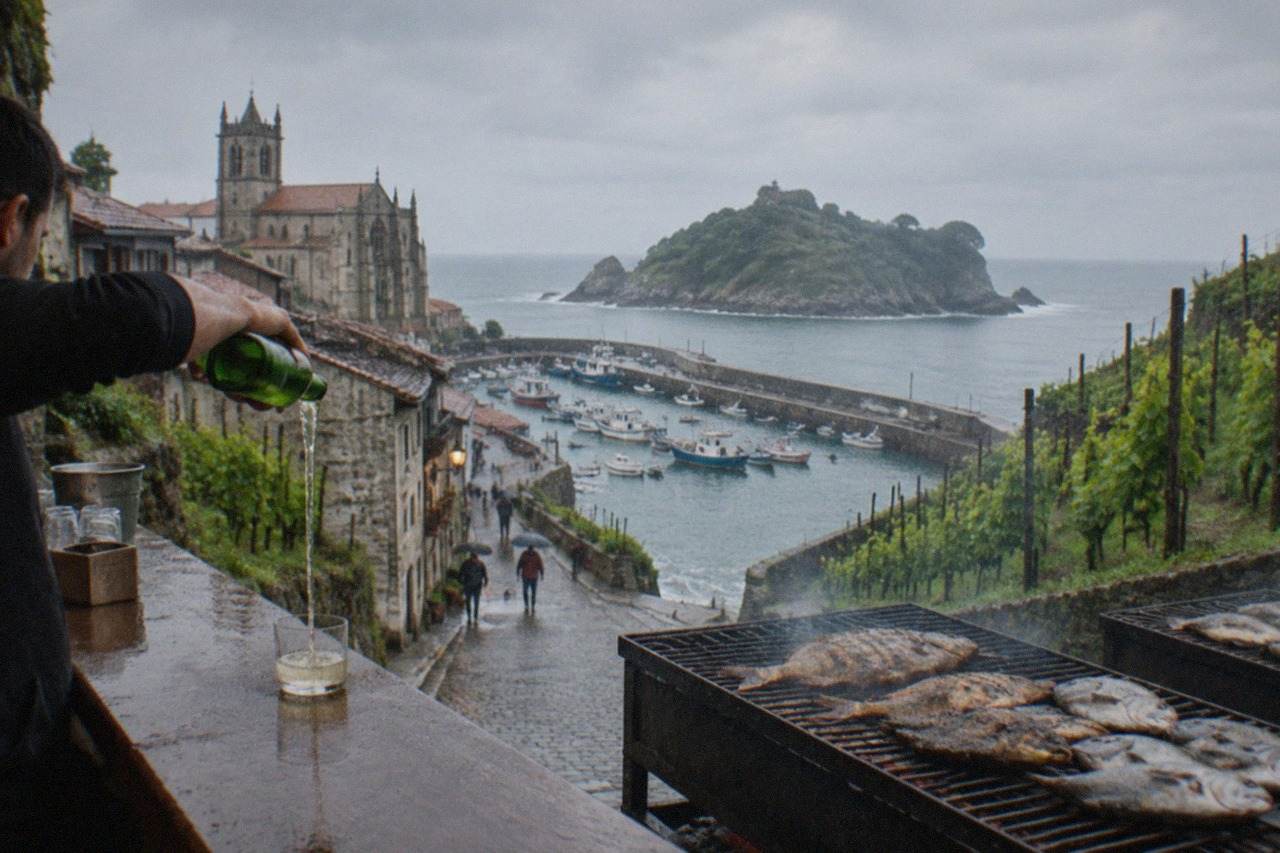
Txakoli is the local white wine of the Basque Country, and in San Sebastián, the coastal city in Gipuzkoa, Spain, whose Basque name is Donostia, it is poured in a way that surprises almost every first-time visitor: the bottle is held high above the glass and the wine is dropped in a long, thin stream. The pour is not theatre for tourists. It is how the wine is designed to be served, and it changes what lands in the glass. This page explains the technique, the reasoning behind it, the glass it calls for, and where around the city and the province the wine is made and drunk.
How Do You Pour Txakoli?
You pour txakoli by holding the bottle well above the glass, tilting the glass slightly, and letting a thin stream of wine fall into the side of the glass rather than the middle, then drinking it soon after while the sparkle is still lively. The traditional glass is a shallow, wide tumbler rather than a stemmed wine glass, and only a small amount is poured at a time, a couple of centimetres deep, so that each serving stays cold and fizzy until the last sip.
The technique breaks down into a few repeatable steps. The server straightens the arm, raises the bottle, and tips it so the wine leaves the lip in a narrow ribbon. The glass is angled so the stream hits the inner wall and runs down instead of splashing. Because only a splash of wine goes in, the pour is repeated every few minutes through a meal or a round of pintxos, which is why a bottle of txakoli on a Basque table keeps circulating rather than sitting filled to the brim. The steps below summarise what the pour involves at each stage.
| Step | What the pourer does | Why it matters |
|---|---|---|
| Raise the bottle | The arm lifts the bottle to a point well above the rim of the glass | The fall aerates the young wine and wakes up its natural sparkle |
| Tilt the glass | The glass tips so the stream meets the inner wall | The wine lands gently instead of splashing over the counter |
| Pour a thin stream | A narrow ribbon of wine, not a wide gush | A thin stream traps air and builds the light fizz the style depends on |
| Keep the serving small | Only a shallow layer of wine goes into the glass | The wine stays cold and the bubbles survive until it is drunk |
| Refill often | The pour is repeated through the meal | Every serving arrives as fresh and as fizzy as the first |
If the pour is done the way the cider houses and pintxo bars of Gipuzkoa do it, the wine arrives slightly cloudy with bubbles, cold, and ready to drink at once. Waiting is the one mistake that undoes the whole exercise: the sparkle that the high pour creates is short-lived, and a glass left standing goes flat and loses the crispness that defines the style. Readers who want the full background on the wine itself can start with the guide to txakoli, and for the flavour profile there is a separate page on what txakoli tastes like.
Why Do They Pour Txakoli So High?
Txakoli is poured from height because the wine is naturally lightly sparkling and very young, and the long fall aerates it, releases its dissolved carbon dioxide, and chills the impression of the wine on the palate. The high pour also suits the traditional shallow glass: with only a small amount in the glass, the drop creates the fizz that the style is known for, and it does the job in the few seconds the wine spends between bottle and mouth.
The reasoning is practical rather than showy. Txakoli finishes its fermentation with a gentle natural prickle, far less insistent than a champagne bubble, and that prickle fades fast. Pouring from above drives air into the wine on the way down, so the carbon dioxide comes out of solution and forms the fine sparkle the drinker is meant to taste. A young, acidic white poured flat can taste sharp and closed; the same wine poured high opens up, and the bubbles carry the aromatics to the nose before the first sip.
The height also matches how the wine is served socially. In the Basque Country the drink is a table wine for pintxos and long lunches, poured in small top-ups rather than single large servings, and a bottle passed around a group is easier to pour from a raised arm into glasses held lower on the table. The same logic runs through the cider house ritual: at a txotx session, cider is shot straight from the barrel at chest height into a held glass, and the drinker stands at the barrel and catches the stream. The cider season runs from the middle of January to the end of April in the tourism board's words, and the txotx pour is the loudest, wetter cousin of the txakoli pour. Both traditions share one idea: a young, living drink deserves a dramatic fall and a quick swallow.
For visitors who want the pour demonstrated rather than described, a guided trip into txakoli country or a pintxo crawl with a local guide puts the technique in front of a group night after night, and the bars pour it the same way whether anyone is watching or not.
What Kind Of Glass Does Txakoli Use?
Txakoli is traditionally served in a shallow, wide tumbler with no stem, the kind of glass that holds only a small measure at a time, though plenty of bars now use a standard white wine glass. The tumbler shape matters because it shows the sparkle, keeps the serving small, and leaves the wine close to the hand and the pintxo plate, which suits the way the drink is consumed: a splash of wine, a bite of food, another splash of wine.
The old glass is sometimes described as resembling a wide, squat water glass, and it is deliberately humble. Txakoli spent much of its history as a farmhouse drink for the families who grew the vines near the coast, not a bottle for a cellar, and the glass carried none of the ceremony of fine wine service. What the tumbler does well is hold the light sparkle where the drinker can see it rise, and its small capacity enforces the refill rhythm that keeps each serving fresh. A stemmed glass does the job too, and in the city's pintxo bars both shapes appear side by side on the counter.
Temperature is the other half of the answer. The wine is served cold, straight from a bottle that has been in the fridge or an ice bucket, and the small pour keeps it from warming in the glass. The drink is dry, high in acidity and low in alcohol compared with many Spanish whites, and the cold plus the fizz is what makes it cut through salted anchovies, oily fish and cured meats. For the specifics of the grape varieties and the wine's classification, there is a dedicated page on what kind of wine txakoli is, and for anyone unsure of the word itself, a page on how to pronounce txakoli covers the Basque spelling.
Where Can You Watch The Pour Around San Sebastian?
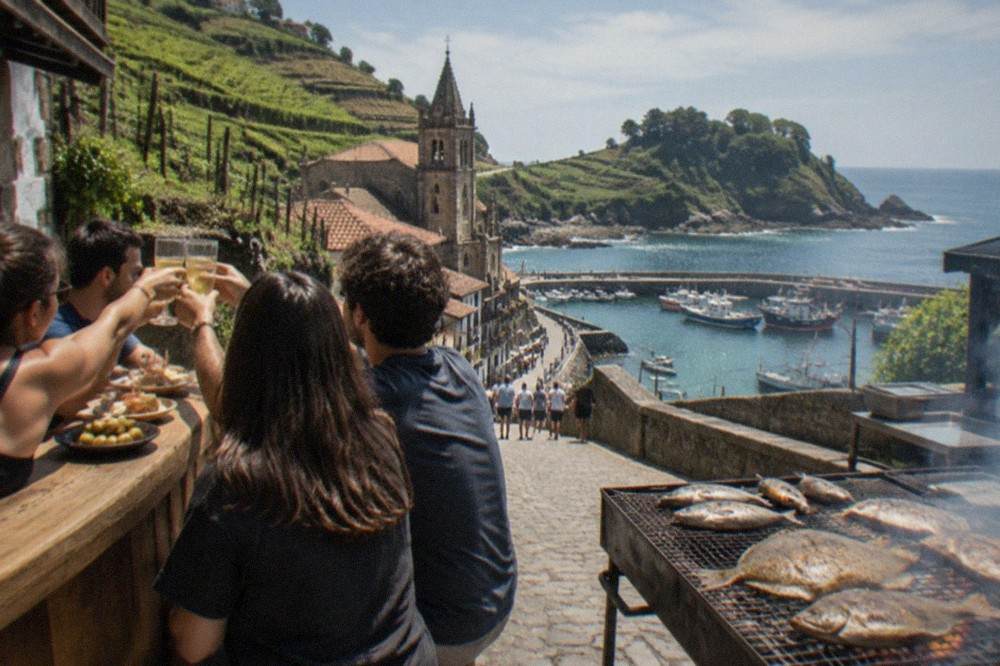
The easiest place to see txakoli poured correctly is any pintxo bar in the Old Town of San Sebastián, where the wine is a standard order and the staff pour it high all evening. The fuller experience is a trip out to the txakoli country of the Gipuzkoa coast, above all the fishing town of Getaria, where the wineries are.
The Basque Cider Museum at Sagardoetxea in Astigarraga, a separate town inland from the city, covers the cider side of the same culture, with museum visits from 5.00 EUR and a premium visit with tasting at 9.00 EUR.
Inside the city, the pour is everywhere. The Old Town, the Parte Vieja, is a dense strip of pintxo bars, and txakoli is one of the default drinks ordered alongside the food, so a visitor standing at a counter on a Friday evening will see the high pour performed dozens of times within a few metres. Ordering it is simple: the word is enough, the bottle is already cold, and the bar staff will pour it the traditional way whether or not anyone asks. The drink is a normal part of the city's food culture, not a performance put on for travellers, and the bars that serve it to locals are the same bars that serve it to everyone. For a steer on which counters those are, the page on where the locals eat in San Sebastián is the place to look.
Outside the city, the wine has its own geography. Getaria, a fishing town on the coast west of San Sebastián, is the heartland of the style, with wineries on the slopes above the harbour, and a half-day trip there pairs the pour with the place the grapes are grown. Astigarraga, inland of the city, is cider house territory rather than txakoli territory, and the museum there tells the story of the txotx ritual, the barrel pour and the season that runs from mid-January to the end of April. The two towns are separate municipalities, neither is inside San Sebastián, and each is a short journey out. A guided visit takes the logistics off the table.
The Getaria trip runs as a small-group half-day with hotel pickup included, and it pairs well with a food tour in the city itself: a shared pintxo crawl with a local covers the bar side of the culture while Getaria covers the vineyard side, and the two halves of the region's drinking life make sense together. Anyone weighing the visit against the wider region can check Check availability for dates and current pricing on the operator's live listing.
| Experience | Where it is | What it covers | Verified entry cost |
|---|---|---|---|
| Sagardoetxea museum visit | Astigarraga, a separate town inland from the city | The Basque Cider Museum, the txotx ritual and cider culture | From 5.00 EUR |
| Sagardoetxea premium visit | Astigarraga | The museum visit plus a guided tasting | 9.00 EUR |
| Txotx cider house season | Cider houses around Donostia and Astigarraga | Barrel-poured cider with the cod steakhouse meal, from mid-January to the end of April | Set by each cider house |
| Txakoli tasting in Getaria | Getaria, on the Gipuzkoa coast west of the city | Winery visits and tastings in the home town of the style | Set by each winery |
Is The High Pour Only A San Sebastian Tradition?
The high pour belongs to the whole Basque drinking culture, not only to San Sebastián, and the same technique appears across Gipuzkoa and the neighbouring Basque provinces wherever txakoli is served, from Bilbao to the French border. What the city adds is concentration: the Old Town's pintxo bars pack the pour into a walkable strip, so San Sebastián is a natural place to see it, but the wine and its serving style are regional, made on the Atlantic coast and drunk the same way wherever Basque is spoken.
Getaria, Zarautz and the coastal strip west of the city hold the vineyards, and the wineries there pour for visitors exactly as the city bars pour for locals. East along the coast, the tradition continues into the French Basque Country, where the same drinking culture crosses the border with the language, and day trips from San Sebastián to Biarritz and Saint-Jean-de-Luz pass through country where the pour would not be out of place. North of the city, the Camino de Santiago's coastal route runs through the txakoli towns on its way west, so pilgrims walk through the vineyards that produce the bottle standing on the bar counter back in Donostia.
The pour also has a cousin inside the city's own calendar. During the txotx season, from the middle of January to the end of April, the cider houses of Gipuzkoa fill with groups standing at barrels while cider is shot into raised glasses from a height, and the two rituals reinforce each other: both take a young, lightly sparkling drink and insist on a dramatic fall and a quick mouthful. A visitor who learns the txakoli pour in a bar in February can walk into a cider house the same week and recognise the logic instantly.
For drinkers who want to compare the local white against wines from further afield, there is a page on wines similar to txakoli, and for the wider question of what the region drinks, the page on the famous drink of San Sebastián sets txakoli beside cider and the rest. More on the city itself, including the full range of plans for a visit, sits on the San Sebastian Spain Guide homepage.
Common Questions About Pouring Txakoli In San Sebastian
How do you pour txakoli?
Hold the bottle well above a slightly tilted glass and let a thin stream of wine fall against the inner wall, filling the glass only a couple of centimetres deep. Drink it quickly while the sparkle the fall created is still lively, and pour again a few minutes later rather than filling the glass full.
Why do they pour Txakoli so high?
The fall aerates the young wine and releases its light natural sparkle, so it tastes livelier and shows more aroma than the same wine poured flat. The height is also practical: a small serving in a shallow glass is easy to top up from a raised arm across a crowded table.
What glass is txakoli served in?
Traditionally a shallow, wide tumbler without a stem, though many bars now use a standard white wine glass. The tumbler holds a small measure, shows the bubbles rising, and keeps the wine close to the pintxo plate it accompanies.
Should txakoli be served cold?
Yes. The bottle is kept chilled and only a small amount is poured at a time so the wine stays cold in the glass. The chill and the fizz together are what make the style cut through the salted fish and cured meats of a pintxo counter.
Do you have to pour it high at home?
A steady pour into a chilled glass still tastes good, but the wine is made to be drunk with its sparkle, and the high pour is what produces it. Raising the bottle and pouring a thin stream into a tilted glass is the traditional method and takes no equipment beyond a steady arm.
The pour is the whole point of the wine: a young, cold, lightly sparkling white built for a long evening of small glasses and short reaches across the counter, and a visitor who copies the technique at home is doing exactly what the bars of San Sebastián do every night.