What Does Txakoli Taste Like?
What txakoli, the lightly sparkling white wine of the Basque Country, tastes like, how it is poured and served in San Sebastián, and which foods and day trips pair with it.
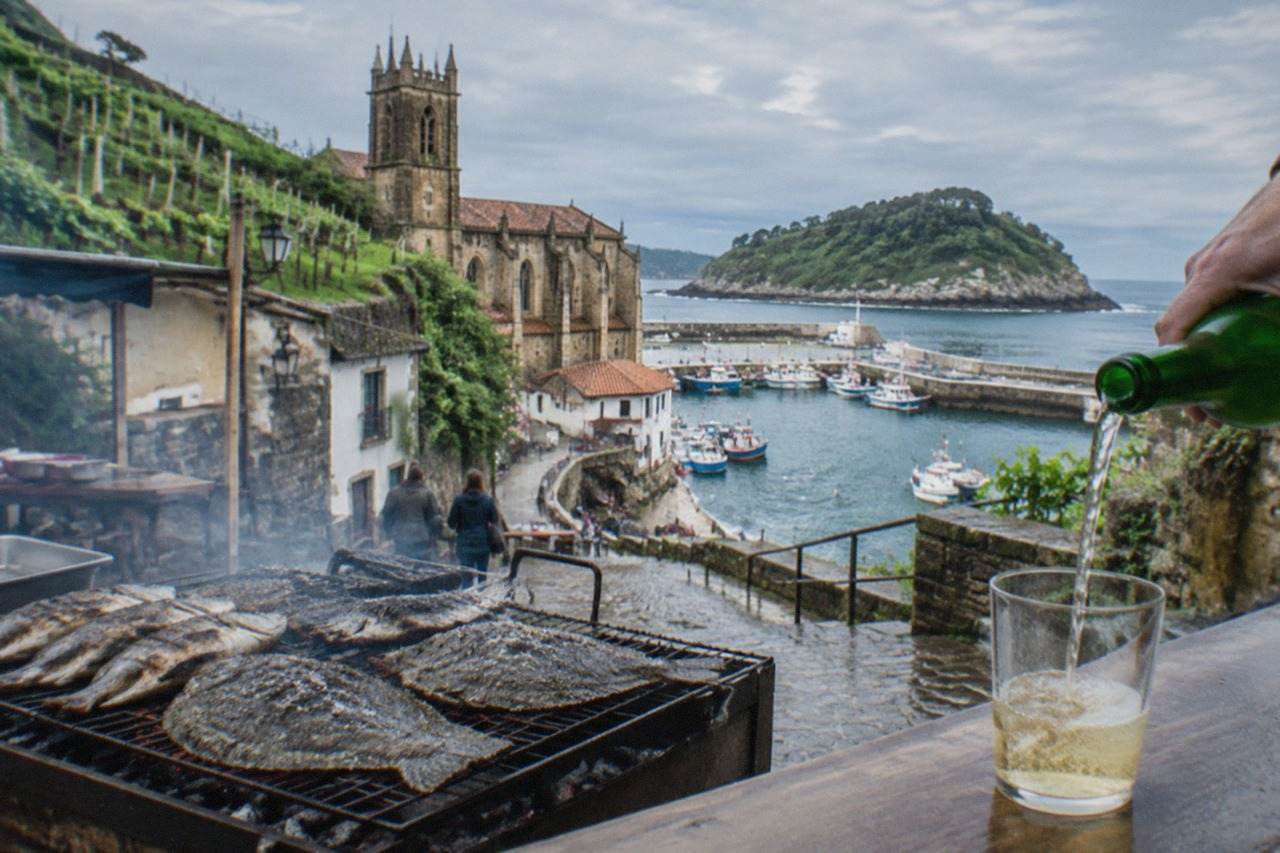
Txakoli is the local white wine of the Basque Country, and in San Sebastián, the Basque city on La Concha bay whose official name is Donostia / San Sebastián, it is poured in nearly every pintxo bar in the Old Town. It is not a wine that visitors tend to have tasted before arriving, because production is small and most of it is drunk close to where it is grown. The short answer is that txakoli tastes dry, sharply acidic and slightly fizzy, with a saline edge and green fruit flavours, and it is poured from a height in a thin stream that is as much a part of the taste as the grape.
The name covers a family of young white wines made mostly from the Hondarribia Zuri grape, with a smaller amount of red Hondarribia Beltza made in some areas. The vines grow on hillsides close to the Atlantic, and the ocean shapes everything about the glass: the acidity, the low alcohol, the slight prickle of gas, and the salty finish that locals treat as the wine's signature. The full txakoli guide on this site covers where it is made and how the denominations work. This page sticks to the question in the title: what it tastes like, and how to drink it the way San Sebastián does.
What Does Txakoli Taste Like?
Txakoli tastes dry and sharply acidic, with a light spritz of bubbles, green fruit notes of green apple, lime and pear skin, a faint herbal edge, and a distinctly saline, almost briny finish. It is a light-bodied wine, low in alcohol compared with most still whites, and served very cold, which makes the acidity feel even brighter. The overall impression is closer to fresh grape juice cut with sea water and lemon than to a rich, oaky Chardonnay.
That saline finish is the detail people remember. The vines are grown within sight of the coast in the Getariako Txakolina growing area around Getaria and Zarautz, west of the city, and the prevailing Atlantic weather, rain included, is part of how the wine gets its character. AEMET's normals for its Igeldo station show the San Sebastián area records 1,507 mm of rain a year over 141 rain days, and even July, the driest month, averages 86 mm. Vines in this climate keep their acidity because the growing season stays cool, and the wine is bottled young, usually within months of harvest, so none of that freshness is traded away.
The bubbles deserve a note, because they are not champagne-style. Most txakoli keeps a light natural carbonation from the fermentation, enough to give a prickle on the tongue rather than a stream of bubbles. The traditional way to serve it, poured from a height into a flat tumbler, is designed around that: the fall aerates the wine and releases the gas, and the wide glass lets it go flat quickly, which is fine, because the bottle is meant to be finished young and fast. If you want the technique, how to pour txakoli explains the arm-high pour step by step.
The table below breaks the taste into its parts, so you know what to look for in the glass.
| Element of the taste | What you notice in the glass |
|---|---|
| Acidity | High and mouth-watering, the dominant feature, sharper than most still whites |
| Bubbles | A light prickle of natural carbonation that fades fast in the glass |
| Fruit | Green apple, lime, pear skin, occasionally white grapefruit |
| Herbal edge | Fresh grass or nettle notes in many bottles |
| Finish | Saline and mineral, with a sea-salt impression that lingers |
| Body and alcohol | Light-bodied and low in alcohol, served very cold |
Not every bottle tastes identical. Wines labelled Getariako Txakolina, from the coast west of the city, tend toward the saltiest and most citric profile. Bottles from Bizkaiko Txakolina, around Bilbao to the west, and Arabako Txakolina, inland to the south, run a shade rounder and less briny, though all three share the same high-acid, low-alcohol, drink-it-now style. If you are curious how the wine compares with better-known bottles, what wine is similar to txakoli maps the closest substitutes.
How Is Txakoli Served In San Sebastian Bars?
In San Sebastián bars txakoli is served very cold, in a flat tumbler rather than a stemmed wine glass, poured from a height in a thin stream by the bartender, and usually in small measures of a few centimetres of wine per pour. The point of the theatrical pour is practical: the fall opens the wine and releases its light fizz, and the small measure means each glass arrives cold and lively. Bottles are typically shared, poured round by round, and finished within the evening rather than cellared.
The pour is the thing visitors photograph, and it is worth watching the bartender's arm rather than the glass. Held high, the bottle tips a thin ribbon of wine down into the tumbler below, and the bar staff do it without looking, which takes practice. The wine is not swirled or sniffed like a tasting-room white. It is drunk almost immediately, cold and slightly spritzy, and then the glass is topped up for the next round. Asking for a big pour defeats the purpose, because a full tumbler of txakoli goes flat and warm before you reach the bottom.
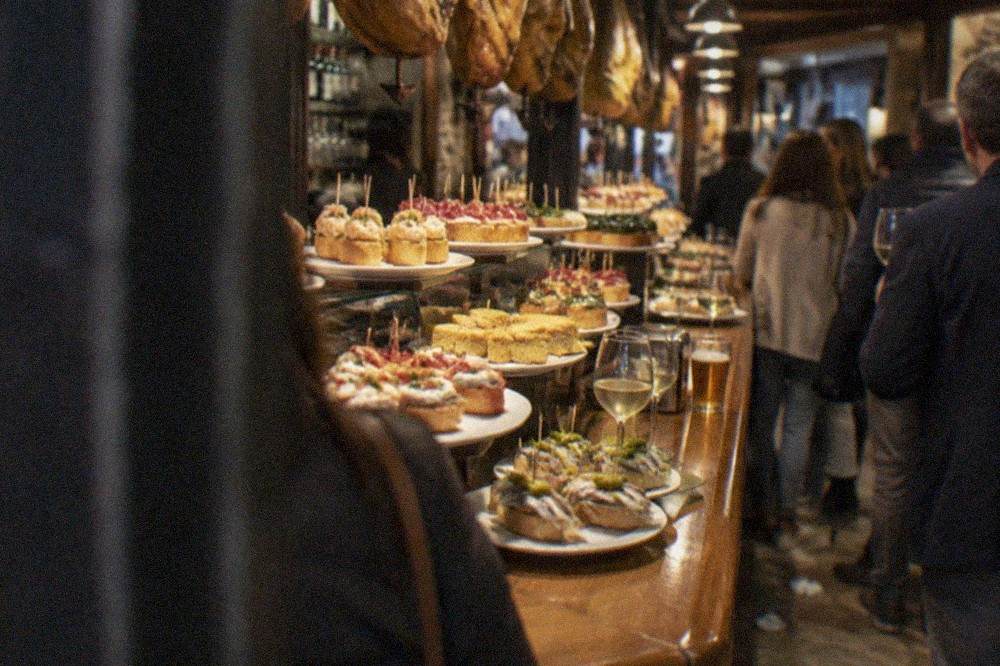
Pintxo bars in the Parte Vieja, the Old Town, are the natural place to drink it, standing at the counter with a small plate in front of you. The wine's acidity is exactly why bars push it: it cuts through oil, salted fish, cured meat and cheese without dominating anything. If you are still working out how to say the word at the bar, how to pronounce txakoli wine gives the Basque pronunciation, and it is easier than the spelling suggests.
Which Foods Does Txakoli Pair With In San Sebastian?
Txakoli pairs best with the foods San Sebastián already puts on the counter: white fish, anchovies and other tinned or cured fish, prawns, squid, mild sheep's cheese, and simple vegetable pintxos. Its high acidity and saline finish reset the palate after oily and salty bites, which is why it works across a whole pintxo crawl rather than with one dish. Rich red meats and heavy sauces overwhelm it, so it is the wrong bottle for a txuleta steak night.
The classic local logic is simple: the wine comes from the coast, and the food it is poured with comes from the same coast. Grilled or fried white fish, salt cod preparations, anchovies in vinegar or oil, and shellfish all echo the wine's own salinity. A wedge of mild Idiazabal-style sheep cheese with quince paste is another standard partner, the acidity slicing through the fat. The pairings table below collects the combinations you will actually see in the city's bars. More of these guides are collected on San Sebastian Spain Guide.
| Food | Why it works with txakoli |
|---|---|
| White fish, grilled or fried | The wine's salinity mirrors the fish, and the acidity lifts fried batter |
| Anchovies and tinned fish | Sharp acid cuts the oil and salt of conservas |
| Prawns and squid | Light body matches delicate shellfish without masking it |
| Mild sheep's cheese | Acidity balances the fat, quince adds a sweet contrast |
| Green vegetables and tortilla pintxos | Herbal notes in the wine echo fresh, grassy flavours |
| Txuleta steak and heavy red sauces | The pairing to avoid: the wine is too light to stand up to them |
Can You Taste Txakoli At The Source Near San Sebastian?
Yes, and the easiest way is a half-day trip west along the coast to Getaria, the fishing town at the heart of the Getariako Txakolina growing area, where wineries receive visitors for tastings among the vines. Getaria is a separate municipality, roughly an hour from the city by road, and it combines the bodegas with a fishing port, a grilled-fish restaurant row and the Cristóbal Balenciaga Museoa. A guided small-group option with hotel pickup exists, and the operator's live listing carries the current price and dates.
Tasting at a bodega is a different experience from the bar counter. You walk the steep, coastal vine rows, see how the vines are trained high off the ground to catch the wind and avoid damp, and taste the wine beside the tank it came from, often alongside the local sheep's cheese and its quince paste. The visit makes the taste click into place: once you have stood in the drizzle the vines grow in, the saline finish stops being a tasting note and starts being geography.
The Getaria trip is the one to pick if txakoli is the point of the day, and you can Check availability beside the Getaria txakoli tour page on this site. Two nearby alternatives suit different plans: a day built around the city's pintxo bars instead of the vines, or a full-day run inland to Rioja for heavier reds. All three appear in the band below.
Is Txakoli The Same As Cider In San Sebastian?
No. Txakoli is a wine made from pressed grapes, while the Basque Country's other signature drink, sagardo, is dry still cider made from apples, drunk in a different season and in a different setting. Cider is poured in cider houses during the txotx season, which the tourism board describes as running from the middle of January to the end of April, from barrels held high so the falling spray aerates it. Txakoli is poured year-round in bars, and its slight fizz comes from grape fermentation, not apples.
The two drinks get confused because both are poured from a height and both taste dry and sharp. The differences are easy to hold onto once you have had both. Cider is flat once the splash settles, tastes of apples with a barnyard, tannic edge, and comes with a fixed cod-and-steak meal at the table. Txakoli keeps a prickle, tastes of green fruit and sea salt, and accompanies pintxos rather than a seated feast. The seasons barely overlap: the txotx season ends in late spring, and txakoli's moment stretches across the summer beach months and beyond.
If a cider house meal is on your list, plan it for the winter or early spring half of the year, and save the txakoli bodega visit for any month. The two together, a January txotx lunch and a June afternoon in Getaria, cover the Basque Country's drinking calendar better than any single trip can.
Common Questions About Txakoli In San Sebastian
What does Txakoli taste like?
Txakoli tastes dry, sharply acidic and lightly fizzy, with green apple, lime and pear-skin fruit, a fresh herbal edge and a distinctly saline, sea-salt finish. It is light-bodied, low in alcohol and served very cold, so the overall impression is fresh and mouth-watering rather than rich.
Should txakoli be chilled?
Yes, served very cold is the standard. The low temperature keeps the acidity brisk and the bubbles lively, and bars keep bottles in the fridge rather than on a room-temperature shelf.
Why is txakoli poured from a height?
The high, thin pour aerates the wine and releases its light natural carbonation, waking it up in the glass. The traditional flat tumbler and small measures exist for the same reason: each pour is drunk quickly while it is still cold and spritzy.
Is txakoli red or white?
Mostly white, from the Hondarribia Zuri grape. A smaller amount of red txakoli is made from Hondarribia Beltza, but the pale, green-tinged white is what nearly every bar in San Sebastián pours.
Can you visit a txakoli winery from San Sebastian?
Yes. The Getariako Txakolina area around Getaria, a separate coastal town west of the city, is the closest, and guided small-group day options with hotel pickup exist. The operator's live listing carries current prices and departure details.
What food goes best with txakoli?
White fish, anchovies and other tinned fish, prawns, squid and mild sheep's cheese are the classic pairings in San Sebastián's pintxo bars. Hearty red meat dishes overpower it, so order a Rioja or a txakoli's cider-house cousin for those instead.
A glass of txakoli, poured high into a tumbler at a crowded counter in the Parte Vieja, is the quickest way to taste the Basque coast itself: green fruit, bright acid, a prickle of gas and a finish of sea salt. Drink it cold, drink it fast, and order the next small measure before the fizz settles.