What Wine Is San Sebastian Known For?
San Sebastián in the Basque Country is known for txakoli, the lightly sparkling white wine poured from a height, plus cider house culture and Rioja day trips.
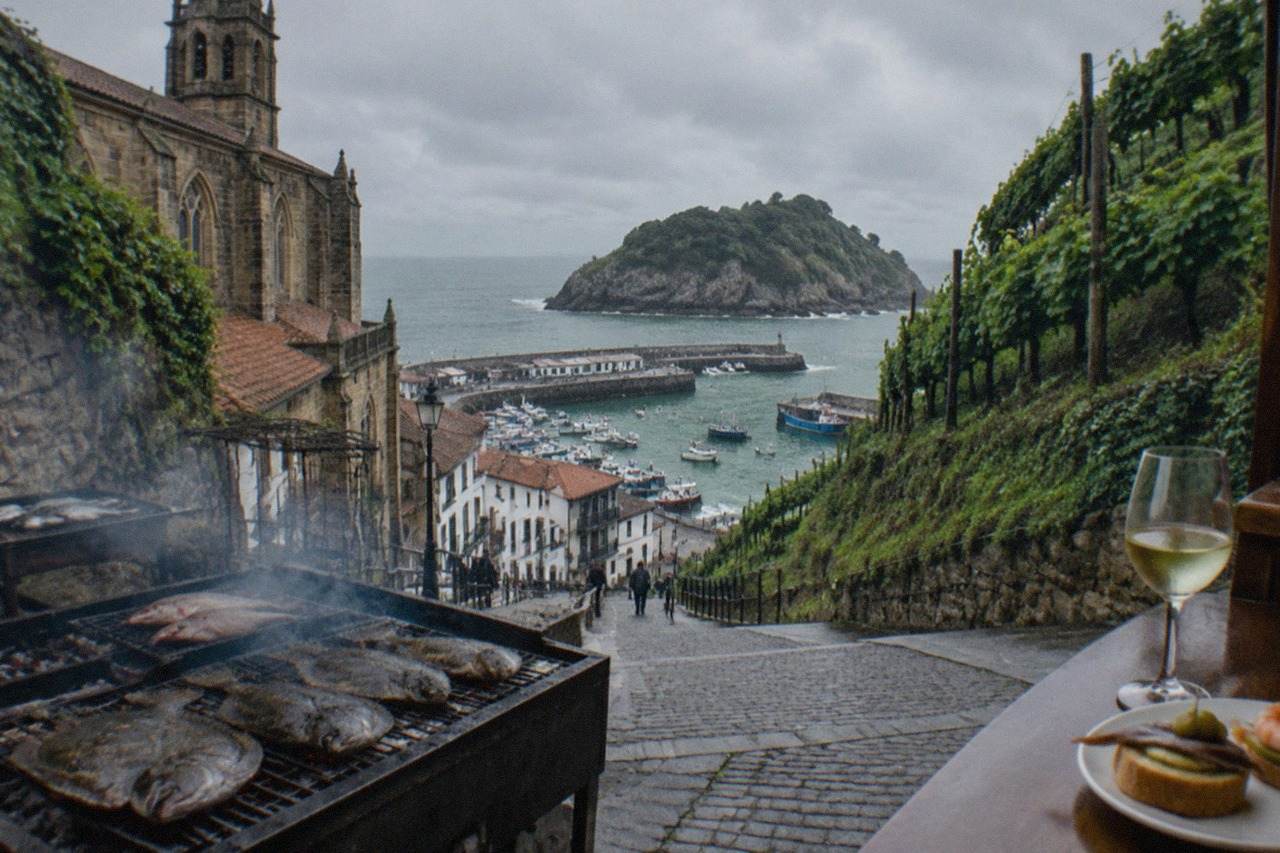
San Sebastián, the Basque city on La Concha bay whose official name is Donostia / San Sebastián, is known for one wine above all others: txakoli, the pale, lightly sparkling white that bars across the city pour from shoulder height straight into the glass. It is the drink that arrives with pintxos in the Old Town, and its home vineyards sit along the Gipuzkoa coast, a short drive from the city. Cider runs a close cultural second, poured straight from the barrel in the cider houses of Astigarraga and the surrounding hills during the txotx season, and Rioja, Spain's most famous red region, is close enough for a day trip. A search for "San Sebastián wine" can also land you on a Florida winery of that name; this page is about the Basque Country in Spain, and the wines that city actually drinks.
What Wine Is San Sebastian Known For?
San Sebastián is known for txakoli, a young, dry, lightly sparkling white wine made from local Basque grape varieties and poured from a height so the bubbles burst on the surface. It is the default glass in the city's pintxo bars and the wine most strongly tied to Basque coastal identity. Alongside it sit natural cider, served straight from the barrel in cider houses during the txotx season, and the reds of Rioja, which is close enough for a day trip.
Txakoli is not a brand but a style with Denomination of Origin protection, and the versions poured in San Sebastián come mostly from the coastal strip of Gipuzkoa, where the Atlantic climate keeps the grapes high in acid and low in alcohol. The wine is deliberately young: most bottles are meant to be drunk within a year or two of the harvest, and the slight spritz that defines it is a feature of that freshness, not a fault. The classic serve is theatrical. The bottle goes up, the glass goes low, and the stream falls through the air, which aerates the wine and wakes the bubbles. More on how that works and how to say the word is in how txakoli is pronounced and what kind of wine txakoli actually is.
The reason the city and the wine belong together is geography. The fishing towns of the Gipuzkoa coast, Getaria and Zarautz among them, sit within easy reach of San Sebastián, and their hillside vineyards look out over the same water the city looks out over. The wine that goes with grilled fish caught in that water is the wine grown above it. That pairing logic, fish and txakoli, is the whole Basque coast in one order at a bar.
Why Is Txakoli Poured From A Height?
Txakoli is poured from a height, often a metre or more above the glass, because the fall aerates the wine and releases its light natural sparkle, which fades fast in the glass. The high pour is not only showmanship: it softens the sharp acidity slightly and makes the wine ready to drink the moment it lands. Drink it slowly and the fizz goes flat, which is why bars pour it in small measures.
The technique has a practical root. Txakoli retains a light carbon dioxide fizz from its fermentation, and that fizz dissipates quickly. Pouring from a distance breaks the surface of the wine as it arrives, waking the bubbles and letting the drinker taste the wine at its liveliest. The traditional glass is a small, flat tumbler, the same kind used for cider in the cider houses, and it holds little more than a couple of sips by design. A large wine glass would let the sparkle die before the pour was finished.
The acidity is the other reason for the ritual. Txakoli's high acid is what makes it the match it is for pintxos, for anchovies, for the gilda, and above all for grilled fish, but it needs a moment of air to show its fruit rather than just its sharpness. The long fall provides that moment instantly. If you want to try the pour yourself, the mechanics are simple enough to describe: bottle high, glass low, a thin steady stream, and no attempt to pause mid-pour.
Where Should You Drink Wine In San Sebastian?
The Old Town, the Parte Vieja, is where most wine drinking in San Sebastián happens, in pintxo bars where txakoli is poured by the glass alongside small plates. The Gros district across the river has a younger bar scene with the same habits, and the cider houses of Astigarraga, a separate town a short ride away, are the place for cider rather than wine. For a structured introduction, guided pintxo and wine tours walk you through several bars in one evening.
The bar culture matters as much as the wine. A visitor does not sit down for a bottle in a Parte Vieja bar; they stand at the counter, order a pintxo and a glass, and move on. Txakoli fits this rhythm perfectly because it is served in small measures and meant to be drunk fresh. The bars around Calle 31 de Agosto and the streets off the Boulevard are the densest stretch, and the staff pour txakoli all evening without a menu being opened.
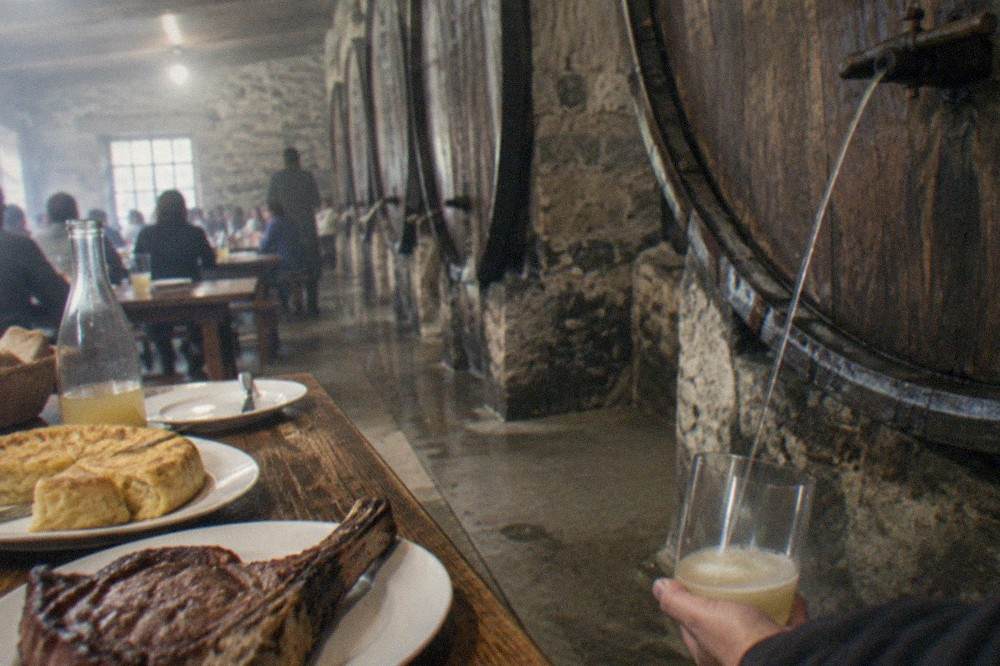
Cider is the other half of the answer. The txotx season, in the tourism board's wording, runs from the middle of January to the end of April, and in season the cider houses around Astigarraga serve a set menu of cod omelette, fried cod, a great txuleta steak and cheese with quince, while the barrel is opened and guests catch the cider straight from the spout. The Basque Cider Museum, Sagardoetxea, in Astigarraga, charges from 5.00 EUR for the museum visit and 9.00 EUR for the premium visit with tasting, if you want the story before the meal. What a txotx pour looks like, and why the glass is held low and sideways, is covered in the guide to cider houses's neighbouring pages and in the city's food coverage, including what food San Sebastián is famous for.
The table below sets out the three drinks the city is actually known for and where each belongs.
| Drink | What it is | Where you drink it | When it is at its peak |
|---|---|---|---|
| Txakoli | Young, dry, lightly sparkling white wine with Denomination of Origin protection | Pintxo bars in the Old Town and Gros, and coastal towns such as Getaria | Year round, drunk young |
| Natural Basque cider | Still farmhouse cider served straight from the barrel | Cider houses around Astigarraga and across Gipuzkoa | Txotx season, mid-January to the end of April |
| Rioja red | Aged red wine from Spain's Rioja region | Restaurants and wine bars in the city | Year round; the region is a day trip away |
Can You Visit The Txakoli Region From San Sebastian?
Yes, the txakoli country of the Gipuzkoa coast is a short drive from San Sebastián, and Getaria is the town most associated with it, a fishing port with hillside vineyards above the harbour. Half-day tours run there from the city with tasting included, and the same stretch of coast takes in Zarautz and Zumaia. Independent travel by bus along the coast is also straightforward.
Getaria is the name that comes up again and again, and for good reason: the town combines a working fishing harbour, a grill restaurant culture built on its catch, and vineyards on the slopes around it, all within a compact walkable centre. It is also the home town of the Balenciaga museum, so a wine afternoon can absorb a fashion museum without moving the car. Zarautz, with its long beach, and Zumaia, at the western end of the coast, complete the set, and the coastal road between them is one of the region's better drives.
The Getaria txakoli wine tour from San Sebastián is the direct way to do this: a half-day small-group trip with hotel pickup included, run to the fishing town for tasting. Check availability on the operator's live listing.
If red wine is more your interest than white, Rioja is the other reachable option. The walled town of Laguardia and the wineries around it sit far enough inland to make a full day of it, and the Rioja day trip guide covers what that involves. Between the two, a visitor gets the full span of northern Spanish wine in one base: the coastal white poured by the glass, and the inland red laid down for years.
What Wines Should You Order If You Do Not Like Txakoli?
If txakoli's sharpness is not for you, San Sebastián's wine lists do not stop there: Rioja reds are on every serious restaurant list, and the city's cider houses offer natural cider as a completely different experience. The local pours are the point of the visit, but a visitor who prefers still white or fuller red wine will find both in the same bars, usually from nearby Spanish regions.
Rioja is the easy answer for red drinkers, and in a city with 11 Michelin stars across 6 restaurants in the MICHELIN Guide Spain 2026, the cellar lists are serious. Whites from Rueda and albarino from Galicia appear on many lists as well. But the honest advice is to keep ordering the txakoli anyway: it is a wine built for the food on the table, its acid cutting through olive oil, salted fish and grilled meat in a way a heavier white will not. If you want a comparison point before you travel, wines similar to txakoli names the styles that come closest.
The cider house is the alternative for anyone who would rather skip wine altogether. The txotx meal is fixed and generous, the cider flows free from the barrel until the food is finished, and the ritual of catching the stream from a height makes txakoli's pour look cautious. It is a dinner theatre in which the drink is the performance, and it runs from the middle of January to the end of April.
Common Questions About Wine In San Sebastian
What wine is San Sebastian known for?
Txakoli, a young, dry, lightly sparkling white wine with Denomination of Origin protection, poured from a height in the city's pintxo bars. Natural cider from the Gipuzkoa cider houses is the other local drink, and Rioja reds are the most common wine on restaurant lists.
Is txakoli a white wine or a sparkling wine?
Txakoli is a still white wine with a light natural sparkle from its fermentation. It is not fully sparkling like cava, and the fizz fades quickly in the glass, which is why it is poured from a height and served in small measures.
Where does the txakoli served in San Sebastian come from?
Mostly from the coastal strip of Gipuzkoa, the province San Sebastián belongs to, with Getaria and Zarautz the best known towns. The Atlantic climate keeps the grapes high in acid, which defines the style.
Can you visit txakoli wineries as a day trip from San Sebastian?
Yes. Getaria is the classic half-day destination, and small-group tours run there from the city with tasting included. The same stretch of coast takes in Zarautz and Zumaia.
What is the txotx season?
The cider house season, when barrels are opened and cider is poured straight from the spout alongside a set menu. The tourism board describes it as running from the middle of January to the end of April.
Is there a wine called San Sebastian?
Not in the Basque Country. The phrase "San Sebastián wine" belongs to a winery in St. Augustine, Florida, and has nothing to do with the Spanish city. The local white here is txakoli.
The short version: come to San Sebastián for txakoli, poured high and drunk young with pintxos, come between January and April if you also want the cider houses at full tilt, and use the city as a base for the coastal vineyards of Getaria and, if red is your colour, the long day inland to Rioja. That is the whole wine map of the Basque Country in one city, as San Sebastian Spain Guide covers in more depth across its wine and cider pages.