What Is The Famous Drink In San Sebastian?
The famous drink of San Sebastián in the Basque Country, Spain is txakoli, the lightly sparkling local white wine, poured alongside pintxos. Cider and the txotx ritual share the spotlight.
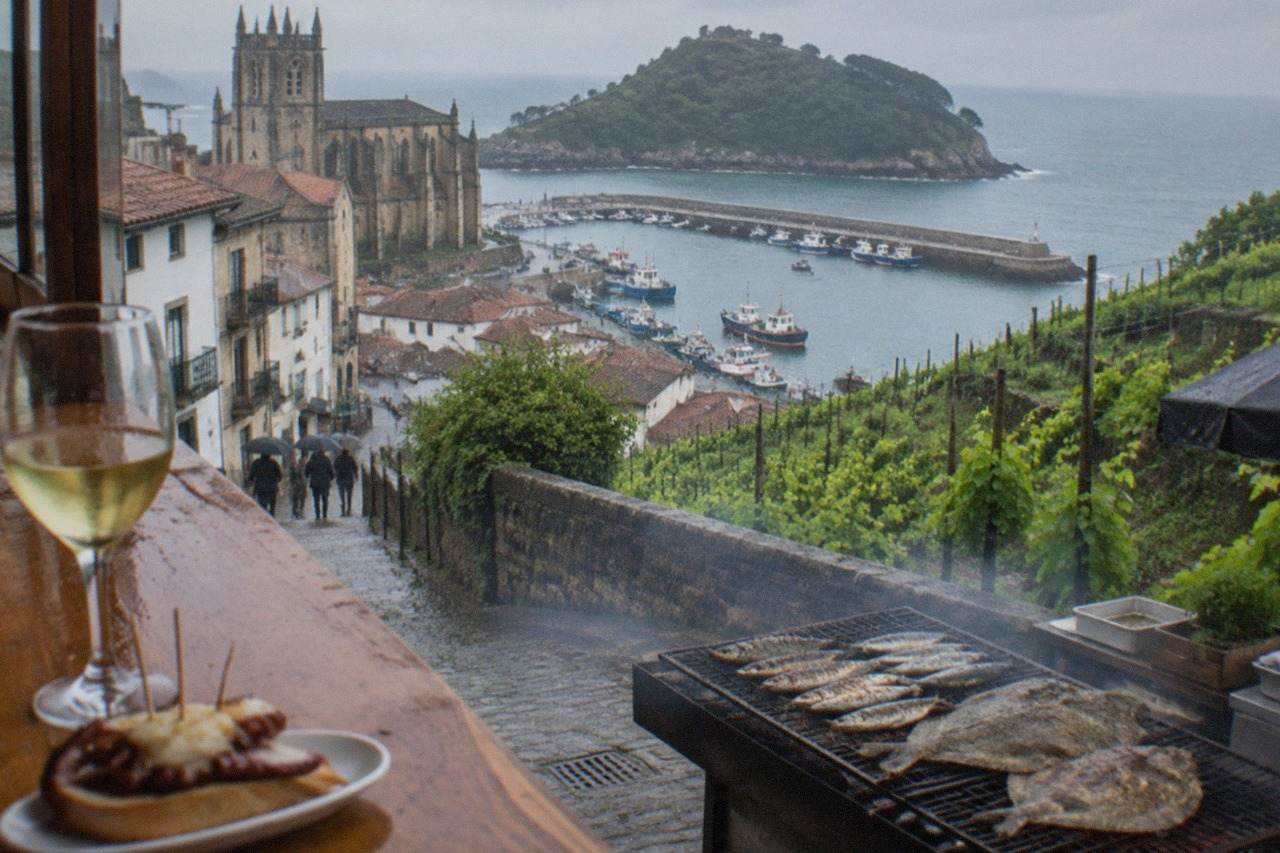
San Sebastián, in the Basque Country of Spain, is a city whose reputation is built on eating, and every plate of pintxos in the Parte Vieja arrives with a drink that is just as local as the food. The official name of the city is Donostia / San Sebastián, and the drink most tightly bound to its bars is txakoli, a pale, lightly sparkling white wine that the Basque Country makes in small quantities and drinks with almost everything. Cider, served straight from the barrel in the txotx ritual, is the other great local drink, and it has a season, a ritual and a menu of its own. This page explains what each one is, how it is served, and where a visitor actually encounters it.
What Is The Famous Drink In San Sebastian?
The famous drink in San Sebastián is txakoli, the lightly sparkling, high-acidity white wine of the Basque Country, poured in the city's pintxo bars as the standard partner to a plate of pintxos. The other celebrated local drink is Basque cider, sagardoa, served straight from the barrel during the txotx season that the tourism board describes as running from the middle of January to the end of April. Both are Basque in origin, and both are part of eating in San Sebastián rather than separate from it.
Neither drink is a tourist invention dressed up as tradition. Txakoli appears on the counters of the Old Town's bars every evening, and cider houses in and around the region, including the town of Astigarraga next to the city, build an entire dining ritual around the barrel. A visitor who orders either one is doing what the person at the next bar stool is doing.
The distinction matters because the phrase "San Sebastián wine" does not describe a wine at all. That search phrase belongs to a winery in St. Augustine, Florida, and nothing about it belongs to the Basque city. The wine of this city is txakoli, full stop, and the pages on what food San Sebastián is famous for and on txakoli itself cover how it fits into the wider food scene.
Why Is Txakoli The Wine Of San Sebastian Bars?
Txakoli is the wine of San Sebastián bars because it is the Basque Country's own white wine: light, dry, lightly sparkling and high in acidity, a style that suits the salt, oil and vinegar of pintxos. It is produced in the surrounding region in small volumes, it is served young and chilled, and in the Old Town it functions as the default glass rather than a curiosity. No other wine carries that local weight here.
The wine's character is the reason it dominates the bar counter. Pintxos are often rich, briny or vinegared, and a crisp, acidic white cuts through that in a way a heavier wine would not. Txakoli is typically poured young, and its slight natural spritz keeps it refreshing through an evening of bar-hopping. It is a wine made to be drunk in the place it comes from, which is exactly how San Sebastián uses it.
Serving it is part of the show. The pour is part of the culture of the drink, and the bars of the Parte Vieja pour it constantly from late morning until late at night. It is not a rarefied tasting-room wine reserved for special occasions; it is the glass that arrives beside a gilda or a plate of anchovies without anyone having to ask for it twice.
For visitors who want to see where txakoli comes from rather than only drink it in the city, the coastal fishing town of Getaria, a short way along the Gipuzkoa coast, is the heartland of the style, and a guided trip there is one of the easiest ways to connect the glass in the bar with the vineyard it came from.
The three options above take different angles on the same idea. The Getaria trip goes to the source of the wine, the pintxo tasting pairs wines with the food they are made to accompany, and the Pamplona day is a different kind of Basque excursion for a day out of the city. Each is booked through the operator's live listing.
What Is Basque Cider And The Txotx Ritual?
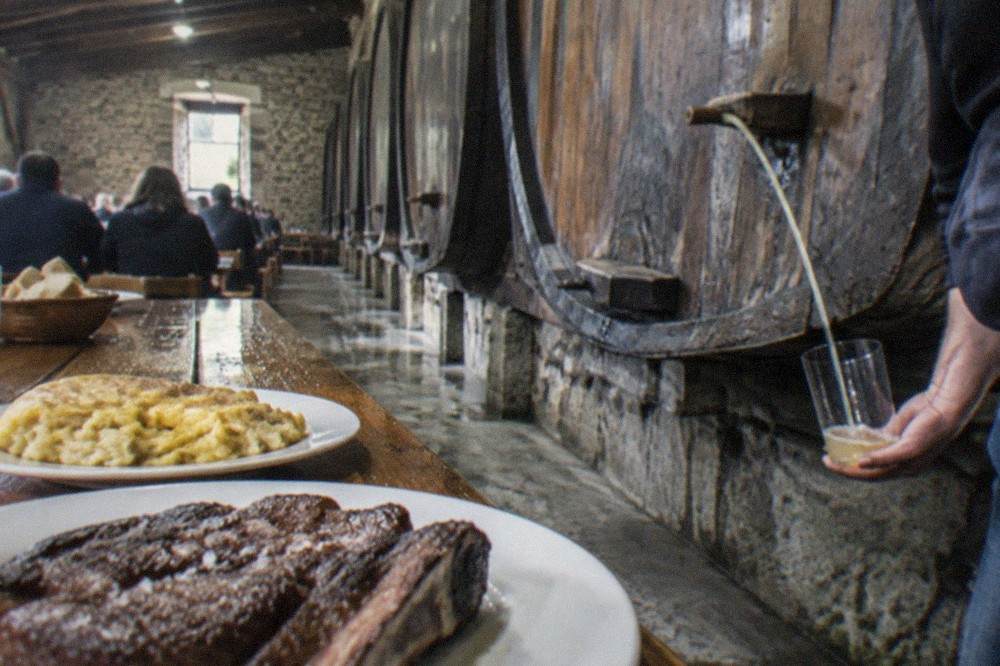
Basque cider, sagardoa, is the region's other famous drink, and the txotx ritual is the way it is served during the cider house season that the tourism board describes as running from the middle of January to the end of April. In the txotx, the barrel is opened and the cider shoots out in a thin arc that each drinker catches in a glass held low, drinking it immediately while it is still fizzing. The ritual comes with a fixed cider house menu built around a thick grilled txuleta steak.
The word txotx is the call itself, shouted when a barrel is tapped, and it is also the name for the whole ceremony. The point of catching the cider from a height is the burst of carbonation: the falling stream aerates the cider, and it is drunk in one go, standing, before the bubbles fade. Nobody sips a txotx slowly. The glass goes back on the table, the drinker goes back to the food, and the barrel calls again.
The season is a rule rather than a fixed calendar. The tourism board's own wording is "from the middle of January to the end of April", and cider houses serve the ritual and the menu inside that window. Outside it, cider still exists, but the barrel-side ceremony is a winter-to-spring thing, and a summer visitor will meet the drink in a bottle instead.
The cider house meal around the txotx is its own institution: cod omelette, cod with peppers, and the txuleta, a bone-in rib steak carved at the table, with cider poured freely in between. It is a loud, communal, standing-and-sitting kind of dinner, and it is one of the most distinctive food experiences anywhere in the region. The San Sebastian Spain Guide covers the food side of the city in depth, and cider is the drink that anchors this particular corner of it.
Booking through the operator's live listing keeps things flexible, and the terms shown there at checkout are the ones that apply. Availability for small-group trips tightens around weekends and holidays, so checking early in a trip's planning is the sensible order.
Where Can You Try Each Drink Around San Sebastian?
Txakoli is easiest to try in the pintxo bars of the Parte Vieja and the city centre, where it is poured by the glass all evening as the standard local white. Basque cider in the txotx ritual is served in cider houses during the January-to-April season, with Astigarraga, the separate town beside the city, as the historic heartland of the trade. Bottled cider and txakoli both appear on restaurant lists year-round.
The two drinks live in different places. Txakoli belongs to the bar counter and the pintxo crawl, ordered by the glass, poured often, and matched to whatever is on the plate in front of you. Cider in its ritual form belongs to the cider house, a destination in itself, visited for an evening rather than a glass. A visitor with only a night or two should drink txakoli in the Old Town; a visitor in the txotx season with an appetite should book a cider house.
The museum in Astigarraga is the one cider-house-adjacent attraction with published prices: Sagardoetxea, the Basque Cider Museum, charges from 5.00 EUR for a museum visit and 9.00 EUR for the premium visit with a tasting. It explains the whole tradition, from the apple orchards to the barrel. Astigarraga is its own municipality, not a neighbourhood of the city, so it is a short hop out rather than a walk.
This table summarises how the two famous drinks fit into a visit:
| Drink | What it is | How it is served | Where you meet it |
|---|---|---|---|
| Txakoli | The Basque Country's light, dry, lightly sparkling white wine | Poured young and chilled, by the glass | Pintxo bars of the Parte Vieja and city centre, all year |
| Sagardoa (cider) | Basque apple cider | Straight from the barrel in the txotx ritual, or bottled | Cider houses in the txotx season, mid-January to end of April; restaurants year-round |
Neither drink needs a plan in the way a Michelin-starred reservation does, but the cider house evening does. The txotx season is finite, cider houses fill up, and the ritual is an event rather than a drop-in. The pages on where locals eat in San Sebastián and the city's wider food identity cover how these evenings slot into a trip.
For a day built entirely around the wine, a guided trip out to Getaria connects the vineyard and the glass, and it can be checked through the operator's live listing:
A trip like that one is the fullest version of the idea, but it is not the only way in. The same trio of options from earlier in this page covers the pairing angle and the day-out angle as well, and the choice between them is mostly a matter of how much of the trip should be about the glass.
Whichever angle suits the trip, the drinks themselves are the easy part. Order txakoli by name in any Old Town bar, and if the calendar lands between January and April, book the cider house and go hungry.
Common Questions About The Famous Drink In San Sebastian
What is the famous drink in San Sebastian?
Txakoli, the Basque Country's lightly sparkling white wine, is the drink most associated with San Sebastián, poured by the glass in the Old Town's pintxo bars. Basque cider, served in the txotx ritual during the season the tourism board describes as the middle of January to the end of April, is the city's other celebrated drink.
Is txakoli sweet or dry?
Txakoli is a dry, high-acidity white wine with a light natural sparkle. That crispness is exactly why the bars of San Sebastián pour it alongside salty, vinegared pintxos: it refreshes the palate between bites. It is typically served young and chilled.
When is cider season in the Basque Country?
The tourism board describes the txotx cider house season as running from the middle of January to the end of April. Inside that window, cider houses serve the barrel-side ritual with its fixed menu. Outside the season, cider is available in bottles but the ceremony itself is not running.
Where does txakoli come from?
Txakoli is made in the Basque Country, and the fishing town of Getaria on the Gipuzkoa coast is one of its historic strongholds. Visitors can taste it in San Sebastián's bars or travel out to the coast to see where it is produced on guided trips.
Is there a wine called San Sebastian?
No. The phrase "San Sebastián wine" belongs to a winery in St. Augustine, Florida, and has nothing to do with the Basque city. The local white wine of San Sebastián, in the Basque Country of Spain, is txakoli.
Do you need to book a cider house in advance?
Yes, in season it is wise to book. The txotx evening is a seated event with a fixed menu, the season runs only from mid-January to the end of April, and cider houses fill up. Contact the cider house or the organiser of your trip for the details.