Getting To San Sebastian From The US
No nonstop flight from the US lands in San Sebastián, so the trip is really two decisions: which European hub to cross through, and which of the city's three nearby airports to arrive at.
Short answer
Fly from the US to Madrid, Barcelona, Paris, Lisbon or another European hub, then connect to Bilbao, Biarritz or San Sebastián Airport. Bilbao is the biggest and best served, with a direct coach to the city listed by the Basque Government at 17.10 EUR.
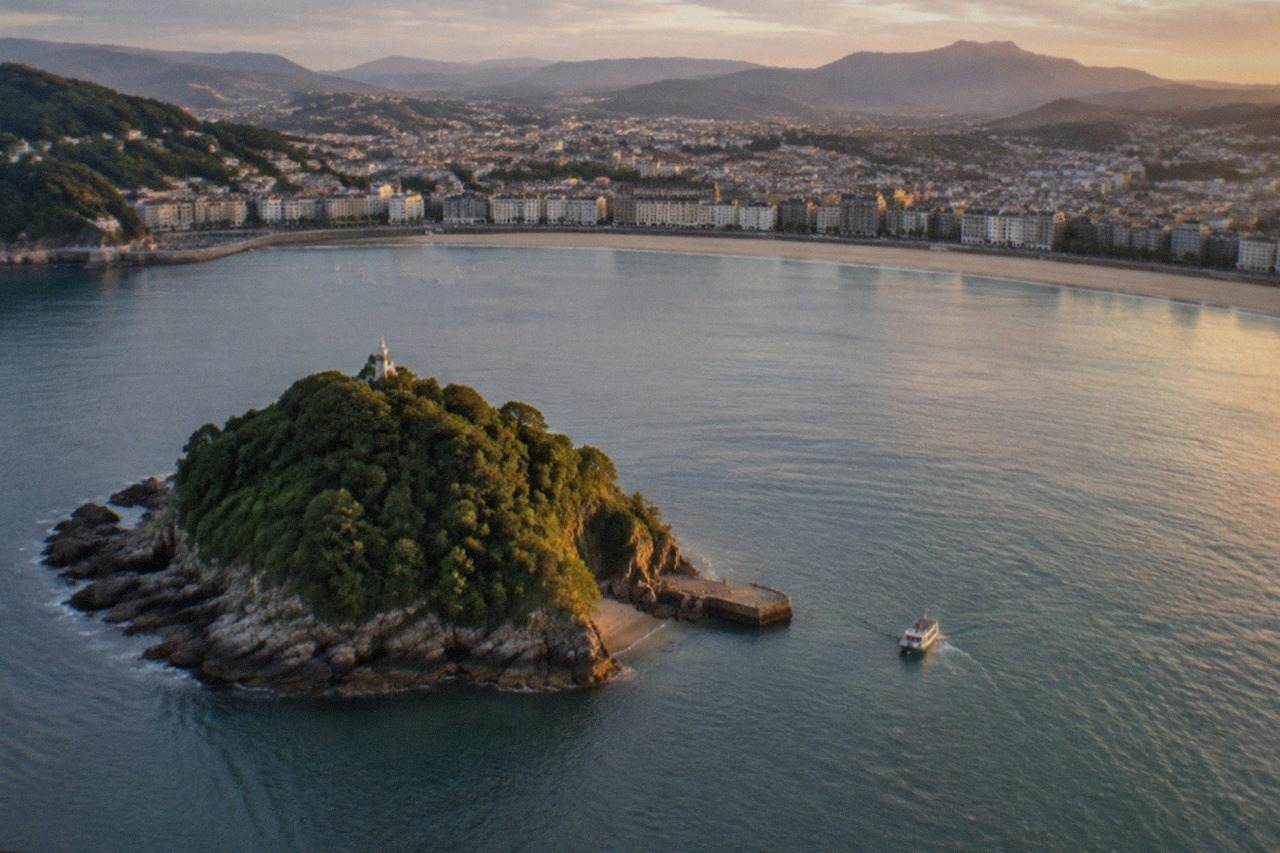
San Sebastián, whose official name is Donostia / San Sebastián, sits on La Concha bay in Gipuzkoa, in the Basque Country of northern Spain, and no scheduled airline flies there nonstop from anywhere in the United States. Every American visitor reaches the city in two steps: a transatlantic flight into a European hub, then a shorter connection to one of three airports within a little over 100 km of the city. The good news is that all three of those airports are workable, the region's rail and coach links are straightforward, and the city itself is compact enough that the last leg of the journey is the shortest part of it.
How Do I Get To San Sebastian, Spain From The Us?
There is no nonstop flight from any US airport to San Sebastián, so every route runs through a European hub first. The practical plan is to fly into Madrid, Barcelona, Paris or another major hub from your US gateway city, then take a connecting flight to Bilbao, Biarritz or San Sebastián Airport at Hondarribia, and finish by coach, train or taxi into the city on the bay.
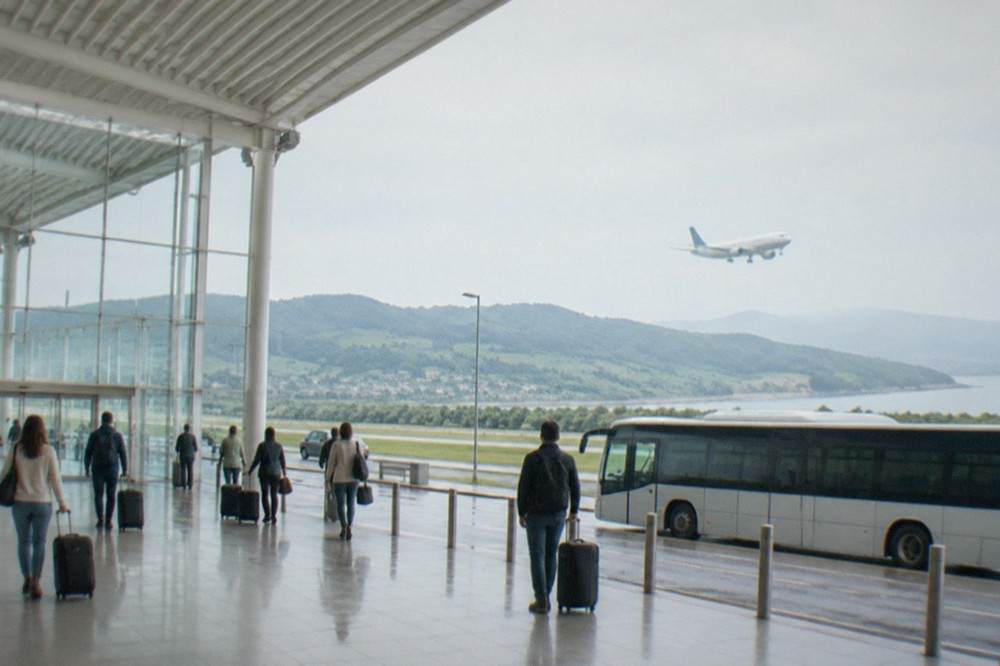
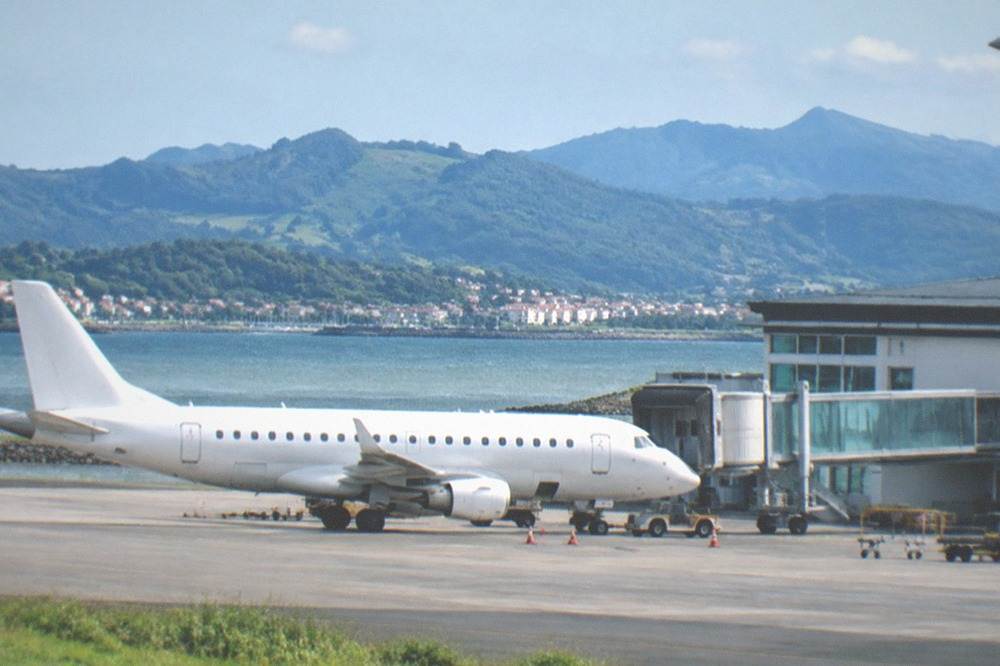
The tourism board for the city lists three airports within reach: San Sebastián Airport (EAS) at Hondarribia, 20 km away; Biarritz Airport (BIQ) in France, 45 km away; and Bilbao Airport (BIO), 105 km away. Two of the three are international, and the board lists direct onward service to the city from Biarritz and Bilbao, while noting that Vitoria-Gasteiz, 100 km away, has no direct service from its airport. Which of the three you choose shapes the whole final stretch of the journey, so it is worth deciding before you book the transatlantic leg rather than after.
For context on where you are actually heading, the city is small, 189,866 residents on the municipal register, and it sits right on the coast at the western end of the Pyrenees, 20 km from the French border. The where San Sebastian actually is question is worth two minutes of reading before you book, because the geography explains the airport options: this is a corner of Spain that is closer to Paris than to Madrid by road, and the French side of the border is genuinely usable for arrivals.
The table below shows the three airports exactly as the tourism board presents them, with the distances it publishes.
| Airport | Code | Location | Distance to San Sebastián | Direct service listed |
|---|---|---|---|---|
| San Sebastián Airport | EAS | Hondarribia | 20 km | Airport bus lines |
| Biarritz Airport | BIQ | Biarritz, France | 45 km | Yes, direct service listed |
| Bilbao Airport | BIO | Bilbao | 105 km | Yes, direct service listed |
| Vitoria-Gasteiz Airport | VIT | Vitoria-Gasteiz | 100 km | No direct service listed |
Which Airport Should You Fly Into For San Sebastian?
Bilbao is the safest choice for most US travelers, because it is the largest of the three airports, has the widest choice of European connections, and has a direct coach to San Sebastián listed by the Basque Government at 17.10 EUR with a journey of about 75 minutes. Biarritz works well if your hub is Paris, and San Sebastián Airport is closest at 20 km but is small, so its flight list is short.
Bilbao Airport handles the bulk of long-hall-adjacent traffic for the whole Basque coast. The Basque Government's airport page lists the PESA Lurraldebus coach between Bilbao Airport and San Sebastián at 17.10 EUR one way, with a journey time of about 75 minutes, running hourly on working days in winter from 07:45 to 23:45, hourly on weekends and holidays from 06:45 to 23:45, and every 30 minutes in July and August. From San Sebastián back to the airport the summer service runs daily from 04:30 to 21:30 every 30 minutes. That page carries no date stamp, so treat the fare as the figure listed by the Basque Government and confirm with the operator before you travel; the old PESA domain now redirects to the operator's current site as part of the Avanza group.
Biarritz is the option most American visitors underestimate. At 45 km it is closer than Bilbao, it is on the French side of the border, and if your transatlantic flight lands at Paris CDG or Orly, the domestic hop to Biarritz is short. The tourism board lists direct service from Biarritz to the city. The pack gives no operator, fare or frequency for a direct Biarritz airport bus, so check the current connections before relying on one, and treat the French rail link via Hendaye as the alternative.
San Sebastián Airport at Hondarribia is the nearest, at 20 km, and for anyone connecting through Madrid it can be the fastest door-to-door option. The catch is size: it is a small regional airport with a short flight list, so it only makes sense if a scheduled connection matches your arrival. If you are weighing the two cities against each other as bases, the is San Sebastian worth visiting question usually answers itself once the travel logistics are clear.
How Do You Get From Bilbao Airport To San Sebastian?
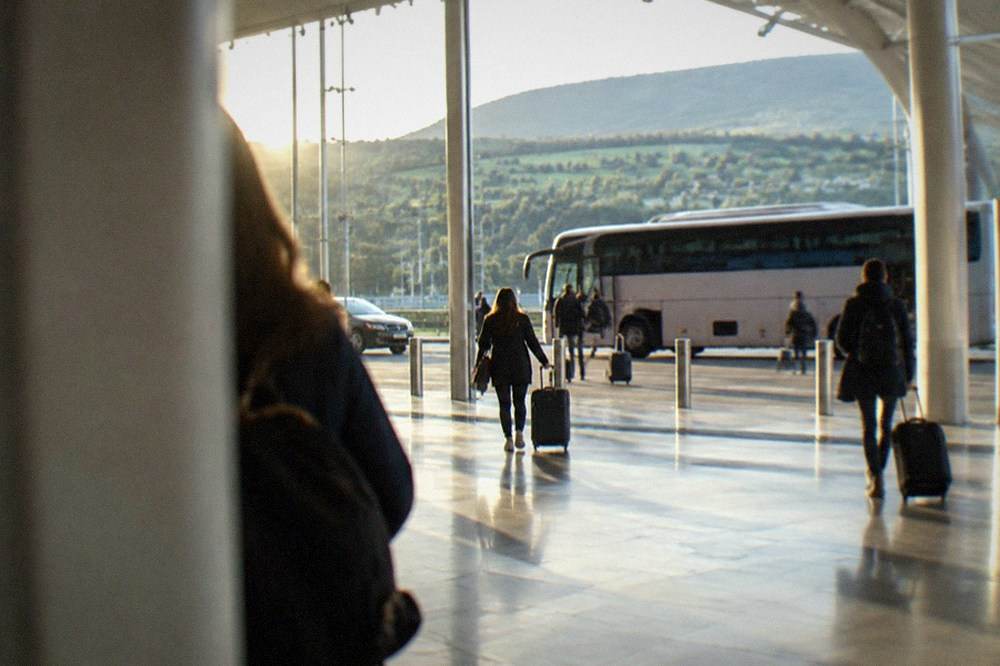
The direct answer is the PESA Lurraldebus coach: the Basque Government lists it at 17.10 EUR one way, about 75 minutes to San Sebastián, hourly in winter and every 30 minutes in July and August, with the summer return service from the city running every 30 minutes from 04:30 to 21:30. Confirm the fare and timetable with the operator before you fly, because the government page carrying those figures is undated.
The coach is the standard choice because it runs from the airport itself, which removes the need to cross Bilbao to the city's main bus terminal. The winter timetable from the airport covers working days from 07:45 to 23:45 and weekends and holidays from 06:45 to 23:45, both hourly. In July and August the frequency doubles to every 30 minutes, which matters if you are landing after a long transatlantic flight and do not want to wait an hour for the last leg.
The fare the government page lists for the same coach to Zarautz, a seaside town on the way, is 14.80 EUR, which gives you a sense of the fare structure along the coast, but the San Sebastián figure is the one to plan on. Because the page is undated, re-read the operator's own site before you print a boarding plan or budget a fixed amount; the coach operator's current site lists the Bilbao airport line among its routes.
If you would rather not ride a coach at all, the rail route between Bilbao and San Sebastián exists but is slow, and the pack gives no journey time for it, so the coach remains the practical answer. For everything inside the city once you arrive, the getting around San Sebastian guide covers the buses, the Topo rail line and the walkability of the centre.
| Bilbao Airport coach detail | What the Basque Government page lists |
|---|---|
| Fare to San Sebastián | 17.10 EUR |
| Fare to Zarautz | 14.80 EUR |
| Journey time | About 75 minutes |
| Winter, working days | Hourly, 07:45 to 23:45 |
| Winter, weekends and holidays | Hourly, 06:45 to 23:45 |
| July and August from the airport | Every 30 minutes, daily |
| July and August from San Sebastián | Every 30 minutes, 04:30 to 21:30 |
What About Flying Into Biarritz Or San Sebastian Airport?
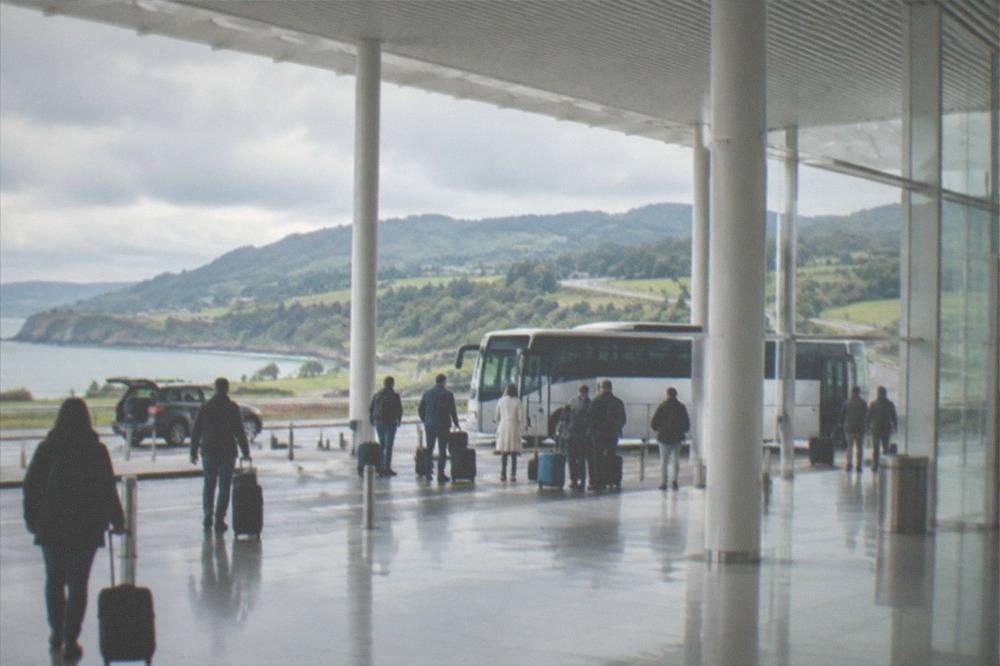
Biarritz, 45 km away in France, suits arrivals from Paris and the tourism board lists direct service to the city, though the pack names no operator or fare for a direct airport bus, so verify the connection before booking. San Sebastián Airport at Hondarribia is closest at 20 km, and its bus services are the Ekialdebus lines E20, E23, E25, E27, E28, E29 and E30, with E30 the direct Donostia to airport line.
One warning that matters: line E21 has not served San Sebastián Airport since 1 June 2026, at either stop, to board or to alight, according to the operator Ekialdebus. A tourism board page still names E21 as an airport line, and that page is stale. If any older itinerary or forum post tells you to catch the E21 from the airport, ignore it and use the operator's own list instead. More of these guides are collected on San Sebastian Spain Guide.
The operator's airport page lists seven lines, E20, E23, E25, E27, E28, E29 and E30, and describes E30 as the direct Donostia to airport service. The E30 page is stamped with a June 2026 update and warns that times are approximate because of traffic, with the timetable published as a PDF. The pack gives no journey time or fare zone for the EAS airport bus, so check the operator's timetable for the current schedule rather than planning on a fixed duration.
| EAS airport bus fact | What the operator states |
|---|---|
| Lines serving the airport | E20, E23, E25, E27, E28, E29, E30 |
| Direct line to the city | E30, Donostia to airport |
| Line E21 at the airport | Does not stop there since 1 June 2026 |
| E30 timetable | Published as a PDF, times approximate |
| Journey time, fare zone | Not published in the pack, check the operator |
Biarritz deserves a fair hearing despite the thinner bus information. The airport is 45 km from the city, the border crossing at Hendaye is a short hop, and the French rail network connects Biarritz to Hendaye, from where the Euskotren Topo line runs into the city. The Topo's occasional fare from Amara to Hendaia is 2.90 EUR, which matches the MUGI one-jump fare, and the feed-computed journey time on that run is 37 to 38 minutes with a busiest-day frequency of every 30 minutes. That makes the French route genuinely competitive, especially in summer when Bilbao's coach is full of arriving visitors. The Biarritz day trip guide covers the same stretch of coast from the other direction.
Do You Need A Visa Or ETIAS To Visit Spain From The US?
US citizens do not need a visa for short stays in Spain, which is in the Schengen area of 29 countries, and ETIAS, the planned European travel authorisation, is not in operation, so there is nothing to apply for right now. The European Union's own page states plainly that ETIAS is not operating and no applications are being collected.
Spain is a member of the Schengen area, which the European Commission lists as 29 countries: 25 EU states plus Iceland, Norway, Switzerland and Liechtenstein. For an American visitor that means one set of border rules across the whole area, so a trip that combines Paris with San Sebastián crosses the internal French-Spanish border with no controls at all, which is exactly why the Biarritz arrival route works so smoothly.
The one thing not to do is pay anyone for an ETIAS application. The EU page on the scheme says it is currently not in operation and that no applications for travel authorisations are being collected, so any site charging a fee to file one is selling nothing of value. When the scheme does launch, it will be a simple online authorisation rather than a visa, and the official EU travel page will be the place to read about it.
Your passport should be valid for the period the Schengen rules require, and that is the whole of the paperwork for a normal tourist visit. If your trip is part of a bigger Spanish plan, the how many days in San Sebastian question is the next one to settle, because the answer changes whether you fly into Bilbao for a short stay or build a wider route.
What Should You Know About Money, Weather And Timing?
Spain uses the euro, the city's climate is wet Atlantic rather than dry Mediterranean, with 1,507 mm of rain a year over 141 rain days at AEMET's Igeldo station, and a provincial tourist tax law takes effect on 1 January 2027, so no visitor pays a tourist tax before that date. For timing, the warmest months are July and August, and the driest single month is July at 86 mm of rain.
Every price in every official source for the city is in euros, so budget in EUR and let your card handle the conversion. The tourist tax deserves one clear paragraph: Norma Foral 3/2026 of Gipuzkoa, published in the Basque official gazette on 25 June 2026, takes effect on 1 January 2027 and sets bands per person per night, from 0.75 to 1.75 EUR for one-star hotels and pensions up to 4.50 to 6.50 EUR for five-star hotels and tourist-use dwellings, with at most six nights charged per stay and under 18s exempt. Before 1 January 2027 nobody pays it, and the city council's own rate inside those bands has not been published in an official source, so never budget a fixed figure for it.
The weather matters more here than in most of Spain, and it is the detail American visitors most often get wrong. AEMET's climate normals for the Igeldo station, the 1981 to 2010 series, record 1,507 mm of rain across 141 rain days a year, and even July, the driest month, averages 86 mm over about 10 rain days. November is the wettest at 169 mm. This is not a city to visit without a rain layer in any season, and the San Sebastian weather guide breaks the year down month by month.
| Month | Mean C | Rain mm | Rain days | Sun hours |
|---|---|---|---|---|
| May | 14.4 | 120 | 12.2 | 181 |
| June | 16.9 | 90 | 10.6 | 189 |
| July | 18.9 | 86 | 9.8 | 196 |
| August | 19.5 | 117 | 10.5 | 190 |
| September | 18.0 | 111 | 10.1 | 179 |
| October | 15.5 | 159 | 11.8 | 140 |
The table shows why September is the month many planners land on: 18 C on average, 111 mm of rain, and 179 sun hours, sitting just under May's 181. August is the peak month for hotel stays in the city, with 245,769 overnight stays recorded by INE for August 2025 against 115,910 for January, so the trade for peak-season warmth is the busiest accommodation of the year. The best time to visit guide works through that trade in full.
What Can You Do Once You Arrive In San Sebastian?
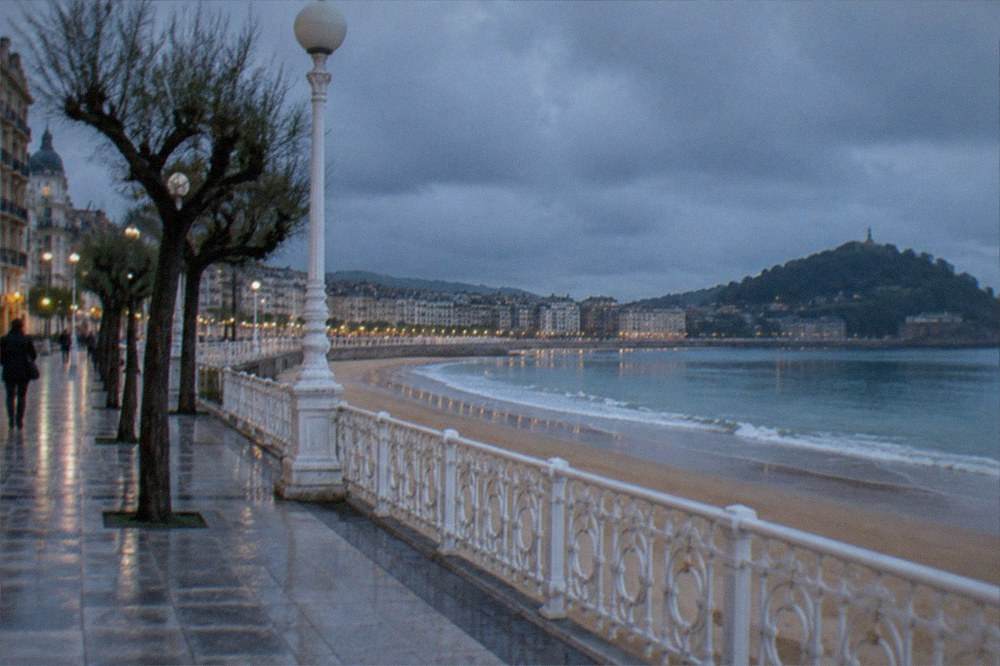
Once you land, the city is small enough to cover on foot, and the fastest way to orient yourself is a guided walk, a bike ride along the bay or a boat out onto the water, all of which leave from the centre. The Old Town, La Concha beach and Monte Urgull sit within a short walk of each other, so your first afternoon needs no transport at all.
A useful first move is a self-guided option that does not depend on schedules. The cultural gems and scenic trails audio tour is a self-guided English audio walk played in an app, covering the city's cultural sights and its coastal paths, and you can start it whenever you arrive.
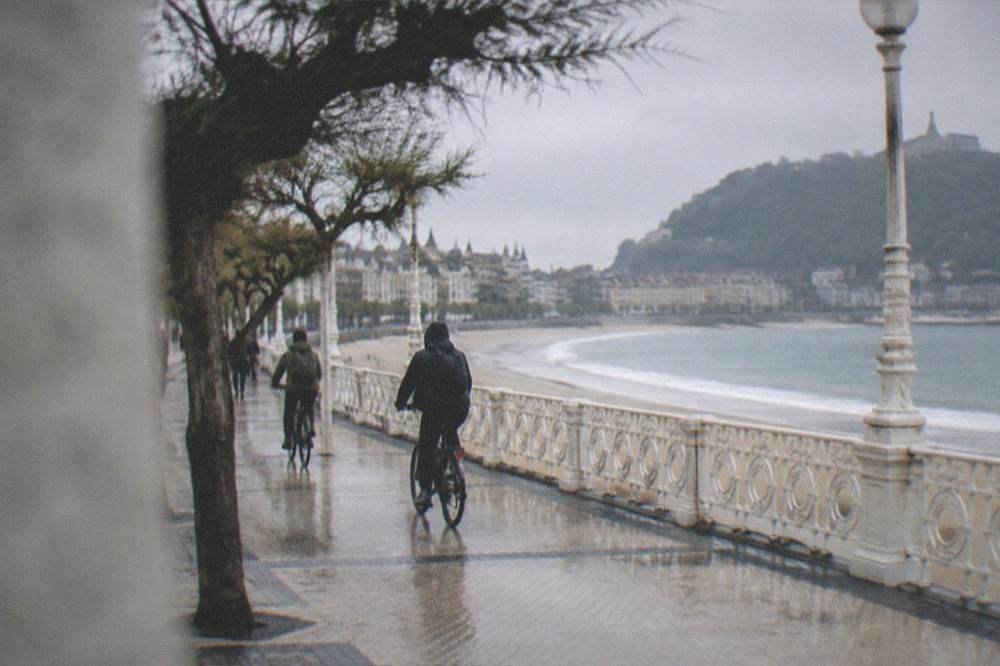
For the bay itself, a small-group electric bike tour covers the city's bike-lane network with an e-bike, which flattens the few hills between the centre and the beaches. The city's bike infrastructure is genuinely good, and an e-bike removes the last excuse.
And because you have crossed an ocean to stand 20 km from France, the border is worth using. The French Basque Country coach excursion runs nine hours from the city across to Biarritz, Bayonne and Saint-Jean-de-Luz, and it is the easiest way to see the French side without a rental car. Check availability if the idea appeals; the day trips from San Sebastian guide lays out the full menu of options in every direction.
Food is the other reason the trip exists. The city holds 11 Michelin stars across 6 restaurants inside the municipality in the MICHELIN Guide Spain 2026, including two of the three-star houses, Akelaŕe and Arzak, and the pintxo bars of the Old Town carry the everyday end of that same food culture. Start with the what are pintxos explainer, then work through the best pintxo bars and the story of the La Viña cheesecake, and finish with the full things to do in San Sebastian list once the jet lag fades.
Common Questions About Getting To San Sebastian From The US
How do I get to San Sebastian, Spain from the US?
Fly from your US gateway into a European hub such as Madrid, Barcelona or Paris, then connect to Bilbao, Biarritz or San Sebastián Airport. Bilbao is the largest and best connected, with a direct coach to the city listed by the Basque Government at 17.10 EUR and about 75 minutes.
Are there direct flights from the US to San Sebastian?
No. There is no nonstop scheduled service from any US airport to the city or to its nearby airports, so every route connects through a European hub. The full answer is on the direct flights question page.
Which is the best airport to fly into for San Sebastian?
Bilbao for the widest choice of connections and a direct coach to the city, Biarritz if you are connecting through Paris, and San Sebastián Airport at Hondarribia if a scheduled connection from Madrid fits your arrival. The airport is 20 km from the city centre.
Does bus E21 serve San Sebastian Airport?
No. Since 1 June 2026 line E21 does not stop at the airport at either stop, to board or to alight, according to the operator Ekialdebus. The airport lines are E20, E23, E25, E27, E28, E29 and E30, and E30 is the direct service to the city.
Do US citizens need ETIAS to visit Spain?
Not at present. The EU's own page states that ETIAS is not in operation and no applications are being collected, so there is nothing to apply for. US citizens do not need a visa for short stays in the Schengen area.
Is there a tourist tax in San Sebastian?
Not before 1 January 2027. A Gipuzkoa law published on 25 June 2026 sets per-night bands by accommodation type, but no visitor pays the tax until the law takes effect, and the city's own rate inside the bands has not been published in an official source.
The short version of the whole journey: cross the Atlantic into a hub, hop to Bilbao or Biarritz, ride the coach or the Topo into the city on the bay, and arrive with a rain layer regardless of the season. Once you are standing on La Concha with the tide out and the island in front of you, the two flights and one bus stop will feel like a small price for the view.