Hendaye: The French Border Town And TGV Link
Hendaye is the closest French town to San Sebastián, the Basque city in Spain on La Concha bay, and a suburban train crosses the river border to reach it in 37 to 38 minutes.
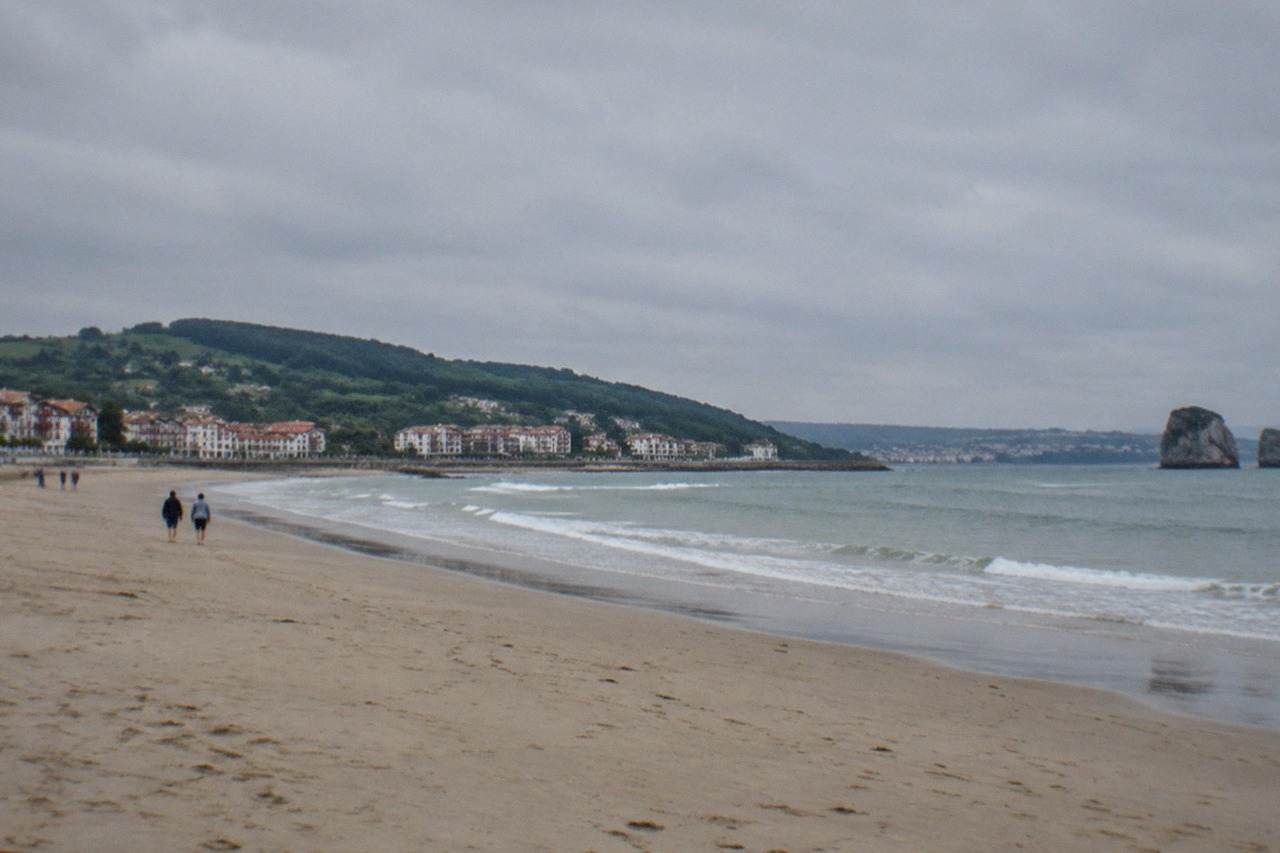
Short answer
Hendaye, in the French Basque Country, is the closest French town to San Sebastián. The Euskotren Topo line runs from the Amara-Donostia station to Hendaia in 37 to 38 minutes, with an occasional fare of 2.90 EUR, and no border check is needed beyond the Schengen area's normal rules.
San Sebastián, the Basque city on La Concha bay in Gipuzkoa, Spain, whose official name is Donostia / San Sebastián, sits under forty minutes by train from an international border. The Bidassoa river separates Spain from France along this stretch of coast, and the first town on the French side is Hendaye, in the French Basque Country. The Euskotren Topo line, computed from Euskotren's own published timetable data, covers the run from the Amara-Donostia station to Hendaia, which makes this the shortest international hop available from the city and one of the easiest border crossings anywhere in the Schengen area's 29 countries.
What Is The Closest French Town To San Sebastián?
Hendaye, in the French Basque Country, is the closest French town to San Sebastián. The Euskotren Topo line links the Amara-Donostia station with Hendaia, running every 30 minutes on the busiest service day, and the MUGI tariff puts the occasional fare for that one-jump journey at 2.90 EUR. The town sits just across the Bidassoa river, the natural border between Gipuzkoa in Spain and the French Basque province of Lapurdi.
That a suburban train crosses this border at all is the point. The Topo, named for the mole-like tunnel profile of its track, is the narrow-gauge Euskotren network that threads the Basque coast, and its Hendaia terminus puts a French railway station within an ordinary commute of the city centre. Euskotren's own timetable data, from the official feed the Basque Government publishes, shows 316 trips on this corridor with a journey time between 37 and 38 minutes, and a frequency of every 30 minutes on the busiest service day. You do not book anything in advance for a ride like this: the MUGI tariff, the single fare system for Gipuzkoa, prices journeys by zone jumps, and the occasional ticket for one jump is 2.90 EUR, while a MUGI card holder pays less.
One detail matters for planning. Amara is still the working terminus for the line in the city. The Basque Government announced on 8 June 2026 that the civil works of the new underground through-line, including the station beside La Concha, are complete and that fitting-out has begun, but it published no opening date, so anyone travelling today starts from Amara. The San Sebastian train and bus stations overview covers where that station sits relative to the centre.
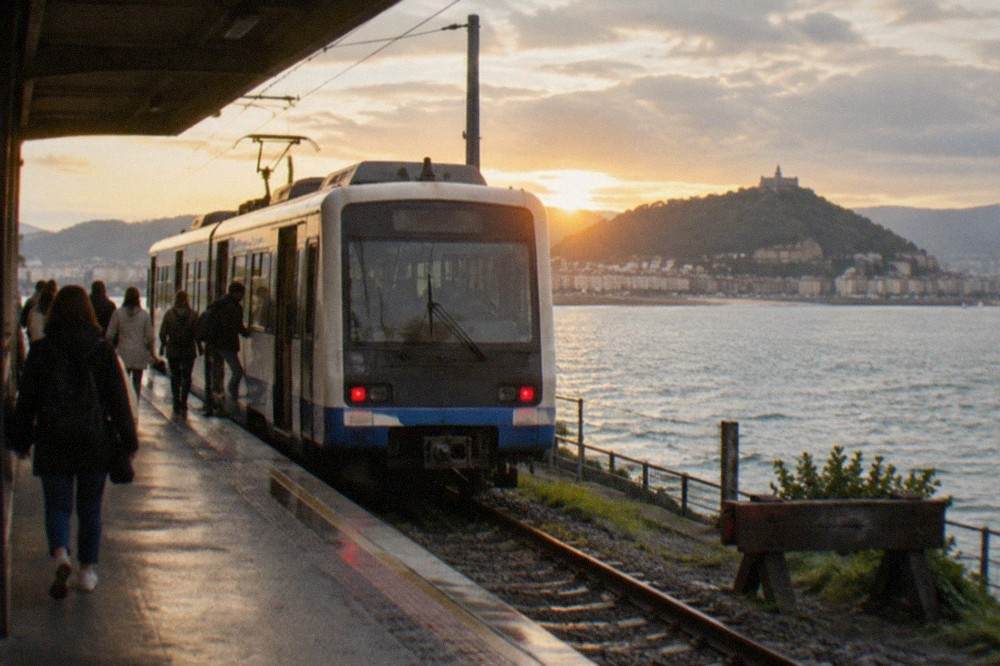
The table below gathers what is known about the crossing in one place.
| Detail | Figure | Source basis |
|---|---|---|
| Journey time Amara-Donostia to Hendaia | 37 to 38 minutes | Euskotren GTFS timetable data |
| Frequency on the busiest service day | Every 30 minutes | Euskotren GTFS timetable data |
| Occasional fare, 1 jump | 2.90 EUR | MUGI tariff |
| MUGI anonymous card fare, 1 jump | 1.16 EUR | MUGI tariff |
| MUGI personalised card fare, 1 jump, trips 1 to 20 in the month | 0.88 EUR | MUGI tariff |
| New underground city stations | No opening date published | Basque Government note, 8 June 2026 |
How Do You Cross The Border From San Sebastián To Hendaye?
You cross by train, bus or car over the Bidassoa river, and under Schengen rules there is normally no border check at all. Spain and France are both in the Schengen area, which the EU lists at 29 countries, so the crossing is treated like travel inside one zone, with occasional checks rather than a fixed control point. The Topo train is the simplest option because it runs every 30 minutes on the busiest service day and needs no booking.
Schengen is what makes this day trip feel local rather than international. The EU's own policy pages list Spain and France among the 29 Schengen countries, 25 EU states plus Iceland, Norway, Switzerland and Liechtenstein, and within the area identity checks happen at the discretion of police rather than at a fixed post. The Basque police on the Spanish side is the Ertzaintza, listed by the tourism board, and the emergency number on both banks of this border is 112. The euro is the currency in both countries, so no money change is involved either.
Two practical cautions are worth noting. First, ETIAS is not in operation: the EU's own travel authorisation page states plainly that no applications are collected at this point, so there is nothing to apply for before a border hop, and anyone selling an "ETIAS registration" is selling nothing. Second, the tourist tax that Gipuzkoa's Norma Foral 3/2026 creates does not take effect until 1 January 2027, and it concerns paid accommodation in Gipuzkoa anyway, so a day trip to France touches it not at all. The guide to getting around San Sebastián explains the MUGI card system if you plan several train and bus journeys in the province.
What Is There To Do In Hendaye On A Day Trip?
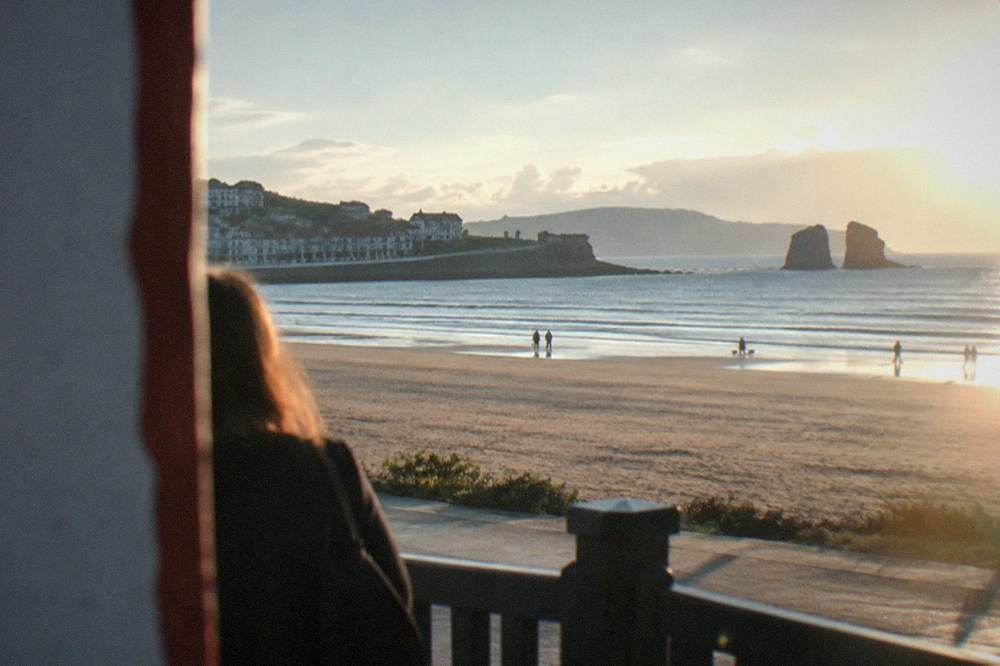
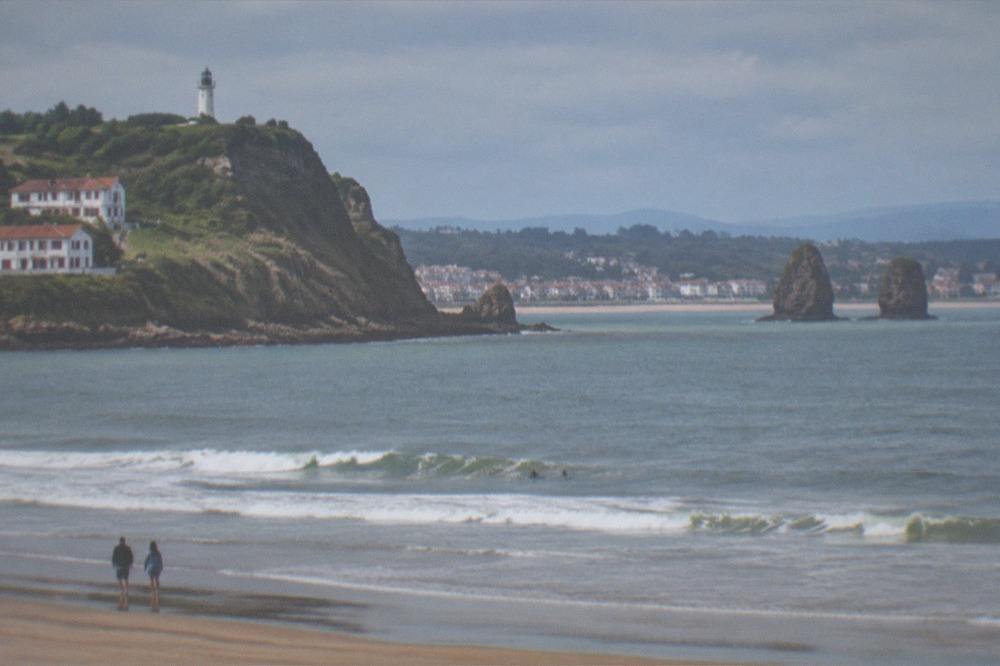
Hendaye's main draw is a long, family-friendly beach on the Atlantic, backed by a seafront promenade, with a Basque town centre behind it and a riverfront facing Spain across the Bidassoa. The town is the French end of the coastal walking country that the tourism board's Camino de Santiago route threads through Gipuzkoa, and its position makes it both a destination in its own right and the rail gateway to the wider French Basque coast, including Biarritz at 45 km from San Sebastián by the tourism board's figures.
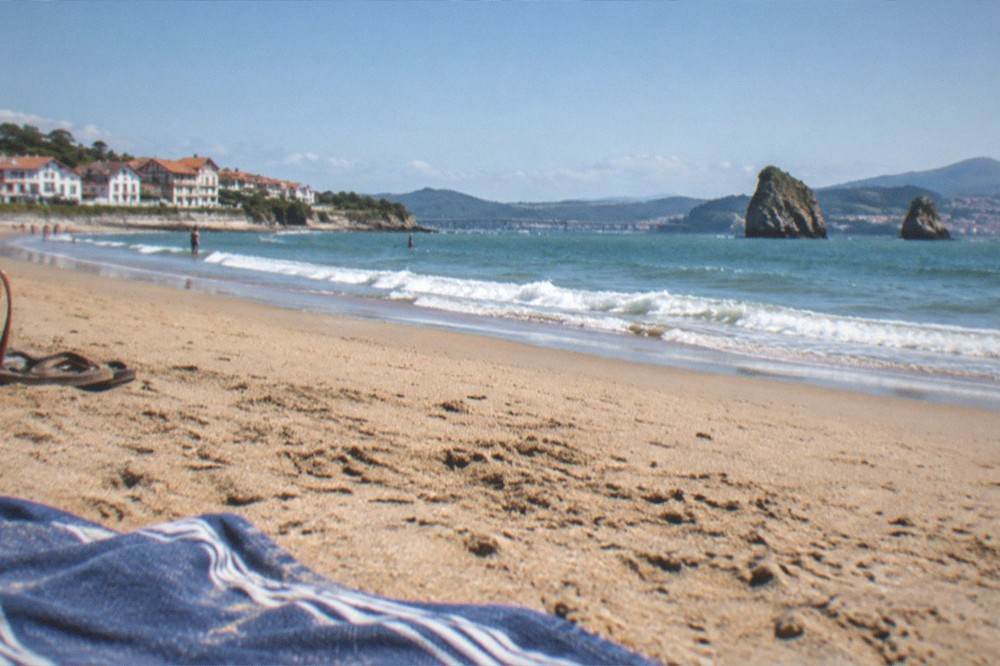
The beach is the reason many people come. Hendaye's plage is the gentlest of the Atlantic beaches on this coast, shelving shallow, which suits families in a way the strong swell of Zurriola back in San Sebastián does not. The council's own beach pages across the river describe Zurriola as sandy, fairly open, with strong swell, remodelled in 1994, and that contrast is the useful planning fact: a visitor who wants calm water for swimming crosses to the French side, while a surfer stays on Zurriola. The Zurriola beach guide covers the Spanish side of that choice.
Behind the beach, the town splits into a seafront quarter and an older centre, and along the river the quays look directly across at Hondarribia and the Spanish bank. Hondarribia itself is a separate municipality in Gipuzkoa, the town whose airport serves San Sebastián at 20 km by the tourism board's figures, and pairing the two banks of the river in one day is a standard itinerary: the Topo out, the road back. The Hondarribia day trip guide covers the Spanish bank in detail.
For visitors who want the French Basque coast without driving it themselves, a coach excursion runs from the city across the border with the whole day planned.
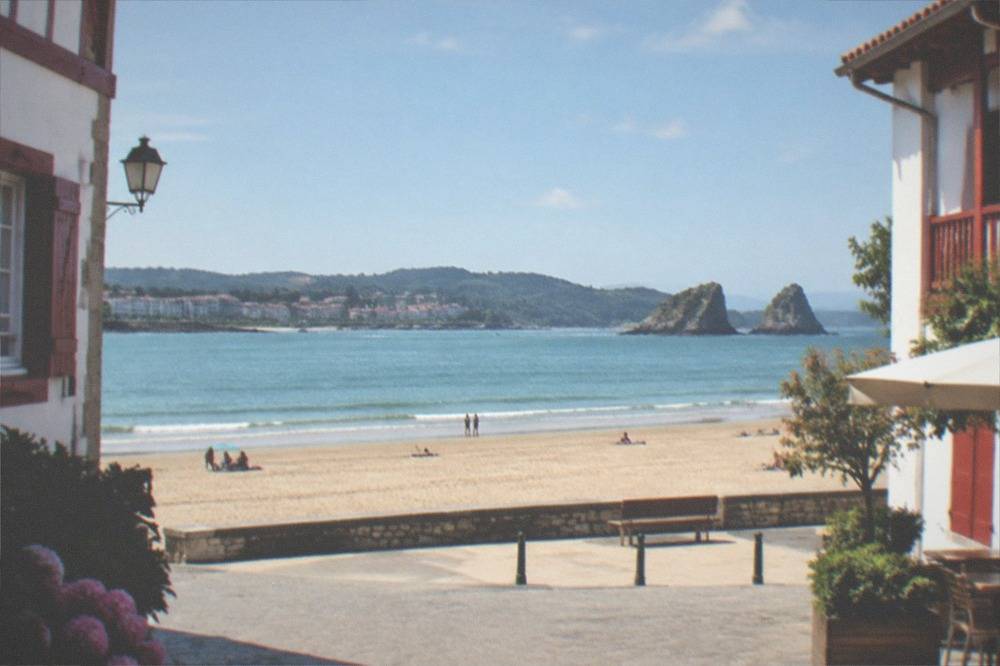
The Camino connection is easy to miss. The tourism board lists the coastal route of the Camino de Santiago through Gipuzkoa in six stages, and stage 2 runs Pasaia to Donostia while stage 3 runs Donostia to Orio, all on the Spanish side. The French bank at Hendaye belongs to the same coastal network of paths, and the walking here is flat, green and clifftopped, which is why guided coastal walks with txakoli tastings sell so well in this region. The Camino del Norte guide explains the Spanish stages.
Should You Take A Tour Or Make Your Own Way To Hendaye?
Make your own way if you want a half day on the beach or a walk along the riverfront, because the Topo train makes the crossing trivial and costs 2.90 EUR as an occasional ticket. Take a guided excursion if you want to reach Biarritz, Bayonne and Saint-Jean-de-Luz in one day, because three French towns plus a border is a lot of driving and parking to arrange alone, and the coach option from San Sebastián handles all of it.
The honest dividing line is ambition. Hendaye alone is a self-guided trip by design: the train is frequent, the town is small, and the beach does the entertaining. The moment the plan grows to the grander French resorts, the case for a tour strengthens, since the distances stack up and the coastal roads are busy in summer. The French Basque Country guide compares the stops in more depth.
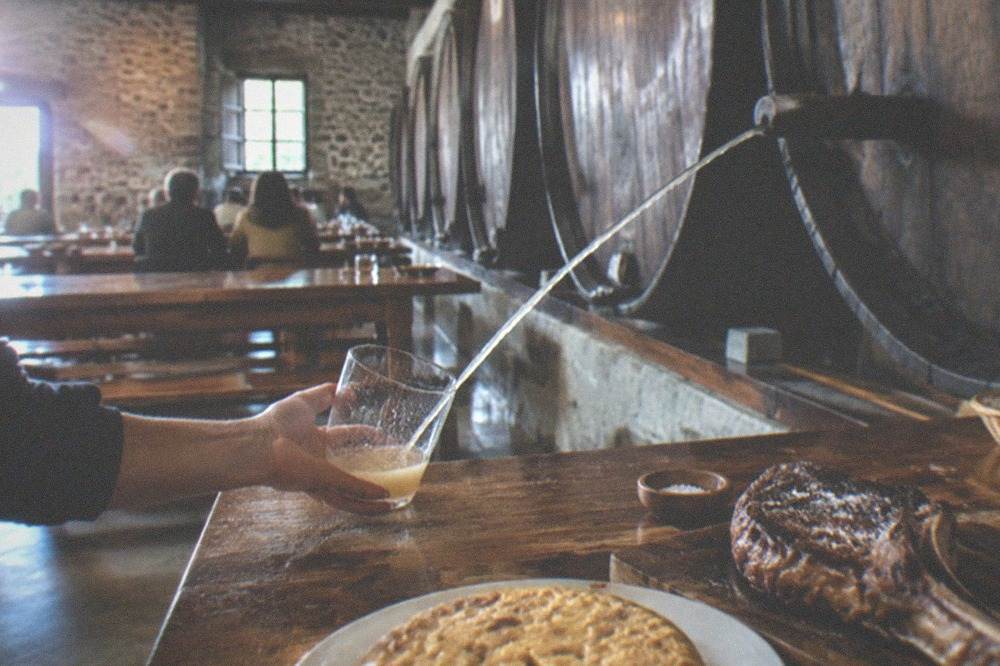
A middle path exists too. The cider houses of Gipuzkoa sit on the Spanish side, in and around Astigarraga, and the txotx season, in the tourism board's wording, runs from the middle of January to the end of April. A cider house lunch with the txotx ritual is a Spanish-side counterweight to a French morning, and some visitors split a week between the two. The full index of guides sits on San Sebastian Spain Guide.
What Are Some Good Day Trips From San Sebastián To France?
The best French day trips from San Sebastián are Hendaye for the beach and border hop, Biarritz for its grand oceanfront, Bayonne for its old town, and Saint-Jean-de-Luz for a sheltered working fishing port, and a coach excursion from the city covers Biarritz, Bayonne and Saint-Jean-de-Luz in one nine-hour day. The tourism board gives Biarritz as 45 km from the city with direct service listed, and the Topo puts Hendaye within 38 minutes by rail.
Each of the four French stops has a distinct character, and the choice is mostly about pace. Hendaye is the half-day option, close enough that you can decide on the spur of the moment when the weather clears. Biarritz is the glamour pick, the imperial resort on the rocks. Bayonne is the cultural one, at the meeting of two rivers, with half-timbered streets. Saint-Jean-de-Luz is the softest of the four, a bay town where the beach curves inside the harbour arms.
| French stop | Character | How it fits a San Sebastián day |
|---|---|---|
| Hendaye | Long shallow Atlantic beach, riverfront facing Spain | Topo train, 37 to 38 minutes, every 30 minutes on the busiest service day |
| Biarritz | Grand oceanfront resort with surf beaches | Tourism board lists 45 km from the city, direct service listed |
| Bayonne | Half-timbered old town at the confluence of two rivers | Usually paired with Biarritz on a coach day |
| Saint-Jean-de-Luz | Sheltered bay and working fishing port | Third stop on the nine-hour coach circuit |
The Spanish side of the border deserves its own comparison, because the nearest Gipuzkoa coast towns compete well with the French ones. The tourism board's airport figures give a sense of the local geography: San Sebastián Airport sits at Hondarribia, 20 km from the city, Biarritz at 45 km, Bilbao at 105 km, and Vitoria-Gasteiz at 100 km with no direct service listed. Hondarribia's old quarter and the fishing village of Pasajes de San Juan sit closer than anything in France, and the Pasaia guide covers them.
| Airport | Distance from San Sebastián | Tourism board note |
|---|---|---|
| San Sebastián (EAS), at Hondarribia | 20 km | City airport, closest to the border |
| Biarritz (BIQ) | 45 km | Direct service to San Sebastián listed |
| Bilbao (BIO) | 105 km | Direct service to San Sebastián listed |
| Vitoria-Gasteiz (VIT) | 100 km | No direct service listed |
What Is The Best Time Of Year For A Hendaye Day Trip?
Summer is the most reliable season for the beach, but the Topo train runs all year, so the best time depends on what you want: June to September for swimming and the full beach season, spring and autumn for walking the coast, and winter for an empty seafront and a warm cafe. AEMET's normals for its Igeldo station show July as the driest month at 86 mm of rain over 9.8 rain days, and November as the wettest at 169 mm.
The climate record deserves honesty. This is a wet Atlantic corner, and the station data, recorded at 250 m on Monte Igeldo so the seafront runs slightly warmer, shows 1,507 mm of rain a year over 141 rain days. Even the driest month, July, averages 86 mm, and August is wetter than June, July or September, at 117 mm against June's 90 and September's 111. Nobody should plan a beach day here on a dry-summer promise, because the record does not contain one.
| Month | Mean max C | Rain mm | Days with 1 mm or more | Sun hours |
|---|---|---|---|---|
| May | 17.7 | 120 | 12.2 | 181 |
| June | 20.0 | 90 | 10.6 | 189 |
| July | 21.8 | 86 | 9.8 | 196 |
| August | 22.5 | 117 | 10.5 | 190 |
| September | 21.1 | 111 | 10.1 | 179 |
| October | 18.5 | 159 | 11.8 | 140 |
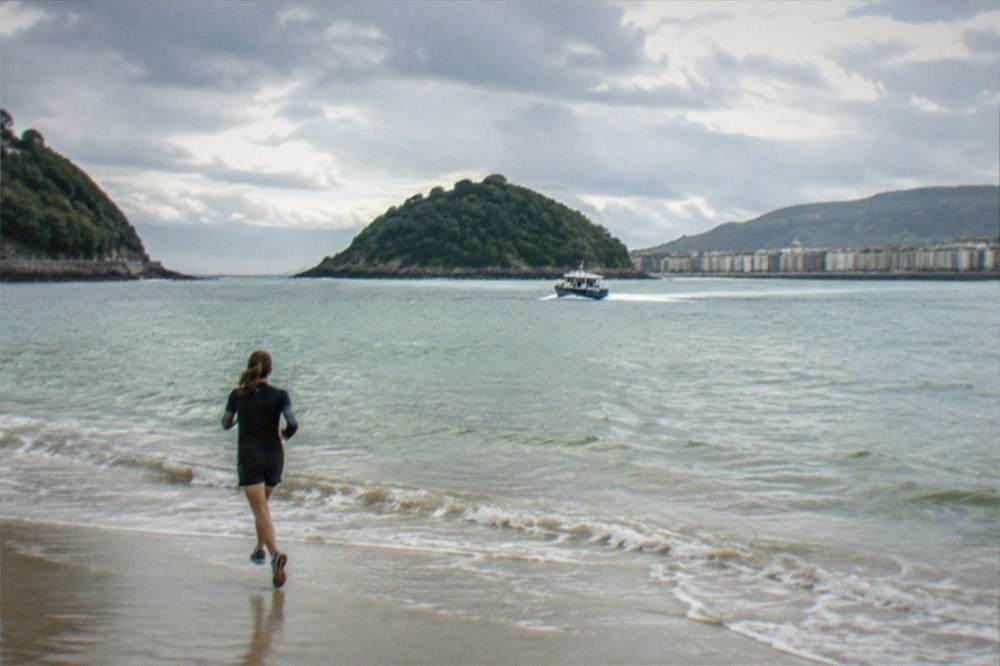
The seasonal rules on the Spanish side are worth knowing if your Hendaye day doubles as a beach day back home. The city council states that lifeguards cover all three San Sebastián beaches from 1 June to 30 September, with hours of 10:00 to 20:00 from 15 June to 15 September and reduced hours to 19:30 from 16 to 30 September. The Santa Clara island boats run their high season over the same window, 1 June to 30 September, and Hondalea, the Cristina Iglesias work in the island lighthouse, is open 1 June to 30 September, 11:00 to 18:30, with free entry and no booking needed for the visit itself. The Santa Clara island guide covers the boat options.
How Does Hendaye Compare With The Spanish Side Of The River?
Hendaye offers the calmest swimming water on either bank, while the Spanish side offers the stronger food culture, the livelier old town and the city's own beaches, so the comparison is really calm versus character. The council's figures give La Concha 1,350 m of mean length and Zurriola 800 m with strong swell, and the French beach's sheltered shelf is the reason families cross the river for the day.
The Spanish bank holds most of the region's weight. San Sebastián carries 6 restaurants holding 11 stars in the MICHELIN Guide Spain 2026, with Akelaŕe and Arzak each holding three, and the wider province of Gipuzkoa holds 19 stars across 11 restaurants, including Elkano in Getaria and Alameda in Hondarribia. Hondarribia, directly across the river from Hendaye, is itself a star-town address, which is a fact many visitors miss: the Michelin table lists Alameda there, one star. The Hondarribia guide and the Getaria guide cover the Spanish food coast.
The French bank answers with landscape and quiet. The walking country behind Hendaye climbs into green hills, and the coast road west runs toward Saint-Jean-de-Luz and Biarritz. For a visitor based in the city, the practical split is simple: eat on the Spanish side, walk and swim on whichever side the swell allows. The best restaurants guide and the what to eat in San Sebastián guide handle the eating half.
Common Questions About San Sebastian And Hendaye
What is the closest French town to San Sebastián?
Hendaye, in the French Basque Country, is the closest French town to San Sebastián. It sits directly across the Bidassoa river, and the Euskotren Topo line runs from the Amara-Donostia station to Hendaia in 37 to 38 minutes, every 30 minutes on the busiest service day. The MUGI tariff prices the occasional ticket for the journey at 2.90 EUR.
What are some good day trips from San Sebastián to France?
The strongest options are Hendaye for a beach and border half day, Biarritz for its oceanfront resort character, Bayonne for its half-timbered old town, and Saint-Jean-de-Luz for its sheltered fishing bay. A coach excursion from the city covers Biarritz, Bayonne and Saint-Jean-de-Luz in one nine-hour day. The tourism board lists Biarritz at 45 km from the city.
Do you need a passport to cross from San Sebastián to Hendaye?
Spain and France are both in the Schengen area, which the EU lists at 29 countries, so there is normally no fixed border check on this crossing. Police on either side can carry out checks at their discretion, so carrying ID is sensible. ETIAS is not in operation, and the EU's own page states that no applications are collected at this point.
How much does the train from San Sebastián to Hendaye cost?
The MUGI tariff prices the journey as a one-jump trip: 2.90 EUR for an occasional ticket, 1.16 EUR on a MUGI anonymous card, and 0.88 EUR on a personalised MUGI card for its first 20 trips in a month. The journey takes 37 to 38 minutes on the Euskotren Topo line from the Amara-Donostia station.
Can you swim at Hendaye?
Yes, and the water is calmer than on the Spanish surf side. The council's own beach pages describe Zurriola in San Sebastián as having strong swell, while Hendaye's long beach shelves shallow and suits families. AEMET's normals for the Igeldo station show sea-level temperatures peaking with a mean maximum of 22.5 C in August, and no month of the year is dry here, so check the forecast rather than the season name.
Is Hendaye worth visiting from San Sebastián?
For a half day, yes: the Topo train makes the crossing a 38-minute ride with no booking, the beach is the calmest on either bank, and the riverfront looks straight across at Hondarribia. Visitors who want grander French resorts should read the French Basque Country guide first, since Biarritz and Bayonne need a longer day.
Hendaye is the rare border town that works as a genuine half day: a frequent suburban train, a calm Atlantic beach, and a river you can see across from both banks. Plan the swimming for June to September, keep an umbrella in the bag whatever the month, and the French Basque Country is 38 minutes from the Amara station whenever the weather turns kind.