San Sebastian Airport (EAS)
San Sebastián Airport sits at Hondarribia, 20 km from the Basque city of Donostia / San Sebastián on La Concha bay. This guide covers the bus lines that actually stop there, what the transfer costs, and when Bilbao or Biarritz is the better arrival point.
Short answer
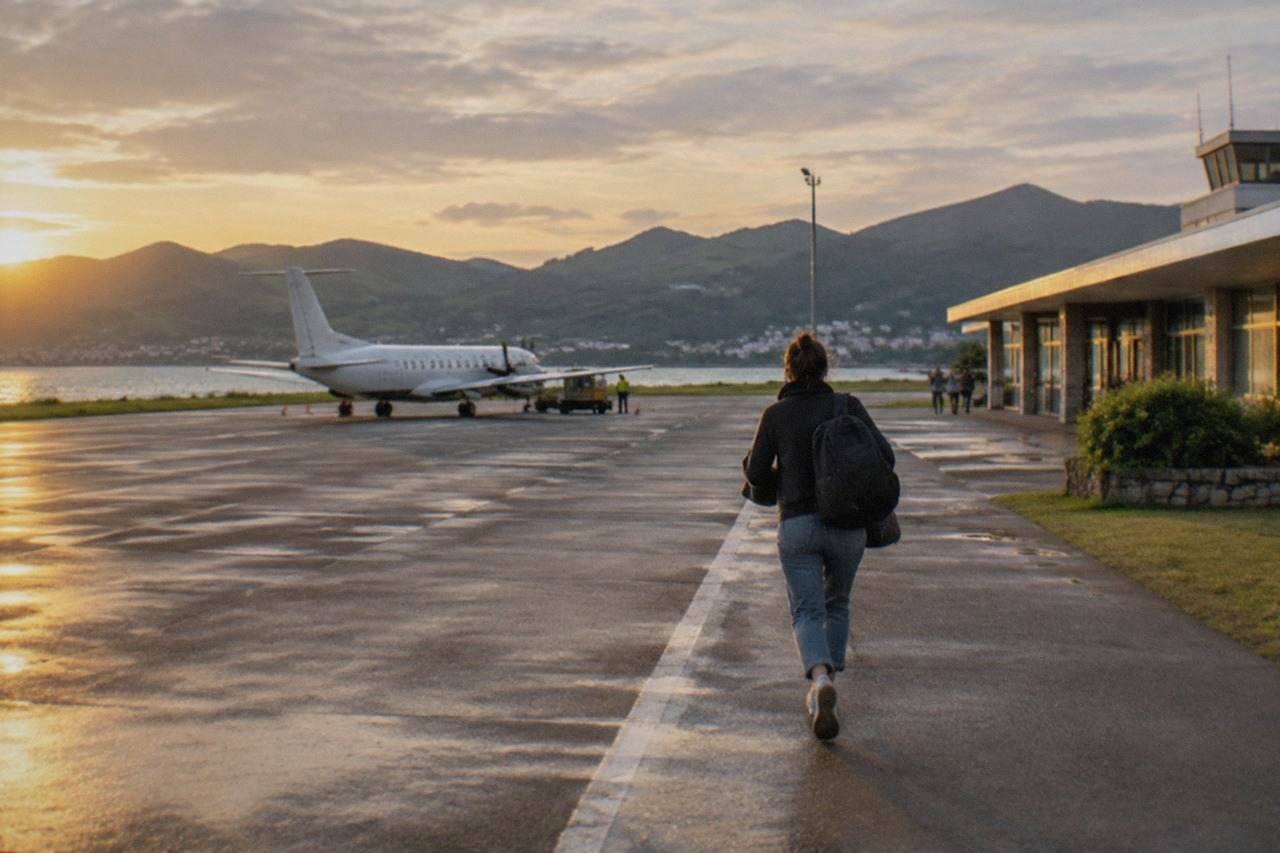
San Sebastián Airport (EAS) is 20 km from the city at Hondarribia, a separate municipality in Gipuzkoa. Lurraldebus lines E20, E23, E25, E27, E28, E29 and E30 serve it, and E30 is the direct Donostia service. Line E21 has not stopped at the airport since 1 June 2026.
San Sebastián Airport, coded EAS, is the closest of the three airports that serve San Sebastián, the Basque city on La Concha bay in Gipuzkoa, Spain, whose official municipal name is Donostia / San Sebastián. The tourism board places it 20 km from the city, at Hondarribia, which is a separate municipality on the mouth of the Bidasoa river and not a district of Donostia at all. It is a small airport, and its usefulness depends less on the planes it receives than on the ground connections on the other side of its single terminal, which is where most of the confusion, and most of the outdated advice, lives. This page, like every airport page on San Sebastian Spain Guide, works only from what official sources state.
One warning before anything else, because it matters more than every other fact on this page. Bus line E21, which older guides and even the tourism board's own arrival page still list as the airport route, has not stopped at San Sebastián Airport since 1 June 2026. The operator, Ekialdebus, states plainly that E21 serves neither the exterior stop nor the Terminal 1 stop, to board or to alight. Anyone who plans around E21 will be standing at a stop the bus no longer visits.
Where Is San Sebastian Airport And Which San Sebastian Is It For?
San Sebastián Airport is at Hondarribia, in the province of Gipuzkoa in the Basque Country, Spain, 20 km from the city of Donostia / San Sebastián on La Concha bay. Hondarribia is its own municipality, not part of the city, and the airport is sometimes called San Sebastián Airport in Spanish despite sitting outside it. The city it serves had 189,866 residents on the municipal register at 1 January 2025.
The name needs the geography spelled out, because "San Sebastián" is shared. There is a San Sebastián in Puerto Rico, whose street festival actually takes place in San Juan. There is the San Sebastián Winery in St. Augustine, Florida, which owns the phrase "San Sebastián wine", and the local white wine here is txakoli, not anything of that name. There is San Sebastián de los Reyes beside Madrid, San Sebastián de La Gomera in the Canary Islands and San Sebastián del Oeste in Mexico. This page is about the Basque city only, and its airport is the one whose code is EAS.
The airport's position at Hondarribia has a practical side effect worth knowing before you book anything: a stay "near the airport" is a stay in a fishing town on the French border, roughly a fifth of the way back toward France, and not on any San Sebastián beach. The city's own beaches, La Concha, Ondarreta and Zurriola, are all on the far side of the 20 km. If proximity to La Concha is the point of the trip, the airport is a gateway, not a base.
How Do You Get From San Sebastian Airport To The City Without A Car?
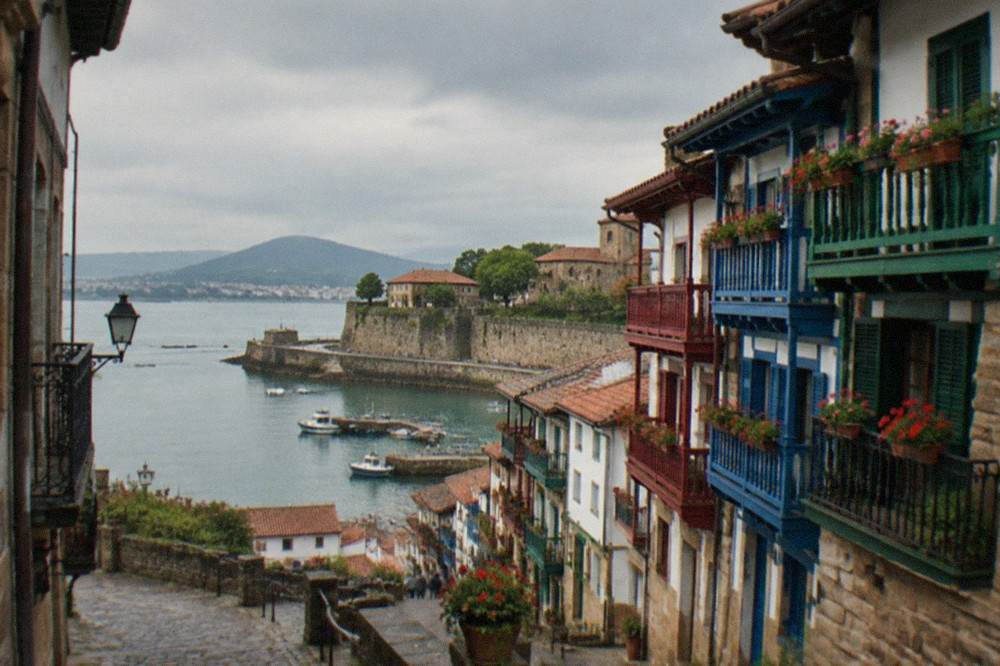
The operator Ekialdebus lists seven Lurraldebus lines under its airport services: E20, E23, E25, E27, E28, E29 and E30, and E30 is the direct Donostia to airport line. Line E21 has not stopped at the airport since 1 June 2026, at either stop, to board or to alight, so any timetable or guide that still names E21 is out of date. The E30 page is stamped as updated in June 2026.
The seven lines are not equal, and the one that matters here is E30, which Ekialdebus lists as "Donostia > Aeropuerto San Sebastián (Directo)", the direct service between the city and the airport. The operator publishes its timetable as a PDF and warns that times are approximate because of traffic, so treat any printed minute as a target rather than a promise. The other six lines exist because the airport stop also serves Hondarribia and the surrounding towns, not because a visitor needs to memorise them.
The table below shows what the operator itself lists. Journey time and fare zone for the airport run are not published in a form this site can state, so confirm both on the operator's E30 page before travelling.
| Line | What the operator lists | Status at the airport |
|---|---|---|
| E30 | Donostia to airport, direct | Serves the airport |
| E20 | Airport service list | Serves the airport |
| E23 | Airport service list | Serves the airport |
| E25 | Airport service list | Serves the airport |
| E27 | Airport service list | Serves the airport |
| E28 | Airport service list | Serves the airport |
| E29 | Airport service list | Serves the airport |
| E21 | Formerly listed by the tourism board | Does not stop since 1 June 2026 |
The stale E21 line deserves its own sentence, because it is the single most common error in airport advice for this city. The tourism board's arrival page still names E21 as a year-round airport line alongside a summer E30, and that page has not caught up with the operator. Ekialdebus published the change on its own site: from 1 June 2026 inclusive, E21 stops nowhere at the airport. When a tourism page and an operator's page disagree about a bus, the operator wins, and here the operator is unambiguous.
Once in the city, the transport system is MUGI, the single fare network that covers dBus city buses, Lurraldebus and Euskotren. A visitor arriving by bus lands inside that system, and the next section covers what it costs.
If the plan is to see the city rather than just reach it, a guided walk is one of the efficient ways to cover the Old Town and the Romantic Area, and the city highlights walking tour pages on this site compare the options in detail.
Should You Fly Into San Sebastian Airport Or Choose Bilbao Or Biarritz?
The tourism board lists three airports within a little over 100 km of San Sebastián: San Sebastián Airport (EAS) at 20 km, Biarritz (BIQ) at 45 km in France, and Bilbao (BIO) at 105 km, with Vitoria-Gasteiz (VIT) at 100 km but no direct service listed. EAS is closest but small, so the right airport depends on where your flight exists, not on distance alone.
EAS wins on geography and loses on reach. A small airport with a limited network cannot take a traveller from anywhere the way a large one can, and many itineraries into the Basque Country route through Bilbao or Biarritz simply because that is where the flights are. The comparison on this site's which airport for San Sebastian page works through the choice in full, and the two dedicated transfer guides cover the Bilbao airport run and the Biarritz option separately.
| Airport | Code | Distance given by the tourism board | Direct service to San Sebastián listed |
|---|---|---|---|
| San Sebastián, at Hondarribia | EAS | 20 km | Yes, by Lurraldebus |
| Biarritz, France | BIQ | 45 km | Yes, listed as direct service |
| Bilbao | BIO | 105 km | Yes, listed as direct service |
| Vitoria-Gasteiz | VIT | 100 km | No direct service listed |
For Bilbao there is one properly sourced figure. The Basque Government's airport page lists the PESA Lurraldebus coach to San Sebastián at 17.10 EUR and about 75 minutes, hourly on working days in winter from 07:45 to 23:45, hourly on weekends from 06:45, and every 30 minutes in July and August. That page carries no date, so treat the fare as listed by the Basque Government and confirm with the operator before travelling, since the old operator domain now redirects to the Avanza group's Gipuzkoa site.
For Biarritz, this site says nothing about a direct bus: neither the operator, nor the fare, nor the frequency is confirmed from an official page, and a gap that size is not filled with a guess. The border crossing is short, 45 km, and the Biarritz airport guide on this site describes what can actually be verified about that route.
What Does The Journey From The Airport Cost Inside The MUGI System?
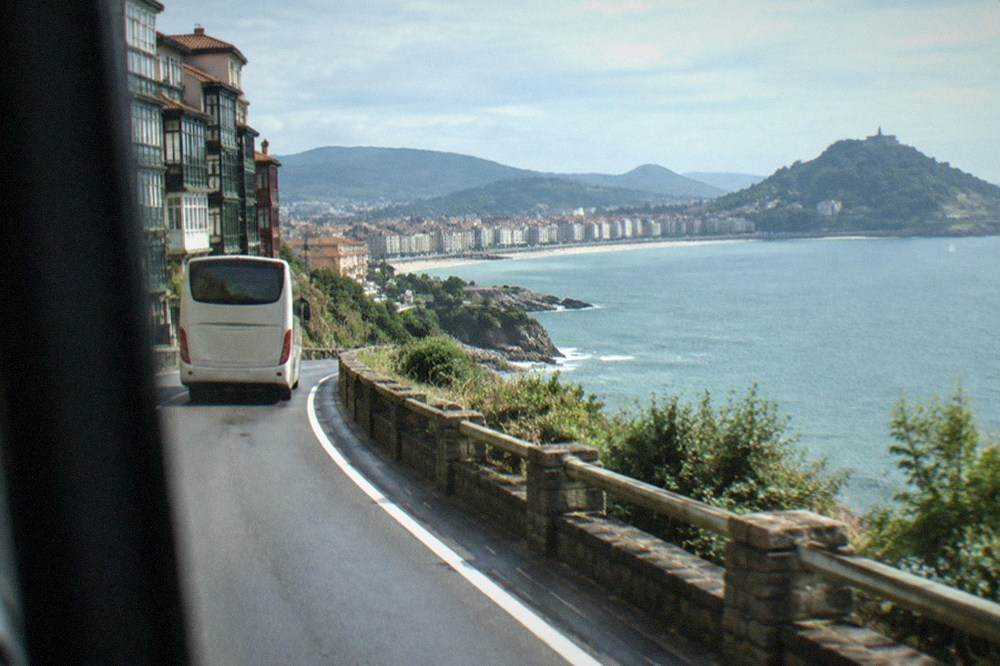
A dBus city bus paid in cash costs 1.95 EUR for an occasional ticket and 2.65 EUR for the night ticket, and the MUGI fare table gives 2.90 EUR for an occasional one-jump ticket, rising to 13.65 EUR at five jumps. The MUGI card cuts the urban fare to 0.78 EUR, and a personalised card drops it further to 0.59 EUR for the first twenty trips of the month.
MUGI prices by zone "jumps" rather than flat distance, which is why the same network can quote a handful of figures that cover the whole province. The dBus cash fare of 1.95 EUR matches the MUGI "urban, 0 jumps" occasional ticket, and the two sources agree, which is what a fare system should look like. Cash paid to the driver does not allow free transfers, so a journey that changes buses costs twice in a way a card journey might not.
| Ticket | Urban, 0 jumps | 1 jump | 2 jumps | 3 jumps | 4 jumps | 5 jumps |
|---|---|---|---|---|---|---|
| Occasional, cash | 1.95 | 2.90 | 5.40 | 7.90 | 10.25 | 13.65 |
| Night ticket | 2.65 | 3.70 | 6.45 | 8.95 | 11.30 | 14.75 |
| MUGI anonymous card | 0.78 | 1.16 | 2.16 | 3.16 | 4.10 | 5.46 |
| MUGI personalised, trips 1 to 20 | 0.59 | 0.88 | 1.64 | 2.41 | 3.12 | 4.16 |
All amounts are euros, as published on the MUGI tariff page. What a MUGI card itself costs to buy is not something this site states, because the purchase price is not in the sourced record, so check that with the operator before relying on one.
One useful detail hides in the fare definitions: MUGI's "urban" zone is defined as Donostia and the Pasaia motorboat, so the harbour ferry across to Pasaia sits inside the urban fare. A traveller with a card can ride the city network and cross that water without leaving the cheapest band.
The train side of the system is the Euskotren Topo, and its working terminus in the city is Amara. Computed from Euskotren's own timetable data, the Amara to Hendaia run takes 37 to 38 minutes and runs roughly every 30 minutes on the busiest service day, at an occasional fare of 2.90 EUR, which matches the one-jump MUGI figure above. A new underground section through the city centre has finished its civil works, with fitting-out under way, but no opening date has been published, and Amara remains the station to plan around.
What Is The Weather Like When You Land In San Sebastián?
AEMET's climate normals for its Igeldo station, the 1981 to 2010 series, put the yearly mean at 13.5 C with 1,507 mm of rain over 141 rain days, and no month averages under 86 mm. July is the driest month at 86 mm over about 10 rain days, and November is the wettest at 169 mm. The station sits 250 m up on Monte Igeldo, so the seafront runs slightly warmer than these figures.
This is a wet Atlantic city, and the honest version of arrival planning accepts that. A summer landing can still meet a shower, because August, at 117 mm, is wetter than June, July or September, a fact that surprises visitors who arrive expecting the dry heat of the Mediterranean coast. Anyone packing for this city packs a rain layer in every month, including the one with the most sun hours.
| Month | Mean C | Mean max C | Rain mm | Rain days 1 mm or more | Sun hours |
|---|---|---|---|---|---|
| January | 8.5 | 11.0 | 141 | 13.2 | 98 |
| March | 10.3 | 13.4 | 113 | 12.4 | 144 |
| May | 14.4 | 17.7 | 120 | 12.2 | 181 |
| July | 18.9 | 21.8 | 86 | 9.8 | 196 |
| August | 19.5 | 22.5 | 117 | 10.5 | 190 |
| September | 18.0 | 21.1 | 111 | 10.1 | 179 |
| November | 11.3 | 14.0 | 169 | 13.0 | 102 |
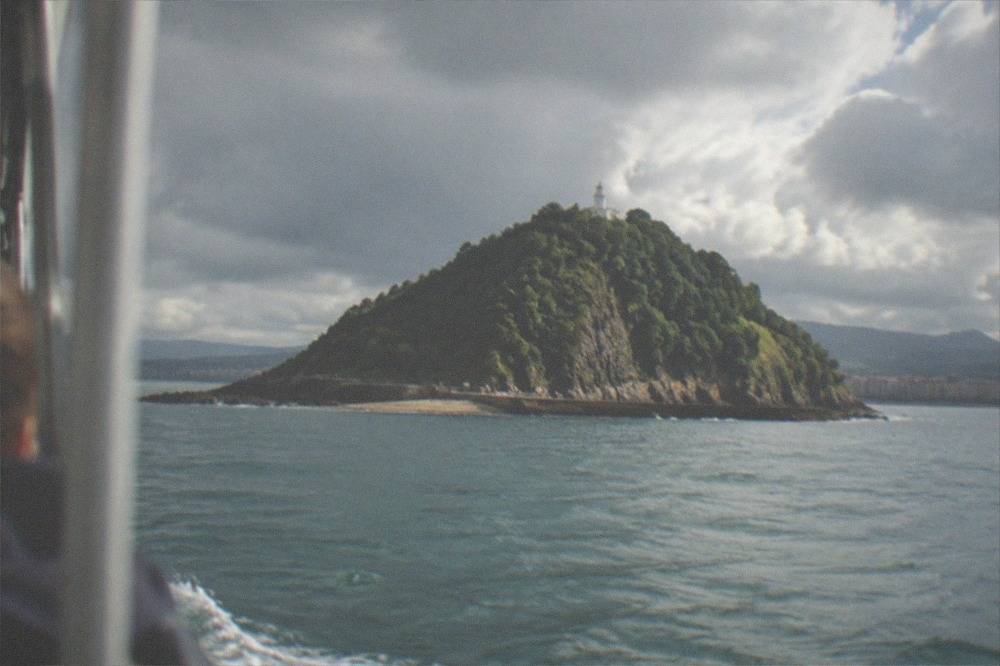
The seasonal calendar matters for what waits at the end of the transfer. Lifeguards serve all three beaches from 1 June to 30 September, with hours of 10:00 to 20:00 from 15 June to 15 September and reduced hours to 19:30 in the second half of September. The Santa Clara island boats run their high season on the same 1 June to 30 September window, and Hondalea, the Cristina Iglesias work in the island lighthouse, is open on that same summer rule with free entry and no booking needed for the visit itself, only the boat. Monte Urgull stays open until 21:00 until 30 September and until 19:30 from 1 October.
Is San Sebastian Airport The Right Choice For A Short Trip?
For a short stay, EAS at 20 km is the least-transfer option when a suitable flight exists, because the city's own hotel and Old Town sit within one direct bus line of the terminal. The trade is schedule: a small airport serves fewer routes, and a traveller who cannot reach it directly may spend longer transferring through Bilbao or Biarritz than the 20 km saving is worth.
The arithmetic is about total door-to-door time, not airport distance. A traveller with a flight into EAS rides one direct line into Donostia. A traveller routed through Bilbao faces 105 km and a coach listed by the Basque Government at about 75 minutes, and a traveller through Biarritz faces a 45 km border crossing with no verified direct bus detail to print. Whichever of those is fastest depends entirely on the flights, which is why the how many days in San Sebastian planning pages treat the airport as one input among several.
For a weekend built around the Old Town, the pintxo bars and the bay, the one-day itinerary on this site shows how much fits into a short arrival window, and the free-things-to-do page covers the walks and viewpoints that cost nothing once the transfer is done.

A short trip can also reach beyond the city. The airport's position at Hondarribia means one of the region's most rewarding half-days, the walled fishing town itself, sits minutes from the arrivals hall rather than an excursion from the centre. The Hondarribia day trip guide covers it, and the coast east of the airport toward Pasaia is the same corner the Camino del Norte coastal route crosses on its way into the city.
For travellers with a free day after arrival, a private excursion turns the stay into something bigger than the bay. The private Pamplona day trip option runs a private day along the bull run route with a Basque meal included, and the operator's live listing carries the current price and dates: Check availability.
What Can You Do Within Reach Of San Sebastian Airport On Arrival Day?
Hondarribia itself, the town the airport sits in, is the obvious first stop, and the city's beaches, Monte Urgull and Monte Igueldo are all within the 20 km transfer. The funicular up Monte Igueldo charges 5.50 EUR return for an adult and includes entry to the grounds, and the council's beach pages give La Concha at 1,350 m, Ondarreta at 600 m and Zurriola at 800 m, all with lifeguards from 1 June to 30 September.
Hondarribia is the arrival-day bonus most schedules miss. The airport exists inside a town with a fortified old quarter and a beach of its own, so a flight landing early does not have to mean waiting in Donostia for a hotel room. The is Hondarribia worth visiting page on this site answers that question directly, and the is there a beach in Hondarribia page settles the swimming question.
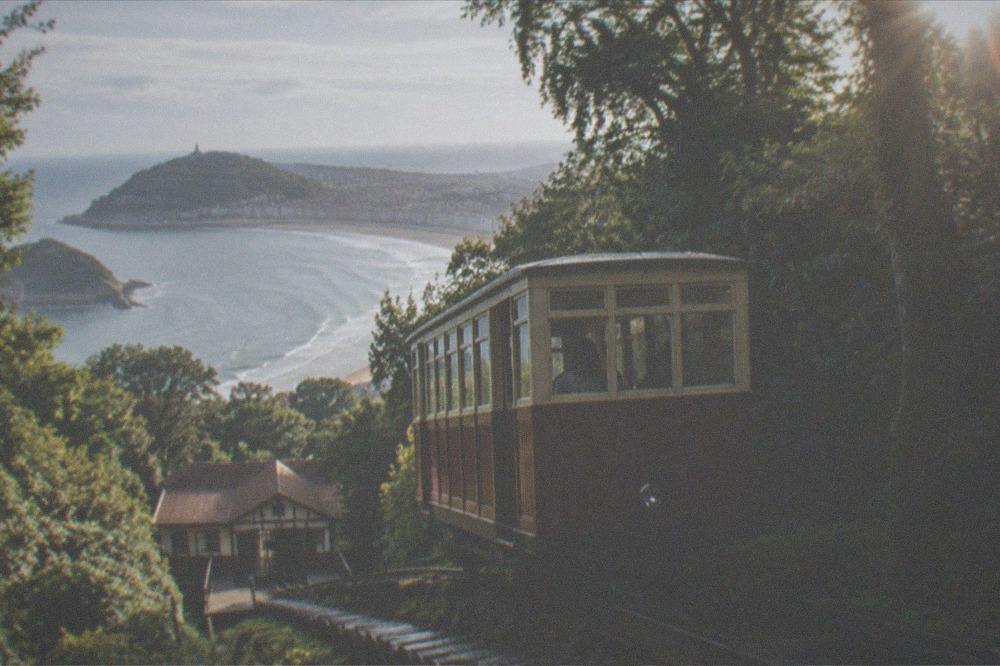
Back in the city, the two hills bracket the bay. Monte Urgull, the eastern one, is free to walk and closes at night, while Monte Igueldo, the western one, is a paid funicular ride with an amusement park at the top, opened on 25 August 1912 and described by the tourism board as the oldest funicular in the Basque Country. Two rules from its own site: the return ticket includes entry to the grounds, and downhill-only funicular tickets are not on sale, so nobody should plan to walk up and ride down.
| Sight | Distance or fare from the pack | Season rule |
|---|---|---|
| La Concha beach | 1,350 m long, 40 m wide | Lifeguards 1 June to 30 September |
| Ondarreta beach | 600 m long, 100 m wide | Lifeguards 1 June to 30 September |
| Zurriola beach | 800 m long, 110 m wide, strong swell | Lifeguards 1 June to 30 September |
| Monte Igueldo funicular | 5.50 EUR adult return | No downhill-only ticket sold |
| Monte Urgull | Access 08:00 to 21:00 in summer | From 1 October closes 19:30 |
| Santa Clara island boat | 5 EUR return, red line | High season 1 June to 30 September |
The island boat is worth a note, because its ticket structure is unusual. The operator Motoras de la Isla runs a red line direct to Santa Clara at 5 EUR return, every 30 minutes in high season from 10:00 to 19:00, weather and sea permitting, and a blue line that adds a 30-minute bay tour for 8 EUR. Children under 4 ride free. On the island, Hondalea is free to visit in half-hourly summer sessions, and only the boat needs booking.
What Practical Rules Apply On Arrival In San Sebastián?
Spain is in the Schengen area of 29 countries, the currency is the euro, and the emergency number is 112, with the local police at 092. A tourist tax exists in law, Norma Foral 3/2026 of Gipuzkoa, but it takes effect on 1 January 2027, so no visitor pays it before that date, and the rate the city itself will apply has not been published in a sourced ordinance.
The tax is the arrival question most likely to be answered wrongly elsewhere. The law sets bands per person per night, from 0.75 to 1.75 EUR for one-star hotels and pensions up to 4.50 to 6.50 EUR for five-star hotels and tourist-use dwellings, with at most six nights charged per stay and under-18s exempt. Each council picks its own rate inside those bands, and San Sebastián's own choice is not in any official publication this site can cite, so the honest line is "up to" the band maximum, attributed to the Gipuzkoa law, and nothing more precise.
ETIAS is the other trap. The EU's own page states that ETIAS is not in operation and no applications are collected, so no traveller should be told to apply for one. Entry rules for the Basque Country are simply Schengen rules until the EU says otherwise.

For luggage and onward movement once the airport transfer is done, the practical numbers to carry are 112 for emergencies and 092 for the city's own police, and the intercity train and bus connections are covered in the stations guide elsewhere on this site. The safety picture for first-time visitors is the usual one for a mid-sized Spanish city: normal city caution applies, and the official emergency channels are those two numbers.
Is A Day Trip Worth Adding To An Airport Arrival Trip?
Yes, when the stay allows it, because the airport's position makes several excursions easy: Pamplona lies inland along the bull run route with a private day trip option that includes a three-course Basque meal, and the Gipuzkoa coast toward Getaria and Zumaia runs in the other direction with txakoli country beside it. The province holds 19 Michelin stars across 11 restaurants in the MICHELIN Guide Spain 2026, six of them in the city itself.
The food is the reason many people make this trip at all, and the what to eat in San Sebastián and best pintxo bars pages are the deep dives. For a day outside the city, the day trips from San Sebastian guide ranks the options, and the coast route through Getaria pairs the fishing town with the txakoli wineries of the same name.
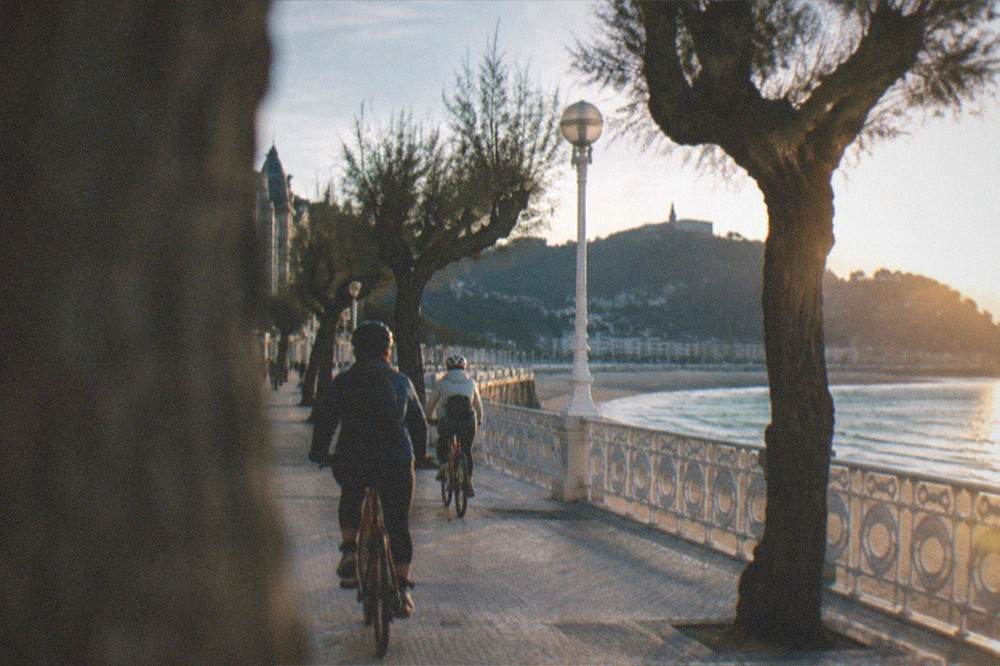
A bike is another way to absorb the bay quickly, and the flat end-to-end ride along the water suits an arrival day with energy in it. The guided bike options on this site compare the regular and electric versions, and the e-bike history ride that follows the bike lanes out to the beaches is one of the trio above, with the operator's live listing carrying its current price and dates.
Common Questions About San Sebastian Airport
How far is San Sebastian Airport from the city?
The tourism board gives the distance as 20 km, with the airport located at Hondarribia, which is a separate municipality from Donostia / San Sebastián. The direct Lurraldebus line E30 connects the airport with the city.
Does bus E21 still stop at San Sebastian Airport?
No. The operator Ekialdebus states that line E21 has not stopped at the airport since 1 June 2026, at either stop, to board or to alight. The tourism board page that still lists E21 is out of date on that point.
Which bus lines serve San Sebastian Airport?
The operator lists E20, E23, E25, E27, E28, E29 and E30 as the airport services, and E30 is the direct Donostia to airport line. Its timetable is published as a PDF and the operator warns times are approximate because of traffic.
Is Bilbao Airport an alternative to San Sebastian Airport?
Yes. The tourism board lists Bilbao at 105 km with direct service, and the Basque Government's page lists the PESA Lurraldebus coach at 17.10 EUR and about 75 minutes, hourly in winter and every 30 minutes in July and August. Confirm the current fare with the operator before travelling.
How much does a city bus cost in San Sebastián?
The dBus occasional ticket paid in cash is 1.95 EUR, the night ticket is 2.65 EUR, and the MUGI card fare is 0.78 EUR for an urban trip. Cash payment does not allow free transfers.
Is there a tourist tax on arrival in San Sebastián?
Not before 1 January 2027. Norma Foral 3/2026 of Gipuzkoa takes effect on that date, with bands per person per night and at most six nights charged, and under-18s exempt. The city's own rate inside those bands has not been published in a sourced ordinance.
Landing at EAS is the quiet start of a trip that most people remember for the bay, the pintxos and the rain that makes both green. Plan the transfer around E30, not E21, and the 20 km between Hondarribia and La Concha is the easiest part of the whole journey.