San Sebastian To Biarritz: Day Trip And Transport
Biarritz sits just across the French border from San Sebastián, close enough that a day trip is one of the easiest excursions from the city. This page covers the realistic ways to make the crossing, what the French Basque coast gives you once you are there, and the border details most guides skip.
Short answer
Biarritz is 45 km from San Sebastián, in the Basque Country, Spain, and the realistic day-trip options are a coach excursion, your own car, or the Euskotren Topo to Hendaia with a French train onward. A coach excursion is the simplest option because the border, the parking and the timetable are all handled for you.
San Sebastián, in the Basque Country of Spain, is the city on La Concha bay whose official name is Donostia / San Sebastián, and it sits closer to France than to most of Spain. Biarritz, the old imperial seaside resort on the French Basque coast, is 45 km away according to the tourism board's own getting-there page, which lists Biarritz airport as one of the city's three airports and notes a direct service between the two. That closeness makes Biarritz the default foreign day trip from San Sebastián: you can breakfast on pintxos in the Parte Vieja and eat lunch under a French lighthouse. This page walks through the transport options in the order visitors actually tend to use them, then covers what the French side of the border gives you, and the practical details, currency, emergency numbers, a tourist tax that is law but not yet charged, that most crossing guides leave out.
How Can I Get From San Sebastian To Biarritz?
There are four realistic ways from San Sebastián to Biarritz: an organised coach excursion across the border, your own car, the Euskotren Topo to Hendaia with a French connection onward, or flying into Biarritz airport and approaching from the air side. The tourism board gives the distance as 45 km and lists a direct service between the two, but no single public timetable covers the whole route, so travellers tend to choose either the coach excursion or the train-plus-train combination.
The coach excursion is the option with the least friction. One booking covers the border crossing, the parking in three French towns and the return timing, and the guide rides with you. The excursion on this site's roster runs to Biarritz, Bayonne and Saint-Jean-de-Luz in a single day, which is more of the French Basque coast than most independent travellers manage on their own timetable. Check availability if that shape of day suits you.
Driving yourself gives the most freedom and the most decisions. The route crosses the Bidasoa river at the border between Irun and Hendaia, and from there the French coast road runs west through the Basque villages of the Labourd coast toward Biarritz. What the pack does not give, and what this page therefore will not print, is a driving time, a parking tariff in Biarritz or a taxi fare: check those with your own sources before you commit to a car day.
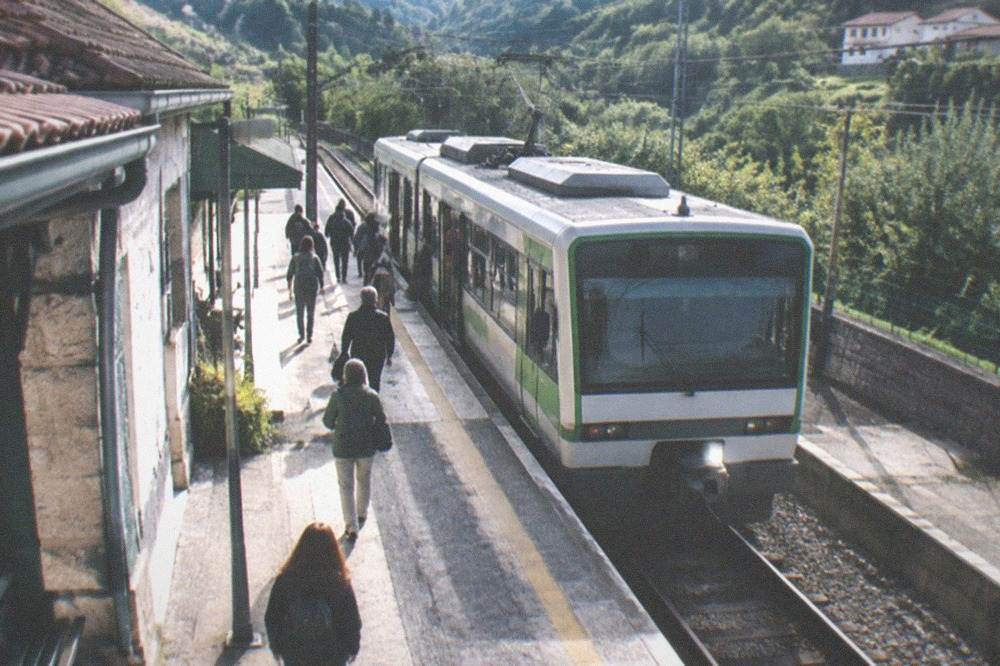
The train option is the local's route. The Euskotren Topo, the narrow-gauge coastal railway, runs from Amara station in San Sebastián to Hendaia on the French side, and from Hendaia the French rail network connects onward along the coast. The Basque Government's open rail data, described in detail further down this page, puts the Topo leg at 37 minutes. The French onward leg is a separate operator and a separate ticket, and this page prints no times for it: check the French operator's timetable before building a day around a connection.
If you are arriving by air rather than crossing by land, the airport picture is worth knowing first. The tourism board lists three airports serving the city, and the table below shows them as that page gives them.
| Airport | Code | Distance from San Sebastián | Direct service listed |
|---|---|---|---|
| San Sebastián Airport, Hondarribia | EAS | 20 km | Yes |
| Biarritz | BIQ | 45 km | Yes |
| Bilbao | BIO | 105 km | Yes |
| Vitoria-Gasteiz | VIT | 100 km | No |
One warning that matters if your Biarritz day starts or ends at an airport bus stop. Since 1 June 2026, bus line E21 has not stopped at San Sebastián Airport at all, neither to board nor to alight, at either stop. The operator Ekialdebus says so plainly, and the operator's own airport page lists the current airport lines as E20, E23, E25, E27, E28, E29 and E30, with E30 the direct Donostia to airport run. A tourism board page still naming E21 for the airport is out of date. If a Biarritz trip is part of a wider Basque itinerary built around flights, the Biarritz airport connection guide covers that airport in detail.
Is A Biarritz Day Trip From San Sebastian Worth It?
A Biarritz day trip is worth it if you want the contrast rather than a second beach day, because Biarritz gives you a French resort town, a different architecture, a different market culture and a different language within an hour-scale crossing of the border. It is not worth it if you only want sand and surf, because San Sebastián already has La Concha, Ondarreta and Zurriola, and the city's own beaches are the equal of anything on the French side.
The honest case for going is variety. San Sebastián is a Basque city with a Spanish rhythm, late dinners, pintxo bars, the bay. Biarritz is a French town with a Basque past, an imperial one, built up when the French court made it fashionable, and its seafront, its covered market and its chocolatiers belong to a different tradition. You notice the border even inside the Basque Country: the same language on both sides, different flags, different road signs, different meal times. A day there reads as a genuine change of country, which a day trip to another Spanish beach town never manages.
The honest case against is weather and pace. AEMET's climate normals for the Igeldo station record 1,507 mm of rain a year over 141 rain days at the San Sebastián end of the coast, and the French side of the same Atlantic corner is not a different climate. Even July, the driest month in the record, averages 86 mm. A Biarritz day built entirely around beaches can be rained out; a day built around the town, the market and the coastal walks cannot. The rainy day planning page applies the same logic to the home city.
For many visitors the decision comes down to logistics. If the idea of driving a rental car across a border, parking in a French resort town in August and reversing the whole trip the same evening sounds like work, the organised excursion is the answer. If it sounds like freedom, the car is the answer. The two coach-based options on the roster below cover both shapes of day.
The three options above span the range. The coach excursion crosses into France; the other two stay on the Spanish side of the coast and are there for travellers who decide the border is more trouble than it is worth on the day. The coastal winery walk pairs a Camino stretch with txakoli tastings, and the Ulia hike follows the Camino de Santiago over the headland east of the city, the same coastal route whose stage list runs Pasaia to Donostia and Donostia to Orio.
What Can You See In Biarritz On A Day Trip?
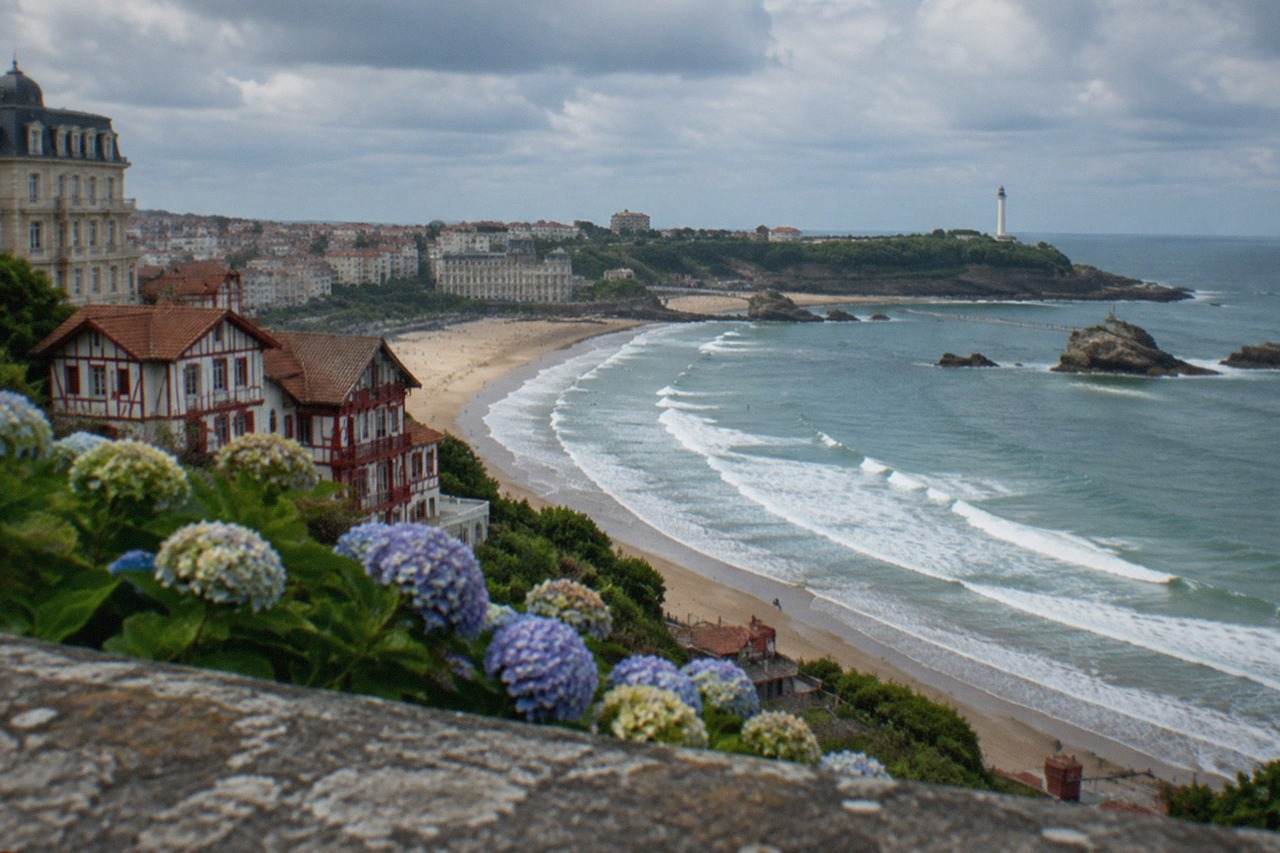
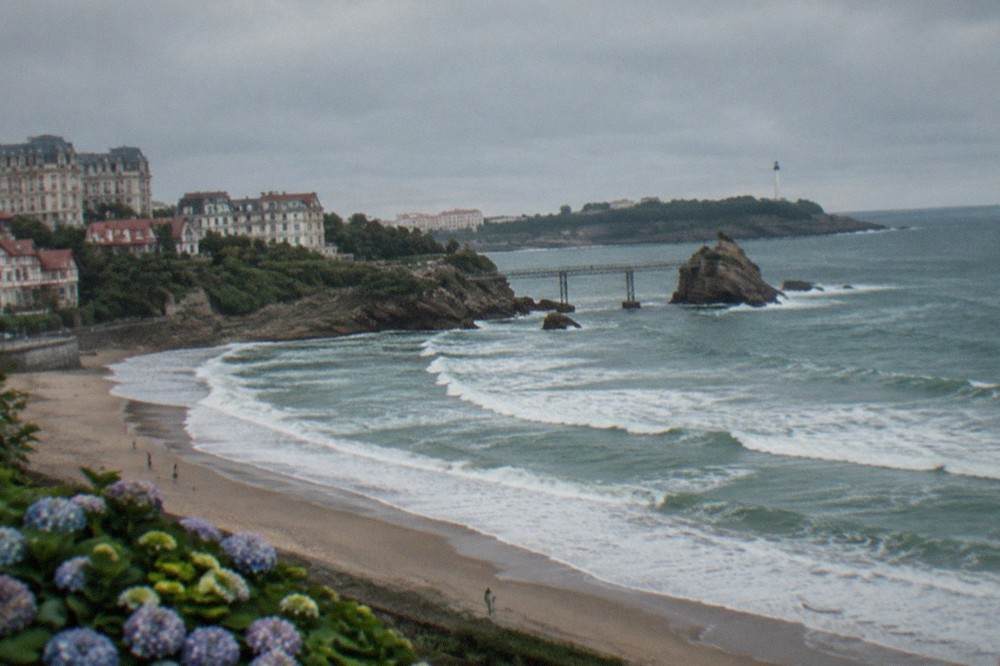
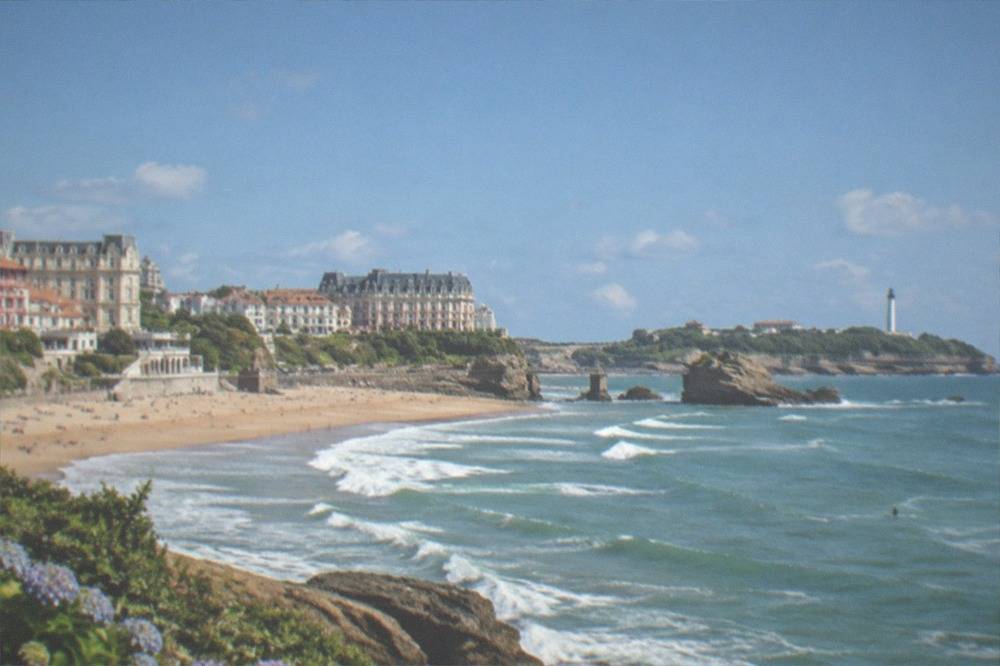
A one-day Biarritz visit comes down to the seafront: the lighthouse headland, the Rocher de la Vierge walkway over the rocks, the Grande Plage in front of the town, the old port, and the covered market for lunch. All of it sits within a walkable strip along the coast, which is why the town works as a day trip at all, since a resort spread out over miles would eat the day in transport.
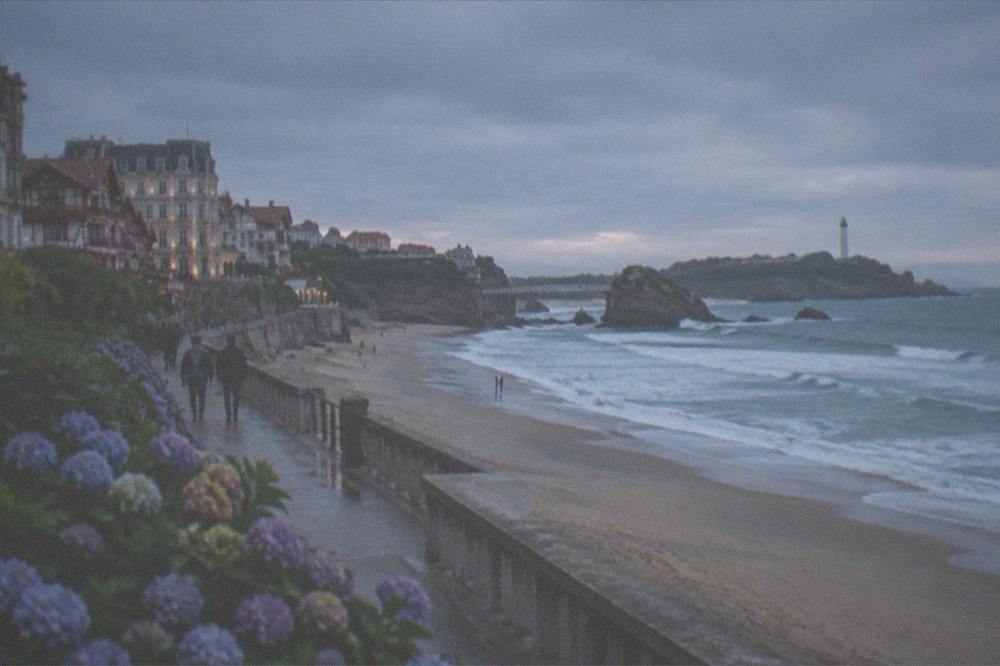
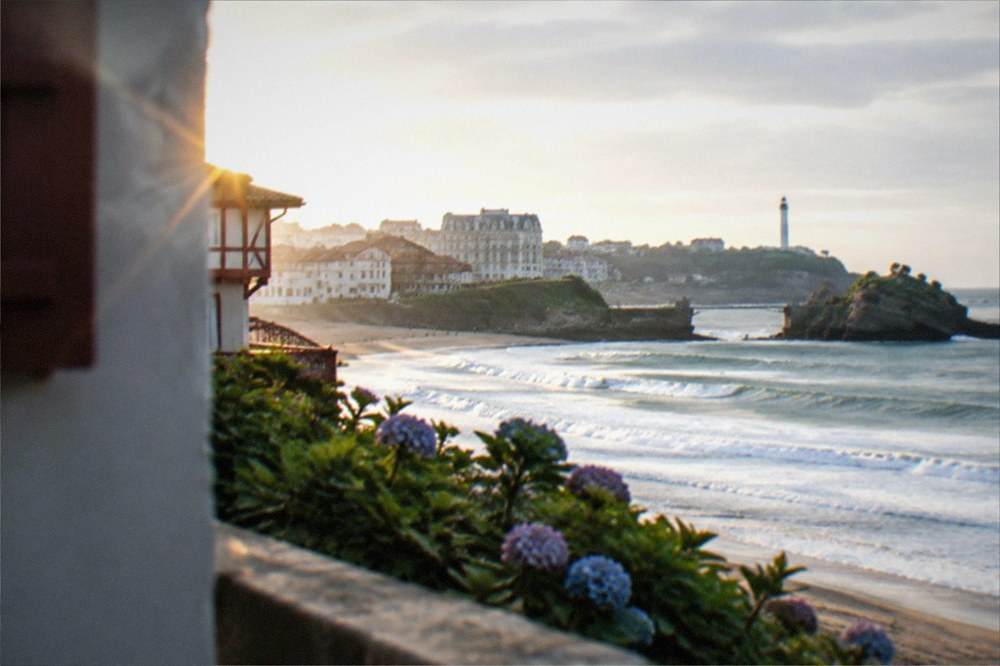
Biarritz's seafront is a single walkable sequence. The lighthouse stands on the headland at the north end. Below it, the Rocher de la Vierge, a rock islet named for a statue of the Virgin, is reached by a metal footbridge built out over the breaking Atlantic, and the viewing platform at its end looks back along the whole coast. The Grande Plage, the main beach, runs along the front of the town, and the smaller coves south of it, including the beach below the casino, break the coastline into a series of short walks rather than one long one. The old port, with its fishing-boat ramp cut into the cliff, sits between them.
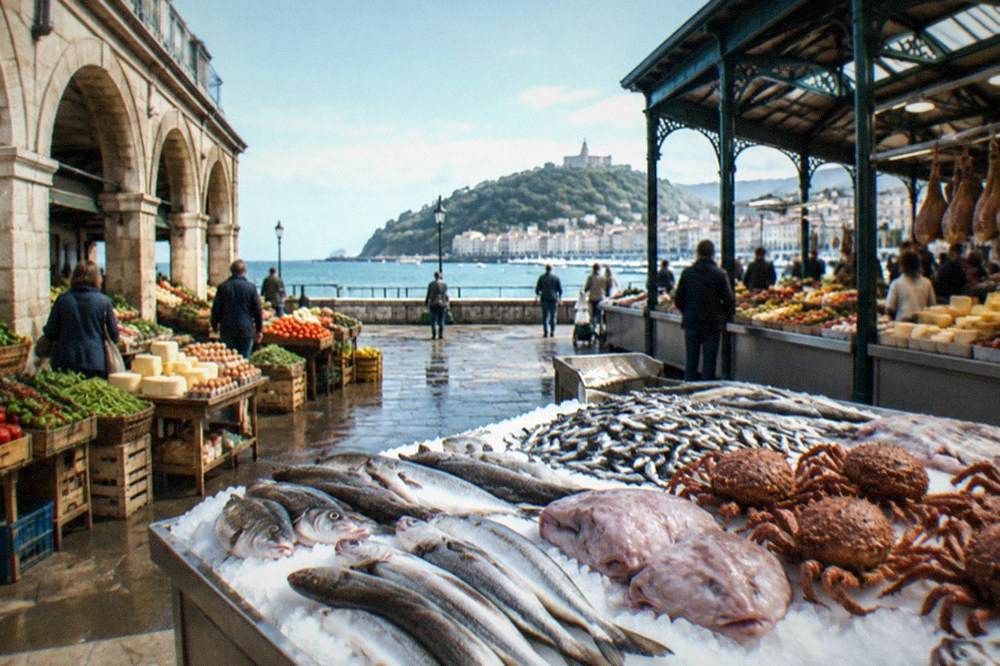
Inland from the seafront, the covered market is the town's food centre, and it is the sensible lunch stop on a day trip: French market culture in a Basque coastal town means oysters, ham, cheese and bread sold by the producers and traders who work there, and the surrounding streets hold the chocolatiers Biarritz is known for. The Hôtel du Palais, the palace hotel built for the empress Eugénie whose court made the town fashionable, anchors the seafront, and the architecture above the beaches, villas and belle époque facades, is as much the sight as the shoreline.
Time-boxing matters. The coach excursion spends a defined block of hours in Biarritz before moving on to Bayonne and Saint-Jean-de-Luz, and that block is enough for the seafront walk, the market and one chocolate stop. An independent day by car can add the lighthouse climb or the coves to the south, but every added stop in Biarritz is a stop subtracted from the rest of the French Basque coast, and the coast is the real prize of the crossing.
What About Bayonne And Saint-Jean-De-Luz On The Same Day?
Bayonne and Saint-Jean-de-Luz are both practical add-ons to a Biarritz day, and the standard coach excursion covers all three towns in one loop: Biarritz on the coast, Bayonne inland at the rivers' meeting point, and Saint-Jean-de-Luz back on the bay, a working fishing port with a sheltered beach inside its harbour walls. Doing all three independently in one day by public transport is possible but tight, which is exactly the gap the excursion fills.
Bayonne is the inland stop, a city at the junction of two rivers with a cathedral, half-timbered streets and the chocolate trade that arrived there before it arrived almost anywhere else in France. It is the administrative capital of the French Basque Country and reads as a working French town rather than a resort, which makes it the contrast to Biarritz inside the same day. Saint-Jean-de-Luz is the southern bookend, a fishing port on a bay sheltered by harbour walls, with a sandy town beach inside the port itself and a church square at the centre of the old town. The town sits on the coast road between Biarritz and the Spanish border, so on a driving day it is the natural last stop before the crossing back.
The same stretch of coast holds smaller stops that suit a car day: the village of Ascain under the Rhune mountain, the port of Ciboure beside Saint-Jean-de-Luz, and Hendaye on the border itself, whose long beach faces Hendaia across the Bidasoa. The Saint-Jean-de-Luz page covers that town in full, and the French Basque Country overview covers the whole region. If you are weighing a second French town against a second Spanish one, the Hondarribia day trip keeps you on the Spanish side of the same estuary and is the shortest border excursion of all.
A second coach option exists for travellers who want Biarritz with a smaller vehicle and a bilingual guide, running to Biarritz and Bayonne from either San Sebastián or Bilbao, and the operator's live listing carries its current availability and pricing.
Can You Take The Train From San Sebastian To France?
Yes, in two stages: the Euskotren Topo runs from Amara station in San Sebastián to Hendaia on the French side of the border, with a fare of 2.90 EUR occasional or 1.16 EUR with an anonymous MUGI card, and from Hendaia the French rail network connects onward toward Biarritz. The Topo is the only rail crossing on this coast, and Amara remains its working terminus in the city.
The Topo, the narrow-gauge railway run by Eusko Trenbideak, is the local's border crossing. The operator's own published timetable data, read from the Basque Government's open transport feed, gives the Amara to Hendaia journey as 37 to 38 minutes across the trips in the feed, and the busiest-day frequency as a departure every 30 minutes for most of the day. The fare sits inside the MUGI zone system that covers all of Gipuzkoa's public transport: one zone jump costs 2.90 EUR as an occasional ticket or 1.16 EUR with an anonymous MUGI card. The full fare ladder from the MUGI tariff page is below.
| Ticket | Urban, 0 jumps | 1 jump | 2 jumps | 3 jumps | 4 jumps | 5 jumps |
|---|---|---|---|---|---|---|
| Occasional, cash | 1.95 | 2.90 | 5.40 | 7.90 | 10.25 | 13.65 |
| Night ticket | 2.65 | 3.70 | 6.45 | 8.95 | 11.30 | 14.75 |
| MUGI anonymous card | 0.78 | 1.16 | 2.16 | 3.16 | 4.10 | 5.46 |
| MUGI personalised, trips 1 to 20 in the month | 0.59 | 0.88 | 1.64 | 2.41 | 3.12 | 4.16 |
All amounts are EUR, as the MUGI tariff gives them. The urban fare covers Donostia and the Pasaia harbour motor boat, so the same card logic that runs the border train also runs the boat across Pasaia bay if your French day is swapped for a Spanish coastal one.
From Hendaia the journey continues on the French side. Hendaia's station connects to the French network along the coast toward Bayonne, and Bayonne is the rail junction for Biarritz. This page prints no times, fares or frequencies for the French operator, because the verified pack gives none: the French side is a separate system, a separate ticket and a separate timetable, and you should read it from the operator before planning a train-only day. What the pack does establish is that the Spanish leg is frequent, cheap and short, so the train option is real, and Hendaia itself, with its long beach facing the border river, is a legitimate destination even if the French onward connection does not suit your timing.
One city-side caveat for rail planners. The new underground Topo section through central San Sebastián has finished its civil works, the Basque Government announced in June 2026, including the station beside La Concha, but fitting-out, electrics, signalling and communications are still under way and no opening date has been published. Amara is still the working terminus, so every Topo journey to the border starts there.
What Should You Know Before Crossing The Border?
Both sides of this border are inside the Schengen area, a zone of 29 countries including Spain and France, so there are no routine border checks, and both sides use the euro, so no money change is needed. The emergency number 112 works on both sides. Two things catch visitors out: the Gipuzkoa tourist tax law takes effect on 1 January 2027 and applies to your Spanish nights, and ETIAS, the planned EU travel authorisation, is not in operation, so do not apply for one.
The Schengen detail is the one that shapes the day. Spain and France are both members of the 29-country Schengen area, 25 EU states plus Iceland, Norway, Switzerland and Liechtenstein, which means the Bidasoa crossing at Irun and Hendaia is an open bridge: you drive or ride across without a checkpoint, and the only sign of the border is the signage changing language. Carry your passport anyway, since checks can happen anywhere inside Schengen, but plan the day as a domestic one.
Money is simple. Every price in the Spanish sources on this site is in euros, and France uses the euro too, so a MUGI card top-up in San Sebastián and a market lunch in Biarritz run on the same currency. Cards are accepted widely on both sides, though small pintxo bars and market stalls on either coast still reward a little cash.
The tourist tax is the detail worth knowing if your day trip is part of a longer stay. Norma Foral 3/2026, the Gipuzkoa law published in the Basque Official Gazette on 25 June 2026, creates a tourist tax on paid stays across the province, but it takes effect on 1 January 2027: before that date, nobody pays a tourist tax in San Sebastián. The law sets bands per person per night, with at most six nights charged per stay and under 18s exempt, and each council picks its own rate inside the bands. The table below gives the bands as the law states them.
| Accommodation | Band minimum, EUR per person per night | Band maximum, EUR per person per night |
|---|---|---|
| Hotel 5 stars | 4.50 | 6.50 |
| Hotel 4 stars | 3.50 | 5.50 |
| Hotel 3 stars | 1.50 | 3.50 |
| Hotel 2 stars | 1.00 | 2.50 |
| Hotel 1 star, pensiones | 0.75 | 1.75 |
| Tourist apartments | 1.50 | 3.50 |
| Campsites, rural houses, hostels | 0.75 | 1.75 |
| Agroturismos | 0.50 | 1.25 |
| Tourist-use dwellings | 4.50 | 6.50 |
The rate San Sebastián's own council will apply has not been found on an official page, so this page prints none. Write the band maximum into your budget as "up to", attribute it to the Gipuzkoa law, and expect the detail from the council in due course.
Weather planning is the last piece. The table below pulls the AEMET normals for the Igeldo station, the series covering the San Sebastián end of the coast, for the months a Biarritz day trip is most often taken. The lesson is not to pick the driest month but to pack for the Atlantic.
| Month | Mean temperature C | Mean max C | Rain, mm | Days with 1 mm or more | Sun hours |
|---|---|---|---|---|---|
| April | 11.3 | 14.5 | 138 | 13.4 | 157 |
| May | 14.4 | 17.7 | 120 | 12.2 | 181 |
| June | 16.9 | 20.0 | 90 | 10.6 | 189 |
| July | 18.9 | 21.8 | 86 | 9.8 | 196 |
| August | 19.5 | 22.5 | 117 | 10.5 | 190 |
| September | 18.0 | 21.1 | 111 | 10.1 | 179 |
| October | 15.5 | 18.5 | 159 | 11.8 | 140 |
Read the cells rather than the reputation of the season. August, the peak hotel month on the Spanish side, is wetter than June, July or September: 117 mm against 90, 86 and 111. July is the driest month in the whole record and still averages 86 mm over about ten rain days. The French side of the same coast shares the same ocean. A Biarritz day trip in any of these months is a good plan with a rain layer in the bag, and the seafront walk in light rain is still a walk; the beach plan is the only one the weather can actually cancel.
Which Other Day Trips Compare With A Biarritz Day?
The strongest Spanish-side alternatives to Biarritz are Hondarribia for the shortest border-flavour trip, Getaria and Zarautz for the Basque coast and txakoli, and Bilbao for a city-and-museum day, while the French side adds Saint-Jean-de-Luz and Bayonne to the Biarritz loop itself. None of them substitutes directly: Biarritz is the only one that changes country, and that is its whole selling point.
The comparison table below lines up the realistic day trips from San Sebastián with what each one is for. Distances and driving times are deliberately absent, because the verified pack gives none for these routes: what it does give is what each town offers and, where a named venue has published figures, those figures.
| Day trip | Side of the border | What the day is for |
|---|---|---|
| Biarritz | France | French resort seafront, covered market, chocolatiers, imperial architecture |
| Bayonne | France | Rivers, cathedral, half-timbered old town, chocolate trade |
| Saint-Jean-de-Luz | France | Fishing port, sheltered town beach, old-town square |
| Hondarribia | Spain | Walled old town and fishing quarter beside the Bidasoa estuary, shortest crossing |
| Getaria | Spain | Fishing village, txakoli country, Balenciaga museum |
| Zarautz | Spain | Long beach and coastal walk |
| Bilbao | Spain | City day, Guggenheim, old town |
Getaria deserves its own note, because it is the Spanish coastal town that most often loses out to Biarritz in visitors' plans and should not. The Cristóbal Balenciaga Museoa there charges 14 EUR general, 9 EUR reduced, and opens Tuesday to Sunday 10:30 to 18:00 from April to October, Wednesday to Sunday 10:30 to 17:00 from November to March, and daily 10:30 to 20:00 in July and August. The same village sits in txakoli wine country, and a dedicated Getaria page and Zarautz page cover both towns. If wine rather than the border is your reason to leave the city for a day, the Getaria txakoli half-day with hotel pickup is the roster's dedicated option, and the Rioja day trip page covers the full-day inland alternative.
For a border day without actually crossing, the half-day excursion to Hondarribia and the Pasajes villages is the roster's shortest French-flavoured trip: it runs to Hondarribia's walled town and the fishing harbours of Pasajes de San Juan and San Pedro, with a bilingual group option, and the operator's live listing carries its current availability.
The trio above is the same three as earlier in the page, repeated here because this is the decision point: one French crossing and two Spanish coastal days, and the choice between them is the choice of what kind of day you want. The full index of options, including the Bilbao day trip and the master day-trips page, covers every direction from the city.
Where Should You Stay, San Sebastian Or Biarritz?
Stay in San Sebastián and day-trip to Biarritz if food is the centre of the trip, because the city's pintxo bars, its cooking classes and its starred restaurants, 11 stars across 6 restaurants inside the municipality in the MICHELIN Guide Spain 2026, are an evening culture Biarritz does not match. Stay in Biarritz if the trip is a beach-and-surf holiday with French market lunches, because Biarritz's surf breaks and resort pace are its own argument.
The food case is not close. The MICHELIN Guide Spain 2026 lists 19 stars across 11 restaurants in the province of Gipuzkoa, and 11 of those stars sit inside San Sebastián itself, including two three-star houses, Akelaŕe and Arzak. Martín Berasategui, the third three-star in the province, is in Lasarte-Oria, a separate municipality, and is never "in San Sebastián". Biarritz eats well, but it does not eat like that, and the evening pintxo crawl in the Parte Vieja has no French equivalent within day-trip range. The comparison page works through the whole decision, and the stay-or-visit question answers it directly for overnight planners.
The surf and pace case belongs to Biarritz. The town is one of the historic homes of European surfing, its beaches face the open Atlantic, and its summer rhythm is a resort's, slower and beach-centred. San Sebastián's own surf beach, Zurriola, is no token: the council's beach page describes it as fairly open with a strong swell, remodelled in 1994. But a visitor who wants a French surf town's week, early waves, late market breakfasts, has a real reason to sleep on the French side and day-trip westward into Spain instead.
For most readers of this page the question answers itself: you are already planning around San Sebastián, and Biarritz is your excursion, not your base. If the reverse is true, the reverse-direction question covers a day trip from Biarritz into the Spanish city, and the answer there mirrors everything on this page with the border crossed the other way.
Common Questions About San Sebastian To Biarritz Day Trips
How can I get from San Sebastián to Biarritz?
Four ways: an organised coach excursion, your own car across the open Schengen border at Irun and Hendaia, the Euskotren Topo to Hendaia in 37 to 38 minutes with a French train onward, or a fly-and-stay approach through Biarritz airport, which the tourism board lists 45 km from the city. The coach excursion is the lowest-friction option; the Topo is the cheapest and the most local.
Do you need a passport to cross from San Sebastián to Biarritz?
You are not routinely checked, because Spain and France are both in the 29-country Schengen area, but carry your passport or national ID card anyway, since checks can be carried out anywhere inside Schengen and third-country visitors must be able to document their status.
Is there a tourist tax on the Spanish side of the trip?
Not yet. Norma Foral 3/2026, the Gipuzkoa law, takes effect on 1 January 2027 and sets per-night bands by accommodation type, with at most six nights charged per stay and under 18s exempt. Before that date nobody pays a tourist tax in San Sebastián, and the city's own rate inside the bands has not been published on an official page.
Do I need to apply for ETIAS before visiting the Basque coast?
No. The EU's own travel page states that ETIAS is not in operation and no applications are collected, so there is nothing to apply for. Plan your entry under the rules that apply today.
Which is better for a rainy day, Biarritz or San Sebastián?
Both are Atlantic towns with rain built into the climate: AEMET's Igeldo station records 1,507 mm a year over 141 rain days at the Spanish end, and even July averages 86 mm. Biarritz's covered market and chocolatiers absorb a wet morning well, but San Sebastián has the deeper indoor bench, museums and pintxo bars, and the site's rainy day itinerary plans it out.
The crossing itself, an open bridge over the Bidasoa between two halves of one Basque coast, is the easiest border in the region, and a day built around the things to do in San Sebastian can hand one of its days to France without losing anything but a beach hour. Pick the transport that matches your tolerance for planning, pack the rain layer whatever the month, and let the San Sebastian Spain Guide day-trips index cover the Spanish alternatives if the French weather map argues against the crossing on the day.