Boutique Hotels In San Sebastian
San Sebastián, in the Basque Country of Spain, is a small city built around a single bay, and its boutique hotels sit inside a handful of walkable neighbourhoods, each with a different character and a different price logic. This page explains where the small, characterful properties actually are, what the weather and the 2027 tourist tax mean for your booking, and what you can reach on foot from each area.
Short answer
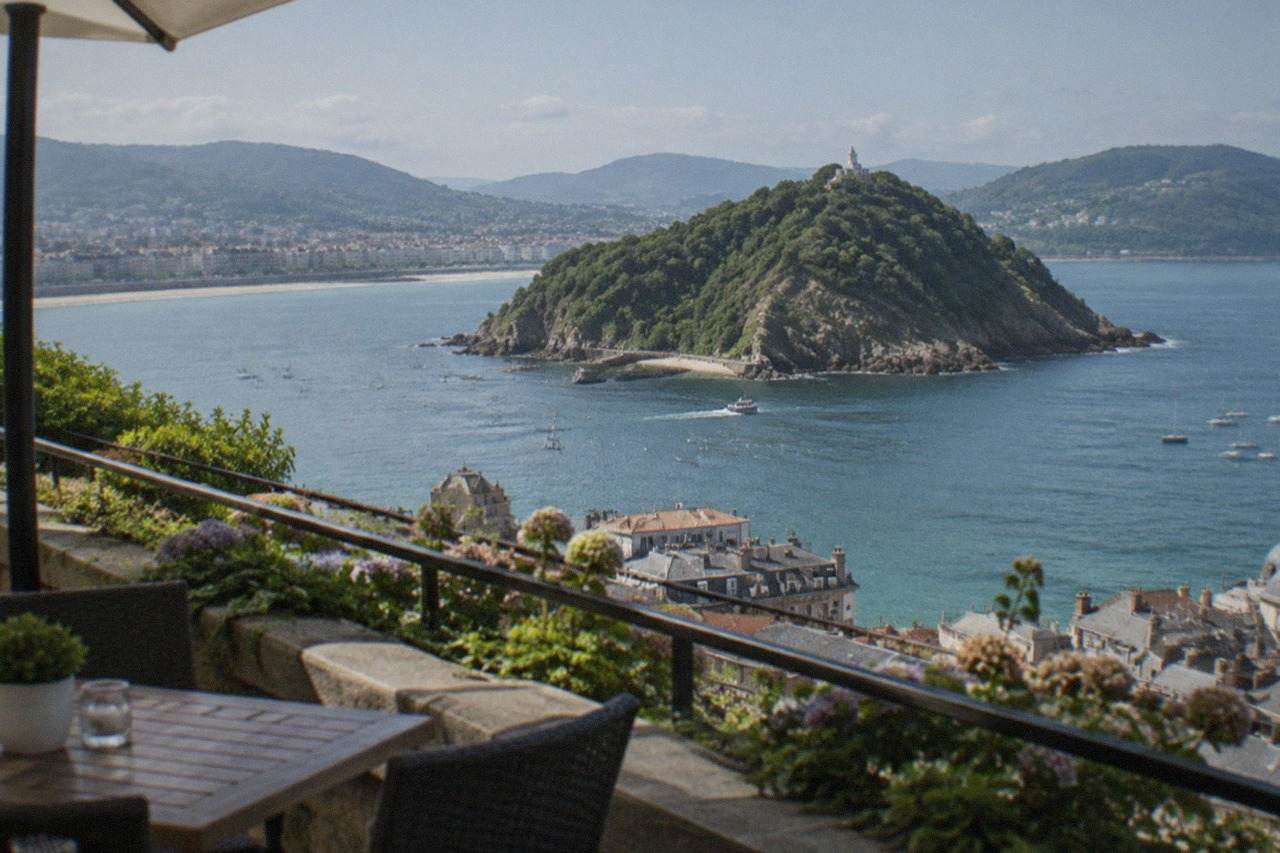
The best boutique hotels in San Sebastián sit in the Parte Vieja, Centro and Gros: the Old Town for pintxo bars and the cathedral-close streets, Centro for belle époque architecture and the beachfront, Gros for a quieter, more local feel beside Zurriola. Choose by neighbourhood first, building second, because the whole city is walkable and the rain, not the distance, is what shapes a stay.
San Sebastián, the Basque city on La Concha bay whose official name is Donostia / San Sebastián, is a place where the choice of hotel matters less than the choice of street. The municipality held 189,866 people on the register at 1 January 2025, and the parts a visitor cares about compress into a bay, a river mouth and two hills, all of it walkable end to end. A boutique property in the right neighbourhood puts the whole city at your feet; the same property three streets out of position adds nothing but rain-soaked walks.
That is the argument of this page: pick the neighbourhood, then the building. The sections below set out what boutique actually means in this city, which of the neighbourhoods suit which kind of traveller, how AEMET's rainfall record should shape the booking, and what the Gipuzkoa tourist tax, which takes effect on 1 January 2027, does and does not change. Along the way there are the closing days of the museums and the dates of the festivals, because a hotel in the Parte Vieja during Semana Grande is a different product from the same room in November.
What Does Boutique Mean For Hotels In San Sebastian?
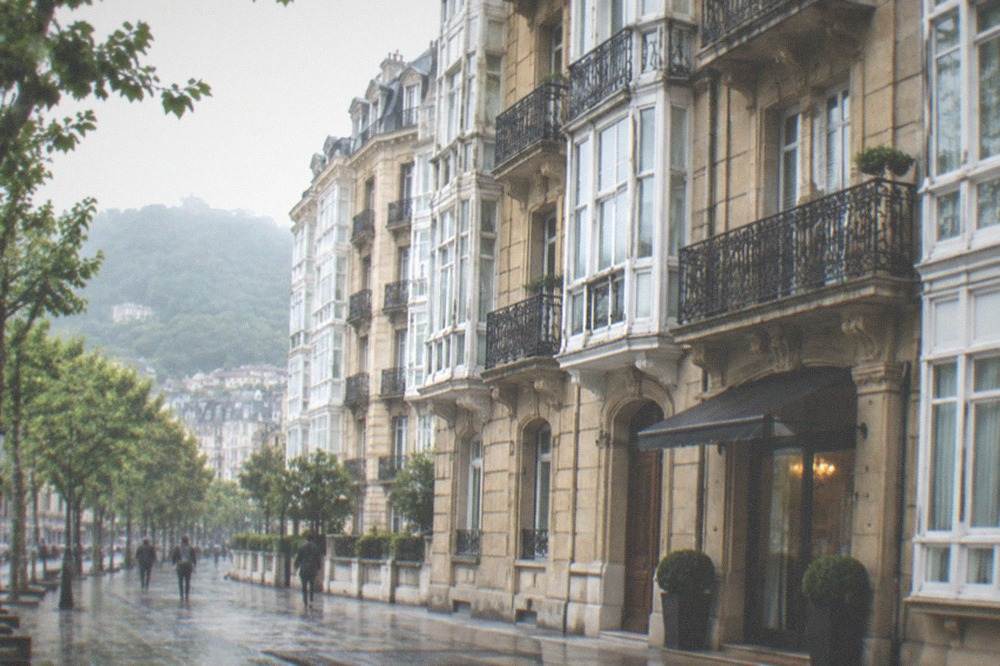
In San Sebastián, boutique means small, central and independent in character: converted townhouses, belle époque facades with a dozen rooms, and designer refits inside buildings that predate the tourism boom. The city has no purpose-built boutique district, so the stock is scattered through the Parte Vieja, the Centro and Gros, and the defining feature is location inside the walkable core rather than a spa or a brand. Almost every property of this type sits within walking distance of both the bay and the pintxo bars.
The city's hotel stock grew out of its belle époque past, when Queen María Cristina's court spent summers here and Miramar Palace was built for her in 1893 to an English country house design by Selden Wornum. The grand dames of that era are covered on the main hotels page; the boutique tier is the layer underneath them, buildings that took the same architecture and kept the scale small. What you are buying is a room inside the fabric of the city rather than a resort on its edge.
There is a practical consequence. Small buildings mean small lobbies, fewer staff and, in the oldest streets of the Parte Vieja, no parking at the door. The trade is that the Old Town is literally downstairs, and the pintxo bars, the plaza and the market are the hotel's de facto public rooms. Anyone who values a full-service lobby over a doorstep should read the luxury hotels guide instead, because those two products diverge sharply here.
Which Neighbourhood Has The Best Boutique Hotels In San Sebastian?
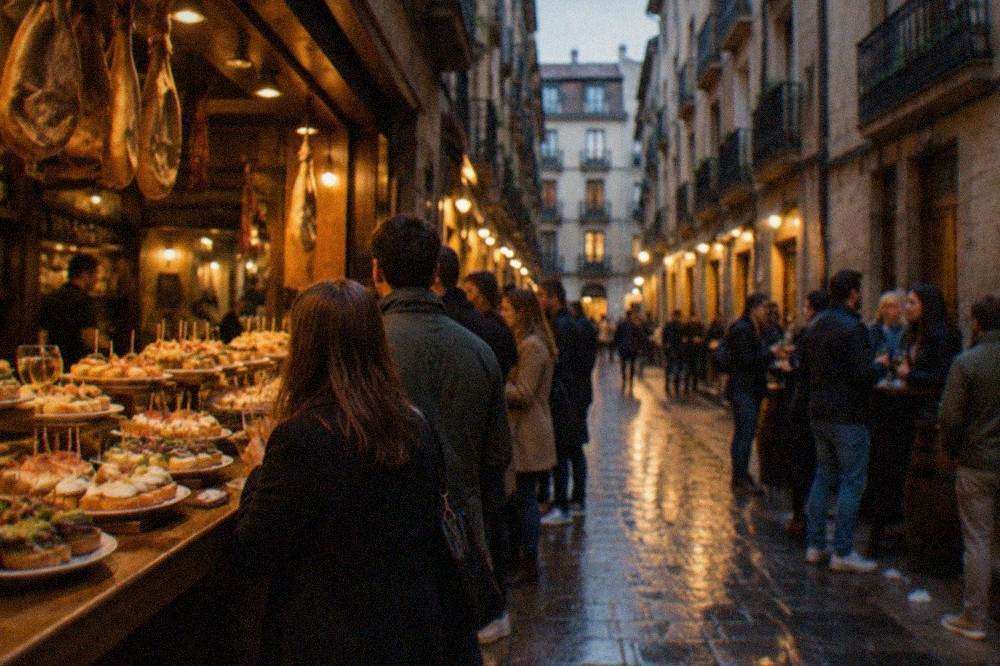
The Parte Vieja has the densest cluster of small characterful properties and puts you above the pintxo bars; Centro, across the river, offers belle époque buildings and the beachfront promenade with a calmer street life; Gros, east of the Kursaal, is the more local, quieter option beside Zurriola beach. Antiguo, west of Ondarreta, suits longer stays and beach days rather than short city breaks. None of the four is a wrong answer, but they serve different trips.
The table below summarises what each area offers a boutique guest, using the character of the neighbourhoods as the tourism board and the council describe them.
| Neighbourhood | Character | Best for | Trade-off |
|---|---|---|---|
| Parte Vieja | Medieval street plan, the densest pintxo bar scene in the city | Short stays, food-focused trips, first visits | Street noise late at night, no parking |
| Centro | Belle époque architecture, the Boulevard, La Concha at the end of the street | Travellers who want quiet plus the beach | Fewer bars on the doorstep, more corporate neighbours |
| Gros | Local streets, Zurriola's surf beach, the Kursaal | Longer stays, surfers, repeat visitors | Farther from the Old Town's core, though still walkable |
| Antiguo | Residential, beside Ondarreta and the walk to the Peine del Viento | Beach days, family stays, car trips | The quietest of the four, the least central |
A first-time visitor with two or three nights should almost always take the Parte Vieja or the Centro edge of it. The how many days guide makes the case that the city rewards short, dense stays, and density is exactly what the Old Town delivers. A guest there can eat, walk, swim and sleep without crossing a single zone boundary.
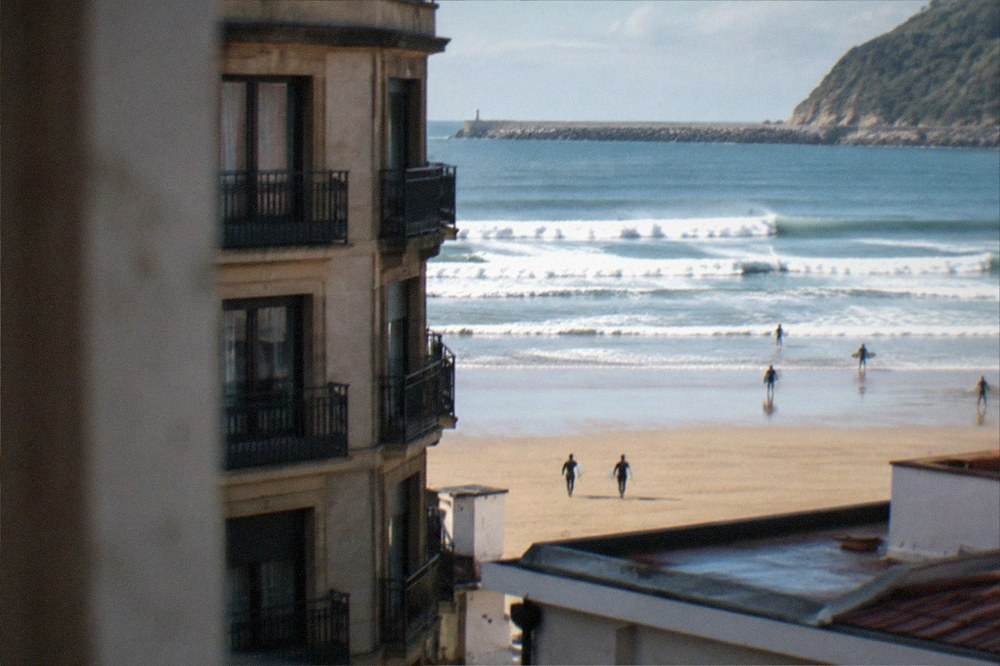
Gros rewards a different calculation. It faces Zurriola, the 800-metre beach the council describes as sandy and fairly open with a strong swell, which is the surf beach, and its streets hold fewer tourists per square metre than the Old Town. The Kursaal, Rafael Moneo's building inaugurated on 23 August 1999 after his 1990 proposal won the competition, sits on its western edge as a landmark.
How Close Are The Boutique Areas To The Beaches?
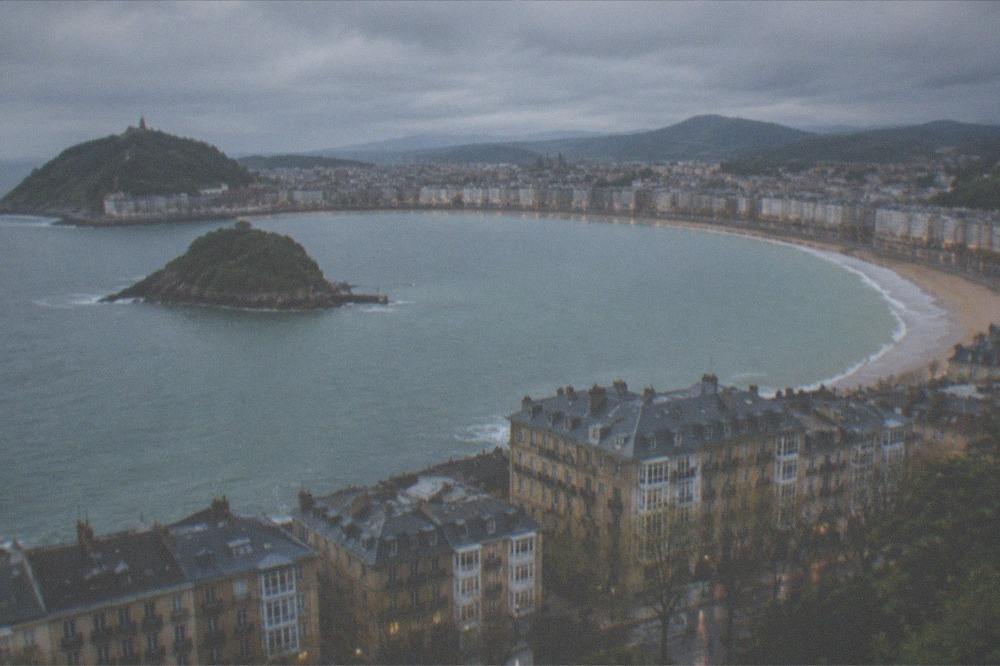
La Concha runs 1,350 metres along the bay with a mean width of 40 metres, Ondarreta runs 600 metres at 100 metres wide, and Zurriola runs 800 metres at 110 metres wide. A Centro or Parte Vieja boutique hotel puts La Concha at a short walk; a Gros hotel fronts Zurriola; an Antiguo hotel fronts Ondarreta. The council's figures also carry the warning that matters most: the tide often limits the usable area of La Concha.
The three beaches are all council-managed sand, and the lifeguard service runs on all three from 1 June to 30 September, with hours of 10:00 to 20:00 from 15 June to 15 September and 13:30 to 19:30 for the second half of September. Parasol and awning hire runs 15 June to 30 September, with an awning at 13.10 EUR a day on La Concha and Zurriola and a lounger at 3.50 EUR. Those figures are the council's own, published on its beach pages.
| Beach | Mean length | Mean width | Mean area | Nearest boutique area | Council note |
|---|---|---|---|---|---|
| La Concha | 1,350 m | 40 m | 54,000 m2 | Centro, Parte Vieja | Sandy and shallow; the tide often limits usable area |
| Ondarreta | 600 m | 100 m | 60,000 m2 | Antiguo | Sandy; the walk to the Peine del Viento starts at its west end |
| Zurriola | 800 m | 110 m | 88,000 m2 | Gros | Sandy, fairly open, strong swell; remodelled in 1994 |
The beaches guide covers the swimming and the water quality sampling in detail. For a hotel decision the single point that matters is this: the bay beaches and the surf beach are on opposite sides of the river mouth, so a guest who wants both is choosing a hotel in the Centro, where the crossing is shortest.
Does The Rain Change Where You Should Stay In San Sebastian?
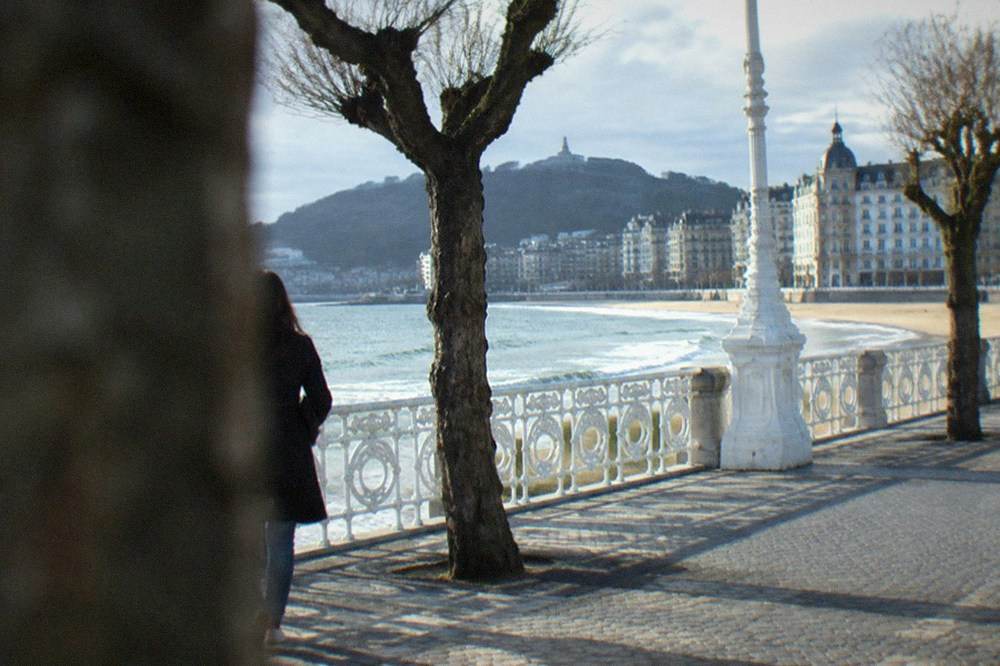
Yes, because AEMET's Igeldo station records 1,507 mm of rain a year over 141 days with at least 1 mm, and even July, the driest month, averages 86 mm over about 10 rain days. A boutique hotel in the Parte Vieja or Centro keeps every rainy-day option, the museums, the bars and the market, under cover and within a few minutes on foot, while an outlying area turns each shower into a bus ride. The city is never dry, and the booking should assume rain.
The climate record for the station, which sits 250 m up on Monte Igeldo so the seafront runs slightly warmer than these values, is unambiguous about what kind of city this is. November is the wettest month at 169 mm, July the driest at 86 mm, and August, at 117 mm, is wetter than June, July or September. Sunshine runs from 93 hours in December to 196 hours in July, 1,816 hours across the year. The weather guide carries the full table.
| Month | Mean C | Rain mm | Rain days 1mm+ | Sun hours |
|---|---|---|---|---|
| January | 8.5 | 141 | 13.2 | 98 |
| April | 11.3 | 138 | 13.4 | 157 |
| July | 18.9 | 86 | 9.8 | 196 |
| August | 19.5 | 117 | 10.5 | 190 |
| November | 11.3 | 169 | 13.0 | 102 |
| December | 9.1 | 151 | 12.4 | 93 |
The practical reading for a hotel choice: a wet afternoon in the Old Town is a long lunch, because the bars are the shelter. A wet afternoon in an outlying district is a taxi. The rainy day guide lists the indoor options, and San Telmo Museoa, free for everyone every Tuesday and 10.00 EUR general admission the rest of the week, is close enough to the Old Town that the walk between hotel and museum never matters.
What Does The Tourist Tax Mean For A Boutique Hotel Booking?
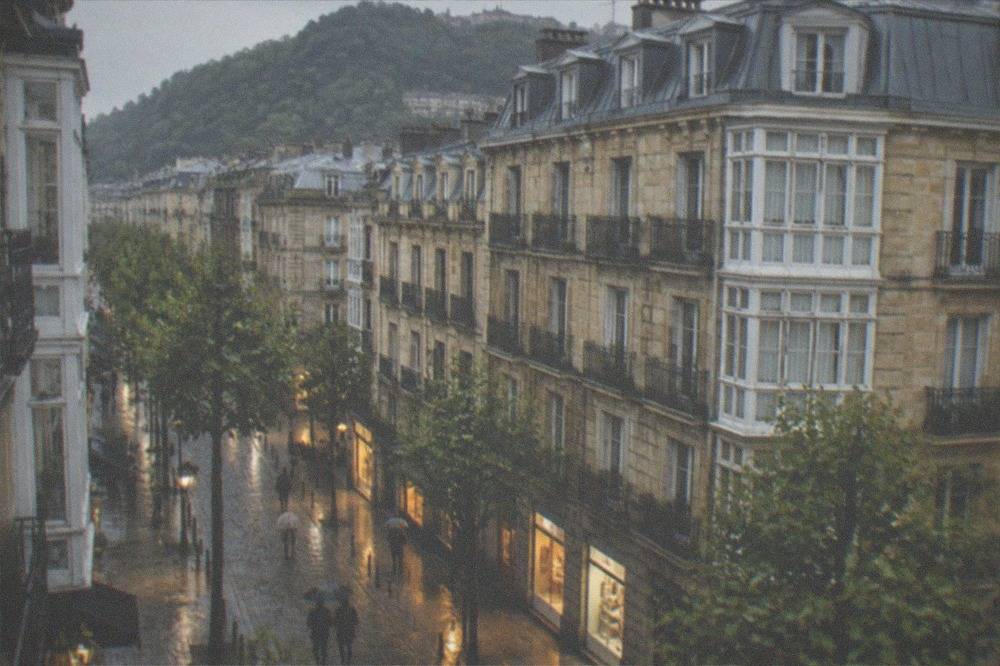
No visitor pays a tourist tax in San Sebastián before 1 January 2027. Norma Foral 3/2026, the Gipuzkoa law published on 25 June 2026, takes effect on that date and sets bands per person per night, with each council fixing its own rate inside them: up to 6.50 EUR for 5-star hotels, up to 5.50 EUR for 4-star, up to 3.50 EUR for 3-star, and up to 1.75 EUR for 1-star hotels and pensiones.
At most 6 nights are charged per stay and under 18s are exempt.
The law is a province-level framework, and the rate San Sebastián's own council will apply has not been published in an official ordinance, so no single city rate can honestly be printed here. What a boutique guest can plan on is the structure: the charge is capped at six nights of a continuous stay, stays under 24 hours count as one unit, and stays booked before 5 February 2026 are not charged at all. The full index of guides sits on San Sebastian Spain Guide.
| Accommodation type | Band minimum EUR | Band maximum EUR |
|---|---|---|
| Hotel 5 stars | 4.50 | 6.50 |
| Hotel 4 stars | 3.50 | 5.50 |
| Hotel 3 stars | 1.50 | 3.50 |
| Hotel 2 stars | 1.00 | 2.50 |
| Hotel 1 star, pensiones | 0.75 | 1.75 |
| Tourist apartments | 1.50 | 3.50 |
| Tourist-use dwellings | 4.50 | 6.50 |
| Campsites, rural houses, hostels | 0.75 | 1.75 |
Many boutique properties in this city sit in the smaller, older buildings, which often means the lower star bands. The is San Sebastian expensive page covers the wider cost picture of a stay, and the honest summary is that the tax, when it arrives, is a small line item measured in single euros per night, not a reason to change neighbourhoods.
Boutique Or Luxury: Which Hotel Tier Fits San Sebastian Better?
Boutique fits the city better for short food-focused stays, because San Sebastián's attractions are its streets, its bars and its bay, and a small hotel inside the Parte Vieja or Centro puts all three at the door. Luxury fits better for a stay built around the 2026 MICHELIN Guide's city count of 11 stars across 6 restaurants, or for travellers who want seafront scale and service after dark. The two tiers are not price neighbours here, and they rarely share a street.
The MICHELIN Guide Spain 2026 counts 6 restaurants holding 11 stars inside the municipality, with Akelaŕe and Arzak each holding three. Martín Berasategui, also three-star, is in Lasarte-Oria, a separate municipality, and must not be counted as a city table. The Michelin restaurants guide explains the geography, and the point for a hotel choice is that the starred houses are spread between the Monte Igueldo side of the bay and the Old Town edge, so no hotel location collects them all.
A boutique guest eating at that level will be taking taxis regardless, which weakens the location argument that drives the boutique choice at dinner time. But the pintxo tier, the one the city is actually built on, is entirely a walking business. The pintxos guide and the best bars page cover that scene, and a hotel above it turns the evening into a descent of one staircase.
What Can You Walk To From Each Boutique Area?
From a Parte Vieja or Centro boutique hotel you can walk to La Concha, the Old Town bars, Plaza de la Constitución, the Buen Pastor cathedral area, La Bretxa market and the Monte Urgull access paths, all without crossing a zone boundary. From Gros you walk to Zurriola, the Kursaal and the Old Town bridge. From Antiguo you walk to Ondarreta and the Peine del Viento, and take a bus for the Old Town. The city's compactness is the boutique product's whole premise.
Monte Urgull, the hill between the Old Town and the bay, opens from 08:00 to 21:00 between 1 May and 30 September and 08:00 to 19:30 from 1 October to 30 April, which makes an evening ascent a realistic hotel-adjacent activity in summer. The Peine del Viento, Eduardo Chillida's three steel sculptures of more than nine tonnes each on the granite plaza by Luis Peña Ganchegui, finished in 1977, sits at the end of the Ondarreta side and belongs to an Antiguo hotel's walking radius.
The closing-day rhythm of the cultural venues also shapes what a walk delivers, and it varies by day of the week more than by season.
| Venue | Closed | Notes from the venue's own page |
|---|---|---|
| San Telmo Museoa | Mondays (except holidays and long weekends) | Free every Tuesday; 10.00 EUR general, 4.00 EUR reduced otherwise |
| Tabakalera | Mondays | Building free to access, 10:00 to 21:00 other days |
| Aquarium | Mondays, October to March, unless a long weekend | Open daily July and August, 10:00 to 20:00 |
| Chillida Leku (Hernani) | Tuesdays and Wednesdays | 14 EUR adults, open 10:00 to 19:00 otherwise; a day trip, not in the city |
A Monday arrival, in other words, is the one weekday when several indoor options are shut, and a hotel in the Old Town at least makes the bars the fallback. The things to do round-up carries the full attraction set.
When Is The Best Time To Book A Boutique Hotel In San Sebastian?
August is the peak month for hotel stays in the city, with 245,769 hotel overnight stays recorded in August 2025 against 115,910 in January, and July and August together carry 22 percent of the year's hotel nights, so boutique rooms in the core are scarcest and hardest to time then. May, June and September combine high sun hours with thinner crowds, and September brings the regattas and the film festival. Book early for August and Semana Grande, and expect rain whenever you come.
The INE hotel figures, which cover hotels only in the city's tourist point, show April to October never dropping below 200,000 overnight stays a month in 2025. The festival calendar explains the spikes better than the weather does: Semana Grande always runs the week of 15 August, Saturday to Saturday, and the 2026 edition ran 8 to 15 August with the International Fireworks Competition. The Bandera de La Concha regattas, first held in 1879, fall on the first two Sundays of September.
| Event | Rule or 2026 date | What it does to the core |
|---|---|---|
| Tamborrada | 20 January every year | Fills the Parte Vieja and Centro with drumming companies all day |
| Quincena Musical | 2 to 30 August 2026 | Concert season, steady evening demand |
| Semana Grande | Week of 15 August; 2026 ran 8 to 15 August | Peak occupancy, fireworks over the bay nightly |
| La Concha regattas | First two Sundays of September; 2026 on 6 and 13 September | Crowds on the bayfront from late morning |
| Film festival | 18 to 26 September 2026 | Hotels fill with industry visitors |
| Behobia-San Sebastián race | 8 November 2026 | One busy weekend, quieter city around it |
The best time to visit guide works through the trade-offs month by month. For a boutique booking the rule of thumb is simple: the weeks around the festivals need the longest lead time, and the wettest months, November at 169 mm and December at 151 mm, are when a small hotel's location matters least and its price logic is friendliest.
What Should You Check Before Booking A Small Hotel Here?
Check four things: the street noise pattern, because Old Town bars run late and windows matter; the walking distance to the bay, because the tide limits La Concha's usable sand and the promenade is the real amenity; the building's closing-day surroundings, because Mondays shut several museums; and the cancellation terms, because this is a wet city and plans flex around weather. A boutique property that answers all four well is worth more here than a higher star rating that answers none of them.
Noise deserves the emphasis. The Parte Vieja's bar scene is the reason to stay there and the reason some travellers should not, and the difference between a room facing a bar street and one facing an interior courtyard is the difference between two different trips. The where to stay guide covers the same trade for every accommodation tier, and the beachfront and Old Town hotels page narrows it to the two areas most boutique guests choose between.
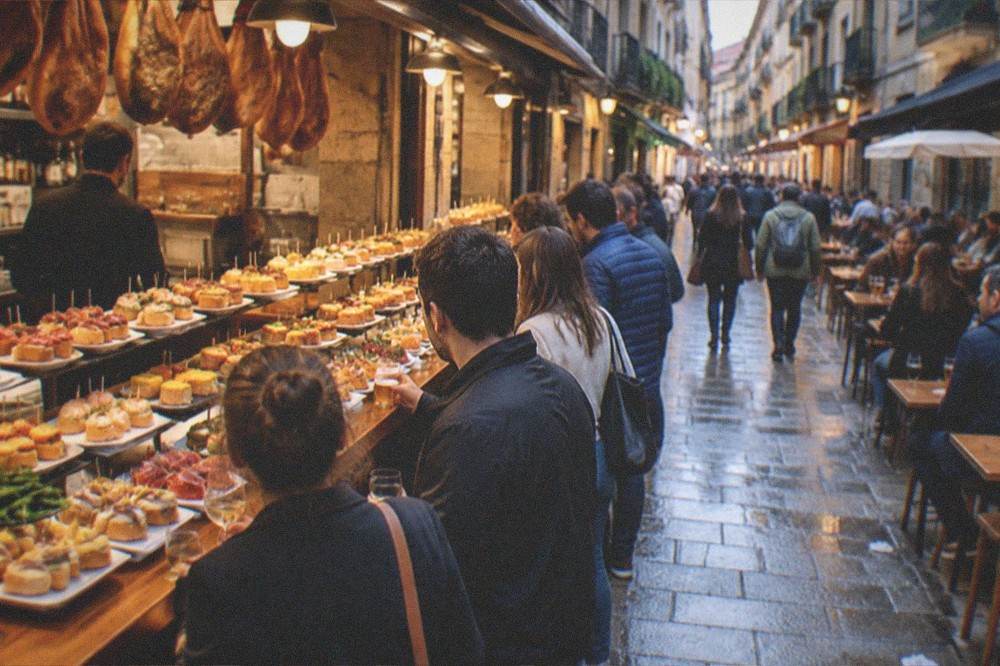
Once the room is booked, the neighbourhood is the amenity. A guest in the Old Town can put an evening around the bars with a guide who knows them, and the small-group crawl below is the version of that most first-time visitors enjoy most, with the operator's live listing carrying current dates and availability. Check availability, and read the tour's own page for what the evening covers.
A morning in the same streets works differently, and a guided walk of the Old Town with a local's insight into the bars is the quietest way to learn the geography before spending an evening in it. The Old Town walking tour page describes the route and the meeting point.
How Does A Boutique Stay Connect To The Rest Of The Region?
A boutique stay in the walkable core connects outward through the bus station, the Renfe and Euskotren stations and the Topo line, whose Amara terminus is still the working station while the new underground section has no published opening date. Day trips to Getaria, Hondarribia, Biarritz and Bilbao all leave from points inside or beside the core, so the hotel location that serves the city best also serves the region. The airport at Hondarribia is 20 km away, and Bilbao's is 105 km.
The tourism board's own distances put Biarritz at 45 km with direct service listed, and the Basque Government's Bilbao airport page lists a PESA Lurraldebus coach at 17.10 EUR to San Sebastián taking about 75 minutes, though that page carries no date and the operator should be re-read before relying on the fare. One correction that matters for arrivals: line E21 has not stopped at the airport since 1 June 2026, whatever older pages say, and the operator's current airport lines are E20, E23, E25, E27, E28, E29 and E30, with E30 the direct run.
The day trips guide sets out the options, and a cooking morning is the other way a hotel guest plugs into the food culture without leaving the city. The market visit and hands-on class below opens at La Bretxa, the market that sits inside the boutique core's walking radius, and the cooking class page describes the menu.
Common Questions About San Sebastian Boutique Hotels
What Is The Best Area For Boutique Hotels In San Sebastian?
The Parte Vieja for a short, food-focused stay, the Centro for a calmer base beside La Concha, Gros for a local feel beside the surf beach, and Antiguo for beach days near Ondarreta. All four are walkable to the bay, and the choice is about street life and noise, not distance.
Is San Sebastian Expensive For Boutique Hotels?
The city is not Spain's cheapest, and the cost guide covers the detail. August and Semana Grande carry the tightest availability, while November and December, the two wettest months at 169 mm and 151 mm of rain, are when demand thins. No accommodation price is printed on this page because none belongs in the detail behind it.
Do You Pay A Tourist Tax On A Boutique Hotel In San Sebastian?
Not before 1 January 2027. The Gipuzkoa law, Norma Foral 3/2026, sets bands per person per night, up to 6.50 EUR for 5-star hotels and down to 0.75 EUR for the smallest categories, with at most 6 nights charged and under 18s exempt. The city's own rate inside those bands has not been published in an official ordinance.
Can You Walk Everywhere From A Boutique Hotel In The Old Town?
Yes, within the core: the pintxo bars, La Concha, Monte Urgull's access paths, the cathedral area and La Bretxa market are all on foot. Chillida Leku in Hernani and the cider houses of Astigarraga are separate municipalities and need transport.
Which Beach Is Closest To The Boutique Hotels?
La Concha, at 1,350 metres long and 40 metres mean width, is closest to Centro and Old Town properties. Gros fronts Zurriola, 800 metres with a strong swell, and Antiguo fronts Ondarreta, 600 metres. Lifeguards are present on all three from 1 June to 30 September.
When Should You Book A Boutique Room For Semana Grande?
As early as you can. Semana Grande always runs the week of 15 August, Saturday to Saturday, and August 2025 was the city's peak hotel month of the year at 245,769 overnight stays. The 2026 edition ran 8 to 15 August and included the International Fireworks Competition.
A boutique hotel in San Sebastián is, in the end, a decision about which street you want to wake up on, in a city small enough that every street in the core reaches the bay, the bars and the hills on foot, and wet enough that reaching them under cover is worth paying for.