Rainy Day In San Sebastian
San Sebastián, in the Basque Country of Spain, is one of the wettest cities in Europe for its size, and a rainy day here is a planning problem worth solving properly. This guide sets out what stays open, what closes, and what is genuinely better in the rain.
Short answer
A rainy day in San Sebastián, Basque Country, Spain, is best spent on pintxo bars in the Parte Vieja, San Telmo Museoa (free on Tuesdays), Tabakalera (free access), the Aquarium and a covered cooking class. AEMET's Igeldo station records 1,507 mm of rain a year over 141 rain days, so wet weather is normal here, not an exception.
San Sebastián, the Basque city on La Concha bay whose official name is Donostia / San Sebastián, sits on Spain's Atlantic coast, and the Atlantic does what the Atlantic does: AEMET's climate normals for its Igeldo station, covering 1981 to 2010, record 1,507 mm of rain a year falling across 141 days with at least 1 mm. Even July, the driest month, averages 86 mm. A rainy day is not a failure of your trip. It is a statistically ordinary Tuesday in Gipuzkoa, and the city is built for it, with covered markets, bar-to-bar eating, museums an easy walk apart and a pintxo culture that has never once depended on the sky.
This page is a full wet-weather plan: what the rain actually looks like month by month, which museums are open and what they cost, how the pintxo bars work when the weather turns, which outdoor attractions stop running, and which day trips survive the drizzle. The figures come from the venues' own sites, the city council, the tourism board and AEMET's published normals, and where a price or a schedule could not be confirmed, this page says nothing rather than guessing.
How Wet Is San Sebastian, Really?
AEMET's normals for the Donostia / San Sebastián, Igeldo station, period 1981 to 2010, show 1,507 mm of rain a year over 141 days with at least 1 mm, with November the wettest month at 169 mm and July the driest at 86 mm. The station sits 250 m up on Monte Igeldo, so the seafront runs slightly warmer than these values. No month averages under 86 mm, and August, at 117 mm, is wetter than June, July or September.
The honest conclusion is that a rainy day is not a seasonal hazard here, it is a baseline condition that any itinerary should be able to absorb. The distribution matters more than the annual total. October and November together average 328 mm, which is why autumn visitors so often find the bay under grey cloud, while the April figure of 138 mm over 13.4 rain days is actually higher than February's 110 mm over 11.6. The idea of a reliably dry shoulder month does not survive contact with the table.
Here is the month-by-month picture from AEMET's published normals, rain columns first because that is the question this page answers:
| Month | Rain mm | Days with 1 mm or more | Mean temp C | Sun hours |
|---|---|---|---|---|
| Jan | 141 | 13.2 | 8.5 | 98 |
| Feb | 110 | 11.6 | 8.7 | 107 |
| Mar | 113 | 12.4 | 10.3 | 144 |
| Apr | 138 | 13.4 | 11.3 | 157 |
| May | 120 | 12.2 | 14.4 | 181 |
| Jun | 90 | 10.6 | 16.9 | 189 |
| Jul | 86 | 9.8 | 18.9 | 196 |
| Aug | 117 | 10.5 | 19.5 | 190 |
| Sep | 111 | 10.1 | 18.0 | 179 |
| Oct | 159 | 11.8 | 15.5 | 140 |
| Nov | 169 | 13.0 | 11.3 | 102 |
| Dec | 151 | 12.4 | 9.1 | 93 |
Two practical readings follow. First, roughly ten rain days a month in the driest stretch of summer means even a July week has a real chance of a wet afternoon, so pack for it rather than gambling. Second, the sun-hours column shows December at 93 against July's 196, so winter rain comes bundled with short, dim days: plan indoor blocks in the middle of the day and treat the late afternoon as bar time. The San Sebastian weather guide carries the full climate breakdown, and the three days in San Sebastian itinerary shows how to slot a wet day into a longer stay.
What To Do In San Sebastian When It Rains: The Short List
The strongest rainy-day options in San Sebastián are the pintxo bars of the Parte Vieja, San Telmo Museoa at 10.00 EUR general admission and free every Tuesday, Tabakalera with free access until 21:00, the Aquarium's fish tanks, a hands-on Basque cooking class, and the covered stalls of Mercado de la Bretxa. All of these sit within a short walk of each other, so a wet day can be spent moving from one roof to the next with minimal exposure.
The structure of the city helps. The Old Town's thirty-odd blocks hold dozens of bars in a grid you can cross in minutes under awnings and arcades, and the big museums sit at its edges rather than in the suburbs. A wet day rarely needs a bus. The table below sorts the main indoor options by what they are and what they cost, using only figures the venues publish themselves.
| Option | Area | Admission | The detail that matters |
|---|---|---|---|
| San Telmo Museoa | Old Town edge | 10.00 EUR general, 4.00 EUR reduced | Free every Tuesday for everyone |
| Tabakalera | Egia, beside the station | Free access | Open to 21:00, closed Mondays |
| Aquarium | Harbour edge | Hours published, prices on site | Closed Mondays October to March unless a long weekend |
| Eureka! Zientzia Museoa | Miramon technology park | Museum 10 EUR, reduced 7 EUR | Planetarium 4 EUR, combined ticket 12.50 EUR |
| Mercado de la Bretxa | Old Town | Free to enter | Covered market halls |
| Cooking classes | City Centre and Old Town | From the listing | You eat the meal you cook |

Guided options compress the decision-making, which is worth real money on a day when you would otherwise be standing on a corner checking a weather app. The Old Town walking tour below is the natural fit: it is a short walk, it is about the bars and the streets rather than a viewpoint, and the guide's job includes picking the sheltered route. The pintxo tour beside it solves lunch and the walking tour's biggest weakness, which is that you otherwise have to choose your own bars in the rain.
A third option in that set, the bay boat, belongs to the "rain that is not really rain" category: a light drizzle on a mild day does not stop a harbour sailing, and the deck gives you the whole bay panorama without a walk up either mountain. The section on boats and the funicular below covers when this works and when it does not.
Which Museums Are Open On A Wet Day In San Sebastian?
San Telmo Museoa is open Tuesday to Sunday, 10:00 to 19:00 from 1 November to 31 March and 10:00 to 20:00 from 1 April to 31 October, charging 10.00 EUR general and 4.00 EUR reduced, with free entry for everyone every Tuesday. Tabakalera offers free access Tuesday to Sunday until 21:00, closed Mondays. The Aquarium is open daily in July and August and closed Mondays from October to March unless a long weekend.
San Telmo is the anchor. It is the city's oldest museum building, wedged between the Old Town and Monte Urgull, and its collection runs from Basque prehistory to contemporary art, including the Sert hall that visitors come out talking about. The free Tuesday is the single most useful fact on this page for a budget traveller: time a wet Tuesday around it and the day's culture costs nothing. The museum closes on 1 and 20 January and 25 December, and reduced hours of 10:00 to 14:00 apply on 21, 24 and 31 December.
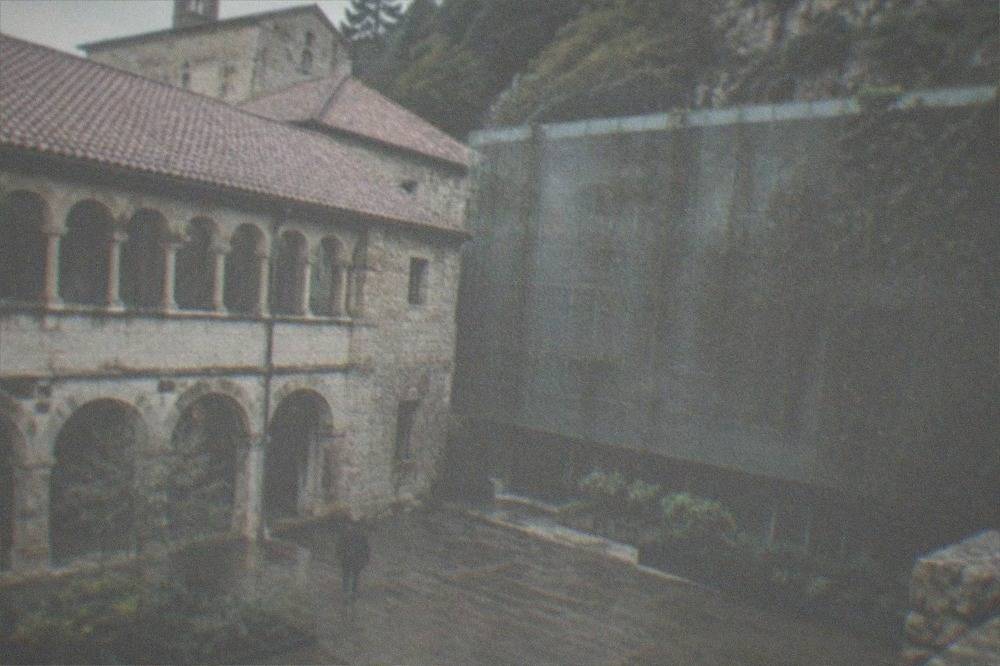
Tabakalera, the old tobacco factory beside the main station, is the wet-day second act. Access to the building is free and runs to 21:00, with the exhibition halls on floors 0 and 1 open 11:00 to 13:00 and 16:00 to 20:00, so it absorbs the awkward late-afternoon gap when the bars have not filled up yet and the rain has not stopped. It is closed Mondays, as is San Telmo, which makes Monday the one weekday where the museum plan needs replacing with market-and-bar time.
The Aquarium publishes its hours but not its prices on the page this site could verify, so check at the ticket office: from October to March it is open Tuesday to Friday 10:00 to 19:00 and weekends 10:00 to 20:00, with Mondays closed unless a long weekend; in July and August it is daily 10:00 to 20:00. Last entry is 60 minutes before closing, a detail that catches people out. Eureka! Zientzia Museoa, up in the technology park, suits families with children, with a museum ticket at 10 EUR general and 7 EUR reduced, a planetarium at 4 EUR and 3 EUR, and a combined museum-plus-planetarium ticket at 12.50 EUR and 9.50 EUR.
If the rain is the persistent kind rather than a shower, one museum outside the city deserves the trip: Chillida Leku in Hernani, a separate municipality, is open daily 10:00 to 19:00 except Tuesdays and Wednesdays, charges 14 EUR for adults, 10 EUR reduced, 7 EUR for under 18s and nothing up to age 8, and has a free car park. The sculptures stand outdoors in a farmyard of trees, so it is best in drizzle rather than a downpour, but the indoor Zabalaga barn holds a rotating display, and the whole site is an easy drive from the centre.
Can You Still Eat Pintxos In The Rain In San Sebastian?
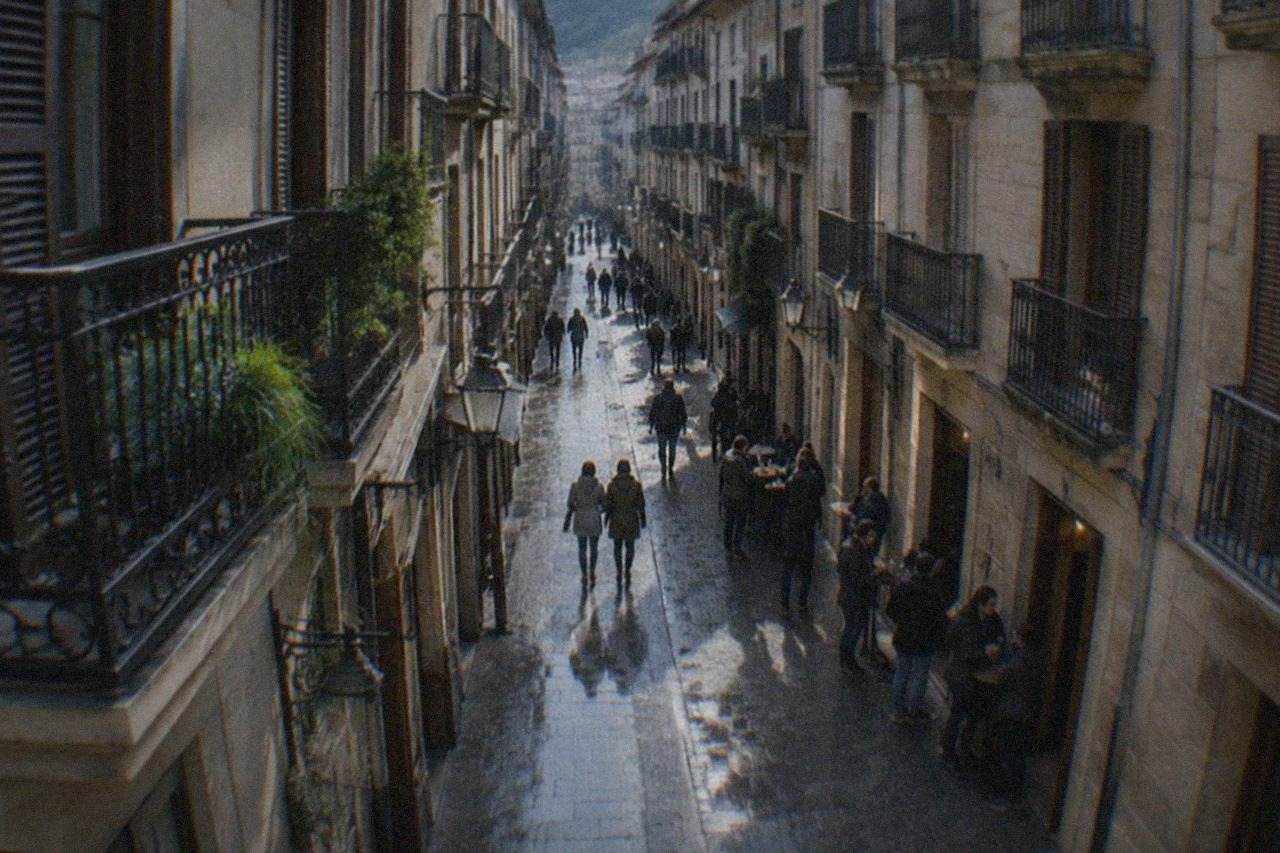
Yes, and a rainy day is arguably the best pintxo day, because the bars of the Parte Vieja sit a few doors apart on covered streets, the counter culture is built for standing indoors, and the whole point of a pintxo crawl is that you never stay anywhere long. The Old Town's grid means a crawl of four or five bars can be walked almost entirely under awnings, balconies and arcade edges.
The mechanics matter more than the philosophy. Pintxos are eaten standing at the counter, in bars that are often no wider than a corridor, and the bars cluster on and around the streets of the Parte Vieja, the Old Town whose name and layout are covered in the guide to what the Old Town of San Sebastian is called. A wet evening changes nothing about the ritual: you order a drink, point at what you want from the counter, eat it in two bites and move on. Rain shortens the gaps between bars, which nobody counts as a loss.
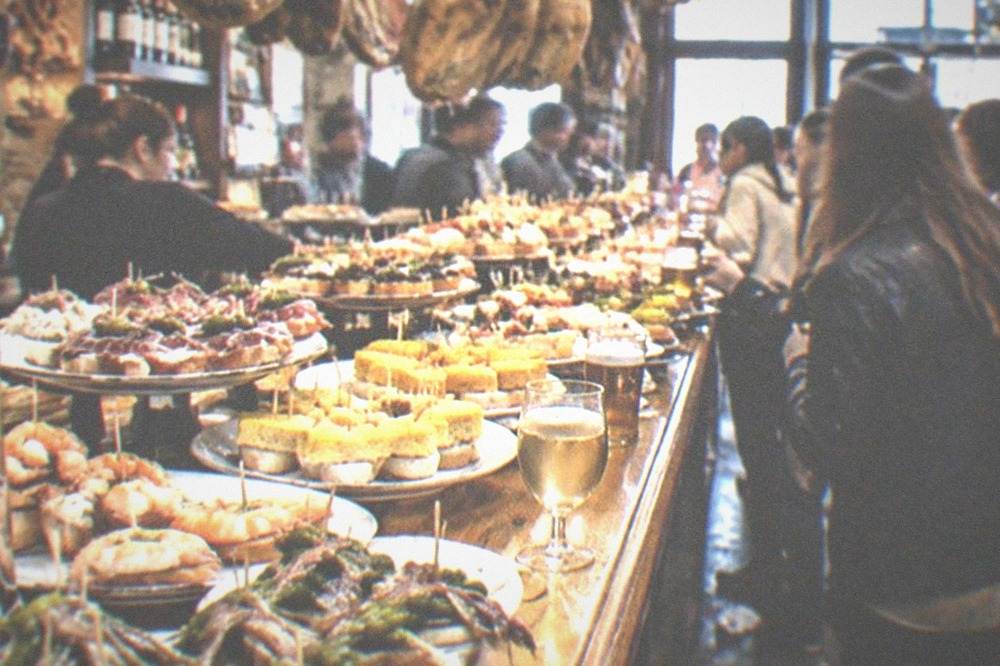
Two things genuinely improve in the rain. First, the queues at the famous bars thin out, because fair-weather visitors are on the promenade. Second, the txakoli pours taste the same under a cloud, and the local white, poured from a height into a wide glass, is the standard pintxo accompaniment. The what are pintxos guide explains the form, and the best pintxo bars guide lists the bars themselves, several of which are close enough to each other to make a rain-proof circuit.
If you would rather not choose, the small-group Old Town crawl below is the wet-day shortcut: it moves through pintxo bars, restaurants and gourmet shops with a guide who knows which door to use. The premium version adds reserved seating at each bar and a guided visit to Mercado de la Bretxa, the covered market, which turns the rain question into someone else's problem.
A cooking class is the other rain-proof food plan, and it has the advantage of eating up a whole afternoon. The market-plus-class version opens with a visit to the market stalls and then moves to a hands-on class in English cooking Basque signature dishes, and you eat the result. The class with wine and cider tasting runs in the city centre and ends the same way. Both are indoor, both end with a meal, and neither requires a weather forecast.
Is The Old Town Walkable In The Rain In San Sebastian?
Yes, the Old Town is one of the most rain-tolerant historic districts in Spain, because its streets are short, its bars and shops sit cheek by jowl, and the whole grid fits inside a walk of a few minutes from the Boulevard to the harbour. The main caution is footwear: the paving is stone, and wet stone is slippery, so the rain changes your shoes rather than your route.
The grid is the point. The Parte Vieja runs in narrow parallel streets from the Plaza de la Constitución down to the port, and every street offers a bar, a bakery or a shop doorway within a few steps. You are never more than a short dash from cover. The plaza itself, the old bullring whose balconies still carry numbered boxes, is the natural regrouping point, and the plaza guide covers its history.
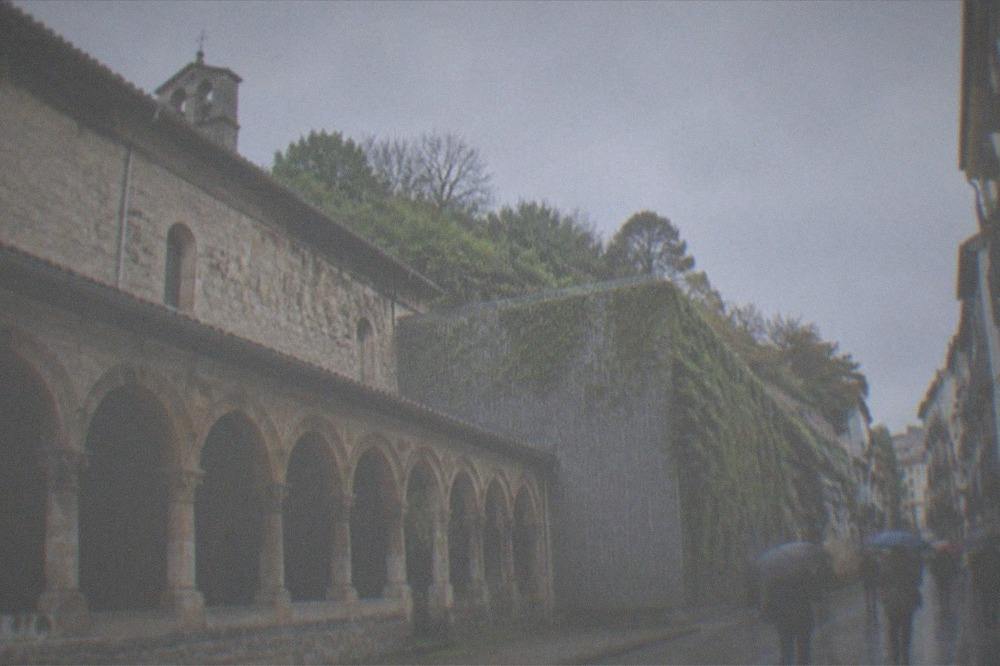
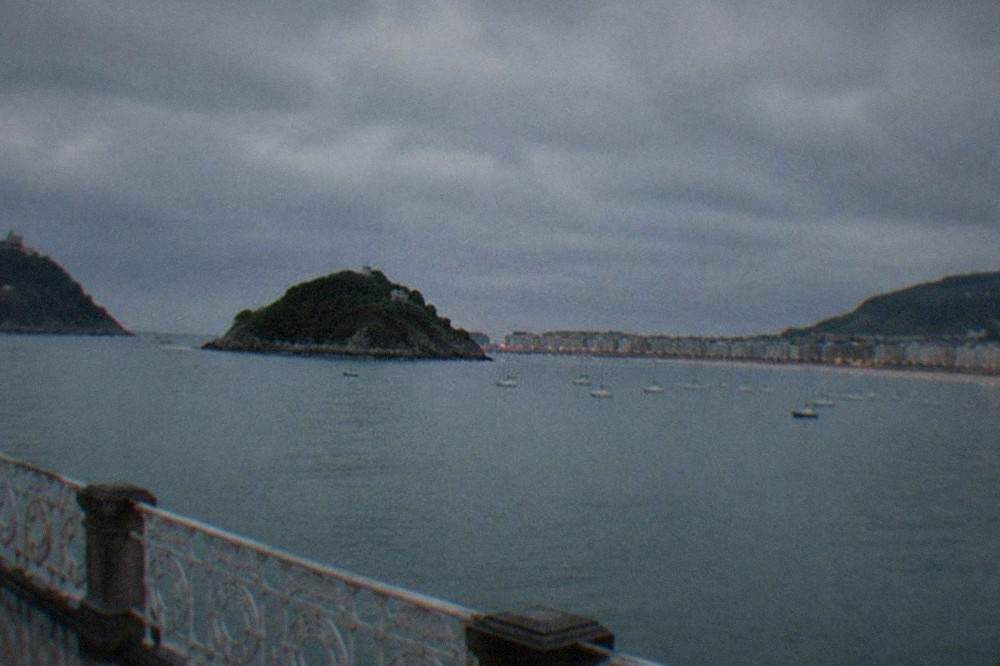
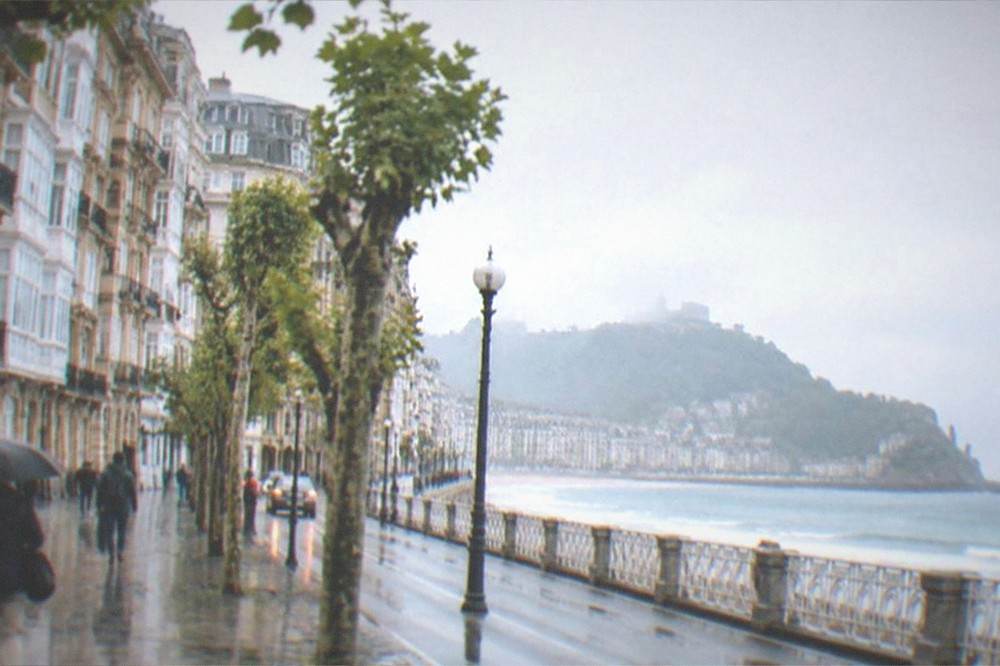
Beyond the Old Town, the city's walkability holds up in the rain with two exceptions. The two mountains, Urgull and Monte Igueldo, are poor wet-day choices for different reasons: Urgull's access hours run 08:00 to 21:00 from 1 May to 30 September and 08:00 to 19:30 the rest of the year, and its paths are steep and exposed, while Monte Igueldo's funicular rides close on rainy days by the site's own FAQ, and its home page states that tickets for the downhill journey alone are not on sale. The seafront promenade along La Concha, flat and rail-lined, stays perfectly walkable in drizzle and is arguably at its best under cloud, when the tide and the empty sand give the bay a different character. The one day in San Sebastian itinerary shows how the pieces fit when time is short.
Do The Boats And The Funicular Run In The Rain?
The bay boats run in light rain whenever the sea permits, with the island operator's high season running 1 June to 30 September and the direct island boat costing 5 EUR return, the 30-minute bay tour with island stop 8 EUR. The funicular is different: Monte Igueldo's own FAQ says rides close on rainy days, and its home page states that downhill-only tickets are not on sale, so the hill is a fair-weather attraction.
The distinction to hold onto is rain against sea state. The Motoras de la Isla service depends on weather and sea, not on cloud cover, and a drizzly July afternoon with a calm bay is a perfectly good sailing day. The red line runs direct to Santa Clara island every 30 minutes from 10:00 to 19:00 in high season, with the last boat back at 20:00 from June to September and children under 4 free. The blue line adds a 30-minute bay tour to the island call at 8 EUR, departing on the hour and half-hour through the afternoon, with the last departure not allowing a landing. Outside the June-to-September window the operator says to consult departures, so treat the boats as a seasonal option.
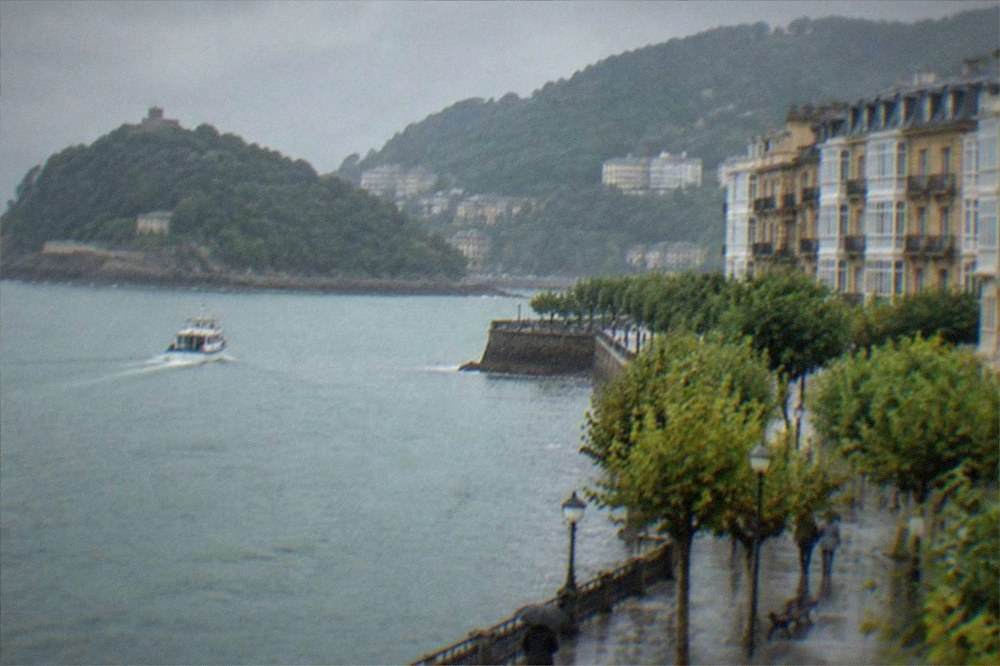
The funicular, by contrast, is explicit about rain: the site's FAQ lists rainy days among the closures, and the home page notice that downhill-only tickets are not on sale closes the walk-up option. The funicular opened on 25 August 1912 and the tourism board calls it the oldest in the Basque Country, a rack railway with wooden cars, but none of that helps in a downpour. If the rain is light and you want the hill, the alternative is entry to the grounds and viewpoint by vehicle or on foot at 3.00 EUR per person, with the return funicular at 5.50 EUR adult when it is running.
Hondalea, Cristina Iglesias's installation in the island lighthouse, is a summer-only proposition: the council's visit page gives 1 June to 30 September, 11:00 to 18:30, free, in small groups of about 20 minutes with no booking needed for the visit itself, only the boat. It is not open all year, and the boat depends on the sea, so a rainy day in high season can still work for it and a rainy day in October cannot.
Which Day Trips Survive A Rainy Day From San Sebastian?
The rain-proof day trips from San Sebastián are the ones whose point is indoors: Bilbao for the Guggenheim, the French Basque towns of Bayonne and Saint-Jean-de-Luz for their covered markets and old quarters, and the Rioja wineries around Laguardia, whose tastings happen in cellars. Coast walks and fishing-village viewpoints, the Getaria and Zumaia circuit, lose most of their appeal in anything heavier than drizzle.
The sorting principle is simple: ask what the trip is for. If the answer is a view, the rain takes it. If the answer is a building, a cellar or a museum, the rain is irrelevant. The table below sorts the main options from the city by how they behave in wet weather.
| Day trip | What it is | In the rain |
|---|---|---|
| Bilbao and the Guggenheim | City and museum day, small-group format | Strong choice, the museum is the point |
| Biarritz, Bayonne, Saint-Jean-de-Luz | Coach day across the border, three French towns | Good choice, Bayonne's old quarter and covered market carry the day |
| La Rioja and Laguardia | Full-day winery visits and a walled town | Strong choice, tastings are indoors in cellars |
| Hondarribia and Pasajes | Half-day to the port town and fishing villages | Mixed, the old quarter works, the viewpoints do not |
| Zarautz, Getaria, Zumaia | Half-day coast drive by vehicle with a guide | Weak choice in rain, the coast is the attraction |
| Getaria txakoli | Half-day small-group winery visit with hotel pickup | Good choice, the tasting is the point |
The day trips from San Sebastian guide expands on all of these, and the Bilbao day trip page covers the strongest wet-weather option in detail. One geography note that matters for planning: Getaria, Zarautz and Zumaia are separate municipalities along the Gipuzkoa coast, not suburbs, so a coast day is a real drive, and in rain it is a drive with the scenery switched off. The French Basque Country, by contrast, spends much of its day under roofs, and Bayonne's cathedral and market quarter make the crossing worthwhile even with the Biarritz beaches written off.
The tours below are the three that hold up best on a wet forecast, and the same trio that opened this page, because the Old Town walk and the pintxo crawl are the two city answers to rain and the bay boat is the borderline one that depends on the sea rather than the sky.
If the day is truly written off, a cider house lunch is the deep-weather answer. The txotx season runs from the middle of January to the end of April by the tourism board's wording, and a cider house meal is a long, indoor, communal affair: the operator's tour below includes the orchard, the cellar, the txotx ritual and lunch, run with the Gipuzkoa cider house association. Outside txotx season the farmhouse-and-cider-house version still delivers the meal. The cider houses guide explains the ritual.
Common Questions About Rainy Days In San Sebastian
What is the rainiest month in San Sebastian?
November, with 169 mm of rain over 13 days with at least 1 mm in AEMET's 1981 to 2010 normals for the Igeldo station. December and October follow at 151 mm and 159 mm. No month averages under 86 mm, so the question is never whether it rains but how much.
Can you swim at La Concha in the rain?
Swimming is not stopped by rain, but it is only lifeguard-supervised from 1 June to 30 September, with hours of 10:00 to 20:00 from 15 June to 15 September and 13:30 to 19:30 from 16 to 30 September. Outside that window you swim unsupervised, and the council's page notes the tide often limits the usable area of the beach.
Does the Monte Igueldo funicular run in the rain?
No. Monte Igueldo's own FAQ lists rainy days among the closures, and its home page states that tickets for the downhill funicular journey alone are not on sale, so walking up and riding down is not an option in any weather. Save the hill for a clear day and check the site before setting out.
What is free to do in San Sebastian on a rainy day?
Tabakalera is free to access and open to 21:00 Tuesday to Sunday. San Telmo Museoa is free for everyone every Tuesday, and free for under 25s on any open day. The covered halls of Mercado de la Bretxa cost nothing to enter, and the Old Town's pintxo bars welcome you for the price of a drink.
Is San Sebastian worth visiting if it rains the whole time?
Yes, because the city's core attractions are roofs: the pintxo bars, the covered market, San Telmo, Tabakalera and the cooking classes are all indoor, and the Old Town grid keeps the walking between them short. The things rain actually removes are the two mountains, the beach hours and the coastal viewpoints, which is a real loss but not the whole city.
Do the Santa Clara island boats run in bad weather?
The boats depend on weather and sea state, not on rain alone, and the operator runs its high season from 1 June to 30 September with departures every 30 minutes from 10:00 to 19:00. Outside high season the operator says to consult departures, and Hondalea in the island lighthouse closes after 30 September.
The last word belongs to the forecast, not the plan: check the sea state before booking a boat, check Monte Igueldo's own notices before planning the hill, and let the bars absorb whatever the Atlantic sends. More ideas for the dry hours between showers are on the things to do in San Sebastian page, and this site, San Sebastian Spain Guide, keeps the hours and prices current so you do not have to trust a stale listing.