Luxury Hotels In San Sebastian
San Sebastián, the Basque Country's bay-side capital of fine dining, concentrates its luxury hotels along La Concha and the River Urumea. Here is how to pick between them, where the five-star houses actually sit, and what the new Gipuzkoa tourist tax will mean for a high-end stay.
Short answer
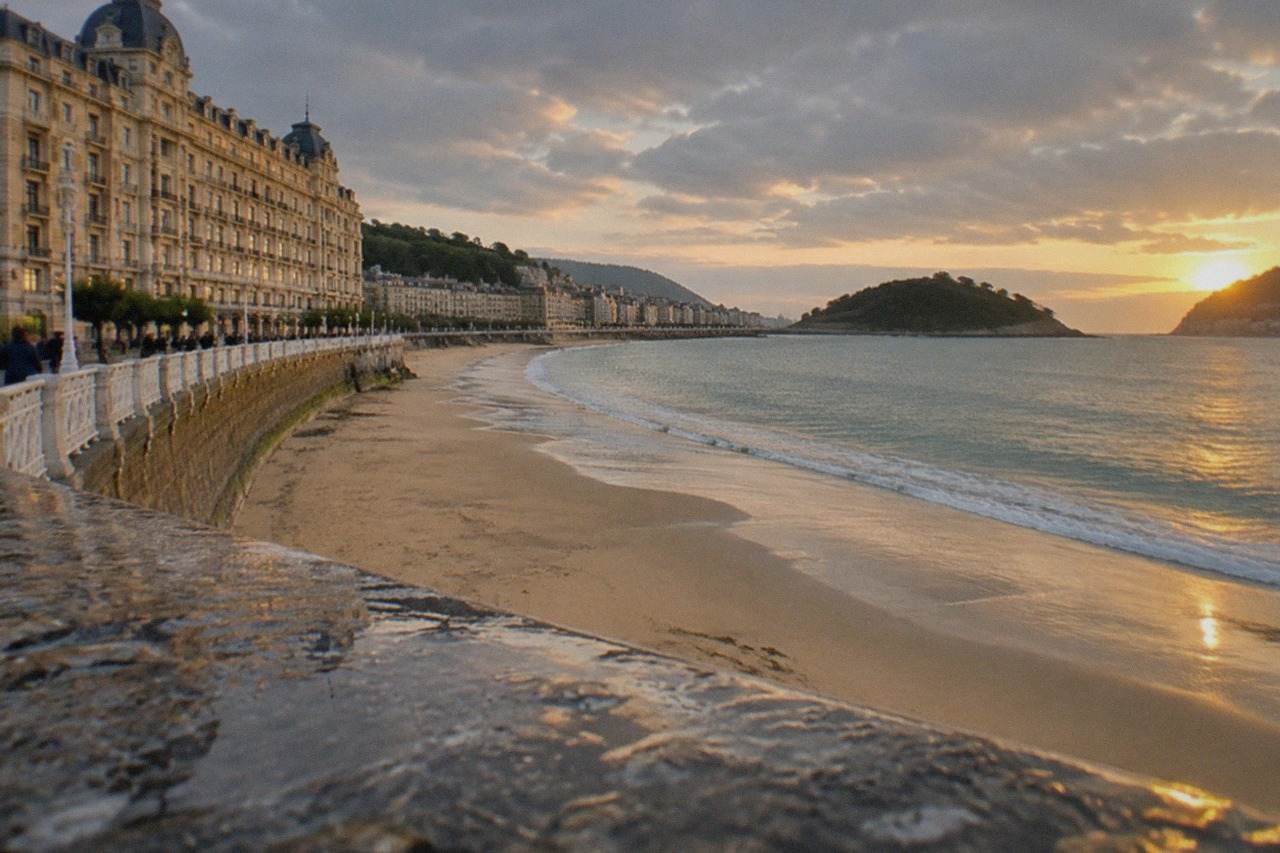
The luxury hotels of San Sebastián sit in three clusters: the La Concha seafront, the Centro around the River Urumea, and the beachfront at Ondarreta and Monte Igueldo. All are walkable to the Old Town, none needs a car, and the city's tourist tax starts only on 1 January 2027.
San Sebastián, in the Basque Country of Spain, keeps its luxury hotels closer together than almost any comparable city in Europe: the official name of the municipality is Donostia / San Sebastián, and nearly every five-star address in it stands within a short walk of La Concha bay. That geography does most of the work for a luxury traveller. The city's hotel history begins with the Belle Epoque, when the Spanish court summered here, and the two grand dames of that era, the Maria Cristina and the Londres, still anchor the market today, flanked by newer design houses along the beach and up toward Monte Igueldo. This page, from San Sebastian Spain Guide, sets out how the options divide up, what each cluster offers, and what the province's new tourist tax, which applies only from 1 January 2027, will mean for a five-star bill.
Which Are The Main Luxury Hotels In San Sebastian?
The luxury market in San Sebastián divides into three clusters: the historic grand hotels beside the River Urumea in Centro, the design-led beachfront addresses directly on La Concha, and the quieter houses at the Ondarreta end below Monte Igueldo. The Hotel Maria Cristina and the Hotel de Londres y de Inglaterra are the two Belle Epoque originals, and the beachfront row along La Concha holds the newer five-star and four-star superior properties. Every one of them sits inside a walkable core of roughly two kilometres.
The Maria Cristina, opened in the era when Queen Maria Cristina brought the court to the city each summer, is the classic choice: it faces the river rather than the beach, beside the Victoria Eugenia theatre and a short stroll from the Old Town's pintxo bars. The Londres sits at the eastern end of La Concha, with the beach and the promenade on one side and the Centro's shopping streets on the other. Between and around them, the beachfront row along Paseo de la Concha offers direct sand access, which matters in a city whose summer beach season draws crowds to a bay only 1,350 metres long, according to the city council's own beach page.
The third cluster is the calmest. Ondarreta, the council records, runs 600 metres long and up to 100 metres wide, and its west end is where the walk to the Peine del Viento begins, so hotels up there trade beach width for views toward the sculpted rocks and the funicular hill. A guest choosing between the three areas is really choosing between theatre-and-pintxos proximity, direct beach access, and sunset quiet.
The table below shows how the main houses divide. No nightly rate is printed, because accommodation prices move constantly: check each hotel's own site for live availability.
| Hotel | Area | Position | What it is known for |
|---|---|---|---|
| Hotel Maria Cristina | Centro | Beside the River Urumea, by the Victoria Eugenia theatre | The Belle Epoque grand hotel of the court era, river and Old Town views |
| Hotel de Londres y de Inglaterra | Centro, La Concha end | Directly on the La Concha promenade | Promenade position with beach access and bay views |
| La Perla spa and hotel | La Concha | On the sand itself, mid-bay | The historic thermal spa of the bay, the oldest of its kind on this coast |
| Ondarreta-end houses | Antiguo / Ondarreta | West end of the bay, below Monte Igueldo | Quieter beach position near the Peine del Viento |
For a wider view of every category, from five-star to hostel, see the best hotels in San Sebastian, and for the smaller design-led alternatives, the boutique hotels guide.
Where Should A Luxury Traveller Stay In San Sebastian?
Stay in Centro, between the river and the east end of La Concha, if the trip is built around restaurants, theatre and the Old Town: every address there is within a short walk of the pintxo bars and the Michelin-starred houses. Stay on the La Concha promenade if a balcony over the sand matters more than proximity to the bars. Stay at the Ondarreta end for calm, sunset walks to the Peine del Viento and the funicular up Monte Igueldo. None of the three needs a car.
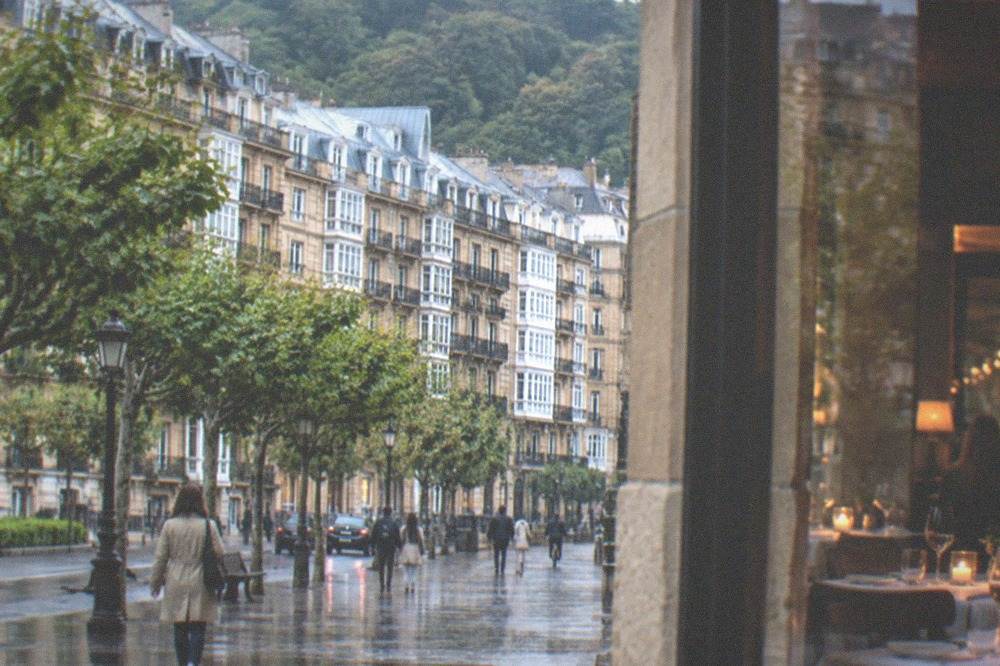
Centro is the practical answer for most first-time luxury visitors. The Maria Cristina's position beside the Victoria Eugenia theatre puts the Parte Vieja, the Old Town, a few minutes away on foot, which is where the evening pintxo crawl happens. The trade-off is that the riverfront rooms face the Urumea, not the bay, so the classic La Concha view belongs to the beachfront row.
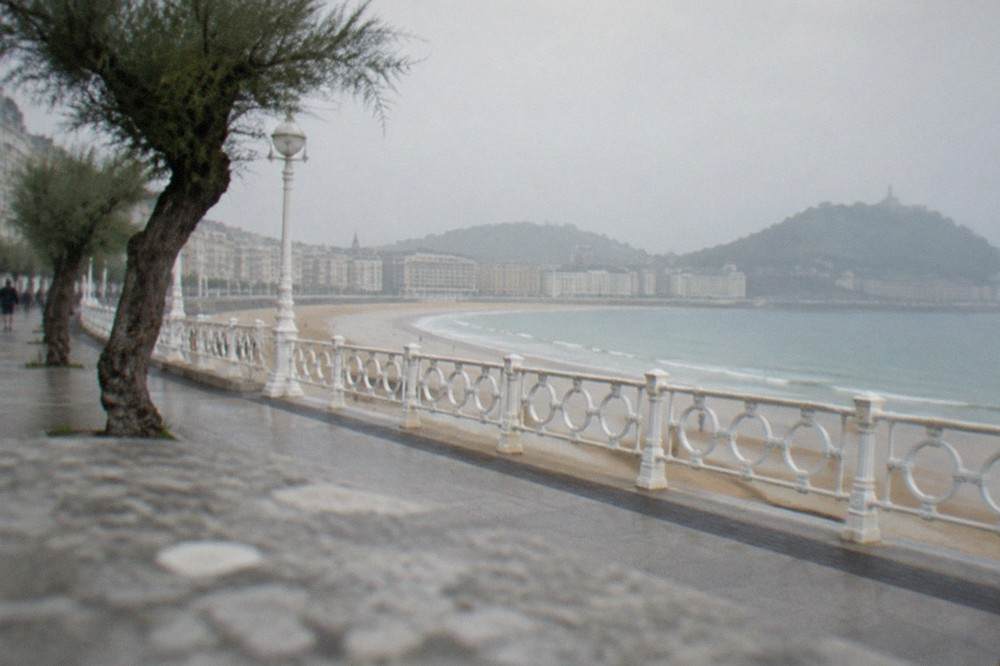
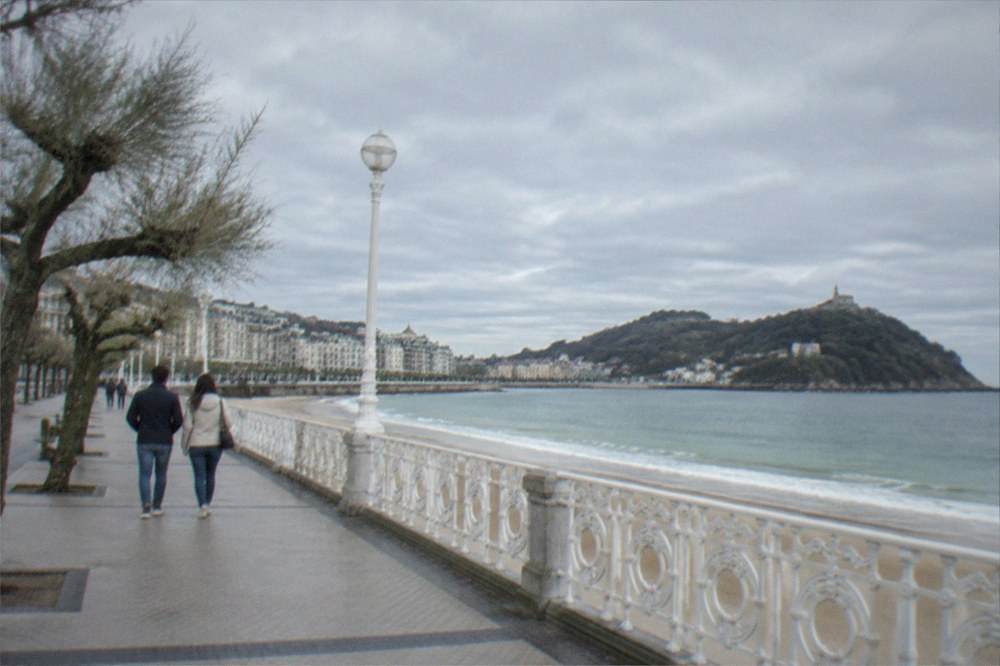
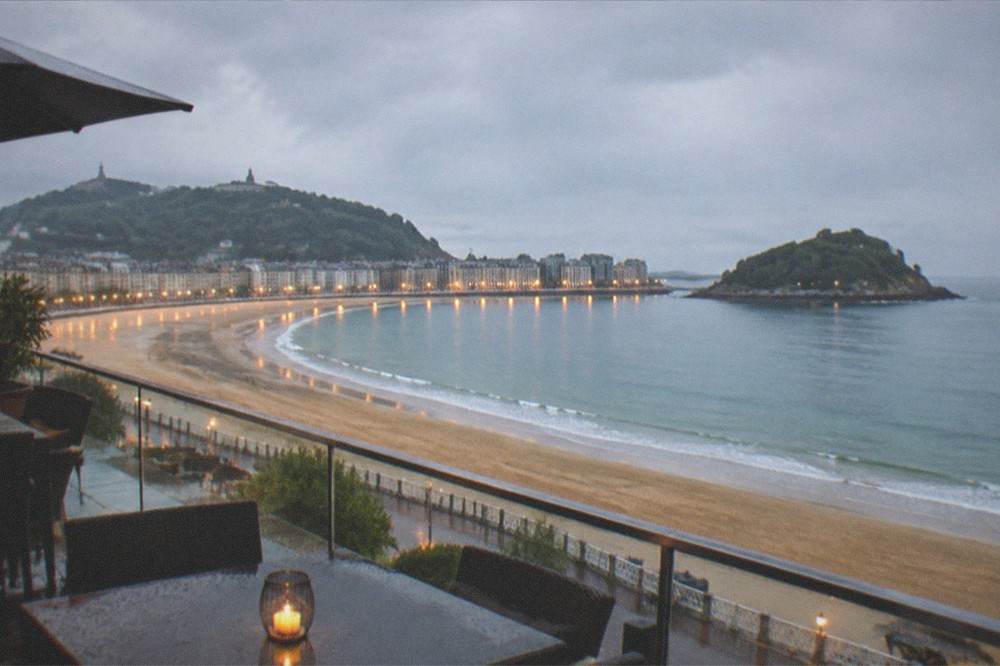
The beachfront row answers that. Paseo de la Concha is the promenade the city is photographed from, and its hotels put the 1,350-metre crescent of sand below the windows. In August, the busiest month of the year for the city's hotels, with 245,769 hotel overnight stays recorded by INE for that month in 2025, the bay fills early, and a hotel door straight onto the sand saves the morning towel run.
Ondarreta is the connoisseur's pick. The council describes Ondarreta as a beach of mass use but its west end is the departure point for the Peine del Viento, Eduardo Chillida's three steel sculptures, each of more than nine tonnes, set into the rocks with Luis Peña Ganchegui's pink granite plaza around them. A hotel at that end of the bay buys the walk to that plaza and the 1912 funicular up Monte Igueldo, whose own site lists a return adult fare of 5.50 EUR with entry to the grounds included.
A luxury stay here is really a food trip with a bed attached, and the evening plan matters as much as the room. These are the guided food experiences that pair best with a bayfront stay:
The shared pintxo tour led by a local is the natural first night: it doubles as an orientation to the Old Town, which is small enough that one evening's route can be reused for the rest of the stay.
What Does A Five-Star Stay Cost With The New Tourist Tax?
No tourist tax is charged in San Sebastián before 1 January 2027. Norma Foral 3/2026 of Gipuzkoa, published in the Boletín Oficial del País Vasco on 25 June 2026, takes effect on that date and sets bands per person per night: five-star hotels fall in a 4.50 to 6.50 EUR band, and each council fixes its own rate inside that band.
At most six nights per stay are charged, under 18s are exempt, and stays booked before 5 February 2026 are not charged at all.
The law is a province-wide framework, so the honest way to plan a 2027 budget is to add up to the band maximum for the hotel's category and wait for the city's own ordinance. For a five-star guest the ceiling is 6.50 EUR per person per night, charged on at most the first six nights of a continuous stay in one establishment. A couple staying five nights would therefore budget at most 65 EUR in tax, and likely less once the council fixes its rate.
| Accommodation type | Band minimum, EUR per person per night | Band maximum, EUR per person per night |
|---|---|---|
| Hotel 5 stars | 4.50 | 6.50 |
| Hotel 4 stars | 3.50 | 5.50 |
| Hotel 3 stars | 1.50 | 3.50 |
| Hotel 2 stars | 1.00 | 2.50 |
| Hotel 1 star and pensiones | 0.75 | 1.75 |
| Tourist apartments | 1.50 | 3.50 |
| Tourist-use dwellings | 4.50 | 6.50 |
| Campsites, rural houses, hostels | 0.75 | 1.75 |
Two details in the law reward attention. A stay of less than a full day counts as one unit of stay, so a single night is charged as a single night. And if a council passes no ordinance of its own, the maximum rates in the table apply, which is why the ceiling, not the floor, is the safe planning number. The bands are reviewed every two full calendar years, so the figures set for 2027 may not survive later reviews unchanged.
Is A Bayfront Room Worth It Compared With The Old Town?
A bayfront room buys the view and the sand access; an Old Town or riverfront room buys the pintxo bars and the restaurants at the door. In San Sebastián the distances are short enough that the choice is about atmosphere, not logistics: the Old Town sits directly across the river mouth from the La Concha promenade, and the walk between them takes minutes. The one real difference is night noise, because the Parte Vieja's bar streets run late and the bayfront is the quieter sleep.
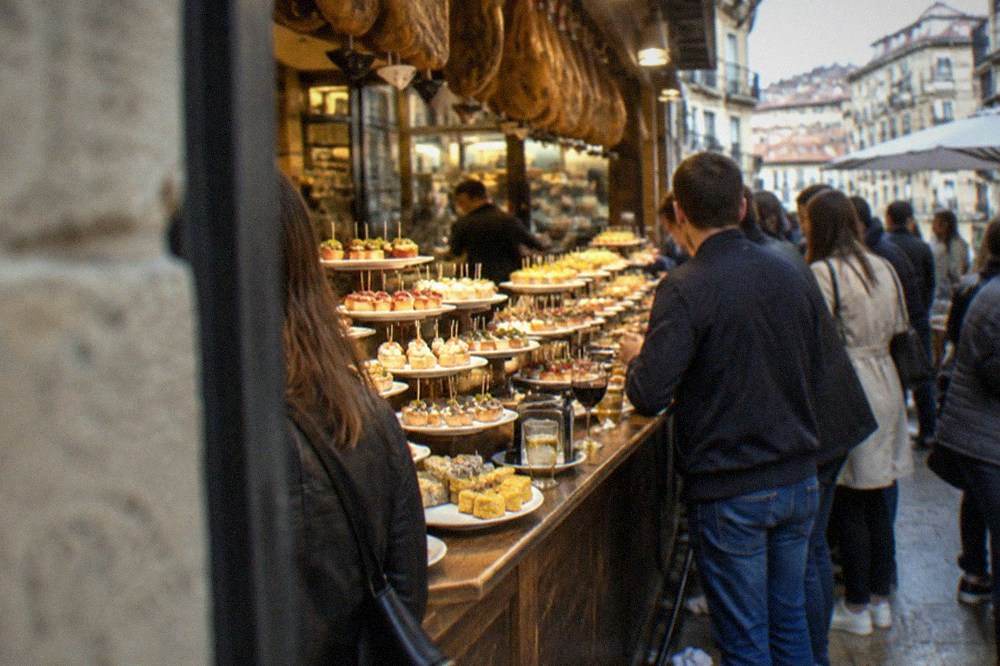
The Parte Vieja is the historic core, and its own guide covers it in detail, but as a hotel district it has a split personality. The streets around Plaza de la Constitucion hold the densest concentration of pintxo bars in the city, and a room there puts the whole evening within a staircase of the bed. The cost is the same density at closing time. The bayfront row, by contrast, faces the water, and the promenade empties after dark.
For guests whose luxury is sleep, the Ondarreta end or the riverfront Maria Cristina are the calmer picks. For guests whose luxury is the last txakoli of the night being forty steps away, the Old Town wins. The beachfront and Old Town hotels guide breaks the trade-off down property by property.
When Is The Best Time To Book A Luxury Hotel In San Sebastian?
Book early for August, which is the peak month of the hotel year, and for the two festival windows: Semana Grande, always the week of 15 August, and the San Sebastián International Film Festival, whose 74th edition ran 18 to 26 September 2026. The La Concha regattas, held on the first two Sundays of September, fill the bay-facing rooms too. Outside those windows, spring and autumn combine mild weather with thinner crowds, though no month here is dry.
The demand numbers are unambiguous. INE's hotel occupancy survey for the tourist point Donostia-San Sebastián recorded 245,769 hotel overnight stays in August 2025, the year's peak, against 115,910 in January: a little over twice the winter floor. July and August together carried 22 percent of the year's hotel nights. April to October never dropped below 200,000 overnight stays in a single month.
| Window | What drives demand | Booking advice |
|---|---|---|
| Semana Grande, week of 15 August | The city's main festival, with the International Fireworks Competition over the bay | Book the bay-facing rooms many months ahead |
| August generally | Peak hotel month of the year, 245,769 overnight stays in 2025 | Earliest booking window of all |
| First two Sundays of September | La Concha regattas, women 11:00 and men 12:00, first held 1879 | Bay-view rooms go first |
| Late September | San Sebastián International Film Festival, 18 to 26 September in 2026 | Centro hotels near the venues fill early |
| January, after Tamborrada on 20 January | Quietest hotel months of the year | Best availability and most flexibility |
The counter-season case is strong. May averages 14.4 C with 181 hours of sunshine, September 18.0 C with 179 hours, and both sit far from the August peak. The caveat the climate data insists on: AEMET's normals for its Igeldo station, on Monte Igeldo 250 metres above the seafront, record 1,507 mm of rain a year over 141 days with at least 1 mm, and no month averages under 86 mm. A shoulder-season luxury stay here should plan for indoor afternoons, which in this city means lunch.
How Does The Weather Affect A Luxury Stay On The Bay?
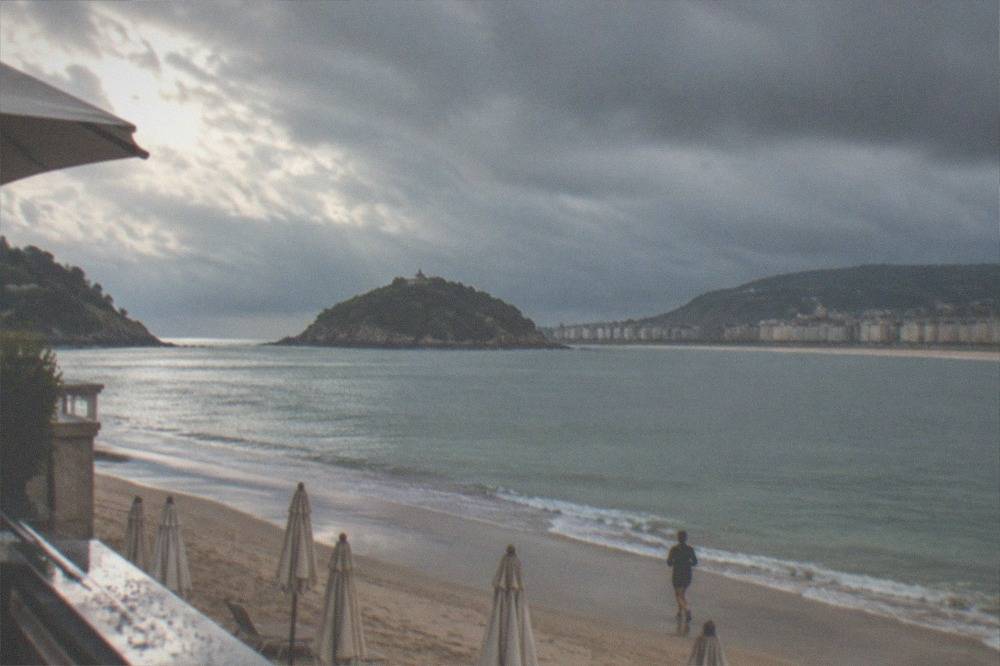
The climate is wet Atlantic, not Mediterranean: AEMET's Igeldo station records 1,507 mm of rain a year, and even July, the driest month, averages 86 mm over about 10 rain days. August, at 19.5 C the warmest month, is wetter than June, July or September at 117 mm, so the peak beach month is not the dry month. For a bayfront stay this means the hotel's indoor offer, the spa, the restaurant and the lounge, matters as much as the balcony.
The monthly picture rewards reading closely. November is the wettest month at 169 mm, and December the darkest at 93 sunshine hours, which is exactly the season the grand hotels were built for: the Maria Cristina's Belle Epoque clientele came for the summer court but the buildings were engineered for long indoor evenings. July is the driest month and the sunniest, with 196 hours of sunshine, and the mean daily maximum reaches 22.5 C in August.
| Month | Mean C | Rain, mm | Rain days of 1 mm or more | Sun hours |
|---|---|---|---|---|
| January | 8.5 | 141 | 13.2 | 98 |
| March | 10.3 | 113 | 12.4 | 144 |
| May | 14.4 | 120 | 12.2 | 181 |
| July | 18.9 | 86 | 9.8 | 196 |
| August | 19.5 | 117 | 10.5 | 190 |
| September | 18.0 | 111 | 10.1 | 179 |
| November | 11.3 | 169 | 13.0 | 102 |
Because the station sits 250 metres up on Monte Igeldo, the seafront runs slightly warmer than these values, which is worth knowing when the forecast looks marginal. The practical consequence for a luxury guest is simple: the beach season, with lifeguards on all three city beaches from 1 June to 30 September, is real but not guaranteed cloudless, and the best luxury itinerary here holds a rain plan of the quality the city's restaurant scene provides.
Which Luxury Hotels Sit Closest To The Michelin Restaurants?
Six restaurants holding 11 stars sit inside the municipality in the MICHELIN Guide Spain 2026: Akelaŕe and Arzak with three stars each, Amelia by Paulo Airaudo with two, and iBAi by Paulo Airaudo, Itzuli and Kokotxa with one each. Akelaŕe stands above the bay on the road toward Monte Igueldo, Arzak is in the Egia district near the station, and the one-star houses cluster in or near the Old Town, so a Centro hotel puts all but Akelaŕe within a short taxi ride.
The geography matters more than the count. Martín Berasategui, also a three-star house, is in Lasarte-Oria, a separate municipality outside the city, and must be planned as a short journey rather than a walk. Elkano, the one-star grill in Getaria, and Alameda in Hondarribia are likewise day-trip tables, covered in the Michelin restaurants guide.
For a luxury itinerary built around dinner, the practical split is this: Akelaŕe pairs naturally with an Ondarreta-end hotel, since both sit on the city's northwestern shoulder above the bay, while Arzak, Kokotxa and the Old Town tables pair with Centro or Parte Vieja addresses. The 2027 edition of the guide is announced on 24 November 2026 in Huesca, so every star count on this page is edition-specific by design.
What Can You Do From A Luxury Hotel Without A Car?
Everything the city offers is walkable from any of the three luxury clusters: La Concha, Ondarreta and Zurriola beaches, the Old Town, Monte Urgull and Monte Igueldo are all reachable on foot or by a single short ride. Santa Clara island is a 5 EUR return boat from the harbour in high season, the funicular to Monte Igueldo runs every 15 minutes, and the Peine del Viento is a promenade stroll from the Ondarreta end. A car is a hindrance, not a help.
The walkable inventory is unusually rich. Monte Urgull, the hill between the Old Town and the river mouth, is open from 08:00 to 21:00 between 1 May and 30 September and until 19:30 in winter, and its Castillo de la Mota holds the Casa de la Historia, a small museum run by San Telmo. The island boat, run by Motoras de la Isla, sails the direct red line every 30 minutes from 10:00 to 19:00 in high season, weather permitting, with children under 4 free.
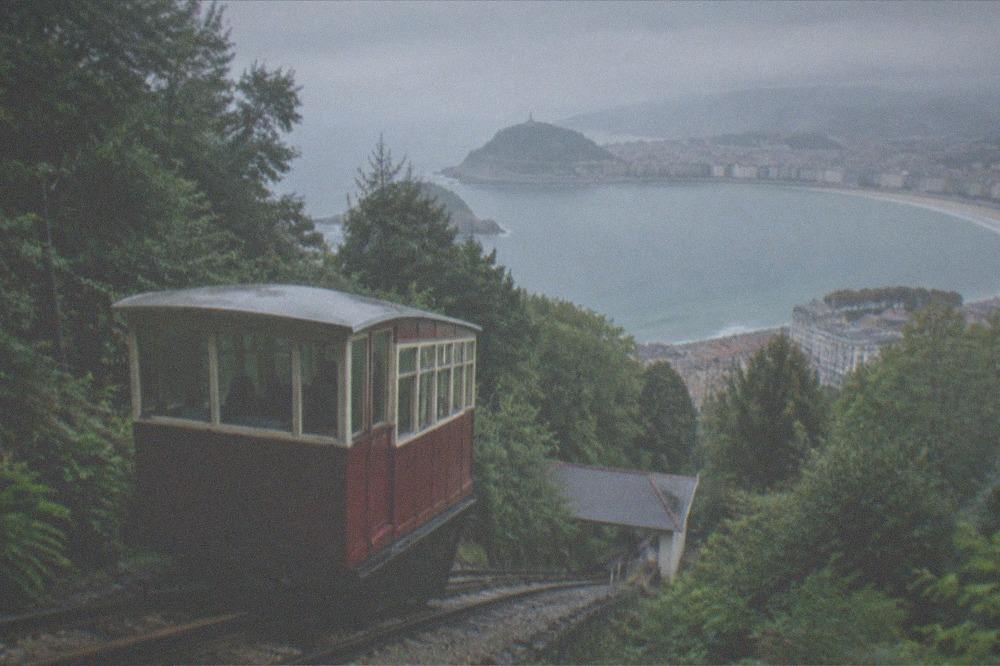
The funicular, opened on 25 August 1912 and described by the tourism board as the oldest in the Basque Country, runs on the hour and every quarter hour, and its ticket includes entry to the grounds on top, where the viewpoint looks back over the whole bay. One warning from the operator's own home page: downhill-only funicular tickets are not on sale, so ride up and walk down, or ride both ways, but do not plan the reverse.
For guests who want the city explained rather than discovered, a guided walk is the efficient first morning, and the Old Town walk with a local's insight into the pintxo bars is the one that pays for itself all week:
A cooking class is the other high-value add-on for a food-centred stay, and the market-visit-plus-class format, which opens at La Bretxa and ends with the meal you cooked, fits a single afternoon between the beach and dinner:
How Do You Get From The Airport To A Luxury Hotel?
The city has three airports within a little over 100 km, the tourism board states: San Sebastián Airport at Hondarribia, 20 km away, Biarritz at 45 km, and Bilbao at 105 km, the last two with direct bus service listed to the city. From San Sebastián Airport, the operator lists Lurraldebus lines E20, E23, E25, E27, E28, E29 and E30, with E30 the direct line to the city, and line E21 has not stopped at the airport since 1 June 2026.
A private transfer or taxi covers the rest.
The Bilbao route is the one most international luxury travellers use, and the Basque Government's airport page lists the PESA Lurraldebus coach at 17.10 EUR to San Sebastián with a journey of about 75 minutes. That page carries no date, so treat the fare as indicative and re-check the operator before relying on it. From Biarritz the tourism board lists direct service, though the operator and fare for that route are not confirmed in the sources behind this page, so ask the hotel to arrange the transfer.
Two practical notes. The city's new underground Topo stations have finished civil works but no opening date is published, and Amara remains the working terminus, so rail plans should not assume the new central stops. And the hotel concierge desks in this city are unusually good at the one thing luxury guests actually need here, which is restaurant reservations in a town where the tables are harder to book than the rooms.
What Should You Pack For A Luxury Stay In San Sebastian?
Pack for a wet Atlantic city with a warm summer core: layers, a proper rain shell and walking shoes matter more than resort wear, because AEMET's Igeldo station records rain on about 10 days even in July and 141 days a year. Beach kit earns its place from June to September, when lifeguards are on all three beaches, but the evening uniform in the pintxo bars and starred restaurants is smart-casual rather than formal. An umbrella is not pessimism here, it is the local dress code.
The city's style is understated by Spanish coastal standards. The Old Town crawl moves between bars within minutes, so flat shoes outperform heels on the cobblestones, and the bayfront promenade is a walking street, not a catwalk. What locals and returning guests share is the outer layer: the same rain reaches the beach at La Concha and the tables at Kokotxa, and a good shell keeps an evening plan intact.
Is A Luxury Hotel In San Sebastian Worth It Compared With An Apartment?
A luxury hotel is worth it here for three reasons the apartment market cannot match: the restaurant reservation desk, the walk-everything position of the bayfront addresses, and the spa infrastructure, led by La Perla on the sand of La Concha itself. An apartment wins on space and kitchen, but the city's tourist-use dwellings fall in the top tourist tax band of 4.50 to 6.50 EUR per person per night from 2027, the same band as five-star hotels.
The comparison is really about how the stay is built. A guest whose days are beach, spa and dinner gets more from a hotel, because the concierge solves the one hard problem, the reservation book, and the position on the bay removes the commute. A guest staying a week with children, or planning to cook after the market, gets more from an apartment, and the apartments and Airbnb guide covers that side.
What tilts the argument toward the hotel in this specific city is the concentration of the luxury product. Where else can a guest walk from a Belle Epoque lobby to a three-star dining room, then to a 1912 funicular, then to a beach with lifeguards, all inside an afternoon? The scale is small and the density is high, and the grand hotels sit exactly at the centre of it.
For the second half of a longer stay, the guided experiences below fill the days the beach cannot, and each departs from the city centre a short walk from every address on this page:
The small-group electric bike tour is the one luxury-friendly way to cover the whole bay, the beaches and the river mouth in a single outing without arriving at dinner windswept:
Common Questions About Luxury Hotels In San Sebastian
Is there a tourist tax on luxury hotels in San Sebastian?
Not before 1 January 2027. Norma Foral 3/2026 of Gipuzkoa takes effect on that date and bands five-star hotels at up to 6.50 EUR per person per night, charged on at most six nights of a continuous stay, with under 18s exempt. The city's own rate inside that band has not been published, so budget up to the maximum.
Which is the most famous luxury hotel in San Sebastian?
The Hotel Maria Cristina, the Belle Epoque grand hotel beside the River Urumea, built for the era when the Spanish court summered in the city. The Hotel de Londres y de Inglaterra at the La Concha end of Centro is its historic counterpart, and the two define the city's grand-hotel tradition.
Can you walk from the luxury hotels to the Old Town?
Yes. Every luxury cluster in the city, Centro, the La Concha promenade and the Ondarreta end, lies within a short walk of the Parte Vieja, and the whole walkable core is roughly two kilometres across. No luxury address in the city needs a car for the evening pintxo crawl.
Do any luxury hotels sit directly on La Concha beach?
Yes, the beachfront row along Paseo de la Concha opens onto the promenade and the sand, and La Perla, the historic spa, stands on the beach itself. The council records La Concha as 1,350 metres long, so any address on that row is mid-bay within minutes.
When is the hardest week to book a luxury room in San Sebastian?
The week of 15 August, when Semana Grande runs with the International Fireworks Competition over the bay. August is the peak hotel month of the year, and the La Concha regattas on the first two Sundays of September and the film festival in late September fill the bay-facing rooms soon after.
Is a luxury hotel in San Sebastian worth it without a car?
Yes, and a car is usually a liability. The beaches, the Old Town, Monte Urgull and the funicular to Monte Igueldo are all walkable or a single short ride from every luxury address, and the island boat leaves from the harbour at 5 EUR return in high season.
Whether the choice lands on the riverfront grandeur of the Maria Cristina, the promenade row above the sand, or the quiet Ondarreta end below the funicular, the luxury stay in San Sebastián is really a single decision about which view to wake up to, because everything else, the pintxo bars, the starred tables and the whole curve of the bay, is already within walking distance.