How Much Do Pintxos Cost In San Sebastian?
How pintxo pricing works in San Sebastián, Basque Country: why the same bite costs different amounts in different bars, what shapes the price, and how a crawl adds up.
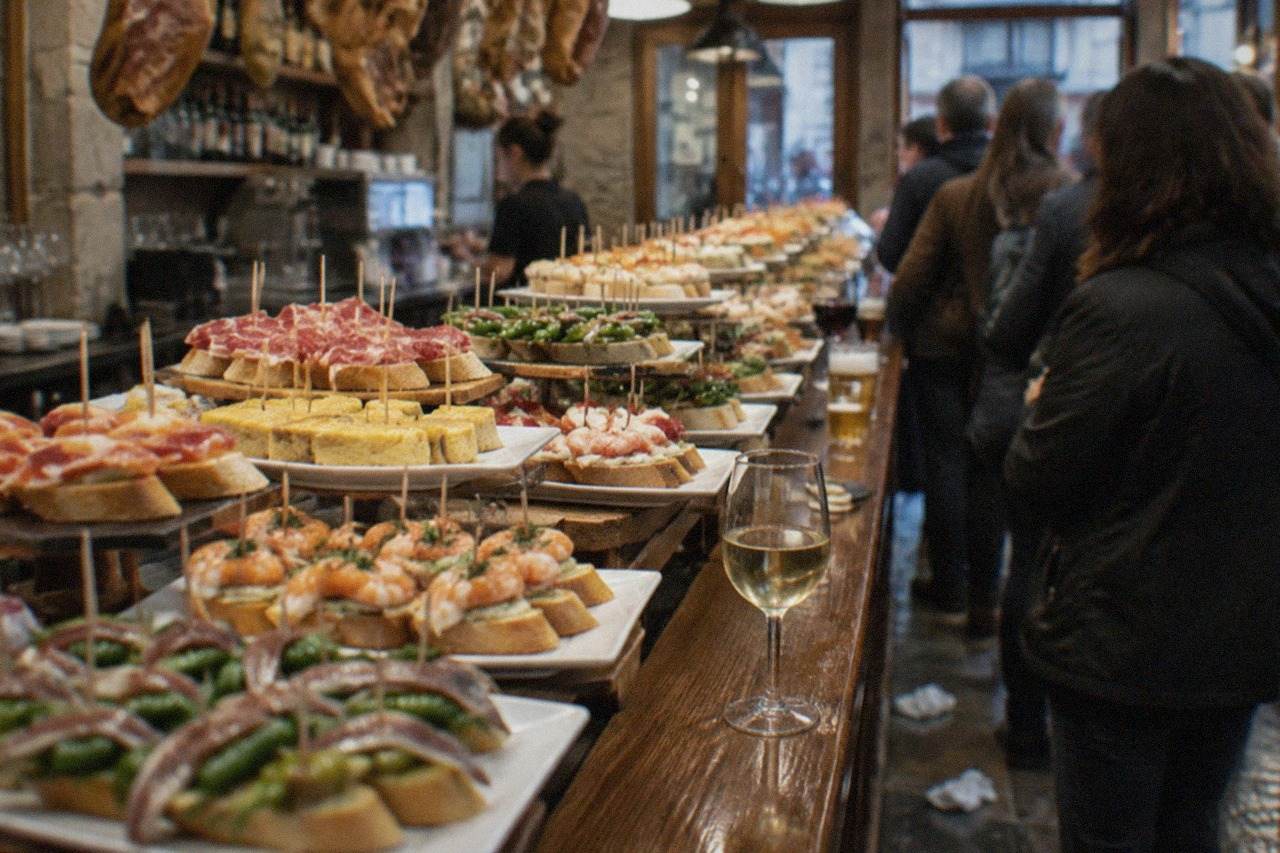
Pintxos are the small, often skewered bites that sit on bar counters across San Sebastián, the Basque city on La Concha bay whose official name is Donostia / San Sebastián, and they are priced in a way that catches almost every first-time visitor out: individually, per piece, not as a plate or a portion. The system of per-piece pricing is well documented, and it is the system that answers the question. What a pintxo costs depends on three things: which bar you are standing in, whether the bite is cold or hot, and what it is made of.
How Much Do Pintxos Cost In San Sebastian?
A pintxo in San Sebastián is priced per piece, and each bar sets its own price, so there is no single city-wide figure. A simple cold skewered bite such as a gilda sits at the low end, hot kitchen-made pintxos cost more because they are cooked to order, and larger or more elaborate creations cost more again. What you pay is decided by the bar, the neighbourhood and the ingredient, and a crawl of several bars is how the evening budget takes shape.
The custom matters as much as the arithmetic. A pintxo is ordered at the bar, eaten standing or perched on a stool, and paid for per piece, which is why locals move from one bar to the next rather than settling in anywhere. A typical evening involves two or three bites and a drink in each of three or four bars. The counting is done by the bar staff, often from the skewers left on your plate, and the total is settled at the end of each stop.
What separates the price bands is the work behind the counter. A gilda, the anchovy, olive and guindilla pepper skewer described on our gilda pintxo page, is assembled from three ingredients and no heat. A hot pintxo, say a solomillo or a battered bite, involves a kitchen ticket and a cook, and the bar prices it accordingly. The most elaborate pintxos, the ones that approach restaurant dishes in miniature, sit at the top of the range, and some bars treat them as signature items. If you want the background on what a pintxo actually is, the what are pintxos guide covers the form and its customs in full.
Why The Same Pintxo Costs Different Amounts In Different San Sebastian Bars
The same style of pintxo carries different prices in different San Sebastián bars because each bar sets its own per-piece price, reflecting the neighbourhood, the rent, the ingredients and the ambition of the kitchen rather than any city tariff. A bite facing La Concha is priced for its address, a neighbourhood bar a few streets back is not, and a bar with a competitive kitchen prices its hot pintxos like small dishes. Nothing is fixed, which is why locals compare notes on value rather than on price alone.
The Parte Vieja, the old town, holds the densest concentration of pintxo bars in the city, and within a few streets the spread between a basic neighbourhood bar and a famous one is wide. Location is the first driver: a counter on a street the tourist traffic passes all evening does not need to compete on price. Ingredient is the second: anchovy, tortilla and cheese sit lower than foie, txangurro or txuleta-based bites. Kitchen work is the third, since anything cooked to order carries the cost of the cook.
The table below shows how the cost ladder is built. It describes the structure of pricing rather than quoting any bar's figures.
| Pintxo type | What it is | Where it sits on the cost ladder | Why |
|---|---|---|---|
| Gilda and simple skewers | Anchovy, olive, guindilla pepper, no cooking | Low end | Three ingredients, assembled by hand, no kitchen time |
| Cold bar pintxos | Tortilla, cheese, marinated fish, croquettes held at counter | Low to middle | Made in batches ahead of service, priced per piece |
| Hot kitchen pintxos | Solomillo, battered bites, seafood cooked to order | Middle to high | Cooked per order, carries kitchen labour |
| Signature creations | Elaborate miniature dishes, seasonal ingredients | High end | Treated as small restaurant dishes, priced accordingly |
For many visitors the comparison that matters is not bar against bar but bar against guided tour. A crawl led by a local moves the decision-making off your plate entirely: the bars are chosen, the ordering is done for you, and the price of the evening is known before it starts. The three options below are the ones this site carries for exactly that kind of evening.
Are Pintxos In San Sebastian Expensive?
Compared with eating the same ingredients as a sit-down restaurant meal, pintxos in San Sebastián are not expensive: per-piece pricing keeps each decision small, and a gilda or a slice of tortilla sits far below what a plated dish in the same city costs. They are not free either, because every piece is paid for. The honest framing is flexibility: a light two-bar evening costs a fraction of a restaurant dinner, and an ambitious crawl through famous counters can rival one.
The city's wider food reputation is the reason the question gets asked at all. San Sebastián holds 11 Michelin stars across 6 restaurants inside the municipality in the MICHELIN Guide Spain 2026, and the province of Gipuzkoa holds 19 stars across 11 restaurants, so the city is surrounded by serious eating at the top end. Pintxos are the everyday layer beneath that. They let a visitor eat the same produce, anchovies, txuleta, txakoli-friendly seafood, at counter scale without booking anything.
Budget flexibility is the practical answer. Because you pay per piece and per bar, the evening's total is set by how many stops you make and how ambitious each stop is, not by a fixed menu price. Two bars and a drink each is a light evening; four bars with hot pintxos and wine at each is a full dinner. The best pintxo bars guide covers how the famous counters differ, and the pintxos in San Sebastian guide maps the custom across the city.
If you would rather have the ordering handled, the pintxo tasting paired with wines is the site's closest match to a classic crawl, and you can check it directly.
What A Pintxo Crawl Adds Up To Over An Evening
A pintxo crawl in San Sebastián is budgeted stop by stop rather than as one bill, and the variables you control are the number of bars, the pieces at each, and the drinks between them. The fixed part is the custom: you eat standing at the bar, you pay per piece, and you move on. Hot kitchen pintxos, famous-name counters and wine at every stop push the total up; neighbourhood bars, cold bites and txakoli poured the local way keep it down.
The drink matters as much as the food. Txakoli, the slightly spritzy local white, is the traditional pour, and the what wine is San Sebastian known for answer covers why it is poured from a height. A drink is priced separately from the bites at most counters, so the evening's arithmetic is pieces plus glasses, multiplied by bars. This is also why guided crawls appeal to visitors: the multiplication is done once, upfront, and the bar selection is not left to chance.
Timing changes the experience more than the cost. Pintxos are eaten in two distinct windows, the early evening wave and the later one, and the what time do people eat pintxos answer explains the local rhythm. Standing at a counter at the local hour means queues at the famous places and a full room everywhere; going earlier means a quieter bar and the same food.
How Pintxo Costs Compare With Other San Sebastian Costs
Pintxos are one of the lower-priced ways to eat well in San Sebastián, and the verified non-food prices around the city put that in context: the return funicular up Monte Igueldo is 5.50 EUR, general admission to San Telmo Museoa is 10.00 EUR with a 4.00 EUR reduced ticket and free entry every Tuesday, and the return boat to Santa Clara Island is 5.00 EUR in high season.
A couple of pieces at a neighbourhood counter belongs in that bracket, not in the bracket of a restaurant dinner.
The comparison is worth making because the city's paid attractions are modest and its eating is the headline. The table below gathers the verified prices a visitor actually pays for a day around the bay, each from the venue's own published tariff.
| Item | Verified price | Notes |
|---|---|---|
| Monte Igueldo funicular, return adult | 5.50 EUR | Child return 2.50 EUR, child up to 7 years; ticket includes entry to the grounds |
| Monte Igueldo grounds entry on foot | 3.00 EUR per person | For visitors arriving by vehicle or walking |
| San Telmo Museoa, general admission | 10.00 EUR | Reduced 4.00 EUR; free for everyone every Tuesday |
| Santa Clara Island boat, red line return | 5.00 EUR | High season 1 June to 30 September, every 30 minutes weather permitting |
| Bay boat tour plus island, blue line | 8.00 EUR | 30 minute bay tour, timed departures |
| Hondalea, island lighthouse installation | Free | 1 June to 30 September, sessions every half hour, no booking needed for the visit |
Against that backdrop, the eating budget is where visitors choose to spend. A sit-down dinner at a Michelin-starred house is a different order of magnitude, and the how much does dinner at Arzak cost answer covers that end of the scale. The cheesecake question gets the same treatment on its own page, how much does a San Sebastián cheesecake cost, since La Viña's basque burnt cheesecake is the one dessert that carries its own price mythology.
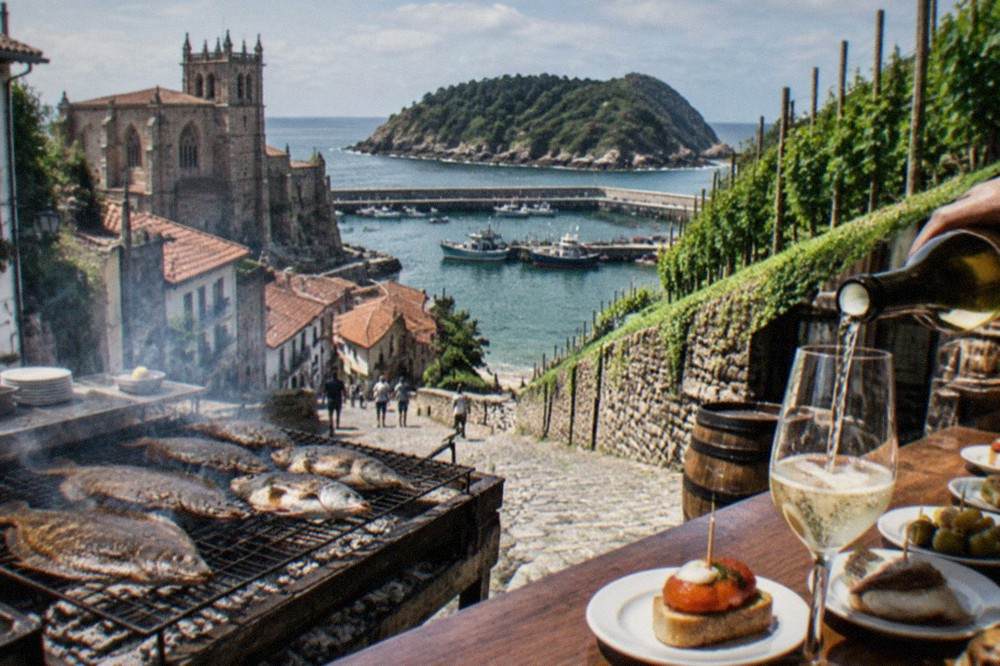
For visitors who want the counter experience with the guesswork removed, the guided options below cover the pintxo crawl itself, a cooking class that ends with you eating the meal, and a half-day trip to the txakoli country along the coast.
Common Questions About Pintxo Costs In San Sebastian
Do you pay per pintxo or per plate in San Sebastián?
You pay per piece. Each pintxo is individually priced by the bar, and the total is counted at the end of your stop, often from the skewers left on the plate. There is no plate or portion pricing in the tapas sense, which is what makes a multi-bar crawl the standard evening.
Is it cheaper to eat at the bar than at a table?
Standing at the bar is the customary way to eat pintxos, and in most places it is also the most direct: you see the trays, you point, you pay per piece. Some venues price table service differently because it carries staff time, and the counter is where the per-piece custom is at its purest.
How many pintxos make a meal?
There is no fixed rule, but the local pattern is a few pieces and a drink at each of several bars, moving between them over the course of an evening. Three or four bars with two or three bites each is a full dinner by local standards. The pace is the point: the crawl is the meal.
Does the price of a pintxo include a drink?
Generally no. Drinks are ordered and priced separately at most counters, with txakoli the traditional pour alongside the food. A guided tasting tour is the exception worth knowing about, since several of the food tours on this site include the drinks in the listed price.
Are hot pintxos more expensive than cold ones?
As a rule, yes. Cold bites held at the counter are made in batches and priced as assembled items, while hot pintxos are cooked to order and carry the kitchen's time. The gap is the reason locals mix the two: cold pieces to fill, one or two hot ones as the highlight of each stop.
Is a pintxo crawl cheaper than a restaurant dinner in San Sebastián?
It can be, and the difference is control. Because every piece is paid for individually and every bar is a fresh decision, a crawl can be kept well below a restaurant dinner by choosing neighbourhood bars and cold bites, or pushed up to restaurant scale with hot signature pieces and wine at famous counters. The budget flexes with the route, which a fixed menu never does.
The short version: nobody can print one price for a pintxo in San Sebastián because no such price exists, each bar sets its own, and the per-piece custom is exactly what makes the city's evening eating so adjustable. Choose the bars, count the pieces, pour the txakoli, and the budget takes care of itself, a point this San Sebastian Spain Guide returns to on every food page it publishes.