San Sebastian In July
July is the driest and sunniest month of the year in San Sebastián, in the Basque Country of Spain, and also one of its busiest. Here is what AEMET's own station data says, what is open, and what a July visit actually looks like.
Short answer
July is the driest month in San Sebastián, averaging 86 mm of rain over about 10 rain days, with mean temperatures of 18.9 C and 196 sun hours, the highest of the year. All three beaches are lifeguarded, the island boats run at high season frequency, and hotel demand is near its annual peak.
San Sebastián, whose official name is Donostia / San Sebastián and whose Basque name is Donostia, sits on La Concha bay in Gipuzkoa, in the Basque Country of Spain. July is the month the whole city leans toward the sea: the beaches are fully staffed, the island boats run their high season timetable, and AEMET's climate normals for its Igeldo station record the sunniest and driest weeks of the year. It is also, alongside August, the month when hotel demand is at its highest, so the two go together, good weather and full terraces. This page sets out what the official numbers say about July here, what opens and closes on a seasonal clock, and how to plan around both.
What Is The Weather Like In San Sebastian In July?
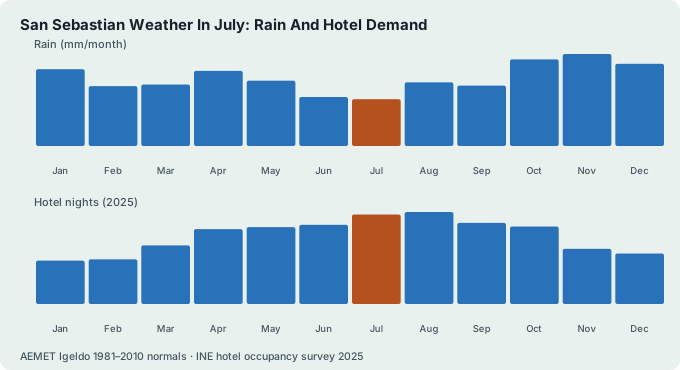
July is the driest and sunniest month of the year in San Sebastián, but it is not dry in absolute terms: AEMET's normals for its Igeldo station, covering 1981 to 2010, give a July mean of 18.9 C, a mean daily maximum of 21.8 C, 86 mm of rain spread over 9.8 days with at least 1 mm, and 196 sun hours, the highest monthly figure of the year.
The station sits 250 m up on Monte Igeldo, so the seafront runs slightly warmer than these values.
That 86 mm figure matters more than visitors expect. This is a wet Atlantic city: 1,507 mm falls across the year over 141 rain days, and no month averages under 86 mm. A July week usually delivers several beach days, but the normals say roughly ten days in the month still catch measurable rain. The practical reading is not "will it rain" but "what do I do when it does", and this city has a deep bench of indoor options, from San Telmo Museoa to Tabakalera, both covered further down.
The comparison with the months either side is worth knowing before booking. August is warmer, with a mean of 19.5 C and a mean maximum of 22.5 C, but it is also wetter, at 117 mm against July's 86. June is drier than August too, at 90 mm, but cooler at a mean of 16.9 C. September sits between them at 111 mm and a mean of 18.0 C. In other words, July is the sweet spot in the table, the month with the best combination of warmth and low rainfall, and the numbers say so rather than any travel writer's memory.
| Month | Mean C | Mean max C | Rain mm | Rain days 1mm+ | Sun hours |
|---|---|---|---|---|---|
| May | 14.4 | 17.7 | 120 | 12.2 | 181 |
| June | 16.9 | 20.0 | 90 | 10.6 | 189 |
| July | 18.9 | 21.8 | 86 | 9.8 | 196 |
| August | 19.5 | 22.5 | 117 | 10.5 | 190 |
| September | 18.0 | 21.1 | 111 | 10.1 | 179 |
The table above is drawn from AEMET's published normals for the Igeldo station, the series the station page itself carries. Two honest cautions come with it. First, the station altitude means the beach promenade is typically a degree or so warmer than the airport-level readings. Second, these are 30-year averages, not a forecast: a given July can run hotter, cooler, wetter or drier, and the only live numbers worth checking before a beach day are the council's own weekly bathing water sampling, which runs through the season.
Is July A Good Time To Visit San Sebastian?
July is a good month to visit San Sebastián if your priorities are beaches, boats and long evenings, and a harder one if your priorities are quiet pintxo bars and low hotel demand. INE's hotel occupancy survey recorded 239,124 overnight stays in the city in July 2025, second only to August's 245,769, and 63.7 percent of the year's overnight stays came from residents abroad, so the summer city is visibly international. The weather is the best of the year by AEMET's measures.
The trade-off is simple and the numbers frame it. July and August together account for 22 percent of the year's hotel overnight stays, and August holds a little over twice January's total. What that means on the ground: the Old Town's pintxo bars fill early, the most photographed stretches of La Concha fill by mid-morning, and restaurant reservations matter more in July than in any month outside August. If a quiet version of the city is what you are after, the guides to San Sebastian in May and the shoulder months are the better starting point.
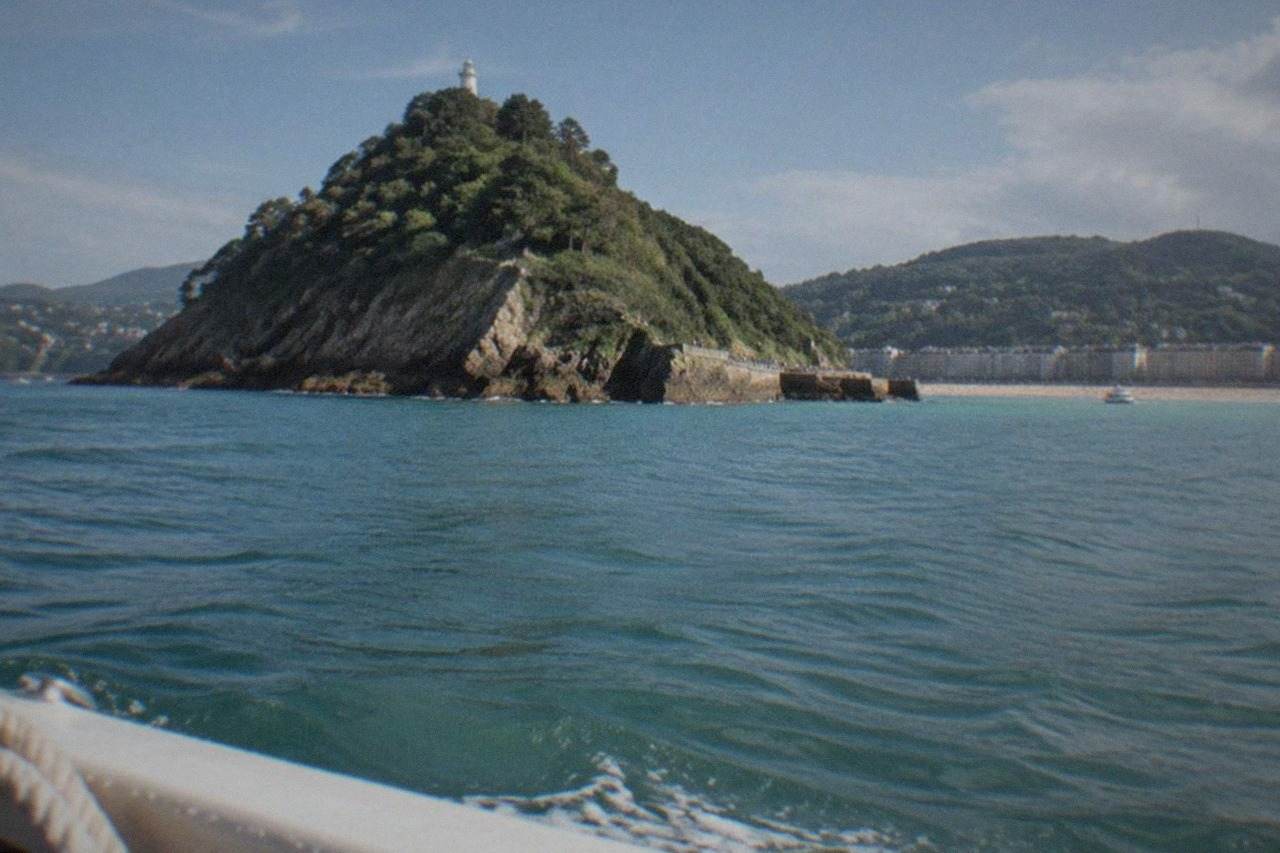
What July gives back is the full seasonal offer, all at once. The lifeguard service runs on all three beaches. The Santa Clara island boats run their high season timetable, every 30 minutes from 10:00 to 19:00 on the direct red line, weather and sea permitting. Hondalea, Cristina Iglesias's installation in the island lighthouse, is open in its summer window. Monte Urgull stays open until 21:00, the late close of its summer hours. None of that is true in February, and a July visitor gets all of it.
For orientation, a guided walk is a sound first move, and there are several ways to do it.
A short walk with a local guide also answers the question every first-time visitor has, which is how the city's pieces fit together: the Parte Vieja, the Centro, the mouth of the Urumea, and the two hills, Urgull and Igeldo, that frame the bay. The site's guide to what San Sebastian is known for gives the fuller picture of why those pieces matter.
What To Do In San Sebastian In July
The core of a July visit is the water and the two hills: swimming at La Concha, Ondarreta or Zurriola with lifeguards on duty, the boat to Santa Clara island, the funicular up Monte Igueldo, and the walk up Monte Urgull, which stays open until 21:00 in its summer hours. Around that sit the pintxo bars of the Parte Vieja, San Telmo Museoa with its free Tuesday, and Tabakalera, which is free to enter every day it is open.
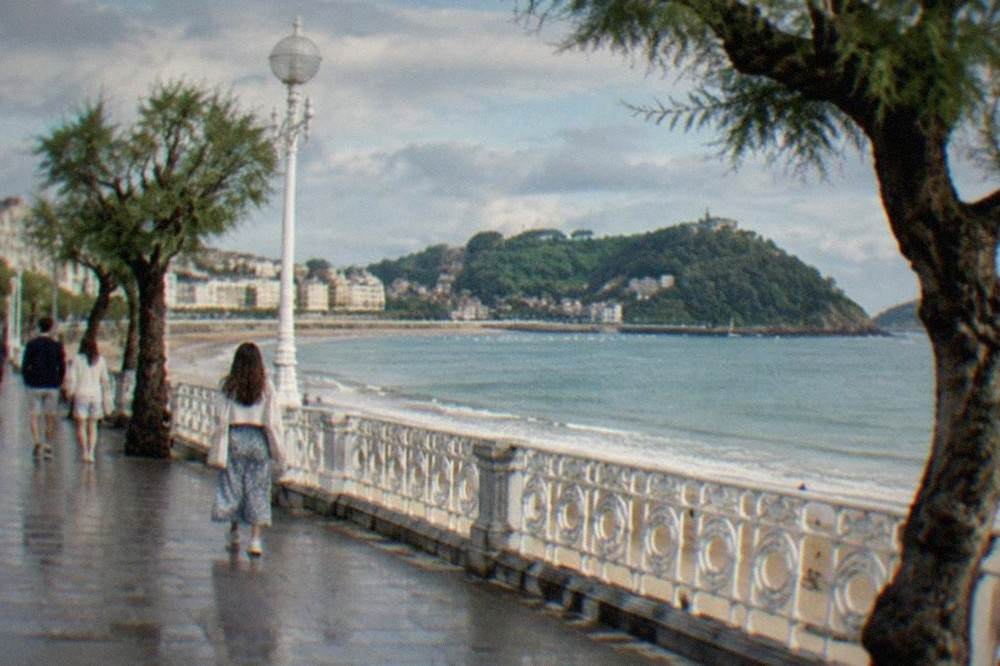
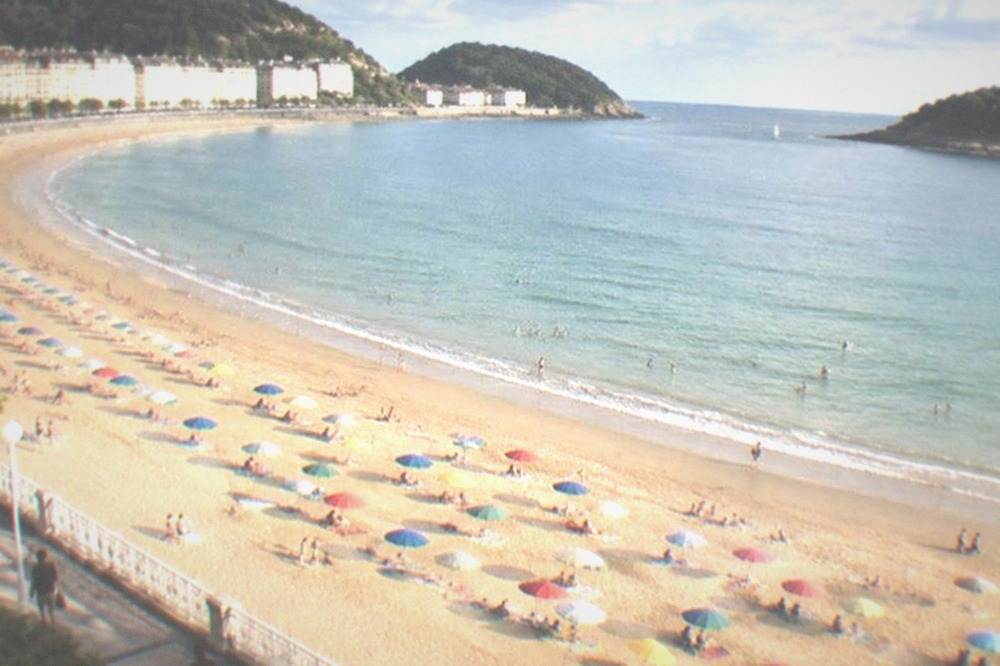
The beach layer is the reason most people come in July, and the council's own pages give the dimensions. La Concha runs 1,350 m with a mean width of 40 m, sandy and shallow, and the council notes the tide often limits the usable area. Ondarreta is 600 m long and 100 m wide on average. Zurriola, at 800 m by 110 m, is the open one, remodelled in 1994, and the council describes its swell as strong, which is why it is the surfers' beach: the guide to surfing in San Sebastian covers it. All three are lifeguarded from 1 June to 30 September, with full 10:00 to 20:00 hours from 15 June to 15 September.
The hills bracket the bay and each has its own season-independent logic. Monte Igueldo's funicular, running since 25 August 1912, carries passengers up every 15 minutes on its normal timetable, and its own site states that a return adult ticket is 5.50 EUR with the grounds entry included; the site also states that downhill-only funicular tickets are not on sale, so plan to ride both ways or enter the grounds on foot at 3.00 EUR. Monte Urgull is free to walk, closes at 21:00 in summer, and holds the Casa de la Historia at the Castillo de la Mota.
The museum layer is stronger than expected, and July's heat makes it more useful, not less. San Telmo Museoa opens Tuesday to Sunday, 10:00 to 20:00 in its summer hours, at 10.00 EUR general and 4.00 EUR reduced, and free for everyone every Tuesday. Tabakalera is free to access, open Tuesday to Sunday 10:00 to 21:00, closed Mondays. Both are short walks from the bay, so a July pattern that works is museum or hill in the late morning, beach through the afternoon, pintxos from nine in the evening, which is when the city itself eats.
| Activity | July status | Source detail |
|---|---|---|
| Beaches, all three | Lifeguarded, 10:00 to 20:00 | Council: 15 June to 15 September full hours |
| Santa Clara island boat | High season, every 30 minutes, 10:00 to 19:00 | Operator: red line, 5 EUR return |
| Hondalea lighthouse installation | Open, 11:00 to 18:30, free | Council: 1 June to 30 September, no booking needed |
| Monte Urgull | Open until 21:00 | Tourism board: 1 May to 30 September hours |
| Monte Igueldo funicular | Running every 15 minutes | Own site: no downhill-only ticket sold |
| San Telmo Museoa | 10:00 to 20:00, free Tuesdays | Own site: summer hours |
| Tabakalera | Free, 10:00 to 21:00, closed Mondays | Own site |
| Beach awning hire | 13.10 EUR a day at La Concha and Zurriola | Council: 15 June to 30 September |
One July detail worth planning around: the assisted bathing service for visitors with reduced mobility runs 15 June to 15 September, and the island boat's last sailing back from Santa Clara leaves at 20:00 in the June to September window. The site's accessibility guide collects these in one place.
Can You Swim At The Beaches In San Sebastian In July?
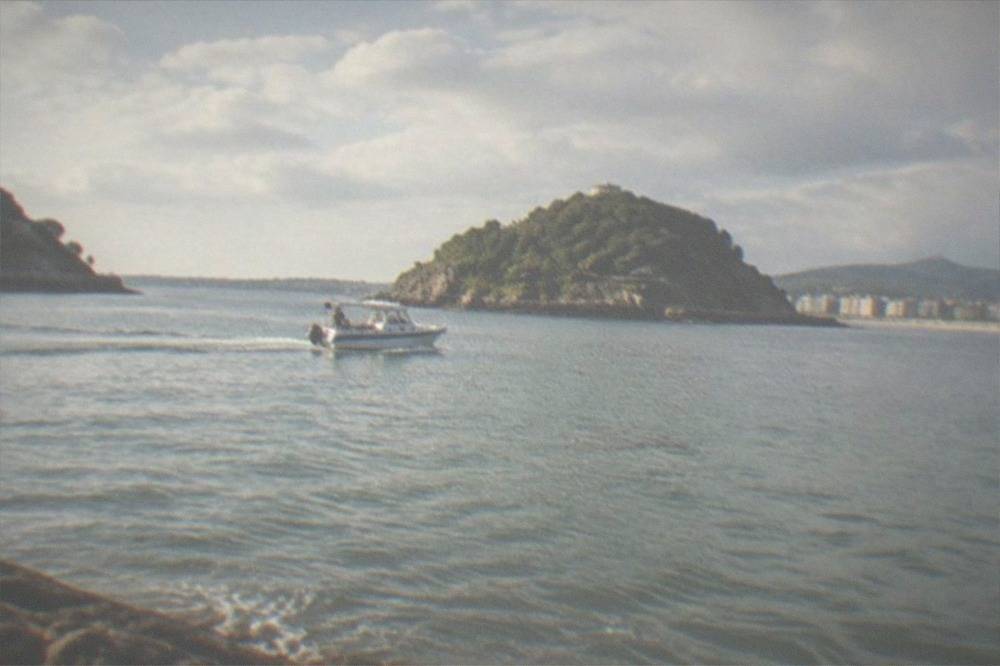
Yes, all three city beaches are swim-ready in July, with lifeguards on duty every day of the month, full 10:00 to 20:00 lifeguard hours through 15 September, and the council's weekly bathing water sampling running through the season. La Concha is the shallow, sheltered family beach, Ondarreta is its quieter western neighbour, and Zurriola is the open, stronger-swelling surf beach.
The council's own beach pages draw the distinction clearly. La Concha, 1,350 m of sand, is described as shallow, which is why it fills with families, but the same page notes the tide often limits the usable area, so a July afternoon's towel space depends on the water more than the calendar. Ondarreta, 600 m by 100 m on average, is described as a mass-use beach too, but its west end is the starting point of the walk to the Peine del Viento, Chillida's three steel sculptures anchored to the rocks, each weighing more than nine tonnes, which makes it the beach with the best built-in evening plan.
Zurriola is the different one. The council calls it fairly open with strong swell, and that is the whole story: this is where the surf schools work and where swimmers need to be honest about their own ability. The site's Zurriola beach guide and the San Sebastian beaches overview carry the detail, and the La Concha guide answers the swimming question for the bay itself.
Two practical July notes from the council's hire tariffs, which run 15 June to 30 September: at La Concha and Zurriola an awning is 13.10 EUR a day, a lounger 3.50, a lounger with parasol 8.40; at Ondarreta an awning is 13.10, a parasol 17.50, a tent 21.90. Those prices are the council's own, published per day, and they are the only beach-hire figures on this site.
What Events Happen In San Sebastian In July?
July itself is not the city's festival month: the headline events cluster around it. Semana Grande always runs the week of 15 August, Saturday to Saturday, with the International Fireworks Competition inside it, and the Bandera de La Concha regattas are held on the first two Sundays of September. July's own calendar is the Quincena Musical, the 87th edition of which ran 2 to 30 August 2026, so check the festival pages for the current edition before assuming a date.
That is the honest framing the official sources support. The tourism board's fiestas page gives the fixed anchors: Tamborrada on 20 January, Santo Tomás on 21 December, Semana Grande in the week of 15 August. The regattas, first held in 1879 with the women's flag since 2008, are dated by rule, the first two Sundays of September. Jazzaldia's exact dates are not published in the text this site's research read, so the Jazzaldia guide is the place to check rather than this page.
What July does have is the summer cultural season in full swing and a city in its highest-occupancy month. The film festival, the 74th edition of which ran 18 to 26 September 2026, belongs to September, and the San Sebastian festivals overview puts every fixed-date event in one table for planning.
| Event | Fixed rule or 2026 date | Month |
|---|---|---|
| Tamborrada | 20 January, every year | January |
| Santo Tomás fair | 21 December, every year | December |
| Semana Grande (Aste Nagusia) | Week of 15 August, Saturday to Saturday; 2026 ran 8 to 15 August | August |
| International Fireworks Competition | Inside Semana Grande week | August |
| Bandera de La Concha regattas | First two Sundays of September; 2026 on 6 and 13 September | September |
| San Sebastián International Film Festival | 74th edition, 18 to 26 September 2026 | September |
| Quincena Musical | 87th edition, 2 to 30 August 2026 | August |
| Behobia-San Sebastián race | 61st edition, 8 November 2026 | November |
For a July visitor the takeaway is this: you get the beaches, the boats and the outdoor city at their best, but if the trip is built around a specific festival, that festival is probably in August or September. Some visitors deliberately split the difference, a July week for the water and an early-September return for the regattas, when the seafront fills for two Sundays of racing that the tourism board dates back to 1879. The full index of guides sits on San Sebastian Spain Guide.
Where Should You Eat In San Sebastian In July?
In July the city eats late and the pintxo bars fill from around nine in the evening, so the practical strategy is to book restaurants ahead and treat pintxos as either an early-evening terrace activity or a full bar crawl through the Parte Vieja. The MICHELIN Guide Spain 2026 counts 11 stars across 6 restaurants inside the city, with Akelaŕe and Arzak each holding three, so the top-end tables need reservations made well before a July trip.
The Michelin count comes with a geography warning this site repeats because the confusion is common: Martín Berasategui, also three stars, is in Lasarte-Oria, and Mugaritz is in Errenteria, both separate municipalities, so neither is "in San Sebastián". The province of Gipuzkoa holds 19 stars across 11 restaurants in the 2026 edition, and the guide's 2027 edition is announced on 24 November 2026, after which every count here changes. The Michelin restaurants guide carries the full table.
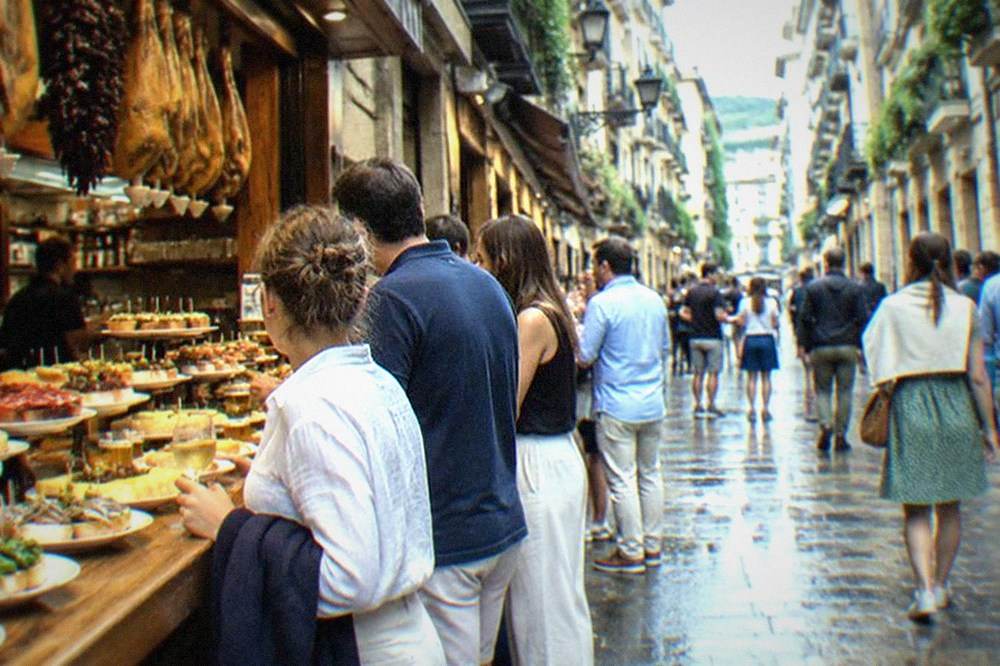
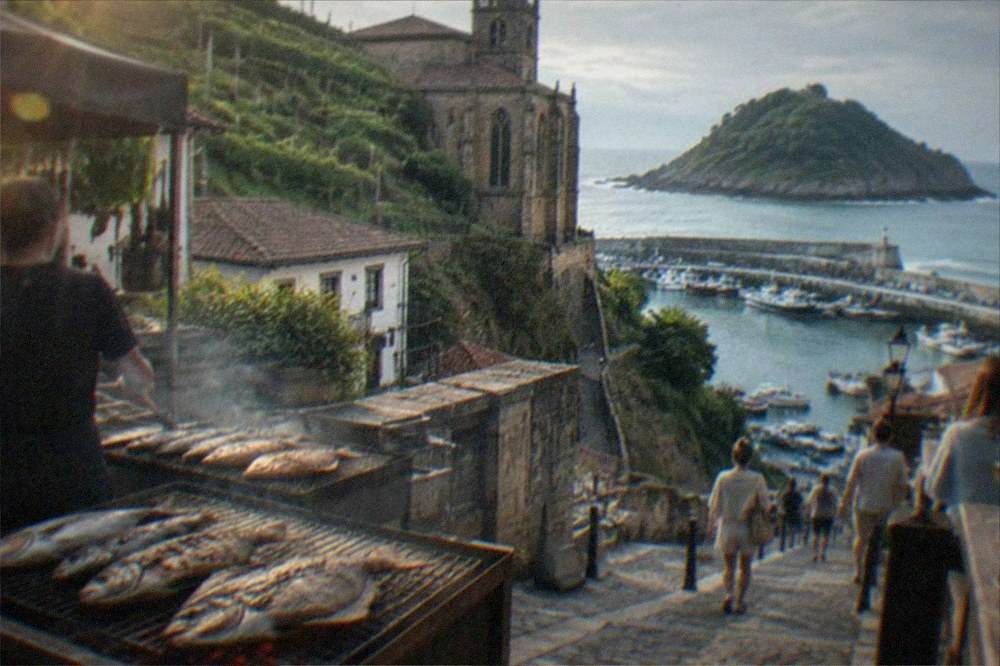
The pintxo layer needs no reservation and no star count. The bars of the Parte Vieja run at their busiest in July, and the difference between a good crawl and a frustrating one is usually timing: the bars before eight are local, the bars after ten are a crowd. A guided crawl solves the problem of not knowing which doorway to choose, and a small-group or capped-group format solves the problem of not getting a spot at the counter.
For the self-guided version, the site's guides to pintxos in San Sebastian, the best pintxo bars and what to eat in San Sebastian name the bars and the dishes. One July-specific note: the cider house txotx season runs from the middle of January to the end of April by the tourism board's own wording, so a July visitor who wants the cider house experience books a summer visit or a meal-based cider house tour rather than expecting the txotx ritual, which is the standing-room, straight-from-the-barrel pouring of the winter and spring season.
What Day Trips Work From San Sebastian In July?
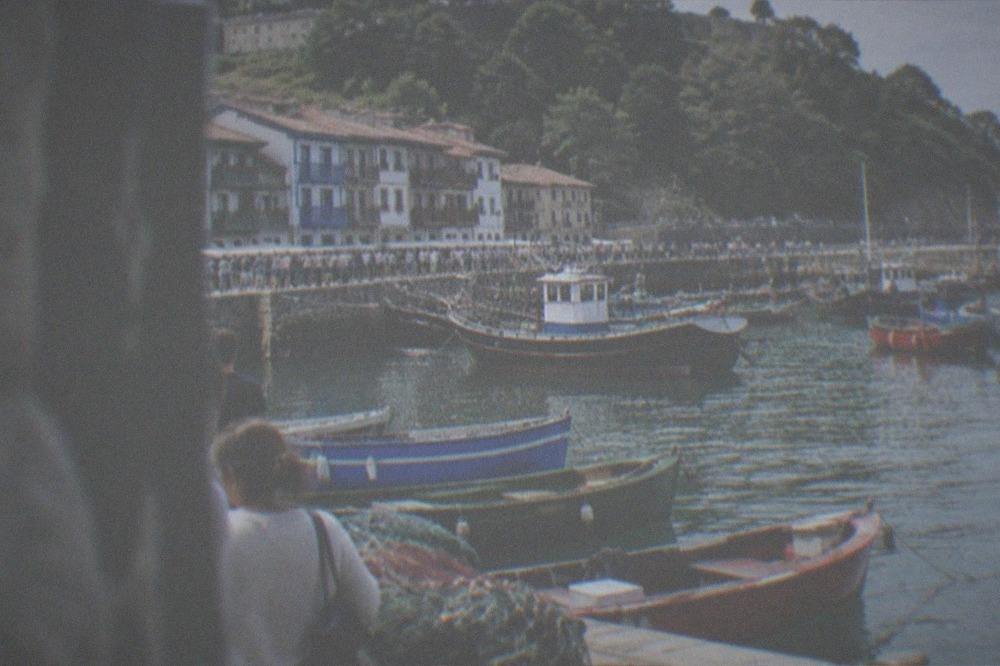
The best July day trips from San Sebastián are the coastal and cross-border ones: Hondarribia and the Pasajes fishing villages on a half-day, Getaria for txakoli and the Balenciaga museum, and Biarritz and Bayonne across the French border on a full-day coach or minibus trip. The Basque Coast UNESCO Global Geopark at Zumaia, a Geopark since 2015, is the pick for a longer coastal drive.
Each of these has a July logic. Hondarribia, a separate municipality at the mouth of the Bidasoa where the airport sits, is a short hop and the site's Hondarribia guide covers it. Getaria, also separate, pairs a fishing town with the txakoli country the local white wine comes from, and the Getaria guide and the txakoli guide explain the pairing. The French Basque Country trips cross into France for Biarritz, Bayonne and Saint-Jean-de-Luz, and the French Basque Country guide gives the framework.
A guided day trip removes the border-and-parking friction, which in July is real: the coastal car parks and the French seaside towns are at their summer fullest.
The Camino de Santiago's coastal route also passes through, and July is a month when pilgrims are on it in numbers. The tourism board lists the city on stage 2, Pasaia to Donostia, and stage 3, Donostia to Orio, of the coastal route through Gipuzkoa, though it publishes no stage distances, so the Camino del Norte guide is the reference for how the route works. A July visitor can walk a stage fragment as a day hike without committing to the whole thing.
| Day trip destination | What it is | July note |
|---|---|---|
| Hondarribia | Historic port town at the French border, separate municipality | Half-day fits around a beach afternoon |
| Pasaia | Fishing villages on the Camino coastal route | Reached by the Topo line from Amara |
| Getaria | Fishing town, txakoli country, Balenciaga Museoa | Museum open daily 10:30 to 20:00 in July and August |
| Zarautz and Zumaia | Long beach and the flysch coast of the UNESCO Global Geopark | Geopark status since 2015 |
| Biarritz and Bayonne | French seaside and old town across the border | Full-day trips run from the city |
| Bilbao and Gaztelugatxe | Guggenheim and the hermitage islet | Full-day small-group format |
What Should You Pack And Plan For San Sebastian In July?
Pack for warm days around a 21.8 C mean daily maximum, cool evenings around a 16.0 C mean minimum, and at least one rain layer, because July still averages 86 mm over about 10 rain days at AEMET's Igeldo station. Plan around the late Spanish dining hours, the 20:00 last island boat, and the fact that July is the city's second-busiest hotel month, so book rooms and restaurant tables ahead rather than on arrival.
The clothing question has a local answer worth knowing: this is a city where people dress well, and the evening pintxo crawl is a smart-casual affair, but the beach and hill walks demand real shoes and swimwear, so the packing list is broader than a pure beach trip. The site's guide to how people dress in San Sebastián goes into it. What the climate table adds is the evening note: a 16.0 C mean minimum means a July night on the Peine del Viento plaza wants a layer, even after a 22 C afternoon.
The planning notes are the ones scattered through this page collected in one place. The island boat's high season runs to 30 September, so July is safely inside it, but every sailing depends on weather and sea. The beaches lose their full lifeguard hours after 15 September and the service entirely after 30 September, so July visitors get the whole offer. And the question of how many days to give the city has its own guide, with three days in San Sebastián the usual answer for a first July visit that wants a beach day, a hill day and a pintxo day.
Common Questions About San Sebastian In July
Is July the driest month in San Sebastian?
Yes. AEMET's normals for the Igeldo station give July 86 mm of rain over 9.8 days, the lowest of any month, ahead of June at 90 mm and September at 111 mm. It is still not a dry month in absolute terms: the station records 1,507 mm a year, and no month averages under 86 mm.
Is July hotter than August in San Sebastian?
No. August is warmer, with a mean of 19.5 C against July's 18.9 C and a mean daily maximum of 22.5 C against 21.8 C. July is sunnier, 196 sun hours to 190, and drier, 86 mm to 117 mm, which is why many visitors prefer it.
Are the beaches lifeguarded in July in San Sebastian?
Yes. The council states the lifeguard service runs on all three beaches, La Concha, Ondarreta and Zurriola, from 1 June to 30 September, with full 10:00 to 20:00 hours from 15 June to 15 September, which covers every day of July.
Can you visit Santa Clara island in July?
Yes. July falls inside the boat operator's high season, 1 June to 30 September, when the direct red line sails every 30 minutes from 10:00 to 19:00, weather and sea permitting, with the last boat back from the island at 20:00. Hondalea, the installation in the island lighthouse, is open in the same window, free and without booking.
Is San Sebastian crowded in July?
It is one of the two busiest months. INE's hotel occupancy survey recorded 239,124 overnight stays in July 2025, just behind August's 245,769, and July and August together account for 22 percent of the year's hotel stays in the city.
What should you do in San Sebastian in July when it rains?
The same things locals do: San Telmo Museoa, free every Tuesday and open to 20:00 in summer, Tabakalera, free and open to 21:00, the Aquarium, which opens daily 10:00 to 20:00 in July and August, and the pintxo bars of the Parte Vieja, which do not close for weather.
July in San Sebastián is the month the city's full seasonal offer is switched on, from the lifeguarded beaches to the half-hourly island boats, and the official numbers, from AEMET's Igeldo station and INE's hotel survey, say exactly what to expect: the sunniest and driest weeks of the year, with rain still on roughly ten days, and a city at near its annual peak of visitors, so the bookable parts, rooms, top restaurants and guided walks, are worth arranging before you arrive.