Jazzaldia: San Sebastian Jazz Festival
Jazzaldia is the jazz festival of San Sebastián, Donostia in Basque, a city on La Concha bay in the Basque Country of Spain, and one of the longest-running jazz festivals in Europe.
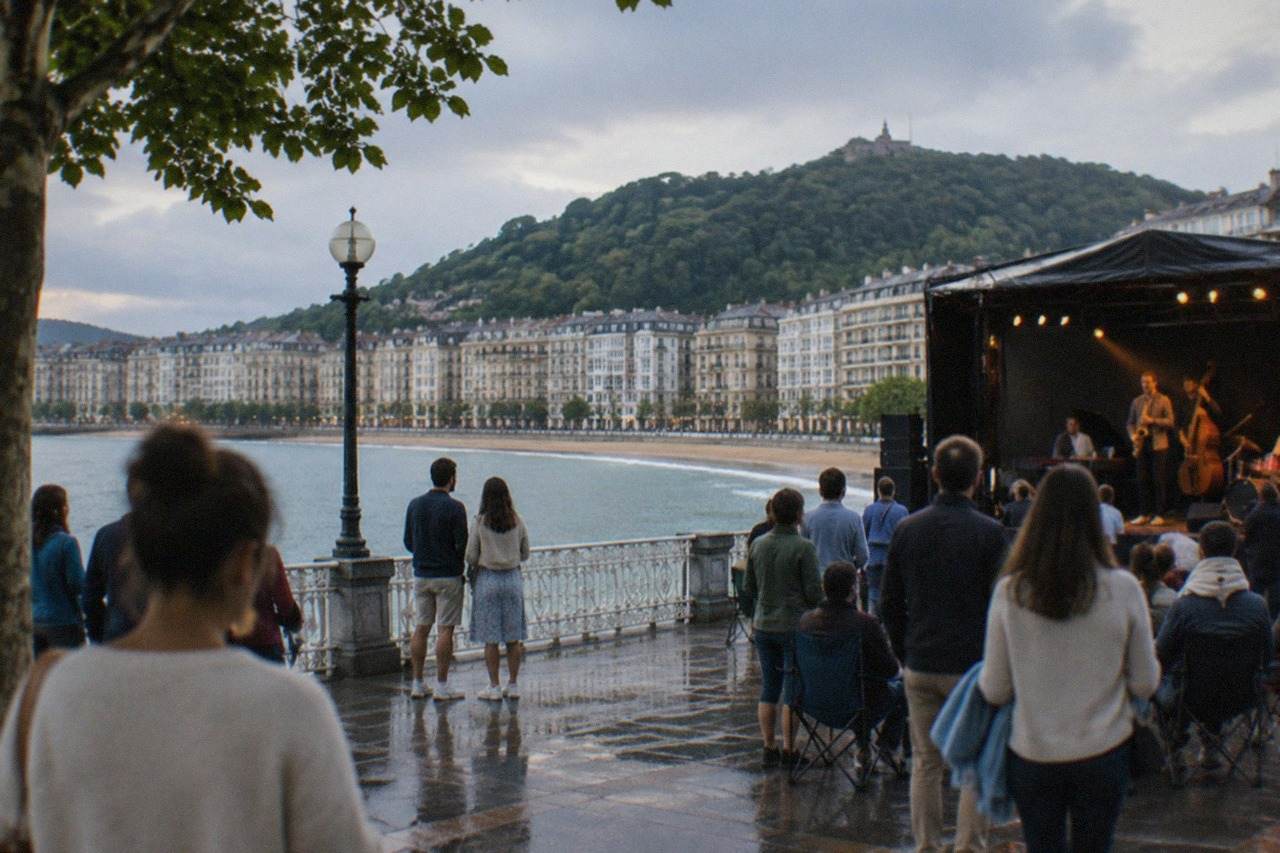
Short answer
Jazzaldia is San Sebastián's jazz festival, held each July. Its 2026 edition was the 61st. Stages sit around the bay and in the Old Town, many concerts are free, and the festival overlaps the warmest, busiest weeks of the city's summer.
Jazzaldia is the jazz festival of San Sebastián, the Basque name of the city being Donostia, on La Concha bay in Gipuzkoa, in the Basque Country of Spain. It is one of the oldest jazz festivals in Europe, and its 2026 edition was the 61st, according to the festival's own site. For a week in July the city's terraces, plazas and beachfront stages fill with music, much of it free and open air, while the bay itself carries the sound. This page explains what the festival is, where its stages sit, what a July visit actually feels like in weather and crowds, and how to plan around it.
What Is Jazzaldia In San Sebastian?
Jazzaldia is the San Sebastián Jazz Festival, an annual music festival held in the city each July, and its 2026 edition was the 61st, which makes it one of the longest-running jazz festivals in Europe. The festival spreads its stages across plazas, beachfronts and halls around the bay and the Old Town, and a large share of its concerts are free and open air, so the music reaches well beyond ticket holders.
The festival has run every summer for more than six decades, through editions that the festival's own site counts to 61 for 2026. That longevity is the first thing that distinguishes it from the city's other big events. Semana Grande is a fireworks-and-parties week anchored to the middle of August, the film festival arrives in September, and Jazzaldia sits earlier, in July, when the city is already at full summer tilt. The two events are covered in more depth on the San Sebastian festivals overview.
The festival's character is shaped by its setting more than by any single venue. A stage by the water means the audience hears the set against the bay; a plaza stage in the Old Town means the set competes, pleasantly, with the evening pintxo crowd spilling out of the bars. The exact dates of each edition are published by the festival organiser, and this guide deliberately gives the rule rather than a guessed calendar: it happens in July, and the organiser's site is the place to confirm the year's dates before booking anything.
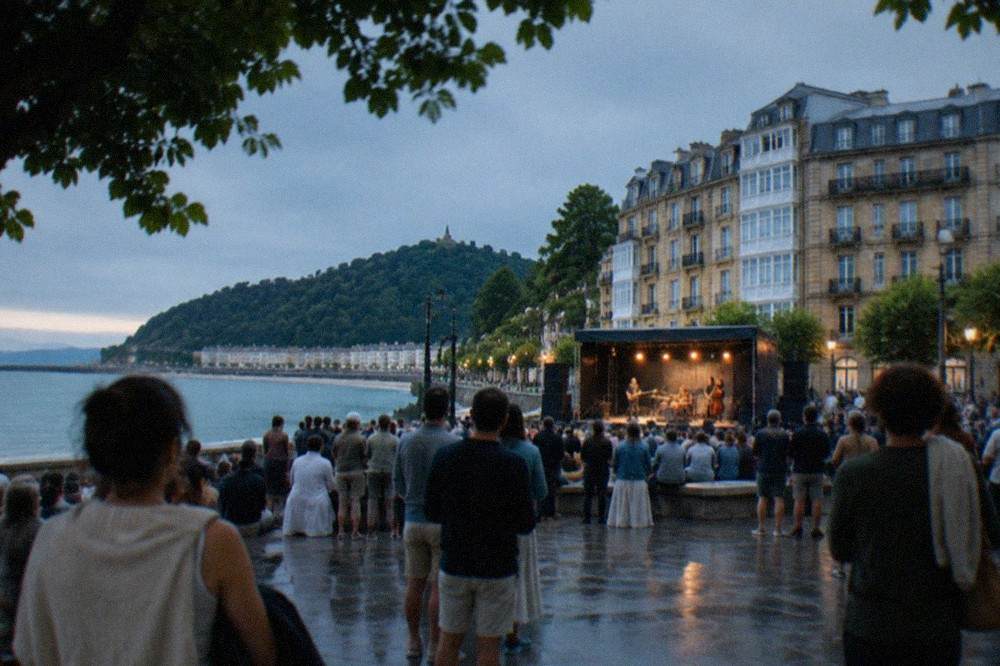
When Does Jazzaldia Take Place Each Year?
Jazzaldia takes place in July each year in San Sebastián, and the festival's own site confirms that its 2026 edition was the 61st, but the exact dates are published by the organiser for each edition and are not fixed in law or by any municipal rule. Anyone planning a trip around the festival should check the festival's own site for the year's dates, and book accommodation only after those dates appear.
July is a deliberate slot. AEMET's climate normals for its Igeldo station show July as the driest month of the year, averaging 86 mm of rain over about 10 rain days, and the warmest mean temperatures alongside August. It is also, per the INE hotel occupancy series, one of the two peak months for the city: July 2025 recorded 239,124 hotel overnight stays, and August recorded 245,769, the year's high. Anyone coming for the festival is coming at the busiest time, and that shapes everything about the planning.
The honest weather note matters here. Even in July, the driest month, the Igeldo station averages 86 mm of rain, and the station sits 250 m up on Monte Igeldo, so the seafront runs slightly warmer than those figures. This is an Atlantic city with 1,507 mm of rain a year over 141 rain days. A festival goer packs for warm evenings and the possibility of a shower, not for a Mediterranean summer. The full picture is on the San Sebastian weather page.
Between sets, the festival week leaves long summer evenings free, and the city's food is the obvious filler. A guided tasting walk through the Old Town bars is one way to spend them.
Where Are The Jazzaldia Stages In San Sebastian?
Jazzaldia stages sit around the bay and through the centre of San Sebastián: the festival has historically used the beachfront and terraces of La Concha and Zurriola, plazas in the Old Town and the city centre, and indoor halls for the ticketed headline concerts. The organiser publishes the exact stage map for each edition, so treat the locations as the pattern rather than the fixed list, and confirm the current venues on the festival's own site.
The geography of the city does most of the work. La Concha beach runs 1,350 m along the bay, per the city council's beach page, and its promenade is a natural auditorium. Zurriola, in the Gros district on the other side of the Urumea river, is 800 m of more open sand that the council describes as having strong swell, and its seafront hosts the surf crowd by day. A festival that uses both beaches effectively has two open-air venues a short walk apart on either side of the river mouth.
The Old Town, the Parte Vieja, supplies the plaza stages. Plaza de la Constitución, the old bullring square with its numbered balconies, is the classic one, and the surrounding streets hold the densest run of pintxo bars in the city, which is why an evening concert there flows straight into a bar crawl with no transition at all. The neighbourhoods are described on the San Sebastian neighborhoods guide, and the beaches themselves on the San Sebastian beaches page.
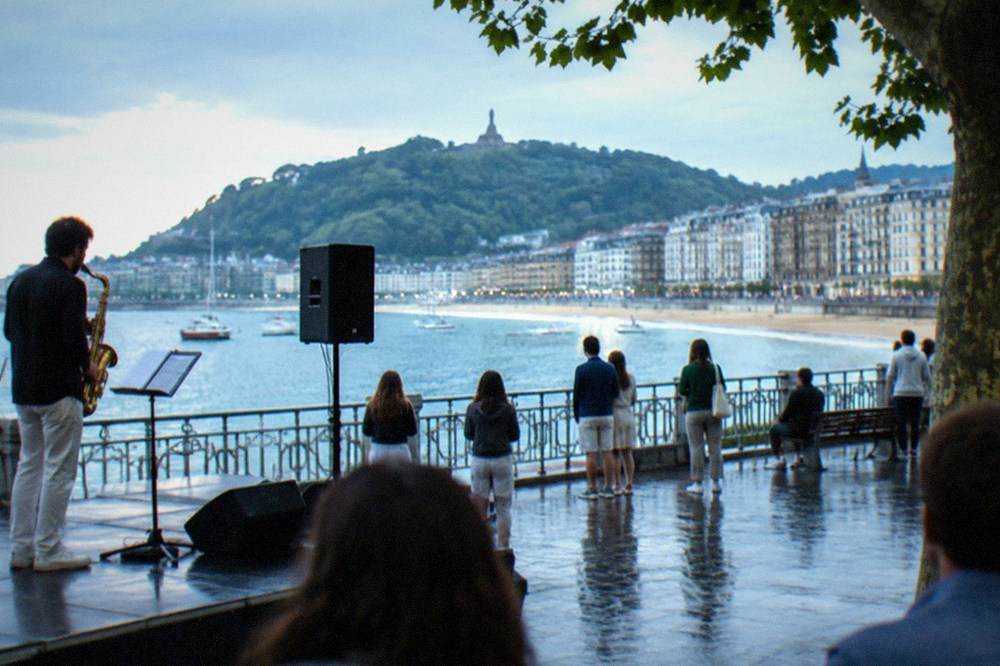
The table below sets out the stage pattern and what each kind of venue offers a visitor.
| Stage setting | Part of the city | Character | What a visitor does there |
|---|---|---|---|
| La Concha beachfront | Bay promenade | Open air, biggest free crowds, bay backdrop | Arrive early for a spot on the sand or promenade |
| Zurriola seafront | Gros district | Open air, younger crowd, surf beach by day | Combine a daytime beach afternoon with an evening set |
| Plaza de la Constitución | Old Town (Parte Vieja) | Historic square, intimate, surrounded by bars | Watch a set, then eat pintxos in the same streets |
| City centre plazas and terraces | Centro | Walkable, close to hotels and the Boulevard | Drop in between dinner and a late set |
| Indoor halls | Various | Ticketed headline concerts, seated | Buy tickets in advance through the organiser |
Are Jazzaldia Concerts Free Or Do You Need Tickets?
Jazzaldia mixes free open-air concerts with ticketed indoor ones, and the pattern has held for years: the outdoor stages on the beaches and plazas carry free shows that need no ticket, while the headline indoor concerts are ticketed and sold through the organiser. The split for any given edition, and which artists play free and which play paid, is on the festival's own site, which is the only reliable source for the year's programme.
The free side of the festival is what makes it a citywide event rather than a venue event. A visitor who never buys a ticket can still hear live jazz during the festival week, standing on sand or a plaza, and that is a genuinely unusual arrangement for a festival of this age and standing. The paid side funds it: the indoor programme, historically the heavy names of each edition, is where the ticket money goes. The rest of the planning pages sit on San Sebastian Spain Guide.
Two practical notes follow from the free shows. First, the free stages fill: July is one of the city's two peak hotel months in the INE series, and a free concert on La Concha draws from that whole crowd. Second, the weather does not always cooperate. The festival runs in the city's driest month, but the driest month still averages 86 mm of rain, and outdoor shows can be affected by it. The organiser communicates changes; a visitor should check the festival's channels on the day.
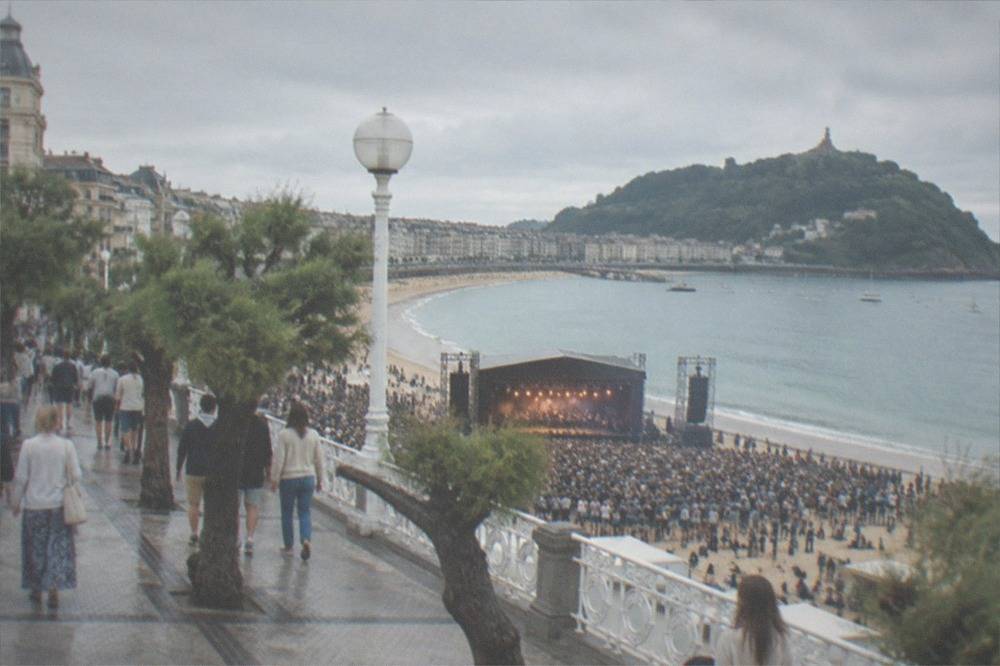
The evenings between concerts are the part of a festival trip that tends to go under-planned, and the Old Town's bar counters are the city's answer to them.
How Does Jazzaldia Fit The City's Festival Calendar?
Jazzaldia in July is the first of San Sebastián's three big summer cultural events, followed by Semana Grande in the week of 15 August and the International Film Festival in September, so the jazz week opens a two-month run in which the city is never quiet. Each event has its own rule: Jazzaldia runs in July, Semana Grande always runs Saturday to Saturday around 15 August, and the film festival's 74th edition ran 18 to 26 September 2026.
The sequence matters for planning. A visitor who wants the music and the fireworks can straddle July and August in one stay, and the how many days in San Sebastian guide covers how long a trip needs to do it without rushing. A visitor who wants the jazz without the biggest crowds should note that July and August together account for 22% of the year's hotel overnight stays in the INE series, so the quiet version of this festival does not really exist.
| Event | When it happens | Rule or 2026 fact | What it is |
|---|---|---|---|
| Jazzaldia | July | 2026 was the 61st edition | Jazz festival, free outdoor stages plus ticketed halls |
| Semana Grande (Aste Nagusia) | Week of 15 August, Saturday to Saturday | 2026 ran 8 to 15 August | City festival with the International Fireworks Competition |
| Quincena Musical | August | 87th edition ran 2 to 30 August 2026 | Classical music festival |
| International Film Festival | September | 74th edition ran 18 to 26 September 2026 | One of Europe's major film festivals |
| La Concha regattas | First two Sundays of September | 2026: 6 and 13 September; first held 1879 | Rowing races, women at 11:00, men at 12:00 |
The film festival that follows is covered separately on the San Sebastian film festival page, and the question of how the festival week's length works is answered at how long does the San Sebastian festival last.
What Is July In San Sebastian Actually Like Beyond The Festival?
July in San Sebastián averages a mean of 18.9 C with a mean maximum of 21.8 C, 86 mm of rain over about 10 rain days and 196 sun hours, the highest sun figure of the year at AEMET's Igeldo station, so festival days are warm, bright and occasionally wet rather than hot and dry. The beaches are fully staffed, with lifeguards on all three beaches from 1 June to 30 September, and hotel occupancy sits at its annual peak.
The sun number is the surprise: July is the year's highest for sunshine, ahead of August's 190. The rain number is the correction: 86 mm over roughly 10 days means a festival week typically sees at least one wet spell. Neither figure cancels the other. The seafront runs slightly warmer than the station values because the station sits 250 m up on Monte Igeldo.
The beach infrastructure is at full season in July. Lifeguards are on duty from 10:00 to 20:00 between 15 June and 15 September, and parasol and awning hire runs on La Concha, Ondarreta and Zurriola through the same window. A festival afternoon can therefore be a beach afternoon with equipment rented on the sand, and the evening concert follows without moving cities.
| July fact for San Sebastián | Figure | Source basis |
|---|---|---|
| Mean temperature | 18.9 C | AEMET Igeldo normals, 1981 to 2010 |
| Mean daily maximum | 21.8 C | AEMET Igeldo normals |
| Rainfall | 86 mm, the driest month of the year | AEMET Igeldo normals |
| Days with 1 mm or more of rain | 9.8 | AEMET Igeldo normals |
| Sunshine | 196 hours, the year's highest | AEMET Igeldo normals |
| Hotel overnight stays, July 2025 | 239,124 | INE hotel occupancy survey, hotels only |
| Lifeguard cover on all three beaches | 1 June to 30 September | City council beach pages |
Where Should You Stay During Jazzaldia?
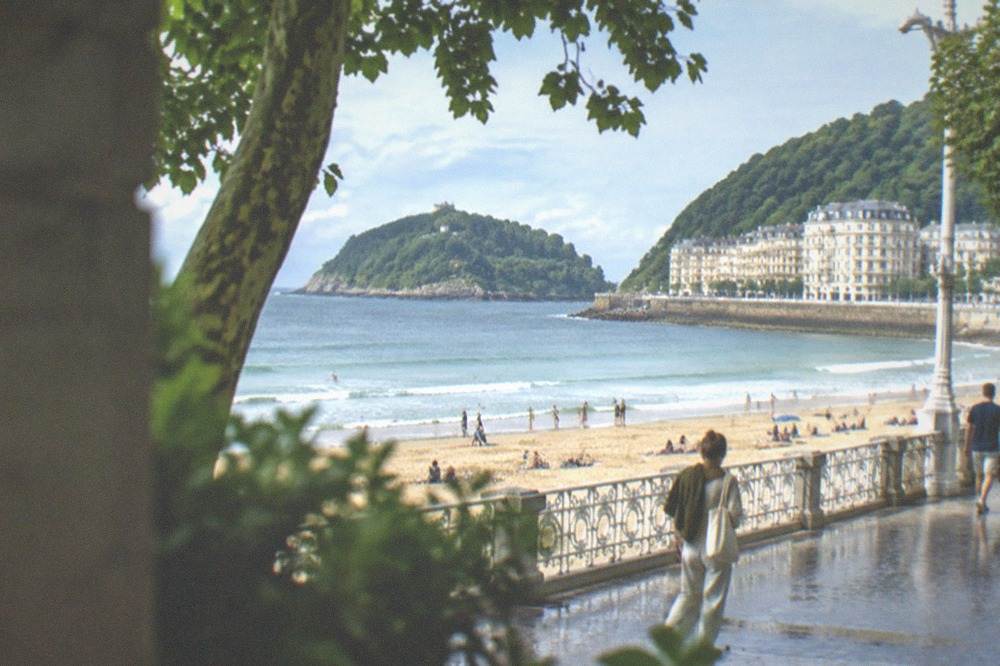
Staying within walking distance of the Old Town or the centre puts every Jazzaldia stage in San Sebastián within a 20-minute walk, because the festival's venues cluster around the bay and the Parte Vieja, and the city is compact enough that a beachfront room and a plaza stage are rarely more than a short stroll apart. The trade-off is price and availability: July is a peak hotel month, and rooms near the water sell first.
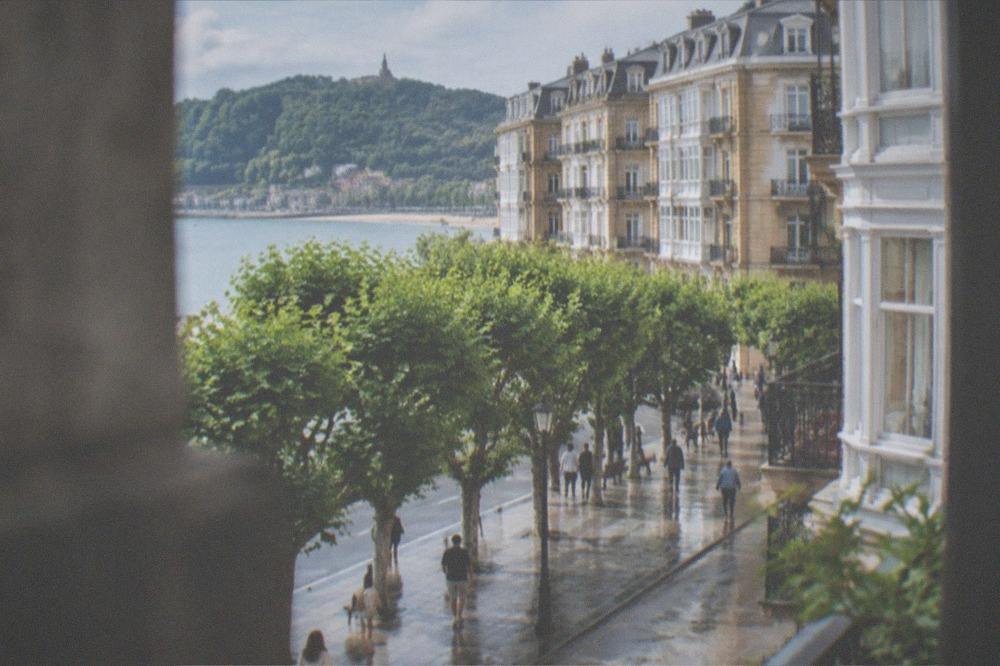
The geography argument is simple. The city's hotel stock concentrates between La Concha and the river, the festival's stages sit on the beaches and plazas of that same core, and the Gros district across the river puts a visitor beside Zurriola's seafront stage while remaining an easy walk to the Old Town. Nothing about the festival requires a car, and parking in July is the harder problem; the car-free approach is the sensible one, and the neighbourhood options are covered on where to stay in San Sebastian.
Booking timing is the real variable. The INE series shows July 2025 at 239,124 hotel overnight stays, second only to August, and the festival concentrates demand further into its own week. A visitor who waits for the programme announcement to book a room is competing with everyone else who did the same. The safer order is: confirm the festival dates on the organiser's site, book the room, then buy tickets when they open.
What Should You Eat And Drink Between Jazzaldia Shows?
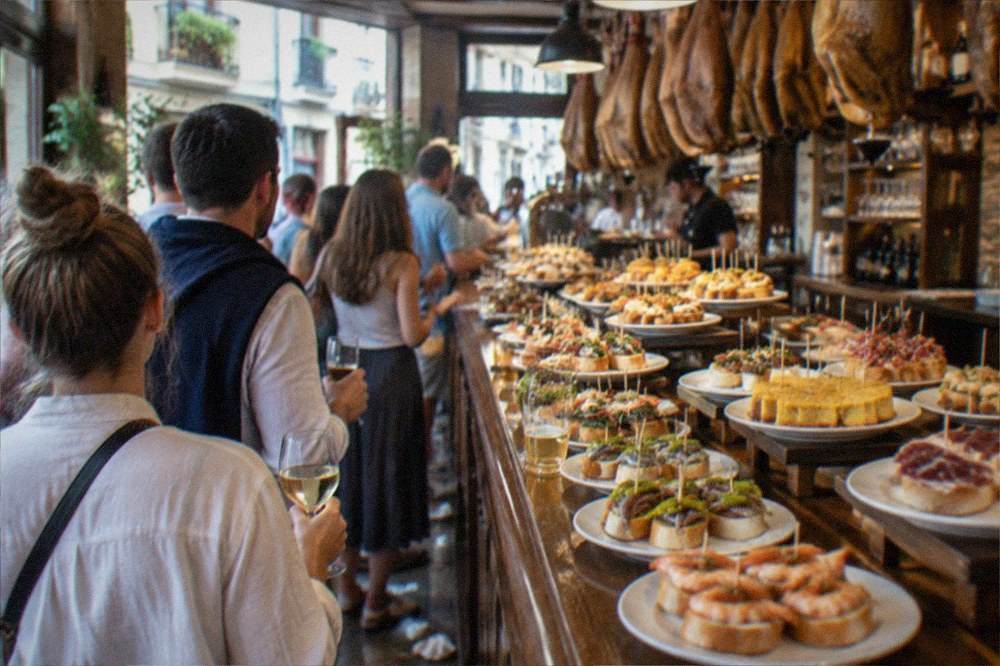
The pintxo bars of the Old Town are the default answer, because the Parte Vieja's streets sit directly beside the festival's plaza stages and the evening concert schedule overlaps the city's own eating rhythm, in which the pintxo crawl runs late into the night. Pintxos are the small, composed bar snacks of the Basque Country, eaten standing with a drink, and a crawl moves from bar to bar rather than sitting down to one table.
The overlap is structural, not coincidental. An open-air set in or beside the Old Town ends, and the crowd disperses into bars that are already serving. The bars themselves are the subject of the best pintxo bars guide, and the dish itself is explained on what are pintxos. For visitors who want the crawl decoded on the first night rather than the third, a guided tasting walk does the bar selection and the ordering.
The local drink that pairs with it is txakoli, the young, lightly sparkling white wine of the coast, poured from a height into the glass. The cider houses of the province are the other classic Basque drinking institution, and the txotx cider ritual, in which cider is poured straight from the barrel, runs in the cider houses from the middle of January to the end of April in the tourism board's wording, so it is a winter-to-spring custom rather than a July one. A cider house lunch is still a summer option at the houses that serve meals outside the season, and one tour runs the visit with lunch included.
What Else Can You Do In San Sebastian During The Festival Week?
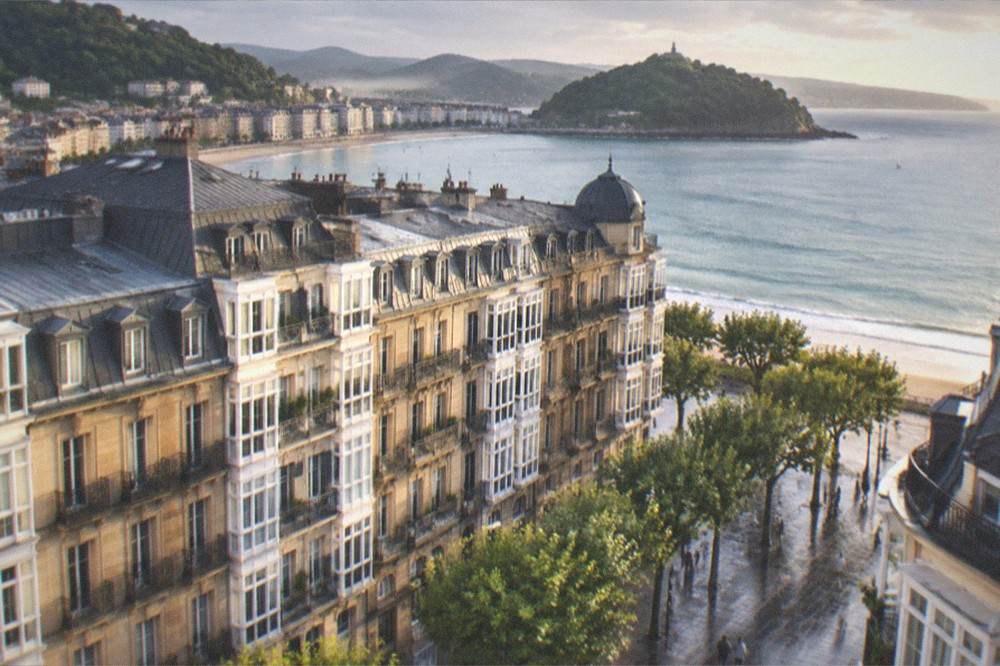
The festival week's daylight hours belong to the beaches, the two bay-front hills and the bay itself: La Concha, Ondarreta and Zurriola for swimming and sun, Monte Igueldo for the 1912 funicular and its views, Monte Urgull for the Old Town-side hill with the Castillo de la Mota, and the bay boat to Santa Clara island, whose high season of 1 June to 30 September covers the whole of July. A festival visitor can fill every non-music hour without leaving the city.
The hills bracket the bay. Monte Igueldo's funicular, opened on 25 August 1912 and called the oldest in the Basque Country by the tourism board, runs every 15 minutes, and its return ticket includes entry to the grounds; the details are on the Monte Igueldo guide. Monte Urgull, on the Old Town side, is open 08:00 to 21:00 from 1 May to 30 September, and its hill paths and views are covered on the Monte Urgull guide.
The island is the short trip. The operator's red-line boat runs direct to Santa Clara every 30 minutes in high season, 10:00 to 19:00, weather and sea permitting, with a 5 EUR return ticket bought at the kiosk on the day. The island's Hondalea installation, Cristina Iglesias's work in the lighthouse, is open 1 June to 30 September, 11:00 to 18:30, free, in half-hour sessions, with no booking needed for the visit itself, only the boat. The island is covered on the Santa Clara island guide.
For a visitor who prefers the city's story at their own pace, a self-guided audio tour of the cultural sights and scenic trails covers the ground between concerts without a fixed schedule.
How Much Does A Jazzaldia Trip Cost?
The music itself can cost nothing, because Jazzaldia's open-air stages in San Sebastián are free, while the ticketed indoor concerts are priced per show by the organiser, so the festival's own cost is whatever a visitor chooses it to be. The rest of the trip is a normal July trip to the city: peak-season accommodation, beach lifeguard and hire services at published council prices, and a pintxo crawl whose cost depends on how many bars it covers.
The controllable costs are the ordinary ones. The MUGI fare system prices a single urban bus journey at 1.95 EUR paid in cash to the driver, or 0.78 EUR on the MUGI anonymous card, and the dBus city network covers the core, so transport inside the city is cheap and no festival venue requires a taxi. Beach hire prices are published by the council: on La Concha and Zurriola an awning is 13.10 EUR a day and a lounger 3.50 EUR, between 15 June and 30 September.
The bigger budget lines are the room and the food. July is the city's second-busiest hotel month, and the accommodation question is examined in depth on is San Sebastian expensive. Eating well does not require the starred houses: the pintxo bars of the Old Town are the city's everyday institution, and the full range from bar counters to the MICHELIN Guide Spain 2026's 11 city stars is easy to cover in one festival week.
| Cost item during festival week | Figure | Basis |
|---|---|---|
| Open-air Jazzaldia concerts | Free | Festival stage pattern |
| Ticketed indoor concerts | Priced per show by the organiser | Festival's own site |
| City bus, cash single | 1.95 EUR | dBus and MUGI fare pages |
| City bus, MUGI anonymous card | 0.78 EUR | MUGI tariff table |
| Beach awning hire, La Concha or Zurriola | 13.10 EUR a day | City council beach pages |
| Beach lounger hire | 3.50 EUR | City council beach pages |
| Santa Clara island boat, return | 5 EUR in high season | Operator's tariff page |
Common Questions About Jazzaldia In San Sebastian
When is Jazzaldia held?
Jazzaldia is held in July each year in San Sebastián, and its 2026 edition was the 61st. The exact dates are published by the festival organiser for each edition, so check the festival's own site before booking a trip around it.
Is Jazzaldia free?
Partly. The festival's open-air stages, on the beaches and in the plazas, have historically carried free concerts that need no ticket, while the headline indoor concerts are ticketed and sold through the organiser. The split for the current edition is on the festival's own site.
How old is the San Sebastian jazz festival?
The 2026 edition was the 61st, per the festival's own site, which places it among the longest-running jazz festivals in Europe.
Does it rain during Jazzaldia?
It can. July is the city's driest month in AEMET's Igeldo normals, averaging 86 mm of rain, but that still means roughly 10 rain days in the month. Pack for warm evenings with a light layer and something for showers.
Where do the Jazzaldia stages sit?
Around the bay and the centre: the La Concha beachfront, the Zurriola seafront in Gros, plazas in the Old Town including Plaza de la Constitución, and indoor halls for the ticketed programme. The organiser publishes the stage map for each edition.
Is Jazzaldia the same as Semana Grande?
No. Jazzaldia is the jazz festival and runs in July. Semana Grande, or Aste Nagusia, is the city's big festival week, always the week of 15 August, Saturday to Saturday, and includes the International Fireworks Competition.
A week of Jazzaldia is a week of the city at its fullest: free music on the sand, warm evenings that can still turn wet, pintxo bars a street away from the stages, and a bay to swim in every afternoon before the first set. Check the organiser's dates, book the room early, and let the festival do the rest.