Lisbon And Porto To San Sebastian
Everything a traveler from Portugal needs to reach San Sebastián, the Basque city on La Concha bay in Spain, and to make the most of the city once the journey is over.
Short answer
There is no single direct train from Lisbon or Porto to San Sebastián. Most travelers fly, change in Madrid or Bilbao, or combine a train to the Spanish border with onward transport. The city's own airport is 20 km away at Hondarribia, Biarritz is 45 km and Bilbao is 105 km.
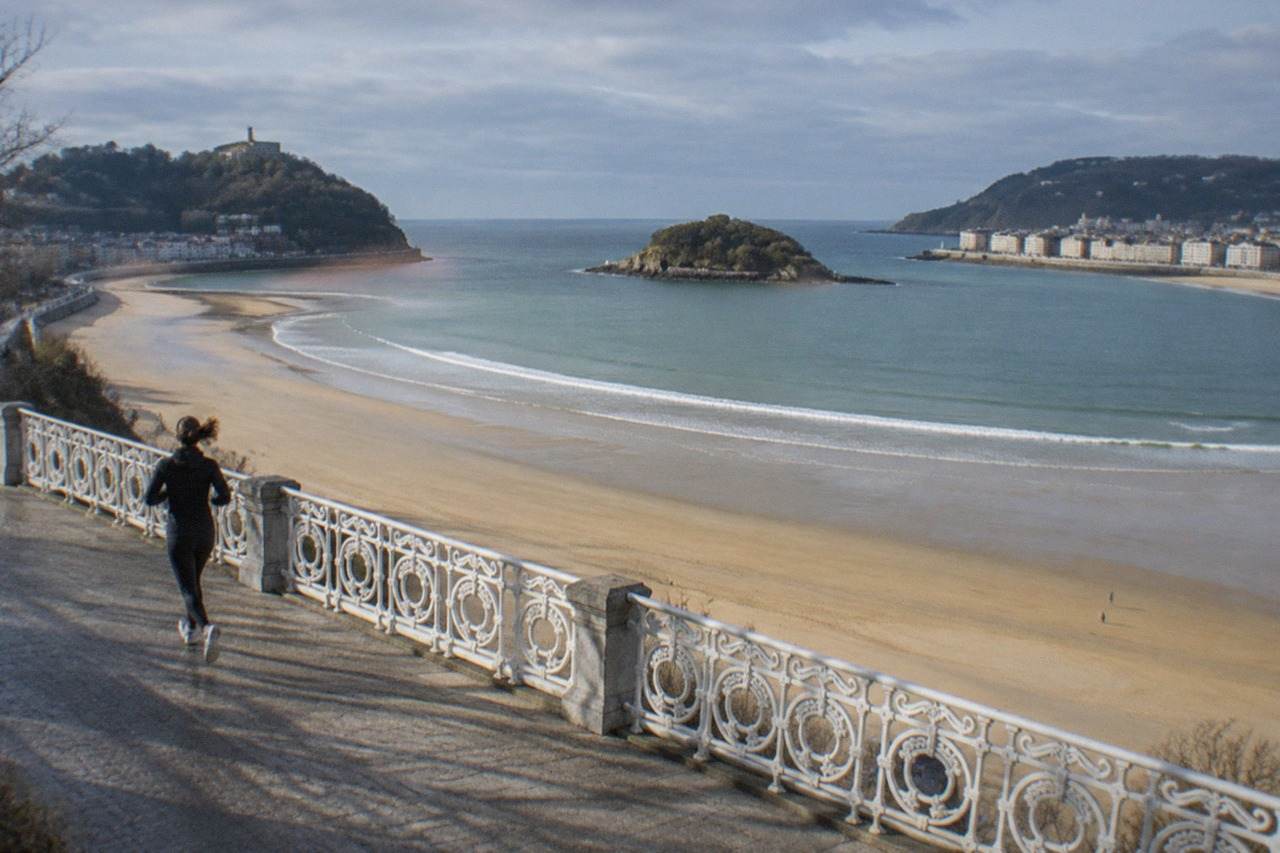
San Sebastián, in the Basque Country of northern Spain, sits on La Concha bay roughly where the Atlantic coast of Spain meets the French border, and its official name is Donostia / San Sebastián. Travelers coming from Portugal, whether from Lisbon on the Tagus or from Porto in the north, cross the entire Iberian peninsula west to east to reach it, and that geography shapes every practical decision on this page. The city is small, walkable and famous for its pintxos bars, its beaches and a concentration of Michelin-starred kitchens that is unusual for a municipality of 189,866 people, so the journey is long but the reward at the end of it is compact. This guide covers the realistic routes from Lisbon and Porto, the airport and arrival choices, and what to do with the city once the bags are down. The full list of options for once you arrive is on the site's things to do in San Sebastian overview.
How Do You Travel From Lisbon To San Sebastian?
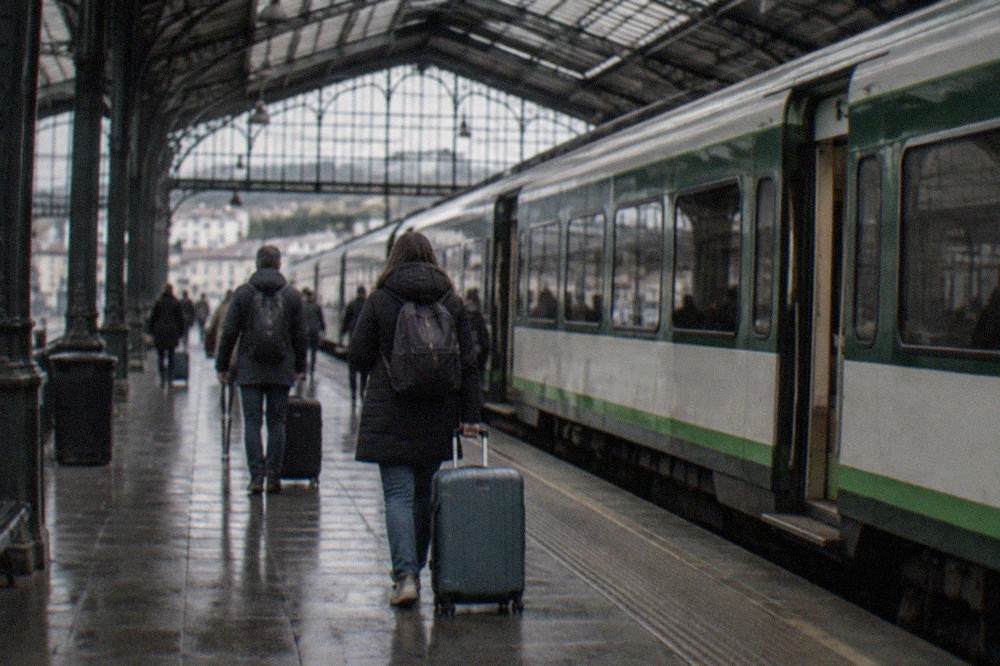
There is no direct train and no single-seat journey from Lisbon to San Sebastián. The realistic options are a flight with one connection, a long-distance bus, or a multi-leg rail route through Madrid, and every one of them takes the better part of a day. The route crosses the whole width of the Iberian peninsula, from the Atlantic coast of Portugal to the Atlantic coast of the Basque Country, a distance no Portuguese or Spanish operator covers in one step.
Lisbon and San Sebastián are both Atlantic cities, but the sea does not connect them: the crossing runs overland through central Spain. The practical choice comes down to time against money. Flying means a connection, most often in Madrid, because the two airports are not linked by a nonstop service. The train means Lisbon to Madrid and then Madrid north, which is comfortable but slow. The bus is the cheapest and slowest of the three.
The tourism board for San Sebastián describes the city as having three airports within a little over 100 km, two of them international, which is the single most useful fact for anyone planning the Portuguese end of the trip. The table below shows those distances as the board lists them.
| Airport | Distance from San Sebastián | Direct service listed |
|---|---|---|
| San Sebastián (EAS), at Hondarribia | 20 km | Yes |
| Biarritz (BIQ), France | 45 km | Yes |
| Bilbao (BIO) | 105 km | Yes |
| Vitoria-Gasteiz (VIT) | 100 km | No |
For background on where exactly the city sits and why it is so close to France, the guide to where San Sebastian is covers the geography in detail.
Is Flying Or The Train The Better Way From Portugal?
Flying is the faster choice from Lisbon because the rail route requires at least two trains and a full day, while a connecting flight gets you there in a few hours of travel time. The train becomes competitive only if you want to stop in Madrid or dislike airports, and from Porto the calculus is similar: a connection through Madrid or Bilbao beats any rail itinerary on time. Neither city offers a nonstop flight to San Sebastián itself.
The rail route from Lisbon runs first to Madrid. From Madrid the line north serves San Sebastián, but the pack behind this page gives no fare and no journey time for that leg, so the honest advice is to check the operator's own site for the current timetable rather than trust a number quoted secondhand. High-speed rail has not yet reached San Sebastián: the Basque Y network is unfinished, and the site's answers page on the high-speed train explains what that means for travel times from the south.
A middle path exists for travelers who enjoy slow rail: cross from Porto or Lisbon into Spain by daytime train, overnight somewhere on the way, and arrive rested. This turns the journey into part of the trip rather than a cost, and it suits the season. AEMET's climate normals for the city's Igeldo station, covering 1981 to 2010, show what waits at the end of the line, and it is not the dry south.
| Month | Mean temperature | Rain, mm | Rain days, 1 mm or more |
|---|---|---|---|
| January | 8.5 C | 141 | 13.2 |
| April | 11.3 C | 138 | 13.4 |
| July | 18.9 C | 86 | 9.8 |
| August | 19.5 C | 117 | 10.5 |
| October | 15.5 C | 159 | 11.8 |
| November | 11.3 C | 169 | 13.0 |
Those numbers come from the station on Monte Igeldo at 250 m altitude, so the seafront runs slightly warmer, but the pattern holds: even July, the driest month, averages 86 mm of rain over about ten rain days. Pack for weather, not for Andalusia. The site's weather guide and the page on the best time to visit go deeper.
What About Coming From Porto To San Sebastian?
Porto is closer than Lisbon but the answer is the same in kind: no direct train, so the choice is a connecting flight, a bus, or a rail route that crosses into Spain and works its way east and north. Porto's airport has a wider route network than San Sebastián's, which usually makes a one-stop flight through Madrid or Bilbao the fastest option, and Bilbao is often the better entry point because of its airport bus.
From Bilbao airport the Basque Government's own travel page lists a PESA Lurraldebus coach to San Sebastián at 17.10 EUR, taking about 75 minutes, with winter departures roughly hourly through the day and a summer timetable that runs every 30 minutes in July and August. That page carries no date stamp, so treat the fare as the one listed by the Basque Government and re-check the operator before traveling. The site's page on Bilbao airport to San Sebastian covers the options in full.
Biarritz, 45 km away across the French border, is a real alternative for anyone whose flight from Portugal connects in France, but the pack gives no operator, fare or frequency for a direct bus between Biarritz airport and the city, so the site says nothing about one. The guide to Biarritz airport to San Sebastian explains what is verified there.
A first afternoon in the city works well on foot, and a self-guided option suits the arrival day when energy is low and schedules are loose. The audio tour below is one way to cover the city's cultural sights without committing to a fixed start time, and it pairs naturally with the cultural gems and scenic trails audio tour listing the operator publishes.
Which Airport Should You Fly Into From Portugal?
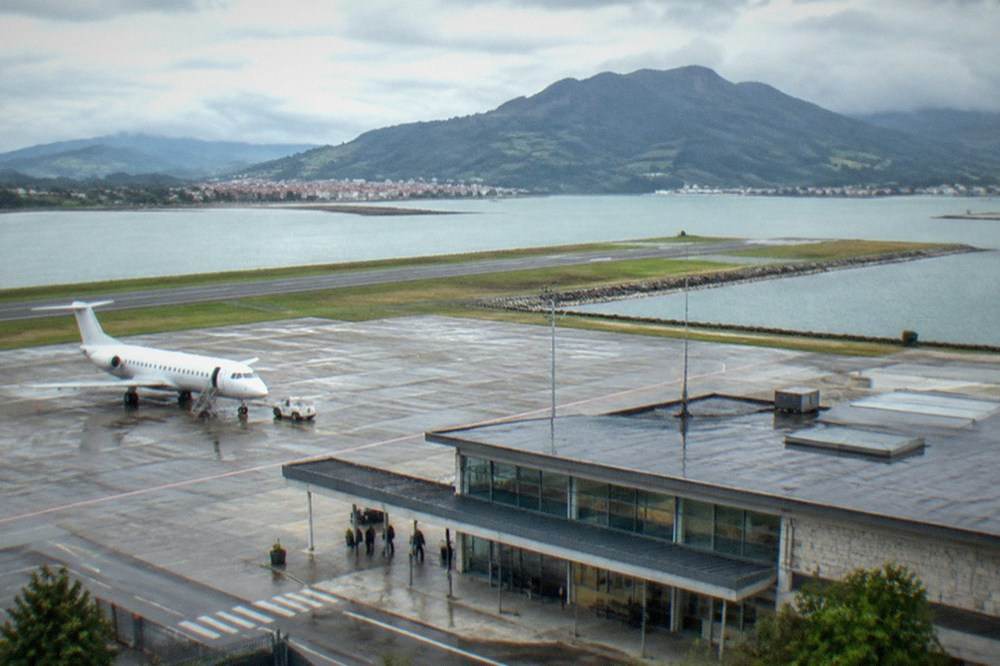
San Sebastián's own airport at Hondarribia, 20 km from the city, is the closest but has the smallest network, so most Portuguese travelers land at Bilbao, 105 km away, or Biarritz in France, 45 km away. Bilbao usually wins on flight connections from Portugal and has a direct airport coach; the city airport wins on the last leg if a suitable flight exists.
The city airport is served by Lurraldebus lines, and one detail matters more than any other: since 1 June 2026 line E21 no longer stops at the airport at all, even though some older tourism pages still name it. The operator lists E20, E23, E25, E27, E28, E29 and E30 among its airport services, and E30 is the direct line between the city and the airport. The pack gives no journey time or fare zone for that route, so check the operator's timetable PDF before relying on it.
| Airport | Distance | Ground connection on record |
|---|---|---|
| San Sebastián (EAS) | 20 km | Lurraldebus lines E20, E23, E25, E27, E28, E29, E30; E30 is the direct service |
| Bilbao (BIO) | 105 km | PESA Lurraldebus coach listed at 17.10 EUR, about 75 minutes |
| Biarritz (BIQ) | 45 km | Tourism board lists direct service to the city; no operator or fare verified |
Do You Need A Car To Reach Or Explore San Sebastian?
No, a car is not needed, and for the city itself it is usually a burden: San Sebastián is compact and walkable, its buses and the Euskotren Topo cover the region, and parking is scarce. A car earns its keep only for a multi-stop tour of the Basque coast or the Rioja wine country, where the day trips are longer and public transport is thinner.
Inside the city the dBus network charges 1.95 EUR for an occasional ticket paid to the driver, or 2.65 EUR for the special night ticket, and cash payment does not allow free transfers. The MUGI card system, which covers Gipuzkoa's buses and trains, prices trips by zone jumps: an anonymous card ride inside the urban zone, which includes Donostia and motorised Pasaia, costs 0.78 EUR, and the personalised card drops to 0.59 EUR for the first twenty trips of the month.
| Ticket | Urban zone, 0 or 1 jumps | 1 jump | 2 jumps |
|---|---|---|---|
| Occasional, cash | 1.95 EUR | 2.90 EUR | 5.40 EUR |
| Night ticket | 2.65 EUR | 3.70 EUR | 6.45 EUR |
| MUGI anonymous card | 0.78 EUR | 1.16 EUR | 2.16 EUR |
| MUGI personalised, trips 1 to 20 | 0.59 EUR | 0.88 EUR | 1.64 EUR |
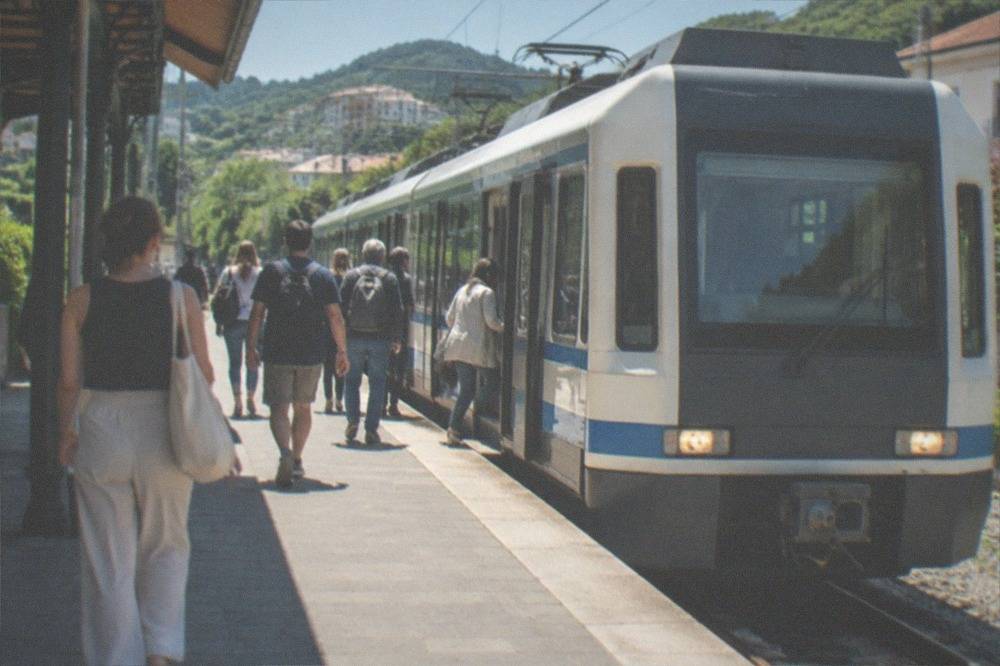
The Euskotren Topo, the regional narrow-gauge railway, is the useful line for coastal hops toward France: the run from Amara station in the city to Hendaia takes 37 to 38 minutes on the current timetable, with departures roughly every 30 minutes on the busiest service day, and the occasional fare is 2.90 EUR. The new underground section through the city centre has finished its civil works but has no published opening date, so Amara remains the working terminus. The site's getting around guide has the detail.
For wine country, a guided day removes the driving question entirely. The Rioja trip below runs to the walled town of Laguardia with winery visits, and it is a natural extension for travelers who have already crossed a peninsula to reach the Basque Country.
How Many Days Do You Need After The Long Journey?
Three days is the comfortable answer for a first visit, because the journey from Portugal consumes a day at each end and the city rewards slow evenings rather than rushed mornings. Two days covers the Old Town, La Concha and one hill; three adds the second hill, a beach swim and a cider house or a day trip; anything less leaves the eating undone, which in this city is the point of coming.
The site's page on how many days to spend in San Sebastian breaks the itineraries down, but the short version is that the city's pleasures are dense and close together. The Old Town, the Parte Vieja, holds the pintxo bars. La Concha beach runs 1,350 m along the bay, Ondarreta continues west from it, and Zurriola faces the open swell on the Gros side. All three beaches are lifeguarded from 1 June to 30 September, with full 10:00 to 20:00 cover from 15 June to 15 September and reduced hours to the end of the month.
| Beach | Mean length | Mean width | Character, per the council |
|---|---|---|---|
| La Concha | 1,350 m | 40 m | Sandy and shallow; the tide often limits usable area |
| Ondarreta | 600 m | 100 m | Sandy, busy; the walk to the Peine del Viento starts at its west end |
| Zurriola | 800 m | 110 m | Sandy and fairly open, with strong swell |
Zurriola is the surf beach, and the guide to surfing in San Sebastian covers lessons and conditions. For the food, start with the site's explanation of what pintxos are and then work through the best pintxo bars.
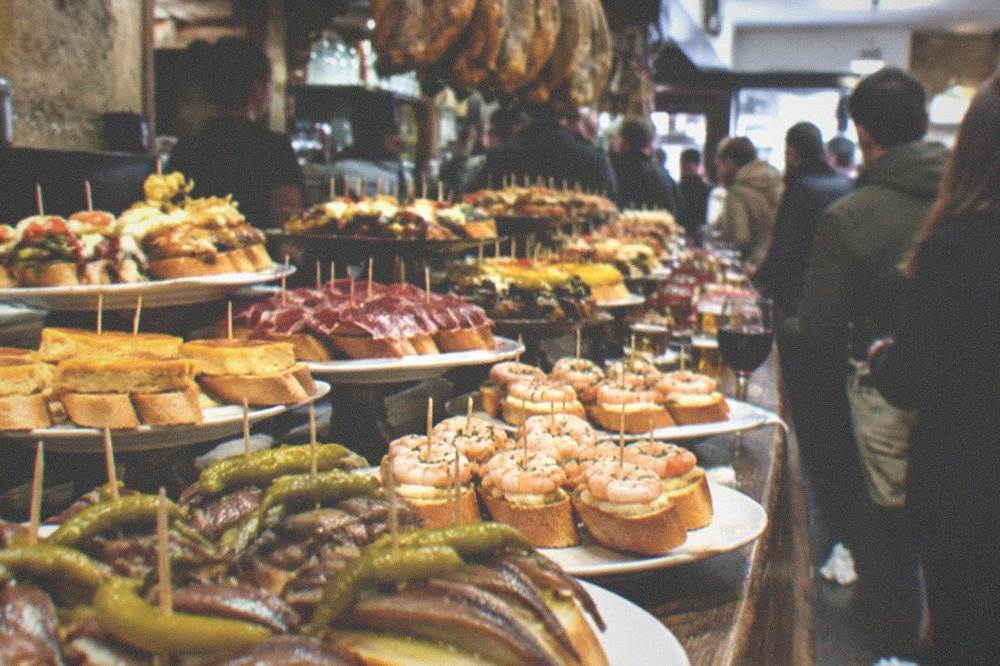
What Makes The Food Worth The Journey From Portugal?
The MICHELIN Guide Spain 2026 lists eleven stars across six restaurants inside the city of San Sebastián, including two three-star houses, Akelaŕe and Arzak, and the pintxo bar culture underneath them is a second, cheaper gastronomy that needs no reservation. That combination, starred kitchens and bar food in the same walkable centre, is what pulls travelers the width of a peninsula.
The province of Gipuzkoa holds nineteen stars across eleven restaurants in the same edition, but the city count is the one that matters here, and Martín Berasategui's three stars sit in Lasarte-Oria, a separate municipality, not in San Sebastián. The site's Michelin restaurants guide keeps the full list straight.
| Stars, 2026 guide | Restaurant | Location |
|---|---|---|
| 3 | Akelaŕe | Donostia / San Sebastián |
| 3 | Arzak | Donostia / San Sebastián |
| 2 | Amelia by Paulo Airaudo | Donostia / San Sebastián |
| 1 | iBAi by Paulo Airaudo | Donostia / San Sebastián |
| 1 | Itzuli, new in 2026 | Donostia / San Sebastián |
| 1 | Kokotxa | Donostia / San Sebastián |
Below the starred tier sits the everyday eating: pintxos eaten standing at the bar, txakoli wine poured from a height, and a cheesecake that became famous far beyond the city, all covered in the guides to what to eat in San Sebastian and the La Viña cheesecake. A guided crawl is the efficient way in, and the small-group Old Town tour below is the one that walks you through the bars with the ordering done for you.
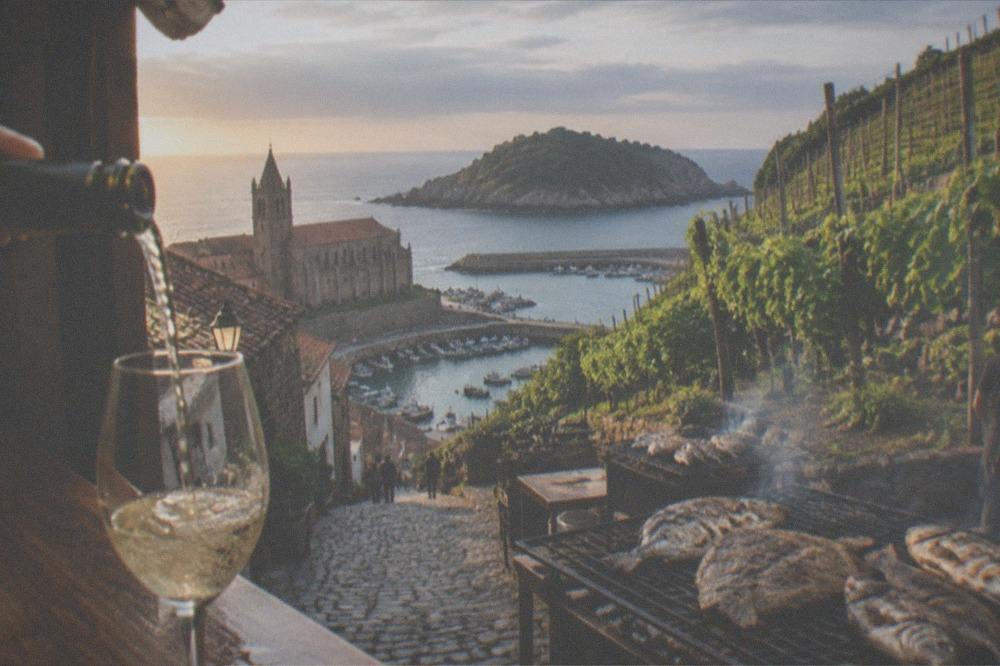
When Is The Best Month To Make The Trip From Portugal?
May, June and September are the best months to travel from Portugal to San Sebastián, because each combines milder temperatures with the full summer beach and boat season, and September adds the film festival and the La Concha regattas. August is the peak, with the highest hotel occupancy of the year, and it is also wetter than June or July, so it rewards booking far ahead rather than arriving on spec.
The city's hotel statistics, which count hotels only, show August 2025 as the peak month with 245,769 overnight stays, a little over twice the January figure of 115,910. July and August together carry roughly 22 percent of the year's stays, and April through October never drops below 200,000. For a traveler arriving from Portugal, that means the shoulder edges of the season, late June or early September, buy the same open beaches with thinner crowds.
| Month, 2025 | Hotel overnight stays |
|---|---|
| January | 115,910 |
| April | 200,055 |
| June | 211,534 |
| July | 239,124 |
| August | 245,769 |
| September | 216,759 |
| October | 207,158 |
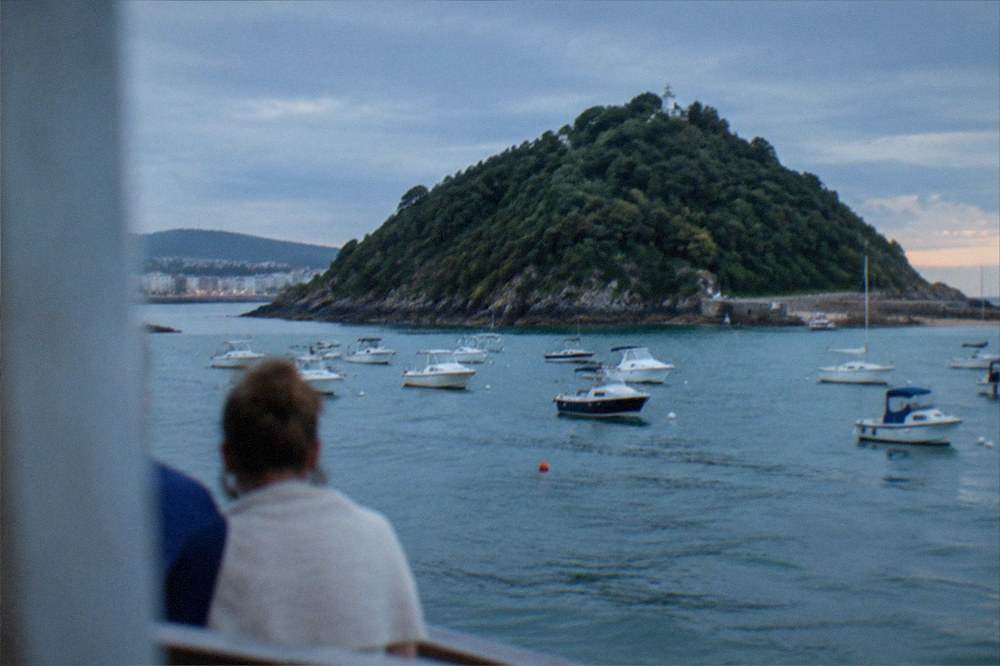
Two season rules matter for planning. The Santa Clara island boat and the Hondalea installation in the island's lighthouse both run their high season from 1 June to 30 September, and the beach lifeguards keep the same calendar, so a trip outside that window changes the bay experience even when the weather is kind. The San Sebastián festivals guide lists what runs when, from Jazzaldia to Semana Grande, which always takes the week of 15 August, Saturday to Saturday.
What Should You Know About Money And Entry Coming From Portugal?
Portugal and Spain are both in the Schengen area and both use the euro, so a traveler from Lisbon or Porto crosses no hard border, changes no currency and needs no new paperwork, and ETIAS, the planned EU travel authorisation, is not yet in operation so nobody should apply for one. The one charge on the horizon is a Gipuzkoa tourist tax that takes effect on 1 January 2027 and is not charged before that date.
The tax, Norma Foral 3/2026 of Gipuzkoa, sets bands per person per night by accommodation type, with at most six nights charged per stay and under 18s exempt. A five-star hotel band runs up to 6.50 EUR and a four-star band up to 5.50 EUR, and each council picks its own rate inside the bands; the city of San Sebastián's own rate is not yet published in an official ordinance, so the honest phrasing is "up to" the band maximum. Nobody arriving from Portugal in 2026 pays it.
The rest is simple. Emergency number is 112 everywhere in Spain, and the local police number for San Sebastián is 092. The city is covered in the site's safety guide, and for what the trip might cost day to day, the is San Sebastián expensive page is the honest one, because this is not a cheap city to eat and sleep in at the peak.
Common Questions About Traveling From Portugal To San Sebastian
Is there a direct train from Lisbon to San Sebastian?
No. Every rail route from Lisbon crosses into Spain and passes through Madrid, and the final leg north is a separate Spanish train. The full journey takes most of a day, so many travelers fly with one connection instead.
Is there a direct train from Porto to San Sebastian?
No. Porto travelers also connect, usually in Madrid, or fly into Bilbao and take the airport coach, which the Basque Government lists at 17.10 EUR for about 75 minutes.
Which airport is closest to San Sebastian?
San Sebastián's own airport at Hondarribia, 20 km away. Biarritz in France is 45 km and Bilbao is 105 km, and both have wider flight networks, so the closest airport is not always the best one.
Do I need a passport to travel from Portugal to San Sebastian?
Portugal and Spain are both in the Schengen area, so there is no border control on the route, but carry a valid ID document, because airlines and some Spanish services require one.
Is San Sebastian worth the long journey from Portugal?
Yes: the city pairs a famous food scene, eleven Michelin stars across six restaurants inside the city in the 2026 guide, with a walkable bay, three beaches and a hilltop funicular, all inside a municipality you can cross on foot. The site's is San Sebastián worth visiting page weighs it further.
How many days should I stay after traveling from Portugal?
Three days is the comfortable answer. One day absorbs the Old Town and La Concha, a second covers the beaches and one of the hills, and a third opens a cider house, a winery trip or the coastal Camino.
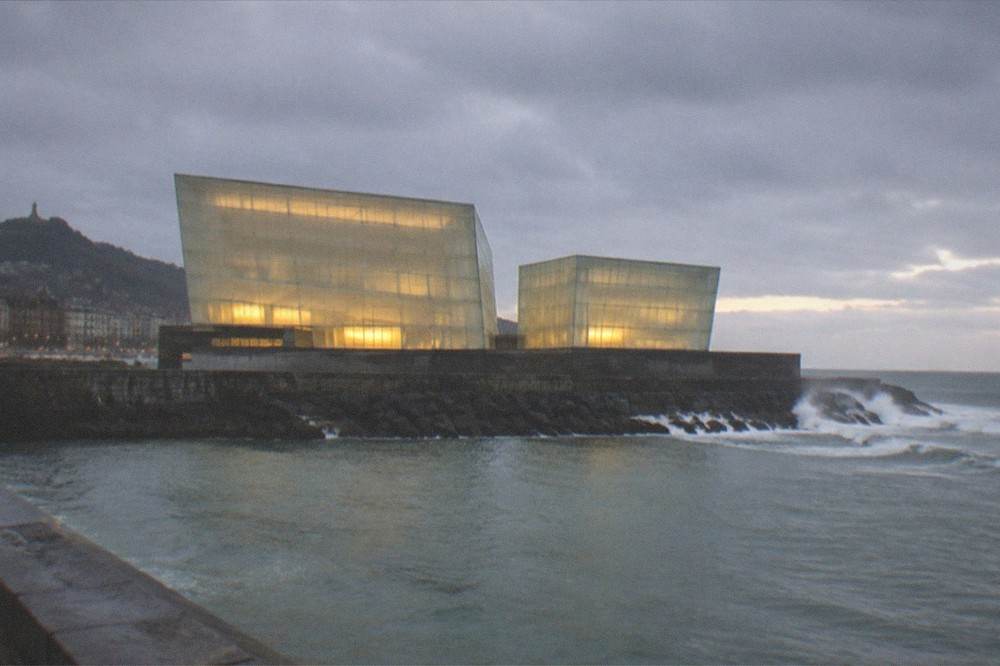
The long crossing from Portugal is the price of admission, and the city pays it back in evenings: a bay that closes like a shell, bars that fill at nine, and a funicular that has climbed Monte Igueldo since 1912. Plan the route around Bilbao or Madrid, keep the rain jacket near the top of the bag, and let the first afternoon be a slow one. This San Sebastian Spain Guide page is one of a set, and the three days in San Sebastián itinerary picks up exactly where the arrival logistics end.