Biarritz Airport To San Sebastian
Biarritz Airport sits 45 km from San Sebastián, across the French border in the Basque Country, and the official tourism board lists it with direct service to the city. This guide covers what that crossing actually involves.
Short answer
Biarritz Airport (BIQ) is 45 km from San Sebastián, Basque Country, Spain, according to the official tourism board, which lists direct service between the two. The crossing involves the French-Spanish border, and once you are on the Spanish side the city's beaches, pintxo bars and MUGI fare system take over.
Biarritz Airport (BIQ) lies 45 km from San Sebastián, the Basque city on La Concha bay in Gipuzkoa, Spain, whose official name is Donostia / San Sebastián and whose Basque name, Donostia, is used on every street sign the moment you cross the border. The official tourism board lists Biarritz as one of the city's three airports and marks it with direct service, which makes it a genuinely practical arrival point for a city that has no large airport of its own. The catch is that the crossing involves France, Spain and a border, so the details matter more than the distance suggests. This page lays out what the tourism board and the operators actually publish: which airport to choose, what each way across involves, and what to do with your first afternoon once you are standing on the seafront.
How Far Is Biarritz Airport From San Sebastian?
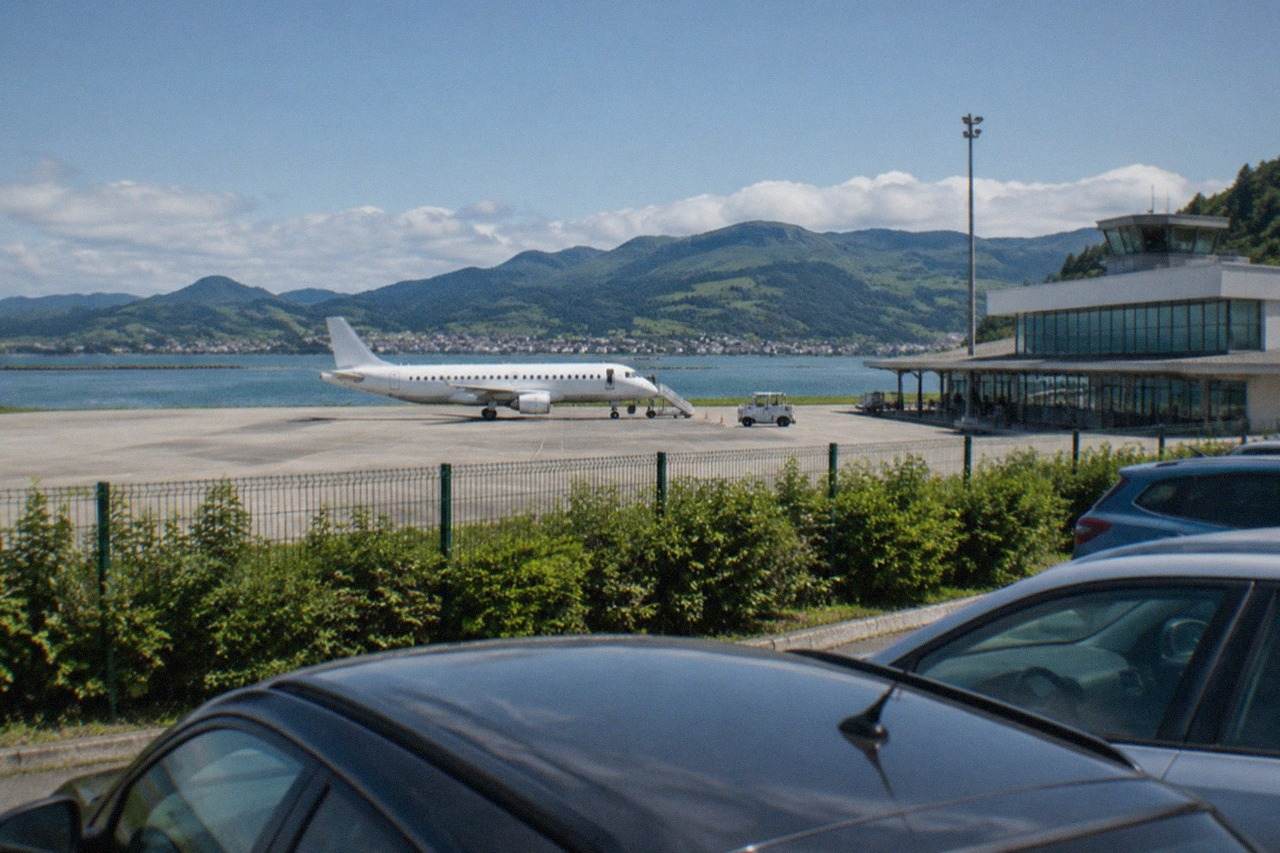
Biarritz Airport is 45 km from San Sebastián, a figure published by the official tourism board on its how-to-arrive page, which also lists Biarritz as one of three airports serving the city and marks it with direct service. The airport sits on the French side of the border in the Basque town of Biarritz, so the journey is a cross-border one between France and Spain. No driving time, taxi fare or bus fare for this specific crossing appears in any official source this site uses.
The tourism board's page is the only official document that puts a number on this route, and it gives the distance without a time. That silence is worth respecting rather than filling with a guess. Border crossings on this coast are short in distance but their duration depends on traffic, season and which road the driver takes, and no operator publishes a scheduled time for the airport-to-city run.
What the tourism board does confirm is the shape of the region. San Sebastián has three airports within a little over 100 km, two of them international, and Biarritz is the closest one that carries a decent network of flights from Paris and other French hubs. The city's own airport at Hondarribia, 20 km away, is small, and Bilbao, 105 km away, is the big one with the widest route map. If you are weighing all three, the comparison page at which airport for San Sebastian breaks the choice down in detail.
The table below shows the tourism board's own figures for all three airports, plus the direct-service status it lists for each.
| Airport | Code | Distance from San Sebastián | Direct service listed by the tourism board |
|---|---|---|---|
| San Sebastián Airport, Hondarribia | EAS | 20 km | Yes, by bus |
| Biarritz | BIQ | 45 km | Yes |
| Bilbao | BIO | 105 km | Yes |
| Vitoria-Gasteiz | VIT | 100 km | No |
Which Airport Should You Fly Into For San Sebastian?
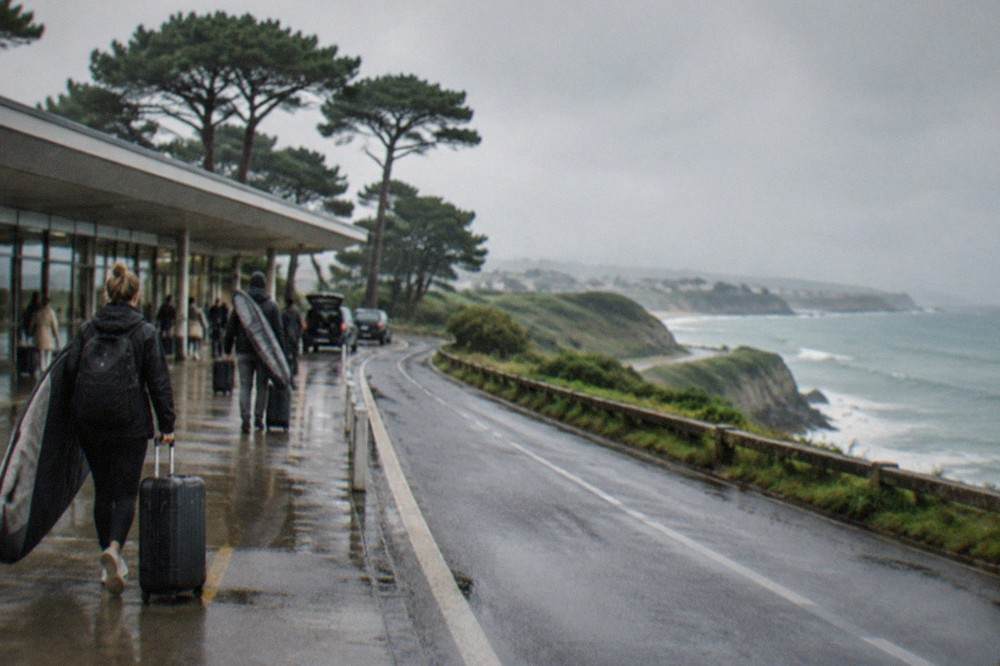
For travellers comparing Biarritz and Bilbao, the choice comes down to flight routes rather than distance: Biarritz is 45 km away and serves mainly French and seasonal routes, while Bilbao is 105 km away with a wider network and a listed coach connection of 17.10 EUR taking about 75 minutes. San Sebastián's own airport at Hondarribia is closest at 20 km but is small. Your origin city usually decides this for you.
The Basque Country spans the border, which is why a French airport serves a Spanish city so naturally. Biarritz Airport works best if you are already in France, flying from Paris, or combining the trip with the French Basque coast. Bilbao works best for wider connections, and the Bilbao airport to San Sebastian route has the most developed public transport of the three, with the Basque Government's page listing a PESA Lurraldebus coach at 17.10 EUR and roughly 75 minutes, hourly on working days in winter and every 30 minutes in July and August. That page carries no date, so treat the fare as listed by the Basque Government and confirm with the operator before relying on it.
San Sebastián Airport at Hondarribia is the sleeper option. It is only 20 km from the centre, and the operator Ekialdebus lists seven bus lines serving it: E20, E23, E25, E27, E28, E29 and E30, with E30 running direct from Donostia to the airport. One warning that matters: the tourism board's page still tells readers that line E21 serves the airport, but the operator says E21 has not stopped there since 1 June 2026, at either stop, to board or to alight. The operator's own notice is the current truth and the tourism board page is stale. The San Sebastian airport guide covers that airport in full.
How Do You Get From Biarritz Airport To San Sebastian?
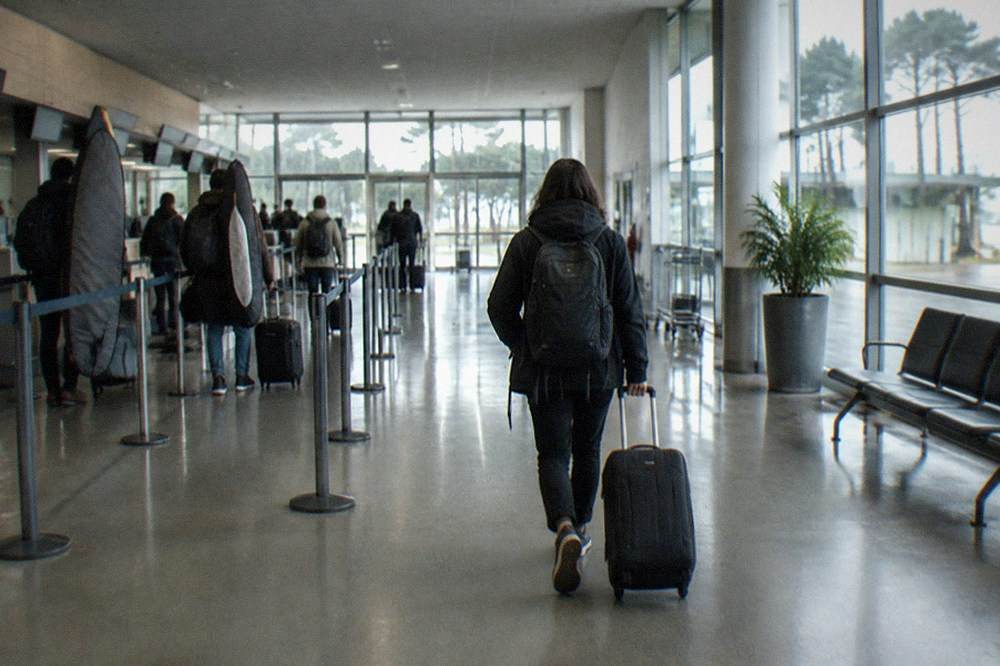
The official record gives no operator, fare or frequency for a direct bus between Biarritz Airport and San Sebastián, so this page states none. The realistic options are a rental car across the border, a taxi or private transfer, or reaching a rail connection on the Spanish side, and each involves the same 45 km of French and Spanish Basque Country. The tourism board's direct-service listing confirms the route exists without publishing its details.
That silence in the sources is the single most useful thing to know about this crossing. Plenty of pages will quote you a bus times and a price for Biarritz Airport to San Sebastián; none of those figures come from an official page this site was able to open and read. What can be said with confidence is the geography: the airport sits just outside Biarritz, the border crossing into Spain at Behobia or Biriatou is a short drive east, and the city appears on the far side of the Bidasoa river.
A rental car gives you the most control and the chance to stop, which on this coast is a real advantage. The road between Biarritz and San Sebastián passes Hendaye, Hondarribia and the estuary at Pasaia, and a car lets you break the transfer into a half-day of sightseeing. The trade-offs are border-weekend traffic in August, and parking in a city built on a bay, which the parking guidance on where is San Sebastian puts in context.
A taxi or private transfer is the simplest option with luggage, and the honest statement is that no official source publishes a fare for this route, so agree the price before you board or book a transfer in advance through your accommodation. The third option is rail, which is where the geography gets interesting, and the next section covers it.
If you would rather not organize the crossing yourself, a booked seat on a guided coach day is the alternative worth a look:
The listings above carry their own prices, ratings and durations, printed from verified data, and each one handles a different slice of the region: the French Basque towns, the cider country inland, and the coastal Camino on foot.
Do You Need A Car From Biarritz Airport?
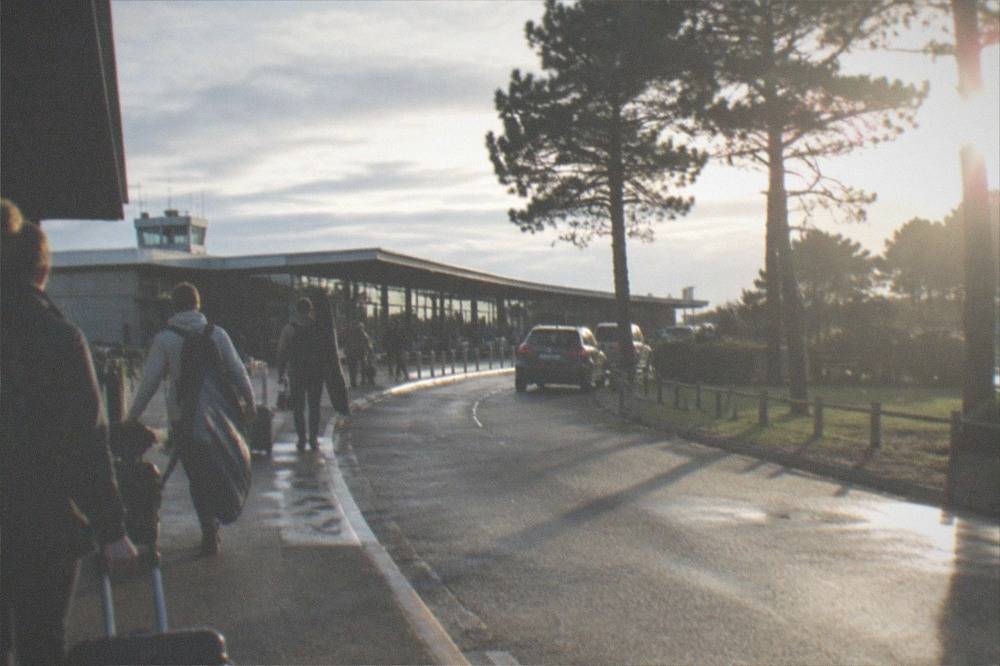
You do not need a car to enjoy San Sebastián once you arrive: the city centre, the three beaches and the Old Town are compact and walkable, the dBus network runs on a 1.95 EUR occasional fare, and the MUGI card covers city buses, Lurraldebus and Euskotren across Gipuzkoa. A car is worth having only if the trip extends to the coast towns or the Rioja, and even then the trains and coaches reach most of them.
The fare system is the reason the city is so easy without a car. The MUGI tariff, published by the Gipuzkoa transport authority, prices journeys by zone jumps: an occasional ticket paid in cash costs 1.95 EUR within the urban zone, a night ticket costs 2.65 EUR, and a MUGI anonymous card drops the urban fare to 0.78 EUR, with personalised cards cheaper still after the first trips of the month. The dBus operator's own fare page carries exactly the same two cash prices, and its GTFS feed confirms them. Cash does not allow free transfers, so a card pays for itself quickly.
The table below shows the MUGI fare structure as published.
| Ticket type | Urban, 0 jumps | 1 jump | 2 jumps | 3 jumps |
|---|---|---|---|---|
| Occasional, cash | 1.95 EUR | 2.90 EUR | 5.40 EUR | 7.90 EUR |
| Night ticket | 2.65 EUR | 3.70 EUR | 6.45 EUR | 8.95 EUR |
| MUGI anonymous card | 0.78 EUR | 1.16 EUR | 2.16 EUR | 3.16 EUR |
| MUGI personalised, trips 1-20 in the month | 0.59 EUR | 0.88 EUR | 1.64 EUR | 2.41 EUR |
So the honest answer on the car is: take one for the crossing if the price beats a transfer, then park it and forget it. The city rewards walking. La Concha beach runs 1,350 m along the bay, Ondarreta 600 m at its west end, and Zurriola 800 m on the surf side, all three sandy, all three with lifeguards from 1 June to 30 September. Between them and the pintxo bars of the Parte Vieja, a car is a liability for anything inside the centre.
Can You Take The Train From The French Side?
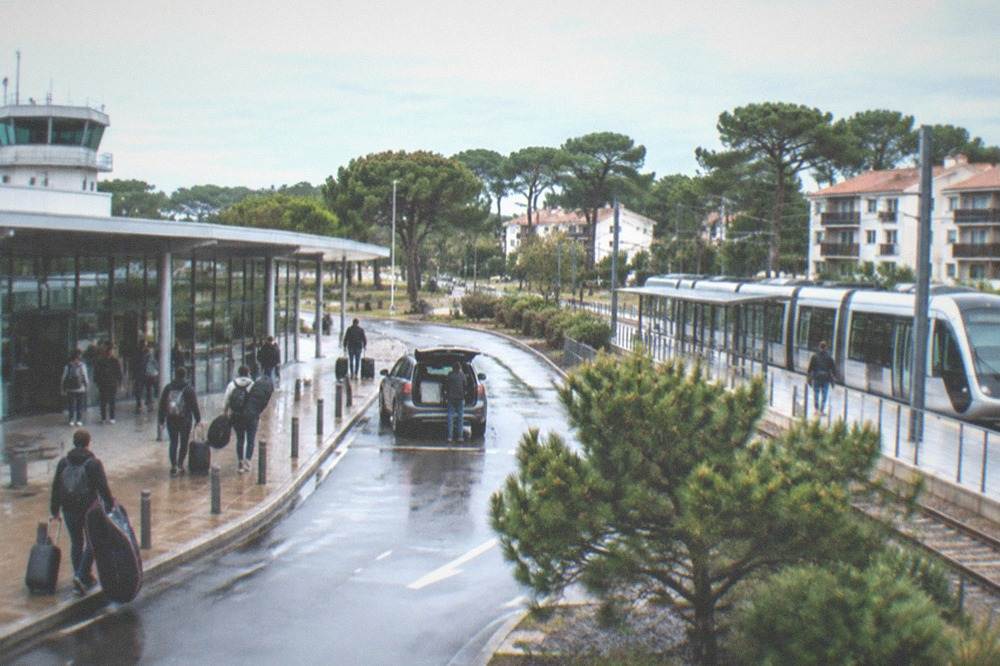
Yes, indirectly: the Euskotren Topo line runs from Hendaia, the French border town on the coast, to Amara-Donostia station in San Sebastián, a journey of 37 to 38 minutes with departures every 30 minutes on the busiest service day, at an occasional fare of 2.90 EUR. The Topo is a cross-border metro-style line, and Hendaia is the Spanish system's reachable stop on the French side.
Those figures come from Euskotren's own timetable data, computed from the operator's published feed, and the 2.90 EUR fare matches the MUGI one-jump occasional price exactly. The catch is the first leg: getting from Biarritz Airport to Hendaia is a French-side journey, and no official source this site read publishes its operator, fare or frequency, so the practical plan is to reach Hendaia by whatever French transport you arrange and let the Topo do the Spanish half.
One thing to know about the Topo if you read about it elsewhere: a new underground section through the city centre has been in the news, with the Basque Government announcing in June 2026 that the civil works are finished, including the station beside La Concha. But no opening date has been published. Amara remains the working terminus, so plan around Amara and ignore any page promising a central underground stop today.
What Should You Do On Your First Day In San Sebastian?
Start on the seafront: La Concha beach, 1,350 m long and 40 m wide on average, is the city's defining space, and the walk from there through the Parte Vieja to the pintxo bars takes an easy afternoon. San Telmo Museoa, at the foot of Monte Urgull, charges 10.00 EUR general admission, 4.00 EUR reduced, and is free for everyone every Tuesday. The bay boat to Santa Clara Island runs a 5 EUR return in high season.
That is a full first day drawn entirely from the venues' own published figures. The council's beach pages give La Concha's dimensions and note that the tide often limits the usable area, so time the walk rather than the swim if you arrive late. The island boat, run by Motoras de la Isla, sails the red line direct to Santa Clara every 30 minutes from 10:00 to 19:00 in high season, which the operator defines as 1 June to 30 September plus Easter and long weekends, with the last boat back at 20:00 in the summer months. On the island, the Hondalea installation by Cristina Iglesias in the lighthouse is free and needs no booking, only the boat fare, and it keeps the same 1 June to 30 September season.
For the evening, the question is pintxos, and the answer is the Old Town. What a pintxo actually is, and how the bar crawl works, is covered in what are pintxos, with the bar-by-bar detail in pintxos in San Sebastian and the shortlist in best pintxos bars. A guided crawl solves the ordering problem on night one, and the listings later on this page print their own verified prices and ratings.
The city's food reputation is not marketing. The MICHELIN Guide Spain 2026 lists 11 stars across 6 restaurants inside the municipality, including two three-star houses, Akelaŕe and Arzak, and the wider province of Gipuzkoa holds 19 stars across 11 restaurants. Martín Berasategui's three stars sit in Lasarte-Oria, a separate municipality, so count it for the province but not the city.
A word on the weather, because it shapes every first day here. AEMET's climate normals for its Igeldo station, the 1981 to 2010 series, record 1,507 mm of rain a year over 141 rain days, and even July, the driest month, averages 86 mm across about 10 rain days. November is the wettest at 169 mm. This is a wet Atlantic city, and the smart first-day plan carries a rain option, which the San Sebastian weather page and the best time to visit guide both break down month by month.
| Month | Mean temperature | Rain mm | Rain days, 1 mm or more |
|---|---|---|---|
| January | 8.5 C | 141 | 13.2 |
| April | 11.3 C | 138 | 13.4 |
| July | 18.9 C | 86 | 9.8 |
| August | 19.5 C | 117 | 10.5 |
| November | 11.3 C | 169 | 13.0 |
Is It Worth Crossing Back To The French Basque Country?
Yes, and arriving through Biarritz makes it almost rude not to: the same three towns most day trips visit, Biarritz, Bayonne and Saint-Jean-de-Luz, sit on your arrival side of the border, and a booked coach day handles all three in one loop with the border, the parking and the driving taken care of. The French Basque coast is a different country's take on the same Basque culture, and it pairs naturally with the city.
The coach excursion listed below is the one this site rates as the related pick for this page, and its listing prints its own price, rating and duration from verified data. For a smaller version, a Biarritz-focused day with a bilingual minibus option also runs, and the Biarritz day trip page covers the town itself.
The comparison between the two cities is a genuine question travellers ask, and the San Sebastian vs Biarritz guide answers it properly, as does the is it better to stay in San Sebastian or Biarritz page. In short: one is a French seaside resort with grand architecture and surf beaches, the other is a Spanish food city wrapped around a bay, and the 45 km between them is exactly why the pairing works.
If the French side tempts you more than once, a second option loops the coast by minibus:
And if the day trips run the other way, toward Spain's own coast, the txakoli country around Getaria makes a contrasting half-day, with hotel pickup included in the listing below.
What Does The Crossing Cost Overall?
The only published figures for the wider journey are these: the Bilbao airport coach is listed at 17.10 EUR by the Basque Government, the Topo from Hendaia costs 2.90 EUR occasional, the city bus is 1.95 EUR cash, and the island boat return is 5 EUR. No official source publishes a Biarritz Airport transfer fare, a taxi fare or a driving time, so budget the crossing from the price a driver or transfer company quotes you, not from a number on a website.
The pattern in that answer is deliberate. Around the crossing itself, the official record is rich on the Spanish side and silent on the French side, and the honest budget reflects that: the unknown is one leg, and everything after it is priced to the cent in published tariffs. The table below gathers every figure on this page that an official source attaches to this journey.
| Leg or service | Published figure | Who publishes it |
|---|---|---|
| Biarritz Airport to San Sebastián distance | 45 km | Official tourism board |
| Topo train, Hendaia to Amara-Donostia | 2.90 EUR occasional, 37-38 minutes | Euskotren timetable data |
| dBus city bus, occasional | 1.95 EUR, night ticket 2.65 EUR | dBus fare page |
| Santa Clara island boat, red line return | 5 EUR, high season | Motoras de la Isla |
| Bilbao airport coach, for comparison | 17.10 EUR, about 75 minutes | Basque Government page, undated |
| Monte Igueldo funicular, return | 5.50 EUR adult | Funicular's own site |
Two practical notes finish the picture. First, the tourist tax: Norma Foral 3/2026 of Gipuzkoa is law, published in June 2026, but it takes effect on 1 January 2027 and no visitor pays it before that date, with at most 6 nights charged per stay and under 18s exempt. Second, entry rules: Spain is in the Schengen area of 29 countries, and the EU's own page states that ETIAS is not in operation and collects no applications, so do not apply for one. Arrivals from Biarritz cross an internal Schengen border in practice, with no routine passport control, though carrying ID is the legal norm on both sides.
Whichever way you close the budget, the booked options below are the ones this site rates for the region around the crossing, and their listings print every price, rating and duration from verified data rather than from this page's keyboard.
Common Questions About Biarritz Airport To San Sebastian
How far is Biarritz Airport from San Sebastian?
Biarritz Airport is 45 km from San Sebastián, Basque Country, Spain, according to the official tourism board, which also lists direct service between the airport and the city. The crossing involves the French-Spanish border.
Is there a direct bus from Biarritz Airport to San Sebastian?
The tourism board lists direct service on this route, but no official page publishes the operator, fare or frequency of a direct Biarritz Airport bus, so this site states none. Arrange the transfer through your accommodation or a transfer company, and confirm the details with whoever runs it.
Which airport is best for San Sebastian?
It depends on your origin. Biarritz, 45 km away, suits French and Paris connections; Bilbao, 105 km away, has the widest route map and a listed 17.10 EUR coach taking about 75 minutes; San Sebastián Airport at Hondarribia, 20 km away, is closest but small. The full comparison is on the which airport guide.
Can you take a train from Biarritz to San Sebastian?
Partly. The Euskotren Topo line runs from Hendaia on the French side to Amara-Donostia in the city, taking 37 to 38 minutes with a 2.90 EUR occasional fare. Reaching Hendaia from Biarritz Airport is a separate French-side journey with no officially published details.
Do you need a car in San Sebastian once you arrive?
No. The centre, the three beaches and the Old Town are walkable, the dBus runs on a 1.95 EUR occasional fare, and the MUGI card covers city buses, Lurraldebus and Euskotren across the province. A car helps mainly for coast towns and wine country beyond the city.
Can you do a day trip from Biarritz to San Sebastian?
Yes, the crossing is short enough that day trips run in both directions, and the question has its own answer page covering the practicalities of doing the French side in a day from the city.
The full picture of the city once you have crossed, from the is San Sebastian worth visiting question through to how many days in San Sebastian you should allow, continues across the rest of San Sebastian Spain Guide, and the master list of everything worth doing sits at things to do in San Sebastian. Arrive through Biarritz, cross the Bidasoa, and the bay does the rest.