Hiking In And Around San Sebastian
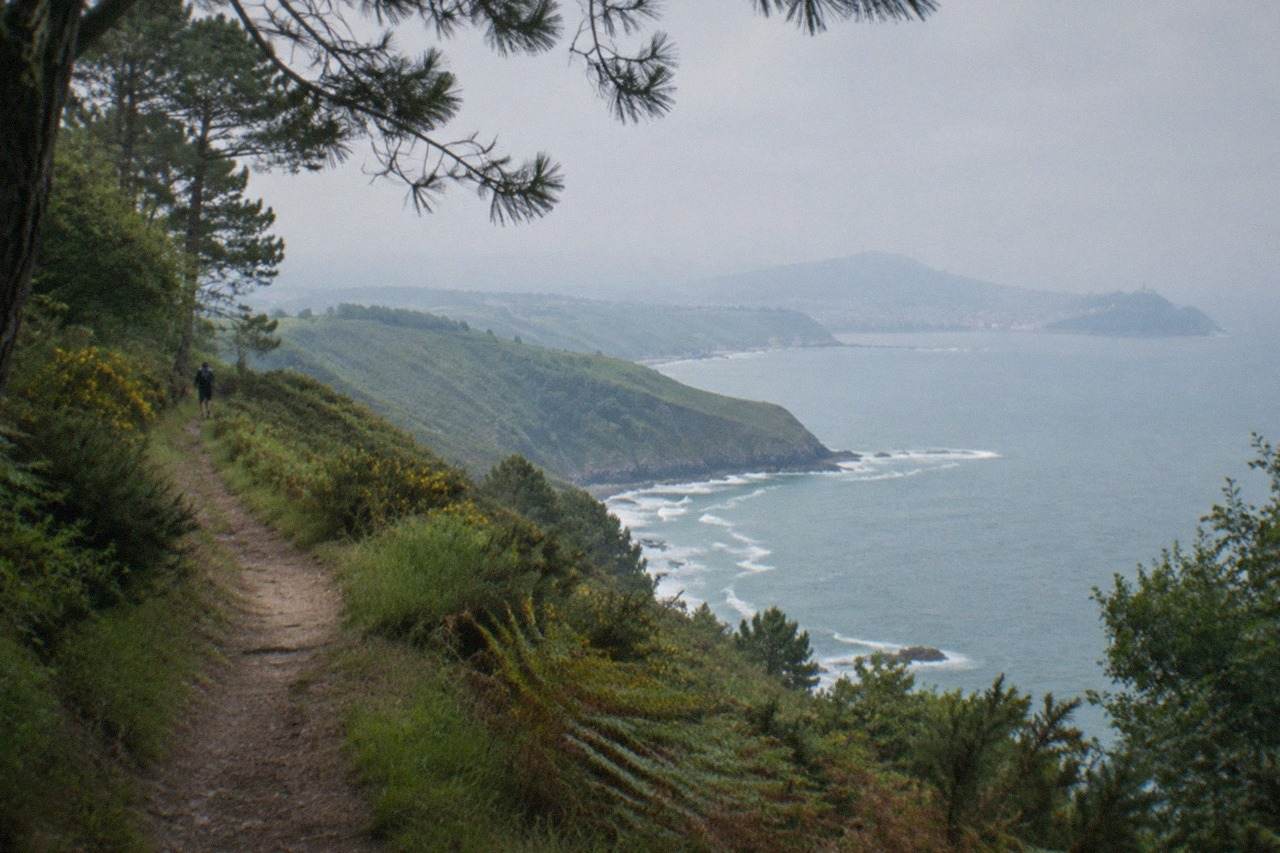
San Sebastián, or Donostia in Basque, is a small Atlantic city where proper hiking trails start within walking distance of the pintxo bars, from the Urgull hill above the old town to the Camino de Santiago route over Monte Ulia.
Short answer
The three hikes you can start on foot from central San Sebastián are Monte Urgull, Monte Igueldo and the Camino del Norte over Monte Ulia. Urgull is open 08:00 to 21:00 in summer and closes at 19:30 in winter, the Igueldo funicular sells no downhill-only ticket, and the Camino stage runs from Pasaia into the city and on towards Orio.
San Sebastián, in the Basque Country of Spain, is one of the few European beach cities where a hiker can leave the front door and be on a marked trail within minutes. The city's Basque name is Donostia, and its official municipal name is Donostia / San Sebastián, and the whole municipality sits wrapped between La Concha bay and green hills that rise straight out of the Atlantic. Urgull guards the eastern end of the bay, Igueldo the western end, and Ulia continues the coastline east towards Pasaia along the coastal branch of the Camino de Santiago. None of this is countryside an hour away by car: the tourism board lists the Camino's second coastal stage as Pasaia to Donostia and its third as Donostia to Orio, which tells you the pilgrim route walks directly through the city. This guide covers what the trails are, when the hills are open, what the weather actually does here, and which guided walks and hikes you can book, with the city's own hills first.
Where Can You Hike Straight From Central San Sebastian?
Three hills sit within walking distance of the city centre, and each one is a genuine hike rather than a stroll: Monte Urgull above the old town, Monte Igueldo at the western end of La Concha, and Monte Ulia, which the Camino de Santiago coastal route crosses on its way east towards Pasaia. All three are free to walk on, and two of them, Urgull and Igueldo, sit directly on the bay, so the sea is in view for most of the climb.
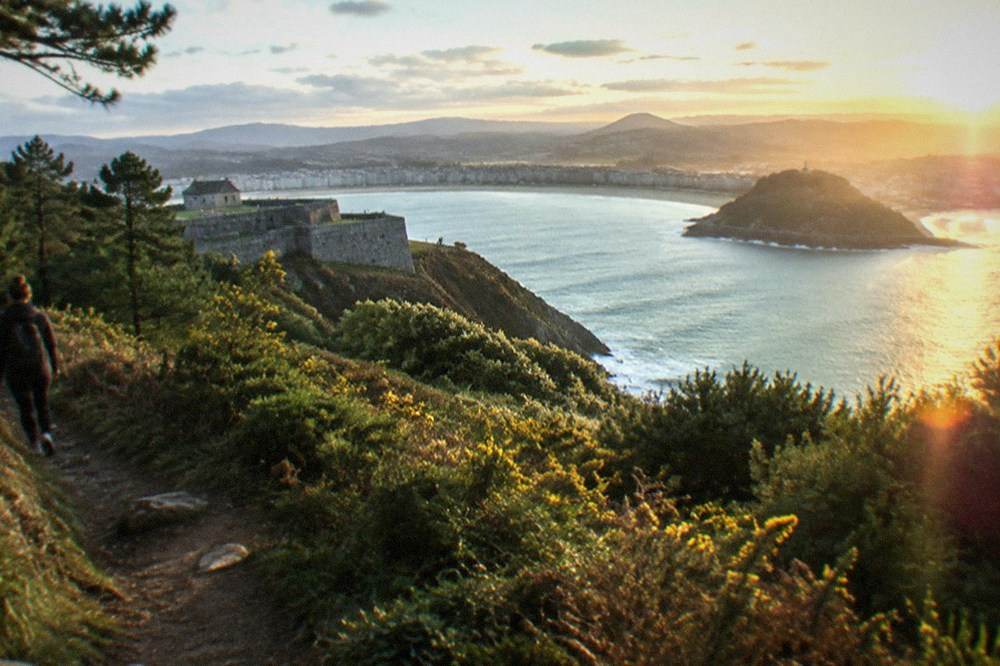
Urgull is the easiest to reach. It rises between the Parte Vieja, the old town, and the mouth of the Urumea river, and its slopes are criss-crossed by paths that climb to the Castillo de la Mota at the summit. The castle holds the Casa de la Historia de Urgull, a small museum run by San Telmo, and the hill's military history, batteries, walls and all, is the reason the paths exist at all. The tourism board's page on the hill describes it as a green lung between the city and the sea.
Igueldo is the western bookend. Its funicular opened on 25 August 1912, which the tourism board calls the oldest funicular in the Basque Country, a rack railway with wooden cars, and at the top the funicular ticket includes entry to the grounds and the viewpoint. The funicular's own site states a return adult fare of 5.50 EUR and a child return of 2.50 EUR, with the child ticket defined as up to 7 years. One point matters for hikers: the site's home page notice says tickets for the downhill funicular journey are not on sale, so the walk up and ride down plan does not work here. If you want the funicular, ride it both ways. If you walk up on foot, entry to the grounds and viewpoint costs 3.00 EUR per person, on foot or by any vehicle.
Ulia is the third and the longest. It is the headland east of the Kursaal, and the Camino de Santiago's coastal route runs over it, which makes it the one hill where the trail keeps going beyond the city limits. The Camino del Norte guide covers the full route through Gipuzkoa.
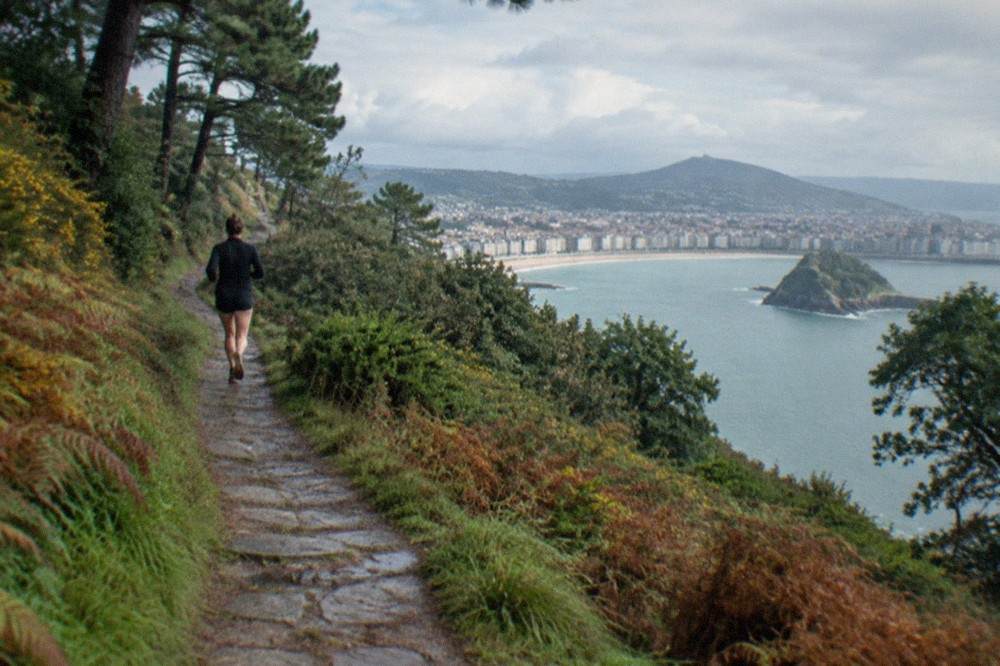
The table below gathers what each of the three hills offers, using only what the official sources state.
| Hill | Where it sits | What the trail gives you | Access facts from the official pages |
|---|---|---|---|
| Monte Urgull | Between the Parte Vieja and the Urumea mouth | Paths to the Castillo de la Mota and the Casa de la Historia de Urgull museum | Open 08:00 to 21:00 from 1 May to 30 September, 08:00 to 19:30 from 1 October to 30 April |
| Monte Igueldo | Western end of La Concha | Grounds, viewpoint and the 1912 funicular | Return funicular 5.50 EUR adult, 2.50 EUR child up to 7, grounds entry on foot 3.00 EUR, no downhill-only ticket sold |
| Monte Ulia | East of the Kursaal, towards Pasaia | Camino de Santiago coastal route over the headland to the Ulia lighthouse | The Camino stage list runs Pasaia to Donostia, then Donostia to Orio |

Is Monte Urgull Open At Night In San Sebastian?
No. Monte Urgull closes every night, and the hours change with the seasons: from 1 May to 30 September the hill is open 08:00 to 21:00, and from 1 October to 30 April it is open 08:00 to 19:30, according to the tourism board's own page for the hill. That makes Urgull a daylight hike in every month of the year, and in winter the gates effectively close more than an hour before the sun does.
Those hours are worth planning around, because Urgull is the hill that visitors tend to underestimate. It sits directly above the Parte Vieja, so it is tempting to wander up after dinner or for a sunset photograph, and in October the 19:30 closing catches people out. The seasonal split is the same rule that governs the beaches' lifeguard season and the island boat's high season: summer in this city runs to 30 September, and everything shifts the day after.
The hill itself is a compact network rather than a single trail. Paths leave from both the bay side and the river side, they cross wooded slopes, and they pass the old batteries before reaching the Castillo de la Mota at the top. The castle houses the Casa de la Historia de Urgull, run by San Telmo, the same museum that operates the main San Telmo Museoa at the foot of the hill. The museum's own pages are the place to check for its hours and any admission, and the hill's paths themselves cost nothing.
| Period | Monte Urgull access hours | What else changes on the same date |
|---|---|---|
| 1 May to 30 September | 08:00 to 21:00 | Beach lifeguards on all three city beaches, island boat high season, Hondalea open on Santa Clara |
| 1 October to 30 April | 08:00 to 19:30 | Lifeguard season over, island boat moves to "consultar salidas", Hondalea closed for the season |
Urgull also earns its place on a hiking itinerary for the view alone: from the summit the whole crescent of La Concha reads as one bay, with Ondarreta and the Peine del Viento at the far end. If you are building a first day in the city, the how many days in San Sebastian guide suggests how a hill walk fits alongside the old town and the beach.
For hikers who want company on the trails, or who want the hills combined with the city's other active options, these are the picks that fit a San Sebastián hiking trip.
Can You Walk The Camino Del Norte Through San Sebastian?
Yes, and the city is a named stage on it. The tourism board's own stage list for the coastal Camino de Santiago through Gipuzkoa runs Irun to Hondarribia to Lezo to Pasaia as stage one, Pasaia to Donostia as stage two, and Donostia to Orio as stage three, so a pilgrim or a day hiker can walk into San Sebastián over Monte Ulia and out of it along the coast towards Orio, Zarautz, Getaria and Zumaia.
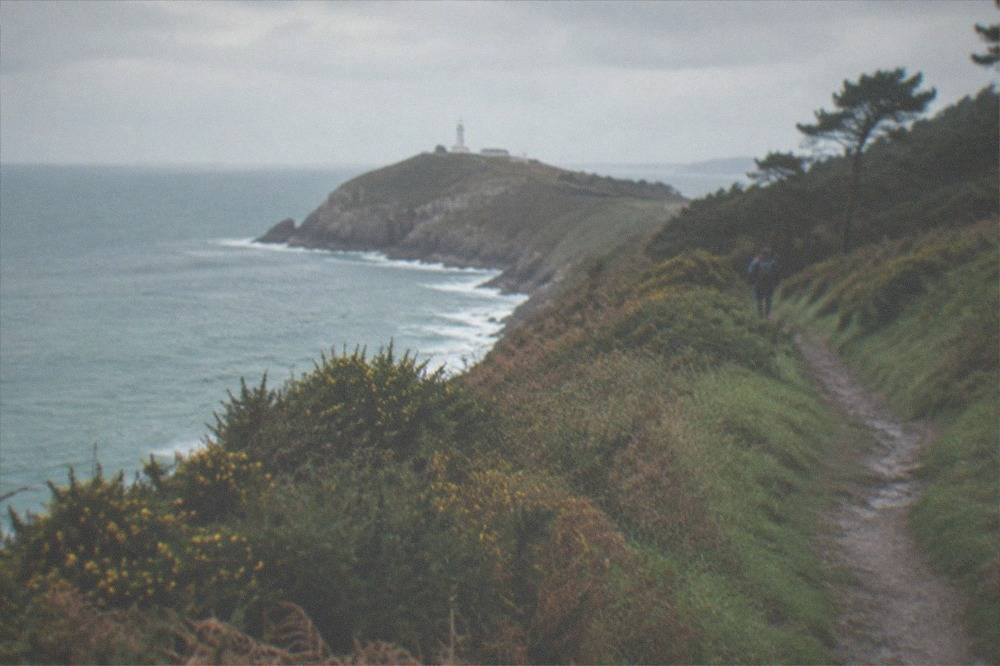
The stage that matters most to a hiker based in the city is the Ulia section. Coming from Pasaia, the route comes over the Ulia headland and descends to the city near the Kursaal, and the tourism board's stage list gives no distances, so the walking time depends entirely on pace and on which end you start from. A guided option exists for exactly this stretch: a Camino de Santiago hike over Monte Ulia that the listing describes as a guided walk on the pilgrim route to the Ulia lighthouse.
The stages after the city follow the Gipuzkoa coast westwards. Stage four runs Orio to Zarautz, stage five runs Zarautz to Getaria to Zumaia, and stage six continues Zumaia to Itziar to Deba. For hikers, this is the great strength of the city's position: the Camino doubles as a coastal trail system, and the towns it links, Zarautz, Getaria and Zumaia, are the same towns on the day trip routes along the coast.
| Camino del Norte stage (tourism board list) | The route as the board names it |
|---|---|
| Stage 1 | Irun, Hondarribia, Lezo, Pasaia |
| Stage 2 | Pasaia to Donostia, over Monte Ulia |
| Stage 3 | Donostia to Orio |
| Stage 4 | Orio to Zarautz |
| Stage 5 | Zarautz, Getaria, Zumaia |
| Stage 6 | Zumaia, Itziar, Deba |
The board's page gives no stage distances, and none is invented here. What the list does tell you, plainly, is that San Sebastián is not a detour on the coastal Camino: it is on the route, and the city's own headland is part of the pilgrim path.
Which Guided Hikes Can You Book From San Sebastian?
Two guided hikes run directly out of the city: a Camino de Santiago hike over Monte Ulia to the Ulia lighthouse, departing from the Kursaal side, and a coastal winery trail walk from Amara station that combines a market tasting with three txakoli tastings at a winery and a train ticket back. Both are small-group, guided options, and both are listed with their prices and ratings on the operator's live listing.
The Ulia hike is the one for pilgrims and hill walkers. The listing describes it as a guided hike on the Camino de Santiago over Monte Ulia to the lighthouse, which makes it the guided version of the stage-two terrain described above. The coastal winery trail walk is the one for hikers who want the coast and the region's white wine in one day: the listing describes a coastal walk, a market tasting, three txakoli tastings at a winery, and a train ticket back to the city.
A third option stretches the definition of a hike but fits the same active day: a surf lesson followed by pintxos, which trades the hills for Zurriola's waves and then eats its reward. Gros, the neighbourhood behind Zurriola, is where that trip starts, and the surfing in San Sebastian guide covers the beach's strong swell, which the council's own beach page flags as the reason surfers gather there.
If a full hike feels like too much for one of your days, the city's flat bay rides are the lighter alternative, and a guided bike tour along the bay covers ground the hills do not. Check availability on the operator's listing if you would rather roll than climb.
When Is The Best Season For Hiking Around San Sebastian?
The driest months are July with 86 mm of rain and June with 90 mm, and the wettest is November with 169 mm, according to AEMET's climate normals for its Igeldo station above the city, so June and September are the honest sweet spots for hiking: cooler than July and August, and outside the peak August crowds. No month here is dry, and no month averages under 86 mm of rain.
That last sentence is the one to hold onto. AEMET's station at Igeldo, 250 m up on Monte Igueldo, records 1,507 mm of rain across 141 rain days in an average year, and even July, the driest month of all, sees rain on about 10 days. This is an Atlantic city, and the numbers say so plainly. The seafront runs slightly warmer than the station values, because the station sits 250 metres up, but the rain pattern is what it is. The wider set of guides lives on San Sebastian Spain Guide.
| Month | Mean temperature C | Rain mm | Days with 1 mm or more of rain | Sun hours |
|---|---|---|---|---|
| January | 8.5 | 141 | 13.2 | 98 |
| February | 8.7 | 110 | 11.6 | 107 |
| March | 10.3 | 113 | 12.4 | 144 |
| April | 11.3 | 138 | 13.4 | 157 |
| May | 14.4 | 120 | 12.2 | 181 |
| June | 16.9 | 90 | 10.6 | 189 |
| July | 18.9 | 86 | 9.8 | 196 |
| August | 19.5 | 117 | 10.5 | 190 |
| September | 18.0 | 111 | 10.1 | 179 |
| October | 15.5 | 159 | 11.8 | 140 |
| November | 11.3 | 169 | 13.0 | 102 |
| December | 9.1 | 151 | 12.4 | 93 |
Two readings of that table matter for hikers. First, August, the busiest month of the year for the city's hotels, is wetter than June, July or September: 117 mm against July's 86. Second, October jumps to 159 mm and the rain days climb back above eleven, so the autumn hiker gets green hills and a real chance of a soaking. The best time to visit guide weighs the same numbers for the city as a whole, and the San Sebastian weather guide goes deeper into what the normals mean.
What Should You Pack For A Hike In San Sebastian?
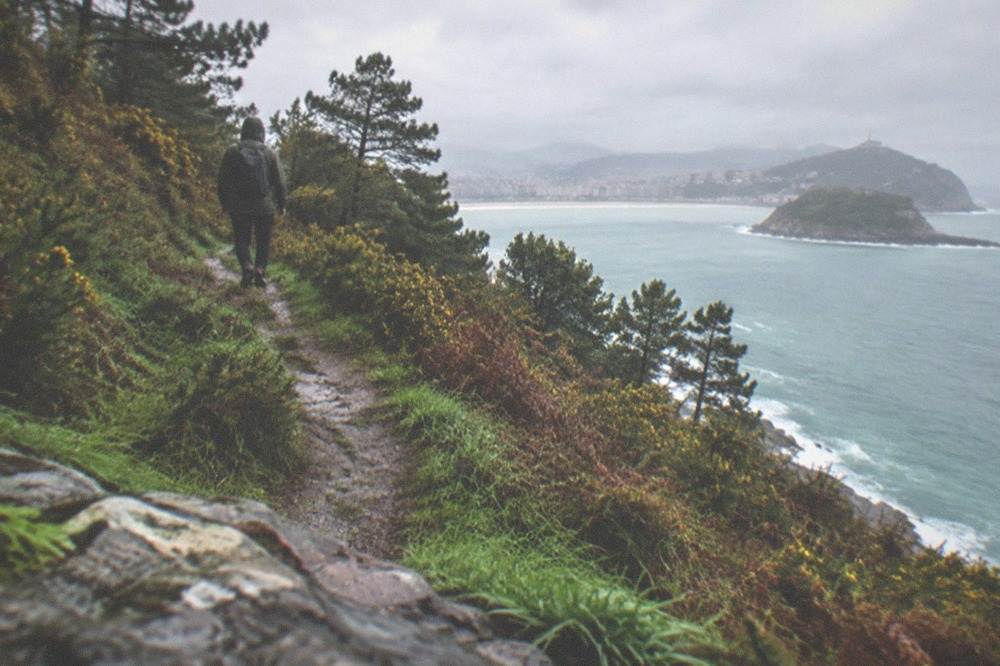
Pack for rain on any hike here, in any month: a waterproof layer is the one non-negotiable item, because the city's own weather record shows rain on roughly 10 days even in the driest month of July, and the hills of Urgull, Igueldo and Ulia offer very little tree cover on their upper slopes. Add layers rather than a single warm coat, because the mean temperature swings from 8.5 C in January to 19.5 C in August.
The layering advice comes straight from the numbers. Mean minimum temperatures sit at 5.9 C in January and February, which makes a winter morning on Urgull genuinely cold, while August's mean maximum of 22.5 C makes the same climb warm work. The Atlantic wind on the exposed ridges, particularly on Ulia where the trail runs along the clifftop, is the reason the waterproof should be a jacket rather than an umbrella.
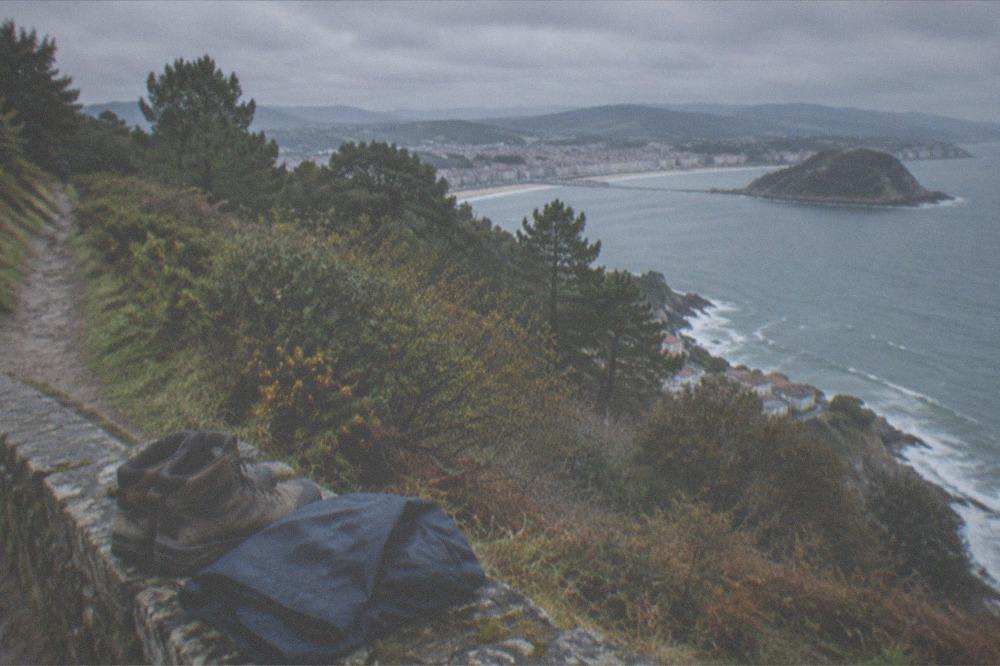
Footwear matters more than many people expect. The paths on Urgull are a mix of cobbled and dirt tracks, the Igueldo walk-up is a road and path combination, and the Ulia stretch of the Camino is coastal trail that turns slick in rain. With 141 rain days in an average year, the ground is rarely bone dry.
A few practical notes round out the packing list. Water is available in the city but not on the hills, so carry what you need. The funicular up Igueldo runs every 15 minutes on its normal schedule, the funicular's own FAQ states, so a one-way ride up and a walk down is possible even though the reverse is not sold. And if the hike ends in the old town, the pintxo bars of the Parte Vieja are the standard reward, which is a plan the hills make easy because Urgull's paths end directly in the old town.
Can You Combine Hiking With The Coast Beyond The City?
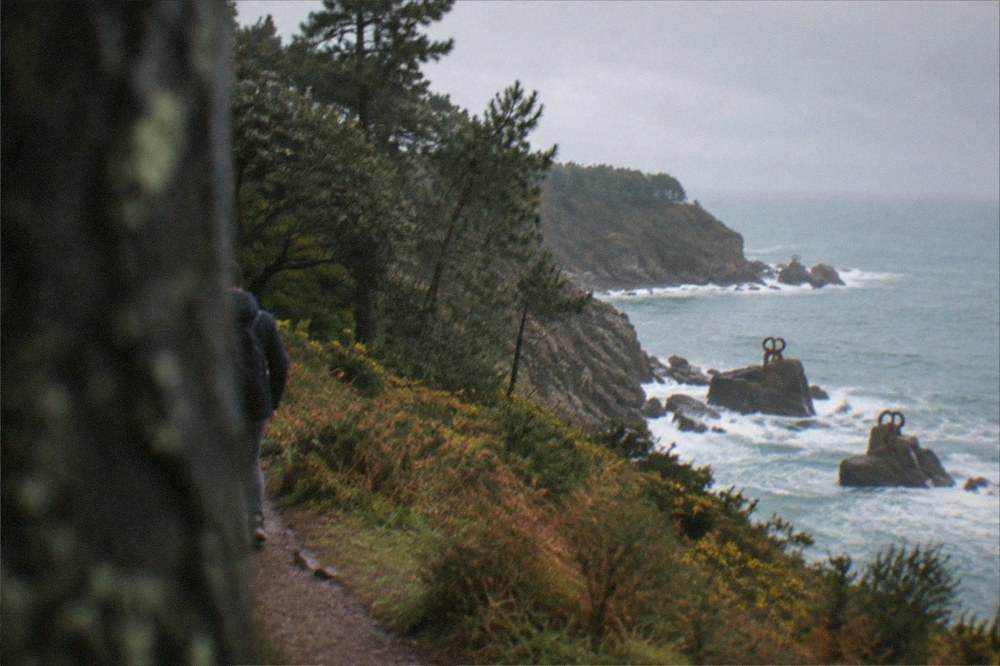
Yes, and the two natural extensions are the coast road to Zarautz, Getaria and Zumaia, which the Camino itself links on stages four and five, and the Peine del Viento at the far end of Ondarreta, which turns a beach walk into a sculpture visit, since the work by Eduardo Chillida and the architect Luis Peña Ganchegui sits anchored to the rocks at the end of Monte Igeldo. Both are reachable without a car for most of the way.
The Peine del Viento is the easy add-on. The council's Ondarreta page notes that the walk to it starts at the beach's west end, and the tourism board's page on the work gives its story: Chillida first made works under that title in 1952 and created the definitive piece in 1977, giving it to the city, and its three steel sculptures each weigh more than nine tonnes. A hiker can walk Ondarreta, reach the plaza, and then decide whether to continue up Igueldo on foot or take the funicular down afterwards, remembering that the funicular ticket includes the grounds and that walking down is always free.
The coast beyond the city is the bigger prize. The Camino stages mean Zarautz, Getaria and Zumaia are connected by a walked route, and a half-day vehicle tour covers all three for hikers who want the scenery without the mileage. Getaria is also the txakoli town, the fishing port where the region's white wine has its home, and the txakoli guide explains what that wine is and how it is poured.
For the eastern side, Pasaia is the destination the Ulia trail points towards, and the coastal walk with winery tastings described earlier follows the same shoreline. The San Sebastian beaches guide covers the city end of that coast, including Zurriola's strong swell, which the council's page flags for surfers rather than swimmers.
How Hard Are The San Sebastian Hills, Really?
All three city hills are half-day walks at most, and none of them is a mountain: Urgull is a short, steep climb from the old town, Igueldo is a longer, gentler ascent along the bay's western end, and Ulia is the only one that behaves like a proper hike, because the Camino route over it continues out of the city towards Pasaia and its trail runs along exposed clifftops. None of the three requires equipment beyond walking shoes and a rain layer.
The honest difficulty ranking, based on what each trail is rather than on figures the sources do not give, runs Ulia first, Igueldo second, Urgull third. Urgull's advantage is that it starts in the middle of town, so a walker is never more than a few minutes from a bar, a bench or the seafront. Igueldo's walk-up is longer but its upper section is the amusement park grounds, which the funicular ticket or the 3.00 EUR grounds entry covers. Ulia is the one where distance and exposure both grow, and it is the only one where a guided option, the Camino hike to the lighthouse, is genuinely useful for route-finding.
Age and fitness barely matter on Urgull and Igueldo. Families walk both, and the San Sebastian with kids angle is well served by the two bayside hills, since a tired child can simply turn back and be on La Concha within minutes. Ulia asks for more commitment, and its eastern sections feel like open country even though the city is behind you.
The funicular fare table below is the one set of hiking-adjacent prices the sources fully support, taken from the Monte Igueldo site's own visit page.
| Monte Igueldo ticket | Adult | Child (up to 7 years) |
|---|---|---|
| Funicular return | 5.50 EUR | 2.50 EUR |
| Funicular single | 4.00 EUR | 1.50 EUR |
| Grounds and viewpoint entry on foot or by vehicle | 3.00 EUR per person | 3.00 EUR per person |
The site adds that the funicular normally runs every 15 minutes, on the hour, quarter past, half past and quarter to, with extra runs when it is busy, and that group discounts do not apply on weekends, holidays or long weekends.
What Else Should A Hiker Know Before Setting Out?
Three season rules govern the hiking year here: Monte Urgull closes at 21:00 until 30 September and at 19:30 from 1 October, the Igueldo funicular does not sell downhill-only tickets and its rides close on rainy days, and the Camino's coastal stages run year-round but the Atlantic rain record, 141 rain days a year, means a dry day is never guaranteed in any month. Plan around the hours, not around the weather forecast alone.
The rainy-day rule for the funicular is worth repeating because it interacts with the rain facts: the Monte Igueldo FAQ states rides close on rainy days, so a wet-afternoon plan of riding up for the view can fail exactly when the view is gone anyway. On those days the city has indoor options instead, and the rainy day guide lists what still works when the hills are streaming.
Getting to the trailheads needs no car. Urgull starts in the old town, Igueldo's funicular base is at the west end of the bay, and Ulia's city access is from the Kursaal side, all of which the getting around guide connects to the city's buses and the MUGI fare system, whose occasional urban ticket is 1.95 EUR in cash.
For the active days that are not hiking days, these are the three picks that pair best with a trail itinerary: a surf lesson and pintxos in Gros, a guided bike lap of the bay, and a small-boat sunset run along the coast east of the city.
The surf-and-pintxos day is the one that shows off the other side of the city's outdoor life, the ocean side, and it is the natural companion to a hill day because it starts and ends in the same Gros neighbourhood where the Ulia trail touches the coast.
Whether the hills come first or the waves do, the structure of a San Sebastián hiking trip stays simple: one hill from the front door, one Camino stage along the coast, and a rain jacket in the bag every single time, because the city's own weather station has already told you how this story usually goes.
Common Questions About Hiking In San Sebastian
Can You Walk Up Monte Igueldo In San Sebastian?
Yes, on foot or by vehicle the grounds and viewpoint entry costs 3.00 EUR per person, and the funicular ride up costs 4.00 EUR single or 5.50 EUR return for an adult. The funicular's own site states that tickets for the downhill journey alone are not on sale, so ride up and walk down works, but walk up and ride down does not.
Is Monte Urgull Open At Night?
No. The tourism board's page gives access hours of 08:00 to 21:00 from 1 May to 30 September and 08:00 to 19:30 from 1 October to 30 April, so the hill closes every night of the year.
Does The Camino De Santiago Pass Through San Sebastian?
Yes. The tourism board's coastal stage list runs Pasaia to Donostia as stage two and Donostia to Orio as stage three, so the pilgrim route crosses the city over Monte Ulia and continues west along the Gipuzkoa coast.
Is San Sebastian Good For Hiking?
Yes, for a city of its size, because three walkable hills, Urgull, Igueldo and Ulia, sit inside or beside the municipality and the Camino del Norte links the city to the coastal towns of Orio, Zarautz, Getaria and Zumaia on foot.
What Is The Driest Month For Hiking In San Sebastian?
July, with an average of 86 mm of rain over about 10 rain days, according to AEMET's normals for its Igeldo station. June, at 90 mm, is close behind, and no month of the year averages less than 86 mm.
Do You Need A Guide To Hike In San Sebastian?
No for Urgull and Igueldo, which are short, signposted and close to the city. A guide helps on the Ulia stretch of the Camino and on the coastal winery trail, and both exist as small-group guided walks bookable from the city, with prices and ratings on the operator's live listing.