Is San Sebastian A Walkable City?
Is San Sebastián a walkable city? A direct answer for the Basque city of Donostia / San Sebastián, with what stays on foot, where the hills bite, and when a bus or boat earns its fare.
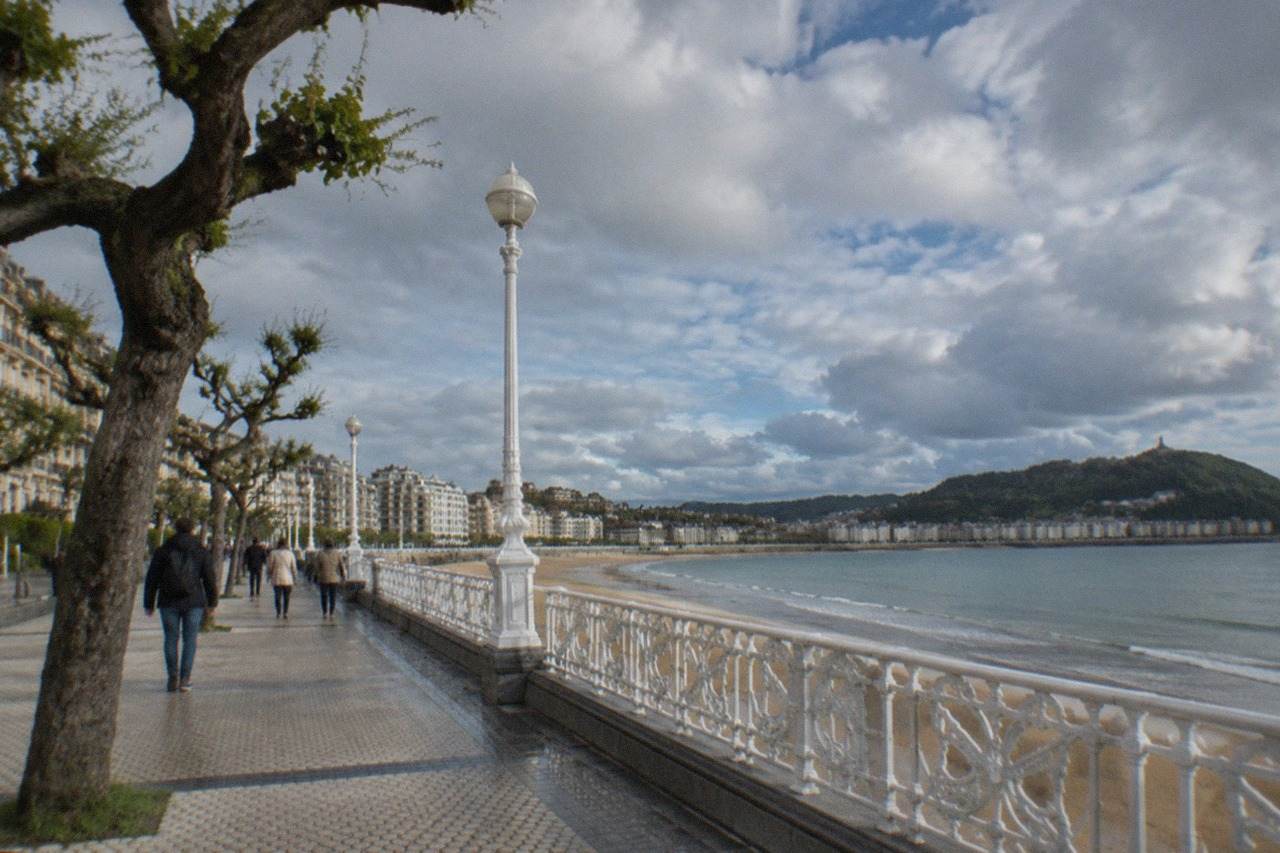
San Sebastián, whose Basque name is Donostia, sits on La Concha bay in Gipuzkoa, in the Basque Country of Spain, and it is one of the most walkable cities a visitor can choose in Europe. The municipal register counted 189,866 residents at 1 January 2025, but the part that matters to a traveller is far smaller: the Old Town, the two main beaches and the Romantic Area all press together around one bay, and the tourism board's own material describes the whole centre as a place built around strolling. The bay promenade alone runs past La Concha, a 1,350 m beach by the council's figures, and Ondarreta continues another 600 m beyond it.
The honest caveat is the weather and the hills. AEMET's Igeldo station, 250 m above the seafront, records 1,507 mm of rain across 141 rain days a year, and even July, the driest month, averages 86 mm, so a walking city here is still a walking city in the rain. Monte Urgull and Monte Igueldo rise at either end of the bay, and both involve real climbing. Neither changes the answer, but both shape how a day on foot actually feels.
Is San Sebastian A Walkable City?
Yes, San Sebastián is a genuinely walkable city: the Old Town, La Concha beach, Ondarreta, Zurriola, the Gros pintxo bars and the Romantic Area all sit within a compact bayside core that a visitor covers on foot, and the council's own beach and neighbourhood pages treat the seafront as a continuous pedestrian space. Monte Urgull and Monte Igueldo add steep climbs at each end of the bay, but neither makes the city car-dependent. Walking is the normal way to see it.
The geography does most of the work. La Concha's 1,350 m of sand, Ondarreta's 600 m and Zurriola's 800 m frame three sides of a low, flat centre, and the streets between them, the Parte Vieja, the Centro and Gros, are a dense grid that predates the car. The council's beach pages describe the promenade as a single continuous space, and the Peine del Viento, Eduardo Chillida's three steel sculptures from 1977, stands at the west end of Ondarreta, reachable on foot along the water.
What that means practically is that a visitor who books a room anywhere in the centre rarely needs transport at all. The Kursaal congress centre, inaugurated in 1999 on the east side of the Urumea river, the Basilica of Santa María del Coro in the Old Town and the Buen Pastor Cathedral in the Romantic Area are all inside the same walkable ring, and the bridges between them are short crossings.
Where Does Walking Stop Working In San Sebastian?
Walking in San Sebastián stops being the easy option in three places: the climb up Monte Urgull, the climb up Monte Igueldo, and any trip beyond the city to places like Getaria, Hondarribia or Bilbao. Monte Urgull's own access hours, 08:00 to 21:00 from May to September and 08:00 to 19:30 from October to April, signal a proper hill rather than a stroll, and Monte Igueldo's funicular exists because the slope defeats most walkers.
Day trips out of the city need a bus, a train or a tour.
Monte Urgull is the gentler of the two hills and rewards the climb with the Castillo de la Mota at the top, but the tourism board's page for the hill treats it as a timed, closed-at-night park, not a street. Monte Igueldo is steeper, and the funicular's own site sells a return adult ticket at 5.50 EUR, with entry to the grounds at the top included in the fare; the site also states that downhill-only funicular tickets are not on sale, so the walk-up-and-ride-down plan does not exist. Anyone arriving by road pays 3.00 EUR per person to enter the grounds and viewpoint.
The table below shows where the flat city ends.
| Destination | On foot from the centre | What the pack says |
|---|---|---|
| La Concha beach | Flat promenade the whole way | 1,350 m long, 40 m mean width |
| Ondarreta beach | Flat promenade, continues west | 600 m long, 100 m mean width |
| Zurriola beach | Flat, across the Urumea bridges | 800 m long, strong swell per the council |
| Monte Urgull | Steep path, timed access | 08:00 to 21:00 May to September, to 19:30 October to April |
| Monte Igueldo | Steep hill or funicular | Funicular every 15 minutes, return 5.50 EUR |
| Santa Clara island | Not walkable | Boat only, 5 EUR return in high season |
Beyond the city, the coastal Camino de Santiago route passes through, with the tourism board listing Pasaia to Donostia and Donostia to Orio as consecutive stages, but the board publishes no stage distances, and a Camino stage is a hike rather than a city walk. For the fishing towns and the Rioja region, the bus station is the honest answer, and a guided day trip handles the driving.
Do You Need Public Transport In San Sebastian?
The central sights of San Sebastián can be reached without public transport, but the dBus network exists for the moments the legs give out: a single ticket paid in cash to the driver costs 1.95 EUR, or 2.65 EUR on the special night tariff, and the MUGI card system covers city buses, Lurraldebus regional lines and the Euskotren Topo under one fare. Cash tickets do not allow free transfers, the dBus fare page states, so a card matters for anyone riding more than once.
The MUGI tariff gives the anonymous card fare as 0.78 EUR for an urban trip, against 1.95 EUR for the occasional cash ticket, and the same card works on the Euskotren Topo line out of Amara. The Topo is the useful one for walkers who want a change of scene: the Euskotren timetable data shows Amara-Donostia to Hendaia across the French border taking 37 to 38 minutes, with departures roughly every 30 minutes on the busiest service day, and the occasional fare for that journey is 2.90 EUR.
One thing not to plan around is the new underground Topo section through the city centre. The Basque Government announced in June 2026 that the civil works, including the station beside La Concha, are finished, but no opening date has been published, and Amara remains the working terminus. A visitor who hears that San Sebastián has an underground should not build an itinerary on it.
For the airport at Hondarribia, the operator lists lines E20, E23, E25, E27, E28, E29 and E30 as airport services, with E30 the direct city-to-airport line. Line E21 has not stopped at the airport since 1 June 2026, whatever an older tourism page may still say.
Which San Sebastian Neighbourhoods Are Best On Foot?
The Parte Vieja, Centro and Gros are the three San Sebastián neighbourhoods that exist for walkers: the Parte Vieja packs its pintxo bars into narrow streets around the Plaza de la Constitución, Centro carries the Belle Époque shopping streets and the Buen Pastor Cathedral, and Gros sits across the river beside Zurriola beach, where the council notes strong swell for surfers. Antiguo, beyond Ondarreta, is also flat and promenade-linked, while Amara sits back from the bay and leans on the station and buses.
The Parte Vieja, the Old Town, is where the walking pays off fastest, because the bars are the attraction and they stand shoulder to shoulder. Pintxo culture is built for movement between them: the habit is a bar, a small dish, a drink, then the next bar, and the tourism board's gastronomy pages treat the crawl as the city's signature evening. Anyone wanting the structure of that crawl without guessing at bars can follow a guided route; the premium pintxo tour with reserved seats and a visit to Mercado de la Bretxa covers the Old Town and the market on foot, and there is more on that approach in what to eat in San Sebastián.
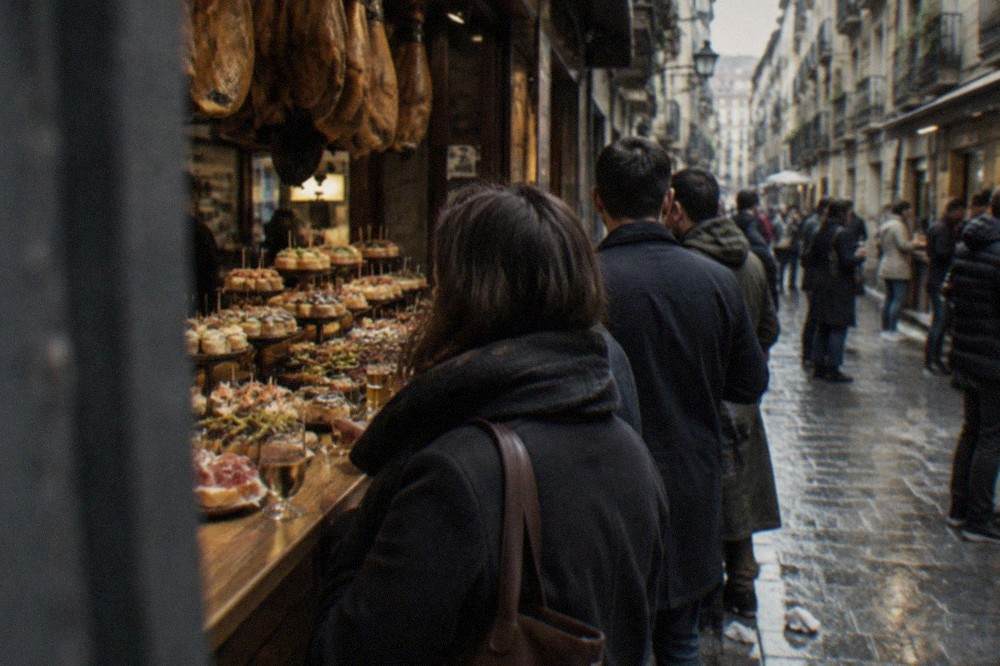
Gros deserves its own evening: the streets behind Zurriola hold a younger bar scene, and the beach itself is the city's surf beach, remodelled in 1994 per the council page. Lifeguards patrol all three beaches from 1 June to 30 September, 10:00 to 20:00 from mid-June to mid-September, so the swimming season and the walking season overlap neatly.
Is San Sebastian Walkable For A Full Trip Without A Car?
Yes, a full trip to San Sebastián works without a car, and a car mostly works against the visitor: the centre is flat and compact, the buses and the Topo train cover the edges, and the popular day trips to Bilbao, Biarritz or the Gipuzkoa coast all run on scheduled coaches or guided tours from the city. Parking is a known friction point in a city built before the automobile, and the surrounding towns are separate municipalities reached by bus, train or tour rather than by a walk.
Four days is a comfortable span for a car-free visit, a question this site covers separately in is four days in San Sebastián too much. The pattern that fits the city is mornings on the flat core, one hill each side of the bay spread across two days, and the boat to Santa Clara island for a view of it all from the water. The eco-catamaran lap of the bay with an audio guide suits that last role, and it leaves from the harbour in the middle of the walking zone.
The rain does not end the walkability, it just changes the equipment. AEMET's normals for the Igeldo station put rain on 13.2 days in January and 9.8 in July, so the difference between the wettest and driest month is a matter of degree, not of kind. A rain layer and a spare pair of shoes are the honest packing advice for a city whose residents walk in all of it.
Common Questions About Walking In San Sebastian
Is San Sebastian A Walkable City?
Yes. The Old Town, the three beaches, Gros and the Romantic Area form a compact, mostly flat core around La Concha bay, so there is rarely any need for transport inside the city. Only the two hills and trips beyond the city break that rule.
Can you walk everywhere in San Sebastian without a car?
Inside the city, yes, with the exception of Monte Igueldo's steep slope, where the funicular runs every 15 minutes, and Santa Clara island, which is boat-only. Day trips to Bilbao, Biarritz or the coast towns need a coach, a train or a tour.
Is the Old Town of San Sebastian easy to walk?
It is one of the easiest walking districts in Spain: narrow, flat streets of pintxo bars around the Plaza de la Constitución, all within a few minutes of the bay promenade. Its density is the reason the pintxo crawl exists.
Does rain make San Sebastian hard to walk in?
No, but it makes it wet. AEMET's Igeldo station records rain on about 10 days even in the driest month, and 141 rain days a year, so rainwear matters more than in most Spanish cities.
Do you need a bus pass in San Sebastian?
Not for the centre. For the edges, a MUGI card charges 0.78 EUR for an urban trip against the 1.95 EUR cash fare, and the same card works on the Euskotren Topo to Hendaia, a 37 to 38 minute ride from Amara.
A final word on scale: the funicular that solves Monte Igueldo's slope opened in 1912, which tells you how long this city has been organised around people moving on foot, and the San Sebastian Spain Guide covers every district of it the same way, one walkable neighbourhood at a time.