Where Anthony Bourdain Ate In San Sebastian
Anthony Bourdain put San Sebastián, in the Basque Country of Spain, on the map for a generation of eaters. This guide follows the food culture he celebrated, from Old Town pintxo bars to the highest tables in the MICHELIN Guide Spain 2026.
Short answer
Bourdain's eating in San Sebastián centred on the Old Town pintxo bars of the Parte Vieja and the city's serious restaurant tables. His televised trips to the Basque Country turned the city's pintxo culture, its cider houses and its Michelin constellation into a global food pilgrimage, and the places that drew him are still the backbone of any eating visit today.
San Sebastián, the Basque city on La Concha bay whose official name is Donostia / San Sebastián, has been a food destination for longer than most, but it was Anthony Bourdain's televised eating trips through the Basque Country that turned it into a bucket-list city for an international audience. He came for a food culture that operates on two levels at once: the standing-room pintxo bars of the Old Town, where dinner is eaten one skewer and one small glass at a time, and a constellation of high-end restaurants that holds 11 stars across 6 restaurants inside the city in the MICHELIN Guide Spain 2026.
This page walks the city Bourdain celebrated, the way a hungry visitor would actually eat it. It covers where his eating was concentrated, how a pintxo crawl works, the dishes the city is famous for, the starred tables of the current Michelin edition, and how to build the same kind of eating day with a guide. The basics of the city itself are covered in where San Sebastian is and how to get around, and this site, San Sebastian Spain Guide, tells the story of the city's two names on the Donostia or San Sebastián page.
Where Did Anthony Bourdain Eat San Sebastián?
Bourdain's eating in San Sebastián was concentrated in the Parte Vieja, the Old Town, where the pintxo bars line the narrow streets around Plaza de la Constitución, and in the city's serious restaurant tables, from the Michelin-starred houses to the grill rooms serving txuleta, the aged Basque rib steak. His televised trips through the Basque Country showed both worlds: the casual crawl from bar to bar, and the temple-level cooking that put the city on every serious eater's list.
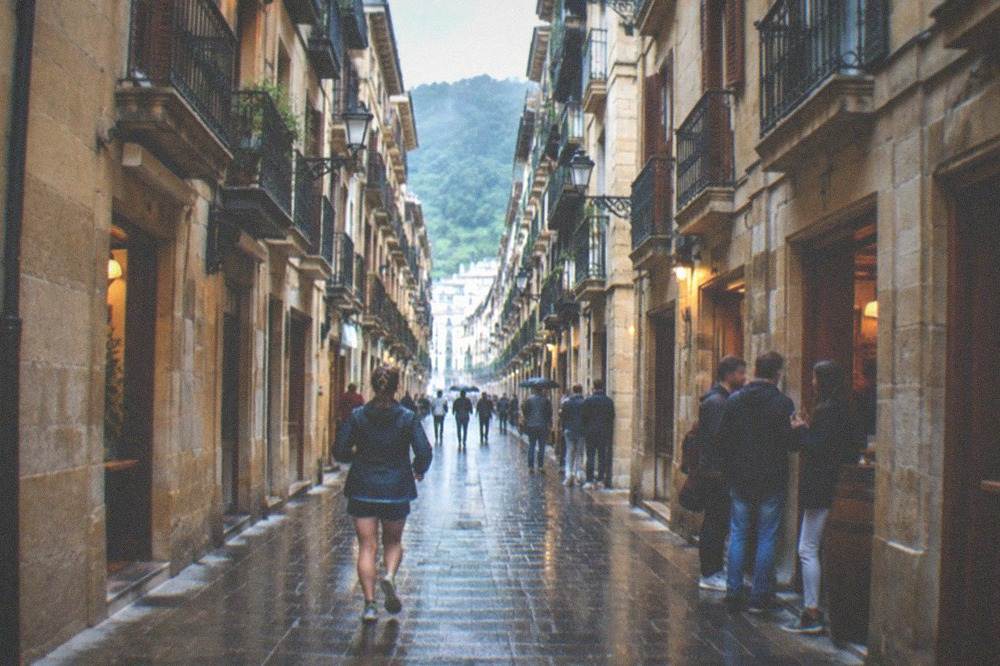
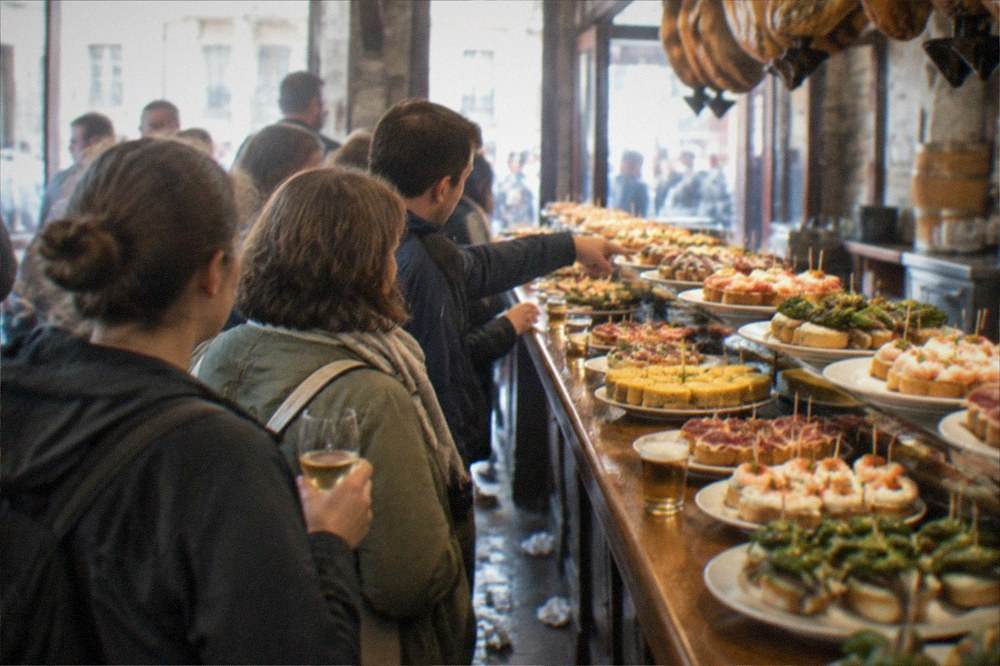
The Old Town is small enough that a crawl is measured in steps, not rides. The bars there work on a simple principle: each house specialises in a handful of pintxos, the small portions served on bread or skewered, and the custom is to eat one or two at a bar, drink the small glass of wine, txakoli or cider that goes with them, and move on. Bourdain's programmes presented exactly this rhythm, and it remains the single best way to eat the neighbourhood. The customs, the vocabulary and the bar-by-bar logic are laid out in the guide to pintxos in San Sebastián, and the individual houses worth building a crawl around are profiled in the best pintxo bars guide.
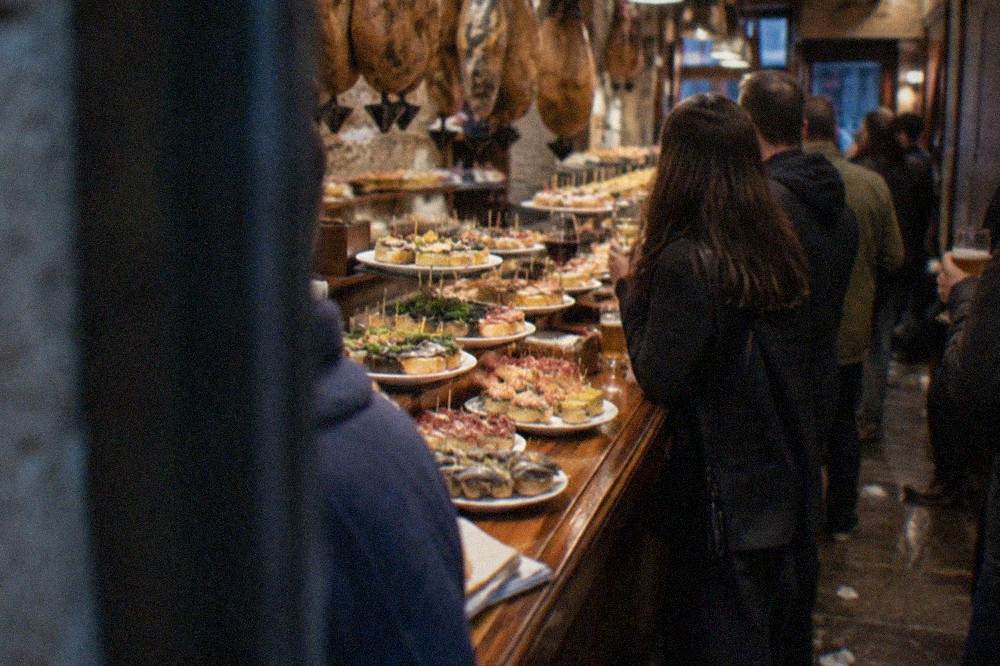
The high end is the other half of the story. The city's most famous tables, Arzak and Akelaŕe, both hold three stars in the MICHELIN Guide Spain 2026, and the full picture of who holds what is on the Michelin restaurants page. Bourdain's affection for the Basque Country was never only about the stars, though. It was about a place where a world-class meal and a two-euro-standing tradition coexist within a fifteen-minute walk of each other, and where nobody thinks that is strange.
Why Did Bourdain Rate San Sebastián So Highly?
Bourdain rated San Sebastián highly because the city packs an unusual density of eating into a small, walkable frame: a beach city of 189,866 residents that holds 11 Michelin stars across 6 restaurants inside the municipality in the MICHELIN Guide Spain 2026, plus a cider-house tradition, a txakoli wine country on its coast, and a bar culture where the pintxo is a daily institution rather than a tourist product.
The numbers explain part of the pull. The municipal register recorded 189,866 residents at 1 January 2025, which makes the star density per capita remarkable by any standard. But the deeper reason a food writer responds to this city is cultural. Eating here is not a special occasion, it is the ordinary structure of an evening. The pintxo crawl, the txotx cider ritual, the grilled txuleta, the cheesecake that has been copied on every continent: these are local habits first and exports second.
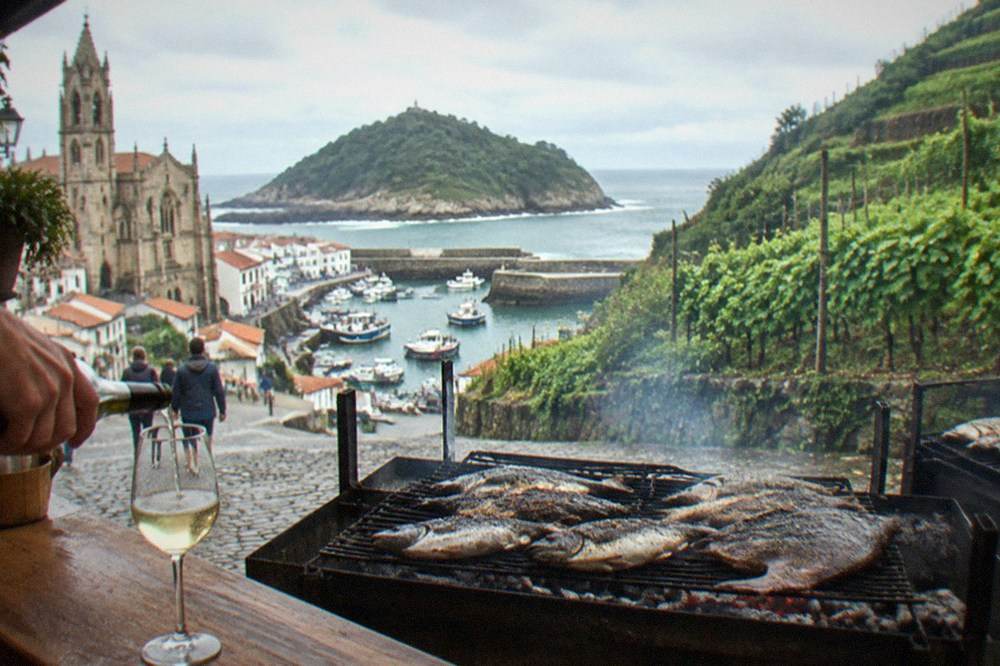
The city also sits in a wider food region. The province of Gipuzkoa holds 19 stars across 11 restaurants in the same 2026 edition, including Elkano in Getaria, the grill house whose whole turbot and anchovies are pilgrimage food in their own right. Getaria is also txakoli country, the local white wine, and the coastal towns around the city each carry their own speciality. A full accounting of that landscape is in the guide to what to eat in San Sebastián and in the day trips from San Sebastian overview.
What Is A Pintxo Crawl And How Does Ordering Work?
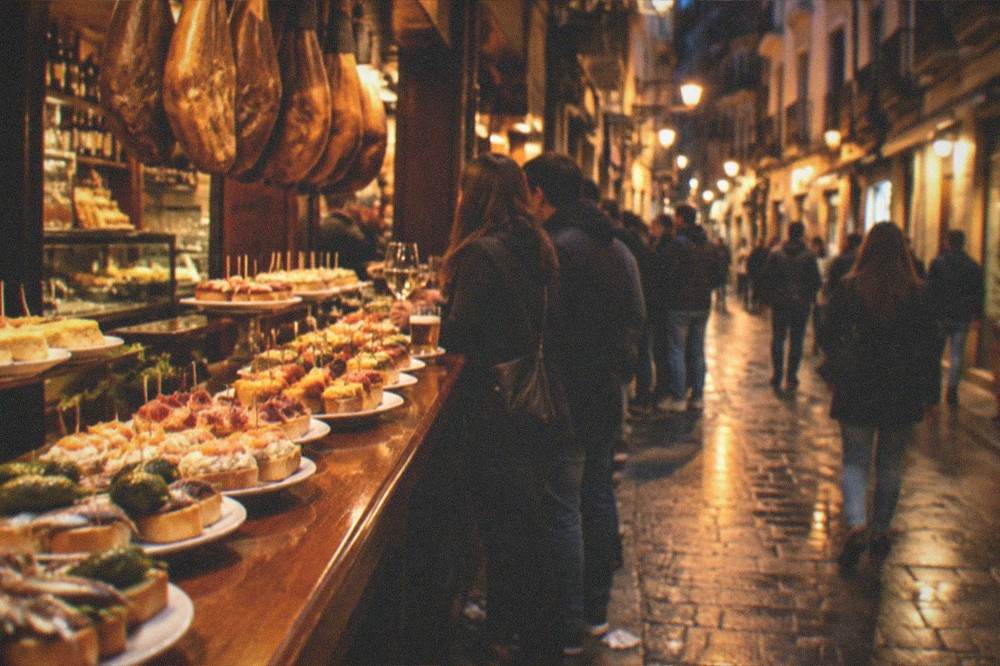
A pintxo crawl is a walk through several bars in one evening, eating one or two small portions at each counter rather than a full meal in one place. Ordering works at the bar: you point at what you want from the display, or ask for the house speciality, pay as you go or settle at the end, and drink whatever the bar pours that day, most often txakoli, cider, beer or a small pour of Rioja. Nobody sits down for the first stop.
The crawl is the part of the food culture visitors find most foreign on day one and most natural by day three. A few working terms cover almost every situation, and the table below collects the ones that actually come up at a bar counter.
| Term | What it means at the counter |
|---|---|
| Pintxo | A small portion, on bread or skewered, eaten standing at the bar |
| Banderilla | A skewered pintxo taken straight from the tray on the bar top |
| Txikito | A small pour of wine, the standard drinking unit of a crawl |
| Zurito | A small beer, roughly a third of a pint |
| Txakoli | The local white wine, traditionally poured from a height |
| Sagardoa | Basque cider, the drink of the cider houses |
| Ración | A larger plate to share, ordered when a crawl turns into a sit-down |
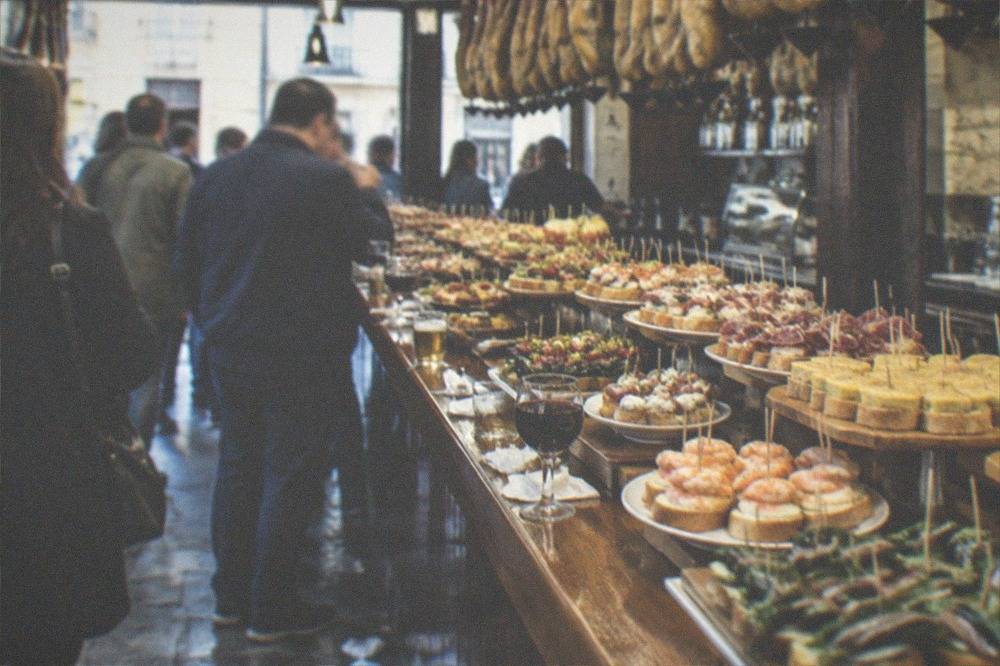
The Old Town is the classic ground, but it is not the only one. Gros, east of the river, has its own bar strip with a younger, local-heavy crowd, and the Centro Romántico holds the more formal restaurant rooms. For visitors who want the crawl decoded by someone who knows which bar does which speciality, a shared crawl with a local guide is the shortcut: the pintxos, drinks and tapas tour with a local style of walk covers the customs and the drinks in one evening, and Check availability for the shared version before committing to a night of solo bar-hopping.
The timing question, when locals actually eat, is a whole subject of its own, and the answer page on pintxo times in San Sebastián covers it in detail. The short version for planning: the evening crawl is a late activity, and the bars are not dinner theatres, they are dinner.
What Are The Michelin Tables Inside San Sebastián?
Inside the municipality, the MICHELIN Guide Spain 2026 lists 6 restaurants holding 11 stars: Akelaŕe with 3, Arzak with 3, Amelia by Paulo Airaudo with 2, and iBAi by Paulo Airaudo, Itzuli and Kokotxa with 1 each. Itzuli is new to the 2026 edition. Martín Berasategui, also a 3-star house, sits in Lasarte-Oria, a separate municipality outside the city, and must not be counted among the city's tables.
The star map matters to a Bourdain-style visit because his programmes treated the city's top tables as part of the same story as its bars. The full list for the province, with the out-of-town houses, is on the Michelin restaurants page, and the question of whether Arzak is worth it has its own answer page. The table below gives the city-level picture of the current edition.
| Stars | Restaurant | Note |
|---|---|---|
| 3 | Akelaŕe | City address, inside the municipality |
| 3 | Arzak | City address, inside the municipality |
| 2 | Amelia by Paulo Airaudo | City address, inside the municipality |
| 1 | iBAi by Paulo Airaudo | City address, inside the municipality |
| 1 | Itzuli | New in the 2026 edition |
| 1 | Kokotxa | City address, inside the municipality |
The 2027 edition is announced on 24 November 2026 in Huesca, so every figure in that table is tied to the 2026 edition by name and expires that day. Booking is the practical constraint at this level: the starred rooms fill weeks ahead in summer, and the whole question of whether San Sebastian is expensive to eat out is worth reading before setting a budget that includes a starred dinner.
Which Dishes Did Bourdain's San Sebastián Become Famous For?
The dishes that define San Sebastián's tables are the gilda, the pintxo of anchovy, guindilla pepper and olive; the txuleta, a thick aged rib steak cooked over wood; the burnt Basque cheesecake; and the whole grilled fish and anchovy tradition of the coastal houses. Each of these has a story, a correct way to be eaten, and a place in the city's daily eating, and each was part of what Bourdain showed the world about Basque food culture.
The gilda is the crawl's opening move, a skewer named after a film character and built from three ingredients that need nothing added. The txuleta is the cider-house centrepiece, a steak brought to the table in slabs and eaten off shared boards. The cheesecake, the runny-centred, caramelised-top tart created at La Viña in the Old Town, has become the city's single most copied dish worldwide, and its full history is told in the San Sebastian cheesecake guide. The steak gets the same treatment in the txuleta steak guide.
| Dish | What it is | How it is eaten |
|---|---|---|
| Gilda | Anchovy, guindilla pepper and green olive on a skewer | Straight from the bar tray, one bite |
| Txuleta | Thick-cut aged rib steak, charred over wood | Shared off a board, cider-house style |
| Basque cheesecake | Burnt-topped, soft-centred tart baked without a crust | A spoon, straight through the middle |
| Txakoli with fish | Young local white wine, classically poured high and into a flat glass | Alongside seafood and white fish |
| Salt-cured anchovies | The coastal specialty, filleted and served simply | As a pintxo or a small plate |
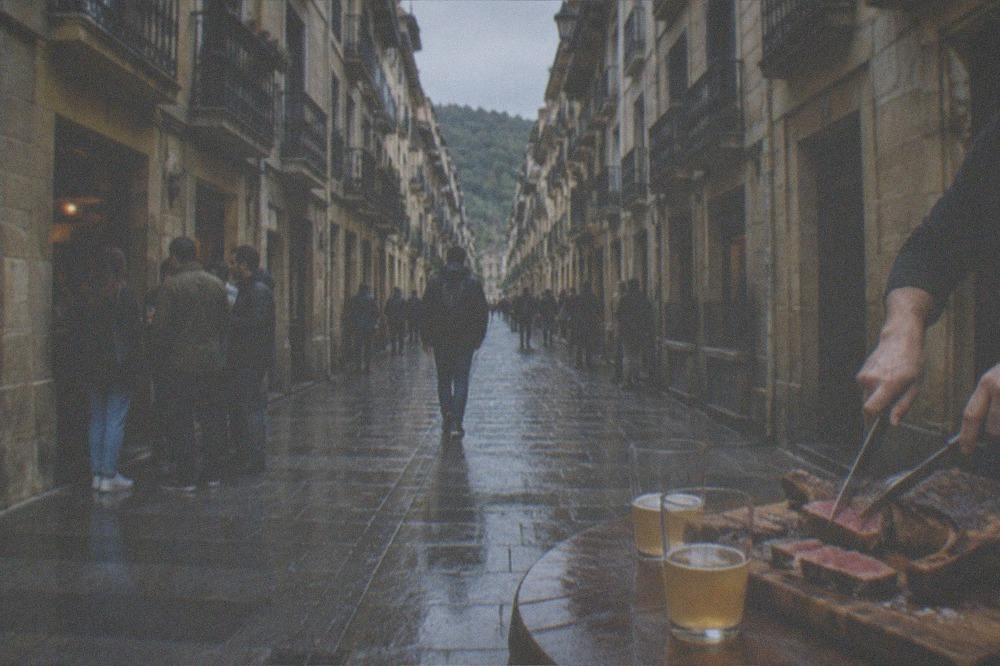
The cider-house meal is its own institution, and the tourism board describes the txotx season as running from the middle of January to the end of April. In season, the ritual is fixed: standing around the barrel, the txotx, as the cider is poured straight from the vat, then a seated meal of cod omelette, fried cod, txuleta and cheese, with cider drunk straight from the vat between courses. The full custom is unpacked in the cider houses guide, and a guided version with transport and the meal included is worth considering since the traditional houses sit outside the city centre, in Astigarraga and the surrounding countryside.
Can You Eat Like Bourdain On A Guided Tour?
Yes, and for many visitors it is the most efficient first move: a guided pintxo crawl covers the Old Town bars with the ordering customs and the drinks handled, a cooking class turns the market and the kitchen into the lesson, and a cider-house or farmhouse day trip reaches the traditions outside the city.
The shared pintxo tour with a local, the cooking class with wine and cider tasting, and the farmhouse and cider-house day with a meal are the three formats that map most closely onto the eating Bourdain showed on screen.
The value of a guide on night one is not knowledge, it is access. A local guide walks a group straight to the counter of the right bar at the right moment, orders the house speciality, explains what is in it, and keeps the group moving at crawl pace. The shared pintxos, drinks and tapas tour with a local format runs with drinks and tapas included, and the premium alternative with reserved seating at each bar and a market visit is profiled on the premium pintxo and market tour page.
The cooking-class route suits visitors who want to take the food home rather than only eat it. The hands-on classes in the city open with a market visit in some formats, cover Basque signature dishes, and end with the meal the class has cooked, with a wine and cider tasting in the mix. The crawl formats, from budget walks to premium reserved-seat tours, are compared in the pintxos and food tours overview, and the kitchen formats on the cooking classes guide.
How Do You Build A Bourdain-Style Eating Day In San Sebastian?
Build the day as three movements: morning at a coffee counter and the market, midday on a long lunch, either a ración-style sit-down or a slow crawl, and evening in the Old Town or Gros, moving between pintxo bars from dusk. Fit the water in around the food, since the city's three beaches sit inside the same walkable frame, and save one evening for the cheesecake, which is a course, not an afterthought.
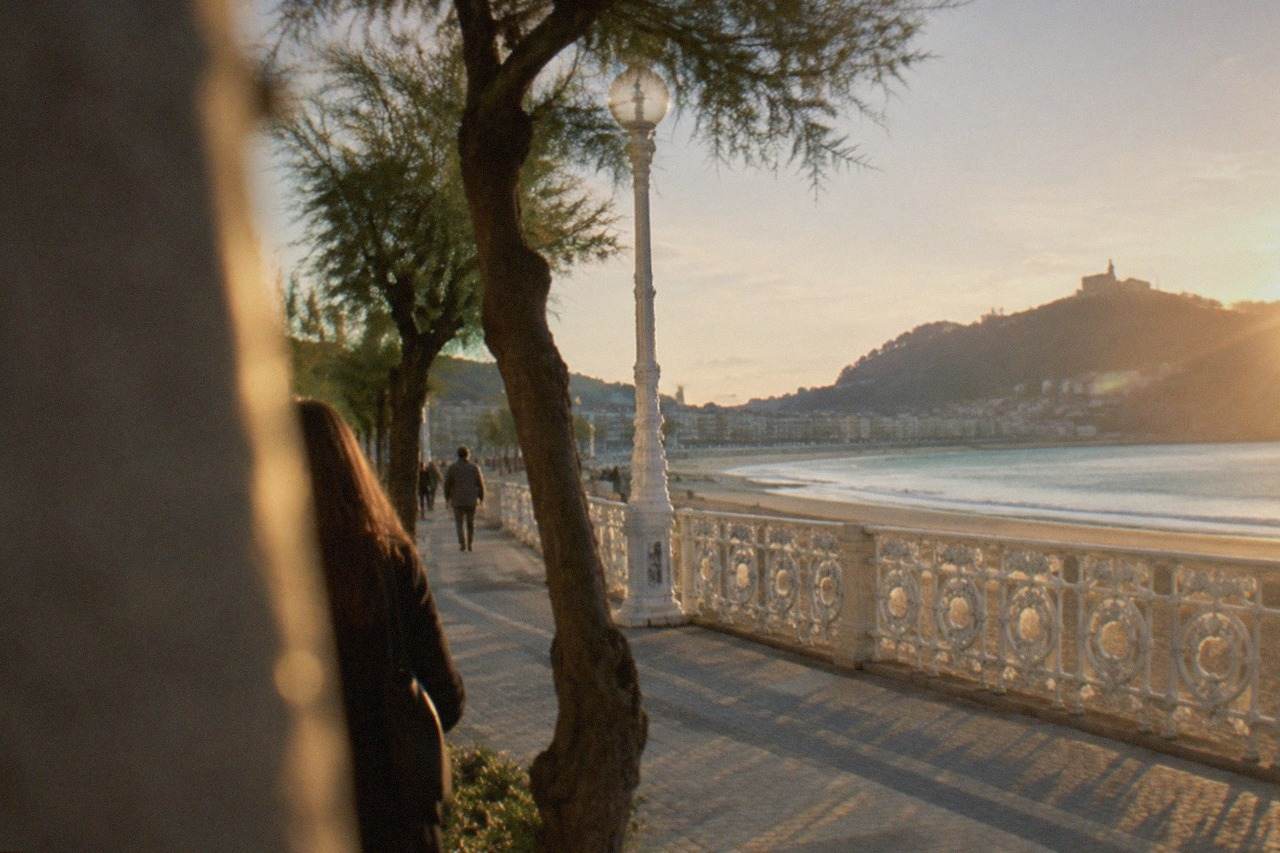
The city makes this easy because everything is close. La Concha, Ondarreta and Zurriola form a crescent around the bay, and the Old Town sits between the first two. The beach detail, including the lifeguard season, which runs 1 June to 30 September on all three beaches, is in the San Sebastián beaches guide. A wet day, and the city averages 1,507 mm of rain a year over 141 rain days at AEMET's Igeldo station, is not a lost eating day: the bars are the point. The rainy day guide covers the indoor options.
| Part of the day | Where | What it looks like |
|---|---|---|
| Morning | Centro or Gros | Coffee and a pastry at a counter, locals only |
| Late morning | La Bretxa area or the bay promenade | Market produce, a walk along La Concha |
| Lunch | Old Town or Centro | A long ración lunch or the first pintxo stops |
| Afternoon | A beach or Monte Urgull | Swim, sand or the hill path above the Old Town |
| Evening | Parte Vieja or Gros | The crawl: three or four bars, one or two pintxos each |
| Late | Back in the Old Town | Cheesecake, or one last txikito at the bar you liked best |
How many days to give the city is a fair question when the eating is this dense, and the how many days in San Sebastián guide answers it directly, weighing the seasons including the August peak, when hotel overnight stays in the city reached 245,769 in August 2025, the year's high point.
What About Bourdain's Favourite Restaurant And His Words On The City?
Two questions about Bourdain and this city have their own dedicated answer pages on this site, and they are better read there in full: which restaurant he called his favourite in San Sebastián, and what he actually said about the city. Both are short reads, both quote him directly, and both settle the matter more precisely than a summary here could.
The favourite table is settled on the favourite restaurant answer page, and his recorded comments on the city are collected on the what Bourdain said about San Sebastián page. This page's job is the eating itself. The practical layers around it, what a visit costs and how the city compares, are covered in the is San Sebastián expensive guide and in the is San Sebastián worth visiting page. For the question of where locals actually eat, beyond the tourist strip of the Old Town, the where locals eat in San Sebastián answer page is the one to read before your second or third night in the city.
Common Questions About Bourdain And San Sebastian
Did Anthony Bourdain film in San Sebastián?
Yes. His food-travel programmes included episodes filmed in the Basque Country, and his time eating in and around the city, its bars, its cider houses and its top tables, formed the basis of what he told viewers about the region's food culture.
Is the Old Town still the best place to eat pintxos?
The Parte Vieja remains the densest pintxo ground in the city, with the bars packed into a few narrow streets. Gros offers a strong local-heavy alternative, and the Centro holds the more formal restaurant rooms.
Do you need to book the Michelin restaurants far ahead?
Yes. The city's starred rooms, including the two 3-star houses Arzak and Akelaŕe in the MICHELIN Guide Spain 2026, fill well ahead in the summer months, and booking weeks in advance is the safe assumption for a July or August visit.
Can you visit a cider house from San Sebastián?
Yes. The traditional cider houses sit in Astigarraga and the surrounding countryside, and the txotx season, by the tourism board's wording, runs from the middle of January to the end of April. Guided day trips with transport and the meal included run from the city.
Is one day enough to eat the city?
One day covers a crawl, a cheesecake and a market, but the city rewards at least two evenings of bar-hopping plus one serious lunch. The how-many-days guide on this site breaks the trade-offs down.
The city Bourdain ate his way through has not stood still since his visits, but its structure is the same: a small walkable frame, a bar culture that doubles as dinner, a handful of the most decorated kitchens in Europe, and a coastline that supplies the anchovies, the fish and the txakoli. Eat it in that order, from the counter up, and the visit lands exactly where his programmes pointed.