Basque Cider Houses Near San Sebastian
Basque cider houses, the sagardotegiak, pour straight from the barrel from mid-January to the end of April, and the txotx ritual that comes with them is one of the food experiences San Sebastián is most known for.
Short answer
The txotx cider house season around San Sebastián runs from the middle of January to the end of April. Visitors stand around an enormous barrel, catch the sharp, lightly sparkling cider in a glass from a jet of it, and eat a fixed menu of cod omelette, fried cod, txuleta steak, cheese and walnuts.
Basque cider, sidra in Spanish and sagardoa in Basque, is the drink of the hills behind San Sebastián, the Basque Country city on La Concha bay whose official name is Donostia / San Sebastián. For a few months each year the cider houses around the city, in the apple orchard country of Gipuzkoa, throw open their cellars and pour straight from the barrel in a ritual called txotx. This guide explains what that ritual is, when the season runs, what you eat, and how to build a visit around it, plus a tasting tour if you would rather arrive with a guide than a hire car.
What Is The Txotx Cider House Season Near San Sebastian?
The txotx season runs from the middle of January to the end of April, in the tourism board's own wording, and those months are when the cider houses around San Sebastián open their cellars for the pouring ritual. Outside that window most houses keep irregular or reduced hours, and the barrel tapping that defines the experience does not happen. The season is a rule rather than a dated calendar, so the tourism board publishes no exact first or last day for any year, and neither does this page.
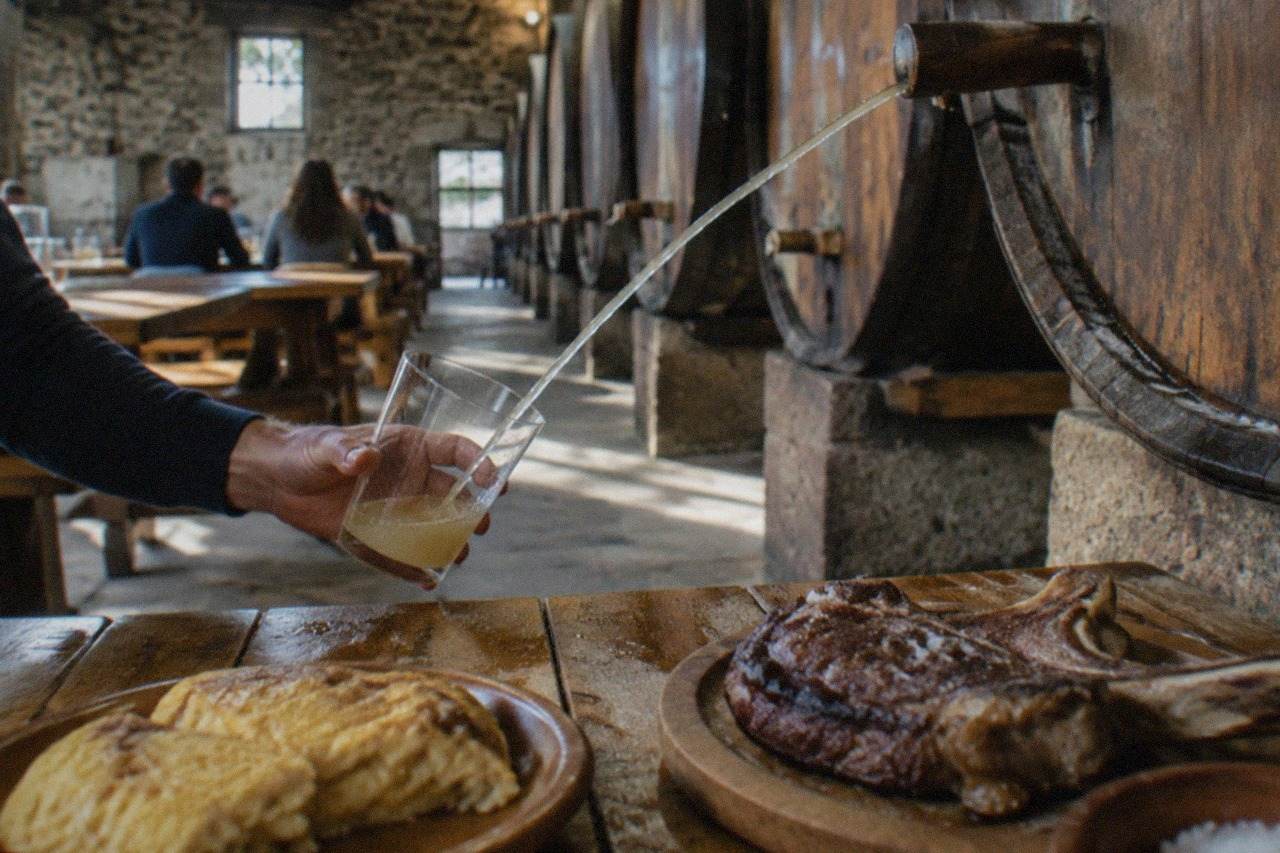
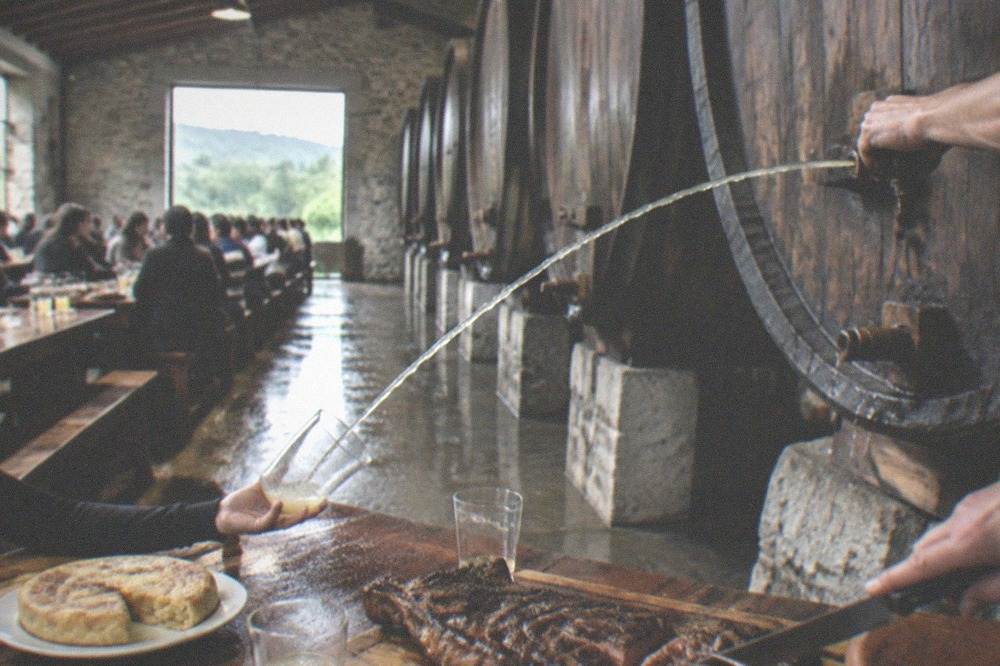
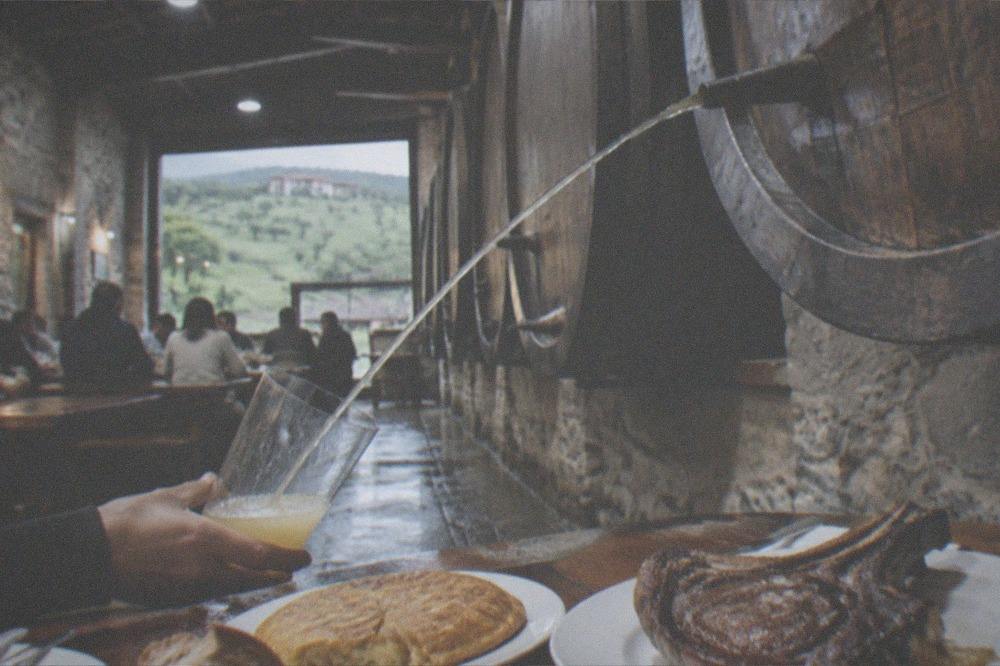
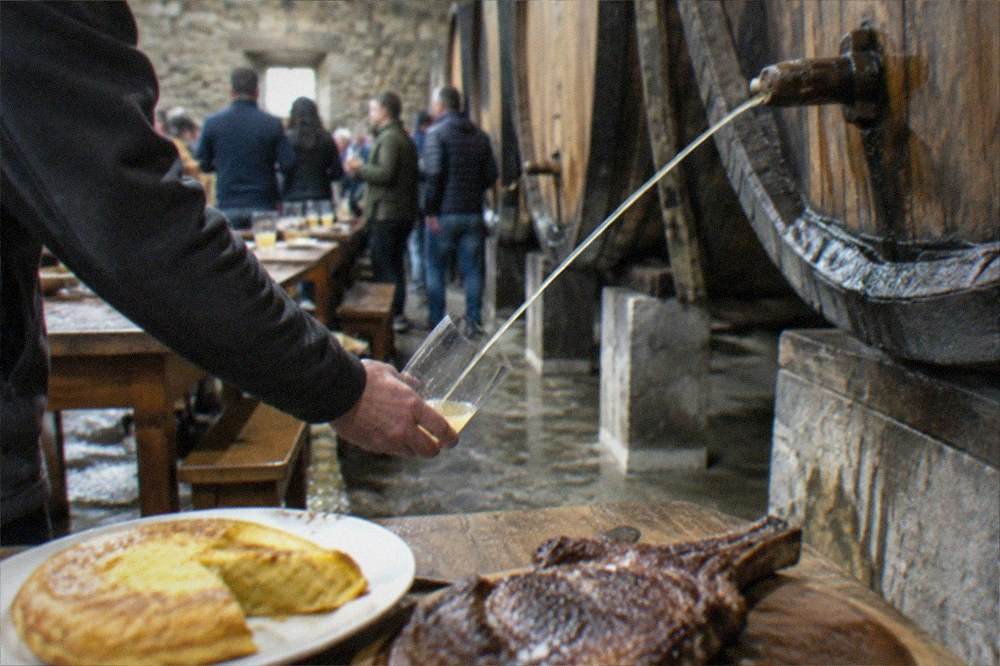
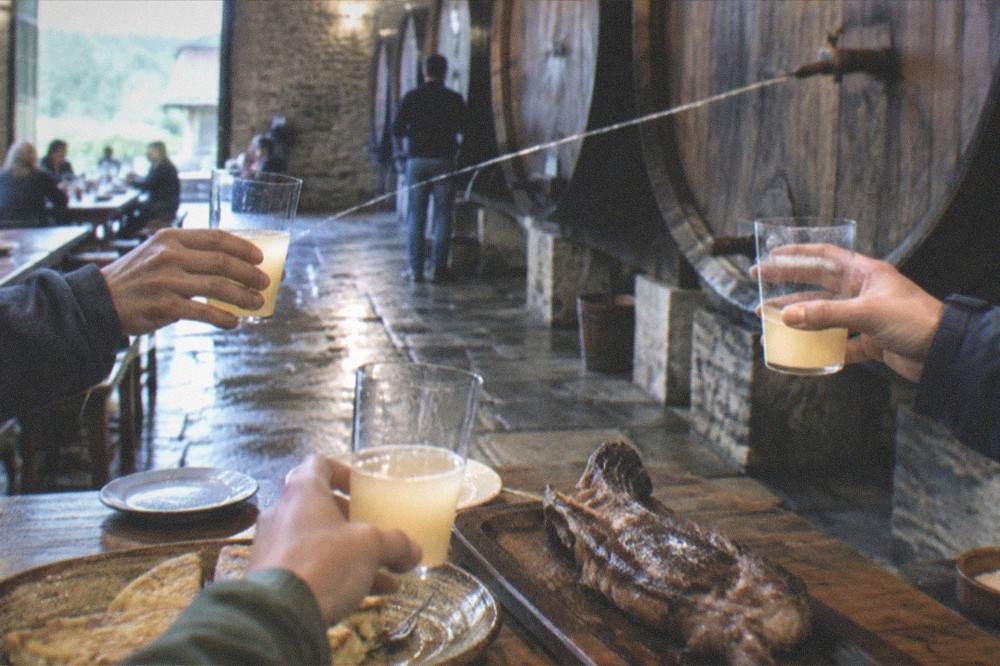
The ritual itself is simple and loud. A staff member, or the house's owner, opens the tap on a giant wooden barrel, the txotx, and a jet of cider shoots out at an angle. Everyone in the room holds a glass at arm's length, low, and catches a splash of the jet as it falls. You drink it in one or two goes, from a short distance, so the cider hits the glass aerated. Then you go back for more whenever the next shout of "txotx!" goes up. Nobody pours you a glass at the table. The whole point is standing at the barrel.
Astigarraga, a separate municipality just inland from the city, is the heart of this country. The tourism board names cider houses for both Donostia and Astigarraga, and the Basque Cider Museum, Sagardoetxea, stands in Astigarraga itself. The museum's own tariff lists the museum visit from 5.00 EUR and the premium visit with a tasting at 9.00 EUR, which makes it the one cider venue in the area with published prices. The working cider houses around it do not publish prices on official pages, so this page prints none for them either.
The table below gathers what the official record actually states about the season and its setting.
| What | The Rule Or Figure | Who States It |
|---|---|---|
| Txotx season | Middle of January to the end of April | Official tourism board |
| Cider museum, Sagardoetxea, Astigarraga | Museum visit from 5.00 EUR | The museum's own tariff |
| Premium museum visit with tasting | 9.00 EUR | The museum's own tariff |
| Cider country | Donostia and Astigarraga cider houses | Official tourism board |
| Published cider house menu prices | None on official pages | Nothing printed here |
One planning note that surprises people: this is an Atlantic city and it rains through the whole season. AEMET's normals for its Igeldo station show 141 mm of rain in January across 13.2 rain days, 110 mm across 11.6 in February, 113 mm across 12.4 in March and 138 mm across 13.4 in April. Nobody goes home from a cider house dry in any sense, but the walk from the car park may be wet, so plan for it.
What Is The Most Popular Basque Cider?
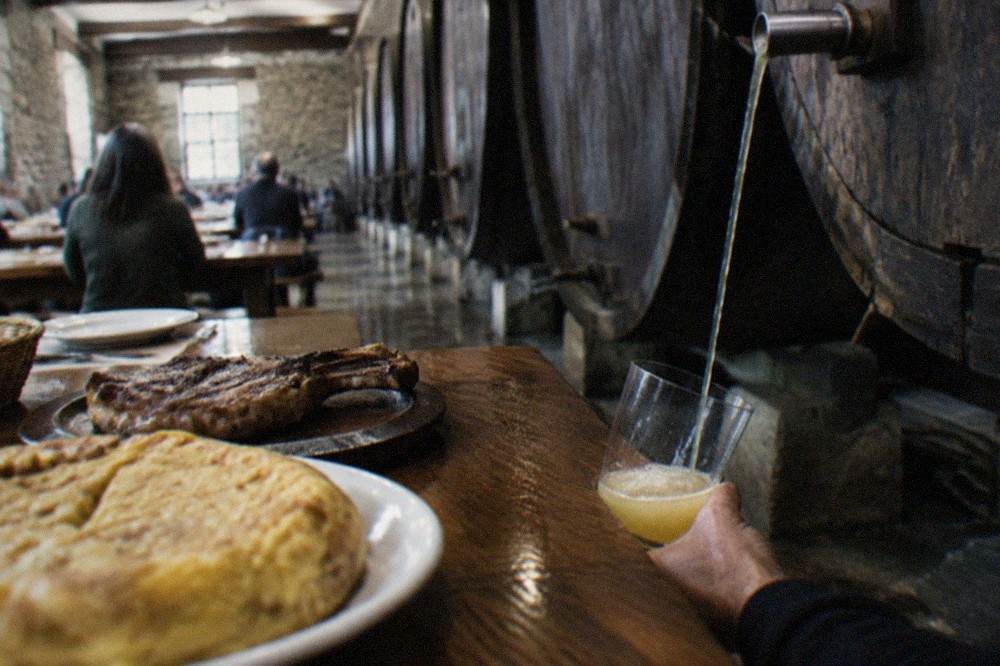
The most popular Basque cider is the natural, still-fermenting house cider poured straight from the barrel during the txotx season, known as sagardoa in Basque. It is not a single brand: each cider house pours its own, made from its own apples, unfinished, sharp and low in alcohol. The barrel version remains the form the region itself drinks with the most enthusiasm.
That distinction matters more here than almost anywhere else in the cider world. Basque barrel cider is alive: fermentation has not been halted, nothing is filtered or pasteurised, and the barrels are opened while the cider inside is still working. The pouring method, from height, into a glass held low, is not theatre for tourists. It is how the region has drunk its own product for generations, because the splash wakes the cider up and softens its edge.
The apples behind it are local varieties grown on the green hills of Gipuzkoa, an Atlantic landscape that takes 1,507 mm of rain a year at the Igeldo weather station. Apple growing here is old, small-scale and tied to the farmhouse tradition, which is why the cider house and the restaurant are usually the same building. The cider is the farm's product, and the menu exists to go with it.
If a bar or shop in San Sebastián hands you a Basque cider outside the season, it will be a bottled one, filtered and conditioned, and it tastes different from the barrel product. It is the same drink in a different form, and it travels well.
If you want the cider without organising a car, the Gipuzkoa cider house association runs a guided visit that includes the orchard, the cellar, the txotx ritual and lunch, and it picks up in the city.
What Makes Basque Cider Different?
Basque cider differs from most of the world's cider in three ways: it is poured unfinished from the barrel rather than bottled and conditioned, it contains no added sugar, carbonation or concentrate, and it is drunk in small amounts, repeatedly, standing up. The txotx method of catching a jet from a height aerates each serving so it tastes different from the same cider drunk flat. Commercial ciders, including most bottled Basque ones, are filtered, sweetened or force-carbonated, and none of that happens to the barrel product.
The differences stack up fast once you are standing in the cellar. Here is how the two forms compare on the points that matter.
| Feature | Barrel Cider At The Txotx | Bottled Basque Cider |
|---|---|---|
| Fermentation | Still running when poured | Stopped before bottling |
| Carbonation | Natural, light, from the pour | Added or retained, stronger |
| Filtration | None | Filtered clear |
| Sweetness | Bone dry, no added sugar | Ranges from dry to sweet |
| How it is served | Jet from the barrel into your glass | Poured at the table |
| Where you drink it | Standing at the barrel | Anywhere, year-round |
The taste, described rather than experienced: sharp, appley, slightly cloudy, with a scrumpy-like edge and a faint natural fizz that comes and goes between pours. The local white wine, txakoli, shares some of that character, high acidity and a tradition of pouring from height, and the two drinks sit side by side in the region's gastronomy. Our txakoli guide covers the wine in detail if you want both on one trip.
What Is The Best Cider House In San Sebastian?
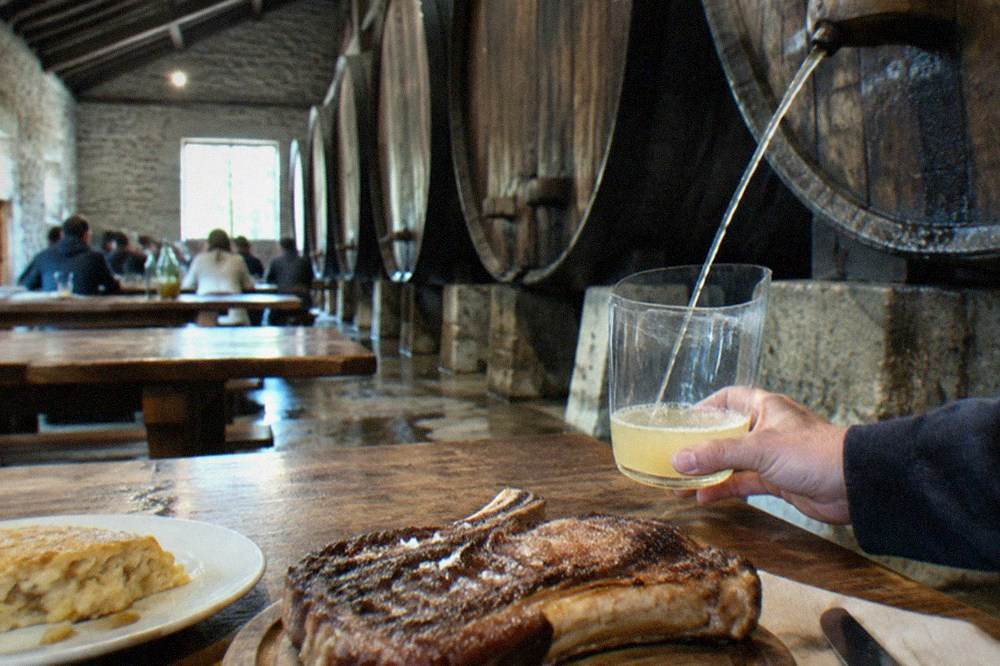
No single cider house can be named the best on the basis of any official record, because none of the working houses around San Sebastián publishes prices, hours or ratings on an official page, and this site prints no figure it cannot source. What the record does support: the season runs from mid-January to the end of April, and Astigarraga is the cider capital of the region. A guided visit run by the Gipuzkoa cider house association is the most reliable first experience.
That answer is deliberately honest. Plenty of guides will hand you a ranked top five, and every name on such a list is a memory or a press release rather than a verified fact. What can be said with confidence is structural: Astigarraga, a separate municipality from San Sebastián, has the densest concentration of cider houses in the region, and Sagardoetxea, the Basque Cider Museum, sits there as the explainer venue, with its own tariff listing the museum visit from 5.00 EUR and the premium visit with tasting at 9.00 EUR. The tourism board names cider houses for both Donostia and Astigarraga, and those are the houses with the standing to be on any shortlist.
For a first visit, three practical routes work, and the table lays them out honestly.
| Route | What It Involves | Best For |
|---|---|---|
| Guided cider house visit | Orchard, cellar, txotx ritual and lunch, pickup in the city | First-timers, no car |
| Museum first, house after | Sagardoetxea visit, then a working house nearby | Understanding before drinking |
| Self-drive to Astigarraga | Your own transport, your own choice of house | Repeat visitors, groups |
If you would rather combine the cider visit with a wider taste of the region's farmhouse food, there is also a tour that pairs a Basque farmhouse with a cider house and includes the meal.
And the association-run classic, the one that covers the whole ritual with lunch, can be checked here: Check availability.
What Do You Eat At A Basque Cider House?
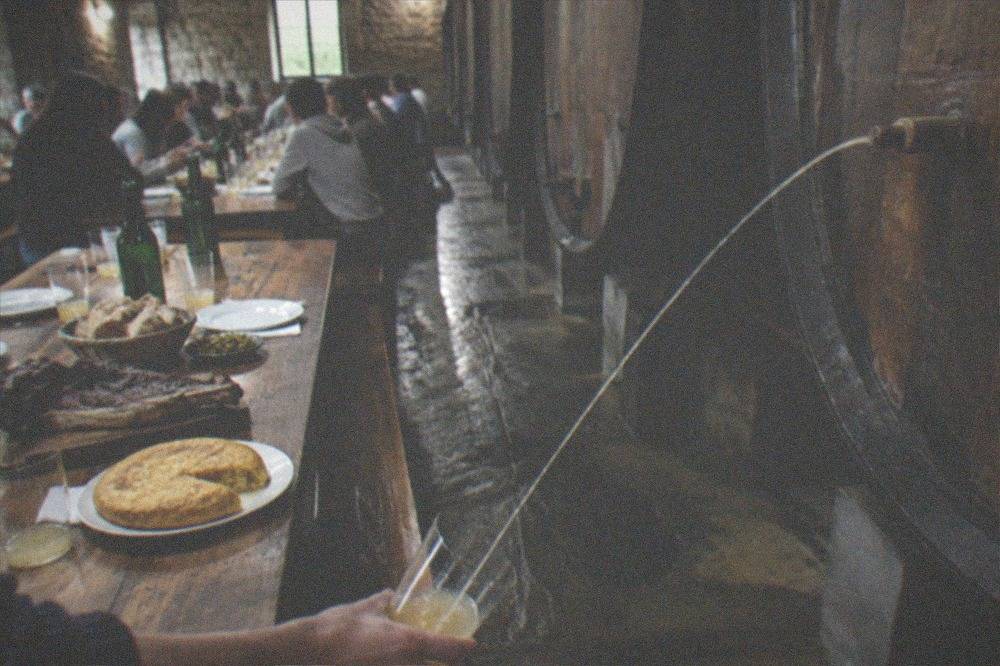
The cider house menu is fixed and near-universal: salt cod omelette first, then fried salt cod with peppers, then a huge grilled txuleta steak carved at the table, and finally cheese, quince paste and walnuts, all with as much barrel cider as you want. There is usually no menu to choose from and no substitutions, the meal is the ritual, and the steak is the centrepiece. Vegetarians should call ahead, because the set menu is built around cod and beef.
The courses arrive in order and nobody hurries. The omelette, tortilla de bacalao, is a thick slice of egg and salt cod eaten warm. The cod comes fried, often with a red pepper sauce. Then the txuleta, a bone-in rib steak cooked over the house fire and carried out whole, is cut into strips with a knife scraped along the bone, and the table eats it straight off the shared board. Dessert is simple: local cheese, membrillo quince paste, and walnuts cracked at the table.
| Course | What It Is | How It Is Served |
|---|---|---|
| Tortilla de bacalao | Thick omelette with salt cod | Warm, cut in wedges |
| Fried cod | Bacalao frito, often with peppers | Shared plate |
| Txuleta | Bone-in rib steak, grilled | Carved at the table, shared board |
| Cheese, quince, walnuts | Idiazabal-style cheese, membrillo, nueces | Help yourself |
The meal explains why the cider is poured the way it is. A bone-dry, sharp, low-alcohol cider cuts through grilled beef and salt cod in a way a sweet drink never could, and the small repeated servings keep pace with a long meal. It is the same logic that runs through the city's pintxo bars, where a glass of txakoli or cider accompanies one or two mouthfuls of food rather than a whole plate. If the pintxo tradition is new to you, start with what pintxos actually are and then read our guide to eating your way through San Sebastián.
How Do You Get To The Cider Houses From San Sebastian?
The cider houses sit in the apple country around the city, above all in Astigarraga, a separate municipality inland from San Sebastián, and the practical ways to reach them are a guided visit with city pickup, a self-driven trip, or a taxi arranged for the return leg. No official page gives a journey time, a bus route or a fare from the city to the cider houses, so this page states none.
That last point is not a small one. The txotx ritual is shouted in Basque, the houses fill up on weekends in season, and many take bookings by phone in Spanish or Basque only. A guided visit sidesteps all of it. The association-run tour picks up in the city, walks the orchard and the cellar, puts a guide between you and the barrel, and ends with the full menu. It is the one option that removes every unknown, because the operator handles the transport, the reservation and the translation.
If cider is one stop on a wider food trip, the region's other liquid exports are within reach. The fishing town of Getaria, also outside the municipality, is the txakoli capital, and a small-group trip there with hotel pickup covers the wine side of Gipuzkoa.
For a taste of the same traditions inside the city itself, a Basque cooking class with wine and cider tasting runs in the centre and teaches the cider-pouring gesture along with the cooking, a good rainy-day alternative in a city where it rains on roughly 10 days even in the driest month. Our San Sebastián weather guide explains what to expect month by month.
Can You Visit A Cider House Outside The Txotx Season?
Outside the middle-of-January-to-end-of-April window the barrel ritual does not run, most working cider houses cut their hours or close to casual visitors, and the honest advice is to plan the cider house visit for the season itself. What stays available year-round is bottled Basque cider in the city's bars and shops, the Sagardoetxea cider museum in Astigarraga, which publishes its tariff regardless of season, and cider-tasting experiences built into cooking classes and food tours that are not tied to the barrel calendar.
The season rule deserves repeating because it is the one thing people get wrong. The tourism board's wording is "from the middle of January to the end of April", and it is a rule, not a calendar with named dates. A visitor in July will find the cider country quiet and the barrels shut. A visitor in March will find the opposite: cellars full, jets flying, and the whole apparatus of the ritual in full swing.
Here is how the options compare across the year.
| Option | In Season (Mid-Jan To End Apr) | Outside The Season |
|---|---|---|
| Barrel txotx ritual | Running at the working houses | Not running |
| Sagardoetxea museum, Astigarraga | Open, visit from 5.00 EUR | Open, same tariff |
| Bottled Basque cider in the city | Widely available | Widely available |
| Cooking class with cider tasting | Available | Available |
The city's own gastronomy carries the rest of the year. The Michelin constellation described in our Michelin restaurants guide is a different register of the same food culture, and the best restaurants in San Sebastián include houses that pour local cider and txakoli by the glass. The cider house, though, is a seasonal animal, and the season is short.
Should You Book A Cider House Tour Or Go Independently?
A guided cider house tour suits first-time visitors, anyone without a car, and anyone who wants the ritual explained rather than merely attended, while going independently suits groups, repeat visitors and confident Spanish speakers who can book a house directly. The tour run by the Gipuzkoa cider house association includes the orchard, the cellar, the txotx ritual and lunch, with pickup in the city, and it is the version of the day that leaves nothing to arrange. Both routes deliver the same meal and the same barrel.
The independent route has one real advantage: you choose the house and the hour. It has one real cost: everything else, the drive, the reservation, the parking, and the season's weekend crowds, is yours to manage. The guided route trades that freedom for certainty, and in a region where the season is short and the houses are busy, certainty has value. The decision, honestly framed:
| Factor | Guided Tour | Independent Visit |
|---|---|---|
| Transport | Pickup in the city included | Your own car or taxi |
| Reservation | Handled by the operator | You call the house |
| Language | Guide explains the ritual | Basque and Spanish at the barrel |
| Choice of house | Fixed by the operator | Yours |
| Best for | First visit, no car | Groups, repeat visitors |
Whichever way you go, go in season, go hungry, and hold the glass low. The full rundown of everything else the city offers, from the things to do in San Sebastian to the pintxo bars of the Parte Vieja, starts on our homepage at San Sebastian Spain Guide.
Common Questions About Basque Cider Houses In San Sebastian
What is the most popular Basque cider?
The most popular Basque cider is the natural barrel cider, sagardoa, poured straight from the txotx during the season from mid-January to the end of April. Each cider house pours its own, made from its own apples, unfinished and dry. Bottled Basque cider is the year-round alternative but the barrel version is the one the region drinks with the most enthusiasm.
What is the best cider house in San Sebastian?
No official record ranks the cider houses, and none of the working houses publishes prices or hours on an official page, so no single one can be named the best here. Astigarraga, a separate municipality just inland, is the cider capital with the densest concentration of houses, and the Gipuzkoa cider house association runs a guided visit that is the most reliable first experience.
What makes Basque cider different?
Basque barrel cider is unfinished, unfiltered and unsweetened, and it is poured as a jet from a height so it aerates in the glass. Most commercial cider is filtered, carbonated and sweetened. The barrel version is also drunk standing, in small repeated servings, rather than sipped at the table.
When is the cider house season in the Basque Country?
The txotx season runs from the middle of January to the end of April, in the tourism board's wording. It is a rule rather than a dated calendar, and no official page gives an exact first or last day for any year. Outside that window the barrel ritual does not run.
Can you buy Basque cider in San Sebastian shops?
Yes, bottled Basque cider is sold in the city's shops and poured in its bars year-round. The bottled product is filtered and conditioned, so it tastes different from the barrel version, but it is the same drink in a different form and it travels well as a souvenir.
Is the cider house meal suitable for vegetarians?
The set cider house menu is built around salt cod and a large grilled txuleta steak, and there is normally no alternative menu. Vegetarians should contact the house or the tour operator before booking, because the fixed menu is the ritual and substitutions are not standard practice.
The txotx season is short, the barrels are only open for a few months, and the meal that goes with the cider is one of the defining food experiences of the Basque Country, so if your trip falls between mid-January and the end of April, the cider house deserves a place on it.